Watch: A ‘Better Call Saul’ Supercut on Point of View

Watch: A ‘Better Call Saul’ Supercut on Point of View

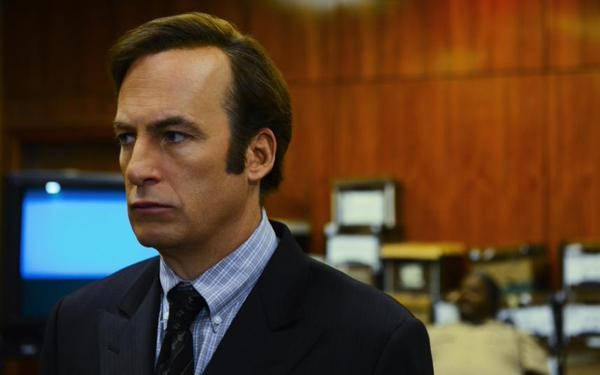
It makes perfect sense that point of view would be significant in the cinematography of ‘Better Call Saul‘ or its long-toothed predecessor, ‘Breaking Bad.’ After all, point of view is both shows’ stock in trade: the story lines take viewers inside the minds of characters whose thoughts and aspirations would otherwise be repugnant to them–either the ethically challenged lawyer Saul Goodman on the one hand or the chemistry-teacher-made-bad Walter White on the other. You could ask why this particular journey fascinates viewers, or you could watch Jaume Lloret‘s brief but dense melange of POV shots (and other shots) from ‘Better Call Saul,’ which showcases Arthur Albert’s wonderful cinematography, or you could do both, with impunity, and learn from the experience. Enjoy!

Watch: Breaking the Fourth Wall in Film: The Sequel

Watch: Breaking the Fourth Wall in Film: The Sequel

A little over two years ago, I put together a video
compilation on 
Breaking the 4th
Wall
: a selection of movies that directly acknowledge the
watching audience by looking at or talking to them, or in some other way
demonstrating that they’re a fictional construct. It was my first ‘video essay’—I called it a ‘supercut’, which I’ve since learned kind of breaks down along
the serious-‘films’-vs.-frivolous-‘movies’ divide—and tentatively sent a link
to a critic I much admired, both for his written and video work, Matt Zoller
Seitz. 

The response was more than I could’ve ever expected. Matt
not only expressed his enthusiasm for the piece, he promptly featured it on Press
Play, which he co-founded and ran at the time, and even wrote a generous accompanying
essay. This stellar support undoubtedly helped the video go viral, garnering
well over 200,000 views within days and being picked up by websites around the
world. I did various interviews about the video; a film studies teacher from Slovenia
asked to use it in one of his classes; and it connected me with talented and
prolific video essayists (Kevin B. Lee, Nelson Carvajal and others) and highly
respected film academics, notably Catherine Grant, founder of the great Film Studies for Free website and passionate audiovisual essay advocate; and Tom Brown, who’d been exploring this field under
the far more erudite title "Direct Address."

For me, these connections are a vital, integral part
of this kind of work. I’d asked for feedback, good or bad, along with other
examples of 4th Wall Movie Breaking that people enjoyed, almost as a
courtesy, and was blown away at how many people responded. Some clips—Eddie Murphy in Trading Places or The Big
Lebowski
—came up numerous times and were clips I knew, but just couldn’t
shoehorn into the original cut. Others—the spectacularly mulleted George
Clooney in Return of the Killer Tomatoes,
or early examples by all-time greats like Max Ophuls or Luis Bunuel—were
wonderful eye-openers.

So I resolved to make another video using all new
films and, if I used their suggestions, to credit those people who made the
effort to contribute. I guess it’s inspired by what the UK Guardian’s new
editor-in-chief Katharine Viner described in her influential 2013 ‘Rise of the Reader’ speech—a way to encourage
active participation and collaboration and redefine the relationship between
online author and audience.

That said, anyone who writes or makes videos for the
web knows the perils of the Comments sections. There’s an incredible amount of
casual vitriol (one original 4th Wall comment claimed “90%” of the
clips were invalid, the video “uneducates [sic] people” and signed off with “F***
you.”) that can be wearying. But the far more lasting revelation is just how
many people out there are looking to constructively engage and discuss. For all
its flaws, the Internet provides an unparalleled forum that, if harnessed
properly, is still so potent at breaking down walls, fourth or otherwise, and
finding new ways to truly connect.

April 2015

Leigh Singer is a freelance film journalist, filmmaker and screenwriter.
Leigh studied Film and Literature at Warwick University, where he
directed and adapted the world stage premiere of Steven Soderbergh’s
‘sex, lies and videotape’. He has written or made video essays on fllm for The Guardian, The Independent, BBCi,
Dazed & Confused, Total Film, RogerEbert.com
and others, has appeared on TV and radio as a film critic and is a
programmer with the London Film Festival. You can reach him on Twitter
@Leigh_Singer.

Watch: Jonathan Demme and the Close-Up Shot: A Video Essay

Watch: Jonathan Demme and the Close-Up Shot: A Video Essay

The close-up may
be one of the most beautiful and conventional shots in cinema.  The shot
is used abundantly and is usually one of the first concepts discussed
in a filmmaking course.  While many close-ups share the same
conventions, Jonathan Demme put a signature twist on this old
and practical technique.  Most filmmakers choose to employ the close-up
shot during scenes of crucial dialogue–the scene cuts back and forth to
the characters’ respective close ups, each character looking to the
opposite side of the screen in order to mine the 180 line.  This is a
standard, yet effective, procedure and is seen in almost any film.  On
the other hand, Demme prefers to line up his characters in the center of
the frame and have them look directly into the lens of the camera.  As
the scene cuts back and forth, the characters usually match placement
and seem to be looking right at us, conveying a unique sense of urgency
or poignancy. 
Demme’s
approach to the close-up is effective on many emotional levels, and
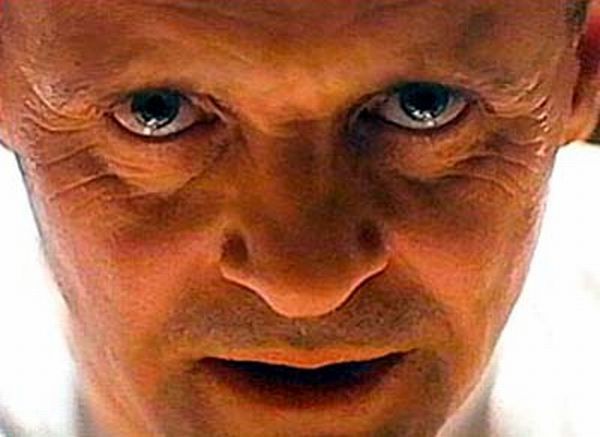
this is largely due to the eye/lens relationship.  When Dr. Hannibal
Lecter hisses at Agent Clarice Starling, we feel equally victimized.  As
Andrew Beckett succumbs to AIDS, we feel an overwhelming sensation of
sympathy.  These characters seem to be looking at us, and we therefore
connect on a deeper level.  Examining a Demme close-up out of context
may seem like breaking the fourth wall, but within the film, Demme
utilizes the shots so naturally and fluidly that we never leave the
cinematic realm.  Demme’s technique has also been copied by some of
today’s most respected auteurs, most notably Paul Thomas Anderson, who
has paid homage in ‘Hard Eight,’ ‘Boogie Nights,’ ‘Magnolia,’ and ‘The Master.’ 
While Demme has gravitated away from his signature approach to close-ups in recent years, the technique was a defining characteristic of a
Jonathan Demme picture from 1986–2004.  Here is a look at Demme’s
signature shot in seven of his feature films.
‘Something Wild’ (1986)
‘Married to the Mob’ (1988)
‘The Silence of the Lambs’ (1991)
‘Philadelphia’ (1993)
‘Beloved’ (1998)
‘The Truth About Charlie’ (2002)
‘The Manchurian Candidate’ (2004)

Jacob T. Swinney is an industrious film editor and filmmaker, as well as a recent graduate of Salisbury University.

Watch: The Editing in Damien Chazelle’s ‘Whiplash’: A Closer Look

Watch: The Editing in Damien Chazelle’s ‘Whiplash’: A Closer Look

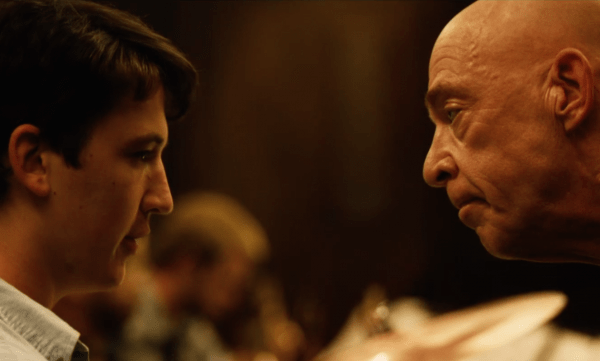
In one sense, you could ask what else there is in Damien Chazelle’s ‘Whiplash’ but the editing. The performances by character-acting veterans like J.K. Simmons or Paul Reiser are remarkable, as is the intense, vulnerable work of Miles Teller, but what really holds the film together, to paraphrase a certain classic, is the splicing of one shot over another over another… This piece by "Robigo TV" is an acute look at Chazelle’s recent film, with a lot of persuasive enthusiasm. You could say the writing could be dusted off, or you could take issue with the video’s near-half-hour length, but you can’t fault the closeness of its attention, or, really, its accuracy.  As we walk through several of the most intimate and hard-hitting scenes of the film, we get to know the work and its characters better, and we also remember the importance of editing in film, all too often taken for granted. This piece is an act of true appreciation, and the appreciation is contagious. 

Watch: All of Sterling Archer’s Literary References: A Video Essay

Watch: All of Sterling Archer’s Literary References: A Video Essay

Secret Agent. Asshole. Book nerd? Sterling Archer, the modern take-down of James Bond on Adam Reed’s cult animated show ‘Archer,’
is many things, but that last detail has always been a quirk in the
show, with literary references spouted out almost as often as jokes
about oral sex. Often, these references in V and films don’t stick as
well as they should, coming off less as wit and more as self-indulgent
name-dropping–it never made sense to me that Buffy Summers lamented
that her slaying duties got in the way of her social life, yet was still
able to stay on top of her pop culture references. Reed has admitted
that the show’s many literary references, including the many from other
characters not included for time, are the remnant of his tenure as a
frustrated English major, yet their contrast with the more deplorable
aspects of Archer’s personality was probably the first indicator of his
humanity, his intelligence when he chose to use it, and maybe even an
indication of his lonely, friendless childhood and adolescence. Plus, of
all the mixed-up characters on Archer, Reed seems to know that
it’s most fun to hear the debonair, narcissistic spy mention an obscure
Herman Melville book at gunpoint, read 10 Babysitter’s Club books
in preparation for guarding his daughter, or wonder out loud if he’s gay
for Tolkien. You won’t find Sean Connery or Daniel Craig saying that
with a straight face any time soon.

Serena Bramble is a film editor whose
montage skills are an end result of accumulated years of movie-watching
and loving. Serena is a graduate from the Teledramatic Arts and
Technology department at Cal State Monterey Bay. In addition to editing,
she also writes on her blog Brief Encounters of the Cinematic Kind.

Watch: Why the Beginning of David Fincher’s ‘Se7en’ Is the Perfect Opening Sequence

Watch: Why the Beginning of David Fincher’s ‘Se7en’ Is the Perfect Opening Sequence

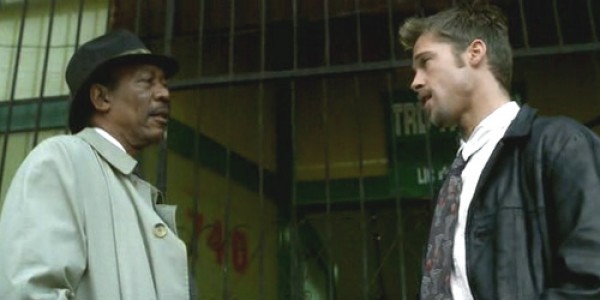
A filmmaker once told
me that exposition in dialogue must be stated twice if anyone is going to
remember it. The opening to David Fincher’s ‘Se7en’ introduces the
protagonists, sets up the initial premise, and displays how their different
personalities will clash throughout the film. Not only does it do this in less
than four minutes, but it manages to communicate this information twice. It was
fascinating to discover that this simple and graceful opening was actually
pieced together from a much longer opening, which contained details that were
meant to make appearances throughout the film. Due to the inability to move the
production to New York for a shot of Morgan Freeman on a train bound for the
city, the opening was ultimately carved up and rearranged into the one we now
know. Without this turn of events, we never would have gotten the brilliant
opening credits sequence that was made to replace the train shot. The trimmed-down opening gives us the opportunity to jump right into the story.

Tyler Knudsen, a San
Francisco Bay Area native, has been a student of film for most of his life.
Appearing several television commercials as a child, Tyler was inspired to
shift his focus from acting to directing after performing as a featured extra
in Vincent Ward’s
What Dreams May Come. He studied Film & Digital
Media with an emphasis on production at the University of California, Santa
Cruz and recently moved to New York City where he currently resides with his girlfriend.


For more of Tyler’s video essays, check out his channel at
youtube.com/cinematyler.

Watch: How the Visual Gaffes in Iñárritu’s ‘Birdman’ Make It a Better Film

Watch: How the Visual Gaffes in Iñárritu’s ‘Birdman’ Make It a Better Film

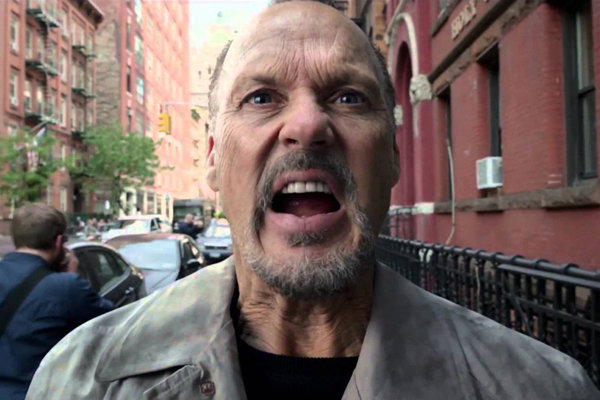
Alejandro González Iñárritu‘s ‘Birdman‘ is a curious film in that it thrives on both orientation and disorientation. As we move (literally) through the film along with Riggan Thompson, we become acquainted with his mind, if not sympathetic with his personality–he orients us, in that our view of the events on screen, even those which do not involve him directly, become filtered through his world view. However, paradoxically enough, as we become oriented in relation to Thompson, we become progressively disoriented in relation to the rest of the world. What are for Thompson wholly routine skitterings through the theater where his Raymond Carver drama is being performed become for us ramblings through an increasingly complex and dizzying maze. As the film moves forward, little discrepancies occur: a path that should lead back to the main stage leads elsewhere; Thompson in his skivvies makes a turn that should send him into the depths of Times Square but instead returns him to the theater; and so on. This well-arranged and articulate video essay by de Filmkrant takes a look at these inconsistencies, and argues convincingly that, far from detracting from the effect of the the film, they are very important to the film’s achievement, which is to describe the rise out of chaos of an utterly troubled, tortured artist.

Watch: Orson Welles, ‘F for Fake,’ and the Art of the Video Essay

Watch: Orson Welles, ‘F for Fake,’ and the Art of the Video Essay

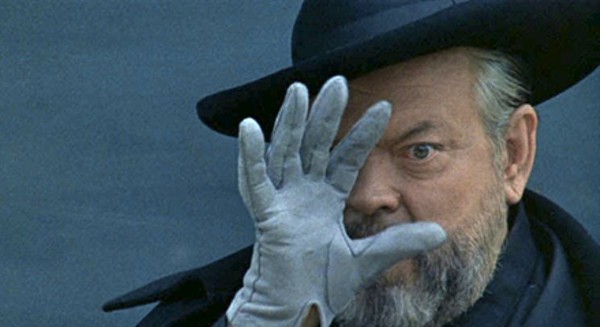
I was 22 when I first saw Orson Welles’ ‘F for Fake.’ Some hipper friends and I were sprawled out on the floor of someone’s dorm room. It was probably a Sunday night, when everyone had more purpose-driven things to do, but we had taken time out to watch this film. Why? Because it was wonderful, of course. And you had to watch it. It was essential Welles, made all the more essential by the fact that few people had seen it. I had seen ‘Citizen Kane,’ of course. And ‘Macbeth.’ And even ‘The Trial.’ (A great match of director to subject, if ever there was one.) But not ‘F for Fake,’ a speculation on the life of a famous forger, which transformed, or at least deepened, my thinking on Welles; the films I had watched previously as unquestionable institutions now seemed to me to be animate, near-living creations, the products of a restless, idiosyncratic mind, exemplary in its curiosity and dissatisfaction. Tony Zhou’s most recent video essay uses this film to explain how one builds and structures a video essay–and he gets some help from, of all people, Trey Parker, who memorably suggests that when one is telling a story, the next word after each plot event must either be "therefore" or "but." The film seems to have helped Zhou developed a working method (ars cinematica?); he reminds us, rather firmly, that video essays, playful though they may sometimes be, are films, and they have to be structured and built as tightly as longer features. As with all of Zhou’s Every Frame a Painting videos, this one is highly educational about the art of film watching and film reading, but, as always, the highly complex insights are affably deployed.

Watch: What If ‘Lost in Translation’ and ‘Her’ Were Two Parts of the Same Movie?

Watch: What If ‘Lost in Translation’ and ‘Her’ Were Two Parts of the Same Movie?

Spike Jonze’s ‘Her’ and Sofia Coppola’s ‘Lost In Translation,’ despite their differences, often seem as if they are part of the same general mood in the minds of their directors: a little sad, a little bemused, a little amused. Each film views as less a story than a series of grace notes on the idea of loneliness; they puncture our minds less than they nudge them. And they conjure terrific, understated performances out of normally dominant stars like Bill Murray, Scarlett Johansson, and Joaquin Phoenix in the process. This new video by Jorge Luengo proposes that they could be part of the same movie, more or less, and in watching it, one begins to think that might not be such an outrageous possibility…

Watch: Gordon Willis’s Framing Techniques in Over 25 Films: A Video Essay

Watch: Gordon Willis’s Framing Techniques in Over 25 Films: A Video Essay

Gordon Willis was one of the cinema’s greatest
artists. Drawing from over 25 of his films, this essay celebrates Willis’ lighting, blocking, preference for a 40mm lens and
above all his use of strong geometric patterns. Whether collaborating with some
of America’s most celebrated directors; Woody Allen, Alan J. Pakula and Francis
Ford Coppola, irrespective of the genre and regardless if the setting was
urban, rustic, contemporary or period, Willis’ style was
so identifiable that he redefined cinematography. Gordon Willis
was a cinematograph-auteur.

Steven Benedict is a writer, producer and director of multi-award
winning films. He is also a contributor to several shows on Newstalk106.
Having lectured for several years in
University College, Dublin, the National College of Art and Design
and the National Film School, he recently graduated with First Class
Honours from the Staffordshire University MSc in Feature Film Production
at
FILMBASE.