Watch: What Tim Burton Owes to German Expressionist Films

Watch: What Tim Burton Owes to German Expressionist Films

It could easily be said that the best things about Tim Burton’s work come from German Expressionist film: the attentiveness to detail in design, the darkness, the vast, complex sets, the theatricality and over-blown nature of films such as ‘Edward Scissorhands,’ ‘Batman,’ and ‘Sweeney Todd.’ This new video piece by Cinema Sem Lei makes the connection between Burton’s work and such great films as ‘Nosferatu’ or ‘The Cabinet of Dr. Caligari’ crystal clear. This isn’t to suggest, of course, that Burton doesn’t inject and imbue his films with his own distinctive style. Far from it, in fact! But we are reminded, when watching this video, that the influence of older German filmmakers flows through Burton, empowering him.

Watch: Wes Anderson: A 10-Minute Tour

Watch: Wes Anderson: A 10-Minute Tour

How about a leisurely stroll through the work of Wes Anderson? I know, I know: the amount of commentary, printed, online, and video-edited, about Anderson is at this point reaching sky-scraping proportions. But: this tightly constructed little piece is worth your 9-10 minutes. Paul Waters takes us through Anderson’s basic biography, shows us some of the director’s dapper commercial work, and then discusses how Anderson has interpreted such basic cinematic techniques as the overhead shot and the single shot for his own Joseph-Cornell-meets-Walt-Disney purposes. We also get close looks at such Anderson trademarks as the ubiquitous Futura font and his characters’ eccentric accoutrements. The best directors can always be revisited, and Anderson, being such, is no exception.

Watch: The Face of Christopher Lee (1922-2015)

Watch: The Face of Christopher Lee (1922-2015)

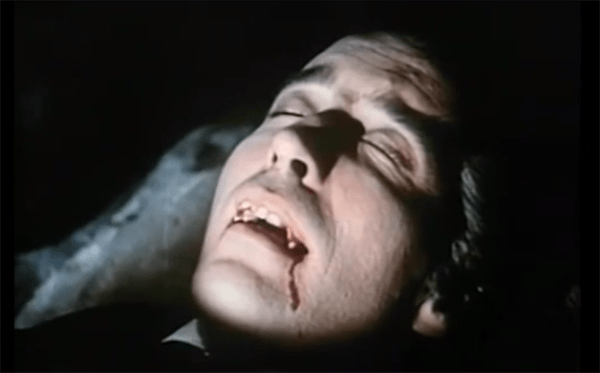
Christopher Lee was the definitive working actor. His career was long, and he appeared in more films than any major performer in the English-speaking world — over 250. What distinguishes him, though, and should make him a role model for anyone seeking a life on stage or screen, is not that he worked so much but that he worked so well. He took that work seriously as both job and art, even in the lightest or most ridiculous roles, and he gave far better, more committed performances than many, if not most, of his films deserved.

Lee said that a successful actor needed “a degree of versatility”, and he embodied that idea. He never quite broke out of his typecasting as a horror villain, but he didn’t need to — he showed the variety and depth possible within such characters, playing each not as a collection of clichés (even when they were written that way), but as something like a human being (even when they weren’t). This is the key to one of the great roles of his later career, that of Saruman in the various Lord of the Rings and Hobbit movies. He is utterly terrifying but also fascinating, and there are moments where we want to sympathize with him, or perhaps join him, and then we realize the error of our momentary desires. No actor in those films so fully and convincingly portrays the temptations of evil.

Though Lee performed well and even memorably in plenty of bad, unmemorable movies, the one that stands as the apotheosis of his skill is ‘The Man with the Golden Gun.’ It’s neither Lee’s worst movie nor the worst James Bond movie, but it’s pretty bad nonetheless. However, Lee so perfectly embodies Scaramanga that he steals every scene he’s in and is usually listed as one of the great Bond villains.

One of the film’s faults is that it plays too much for laughs, but Lee doesn’t make that mistake. He takes Scaramanga seriously as a character and he doesn’t wink at us to signal that he thinks he’s in a crappy movie. To have an actor commit to a role, even if it’s a terrible role in a terrible movie, pays respect to the audience. The nature of film production is such that an actor can’t always know when they’re in a good or bad film, anyway, as what things feel like on set can be quite different from what ends up making it through postproduction, and so the only way to make sure that you don’t mess up a potentially great (or even just passably good) movie is to treat the job as you would had you been cast in the greatest, most demanding, most prestigious film of all time. 

Again and again, Christopher Lee performed that way. Nobody performed terribly-written lines as adroitly as he — no matter how awkward, stilted, or absurd the line, he would find a way to inhabit it, a way to make it seem like the only thing his character could possibly have said at the moment of utterance. As an actor, he couldn’t necessarily control the writing, the cinematography, the editing, but he could control his own performance, and that he did.

Lee was, for similar reasons, an impressive comedic actor. One key to successful comedic acting is this: the actors shouldn’t do the laughing for the audience. Watch Lee in, for instance, ‘Gremlins 2,’ an at best mediocre film in which he is delightful: his timing is excellent, and he knows when to pull back and allow a simple, stoic glance to do all the work for him.

It’s a shame that Christopher Lee was never nominated for an Academy Award (though of course the list of actors and filmmakers never nominated for that award is not at all a shameful one). He certainly deserved at least an honorary, career-spanning acting award, because he achieved far more than a lot of actors who walked away with Oscar in their hands. It’s one thing to perform well in a beautifully written, sensitively directed, artistically shot, masterfully edited movie. It’s quite another accomplishment to perform so consistently well, year after year, in a wide variety of movies that more often than not are not especially well written, directed, shot, or edited — that, indeed, at times seem to have been written, directed, shot, and edited by a vaguely sentient slime mold. Christopher Lee did so, over and over again, for more than sixty years. If that doesn’t define a great actor, I don’t know what does.

Matthew Cheney’s work has been published by English Journal, One StoryWeb ConjunctionsStrange HorizonsFailbetter.comIdeomancerPindeldybozRain TaxiLocusThe Internet Review of Science Fiction and SF Siteamong other places, and he is the former series editor for Best American Fantasy. He is currently a student in the Ph.D. in Literature program at the University of New Hampshire.

Watch: How Did Steven Spielberg Influence David Fincher?

Watch: How Did Steven Spielberg Influence David Fincher?

Steven Spielberg and David Fincher make for a more likely chain of influence than one might think. It might boil down to this: same audience, different focus. Spielberg reaches towards broad themes intended for a wide audience; Fincher seems to have made it his mission to bring the dark side of humanity (the torment, the obsession, the rage, the calumny) to, like Spielberg, as wide a viewership as possible, with films like ‘Seven‘ and ‘The Social Network‘ in particular. Michael Bryant has narrowed this comparison considerably in this pithy video, bringing these two cinematic minds together in a rare and convincing way. So: how did Spielberg influence Fincher? Fincher seems to have absorbed Spielberg’s filmmaking techniques and presented them to us transformed. Look and see…

Watch: Stanley Kubrick’s ‘The Shining’ Meets Alain Resnais’ ‘Last Year at Marienbad’

Watch: Stanley Kubrick’s ‘The Shining’ Meets Alain Resnais’ ‘Last Year at Marienbad’

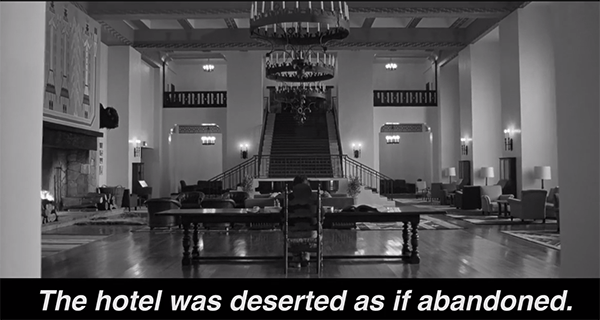
In many ways, Alain Resnais’ ‘Last Year at Marienbad (1961) and Stanley Kubrick’s ‘The Shining (1980) are quite similar.  Both films take place in sprawling resorts that are sparsely populated.  Both films pose narrative mysteries that have deliberately ambiguous solutions.  In the former, did the woman (Delphine Seyrig) meet the man (Giorgio Albertazzi) last year at Marienbad or not?  Or perhaps they did meet, but not at Marienbad.  If they did meet, did the woman forget because she was traumatized after being raped by the man?  Are the characters even "real" or ghosts or fragments of someone’s imagination?  Resnais’s French New Wave classic has fascinated, baffled, and frustrated viewers for half a century quite simply because it is a puzzle without a key to guide the viewer.  You have may an interpretation after watching it, but it is tentative (I change my mind almost every time I watch the film) and far from being definitive.  Kubrick’s ‘The Shining’ offers up ambiguity in a slightly lower dose.  Quite simply, is Jack (Jack Nicholson) motivated by cabin fever or ghosts?  If we accept the former, how does Jack escape the freezer after he’s locked up by Wendy (Shelley Duvall)?  If we accept the latter and the ghosts can take physical action (who rolls the ball towards Danny?), why do they stop short of killing the Danny (Danny Lloyd) and Wendy?  Moreover, how can Jack exist both in the early 1980s and in a 1921 photograph?  These are ambiguities that have encouraged numerous interpretations, ranging from the ridiculous theories of ‘Room 237’ (2012) to my own video essay "Free Will in Kubrick’s The Shining".  

Yet, the connections between these two films go even deeper in how they attempt to use spatiotemporal ambiguity to further disorient the spectator.  The hallways and spaces of Kubrick’s Overlook do not make any spatial sense.  There are windows that look outdoors in rooms that face inwards.  The flow of time, as aforementioned, is also mysterious.  The film’s title cards marking off days and hours represent a linear march of time, yet Jack’s encounter in room 237 and the photograph at the end would suggest that time is a circular or that alternate timelines exist simultaneously.  Similarly, the times and spaces of Resnais’s film blend together.  Costumes provide only a temporary reference point, because jump cuts, voice over, and the similar interiors of separate resorts make the differences between past, present, and future indistinguishable.  Yet, viewers of both films can probably agree on one aspect.  Violence haunts these corridors.  

Dr. Drew Morton is an Assistant Professor of Mass Communication at Texas A&M University-Texarkana.  He the co-editor and co-founder of [in]Transition:  Journal of Videographic Film and Moving Image Studies, the first peer-reviewed academic journal focused on the visual essay and all of its forms (co-presented by MediaCommons and Cinema Journal).  [in]Transition recently won an award of distinction in the annual SCMS Anne Friedberg Innovative Scholarship competition.  His publications have appeared in animation: an interdisciplinary journal, The Black Maria, Flow, In Media Res, Mediascape, Press Play, RogerEbert.com, Senses of Cinema, Studies in Comics, and a range of academic anthologies.  He is currently completing a manuscript on the overlap between American blockbuster cinema and comic book style.

Watch: What Are the 100 Best Movie Lines of All Time?

Watch: What Are the 100 Best Movie Lines of All Time?

If I had to choose my top 10 favorite movie lines of all time, out of this masterful 6-minute video from Cinefix which gives the ****100**** best movie lines of all time, well, I’d say–well, what would I say? Let’s see:

Rosebud.
You can’t handle the truth!
Why so serious?
Honey, I’m home!
Well, nobody’s perfect!
I’m not bad, I’m just drawn that way.
Go ahead, make my day.
You know how to whistle, don’t you, Steve?
Luke, I am your father.
You talkin’ to me?

Viewed this way, these choices could read like the results of a psychological test, of some sort. And what would they say about me? Hmmm…. In any event, this short feature takes us through 100 of the greatest individual lines in movie history, from ‘Top Gun‘ to ‘Blade Runner‘ to ‘Jaws‘ to ‘Some Like It Hot‘ to ‘The Empire Strikes Back‘ to ‘Scarface‘ to…

See how many movies you can identify from this video–and, lest I forget, what are your top ten best lines?

Watch: How Does Nicolas Winding Refn’s Colorblindness Shape His Films?

Watch: How Does Nicolas Winding Refn’s Colorblindness Shape His Films?

Did I know Nicolas Winding Refn was colorblind? No, I did not. But having been thus educated, this little bit of information explains quite a lot about his work’s appeal. Looking at YouTube user Blue Leaf’s piece through this scrim, and given Refn’s own testimony that his colorblindness is what causes him to make all of his films with high color contrast, I begin to understand why films like ‘Bronson‘ or ‘Only God Forgives‘ have the visual appearance they do–and I also begin to understand something about their attitudes: the interest in extremes of morality, the clash of affection and intense violence, the silence versus the noise. Perhaps it’s an obvious point to make about a filmmaker who’s gotten more than his fair share of attention, criticism and fan-dom over the years, but re-investigating the point can’t hurt–and this piece is, at the very least, a thrilling watch.

Watch: ‘Jurassic Park’ and Its Prehistoric Symphony

Watch: ‘Jurassic Park’ and Its Prehistoric Symphony

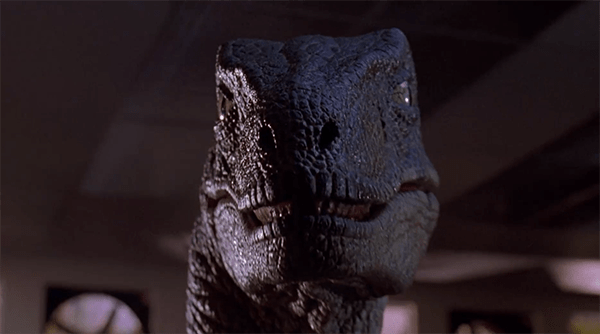
Steven Spielberg’s ‘Jurassic Park‘ wasn’t just about the dinosaurs. Nor was it just about the story, such as it was. A combination of elements made it successful, drawing people to the theaters in multitudes, even drawing movie snobs such as myself! Certainly, Dean Cundey’s cinematography brought the film’s monstrous and only-semi-herbivorous presences into viewers’ faces in a memorable way, but there was also another significant element: the sound. Had sound designer Gary Rydstrom decided to "go digital" with the sounds, the technology of the time might have yielded a product with only a fraction of the film’s staying power or box-office command. Instead, as Jacob T. Swinney (a Press Play regular) shows us in this video and in his explanatory notes, Rydstrom took a more adventurous route, using lion roars and dolphin chirps to recreate what poet Walt Whitman would have called the dinosaurs’ barbaric yawps. With ‘Jurassic World‘ on its way to theaters this Friday, looking at and listening to the original entry in the series may give your movie-going experience more heft. 

Watch: The Movie References in ‘True Detective’ (Including Some Shockers)

Watch: The Movie References in ‘True Detective’ (Including Some Shockers)

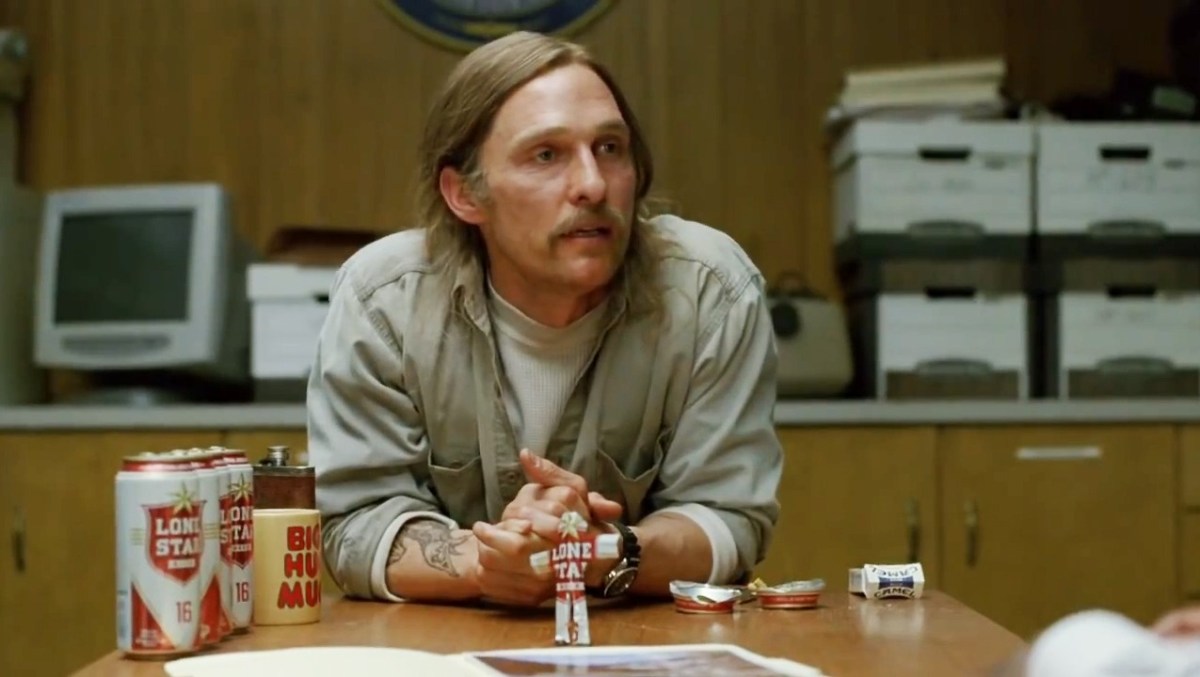
One of the reasons the first season of HBO’s ‘True Detective‘ was so fascinating for so many viewers was that its ambition–shown by the development of the tormented relationship between detectives Rust Cohle (Matthew McConaughey) and Marty Hart (Woody Harrelson), the spiraling exploration of a murder investigation, the multi-layered nature of the narrative–was of a type that, though we wouldn’t necessarily say it out loud, we would typically expect from a film rather than a television show, even in the Golden Age of Television. Decades of historic restraint of narratives on the small screen to fit into a one-hour format can still make television shows like ‘True Detective’ or its "prestige" brethren stand out. So it’s no surprise that the influences collected in this short piece by "Tea and a Movie" range from David Fincher to Jonathan Demme to (oddly enough) Andrei Tarkovsky. The piece highlights yet another part of the show’s allure, and filmic quality: its visuals (thanks to Adam Arkapaw’s cinematography), which might act on the viewer without the viewer’s awareness. Plenty have chatted about various filmmakers’ influence on the series, but seeing these similarities illustrated with such clarity could provoke further examination–where there’s smoke, there’s fire.   

Watch: What’s the Difference Between the WATCHMEN Comic and the WATCHMEN Movie?

Watch: What’s the Difference Between the WATCHMEN Comic and the WATCHMEN Movie?

Alan Moore’s ‘Watchmen’ graphic novel, named by Time Magazine as one of the 100 best novels of all time, is an absorbing and potentially transformative read: for its sagacity, for its balancing of numerous texts, for its storytelling. Zack Snyder’s ‘Watchmen‘ film was a slightly different animal, a valiant attempt to film a book that many might call unfilmable. With their usual wit and energy, the staff of Cinefix have constructed an elegant and rousing examination of the differences between book and film here, giving credit to both source and adaptation where due–and including some background about other filmmakers who took a running jump at filming the comic and failed. Take a look…