Watch: Darren Aronofsky’s Assault on the Senses in ‘Requiem for a Dream’

Watch: Darren Aronofsky’s Assault on the Senses in ‘Requiem for a Dream’

Given that the eyes and the ears are the only two sense organs film can access (setting aside ersatz experiments with scratch-and-sniff giveaways at theaters), if a director wanted to make sensory overload part of a film’s experience, the key would be to make visual and auditory elements larger than life, so that they practically jump out of the screen at the viewer. And that, it seems, is what Darren Aronofsky has done with ‘Requiem for a Dream," a film of addiction and humiliation for which the word "harrowing" would be a gross understatement. In this dynamic and startling video, Jorge Luengo focuses on Aronofsky’s jarring close-ups and aggressive in-your-ears sound effects to make an elegant point about the film: that its sensual experience is a mainline, if you will, to its thematic concerns. 

Watch: Martin Scorsese’s Films Have a Lot of Crucifixion Poses. Why Is That?

Watch: Martin Scorsese’s Films Have a Lot of Crucifixion Poses. Why Is That?

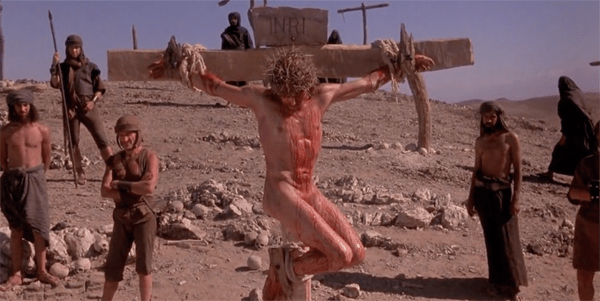
What do Travis Bickle, Howard Hughes, Jesus Christ, Rupert Pupkin, and Jordan Belfort have in common? Apart from being crucial figures in Martin Scorsese’s films, they have all made a gesture that could be described as a prototypical Scorsese gesture: arms outstretched, body (more or less) upright, body language that says to the universe: Do what you wish, think what you wish, say what you wish. Here I am. The gesture also, though, looks a great deal like a crucifixion–and in the case of Jesus, was one. Milad Tangshir examines the recurrence of this image in Scorsese’s films and, in so doing, makes one wonder if, by isolating and exposing his male figures this way, from ‘The Last Temptation of Christ‘ to ‘Taxi Driver‘ to ‘The Wolf of Wall Street,’ he is in fact, in a sense, crucifying them.

Watch: Mad Max Meets Star Wars in ‘Road Wars’

Watch: Mad Max Meets Star Wars in ‘Road Wars’

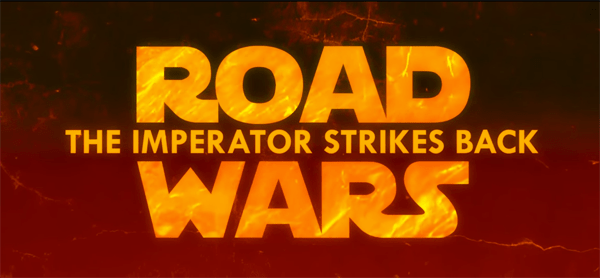
There are only so many stories, after all–and these days, ‘Mad Max: Fury Road’ is a part of all of them. How this particular mash-up hasn’t happened yet is beyond me, but the clever, tidily done work by Krishna Baleshenoi should make you either want to see ‘Fury Road’ or see ‘The Empire Strikes Back’ or see both–perhaps at the same time. 

Watch: David Fincher: From Adidas to Benjamin Button

Watch: David Fincher: From Adidas to Benjamin Button

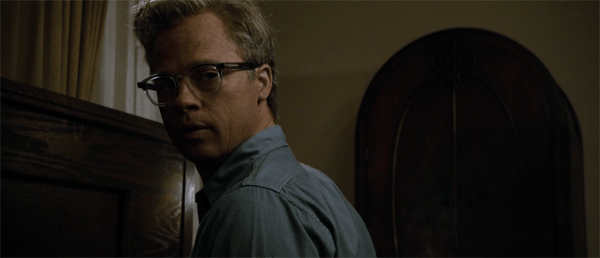
The latest installment in Raccord’s excellent series on David Fincher takes up some of his more knotty work–namely ‘Zodiac’ and ‘The Curious Case of Benjamin Button’–along with the commercial work addressed earlier in the series. We can see Fincher developing here, focusing in on a kind of intricacy that may have been akin to intellectual play for him in his early films, the fulfillment of an inner desire to communicate, but becomes a kind of ars cinematica as his work matures. By the end of this in-depth piece, which includes many clips of interviews with Fincher and others, the journey from the gangly robot of Fincher’s famous Adidas commercial to the wizened Brad Pitt of ‘Benjamin Button’ or the obsessive Jake Gyllenhaal of ‘Zodiac’ seems a quite logical one, almost inevitable.

Watch: How Chuck Jones Grew as a Cartoonist

Watch: How Chuck Jones Grew as a Cartoonist

In his latest "Every Frame A Painting" installment, Tony Zhou gives us the crucial components of the work of Chuck Jones, Warner Brothers’ genius master cartoonist, and in so doing shows us the laws of a small universe. The points Zhou focuses in, as we watch the pranks of Bugs Bunny, the stammering of Daffy Duck, the blundering of Wile E. Coyote, are the gag (assumptions vs. harsh reality), the character developments we witness, and the discipline–the way a character focuses on a particular task or conflict. Throughout, we get snippets of interviews with Jones himself, Steven Spielberg, and others, making this a departure for Zhou and a benchmark within his body of work.

Watch: How the Famous ‘Mission: Impossible’ Heist Scene Was Made

Watch: How the Famous ‘Mission: Impossible’ Heist Scene Was Made

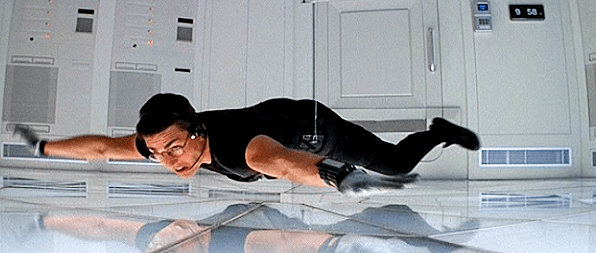
If you’re like me, all you took away from the first ‘Mission: Impossible’ film, helmed by Brian De Palma, was the scene where Tom Cruise hangs, arms and legs outwards, suspended from a cable over the floor of an extremely well-protected computer vault as, below him, a rather retiring-looking fellow… types some stuff. One drop of sweat falls from Tom Cruise’s noble brow and: the rest is history. This new ‘Art of the Scene’ installment from Cinefix does the entertaining work of explaining how that scene was made, complete with a clip from, if I’m not mistaken, ‘Rififi.’ 

Watch: Brian De Palma’s ‘Carlito’s Way’ and the Vulnerability of Al Pacino

Watch: Brian De Palma’s ‘Carlito’s Way’ and the Vulnerability of Al Pacino

Al Pacino never played a more nakedly conflicted character than he did in Brian De Palma’s ‘Carlito’s Way.’ Sure, there was the famous "dragging me back in" moment from ‘The Godfather Part II," but even the thugs caricatured in ‘The Sopranos’ made fun of that line. You could say that his recent performance in ‘The Humbling’ showed a soul torn between the desire for glory and the desire for happiness. But really, his turn as Carlito in De Palma’s film showed us a man who, in his heart, wanted strongly not to be a criminal but somehow could not reverse inevitable patterns–and did so indelibly. 1848 Media’s meticulous and brilliant breakdown of the infamous poolhall scene from ‘Carlito’s Way’ shows us what was at stake in the character’s life, both in real time and in the span of the plot–and how all of this was expressed through the positioning of the camera. This film is under-watched, among De Palma’s works, which seems unfortunate; it glides with a confidence his other movies don’t always display, prey as they are to jerks of suspense alternated with Ken-Russell-level decadence. Kudos to Julian Palmer for giving this film the very close look it deserves–this is the second episode in the excellent "The Discarded Image" series, preceded by a remarkable piece on the famous beach scene from ‘Jaws.’ 

Watch: A Trip To Pluto and Beyond

Watch: A Trip To Pluto and Beyond

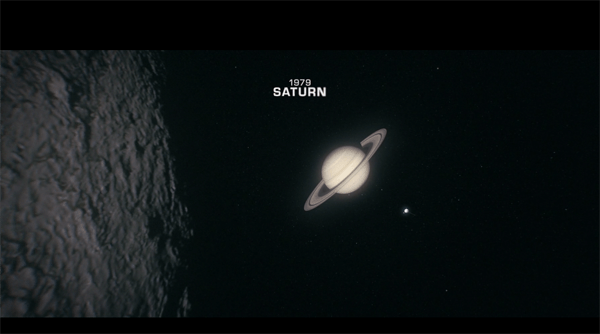
Do you remember when you first learned what a planet was? When someone pointed up at the sky and explained that, out there in the darkness, there were huge masses of rock and gas that were as big as Earth, if not bigger? Do you remember wondering what those planets looked like? Or wishing you could travel to one of them, and see outer space? That’s the feeling this video by Erik Wernquist accesses, as it gives us a three-minute history of space exploration. He made it on commission for NASA, and with the use of NASA’s images, to commemorate a very special event that’s taking place tomorrow, July 14, 2015. Tomorrow, our spacecraft are exploring Pluto and its system of moons for the very first time in history. Doubtless we’ll receive hundreds of remarkable photos from the journey. I, personally, can’t wait. So, while it’s fun to ponder what Ennio Morricone’s soundtrack for Quentin Tarantino’s ‘The Hateful Eight’ will sound like, or wonder what Wes Anderson might do next, or find something to complain about in the second season of ‘True Detective,’ why not take a couple of minutes to watch this short film and just… imagine?  

Watch: How Wes Anderson and Yasujiro Ozu Are Very, Very Similar

Watch: How Wes Anderson and Yasujiro Ozu Are Very, Very Similar

When you think about it, the influences of Wes Anderson are hard to trace, as much as he might be discussed and re-discussed–if you had to find one director he was "quoting," it might be slightly difficult. His influences, such as they are, are more easily found within visual art and literature (Joseph Cornell, Franz Kafka) or even music (Serge Gainsbourg, for instance). Similarly, it’s hard to find a director Wes Anderson is "like"–he cultivates a meticulous distinctiveness that makes it tricky to compare him in the same way you might compare, say Steven Spielberg and George Lucas, or David Fincher and Christopher Nolan. Nevertheless, Anna Catley, who has posted memorably at Vimeo, has waded in and made a strong, fascinating comparison between Wes Anderson and Japanese director Yasujiro Ozu, perhaps most famous for his 1953 film ‘Tokyo Story.’ Catley finds many points in common, such as strong repertory casts or a love of complex interiors, as well as many thematic overlaps, which make the comparison seem wholly logical–and might make one wonder why it hadn’t popped up before.   

Watch: Who Is Jonathan Glazer?

Watch: Who Is Jonathan Glazer?

[A transcript follows:]

The ultra-bizarre surrealist nightmare ‘Under the Skin’ sparked a lot of discussion when it came out last year and the name Jonathan Glazer found its way onto the lips of many film enthusiasts, but what you may not realize is that you’ve been watching his work for years.
 
Let’s go back a bit. For the past 20 years, Jonathan Glazer’s directorial efforts have mainly been television advertisements and music videos. You may recognize his 1996 video for Jamiroquai’s ‘Virtual Insanity’ where Jamiroquai appears to slide around the room as he dances. The effect is quite an ingenious one. He was a theater design major at Nottingham Trent University in his native country of England, and we can see how this knowledge came into play in his creative solution for the video.
 
It seems obvious that his experiences working on music videos and commercials allowed for much more experimentation than if he had focused on directing features from the beginning, but it’s much more than that. He also had the invaluable experience of heading a Guinness campaign that provided the opportunity and constraint to communicate information economically. These ads pack a lot into a short timeframe—whether it’s character, story, or atmosphere.
 
The next thing these commercials and music videos did was provide logistical experience in a shoot much shorter than a feature film. And sometimes the scale of the production was quite substantial. This ad for Bravia, which he directed in 2006 (after his first two feature films), used 250 crew members and was made pretty much entirely out of practical effects. It took 10 days to shoot and the result is nothing short of epic.
 
His first feature film, made in 2000, was titled ‘Sexy Beast’ about a gangster called out of retirement to aid in a heist. His second, made in 2004, was ‘Birth’—a film about a boy who claims to be the reincarnated soul of a woman’s deceased husband. The films display Glazer’s playful creativity and striking visual style, but none more so than his most recent endeavor—’Under the Skin.’
 
I don’t know about you, but I am really looking forward to seeing what he does next—whatever that may be.

Credits:

Films:
Under the Skin (2014 dir. Jonathan Glazer)
Sexy Beast (2000 dir. Jonathan Glazer)
Birth (2004 dir. Jonathan Glazer)

Music Videos:
“Street Spirit” by Radiohead  (Music Video dir. Jonathan Glazer)
“Virtual Insanity” by Jamiroquai (Music Video dir. Jonathan Glazer)
“Rabbit in Your Headlights” by UNKLE (Music Video dir. Jonathan Glazer)
“The Universal” by Blur (Music Video dir. Jonathan Glazer)
“Karma Police” by Radiohead (Music Video dir. Jonathan Glazer)
“Karmacoma” by Massive Attack (Music Video dir. Jonathan Glazer)

"Treat Me Like Your Mother" by The Dead Weather (Music Video dir. Jonathan Glazer)

Commercials:
Wrangler – Ride (Commercial dir. Jonathan Glazer)
Guinness – Surfer (Commercial dir. Jonathan Glazer)
Guinness – Swim Black (Commercial dir. Jonathan Glazer)
Guinness – Dreamer (Commercial dir. Jonathan Glazer)
Volkswagen – Protection (Commercial dir. Jonathan Glazer)
Stella Artois – Last Orders (Commercial dir. Jonathan Glazer)
Stella Artois – Whip Round (Commercial dir. Jonathan Glazer)
Levis – Kung Fu (Commercial dir. Jonathan Glazer)
Levis – Odyssey (Commercial dir. Jonathan Glazer)
Barclays – Chicken (Commercial dir. Jonathan Glazer)

Sony BRAVIA – Paint  (Commercial dir. Jonathan Glazer)


Clips:
Jonathan Glazer: The Making of Jamiroquai’s "Virtual Insanity"
Jonathan Glazer: Keeping It Alien – Jonathan Glazer on Under The Skin
Jonathan Glazer: BRAVIA "Paint" Behind the Scenes
DP/30 Short Ends – Jonathan Glazer talks Under The Skin

Music:
“Andrew Void” – Under The Skin OST
“Virtual Insanity” by Jamiroquai
“Karma Police” by Radiohead

Tyler Knudsen, a San Francisco Bay Area native, has been a student of film for most of his life. Appearing in several television commercials as a child, Tyler was inspired to shift his focus from acting to directing after performing as a featured extra in Vincent Ward’s What Dreams May Come. He studied Film & Digital Media with an emphasis on production at the University of California, Santa Cruz and recently moved to New York City where he currently resides with his girlfriend.