SIMON SAYS: An Interview with Bobcat Goldthwait

SIMON SAYS: An Interview with Bobcat Goldthwait

null

When you talk to Bobcat Goldthwait, the American stand-up comic turned Police Academy sideshow attraction and now filmmaker, you see that his demeanor is very similar to the even-handed tone of his films. During our talk, Goldthwait casually referenced Preston Sturges and Falling Down as he addressed the tone of his controversial comedies. And he did it all while talking very matter-of-factly about the logic behind making movies centered around outlandish behavior.

Goldthwait’s recent breakthrough as a director was Sleeping Dogs Lie (2006), a romcom about a woman who admits to her fiancé that she once drunkenly gave a blowjob to her dog. He then followed that up with World’s Greatest Dad (2009), a black comedy about a father/teacher (Robin Williams) who admits that he didn’t always love his son (a perversely inspired performance by Daryl Sabara). Now, Goldthwait has directed a film called God Bless America (2011), a characteristically thoughtful black comedy about an unlikely pair of vigilante killers (one of whom is played by Mad Men’s Joel “Freddy Rumsen” Murray) who murder people whose bad behavior they can’t stand.

God Bless America is, like Goldthwait’s last two movies, a comedy about characters who eventually give in to their morally weaker impulses. But the film has been weirdly mischaracterized by many detractors as a goofy revamp of Natural Born Killers. I talked to Goldthwait on the phone about his audience’s expectations, directing a superhero movie, and his idea for a remake of Billy Jack.

I saw God Bless America at Toronto and am still taken aback by how wildly misinterpreted it’s been. How would you describe the reception it’s gotten?

Bobcat Goldthwait (BG): It’s had its fair share of positive reviews and . . . well, you know, my other movies had the same thing. People will say, “It’s a one-joke movie.” Well, yeah, if you don’t empathize with any of those characters. Then it’s a no-joke movie. I’m not into comedies that are joke-driven. I’m not trying to make Two and a Half Men: The Movie.

One of the thing’s that’s striking about your films is that you do try to get us to empathize with your characters. One of the things I found most bizarre about the negative pans was the way people compared God Bless America to Natural Born Killers. Natural Born Killers is about the psychosis of its characters, whereas this film seems to be about how your characters allow themselves to be seduced by psychosis. That’s not really the subject of the film, right?

BG: Yes, right. And Natural Born Killers, at the end of the day, was trying to implicate the media. And with this movie, I’m not trying to blame the media. I’m trying to make a movie that questions our own appetite for distraction, and that raises the question of where are we going. If you’re disappointed that I didn’t have a scene where I keep cutting back to Harvey Keitel in front of a big map saying, “I gotta get inside the brains of these people! Where are they gonna strike next?! Oh, I got it: this reality TV show,” I have no interest in doing that kind of movie.

The movies I make don’t take place in reality. I have a problem with vigilante movies. Usually, they start with a very gratuitous rape. And at the end, the hero kills all the bad people. So people can get their rocks off watching this gratuitous rape and then they can get their rocks off watching people get blown away.

In this movie, at first you’re rooting for the characters, and in the end, the wheels fall off. You should be questioning their behavior all along. Frank eventually realizes that he’s a flawed human being, and that this whole thing that he put into motion doesn’t really work. [laughs] I mean, for instance, if people were to treat Sleeping Dogs Lie as a serious examination of bestiality, they’d be out of their minds! This isn’t a movie about serial killers, it’s a movie about our own appetite for distraction.

That comparison to Sleeping Dogs Lie is striking as it doesn’t look like it’s being made by God Bless America’s critics. I think people get confused about the characters’ speeches—or more accurately, the rants—and they assume they’re speaking for an authorial voice. Which is ridiculous, considering what the consequences of those rants are.

BG: Yeah, I think it’s funny that people mistake those rants for my opinions. I wouldn’t make those speeches in everyday life. People think, “Oh, this movie is preaching,” but obviously those are people that don’t agree with what’s being said or think that they should agree with everything. I like to go to the movies and watch characters who make me question how I see the world. I don’t want to watch a movie where everyone does things I agree with. I think people see this movie on a superficial level sometimes and think that’s what it is. Those are the people that are more likely to go see The Avengers.

I was actually going to ask you later—beg you—to please, please try to make a superhero movie. I think you’d make a great Dr. Strange.

BG: [laughs] They usually use their own people, or they’ll sniff around and say, “Are you interested?” I briefly tried to look at the Marvel catalogue, and everything is gone. The only thing I could find was, during the CB craze of the ‘70s, a trucker called Razorback.

Yes!

BG: My friend who helped me find this character says, “You gotta make the Razorback movie!” [both laugh] I say to him, “You’re out of your mind!” Somebody told me about World’s Greatest Dad, “Wow, you really created a whole world there. I half expected Batman to show up at any moment!”

[laughs] That’s the thing about your movies: I almost want to describe them as Bobcat Goldthwait’s Moral Tales. Without shaming the audience, they’re about a sense of perspective people get when they realize they can be pushed beyond their comfort zones. World’s Greatest Dad, Sleeping Dogs Lie and God Bless America all have these characters that think, “Oh, I don’t even understand myself beyond a point.” That almost goes hand-in-hand with the superhero genre!

BG: That’s what interests me about making movies. I don’t think I’m smarter than the audience and I’m not trying to manipulate them. I’m making movies about people as flawed as myself and the viewers. So if you just have a reptilian brain and live your life simply by reacting to things, my movies aren’t going to work for you. They’re not going to make any sense, you know? I’m not trying to manipulate you with clever zingers. I don’t have all the answers. I’m still trying to figure it out.

That reminds me of something [comic book writer and artist] Howard Chaykin said. He’s said he that he creates characters who were flawed because he felt it would be dishonest to create paragons of virtue when he himself isn’t totally virtuous.

BG: Right. Right! And that’s the thing: there are plenty of things that Frank complains about that I’m guilty of. I’m not this angry guy that wishes the world would operate the way I see it. Another movie people bring up is Falling Down. But that movie—I don’t think people understand. He really wants to go to his daughter’s birthday party. It’s a racist movie! [laughs] When they finally get around to killing people, the Michael Douglas character winds up being a closeted Nazi. But we’re supposed to go, “Well, I still don’t hate this guy, but he’s still a Nazi.” In the movie I made, you should be going, “Well, none of this is right. This is all a little screwy.”

When I’m ego-surfing on the web, and I look at people’s comments to the movie’s trailer, and they go, [slow voice] “So, what, I’m not supposed to text during a movie anymore?!” [both laugh] I make these tiny, independent movies with my friends on a very, very small budget. I don’t make them for everybody. I expect to continue to pay rent for the rest of my life. [laughs]

World’s Great Dad and God Bless America have gotten some pretty good exposure. One of the things that’s striking about you is that, while you see plenty of actors and comedians try their hands at directing movies, you’ve kept at it. How difficult is it for you to keep on making these films?

BG: I actually write a lot of screenplays. I don’t really have an objective. I don’t sit down and go, “Well, this is one I can get made this year. Movies with penguins are really popular.” I just write whatever comes out of me. And then I try to get money and get all of them going. The key is I don’t make them if I have to compromise. I would rather not make a movie than compromise or to change something in the story so it’s more sensible or less offensive. So for good or for bad, these movies have my voice.

Even given the increasingly positive response you’ve gotten to your movies, are there some ideas that you thought were so extreme that only you could write and direct them?

BG: I don’t make compromises. One of the movies I wrote—I said to my wife, jokingly, “I’m tired of not making money. I’m going to write a genre picture.” I love Billy Jack, so I wanted to make something like Billy Jack

Oh, wow.

BG: I'm, like, 45 pages in, and she comes over and asks, “Well, how’s it goin’?” And I go, “Well, he’s gay now.” And she goes, “We really are just going to keep renting, aren’t we?” [both laugh] Well, anyway, he goes into a redneck town and kicks ass.

And again, it’s meant to question all this craziness about equal rights for the gay community. I did it in a funny way, but the joke’s not that this guy dresses funny. He’s an ass-kicking Marine that gets kicked out during Don’t Ask, Don’t Tell. I want to make that movie, but when I do make it, I want to make it the right way, with the right cast. I can’t get money for that. I’m surprised, but not a lot of action stars want to make out with a dude on camera! [both laugh]

But that’s an example of how I work. I just write it and say, “This is the world I want to see.” And then I wait until I get the right people to pull the trigger on the money. I wrote five screenplays, and God Bless America is one of them.

One of the things I find striking about your movies—and also Spike Lee’s movies—is that you assume that these prejudices come from somewhere. And the places where they come from, like family and religion—those institutions have the potential to be good things. They’re not always bad. They have the potential to bring people together. That even-handedness is striking. When you write characters who aren’t necessarily totally sympathetic but also aren’t black-hat-wearing bad guys, how do you make them somewhat sympathetic?

BG: Well, as I said, none of these movies take place in the real world but I try to make the lead characters in these movies very real people. I’m a big Preston Sturges fan and the leads in his films are often quite flawed. They have a lot of dimension to ‘em, even the sillier ones. But then there are always these one-dimensional characters that are circling around these people. And that’s how I see these movies, where the main people are hopefully well-rounded characters and that’s why you empathize with ‘em.

That’s why I think Joel did a terrific job in this movie. I didn’t want people to pity Frank. I didn’t want him to be someone they felt bad for, I wanted him to be somebody they empathized with.

Yeah, there’s usually a level of latent patronization or condescension in comedies when audiences are asked to sympathize with a character. Your movies place your characters on a pretty even level with the audience.

BG: That’s the goal, thanks. I hope folks see that. Sometimes I’ll pop out jokes and get rid of things that are a little too funny or too silly if they compromise the world that this guy comes from. It’s funny that, for a guy that was a night-club comedian for so long, jokes are the last thing I think about when I’m writing a screenplay.

Really? Do you work it in afterwards?

BG: Yeah, or they just come up organically, like an actor will pitch a funny line or on the day I’ll come up with a funny line. But like I said, I don’t like comedies that are joke-driven. And I don’t like comedies where the theme is an afterthought. Like, at the end of the day, it feels like they just made it up. Like, “Friends are the most important friends,” or, “If you don’t give up, you’ll wind up believing in yourself.” For me, it’s the themes and the world first and then I figure out who those people are from there.

That conjured up an image of Judd Apatow’s comedies. They often have an improvisatory feel to them. They just go on forever and there never seems to be anyone calling cut. There’s just a lot of riffing and that’s sort of become a style unto itself.

BG: Yeah, that’s a form and people enjoy it the same way… I don’t have that luxury when I go to make a movie. There are scenes that are ad-libbed, and I do ask people to contribute. That’s usually because the people I collaborate with, we collaborate from day one. [laughs] I don’t have the budget to deliver a four-hour cut of a movie.

At what point do you start talking to your collaborators about what the characters’ voices are?

BG: Well, when somebody’s hired, because of the small world that I make my movies in, you’re dealing with people that are the right people for the job first. So they usually already have that character dialed in. They audition, or I already know that they can do it. But, you know, Joel had a lot of questions about the character, and I reflected it in the screenplay. He said, “Well, he wouldn’t do this and he wouldn’t do that.” And I said, “Yeah, you’re right.” So I would rewrite it.

I think I’ve got what I need. So I just want to urge you: please, please make an Antman movie or a Razorback movie. [Goldthwait laughs] You don’t even need to think of it as selling out, you’d just be doing a Bobcat Goldthwait movie on a different level.

BG: It’s so hard! All the good ones are taken. All of them are in development, that’s the problem.

Yeah, I can’t imagine them doing anything with a lot of these properties but I’m sure all of them are in development hell on some stage or another.

BG: Yeah. Well, maybe I’ll make a movie about my alter ego when I was a little boy, which was Super Rabbit.

Super Rabbit. What’s the story behind that?

BG: When I was a little boy, my sister would make pills out of dough. When I took the pills, I would have all the powers and strength of a rabbit. [laughs]

Uh…oh, wow.

BG: What happened was, when me and [Sponge Bob voice actor] Tom Kenny were kids—he had actually written it out, he had a character named Captain Caribou.

Oh my gosh.

BG: Which was about a guy that was bitten by a radioactive caribou in Alaska. And he had these antlers that he had to live with . . .

I think you’ve got your next movie right there.

BG: [laughs] Captain Caribou and Super Rabbit!

Simon Abrams is a New York-based freelance arts critic. His film reviews and features have been featured in The Village Voice, Time Out New York, Slant Magazine, The L Magazine, The New York Press and Time Out Chicago. He currently writes TV criticism for The Onion AV Club and is a contributing writer at the Comics Journal. His writings on film are collected at the blog, Extended Cut.
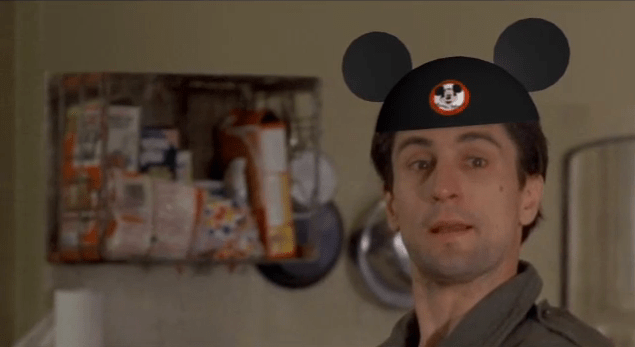
VIDEO: All the Animals Come Out at Night: WALT DISNEY’S TAXI DRIVER

VIDEO: All the Animals Come Out at Night: WALT DISNEY’S TAXI DRIVER

nullBryan Boyce's brilliant short film "Walt Disney's Taxi Driver" cherry-picks scenes between psychotic cabbie Travis Bickle and his love object Betsy in Taxi Driver, but substitutes Disney imagery for Travis' obsession with urban decay. This is a masterstroke: not a gimmick, but a flourish. Much writing on Taxi Driver tends to situate the film within its era, and fixate on certain details established by director Martin Scorsese, screenwriter Paul Schrader and star Robert DeNiro: specifically Travis' traumatic experience in Vietnam and his culturally reactionary response to seedy New York circa 1976. Part of what makes "Walt Disney's Taxi Driver" so wonderful is the way that it lifts Travis' character out of context without actually losing the context, so that you can see him more clearly as a literary creation, and recognize that his mania is adaptable and timeless. The 1976 New York setting turns out to be important in this mash-up, but not until the very end. The first part of the video disentangles Travis from his world, lifts him out of the muck (and the almost purely subjective structure of Scorsese's film) so you can get a better look at him. When it returns him to his context, Boyce's short becomes a cinematic time machine, connecting Travis' past and our present. Watch it here:

The first time we see Betsy through Travis' eyes, she's got an animated bird on her arm, which effectively transforms the "angel" Travis describes in voice-over into a Disney princess (same difference, given how asexual Travis is). When Travis takes Betsy to the movies, it's to see Disney cartoons instead of porn. But while the marquee advertises Lady and the Tramp and "Steamboat Willie" as "Explicit! Provocative!", when Travis and Betsy look at the screen we're watching unaltered Mickey Mouse. The images seem faintly sexual only because they've been inserted (heh) into Taxi Driver. Yet the sense of Travis as a tone-deaf, maybe socially autistic misfit still shines through. He's taking a sleepy-eyed bombshell to see G-rated cartoons on their first date? It's not exactly a romantic mood-enhancer. When Betsy shifts uncomfortably in her seat, her reaction now seems to have less to do with the content onscreen than the fact that Travis chose a film program that was of interest only to him. Suddenly the scene isn't about sickness, but how casual narcissism can prevent two people from connecting. "I don't know why I came in here," she says, storming out of the theater with Travis in pursuit. "I don't like these movies!"

The piece builds to a giddy, surreal climax, inserting Disney creatures into Travis' "All the animals come out at night" monologue and superimposing a Mickey Mouse Club cap on Travis during his "You talking to me?" rant (that it's clearly animated makes it seem like Travis' unhinged projection). The  asexual, paranoid, controlling traits exhibited by Travis in Scorsese's original movie manifest themselves differently here, but they're alternate versions of the same urges. When Boyce replaces a 1976 object of Travis' ire, couples dancing sensuously on American Bandstand, with the parting theme of The Mickey Mouse Club ("'C' ya real soon!'), it confims that the Disney imagery is all in Travis' head — an aspect of this Travis' pre-sexual, childlike fantasy of cleanness that's different from, but connected to, the original film's fantasy of bloody, righteous cleansing. The filmmaker mucks with Taxi Driver's famous final shot of Travis glancing at himself in the rearview mirror, then slapping the mirror away to avert his own gaze. In this version, Boyce replaces Times Square circa '76 with a composited, modern Times Square that literally been Disneyfied: made bright and cheerful, harmless. It's a genius embellishment that connects present-day megacorporate dominance of Manhattan (and urban life in general) with mid-'70s Silent Majority resentment. The world we live in now is the one that Joe the construction worker, Archie Bunker and other '60s and '70s symbols of conservative disquiet dreamed of; once it became clear there was money to be made in catering to them, their wishes upon stars came true. The Disneyfied Times Square means Travis Bickle won. A real rain came and washed all the scum off the streets: a rain of money.

Sure, You Can Film a Poem: Charles Bukowski’s “The Man with the Beautiful Eyes”

Sure, You Can Film a Poem: Charles Bukowski’s “The Man with the Beautiful Eyes”

If you're reading this, chances are you don't read poetry too regularly (just a guess). You may even feel slight revulsion towards it, that mysterious, elusive presence in the literary spectrum, that stuff that sometimes rhymes, but most of the time just makes you scratch your head. That's okay! Be revulsed! Be confused! Any reaction is a good reaction.

If someone, like, say, me, or rather I, told you a poem could be filmed, you'd say, "No way!" And in part you might be right. The idea of a filmed poem conjures up a host of images, none of them pleasant: ever seen those placemats with scripture printed on them? Pastoral scenes? Clouds? Windswept plains? Pairs of footprints in the sand? Picture that as a film, with a voice-over by some out-of-work baritone. You get the idea. The concept of filming something without structure or narrative is a quicksand, just waiting for someone to step into it.

But fear not: various filmmakers, animators, and other pasty-faced, tired-looking souls have been hard at work for years, disproving this hypothesis, and the results of their experiments have been fine, indeed.

One of the first products I'll show you is a fairly safe bet: it's an animation of a poem by Charles Bukowski, and a much-beloved animation, at that.

null

Many people go through a Charles Bukowski phase: usually it's in your college years, when all you see is the openness, the directness, the humanity, and the humor of his poems; because his chronic alcoholism and self-destructive isolationism, along with his rampant misogyny and sexual degradation, seem romantic to you, you're not really able to analyze the quality of the work. He could say anything, literally anything, and you might think it was wonderful.

So you buy all of his books, and you drink a lot, because he did, and you keep reading him, and you keep talking about him, and you keep swapping favorite poem/favorite line stories with your friends, and then, eventually, you read something else. And then? In a year's time, maybe two, if you read enough, Bukowski becomes an "oh, yeah, him, whatever" author. The problem here is not his work, really, which was wildly inconsistent. It's also not the fact that you can cast him aside so easily. It's that the drunken bravado of a lot of his poems ultimately outshadowed what he was really good at, which was telling stories. That, and the fact that he was imprisoned by his style–but that's another blog post altogether. His numerous fictional works (Ham on Rye and Notes of a Dirty Old Man being notable examples) attest to the fact that his narrative impulse always competed with his poetic impulse; when the storyteller took the mike from the poet in his poems, the positive result was always noticeable.

"The Man with the Beautiful Eyes," cast remarkably here in bold, confidently drawn blacks and blues and reds and whites and grays by artist Jonny Hannah and animator Jonathan Hodgson, is a testament to Bukowski's elegant, perfect, utterly personal narrative ability. It's a gorgeous little movie, full of the fear and the wildness and the pure silliness and awfulness of reality that comprise childhood, presented in a rough-cut, aggressive, startling manner that suits Bukowski's work, and all in just over five minutes. It's not exactly new, having been first released in 2000, but if you haven't seen it, it will be a real discovery… Watch it, and see.

–Max Winter

VIDEO ESSAY: BLACK SUNDAY: Three Reasons for Criterion Consideration

VIDEO ESSAY: Burton versus Bava

Just as people ultimately judge a book by its cover, many of us are quick to judge a film by its trailer.  When I was asked to set my sights on Tim Burton's upcoming Dark Shadows, a movie based on the cult TV show of the late 1960s, as my next entry point for Criterion Consideration, I immediately knew where my judgment would most likely fall. I might find it hard to veil my contempt for Burton's recent work. His early films had a profound impact on my childhood and may very well be responsible for who I am today, but as I became an adult Burton began rewriting the rest of my childhood in ways that make me confused and horrified. Remaking the classic films from my youth, Burton has me questioning my admiration. Also, with the upcoming release of his animated Frankenweenie, Burton has begun remaking himself. We could list his later films and describe how the themes and storylines are still consistent with his earlier work, so maybe I just grew out of him. Now, every time I see one of his films, I end up screaming at the screen, vowing never to see the next Tim Burton film. Still, I cannot deny that his films are intriguing, innovative, and entertaining, if not infuriating. In his collaborations with Johnny Depp, Burton has given us classics likeEdward Scissorhands and Ed Wood, capturing some of the finest performances from Depp in eight films thus far, but I wish that Johnny would begin to show more discretion. Shilling for Burton in promotional videos, Johnny admits to instigating him to collaborate on "a vampire film," citing the classics of German Expressionism, Universal Horror films from the 1930s, and the Hammer Studio films as an influence for this new adaptation. Thankfully all those classics of cinema are thrown into the meaningless mess of Dark Shadows. Sporting the worst make-up job since Alice in Wonderland, Depp's Barnabas Collins struts in front of the living legends of horror cinema, including a direct (slap in the) face-to-face cameo with Jonathan Frid (who played the original character on the TV show). Even before I saw the trailer for Dark Shadows, I knew there would most likely be a nod to Mario Bava's first film, Black Sunday (or The Mask of Satan from its original title La maschera del demonio). Burton has been vocal about Bava's influence, and over a decade ago there were rumors that he would remake Black Sunday. That never exactly came to be, but Burton did evoke a lot from the film for his adaptation of Sleepy Hollow, which unmistakably borrows Bava's visual style. 

One of the most important directors in the horror genre, Mario Bava began his career as a cinematographer for Roberto Rossellini during the Italian Neo-Realist movement.  He first learned the tools of the trade from his father Eugenio Bava, who was an expert on special effects and also a cameraman.  Mario then was contracted by Galatea Studios, where his skills as a photographer, as well as his ability to work quickly and efficiently, would bring many of the studio’s films to life with stunning chiaroscuro. His films always show a deep understanding of the history of the horror genre, with its strange settings and eerie environments, and a weird and wonderful worldview that would become Bava's trademark style. That style would later influence many notable directors, such as Ridley Scott (Alien), Joe Dante (The Howling), and Burton himself, in Sleepy Hollow. In the late 50s, Bava would have to complete principle photography for Riccardo Freda, who abandoned his directorial duties on I Vampiri (Lust of the Vampire) because of the tight shooting schedule. Bava would do the same thing again with Freda's Caltiki, The Immortal Monster in 1959. To show his gratitude, Galatea's producer, Lionello Santi, allowed Bava to choose his (official) directorial debut, which was the adaptation of Nikolai Gogol's short story The Vij. While evoking the traditional story of witchcraft and vampirism at the heart of Gogol’s tale, Bava simultaneously paid his respect to the classic Universal Studios' horror films and the (then) contemporary Hammer Horror films with Christopher Lee and Peter Cushing.   Black Sunday relies heavily on the pantheon of 1930's horror, while including the eroticism and gimmicky gore of the new horror wave, creating one of the most beautiful and disturbing horror films of all time.

The film begins with a prologue, describing the superstitious tradition that one day in every century, Satan is allowed to walk the Earth, and his evil disciples can haunt and torment their descendants.  We are introduced to Princess Asa (Barbara Steele, a dead-ringer for Tim Burton's old muse, Lisa Marie) and her lover Javutich (Arturo Dominici) while they are standing trial by the Inquisition for acts of Satan worship and witchcraft.  Asa is branded with the mark of a witch, before having the iron mask of Satan nailed to her face.  Such a gruesome beginning was a standard shock tactic of the time, to keep audiences hooked from the start, but this particular opening was considered so shocking that the British Film Board banned the film for seven years after its release.  Before Princess Asa is put to rest, she vows to return from beyond the grave to seek revenge on her family for condemning her to the Inquisition.  Two centuries later, doctors Kruvajan (Andrea Checchi) and Gorobek (John Richardson) are traveling to Moscow when their carriage conveniently breaks down next to Asa's tomb.  After a slight scuffle with an enormous (and barely visible) bat, Dr. Kruvajan accidentally breaks open her coffin, allowing Princess Asa to return from the grave to torment and acquire the body from her living-image descendant Katia Vajda (also played by Steele).  Her father, Prince Vajda (Ivo Garrani), is the only member who still believes the family's sordid history, and he becomes instantly aware that Asa has returned when he sees the ghostly vision of her mask in his evening cup of tea.  Once Asa summons Javutich from his grave, she hypnotizes Kruvajan to help her exact revenge and take over Katia's body.

nullFilming in gorgeous black and white, Mario Bava was both the cinematographer and the director for Black Sunday, which has proven to be more than just a meaningless homage to the Universal visual standard.  In the decades before Bava’s film, horror had become the subject of parody and pastiche.  Classic monster figures suddenly had brides, reverted back to teenagers, and had mutated into radioactive amalgamations, thanks to a wave of low-budget science-y gimmicks. Bava's chiaroscuro masterpiece harkened back to a simpler time, when horror relied on tense atmospheric emotions, technical skills and claustrophobic mise-en-scene and blocking.  Bava was able to accomplish this entirely on the Galatea backlot, utilizing the masters’ techniques with a distinctively innovative approach.  Keeping his camera on a dolly at all times, the film moves with restless fluidity, creating an ambience unmatched in its time.  When Kruvajan first arrives at Vajda Castle, the camera tracks through endless corridors and secret-passageways before leading him to Asa's tomb.  It's sometimes hard to believe that Bava was able to create such a genuinely creepy atmosphere entirely on set, but his technical background elevated all the tired horror tropes to engaging new levels.  Bava also found an excellent leading lady in Barbara Steele, who would later become the scream queen of Italian horror because of Black Sunday.  Notoriously difficult to work with, Steele created problems for Bava in every regard.  Costumes had to be changed or altered, false vampire teeth had to be remolded (then only to be removed from the film completely), and once Steele refused to come on set because she was convinced the Italians had developed a camera that could shoot through clothing.  But even she remembered fondly Bava's ability as a director and as a cameraman.  Somewhat shy about her status as a horror icon, she attributes her standing to Bava and what he was able to accomplish with Black Sunday.
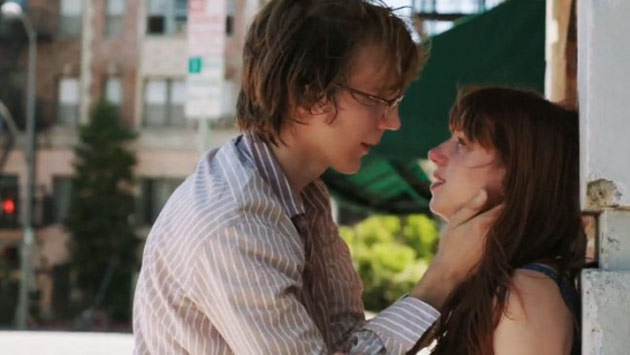
Bava's magnificently malicious worldview still stands the test of time and hasn't aged a day in light of recent splatter-filled gore-fests currently pass as cinema.  Perhaps it is because Bava's films helped usher in subsequent movements in the horror genre that Black Sunday remains untarnished and undated.  His later film Black Sabbath (with horror legend Boris Karloff) is credited with starting the Italian giallo films and the American slasher movement.  With so many directors indebted to Bava's films, it’s no surprise that a director like Tim Burton would return to Bava again and again for inspiration.  Whether Burton will decide to remake Black Sunday remains to be seen, but if that should ever happen it will only allow the next generation of filmmakers to fully embrace Mario Bava's original film.  Naturally, I would never want Burton to actually reboot Bava's film, since he would most likely set the film in the American 1960s, needlessly inserting some appalling 80s-style comedy.   Maybe before Burton's Dark Shadows is released on DVD, Criterion will seize the chance to bring Black Sunday to Blu-Ray, a format in which it so desperately needs to be seen.  If Criterion chooses the film, it would categorize Black Sunday as a superior work, allowing all of us film hipsters to say, "I told you so" and put directors like Tim Burton in their place.  In the meantime, if you're looking to avoid the long lines at the cinema for Dark Shadows, I highly recommend watching Black Sunday first.  It will not disappoint.

Robert Nishimura is a Japan-based filmmaker, artist, and freelance designer. His designs can be found at Primolandia Productions. You can follow him on Twitter here.

TRAILER MIX: RUBY SPARKS

TRAILER MIX: RUBY SPARKS

Trumpeting the long-awaited sophomore effort of Little Miss Sunshine creators Jonathan Dayton and Valerie Faris, the trailer for Ruby Sparks tackles that age-old challenge of visualizing the tribulations of a writer, which are inherently and notoriously un-cinematic. Editing substantiates the daily grind of someone like Calvin (Paul Dano), a squirmy novelist whose bursts of inspiration are expressed via fast cuts of punched keys and typewriter carriage returns. Going a bit further, the preview shows us Calvin's writerly thoughts in the office of his shrink (Elliot Gould), whose stucco, vented ceiling is seen through Calvin's eyes and superimposed on his thoughts of the titular dream girl (Zoe Kazan), who starts as his written creation and then actually appears in his apartment.

Manifesting a writer's ideas in three-dimensional, flesh-and-blood form is of course the ultimate way to commit them to film, and it's the basic conceit of this quaint indie rom-com, which matches an author's plight with the sweet reward of found love. As the trailer promises, Ruby Sparks is a less cynical exploration of territory already roamed in films like Secret Window and Stranger Than Fiction, wherein Will Ferrell's lead character was in fact the doomed creation of Emma Thompson's troubled author. Indeed, the similarity inevitably shows a lack of originality, and the sterile production design showcased in the preview only indicates a probable generic quality in the film. From Calvin's ultra-modern space to his hip little typewriter, the film is shown to have a Pier 1-style, catalog aesthetic, which these days is more prevalent in supposedly arty films than pricey blockbusters.

But despite all the trailer's missteps and boilerplate elements (the choral tune accompanying the tonal pick-me-up is dead-tired, while the flashes of big-name players like Annette Bening are dead-lazy in their hectic star promotion), it ably communicates a palpable sweetness that suggests it's not just another cerebral quirkfest. Paul Dano, captured in panicky moments that yield excellent expositional soundbites, may show new range as a performer in this film, ditching his usual gloom and rage to inhabit an endearing, love-struck dork. Naturally, his earnestness is met with obligatory macho wisdom from a co-star (Chris Messina), who speaks for male stereotypes everywhere when Calvin's control over Ruby is discussed. But Dano, ever at home in the roles he chooses, could very well overcome the shallow limits put on him by the film itself.

Where the trailer finally triumphs is in the chemistry between Dano and Kazan, who, in a bit of trivia only relevant for its apparent onscreen benefits, are an actual offscreen couple. Kazan penned the script and wrote the lead role for Dano, and there's something undeniably effective about these two arthouse darlings sharing their rising-star romance with the audience. It may not be the kind of “magic” Calvin preciously professes, but in just over two minutes, it’s immediately more genuine than dozens of other filmic pairings. What's more, for all its familiar beats, the trailer has the decency to withhold the whole of the plot, and never states if it's the kind of film that's bound for happily ever after. “Don't tell me how it ends,” Ruby pleads, and thankfully, nobody does.

R. Kurt Osenlund is the Managing Editor of Slant Magazine's The House Next Door, as well as a film critic & contributor for Slant, South Philly Review, Film Experience, Cineaste, Fandor, ICON, and many other publications.

MAD MEN RECAP 7: LADY LAZARUS

MAD MEN RECAP 7: LADY LAZARUS

nullBut listen to the color of your dreams
It is not leaving, it is not leaving.

–The Beatles, "Tomorrow Never Knows."

nullIn the Season 2 episode of Mad Men called A Night to Remember, Betty needs, finally, to confront Don. She wakes him in the middle of the night. It's a stark moment of deep revelation (discussed in our video essay for Season 2), made more so by Betty's pale, unmade-up face. It's the beginning of the end of Don and Betty's marriage.
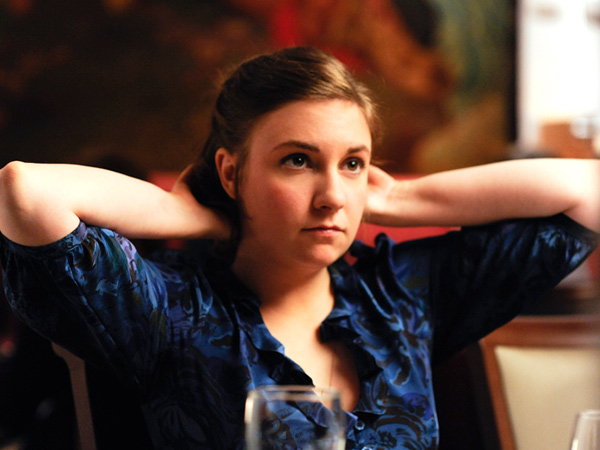
At the halfway point of last night's Mad Men, Lady Lazarus, Megan wakes Don in the middle of the night. Her vulnerability is accentuated by her unmade-up face. It's a conversation that will change their marriage. (Watch the video below.)

Betty confronted Don about his lying, and though he claimed to love her, he lied all the way through. When Megan confronts Don about her own lying, Don, somehow, is open to listening, although only in pieces. At first they speak at cross-purposes; he truly believes that she wants to work in advertising and will be happy doing it. He sees her talent. Nothing she says persuades him, but, remarkably, she holds her ground.

No one has an accurate perception of Megan's decision. We know that Megan was unhappy at work, that she wasn't nearly as thrilled with her Heinz win as she had a right to be, that her father's visit had rekindled her desire to fulfill her acting dreams. Peggy's snapping at her that the job would be precious to someone else probably moved her to decide. It's pretty clear that she's been afraid to face Don down, but this is what she wants. Yet Don blames Peggy for jealousy and competitiveness, Peggy blames herself for being too hard on Megan, Joan sees Megan's love as gold-digging, Stan sees it as an escape from the compromise and mediocrity of advertising: In other words, they all see themselves in the situation.

As people hear about Megan, they all see their own dreams and disappointments. Don dreams of material success and security, climbing past the back stabbers into recognition; Peggy dreams of doing everything right and having it be rewarded, Stan dreams of artistic recognition, and Joan dreams of a husband who will financially nourish his wife's dreams rather than abandon her.

Pete, too, has a dream. His dreams are sweetly, dangerously romantic. In past episodes, we've noted how Pete is turning into Don—the life in the suburbs he hates, the wife he becomes alienated from, the life lived through business success that brings no emotional rewards. Here's another aspect of Don: He was never really into the casual affairs. Roger was always happy to dip his wick into redheaded twins, or whores, or whoever happened by, but Don fell in love with Rachel, he fell in love with Suzanne, and he left Midge when he realized she loved someone else. Pete, like Don, wants the love dream. He wants a romantic ideal to fill the gaps in his marriage, just as Don did when married to Betty.

Pete wants to love Beth. (Check out their hot first encounter below.) He wants to feel he has her ("I have nothing," he said in the "Previously On" clip). He wants a sense that dreams have been restored to his life.

Beth leaves Pete with a dream. "This can never happen again," she says, and she means it. He feels brutalized by this rejection and does everything he can to fight it, to reject the rejection, but she stands firm. Pete's romance is all by itself when it's a hotel room and a bottle of chilled champagne. But if it's silent longing, if it's fantasy and secret hearts left on windows like a hobo code, she's all in. She just wants the dream.

When we see the layers of secrets and lying, the codes and conspiracies, we know we're firmly in Mad Men territory. These aren't themes of the episode or even the season, they're themes of the series. Two different phone calls this week at the same pay booth make very clear how important secrets are to this show, even as Don gives relatively less attention to protecting his identity. Pete, Beth, Howard, Peggy: they all lie, they all speak in code, they all talk about the things that aren't true in order to obliquely say the things that are. No wonder Megan, speaking her truth to the best of her ability, shakes them all up.

Sylvia Plath's poem "Lady Lazarus" is too dense to analyze here. In part, it's about remaking yourself as a new woman, and in part, it's about surviving suicide attempts. Megan remakes herself, but the scent of suicide pervades this episode. Pete mentions in the opening scene that his life insurance policy covers suicide "after two years" (which have already passed).  Pete at first follows Beth into her house because he fears she's suicidal (it's the second clip above). The elevator door opens to an empty shaft—terrifying, foreboding. Megan cooks barefoot (you're not supposed to because you risk electrocution). The Beatles song that Don plays, Tomorrow Never Knows, repeats the lyric "It is not dying," and we see Megan in acting class, lying corpse-like on the floor. That's a lot of death imagery, and it fills me with dread. I can't instantly or easily tie all these images together with the poem and deliver a neat interpretation. Should I? Is interpretation the point? The 1960s are, in part, a time of dread. We hear news reports about Vietnam twice during the episode. War, fear, violence, change . . . society as a whole may be killing itself and arising Lazarus-like. Does the Draper marriage survive this? We don't know. I don't believe we're meant to know. I do believe we're meant to fear.

Don wants to know what's happening with modern music, and Megan hands him Revolver, very possibly the Beatles' best album, released quite recently (August 1966—this episode appears to take place in October or November). She tells him to listen to Tomorrow Never Knows first. It is the most challenging, most psychedelic, least accessible track on the album; the song Don is least likely to understand or enjoy. It's being introduced to new music with a bucket of ice water to the face. Don might easily have embraced I Want to Tell You or Taxman. Instead, he gets experimental music, Timothy Leary-inspired lyrics, and sitar. The world is running away from him too fast to keep up; Lady Lazarus may remake herself, say, by quitting her job in order to act, but it seems like Don can't continue to rise from the dead, although he's done it before.

Some additional thoughts:

  • Another motif is the interconnection of safety and protection, rejection and danger: Some people feel small and insignificant in their lives, and some people feel protected and supported. Beth is scared of the city. Harry feels belittled at home. Who will watch over the unprotected? Who will feel safe?
  • Quote of the week goes to Don, both for wit and for meaning: "I was raised in the thirties. My dream was indoor plumbing."
  • If the physical comedy didn't get to you this week, you are not paying attention. Watch the guys acting out A Hard Day's Night in the fishbowl conference room when Megan peeks in. For that matter, watch Pete wrestle with skis. Or just listen: The sound effect of the scraping skis after he says goodnight to Peggy is worth the price of admission (or would be if AMC weren't basic cable).
  • Rich Sommer cracks me up. As usual. Thank you, Harry, for finding the Earth from space majestic.

Deborah Lipp is the co-owner of Basket of Kisses, whose motto is "smart discussion about smart television." She is the author of six books, including "The Ultimate James Bond Fan Book."

Watch Mad Men Moments, a series of videos on Mad Men, produced by Indiewire Press Play.

GIRLS RECAP 4: HANNAH’S DIARY

GIRLS RECAP 4: HANNAH’S DIARY

null

I hoped the title of this week's episode wouldn't imply what I had a feeling it implied. I hoped we'd just see Hannah writing in her diary, or hear snippets in a voice-over—something, anything besides another character reading Hannah's diary and getting information s/he didn't want, while I watched, cringing, from behind a pillow.

nullNo such luck. The information we don't want, the things we can't un-know, the facts we already have but can't face: these form the contents of "Hannah's Diary."

Shoshanna's virginity is the most obvious example; it looks like she's found a likely prospect for dumping it when she runs into an old summer-camp acquaintance, Matt Kornstein, on the street. The flame rekindles with a quickness . . . er, "dork-ness": Matt speaks admiringly of "the most intense kitchen raid" that Shoshanna led as a junior counselor back in the day; she fondly remembers how he saved a camper stuck between two kayaks. Summer-camp nerdery is an easy target, but it hits its mark here; no dummy, Matt avails himself of their mutual raptness by suggesting a hang that very night.

It's still going well as they watch a movie—Matt isn't put off by the trademark Shoshanna hail of verbiage, and smooves his leg onto her lap with an excuse about how it gets achy if he can't stretch it. Next thing you know, he's peeling off her clothes (to reveal the fancy and fairly risqué lingerie she wore for a garden-variety movie date; atta girl) and diving between her legs. The overhead shot that comes next is a deft run of faces by Shoshanna: he's doing his thing, and she's simultaneously ticklish, intrigued, and unable to enjoy it because she's fixated on whether it means she can oust her hymen.

When he surfaces to rave that "this is so chill, the way this is happening, I love it," that's Shoshanna's cue to ruin it with the information that she's a virgin. Matt didn't want to know that: "This is . . . really not my thing. Virgins!" She didn't want to know that, and tries to correct her mistake by protesting that "except for the fact that I haven't had sex I'm like totally not a virgin." Shoshanna's description of herself as "the least virgin-y virgin ever" is the line everyone's going to seize on, but the "except for the fact" line is more striking—not because it's nonsensical, but because it's such a tidy nutshelling of the idea that, until you're not a virgin anymore, you have only a theoretical grasp of these distinctions.

Matt's not going to put too fine a point on it, though: "Virgins get attached. And they bleed. You get attached when you bleed." Thanks for . . . not sugar-coating it? I think this is a widely held belief among both genders (minus the blood part), but the bluntness is bracing. And non-negotiable: Shoshanna's assertion that she's "totally not an attached bleeder" doesn't change Matt's mind. Later, Shoshanna plaintively asks Jessa if she'd fuck a virgin, and when she's told Shoshanna means herself, Jessa sweetly says, "Oh, Shosh. If I had a cock, it's all I'd do."

By that time, Jessa's spent most of a day confronting what she doesn't know yet. She has a power over men, which she exercises effortlessly when she runs into her charges' dad, Jeff Lavoyt (James LeGros; took me a while to track down the character name), and his just-out-of-rehab brother Terry (Horatio Sanz, and you have to wonder where that casting is going) on the street. Terry is gobsmacked that Jeff scored a caregiver who looks like she's from "the back page of the Village Voice," but what they don't know—and Jessa hasn't admitted to herself yet—is that she has no idea what the eff she's doing, or talking about.

Chilling with the other nannies on the playground—mostly women of color who "thought she was an actress with some baby," not a babysitter—she bonds with them by complaining that Lola is acting like a "C U next Tuesday," then assures the others grandly that "I'm just like all of you." The "girl, please" faces pulled in response don't stop her from sitting on the picnic table and delivering a well-meaning but obnoxiously ignorant sermon to them about unionizing, and she's only pulled up short when the Caribbean nanny wonders where Lola and Trixie have gotten to. They're located (by the other nanny) under a gazebo, but Jessa can't make them come out, and she can't stop Lola from immediately tattling to her parents when they get home that Jessa lost them.  

The parents just assume Lola is lying, and it strikes a chord in Jessa. Not only does she know the truth about what happened in the park, she knows another truth—about Lola, and then about her own overlooked childhood.

Jessa confesses to their father that she did lose the girls. Lavoyt sighs that "we've all done it," that he lost Lola at a green market years ago, and Jessa admits that she "would run away and tell lies all the time" at Lola's age—like that her mom was awesome and they were best friends. This conversation puts the first chink in Jessa's armor of pretension; Jessa may not know how to take care of Lola, exactly, but she knows Lola.

Hannah has known for a while that Adam is a pig; it's just not something she can admit to herself without it meaning something negative about her—not when he sexts her a picture of his dick, then follows it up immediately with a bone-chilling "sorry, meant to send that to someone else" text; not when Marnie calls Adam "a noted psychopath"; not when Hannah sends him a picture of her breasts in an attempt to play along, and he doesn't respond.

It takes a conversation with her co-workers at her temp job to get the light bulb to go on. It's great that Hannah landed a gig, except that she's in over her head with building charts in Windows, and her boss, Rich (the reliably excellent Richard Masur), is a creeper. After he "demonstrates his Reiki technique" on her as an excuse to handle her boobs, Hannah is concerned and grossed out, but during a bathroom powwow lit to resemble a prison documentary, Hannah's colleagues explain that she'll get used to it, and besides, in exchange, Rich buys them iPods and looks the other way on tardiness and "sick" days. This leverage-based view of sexual harassment is interesting (and/or depressing) on its own, in light of the current economy and Hannah's specific predicament within it; it's even more interesting (and/or depressing) that the co-workers have no problem letting Rich's fingers do the walking, but all-caps demand that Hannah "have a little self-respect" when it comes to Adam. Hannah does ask why the Rich fondling is different, but they don't really answer. (Another instance in which the show presents a complex argument or hypocrisy, then doesn't draw an explicit conclusion about right or wrong. Possibly Girls feels overmatched by untangling complicated motivations; more likely, it's that real-life situations — the emotions surrounding an abortion; the compromises women may make to keep jobs—don't resolve in a narratively neat way, and Dunham doesn't want to force them to.)

After their intervention on her patchy eyebrows left her looking like Frida Kahlo as drawn by a kindergartener, Hannah probably shouldn't ask those two for the time, much less for advice about her personal life. But something in the conversation forces her to see that the only thing she "gets out of" her relationship with Adam is self-loathing and dashed hopes. And she tells Adam exactly that, standing in his doorway and cutting him loose: the dick pic made her feel "stupid and pathetic," which is how she's trained him to treat her, and she really likes him, but she can't anymore, because it hurts too much. "I just want someone who wants to hang out all the time, who thinks I'm the best person in the world, and who wants to have sex with only me." I stop taking notes to stitch that on a pillow, but Hannah's not done—Adam doesn't hear her, and he's not going to change, so sayonara. Adam doesn't say much of anything, but when her lip starts to tremble towards the end, he hooks a finger into the front of her sweater. Ohhhh no no no no no, don't do it! Walk off before he can suck you back i—dammit. Passionate making-out. She stops to say that she can't take "serious" naked pictures of herself, "it's not who I am." "Just be who you are," he says, oh so sweetly, and it's a moment Hannah is going to take out and look at with brimming eyes for months after he goes back to his regular shitheel self. Been there, done that, bought the t-shirt, and "forgot" it at his place so I'd have an excuse to come over again.

Hannah meets up with the others at Charlie and Ray's open-mic performance. She's all aglow (maybe Adam finally found her clit), but that won't last long, because the scales have fallen from Charlie's eyes. Earlier, doing some daytime song-writing with Ray at the Hannah/Marniehaus, Charlie notes that Marnie's "been completely on edge lately," but doesn't connect this with their relationship. He wants to make her something nice to cheer her up. Ray: "Like a coffee table made out of street garbage?" Actually, Ray, in Brooklyn we prefer the term "found materials," but he's right that Charlie is in denial—although Ray's assertion that Marnie needs to be fucked hard, chained to a post, and whipped "until she fuckin'—whatever" is perhaps more about Ray's hostility issues.

The snooping that follows is definitely about Ray's boundary issues, as he examines Hannah's holey undies, then holds Marnie's vibrator aloft. "That's a shared tool," Charlie sniffs. "You're a shared tool," Ray and I say in unison. But the mother lode is sitting right out on the bed: Hannah's diary, which Ray begins reading and snarking on. Then he falls silent and is suddenly super-eager to get back to helping Charlie build the table. Charlie doesn't understand that ignorance is bliss, and insists on knowing what Ray read.

And he can't un-know it, so he puts it into a song, Kathy-Griffin-on-Seinfeld-style. After dedicating the piece to "my G-friend Marnie" and Hannah, he angrily strums and sings lines from the diary: "What is Marnie thinking / she needs to know what's out there / how does it feel to date a man with a vagina." All things we know, all things we've seen, several things Hannah and Marnie have already discussed in the bathtub and elsewhere. Shoshanna, confused, asks if it's a love song as Ray whips out the diary itself and Charlie begins to read directly from it. Hannah is turning a shade of mortified spearmint; from her right comes the bubbling sound of Marnie's blood reaching a boil. Charlie finishes and storms off-stage, and Marnie, unwilling to accept that this is everyone's fault but Hannah's, dashes her cocktail down Hannah's front and calls her "such a fucking bitch." Or perhaps calls herself that. Not the most realistic burst of plot I've ever seen—but that relationship had to end, so why mess around. It also reminded me of that great line from the Toni Pavone character on Felicity, when she tells Felicity that honesty isn't as important as kindness; every writer has to decide, usually more than once, whether it's more important to nail the description or protect the feelings of those described. Granted, Hannah didn't intend for anyone to read her diary—but it can't be un-read. After Marnie storms off, Jessa chuckles, "That was awesome," and Hannah says glumly that she's going to puke, and both comments are probably accurate assessments of how it's going to feel for Hannah to have to think about someone besides herself going forward.

Sarah D. Bunting co-founded TelevisionWithoutPity.com, and has written for Seventeen, New York Magazine, MSNBC.com, Salon, Yahoo!, and others. She's the chief cook and bottle-washer at TomatoNation.com.

GAME OF THRONES RECAP 6: THE OLD GODS AND THE NEW

GAME OF THRONES RECAP 6: THE OLD GODS AND THE NEW

null

Game Of Thrones is getting exciting again.

nullOne of the show’s defining features has always been its class system, which boils over in The Old Gods and the New. It’s painful for the people who live in that system. A butcher’s boy, like Micah, Arya’s friend from early in the first season, can be slaughtered at the whim of a prince. There’s not much room for class mobility, either. This has led to a focus on the most powerful in the Seven Kingdoms, since they’re the ones who drive the story, which makes the show seem to have a blind spot surrounding any character who doesn’t have a title. That all changes in this episode.
First, Theon Greyjoy captures Bran Stark and Winterfell, betraying the family that raised him for half his life as well as a king he swore allegiance to. Why? Theon’s torn between his blood father and his adopted brother: “I’m a Greyjoy. I can’t fight for Robb and your father at the same time.” He chooses his father, now-King Balon Greyjoy, because that way gives him the opportunity to become a prince, even a king, as long as he impresses his father. If he stays with Robb, he’s unlikely to rise above his current means.

Theon’s ambition makes him look pathetic, which Game Of Thrones plays up. A quick attack with his ironborn takes Winterfell while its troops are away, and Theon comes in expecting to be treated as a conquering prince. Instead, Bran Stark can’t believe that someone he grew up with, someone who saved his life recently, would turn into an enemy. Alfie Allen plays Theon’s confused posturing well, first in the scene with Bran, then in a scene where he tries to force Maester Luwin, then Ser Rodrik to acknowledge him as the lord of the castle. When the latter goes poorly, Theon’s entertainingly pathetic attempts at macho posturing turn horrifying, as he beheads Ser Rodrik in front of everyone.

While Theon may be trying to make his life as a noble better, Danaerys negotiates with the merchants of Qarth for ships to conquer the Seven Kingdoms with, more specifically addressing the issue of class mobility. Her ally, Xaro Xhaon Daxos, argues with his rival, the Spice King, about their origins. The Spice King’s grandfather was poor, his family having worked its way into wealth, while Xaro did the work himself. Meanwhile, Dany’s prime claim to power is her bloodline, and she justifies her entitlement by declaring that her dreams become reality, as they did with her dragons.

Oddly, the arguments used in this scene, particularly by the Spice King, seem particularly anachronistic. He claims that he’s ruled by logic, and he says “I make my trades based on the merits.” These entirely modern arguments stand out from most justifications used by other characters, like Ned Stark’s honor, or Cersei Lannister’s naked grabs at power. Nicholas Blane’s scenery-chewing performance as the Spice King is a delight, yes, but the scene’s attachment to modern tropes gets in the way of its drama.

The Old Gods And The New takes on class envy more directly in King’s Landing. The court sees Princess Myrcella off to Dorne, but on the way back, the people of the city get angry, with one of them throwing trash that hits Joffrey, who immediately escalates the situation into violence. Sansa Stark gets dragged away before being rescued by The Hound. As her handmaiden Shae cleans her, Sansa wonders why one of the men hates her so much. Shae responds: “Your horse eats better than his children.”

We’ve seen Game Of Thrones deal with the effects of war and chaos on its families and individual characters, but it hasn’t depicted those effects on the commoners very well. To be fair, a great deal of this has to do with issues of adaptation. There are only so many actors to hire, and only so many sets or locations to film on. Depicting the burnt-out farmlands of the Riverlands is far easier on a printed page or two than on an expensive show, and it doesn’t literally advance the story. This is part of the reason Littlefinger’s brothel has been used so prominently. Roz’s emotional collapse after the murder of the baby a few episodes back wasn’t just another way to demonstrate how nasty Littlefinger is, but also a way to show how ugly the city becomes as the nobles play their violent games.

That, combined with the appearance of the anti-Joffrey preacher last week, helps set up tonight’s riot as an organic development. The war isn’t just a game of nobles—it creates refugees and burns the crops they need to eat. This was, if you’ll recall, the Lannister strategy when the conflict began, late in the first season. But there are unintended consequences.

North of The Wall, Jon Snow has his first encounter with one of the “free folk,” as his new friend Ygritte calls herself. Yet as free as she may claim to be, she still follows the King-Beyond-The-Wall, wich also makes her an enemy of the Watch. The Watch is one of the few groups in Westeros that looks even slightly egalitarian, with promotions by merit, but still, Jon is somewhat tempted by Ygritte’s promises of freedom. Well, he’s probably more tempted by other charms—Rose Leslie as Ygritte is both dangerous and flirtatious, and it’s fun to watch.

Less fun: Jon’s brother Robb discovers girls as well. His romance with Tylisa remains as stilted as it was a few episodes ago, not surprising since it’s so detached from everything else going on (although the arrival of Catelyn and Brienna may change that). A bigger surprise: the episode’s weakest scene involves Arya, Tywin, and Littlefinger. Since Lord Baelish can recognize her, Arya tries to hide her identity, resulting in a farcical scene where she moves repeatedly to point her face away from his line of sight.

Turning Arya’s disguise into a sitcom trope is a misstep. Fortunately, the rest of the episode works around its few minor errors: the scenes at Winterfell and King’s Landing are particularly strong. The show gets better as its characters start to reach the point of no return. Theon Greyjoy has passed that point, and the other characters are approaching it.

Adaptation:

My belief that many of the show’s best scenes were invented for the show takes a beating tonight. The Spice King was specifically invented for the show, making his anachronistic conversation even more baffling. The problematic scenes with Dany, Arya, and Robb were all fabrications. Some of the better scenes, it turns out, were those that were adapted. (A more amusing anachronism: Jaime Lannister is dyslexic, but Tywin forced him learn to read conventionally anyway.)

The thing I’m most concerned about is the show’s altering of events to change motivations. In the novel, Qhorin Halfhand deliberately allows Jon to let Ygritte go, and Jon immediately returns—there’s no chase scene, no initial seduction. This has happened several times, like with Littlefinger offering to exchange Jaime for Cat’s daughters. In many cases, in attempting to be simpler, Game Of Thrones makes its story more confusing.

Rowan Kaiser is a freelance pop culture critic currently living in the Bay Area. He is a staff writer at The A.V. Club, covering television and literature. He also writes about video games for several different publications, including Joystiq and Paste Magazine. Follow him on Twitter @rowankaiser for unimportant musings on media and extremely important kitten photographs.

VIDEO – Motion Studies #34: John Cook’s SLOW SUMMER Revisited

VIDEO – Motion Studies #34: John Cook’s SLOW SUMMER Revisited

The Oberhausen International Short Film Festival presents "Film Studies in Motion", a Web Series curated by Volker Pantenburg and Kevin B. Lee. This series, available on the festival's website and Facebook page, presents weekly selections of analytical video essays on the web, in preparation for Pantenberg and Lee's presentation  "Whatever happened to Bildungsauftrag? – Teaching cinema on TV and the Web", scheduled for April 28 at the festival.

Episode 7: Critics and Scholars on Video

The online video essay format opened a new playing field for critical and scholarly analysis of movies, providing opportunities for innovative explorations of films while also challenging the established conventions and limitations of text-based film criticism and scholarship. In its early stages, the video essay format was legitimized by the involvement of such prominent critics as Jonathan Rosenbaum and Matt Zoller Seitz and scholars such as Nicole Brenez and Kristin Thompson. One characteristic of these early videos is that they often resembled narrations of written texts with the video serving a secondary role as illustration. Over time, the relationship between text and media has evolved into more sophisticated works that seek to fully utilize the potential of the medium to illuminate itself. As more people continue to adopt the medium to advance their scholarship, the creative and analytical possibilities of this emerging genre will continue to evolve.

Today's selection:

John Cook's Slow Summer Revisited

Michael Baute, Volker Pantenburg, Stefan Pethke (2008)

View all Motion Studies video selections.

Volker Pantenburg is assistant professor for moving images at the media faculty of the Bauhaus-Universität Weimar. 

Kevin B. Lee is Editor in Chief of IndieWire’s PressPlay Video Blog, Video Essayist for Fandor Keyframe, and contributor to Roger Ebert.com. Follow him on Twitter.

GREY MATTERS: The Decline and Fall of April Ludgate

GREY MATTERS: The Decline and Fall of April Ludgate

null

I guess it was inevitable, especially when you think about the place of women in TV and the size of the NBC machine. But the worst has come to pass, and April Ludgate, the beyond-deadpan carrier of careless anarchic energies, the one-woman friction element who’s kept Parks and Recreation from being an Office clone from the unsteady git-go, has been muffled into a millennial-generation version of a wacky neighbor from a sitcom.

This, well, sucks. Because April Ludgate, it’s not a stretch to say, is the most extreme, most uncompromisingly strange, noncompliant female character in the history of broadcast TV. There is no mold for April Ludgate to break. When she ends up sunning herself in a South American dictator’s pool in one episode, the joke is that she fits there as well as she fits in small town America. Meaning she doesn’t, to her amusement.

Because of April, Parks and Recreation was an utterly unique situation comedy, set in a binary universe.

On the one hand we had Amy Poehler, playing Leslie Knope, a passionate bureaucrat in an Indiana small town’s Parks and Rec department, and her hugely adorable co-workers.

And on the other hand, as if reporting in from a parallel universe lorded over by deadpan semi-surrealist Steven Wright, there was April Ludgate (Aubrey Plaza), permanently hunched over, with huge, give-me-a-break rolling eyes, snark, and all-around Dada-esque hostility.

April’s acid grin gave the Libertarian outbursts of Ron Swanson (Nick Offerman) their exclamation points. Her eye-rolling threw water onto Leslie’s eternal happy hour of optimism. She showed proper disgust when one-joke wannabe playa Tom (Aziz Ansari) said something, well, disgusting. Let’s put it baldly: April Ludgate was Parks and Recreation’s stealth weapon.

But now? Now the girl who used to answer the phone with impossible dates and times, glower at the horizon for fun, and hang up on people for sport—all to the endless delight of her boss, no-government Ron, it should be mentioned—has been shorn of her playful, perverse and puckish identity.

She now prefers conservative work force clothing to better integrate into the office. She also shares hugs with anyone when needed, and when her cutely thick musician husband Andy (Chris Pratt) does something really dumb, she will throw her arms up and cry “Andy!” like a million other flustered wives before her. All that’s missing is a laugh track.

How far the mighty fall. I mean, sure, she’ll say something surly every now and then: I bet they have five or six 18 year old interns at NBC tasked with the job of coining her devilish rejoinders.

Anyway. Back in the day (before this season), I loved the way that April and Ron had bonded as peers in their mutual disgust over institutions, government, groups and, hell, everything but rare steaks, whiskey and causing more problems.

Not anymore! Now that Ron has committed an actual act of governance and promoted April to a job with more responsibilities, he has also become a father figure for April, because all girls, the subtext logic goes, especially uppity ones like April Ludgate, are really looking for the right substitute father.

Maybe here you can see why The Girl with the Dragon Tattoo was so remarkable. When Rooney Mara’s punk hacker was dragged into another dubious Girl Domestication scenario with another Oedipal-freighted father replacement, she soundly rejected it: that just doesn’t happen that much. That is breaking the law, after all.

Meanwhile, as I mourn April Ludgate’s spiky soul—I can see, in indelible ink, the writing on her face, saying “Don’t worry folks! She’s normal! Really!”—the show itself trundles to an ignoble season’s end.

Knope has run for city council. Since this is NBC and actual political parties cannot be named, the show instead goes for the Maureen Dowd school of politics, where there are no issues or ideologies, only personalities.

Knope should win, the show argues, because she’s wanted it longer. Me, I could use less of my favorite comic actor getting shitfaced and falling into hot tubs, failing career-making interviews and becoming the buffoon she never was.

Meanwhile, over in the kingdom of bad decisions of which April is queen, we find a high princess in Ann Perkins (Rashida Jones). Like April, Ann has been shorn of delightful prickliness and is now so needy that she pairs up with Tom, because he is now an adorable man-child. Or child-man.

Look. I revel in the promise of serialized TV’s ability to let people change. But there has never been any fine print about devolving them. And the other promise and pleasure is that they also stay essentially the same. I just don’t buy a Knope who’s recently so often a dope, or an Ann willing to forget everything she knows about romance so that Tom can annoy her into having sex—or as Tom described it, “The four sweetest words: you wore me down.”

Maybe I’m spoiled by girls doing whatever they want. Maybe I’m paranoid about endless notes and tweakings by suits after terrible ratings because lord knows Parks & Rec had those last year, but when all your female characters have been blunted and your male characters left the same or improved, it's just weird. Add on characters name-dropping the feminist critic Laura Mulvey and making knowing reference to “the male gaze” in time for Ron to have hot monkey sex with an actual female feminist, and I can’t help but feel as if the showrunners are not only winking at us, but at least partially aware that they knew exactly what they were doing with, say, April,
and probably knew we'd be at least somewhat put off by it, and hence the un-Parks and Rec-like avalanche of Community-style referencing meant to ensure we don’t get actually mad at them about doing any of it, because, like, see, we get the whole discourse, so we’re cool, right?

This irks me.

Still, the anarchy-in-the-USA energies have been passed to a male body now: that of real-life Republican Rob Lowe, here playing state auditor Chris Traeger.  (Yes, that is irony.)

At first a running joke of narcissism and mortality fear, Chris’s encroaching middle age anxieties have turned him into the show’s new wildcard of strange/insightful behavior (playing terrifying Gregorian chants at a Valentine’s Day DJ gig for example). Chris, it seems, is the new April.

With HBO’s Girls zeitgeist on the one hand and FOX’s retrogressive indie pixie gold mine The New Girl on the other, next season will tell whether April and the other women on Parks and Rec are allowed to rediscover their spiky roots. I hate to say it, but my hopes are not high. And maybe if I don’t watch any more demoted Aprils, I can think of this impossible character more as some incredibly rare, unstable mineral that let off this amazing, crazy light that was never meant to shine more than a few years before exploding beautifully into nothing. Yeah—I can think about it that way without getting cranky.

Ian Grey has written, co-written or been a contributor to books on cinema, fine art, fashion, identity politics, music and tragedy. Magazines and newspapers that have his articles include Detroit Metro Times, gothic.net, Icon Magazine, International Musician and Recording World, Lacanian Ink, MusicFilmWeb, New York Post, The Perfect Sound, Salon, Smart Money Magazine, Teeth of the Divine, Venuszine, and Time Out New York.