Watch: David Fincher’s Inimitable Control of ‘The Game,’ ‘Fight Club,’ and ‘Panic Room’: A Video Essay

Watch: David Fincher’s Inimitable Control of ‘The Game,’ ‘Fight Club,’ and ‘Panic Room’

David Fincher’s work, if about nothing else, is about enclosure. This enclosure can take different forms, from the walls of a spaceship in ‘Alien 3‘ to the boundaries of friendship in ‘The Social Network’ to the psychological wall Lisbeth Salander places between herself and the world in ‘The Girl with the Dragon Tattoo.’ The films discussed in this, the third installment in the Raccord collective’s series on Fincher: address enclosure of a more direct kind: the confines of an office bulding in ‘The Game,’ the strictures of a clandestine secret society in ‘Fight Club,’ and the literal walls of a safe space in the process of being invaded in ‘Panic Room.’ The video takes us inside the eccentricities of Fincher’s technique: his penchant for multiple takes, his meticulous planning of characters’ movements and of the spaces they move through, and his miniaturist’s attentiveness to interior details–as well as, of course, his love of breaking the fourth wall, as he did in ‘Fight Club’ and again in Netflix’s ‘House of Cards.’ If the first two installments took us through the director’s artistic adolescence, this 30-minute installment of the series shows us how Fincher has flourished in his adulthood.

Watch: The Symmetry of Alfred Hitchcock’s ‘Rear Window’: A Video Essay

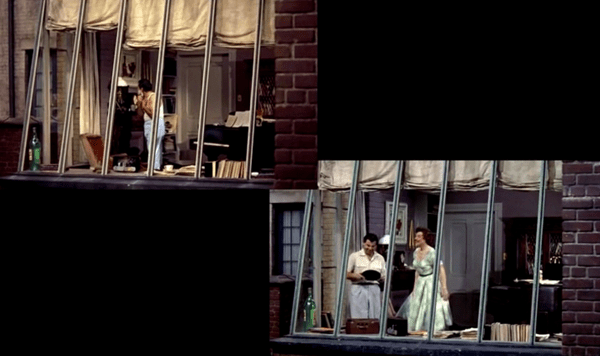
Watch: The Symmetry of Alfred Hitchcock’s ‘Rear Window’: A Video Essay

Do you ever wonder why you love the movies you love? Do you ever think that there might be a reason beyond the obvious–a great story, say, or a terrific actor–that might be directing you back to a certain film? Alfred Hitchcock’s ‘Rear Window’ is a confluence of virtues: a story with a hook the size of a crane, James Stewart’s sensitive performance, Grace Kelly’s screen presence… But it also has something else: a director’s steady and deliberate hand. That hand does all sorts of things, as we know: frames shots, paces the narrative, moves in and retracts at just the right moment. But what it also does, as this video essay by Australian filmmaker Michael Mclennan demonstrates, is arrange the film’s shots in a symmetrical fashion. Later shots quote earlier shots–sometimes once, sometimes even twice. With each re-appearance, the original shot is revised. And with each shot, as well, a remarkable tale is told. All we have to do is pay attention and the story grows ever deeper. And that, right there, is why we return to ‘Rear Window.’ It will never give up all of its secrets.

Watch: Quentin Tarantino’s Best Visual Film References… in Three Minutes!

Watch: Quentin Tarantino’s Best Visual Film References… in Three Minutes!

It is a well known fact that Quentin Tarantino is a self-proclaimed
cinephile.  But the writer/director’s love for cinema is most obviously
expressed through his own films.  In addition to showing his characters
spending a great deal of time discussing cinema, Tarantino’s films are
jam-packed with homages and visual references to the movies that have
intrigued him throughout his life. 

Many
filmmakers pay homage, but Tarantino takes things a step further by
replicating exact moments from a variety of genres and smashing them
together to create his own distinct vision.  Just like ‘Kill Bill: Vol 2
(2004) draws on ‘The Good, the Bad and the Ugly‘ (1966) and ‘Samurai
Fiction
‘ (1998), Tarantino’s work often reflects Spaghetti Westerns and
Japanese cinema–both new and old.  His unique way of referencing other
films allows him to bend genre boundaries and shatter the mold of what
we expect to experience.  While his methods are often criticized and he
is accused of "ripping off" other filmmakers, it seems that Tarantino is
simply writing love letters to the art he is ever so passionate about. 
From German silent-cinema to American B
movies, the following video uses split-screen to demonstrate a few of
the hundreds of visual film references over the course of Tarantino’s
career.
Tarantino Films:
‘Reservoir Dogs’ (1992)
‘Pulp Fiction’ (1994)
‘Jackie Brown’ (1997)
‘Kill Bill: Vol. 1’ (2003)
‘Kill Bill: Vol. 2’ (2004)
‘Death Proof’ (2007)
‘Inglourious Basterds’ (2009)
‘Django Unchained’ (2012)
Referenced Films (in order of appearance):
‘City on Fire’ (1987)
‘Django’ (1966)
‘Band of Outsiders’ (1964)
‘8 1/2’ (1963)
‘The Warriors’ (1979)
‘Psycho’ (1960)
‘Kiss Me Deadly’ (1955)
‘The Flintstones’ (1960-66)
‘Superchick’ (1973)
‘The Graduate’ (1967)
‘Citizen Kane’ (1941)
‘Goke, Body Snatcher From Hell’ (1968)
‘Lady Snowblood’ (1973)
‘City of the Living Dead’ (1980)
‘Black Sunday‘ (1977)
‘Game of Death’ (1978)
‘Miller’s Crossing’ (1990)
‘Death Rides a Horse’ (1966)
‘Gone in 60 Seconds’ (1974)
‘Samurai Fiction’ (1998)
‘Blade Runner’ (1982)
‘The Searchers’ (1956)
‘Once Upon a Time in the West’ (1968)
‘Five Fingers of Death’ (1972)
‘The Good, the Bad and the Ugly’ (1966)
‘Convoy’ (1978)
‘The Bird With the Crystal Plumage’ (1970)
‘Unforgiven’ (1992)
‘The Searchers’ (1956)
‘Metropolis’ (1927)
‘Django’ (1966)
‘Gone With the Wind’ (1939)
‘The Great Silence’ (1968)
‘A Professional Gun’ (1968)

Jacob T. Swinney is an industrious film editor and filmmaker, as well as a recent graduate of Salisbury University.

Watch: What If Lou Bloom of ‘Nightcrawler’ Is Travis Bickle’s Lost Son?

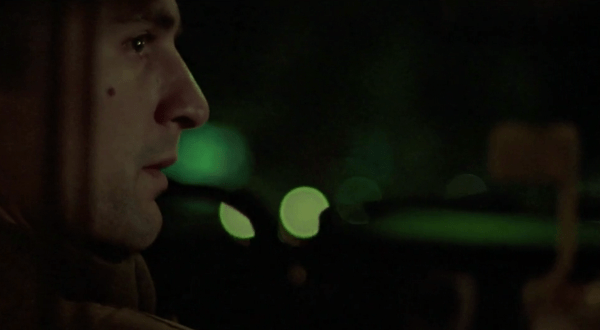
Watch: What If Lou Bloom of ‘Nightcrawler’ Is Travis Bickle’s Lost Son?

Dan Gilroy’s ‘Nightcrawler’ is fascinating for a number of reasons: its cinematography, its exploration of a large city’s night-world, the transformative performance of Jake Gyllenhaal, its eccentric and at times overly specific script. But it is also interesting for its seeming revision of Martin Scorsese’s ‘Taxi Driver,’ another film which, by showing us a man, driving, at night, managed to suggest how far loneliness might push an individual. Is it so eccentric, given everything, to suggest, as Jorge Luengo does in this chilling piece, that Lou Bloom could be Travis Bickle’s progeny, the product of some anonymous tryst? The two men have a great deal in common: creepiness, an excess of aggression, solitude… Why couldn’t Bickle have passed on his genes to Bloom?

Watch: The Dancing of Whit Stillman: A Video Tour

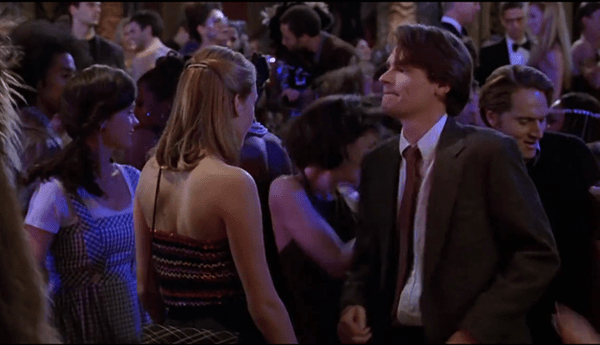
Watch: The Dancing of Whit Stillman: A Video Tour

His films have been described as “Comedies of
Mannerlessness.” Ranging from modern 90s Manhattan to the early 80s
Disco scene and soon the period of the late 18th century, Whit Stillman
has made a name for himself for his ‘[S]ly depictions of the “urban
haute bourgeoisie”’.

But while his characters often have a cynical detachment from the
upper-class life they live in, they sure know how to have fun. In all of
Stillman’s films, the art of dance is prevalent. Whether it’s the
conga, the limbo or the Sambola, the world of Whit Stillman seems to
provide a dance floor for anyone willing to give it a try.

This video showcases the love of dancing that appears in the first
four of Stillman’s films. While "Love & Friendship" is not included in
this tribute, it will be interesting to see what kind of moves will
be presented from the olden times.

Films Featured:

Metropolitan
Barcelona
Last Days of Disco
Damsels in Distress

Watch: David Letterman: The Late Night Television Anti-Hero

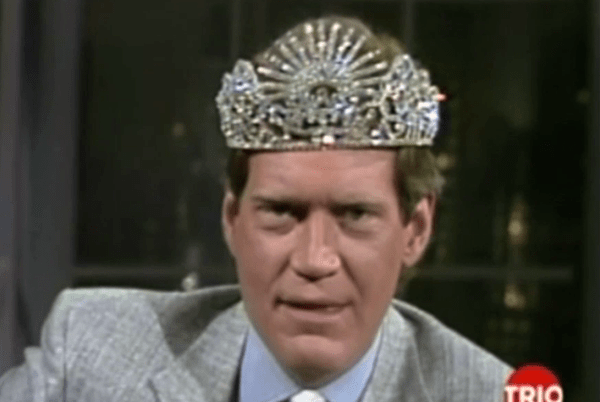
Watch: David Letterman: The Late Night Television Anti-Hero

If you were alive in the 1980s and you turned on NBC at 12:35 AM,
the very last activity you would have seen David Letterman doing on
“Late Night” is fawning over baby pictures—as he did during his final
days of public life. 

In fact
Letterman was TVs first and now its last grumpy old man, except he was
in his thirties at the time and looking at this video essay, it’s hard
to believe a guy this thorny, someone who spent
this much time torching his bosses and ripping away at a pretentious
celebrity modus operandi—could be on television for more than three
minutes, much less over 30 years.

How does one explain his success?

In interviews
Letterman likes to give all the credit away for his success to his hero,
the great Johnny Carson, and more than occasionally, he even
acknowledges the influence of Steve Allen, the first helmsman of that
NBC institution known as the Tonight Show and perhaps its most talented
performer.  (Before anyone insists Jimmy Fallon takes the crown on this
point, take a look at Steve Allen’s “Meeting of Minds,” which he created
and wrote for PBS, and tell me if our latest occupant of Tonight could
pull off something so erudite.)

While
Letterman’s approach to late night TV may have channeled his
predecessors in certain ways—like Letterman, Johnny Carson could
belittle and destroy his guests in a single sentence—the Letterman who
rose to cultural prominence at the end of the Cold War was a singularly
crass, awkward, slightly misogynistic, fearless truth-teller. 

And that’s why we loved him. 

Letterman’s
eternal brilliance lies in his expansive mastery of the components of
humor: the set-up and the punchline, i.e. the story and the funny
climax.

First, unlike
the 2015 version of himself, Letterman in the 1980s was absolutely not a willing member of America’s celebritocracy—that cult of celebrity
which had always been a large part of show business culture. 

But, what
Letterman possessed from the beginning was an uncanny ability to search
for comedic set-ups in visual, verbal and intellectual spaces where no
other performer thought to look. He was intelligent, well read and
lightening fast. Any sentence uttered—stupid or intelligent—on “Late
Night with David Letterman” could be made a slave to his opportunistic,
devastating punchlines—with emphasis on the word “punch.” 

And it didn’t
matter who you were—network executives, respected celebrities, stupid
humans, stupid pets and his most prolific target of all, Letterman
himself. No wonder Cher called him an asshole. No one was safe.

Before he
leaves for good, one must acknowledge his huge influence. “Late Night
with David Letterman” taught an entire generation not only how to search
for the perfect comedic set up but also what it means to deliver a
foolproof punchline. In college I watched this sweet anarchy day after
glorious day, as the comedian casually lobbed stick after stick of
verbal dynamite into the key light biosphere, this wanton behavior
continuing unabated for a decade and a half.

But, young
David Letterman was not stupid. He understood himself and his audience
extremely well, and he walked the line between hero and anti-hero,
between TV pioneer and social pariah for as long as he could and as he
aged and matured, he even knew when to step away from that line. 

So, here he
is again in full “Dave,” before the anti-depressants, before the lessons
of the sex scandal, before the birth of his son Harry, before his
heroes had ascended to the next life and left him alone.  

I was recently waiting in line at the post office. 

The lines are
long these days at the busy location in central Plano, Texas because
that branch has staffed down, and one can be sure that sending a parcel
these days is a deeply boring and cynical experience as an impersonal
staff and an uninterested system wastes your time and pisses you off.

A half hour
or so later, I had placed my package in the system, and I was walking
toward the exit. I spied a middle-aged African-American man shaking
his head and sighing in frustration. He was at the end of a very long
line. 

I walked up to him and extended a hand which he grasped as if it were a life line.

“The cocktail waitress will be around in a few minutes,” I said to him. “Buy yourself a rum and Coke. I hear they’re amazing.”

The man smiled and laughed. 

For those of us who watched it, “Late Night with David Letterman” continues.

Serena Bramble is a film editor whose
montage skills are an end result of accumulated years of movie-watching
and loving. Serena is a graduate from the Teledramatic Arts and
Technology department at Cal State Monterey Bay. In addition to editing,
she also writes on her blog Brief Encounters of the Cinematic Kind.

Ken Cancelosi is the Publisher and Co-Founder of Press Play.

Watch: How Did Film Noir Evolve? A Video Essay

Watch: How Did Film Noir Evolve? A Video Essay

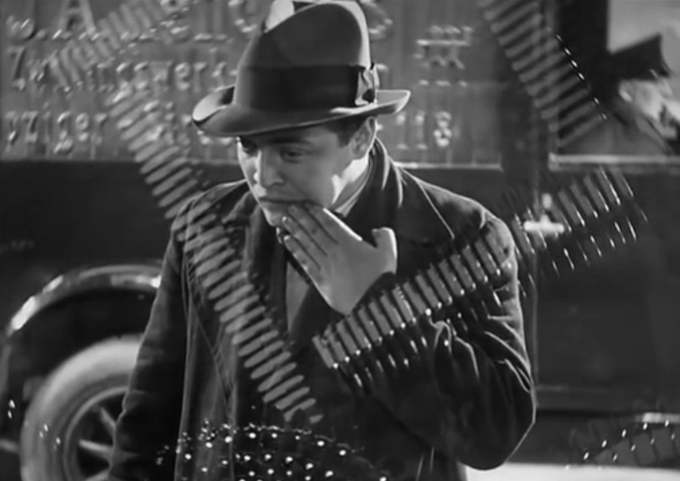
What
exactly is film noir?  Is it a movement, a mode, a style, or a genre?
 These questions have preoccupied film scholars for decades. According
to filmmaker Paul Schrader, noir began with The Maltese Falcon and ended with Orson Welles’s Touch of Evil.
 He’d add that it was largely an American movement that applied certain
stylistic (high contrast lighting, voice over narration, non-linear
storytelling) and thematic (existentialism, the cruel mechanizations of
fate, amour fou) elements in genres ranging from melodramas to detective
films. Another film scholar might add that directors like Fritz Lang
and Billy Wilder never described their films as being "noir."  They
thought they were making thrillers. Film noir?  That’s a term the French
critics applied retroactively. 

This
video essay series takes the fairly provocative stance that film noir
became a genre.  Essentially, in its golden age during the 1940s, noir
was a mode/movement that was superimposed onto other genres.  In the
words of genre theorist Rick Altman, genres can start off as
"adjectives"–fragments of the style and theme might be there, but the
genre has yet to fully solidify because the filmmakers and audiences
haven’t quite gotten their heads around it yet.  However, by the time
Robert Aldrich was making Kiss Me Deadly in
1955, the writings of the French critics had made it stateside (in
fact, there’s a picture of him reading Borde and Chaumeton’s Panorama du Film Noir on the set of Attack!),
and perhaps the filmmakers and audiences had finally begun to think of
noir as being a noun.  When neo-noir flourished in the 1970s (thanks to
filmmakers like Schrader), the movement emerged–fully formed as a
genre–from its black-and-white cocoon.  

I
write this trajectory into this introduction to the series because I
can imagine that some of my colleagues might have been troubled by a
video essay that calls film noir a genre. I am more than aware of the
history of this debate and it was covered in Part III on Pragmatics.
 Part IV is a shift in gears and focuses the evolution of the genre,
guided by Thomas Schatz’s scholarship (so be sure to watch the
introduction one last time for the change in approach!).  Finally, there
will be one final installment focusing more intensely on international
noir, so don’t think I’ve forgotten about that either.  What I’m
attempting to do here is to craft the video essay equivalent of an
encyclopedia entry on film noir for the undergraduate student with a new
episode each month.  If you’re already familiar with the films and the
key debates, you may not find much in the way of "new" knowledge here.
 My main audience–at least in terms of an intellectual presentation–is
the uninitiated.  I assume the pleasures of the more advanced fans and
scholars of noir will be found in the aesthetics of the pieces, although
maybe they’ll be surprised by a "new" recommendation (I love Key Lime Pie, a fantastic animated short by
Trevor Jimenez).  In any case, I hope you enjoy the penultimate episode
of this ongoing series and I look forward to the debate it encourages.

A list of the films featured in this installment:

M
La Bete Humaine
This Gun For Hire
The Big Sleep
Out Of The Past
The Killers
The Lady From Shanghai
In A Lonely Place
Sunset Blvd.
Ace In The Hole
Bob Le Flambeur
Breathless
Shoot The Piano Player
Chinatown
Who Framed Roger Rabbit
Pulp Fiction
Sin City
Drive 

Dr. Drew Morton is an Assistant Professor of Mass Communication at Texas A&M University-Texarkana.  He the co-editor and co-founder of[in]Transition: 
Journal of Videographic Film and Moving Image Studies, the first
peer-reviewed academic journal focused on the visual essay and all of
its forms (co-presented by MediaCommons and
 Cinema Journal).  [in]Transitionrecently
won an award of distinction in the annual SCMS Anne Friedberg
Innovative Scholarship competition.  His publications have appeared in
animation: an interdisciplinary journal, The Black Maria, Flow, In Media Res, Mediascape, Press Play, RogerEbert.com, Senses of Cinema, Studies in Comics, and
a range of academic anthologies.  He is currently completing a
manuscript on the overlap between American blockbuster cinema and comic
book style.

Watch: David Fincher’s ‘The Girl with the Dragon Tattoo’ Is a Symphony of Angles

Watch: David Fincher’s ‘The Girl with the Dragon Tattoo’ Is a Symphony of Angles

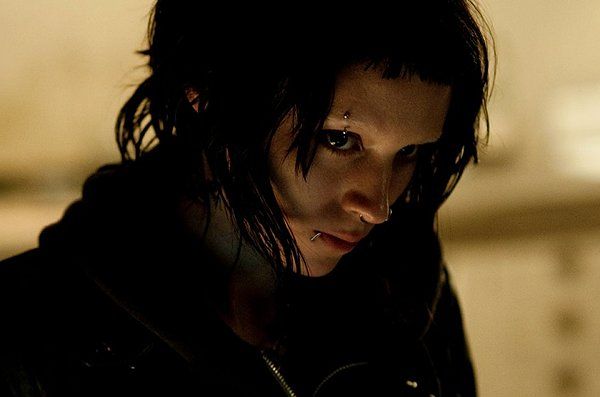
When I first learned that David Fincher would be directing the American adaptation of Stieg Larsson’s ‘The Girl with the Dragon Tattoo,’ I was a bit concerned: I was partial to the original Swedish adaptation, to Noomi Rapace’s steady glare, which somehow managed to be both understated and aggressive, simultaneously. Beyond that, I wasn’t sure what Rooney Mara could do with Lisbeth Salander–she had projected strength in ‘The Social Network,’ but the capacity for violence seemed a bit of a stretch. Also, Fincher tends to devour when adapting–he turned ‘The Curious Case of Benjamin Button‘ into such a distinctive creation that, sadly, many critics ignored the marvelous F. Scott Fitzgerald story on which it’s based. This movie was a slightly different case: Fincher does consume and re-interpret the original text, but the consumption here is in service of the book, and as such is a (literally) thrilling visual phenomenon. Kristin Slater’s restless and forceful piece points out something integral to the film’s approach: that its angles tell a greater story, in some ways, than the script. That the constant adjustment and rejiggering of the viewer’s perspective takes us quite convincingly inside the mind of Lisbeth, into her unique and tortured way of seeing the world. Unstable? Perhaps. Or maybe just… correct.

Watch: Why WERE the Lights Always Flickering in ‘Twin Peaks’?

Watch: Why WERE the Lights Always Flickering in ‘Twin Peaks’?


In the world of ‘Twin Peaks," the lights are on the fritz. Transformers buzz. Electrocutions may occur. Events of great significance take place almost entirely through circuitry, be it on a television screen or through a phone wire. What does it all mean? Everything and nothing. In David Lynch’s vision, the electric spark is the clash of small-town sensibilities and big-city decadence, between the past and the more modern world, between human life and the shadowy world beyond it where Laura Palmer and "Bob" dwell, between the baffling, horrific day-world and the world of dreams. This video essay by A. Martin and C. Álvarez López takes us through the short-circuitry of ‘Twin Peaks,’ at times hilarious, at times awful–it’s a beautiful, uncomfortable, ride. Enjoy.

Watch: Listening to the Sounds of ‘Star Wars’

Watch: Listening to the Sounds of ‘Star Wars’

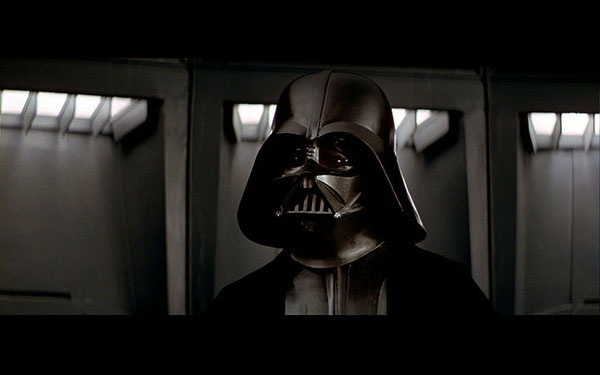
It’s been observed many times that muscles are crucial to human memory–that we remember things as much with our arms, legs, and fingers as we do with our brains. It stands to reason, then, that sounds can call up a range of memories about the experience with which they’re associated: sometimes in direct connection, sometimes not so direct. This new video by Rishi Kaneria takes us through the most familiar sounds of 1977’s ‘Star Wars Episode IV: A New Hope,’ which is a milestone in the memories of many viewers. In so doing, Kaneria reminds us that, thanks to the sound design of Ben Burtt, the auditory experiences of the film–R2D2’s beeps, C3PO’s Anglo-robotic accent, Chewbacca’s grunt-howl–were as much responsible for the movie’s penetration of the public consciousness as its entertainment value. Close your eyes, and listen to the sounds of the place where this particular story began–or where we began to hear it told.