Watch: RIP James Horner, Catcher of Cinematic Moments

Watch: RIP James Horner, Catcher of Cinematic Moments

It’s difficult for me to maintain objectivity as I process the death of James Horner, one of America’s great film composers of the past 50 years, who died Monday piloting his turboprop aircraft through the Los Padres National Forest in southern California.

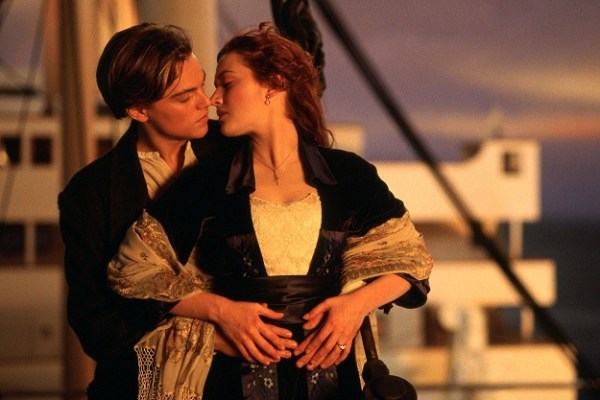
Horner was only 61 and he had decades left in his storied career, one punctuated by iconic achievements in film scoring such as ‘Field of Dreams,’ ‘Glory,’ ‘Sneakers,’ and ‘Titanic.’

I’m just so angry at him. One would think that such a truly gifted artist owes it to himself and to his faithful followers to protect his talent from this kind of stupidity — this aviation arrogance — because he — objectively speaking — creates art for the ages. 
And that’s how James Horner’s work came across: as big and epic and dynamic as the action images he infused with his soundscapes and as intimate, heartbreaking and poignant as the great actors he underscored.
There was a time when audiences would sit and listen to complete music ideas, emotional journeys expressed in expansive works like Mahler’s symphonies or Strauss’ Tone Poems.

But, the forces of distraction brought about by modern living have changed us all. What’s left of the classical idiom is the film composer — the ideal artist for the new age — and the short music cues he or she writes for the cultural touchstones we consume on weekends and birthdays.
 

And there was nobody better at capturing a single moment, a salient feeling than James Horner. 

His most clever work has got to be the score he created for Phil Alden Robinson’s caper ‘Sneakers,’ where we see some of our favorite screen personalities — Sidney Poitier, Robert Redford and River Phoenix — spent two hours staring at various computer monitors, not exactly visually riveting.  But it all works, thanks to James Horner’s effortless soundscapes, building tension when necessary and creating mystery out of whole cloth. 

You can’t replace someone as gifted as James Horner. 

How could he risk it all? I’m just so angry at him.–Ken Cancelosi

Nelson Carvajal is an independent digital filmmaker, writer and content creator based out of Chicago, Illinois. His digital short films usually contain appropriated content and have screened at such venues as the London Underground Film Festival. Carvajal runs a blog called FREE CINEMA NOW which boasts the tagline: "Liberating Independent Film And Video From A Prehistoric Value System." You can follow Nelson on Twitter here.

Ken Cancelosi is the Publisher and Co-Founder of Press Play.

Watch: Xavier Dolan Makes Filmic Poems

Watch: Xavier Dolan Makes Filmic Poems

Watching a Xavier Dolan film is like having a poem smashed over your head. If you don’t know what I mean by that sentence, then you should watch Kevin B. Lee’s remarkable compilation video essay for Fandor on Dolan’s film ‘Laurence Anyways,’ above. Take a look, and let me know if I’m right. (And yes, I used the word "filmic" in the headline.)

Watch: Robert Altman’s Best Overlapping Dialogue … In Three Minutes!

Watch: Robert Altman’s Best Overlapping Dialogue … In Three Minutes!

While there are many trademarks that define his extensive body of work, Robert Altman’s films may be most easily recognized through the director’s unique approach to dialogue.  Rather than utilizing the more traditional give-and-take approach to a conversation, Altman would have two, three, or even entire rooms full of people delivering their lines at the same time.  This overlapping dialogue, while unconventional and often difficult to comprehend, created a sense of realism that became a staple of Altman’s films.  Altman never seemed to be overly concerned with creating a digestible piece of cinema–he recreated life and dropped us right in the middle of it.  We do not simply view a Robert Altman picture, we experience it in full immersion.  Here is a three-minute showcase of Altman’s famous approach to dialogue. 

Films featured, in order of appearance:

M.A.S.H.
McCabe and Mrs. Miller 
Thieves Like Us
Nashville
Popeye
The Player
Short Cuts
Kansas City
Dr. T & the Women
Gosford Park
The Company
A Prairie Home Companion

Jacob T. Swinney is an industrious film editor and filmmaker, as well as a recent graduate of Salisbury University.

Watch: ‘Twin Peaks’: A Short Video History

Watch: ‘Twin Peaks’: A Short Video History

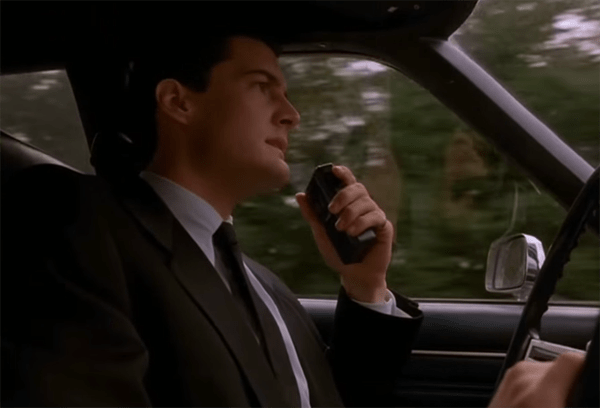
What is it that made ‘Twin Peaks’ so influential in so many different cultural areas? This is the question most often asked about David Lynch’s and Mark Frost’s pioneering television series–beyond, of course, "What’s it mean?" This video essay by YouTube user "Glit Boy" offers us a history of the show and, in so doing, provides a possible answer to the question, perhaps uninintentionally. The video shows us snippets of the show’s origins, alluding to Frost’s previous work with ‘Hill Street Blues,’ by way of saying that the show was wholly unconventional in a time at which the networks were dominated by police procedurals and other similarly plot-driven vehicles. After a run-down of the plot, we get an explanation of the show’s influence on video games such as ‘A Link to the Past’ and ‘Deadly Premonition,’ as well as series such as ‘The Killing’ and countless others. What all of this accumulated evidence indicates is that what made the series so influential may have been its confidence: not just its storytelling skill, or its cinematography, but the sense that all of its elements, from Agent Cooper’s love of coffee to the fixation of the Log Lady, were in place before Lynch even imagined them, that he simply walked into the world of the show and began filming.

Watch: Studio Ghibli’s Heroines, and What They Have to Tell Us

Watch: Studio Ghibli’s Heroines, and What They Have to Tell Us

As the parent of a five-year-old girl, the relentless barrage of ‘Disney princess’ stuff targeted at her, from the films themselves to cuddly toys to the highly prized costumes, can be overwhelming. Snow White, Cinderella, ‘The Little Mermaid’’s Ariel, all have their charms, but, as most people would now acknowledge, these damsels-in-distress are hardly the most inspiring role models. And yes, times have changed, so that the likes of ‘Beauty and the Beast’’s Belle, Merida in Pixar’s ‘Brave’ or ‘Frozen’’s princess sisters, are a big evolutionary step up—even if the frocks remain pretty much the same.

However, for genuinely aspirational princesses, I’d bypass Magic Kingdom output altogether and head East: to the company whose 1997 film ‘Princess Mononoke’ introduces its lead female character, San, sucking blood from giant wolf’s bullet wound before glaring down its male hero; or whose most recent release, ‘The Tale of the Princess Kaguya,’ features a young woman who refuses to submit to imperial demands of subservient marriage, just because it’s expected.

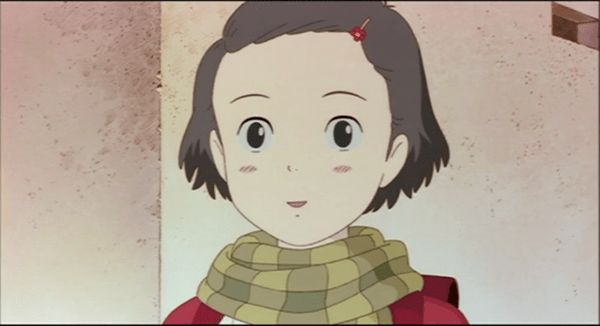
Japan’s Studio Ghibli has been making hugely successful, highly acclaimed animation centred on smart, independent, complex female characters for over 30 years. From wide-eyed children (‘My Neighbour Totoro,’ ‘Spirited Away’) to battle-hardened warriors (‘Nausicaä of the Valley of the Wind, ‘Princess Mononoke’), rare are the Ghibli films that don’t foreground women. And this isn’t just a fixation of the company’s two main directors and figureheads, Hayao Miyazaki (‘Mononoke’) and Isao Takahata (‘Kaguya’): other directors—the late Yoshifumi Kondō (‘Whisper of the Heart’) or Hiromasa Yonebayashi (‘Arrietty’)—have helped make this trope practically the house style.

Entire theses can—and doubtless have—been written on the repercussions of switching heroines for heroes. Certainly Ghibli films are far less caught up in the machismo of most Hollywood tales of derring-do. In ‘Kiki’s Delivery Service,’ a trainee witch’s biggest battle is establishing her broomstick-led courier company. There are no overt villains in the bucolic, gentle ‘My Neighbour Totoro’ (my daughter’s all-time favourite movie), though several other films—’Spirited Away,’ ‘Mononoke,’ ‘Howl’s Moving Castle’—delight in their nuanced female antagonists. Ghibli is confident enough to move between rollicking adventure fantasies like ‘Castle in the Sky’ to more quotidian, intimate emotional stories like ‘Only Yesterday,’ varying narrative texture, tone and rhythm in ways practically unknown in mainstream Western animation.

Ghibli is also smart enough to realize that a “strong woman” isn’t limited to a kick-ass action heroine, the faddish template meant well but often haplessly shoehorned into revisionist versions of classic stories (see ‘The Lord of the Rings’’ Arwen or Tim Burton’s sword-wielding ‘Alice in Wonderland’). Ghibli female characters are brave and foolhardy, noble and spiteful, wise and naïve, hopelessly romantic and resolutely standoffish. In short, for all their 2D animation, they’re strong because they’re fully rounded and three-dimensional. They’re strong because they have agency. They’re strong because they truly matter in their stories.

As this video tribute seeks to show, there’s no better series of female characters to provide inspiration or aspiration for a young girl—or anyone, for that matter. Now if we could just start some San / Mononoke costumes trending—outfits absolutely not fit for a traditional princess – we’d really be ready to have a ball, and not just demurely go to one.

Leigh Singer is a freelance film journalist, programmer and filmmaker.  He has written or made video essays on film for The Guardian, The Independent, BBC online, Dazed & Confused, Total Film, RogerEbert.com and others. You can reach him on Twitter @Leigh_Singer or at www.leighsinger.com

Watch: What Tim Burton Owes to German Expressionist Films

Watch: What Tim Burton Owes to German Expressionist Films

It could easily be said that the best things about Tim Burton’s work come from German Expressionist film: the attentiveness to detail in design, the darkness, the vast, complex sets, the theatricality and over-blown nature of films such as ‘Edward Scissorhands,’ ‘Batman,’ and ‘Sweeney Todd.’ This new video piece by Cinema Sem Lei makes the connection between Burton’s work and such great films as ‘Nosferatu’ or ‘The Cabinet of Dr. Caligari’ crystal clear. This isn’t to suggest, of course, that Burton doesn’t inject and imbue his films with his own distinctive style. Far from it, in fact! But we are reminded, when watching this video, that the influence of older German filmmakers flows through Burton, empowering him.

Watch: Wes Anderson: A 10-Minute Tour

Watch: Wes Anderson: A 10-Minute Tour

How about a leisurely stroll through the work of Wes Anderson? I know, I know: the amount of commentary, printed, online, and video-edited, about Anderson is at this point reaching sky-scraping proportions. But: this tightly constructed little piece is worth your 9-10 minutes. Paul Waters takes us through Anderson’s basic biography, shows us some of the director’s dapper commercial work, and then discusses how Anderson has interpreted such basic cinematic techniques as the overhead shot and the single shot for his own Joseph-Cornell-meets-Walt-Disney purposes. We also get close looks at such Anderson trademarks as the ubiquitous Futura font and his characters’ eccentric accoutrements. The best directors can always be revisited, and Anderson, being such, is no exception.

Watch: The Face of Christopher Lee (1922-2015)

Watch: The Face of Christopher Lee (1922-2015)

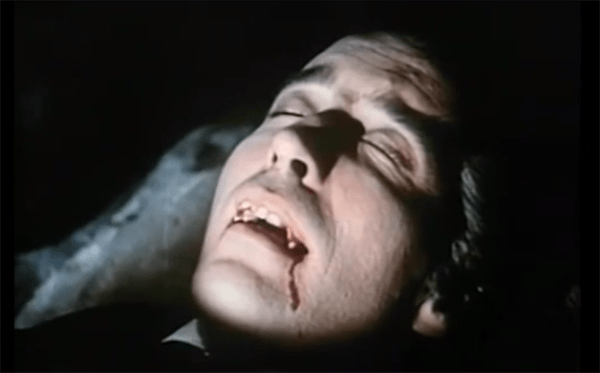
Christopher Lee was the definitive working actor. His career was long, and he appeared in more films than any major performer in the English-speaking world — over 250. What distinguishes him, though, and should make him a role model for anyone seeking a life on stage or screen, is not that he worked so much but that he worked so well. He took that work seriously as both job and art, even in the lightest or most ridiculous roles, and he gave far better, more committed performances than many, if not most, of his films deserved.

Lee said that a successful actor needed “a degree of versatility”, and he embodied that idea. He never quite broke out of his typecasting as a horror villain, but he didn’t need to — he showed the variety and depth possible within such characters, playing each not as a collection of clichés (even when they were written that way), but as something like a human being (even when they weren’t). This is the key to one of the great roles of his later career, that of Saruman in the various Lord of the Rings and Hobbit movies. He is utterly terrifying but also fascinating, and there are moments where we want to sympathize with him, or perhaps join him, and then we realize the error of our momentary desires. No actor in those films so fully and convincingly portrays the temptations of evil.

Though Lee performed well and even memorably in plenty of bad, unmemorable movies, the one that stands as the apotheosis of his skill is ‘The Man with the Golden Gun.’ It’s neither Lee’s worst movie nor the worst James Bond movie, but it’s pretty bad nonetheless. However, Lee so perfectly embodies Scaramanga that he steals every scene he’s in and is usually listed as one of the great Bond villains.

One of the film’s faults is that it plays too much for laughs, but Lee doesn’t make that mistake. He takes Scaramanga seriously as a character and he doesn’t wink at us to signal that he thinks he’s in a crappy movie. To have an actor commit to a role, even if it’s a terrible role in a terrible movie, pays respect to the audience. The nature of film production is such that an actor can’t always know when they’re in a good or bad film, anyway, as what things feel like on set can be quite different from what ends up making it through postproduction, and so the only way to make sure that you don’t mess up a potentially great (or even just passably good) movie is to treat the job as you would had you been cast in the greatest, most demanding, most prestigious film of all time. 

Again and again, Christopher Lee performed that way. Nobody performed terribly-written lines as adroitly as he — no matter how awkward, stilted, or absurd the line, he would find a way to inhabit it, a way to make it seem like the only thing his character could possibly have said at the moment of utterance. As an actor, he couldn’t necessarily control the writing, the cinematography, the editing, but he could control his own performance, and that he did.

Lee was, for similar reasons, an impressive comedic actor. One key to successful comedic acting is this: the actors shouldn’t do the laughing for the audience. Watch Lee in, for instance, ‘Gremlins 2,’ an at best mediocre film in which he is delightful: his timing is excellent, and he knows when to pull back and allow a simple, stoic glance to do all the work for him.

It’s a shame that Christopher Lee was never nominated for an Academy Award (though of course the list of actors and filmmakers never nominated for that award is not at all a shameful one). He certainly deserved at least an honorary, career-spanning acting award, because he achieved far more than a lot of actors who walked away with Oscar in their hands. It’s one thing to perform well in a beautifully written, sensitively directed, artistically shot, masterfully edited movie. It’s quite another accomplishment to perform so consistently well, year after year, in a wide variety of movies that more often than not are not especially well written, directed, shot, or edited — that, indeed, at times seem to have been written, directed, shot, and edited by a vaguely sentient slime mold. Christopher Lee did so, over and over again, for more than sixty years. If that doesn’t define a great actor, I don’t know what does.

Matthew Cheney’s work has been published by English Journal, One StoryWeb ConjunctionsStrange HorizonsFailbetter.comIdeomancerPindeldybozRain TaxiLocusThe Internet Review of Science Fiction and SF Siteamong other places, and he is the former series editor for Best American Fantasy. He is currently a student in the Ph.D. in Literature program at the University of New Hampshire.

Watch: How Did Steven Spielberg Influence David Fincher?

Watch: How Did Steven Spielberg Influence David Fincher?

Steven Spielberg and David Fincher make for a more likely chain of influence than one might think. It might boil down to this: same audience, different focus. Spielberg reaches towards broad themes intended for a wide audience; Fincher seems to have made it his mission to bring the dark side of humanity (the torment, the obsession, the rage, the calumny) to, like Spielberg, as wide a viewership as possible, with films like ‘Seven‘ and ‘The Social Network‘ in particular. Michael Bryant has narrowed this comparison considerably in this pithy video, bringing these two cinematic minds together in a rare and convincing way. So: how did Spielberg influence Fincher? Fincher seems to have absorbed Spielberg’s filmmaking techniques and presented them to us transformed. Look and see…

Watch: Stanley Kubrick’s ‘The Shining’ Meets Alain Resnais’ ‘Last Year at Marienbad’

Watch: Stanley Kubrick’s ‘The Shining’ Meets Alain Resnais’ ‘Last Year at Marienbad’

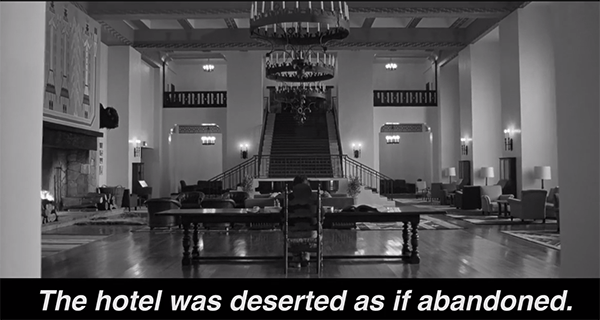
In many ways, Alain Resnais’ ‘Last Year at Marienbad (1961) and Stanley Kubrick’s ‘The Shining (1980) are quite similar.  Both films take place in sprawling resorts that are sparsely populated.  Both films pose narrative mysteries that have deliberately ambiguous solutions.  In the former, did the woman (Delphine Seyrig) meet the man (Giorgio Albertazzi) last year at Marienbad or not?  Or perhaps they did meet, but not at Marienbad.  If they did meet, did the woman forget because she was traumatized after being raped by the man?  Are the characters even "real" or ghosts or fragments of someone’s imagination?  Resnais’s French New Wave classic has fascinated, baffled, and frustrated viewers for half a century quite simply because it is a puzzle without a key to guide the viewer.  You have may an interpretation after watching it, but it is tentative (I change my mind almost every time I watch the film) and far from being definitive.  Kubrick’s ‘The Shining’ offers up ambiguity in a slightly lower dose.  Quite simply, is Jack (Jack Nicholson) motivated by cabin fever or ghosts?  If we accept the former, how does Jack escape the freezer after he’s locked up by Wendy (Shelley Duvall)?  If we accept the latter and the ghosts can take physical action (who rolls the ball towards Danny?), why do they stop short of killing the Danny (Danny Lloyd) and Wendy?  Moreover, how can Jack exist both in the early 1980s and in a 1921 photograph?  These are ambiguities that have encouraged numerous interpretations, ranging from the ridiculous theories of ‘Room 237’ (2012) to my own video essay "Free Will in Kubrick’s The Shining".  

Yet, the connections between these two films go even deeper in how they attempt to use spatiotemporal ambiguity to further disorient the spectator.  The hallways and spaces of Kubrick’s Overlook do not make any spatial sense.  There are windows that look outdoors in rooms that face inwards.  The flow of time, as aforementioned, is also mysterious.  The film’s title cards marking off days and hours represent a linear march of time, yet Jack’s encounter in room 237 and the photograph at the end would suggest that time is a circular or that alternate timelines exist simultaneously.  Similarly, the times and spaces of Resnais’s film blend together.  Costumes provide only a temporary reference point, because jump cuts, voice over, and the similar interiors of separate resorts make the differences between past, present, and future indistinguishable.  Yet, viewers of both films can probably agree on one aspect.  Violence haunts these corridors.  

Dr. Drew Morton is an Assistant Professor of Mass Communication at Texas A&M University-Texarkana.  He the co-editor and co-founder of [in]Transition:  Journal of Videographic Film and Moving Image Studies, the first peer-reviewed academic journal focused on the visual essay and all of its forms (co-presented by MediaCommons and Cinema Journal).  [in]Transition recently won an award of distinction in the annual SCMS Anne Friedberg Innovative Scholarship competition.  His publications have appeared in animation: an interdisciplinary journal, The Black Maria, Flow, In Media Res, Mediascape, Press Play, RogerEbert.com, Senses of Cinema, Studies in Comics, and a range of academic anthologies.  He is currently completing a manuscript on the overlap between American blockbuster cinema and comic book style.