VIDEO ESSAY: Spike Lee’s free-floating, dolly shots collected, stitched together and deconstructed

VIDEO ESSAY: Spike Lee’s free-floating, dolly shots collected, stitched together and deconstructed

This video essay by Richard Cruz collects Spike Lee's loopy, free-floating dolly shots into a music video. In the process, it makes them less jarring than they were when they first appeared in Lee's films. You know what I'm talking about: a shot where a major character is still, or perhaps moving subtly, while the background moves at an unrealistically fast speed or whirls wildly, creating the sense that the character is sort of hovering through the air, or perhaps moving on a conveyor belt or turning on a merry-go-round.

Every time I've seen a Lee film in a theater, audiences have begun tittering and pointing at the screen whenever Lee busted out this type of shot. It's as disruptive as it is flamboyant — deliberately so, I'm guessing. The Spike Lee dolly seems to be trying to find a way to signify "subjectivity", or otherwise put a conceptual frame around a certain moment in a story. This is typical of Lee. His features are never, strictly speaking, "realistic." They're more expressionist, like the films of Martin Scorsese, one of Lee's biggest influences. As such, they give themselves the freedom to bend the visuals and suggest what characters are feeling, or maybe what the filmmaker is feeling about the characters at that point in the story.

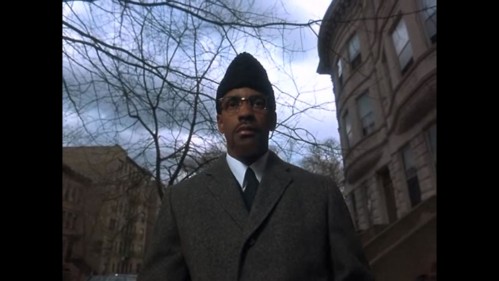
Sometimes the device works brilliantly, or at the very least, in such a way that you can see what the director was going for, even if he didn't pull it off; my favorite examples are Larry Fishburne seeming to glide through campus at the end of School Daze — a musical polemic of a movie — hollering "Waaaake uuuup!"; Anna Paquin's private school student, drunk and high, floating through a nightclub in The 25th Hour ; Theresa Randle in Girl 6, gliding through her apartment while jazzed on her own sensuality or fearing an attack by a creep who's phone-stalking her. But other times the Spike Lee dolly just feels weird. The shot of Lee's gambling addict gliding through the park in Mo' Better Blues made the character seem as though he'd been replaced by a Muppet (maybe because Lee's gestures were so stylized and herky-jerky). In the finale of Malcolm X, when Malcolm heads toward the church where he's about to be assassinated, I think we're supposed to feel as if he's being pulled along by destiny or history or somesuch; but because the more conventional parts of the sequence convey this so effectively already, it just feels like a bad idea that somehow made it into the final cut. (When I saw the movie on opening night in 1992, the crowd burst into ironic applause and laughter when that Malcolm X  people-mover shot appeared onscreen, and somebody behind me said, "And here I was, thinking he might get all the way through a movie without doing that!")

Most of Lee's floating dollies owe a debt to shots in Scorsese's Mean Streets. Scorsese filched the idea from Vincente Minnelli's 1949 film of Madame Bovary, which conveyed romantic delirium at a grand ball by putting the actors on a fast-whirling dolly platform so that they seemed to be whooshing around the ballroom like astronauts in centrifuge training. Over the last quarter-century, though, Lee has pretty much owned this kind of shot, and he's explored it in increasingly surprising, sometimes bizarre ways. I used to call this type of shot "the Spike Lee people-mover shot," because it was usually framed so that we were looking at the characters head-on while the background receded behind them; the effect reminded me of riding a conveyor belt in an airport terminal. But Lee has gone way beyond that since the early 90s, to the point where we go into a new Spike Lee movie wondering what sort of variation he'll wring on it this time.

What I love most about this video is how it neutralizes whatever observations one might have about the appropriateness or inappropriateness of a shot in a given Spike Lee film by placing them all together in a single short video. The shots' inventiveness, showiness and beauty take center stage. You're no longer watching characters in a story, but living sculptural objects driving through a series of spectacular and sometimes haunting settings.

Matt Zoller Seitz is publisher of Press Play and TV critic for New York Magazine. Richard Cruz lives in New York City and you can visit his web page here.

VIDEO ESSAY: The Art of Film and TV title design from PBS’ OFF BOOK

VIDEO ESSAY: The Art of Film and TV title design from PBS’ OFF BOOK

Editor's Note: The opening credits to a movie or TV show are more than just a title and names. They’re an opportunity to set the tone of the story to come. They can provide necessary background and setting for the drama to follow. Creators of title sequences often create powerful visual experiences that pull the viewer into a new visual world. In this episode of PBS Off Book, meet Peter Frankfurt and Karin Fong, the creators of the iconic Mad Men sequence; Ben Conrad, who was behind the hilarious Zombieland opening and "rules" sequences;  and Jim Helton, who developed the stirring end credits from Blue Valentine. Please take a moment to view the video linked above. If you would like to view other episodes of Off Book, go here. Thanks! — Kevin B. Lee

VIDEO ESSAY: THE AVENGERS: Marvel’s Redemption?

THE AVENGERS: Marvel’s Redemption?

Amazingly, the Marvel movie brand has been able to survive with an enthusiastic audience—even in the midst of artistic failure. To explain: Marvel’s track record at the box office is basically critic-proof. No matter how bad or silly a Marvel movie may be (e.g. Thor), the bottom line box office numbers speak to a broader truth (e.g. Thor eventually grossed $449 million in ticket sales). And now with The Avengers, the already highly successful Marvel economic phenomenon should increase exponentially. Regardless of whether or not you’re sick to death of superhero movies, this upcoming release of The Avengers deserves some close examination—if not optimistic thinking. You see, unlike the cavalcade of superhero movies that preceded it, Avengers is attempting to do something that no feature film has ever done; it will cinematically bring to life all of Marvel Comic’s core superheroes in one movie, a feat that should excite a wide spectrum of fan boys. The top tier cast is unmatched: Robert Downey Jr. (Iron Man), Mark Ruffalo (Hulk), Scarlett Johansson (Black Widow), Chris Hemsworth (Thor), Jeremy Renner (Hawkeye) and Chris Evans (Captain America). So the real question is this: Is The Avengers the light at the end of the tunnel for a nation of loyal Marvel fans?

Perhaps the best way to tackle this question is to go back to what captured fans’ hearts in the first place—the Marvel comic books. Consider: The heroes that were created under the Marvel umbrella transcended the quick-fix throwaway ethos found in traditional comic strips (e.g. brief standalone scenes) by maturing through long prose narratives. For example, a comic book hero like “Captain America,” birthed onto ink and paper at the start of World War II, sprouted brimming nationalism. On the other hand, the “X-Men” comic books (1963) took their crucial twist, the existence of mutant heroes, and illustrated a parallel narrative evoking the anxieties of the African-American Civil Rights Movement. Each of these Marvel superheroes was able to tell a never-ending American saga in comic book form. His or her iconic superhero outfits could always be updated, but the heart of each hero was linked to its cultural reference in the national timeline.

Underlying their messages, of course, was the immediate draw of the Marvel comics: pure unadulterated escapism. A billionaire who builds his own iron suit to fight world terror! A brilliant scientist who can morph into a giant green beast when he’s angry! A demigod who wields a hammer with the force of thunder! They’re all sky-reaching wonders. On top of all this, the syntax of a comic book—with its varying panel sizes and meshing of word balloons against vibrant images—projected these flights of fancy onto the imaginations of generations of readers.

So what went wrong with the Marvel movies?

To be fair, using the phrase “lost in translation” would be unjust. After all, the motion picture medium works with different gears (sight and sound); plus the Hollywood system was never one to choose artistic purity over dollar signs. Yes, these Marvel movies are telling the literal comic book stories of each superhero—but not without diluting the purity of each hero with laughable screen dialogue (as when the titular hero of Captain America asks if he has time to pee before undergoing his explosive transformation) and distracting product placement (Robert Downey Jr. sure does love his Burger King in Iron Man). In fact, nothing is really “lost” in the translation from page to screen: it’s as if the filmmakers mistook the comic book ads as pages to the main narrative. These Marvel movies are super sized to please the most aloof of moviegoers; throw in some A-list movie stars, an innumerable amount of CGI explosions and you got yourself a box office hit.

Which brings us back to The Avengers. Over the last few years, Marvel has been hinting at an eventual all-barrels-blazing motion picture adaptation: The comic book character of Nick Fury (aptly embodied by Samuel L. Jackson) appears after the end credits of recent Marvel movies, recruiting each titular superhero to join the Avengers team. Now we are literally days away from seeing this cinematic event hit screens across the nation. The sheer anticipation from hordes of loyal fans will surely churn out staggering box office figures come opening weekend (possibly giving the film legs to ride out the early summer). Though, the real challenge for The Avengers won’t be to save the world onscreen or to etch its place in box office history. The real challenge will be in the film’s ability—or inability—to redeem the historical iconography of its heroes, which would in turn reaffirm Marvel as a vital cultural phenomenon (and not just an economic phenomenon). Fortunately, writer-director Joss Whedon reveres the mythology behind the characters he brings to the screen (look no further than his highly-celebrated Buffy The Vampire Slayer TV series). Couple that with his knack for gleefully deconstructing cliché movie vehicles (like his witty and ingenious screenplay for the horror-comedy The Cabin In The Woods) and The Avengers seems destined to be that one-in-a-million blockbuster that actually has the brains to match its box office brawn. It just might be the miracle fan boys, as well as commercial moviegoers, have been waiting for.

Nelson Carvajal is an independent digital filmmaker, writer and content creator based out of Chicago, Illinois. His digital short films usually contain appropriated content and have screened at such venues as the London Underground Film Festival. Carvajal runs a blog called FREE CINEMA NOW which boasts the tagline: "Liberating Independent Film And Video From A Prehistoric Value System."
You can follow Nelson on Twitter here.

VIDEO – Motion Studies #25: A.I.: A Visual Study

VIDEO – Motion Studies #25: A.I.: A Visual Study

From now through April, the Oberhausen International Short Film Festival will present "Film Studies in Motion", a Web Series curated by Volker Pantenburg and Kevin B. Lee. This series, available on the festival's website and Facebook page, presents weekly selections of analytical video essays on the web, in preparation for Pantenberg and Lee's presentation  "Whatever happened to Bildungsauftrag? – Teaching cinema on TV and the Web", scheduled for April 28 at the festival.

Week Five: Auteur Studies

As auteur theory remains a central component of film studies, the medium of online video generates new perspectives and approaches to understanding the director’s vision and process. One remarkable aspect that can be found in this selection of videos is the extent to which the format allows the video creators to personalize their appreciation of a director’s work. These videos convey the creator’s individualized perspective through their narration or editing techniques, as well as the act of appearing on screen, even as they consciously incorporate or mimic the style of the director. This interplay between the creator and their subject gives video auteur studies a unique quality of its own.

Today's selection:

A.I.: A Visual Study
Ben Sampson (2009)

The first part of Benjamin Sampson's video essay which he edited in 2009 while studying cinema and media studies at UCLA. Read his introduction and watch part two.

View all Motion Studies video selections.

Volker Pantenburg is assistant professor for moving images at the media faculty of the Bauhaus-Universität Weimar. 

Kevin B. Lee is Editor in Chief of IndieWire’s PressPlay Video Blog and contributor to Roger Ebert.com. Follow him on Twitter.

VIDEO: Take the “COLOR REEL” film quiz with Evan Seitz

VIDEO: Take the “COLOR REEL” quiz with Evan Seitz

Editor's Note: We at Press Play had never seen animator Evan Seitz's remarkable work up until today. Our first encounter with his kaleidoscopic visions came when our publisher Matt Zoller Seitz (no relation) sent out an e-mail blast to everyone stating unequivocally that "we should post this immediately." In the most elegant way possible Evan Seitz blends known cinema soundtracks — some of the most famous sounds in all of history —with colorful, animated likenesses from those same films, all of them interpreted through the prism of his imagination. Make no mistake about it. This is a quiz worth engaging and admiring. If you would like to pour over Mr. Seitz's other work, go here.  — Ken Cancelosi

VIDEO – Motion Studies #23: Dreaming of Jeannie: John Ford’s STAGECOACH

VIDEO – Motion Studies #23: Dreaming of Jeannie: John Ford’s STAGECOACH

From now through April, the Oberhausen International Short Film Festival will present "Film Studies in Motion", a Web Series curated by Volker Pantenburg and Kevin B. Lee. This series, available on the festival's website and Facebook page, presents weekly selections of analytical video essays on the web, in preparation for Pantenberg and Lee's presentation  "Whatever happened to Bildungsauftrag? – Teaching cinema on TV and the Web", scheduled for April 28 at the festival.

Week Five: Auteur Studies

As auteur theory remains a central component of film studies, the medium of online video generates new perspectives and approaches to understanding the director’s vision and process. One remarkable aspect that can be found in this selection of videos is the extent to which the format allows the video creators to personalize their appreciation of a director’s work. These videos convey the creator’s individualized perspective through their narration or editing techniques, as well as the act of appearing on screen, even as they consciously incorporate or mimic the style of the director. This interplay between the creator and their subject gives video auteur studies a unique quality of its own.

Today's selection:

Dreaming of Jeannie: John Ford's Stagecoach
Tag Gallagher (2003)

View all Motion Studies video selections.

Volker Pantenburg is assistant professor for moving images at the media faculty of the Bauhaus-Universität Weimar. 

Kevin B. Lee is Editor in Chief of IndieWire’s PressPlay Video Blog and contributor to Roger Ebert.com. Follow him on Twitter.

VIDEO – MOTION STUDIES #22: Apichatpong Weerasethakul: Reverse Shot Talkies

VIDEO – MOTION STUDIES #22: Apichatpong Weerasethakul: Reverse Shot Talkies

From now through April, the Oberhausen International Short Film Festival will present "Film Studies in Motion", a Web Series curated by Volker Pantenburg and Kevin B. Lee. This series, available on the festival's website and Facebook page, presents weekly selections of analytical video essays on the web, in preparation for Pantenberg and Lee's presentation  "Whatever happened to Bildungsauftrag? – Teaching cinema on TV and the Web", scheduled for April 28 at the festival.

Week Five: Auteur Studies

As auteur theory remains a central component of film studies, the medium of online video generates new perspectives and approaches to understanding the director’s vision and process. One remarkable aspect that can be found in this selection of videos is the extent to which the format allows the video creators to personalize their appreciation of a director’s work. These videos convey the creator’s individualized perspective through their narration or editing techniques, as well as the act of appearing on screen, even as they consciously incorporate or mimic the style of the director. This interplay between the creator and their subject gives video auteur studies a unique quality of its own.

Today's selection:

Apichatpong Weerasethakul: Reverse Shot Talkies #27 

Eric Hynes talks to Palme d'Or–winning filmmaker Apichatpong Weerasethakul (UNCLE BOONMEE WHO CAN RECALL HIS PAST LIVES) about the Thai jungle, time and duration, and the transformative qualities of life and cinema. Part of a series of videos produced by the website Reverse Shot that take playful, innovative approaches to the video interview format.

View all Motion Studies video selections.

Volker Pantenburg is assistant professor for moving images at the media faculty of the Bauhaus-Universität Weimar. 

Kevin B. Lee is Editor in Chief of IndieWire’s PressPlay Video Blog and contributor to Roger Ebert.com. Follow him on Twitter.

VIDEO – Motion Studies #21: Outer Space

VIDEO – Motion Studies #21: Outer Space

From now through April, the Oberhausen International Short Film Festival will present "Film Studies in Motion", a Web Series curated by Volker Pantenburg and Kevin B. Lee. This series, available on the festival's website and Facebook page, presents weekly selections of analytical video essays on the web, in preparation for Pantenberg and Lee's presentation  "Whatever happened to Bildungsauftrag? – Teaching cinema on TV and the Web", scheduled for April 28 at the festival.

Week Four: Precursors: TV, Cinema, Contemporary Art

There is a a tradition of “Videographic Film Studies” that existed before the Internet. Some TV channels, like the West-German WDR, but also TV programmers in other countries, initiated an impressive variety of programmes on cinema that combined thorough analytical observations with an inventiveness of visual forms and techniques. Found footage has also been used in experimental cinema and contemporary art. Most examples of this audiovisual legacy remain either overlooked or invisible as they are stacked away in archives or private catalogues. For this reason, this episode mostly gathers fragments and snippets instead of entire essays.

Today's selection:

Outer Space 

Peter Tscherkassky (1999)

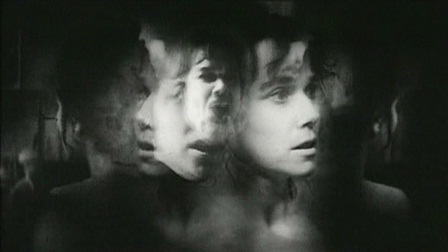
"Cannibalizing Sidney J Furie's 1982 Barbara Hershey horror film The Entity, the story of a woman who is continually assaulted and raped either by real ghosts or by awfully adept repressed traumas… The screen literally explodes with a tumult of Hershey faces, shattering Steve Burum's original cinematography into shards of frightened eyes, trembling hands, and violent outbursts of self-defense, presented in multiple exposures too layered to count, too arresting to ignore. Each frame is further entangled with details revealed by a jittery effect (a primitive traveling matte?) which spills fluttering ectoplasmic lightpools from one cubist aspect of the woman to another. The filmmaker mimics the action of nightmares by condensing the original imagery of the feature and displacing it into a new narrative — as in dreams, a narrative not explicitly linked to actual events, but emotionally more true than any rational explanation. Tscherkassky's shorts are actually considerably more terrifying than the original material."
– Guy Maddin

View all Motion Studies video selections.

Volker Pantenburg is assistant professor for moving images at the media faculty of the Bauhaus-Universität Weimar. 

Kevin B. Lee is Editor in Chief of IndieWire’s PressPlay Video Blog and contributor to Roger Ebert.com. Follow him on Twitter.

VIDEO ESSAY: Ceylan’s Faces – A Portrait Gallery of Three Films

VIDEO ESSAY: Ceylan’s Faces – A Portrait Gallery of Three Films

Who are the greatest directors of faces in movie history? When you think of great films that could double as portrait art, there’s Carl Dreyer’s The Passion of Joan of Arc, Ingmar Bergman’s Persona, and just about any film by Federico Fellini or Robert Bresson, to name a few. Of course there are countless movies graced by memorable faces, enabled by expressive performers and highly talented cameramen and crew. But what sets the films listed above apart from the glamourous pack is a specific, individualized way of looking at a face. It’s a vision that does more than express beauty, but conveys an idea of people and how to look not just at them, but into them. All of those aforementioned directors have passed on, so who today carries this torch?

Although I’ve previously paid tribute to the unmistakable portrait art talents of Steven Spielberg, here I bring attention to the recent work of Nuri Bilge Ceylan, arguably the most accomplished filmmaker to ever emerge from Turkey. His last four films have all won prizes at the Cannes Film Festival, with the most recent, Once Upon a Time in Anatolia, sure to make many top ten lists this year. (Ceylan will be receiving Cannes Directors’ Fortnight Carrosse d’Or prize in 2012.)

Much has been written about his films’ masterful explorations into the dark mysteries of human behavior, set against a canvas of stunningly composed visuals. For me, the anchor point that joins together his world of shadowy emotions and precise visuals are the many gorgeous shots of human faces. This video essay assembles several of these shots into a kind of moving portrait gallery, exploring this motif through his last three films, Climates, Three Monkeys and Once Upon a Time in Anatolia (the first two titles are available on Fandor). Of course the images wouldn’t be possible without the consistently stunning work of cinematographer Gökhan Tiryaki, as well as a revolving ensemble of professionals and non-professionals alike, each graced with their own distinct visage.

Originally published on Fandor. Read the full essay companion to the video.

VIDEO – Motion Studies #19 and #20: “Telephones” and “Home Stories”

VIDEO – Motion Studies #19 and #20: “Telephones” and “Home Stories”

From now through April, the Oberhausen International Short Film Festival will present "Film Studies in Motion", a Web Series curated by Volker Pantenburg and Kevin B. Lee. This series, available on the festival's website and Facebook page, presents weekly selections of analytical video essays on the web, in preparation for Pantenberg and Lee's presentation  "Whatever happened to Bildungsauftrag? – Teaching cinema on TV and the Web", scheduled for April 28 at the festival.

Week Four: Precursors: TV, Cinema, Contemporary Art

There is a a tradition of “Videographic Film Studies” that existed before the Internet. Some TV channels, like the West-German WDR, but also TV programmers in other countries, initiated an impressive variety of programmes on cinema that combined thorough analytical observations with an inventiveness of visual forms and techniques. Found footage has also been used in experimental cinema and contemporary art. Most examples of this audiovisual legacy remain either overlooked or invisible as they are stacked away in archives or private catalogues. For this reason, this episode mostly gathers fragments and snippets instead of entire essays.

Today's selections:

Home Stories 
Matthias Muller (1990)
The most unmistakable forerunners of the supercut come from the end of the 20th and start of the 21st century. For Home Stories (1990), Matthias Müller fashioned an elliptical narrative out of a host of very similar scenes from Hollywood melodramas. Pastel-decked women linger in large, well-ornamented rooms, all lying down, throwing their heads back and forth, hearing something, turning on a lamp, looking shocked, slamming doors. Funny in their sameness, the women also unearth a disturbed core to the gilded dreams of ‘50s America. 
– Tom McCormack, Moving Image Source

Telephones
Christian Marclay (1995)
Christian Marclay's "Telephones" (1995), a 7 1/2-minute compilation of brief Hollywood film clips that creates a narrative of its own. These linked-together snippets of scenes involve innumerable well-known actors such as Cary Grant, Tippi Hedren, Ray Milland, Humphrey Bogart and Meg Ryan, who dial, pick up the receiver, converse, react, say good-bye and hang up. In doing so, they express a multitude of emotions–surprise, desire, anger, disbelief, excitement, boredom–ultimately leaving the impression that they are all part of one big conversation. The piece moves easily back and forth in time, as well as between color and black-and-white, aided by Marclay's whimsical notions of continuity.
– From description on YouTube 

View all Motion Studies video selections.

Volker Pantenburg is assistant professor for moving images at the media faculty of the Bauhaus-Universität Weimar. 

Kevin B. Lee is Editor in Chief of IndieWire’s PressPlay Video Blog and contributor to Roger Ebert.com. Follow him on Twitter.