Watch: The Louisiana Landscapes of TRUE DETECTIVE As One Grand Open Stage: A Video Essay

Watch: The Louisiana Landscapes of TRUE DETECTIVE As One Grand Open Stage: A Video Essay

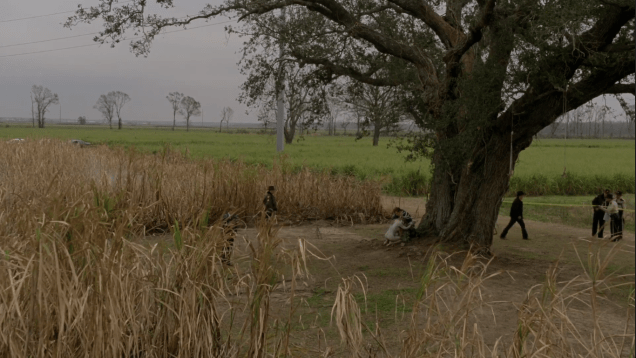
It is entirely appropriate that True Detective takes place in Louisiana. That might sound like a tautology, somewhat like saying that it’s appropriate that A Christmas Carol takes place in London or Vertigo takes place in San Francisco. However, what I mean is something different, which is called up by Jaume Lloret’s gathering of the more gorgeous landscapes of HBO’s recent episodic masterwork, filmed lovingly by Cary Fukunaga and Adam Arkapaw. The landscape of Louisiana can be described many ways: lush, verdant, mysterious, overgrown, swampy, humid, shadowy, punishing, endless. But one simple adjective which could also be applied to it is flat. The land pushes onwards until it gets tired of pushing, and then it just keeps going. Some might view the landscape, devoid of mountains, valleys, mesas, buttes, canyons, and all the other things that form the common conception of whatever spectacular is, to be quite dull. But another way of looking at it is as a tabula rasa of sorts. Rust Cohle can unfurl his eccentric, rambling monologues into the air without fear that they will ever bounce back at him. The detectives can drive on, in pursuit of one lead or another, without ever being certain that they will find the person they are looking for. And the criminals, as well, commit their acts of violence in something of a void: our first sight of the villain in the series finds him all by himself amidst the trees and shrubs of his backyard, a tiny figure, engulfed by the natural world around him even as he tries to punctuate it, in his own cruel manner. What makes True Detective so interesting, for so many people, is not its story, which is a fairly run-of-the-mill procedural with, granted, some spooky effects tossed in. It’s not the post-Tarantino digressiveness of its dialogue. And it’s not its relationships, since the parable of the man too involved in his job to be a loving marital partner has been oft-told, as has the story of the two work partners who need each other despite disagreements. It’s that all of the story’s horrific events occur on a flat plane whose closest analog, strangely enough, is reality itself.  

Watch: The Sublime Presence in Michael Mann’s Films: A Video Essay

Watch: The Sublime Presence in Michael Mann’s Films: A Video Essay

It’s hard to say what it is that’s surging beneath so many of Michael Mann’s films, what gives them their energy. It could be that he comes the closest to the sublime of any American director. For those keeping score, the word sublime is often used to describe something that reaches heights we did not expect, beyond excellence. But what the term means for artistic works is quite different: it describes a force, somewhat inexplicable, that moves forward and dwarfs everything else around it, that is near-frightening in its intensity. And that’s what we have here, in Michael Mann’s films, which Tom Kramer has managed to get at with this video piece. It’s there in the shimmering tension between Al Pacino and Robert De Niro in Heat. It’s there, believe it or not, in Colin Farrell’s momentary love in Miami Vice. Certainly the poor tormented soul at the heart of Manhunter faces it as he goes about his disturbed criminal-profiling craft. And, of course, it pervades The Last of the Mohicans, both in the characters’ relationships with each other and in their facing of the vast, complex mass of untamed America. It could be said that Mann coats his films with too much style, too much visual slickness–and that’s evident in Kramer’s piece too. But, on the other hand, that sense of visual craft could also be said to ameliorate the near-atomic power always simmering within Mann’s subject matter, always threatening to overtake all else.

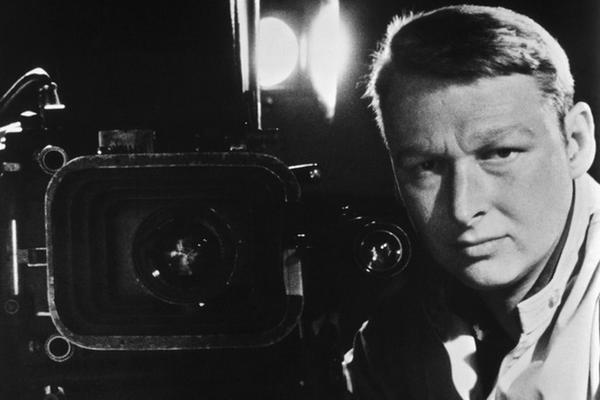
Watch: For Mike Nichols (1931-2014): A Video Essay

Watch: For Mike Nichols (1931-2014): A Video Essay

There were three big “Mike Nichols moments” in my life. The first was the universally shared one: watching The Graduate for the first time. I was a teenager and an interest in sexuality, excitement, and a nose for mischief were at their height. Watching Dustin Hoffman sleep with an older woman and then run off with her daughter, all to the tune of Simon & Garfunkel, even had me sweating as a so-called Generation Y-er. Visually, the film was doing interesting things with its pans and sudden zooms. They weren’t cheesy. They were oddly endearing. And to think that this film was made in the 1960s was all the more impressive. The next moment came when I saw Closer in the theatre back in 2004. I was well versed in the Nichols film canon (Primary Colors, Working Girl, etc.) and was expecting warmth and light at the end of the tunnel for this story of four miserable people who kept fucking each other over, literally and figuratively. But it never came. Yes, as per many Mike Nichols films, it was brilliantly acted. But this film was relentlessly blunt. It was cold. Was this really a Mike Nichols film? Yes, Nichols had made groundbreaking films in the past, but none that ever told America’s Sweetheart to “fuck off and die.” It had such a startling affect on me that when I re-watched some of his films (Wolf, Silkwood), I ardently searched to find even more tangible nastiness in some of those characters. I wanted to not like some of the fully realized, compassionate characters from those past films simply so I could connect them back to the characters of Closer—and ultimately give myself vindication as a viewer. But I couldn’t. I could never dislike Harrison Ford in Regarding Henry as much as I disliked Jude Law in Closer. But that’s okay. Nichols was showing me that he handled every type of person equally. By the time Nichols made Charlie Wilson’s War in 2007, it was obvious that Nichols really wasn’t interested in the dynamic movements of the camera; contrast that to The Graduate, which has something going on in nearly every frame. Nichols was basically creating a cinema of the theatre. He was going back to his roots. His camera was much more calm in the last feature films. He was just watching his players, smiling behind the camera. This speaks directly to the third Nichols moment for me, which happened a few years ago. I was on the “L” train in Chicago, headed downtown, listening to a podcast of Radiolab on NPR. The segment was on the origin of laughter. It opened by playing some archival audio of Nichols and Elaine May laughing hysterically as they attempted to get through a comedy bit. It was such an infectious sound, so hearty and real, that I kept playing it over and over. I was so obsessed with the clip that I found myself researching Nichols’ early comedic past, of which I was not too informed. I was shocked to learn that his original improv troupe (the Compass Players) was the predecessor to what would eventually become the Second City improv powerhouse of Chicago. Nichols was closer to my roots that I even realized.

At the end of the day, what these three moments signify was that Mike Nichols was always a filmmaker that kept surprising me. I never had him figured out. There was always a fascinating development or a piece of information about his life that was waiting to be discovered. I put this video essay together with a heavy heart. Aside from seeing such recent artists who have passed (like Philip Seymour Hoffman and Robin Williams) in the clips, the overwhelming fact that there were going to be no more films or pieces of theatre created by this great storyteller was piercing. But then I just remember that great laugh of his from that comedy sketch outtake. Something tells me that he still has some surprises waiting for me.

Nelson Carvajal is an independent digital filmmaker, writer and content creator based out of Chicago, Illinois. His digital short films usually contain appropriated content and have screened at such venues as the London Underground Film Festival. Carvajal runs a blog called FREE CINEMA NOW which boasts the tagline: "Liberating Independent Film And Video From A Prehistoric Value System." You can follow Nelson on Twitter here.

Watch: 222 Heartbeats, Over 100 Films, From TRIP TO THE MOON to E.T. to BROKEBACK MOUNTAIN to GRAVITY and Onward

Watch: 222 Heartbeats, Over 100 Films, From TRIP TO THE MOON to E.T. to GRAVITY …

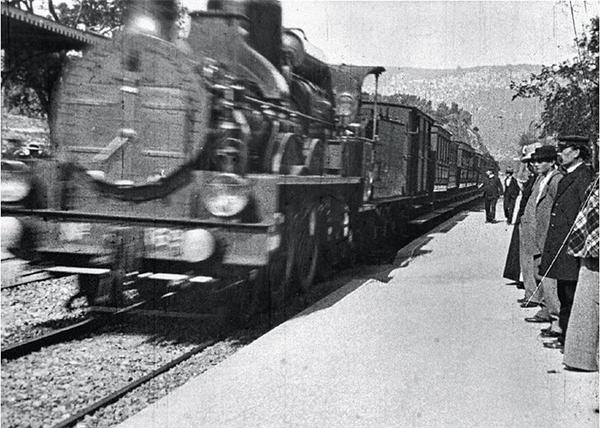
This rambunctious and rapacious video tribute to film history, featuring flashed images from over 100 films from Arrival of a Train at La Ciotat up to the present day, with a thumping heartbeat under its visuals for added intensity, is a sprint for the bases, derived from research which "Wandering Gio" details here. In fact, this piece is a tributary of a much larger piece, spanning the same time period, but with over 200 films included and at a much greater length. The current piece is just under five minutes long, and does truly take us from a man pointing a gun at an audience in The Great Train Robbery to the shower scene in Psycho to the rearing of the beast’s head in Alien to Anthony Hopkins’ mask in Silence of the Lambs up to Sandra Bullock spinning through space in Gravity. What’s interesting about watching a piece like this, beyond trying to see how many films you can identify out of the assemblage, is noting which films trigger the strongest reaction, nostalgic or otherwise. We all develop our own relationship with the flickering screen, after all, whether celluloid or digital, don’t we? As the poet Frank O’Hara famously said:

Mothers of America
                                     let your kids go to the movies!
get them out of the house so they won’t know what you’re up to   
it’s true that fresh air is good for the body
                                                                             but what about the soul   
that grows in darkness, embossed by silvery images…


Watch: Darren Aronofsky’s Cinema of Extremities: A Video Tribute

Watch: Darren Aronofsky’s Cinema of Extremities: A Video Tribute

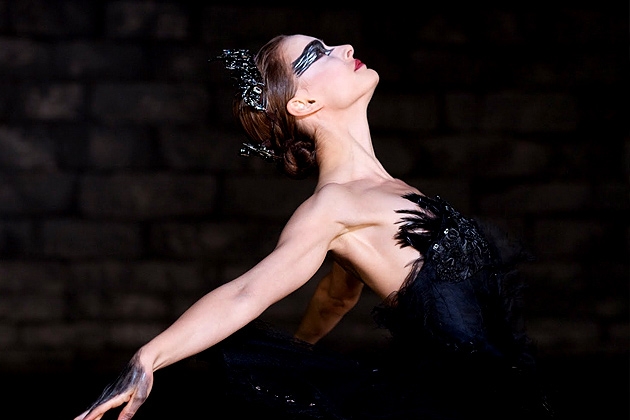
When watching this brief but dense video homage to Darren Aronofsky’s work by Edgar Martinez, one is reminded that Aronofsky never does anything by halves. The emotions he portrays are massive, embedded within timeless stories, and yet he manages, through his kinetic, sinewy style, to render these emotions with powerful detail, never short-changing their complexity. With The Wrestler, for example, Aronofsky managed to bring numerous unexpected shades to what could have been a cartoonish turn for Mickey Rourke–but at the same time, Rourke’s literal and figurative muscle was an unmistakable force in the film; part of the thrill of watching was following Rourke’s thrashing around his stage bounded by ropes, trying to correct there what he couldn’t fix outside those ropes. Black Swan displayed another aspect of Aronofsky’s work addressed here: relentless movement, a flow, for lack of a better word, that might make a film seem like one continuous, unpunctuated sentence, rather than a series of connected phrases. And Requiem for a Dream drew its energy from its daring–not trapeze-act daring, but a sense that the film was daring itself to go farther and farther into its portrayal of degradation and humiliation. There’s a tremendous amount of visual darkness in this tribute, which suits a director who seems to be constantly swimming in darkness and, at the same time, encouraging his viewers: come on in, the water’s fine. 

Watch: David Bowie’s Film Roles: A Video Essay

Watch: David Bowie’s Film Roles: A Video Essay

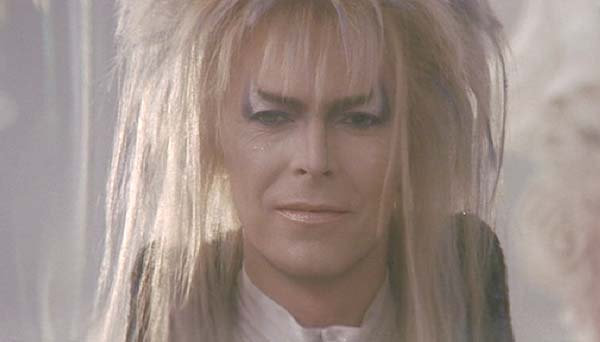
Seeing David Bowie appear in a film is always a vaguely unsettling experience, and Drew Morton’s video essay about the musician’s movie work takes us on a transfixing tour of that experience, inside and out. Bowie’s presence on camera is shaped as much by his carriage as by what we know about him. It can be said without too much exaggeration or nostalgia-laden reputation inflation that Bowie is one of the more original and enigmatic figures to record rock music in the last 50 years–he has cultivated an unearthly quality and perspective in his work practically from its outset. (There’s a reason "Space Oddity" was performed on the ISS, after all.) And in films, he projects an aura that does make it seem, at times, as if he had been teleported into the film from … elsewhere, to inject a factor of unpredictability into the work and, possibly, to stir recognition in older viewers, giving the film they’re watching a certain boost in credibility with a pop-culture wink. In the older films, like Labyrinth or The Man Who Fell to Earth or The Hunger, Bowie’s exotic, vaguely androgynous quality is all we see: his rock heritage is worn on his sleeve and empowers his performance. In the more recent The Prestige, Bowie’s performance was more buttoned-up as he played Nicola Tesla, but at the same time, the casting choice made perfect sense. Who better to play someone with as wild and untamed an imagination as Tesla’s than Bowie, the man who once dressed himself up as Ziggy Stardust, a man who communed with aliens? As Bowie’s musical career continues to develop, watching him in films like the ones sampled here should help to give well-deserved breadth to his accomplishments.     

Watch: Federico Fellini’s Influence on Wes Anderson: A Video Essay

Watch: Federico Fellini’s Influence on Wes Anderson: A Video Essay

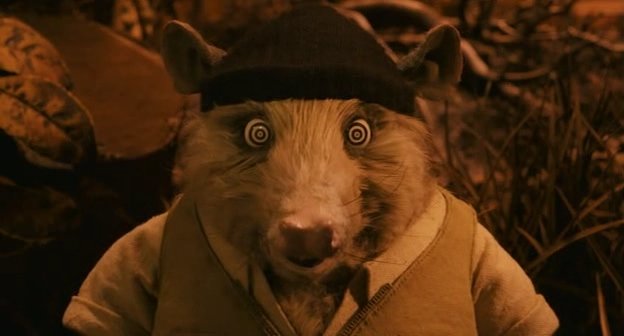
Is Wes Anderson influenced by Federico Fellini? Yes. Inasmuch, of course, as any American film director of the past 50 years might have been influenced by him. Fellini, Ingmar Bergman, Francois Truffaut, Jean-Luc Godard and others opened up a possibility for expansiveness and experiment in cinematic storytelling in the mid-years of the twentieth century that is as irreplaceable as it is hard to dispute. As this haunting piece by Andrew Infante shows, there’s a lot of similarity to note here, whether it’s the vaguely dreamlike way events occur in Anderson’s films, external logic giving way, beneath the surface, to something darker and stranger, or the lack of context for so many of the images and scenarios Anderson presents, from the garish outfit Max Fischer wears onstage in Rushmore to the strange silence of the hawk in Fantastic Mr. Fox and onwards. There’s also a sense of nostalgia, of looking backwards, in Anderson’s films that very much recalls Fellini classics like Amarcord or Juliette of the Spirits–in which the sense we get is not so much that the past was better, but that it was richer, even if that richness included equal parts suffering, temptation, and ecstasy. And is there decadence in Anderson’s films that rivals that shown in Fellini’s work? Yes. The older director filmed it: the parties, the orgies, the makeup, the wealth. Anderson embraces the same spirit, but works towards allowing his own imagination, the cult of one in which his vision is the founder and the sole acolyte, to steer his films. You could say "self-indulgent," but that’s not quite it: it’s a career in which, rather than killing his darlings, Anderson has multiplied them, magnified them and built them up to show the world the great benefit which has been reaped by keeping them alive.

Watch: What If RATATOUILLE Met THE WOLF OF WALL STREET? Two Trailers, Merged

Watch: What If RATATOUILLE Met THE WOLF OF WALL STREET? Two Trailers, Merged

So here’s the thing: the most resounding criticism of Martin Scorsese’s The Wolf of Wall Street was that its rambunctious, excessive, extreme, vulgar manner was not, in fact, satire but an endorsement, and in fact a glorification, of Wall Streeters’ behavior, without filter, without restraint, loud, in your face, and utterly unapologetic. No one made similar accusations of Ratatouille, for a number of reasons. It was a cartoon, so its viewers knew what to expect. Its storyline was not the sort of storyline that attracts such rage. Oh, and of course, lest I forget: Ratatouille was about RATS! In all other respects, though, the two films are quite similar. Could have been by the same director, in fact. And as if to prove it, we have Harrison Allen’s ingenious mix of the two films, right here. Once you watch this, you’ll wonder how you could have ever thought the films were all that different…

Watch: A Video Essay on the Structural Beauty of Martin Scorsese’s THE WOLF OF WALL STREET

Watch: A Video Essay on the Structural Beauty of Martin Scorsese’s THE WOLF OF WALL STREET

What Milad Tangshir has done with this extremely well-researched and well-edited video essay on Martin Scorsese’s The Wolf of Wall Street is actually several things. On the most basic level, he has broken down one of Scorsese’s best films of recent years into its components: a tightly structured plot; nuanced narration; camera techniques which allow us to inhabit the transformation at the heart of the movie. On another level, Tangshir places the film within the context of Scorsese’s other films, most directly Raging Bull and Mean Streets, showing us how, in films externally quite different from this one, Scorsese’s mind manifests in the way the film is pieced together, and is consistent. And on still another level, the piece shows how this film can be linked to other similar films from throughout film history, from Citizen Kane forwards. The essay might help diehard fans of Scorsese and his work renew their appreciation for Wolf–and it might help the many people who found the film bothersome appreciate the method at the heart of what is a maelstrom of satirical, Satyricon-worthy madness. Tangshir shows us Jordan Belfort’s ecstacy and his tragicomic decline in equal measure, taking us on a frightening ride through what Scorsese intimates, in one of the interview clips presented here, is our collective mind.

Watch: A Video Essay Ode to Martin Scorsese’s BRINGING OUT THE DEAD

Watch: A Video Essay Ode to Martin Scorsese’s BRINGING OUT THE DEAD

For the last year or so, Scout Tafoya has been posting a fantastic series of video essays called "The Unloved" at RogerEbert.com. The series takes as its subject films which were underappreciated  at the time of their release and which deserve, in Tafoya’s view, another look; other films in the series have been Alien 3, The Village, and John Carter. With each piece, Tafoya shows a great deal of passion for the work that goes into making these films, as well as for the passion of the directors themselves. Tafoya’s most recent installment was on Martin Scorsese’s Bringing Out the Dead, a film describing the crazed and vaguely hallucinatory careenings of a New York ambulance driver played by Nicolas Cage, thrust up against life and death at their most intense. Tafoya gets at the heart of a couple of irreplaceable elements in this film. One is the presence of New York, shown as only Scorsese could film it: dark, dangerous, wild, uncensored, gleeful, mournful, desperate, cacophonous, deathly silent. The other is Cage’s terrific performance, possibly one of his best in Tafoya’s estimation. The video essay does a beautiful job of making a point at its outset and following it through, managing to interrogate that point at various junctures along the way without going off course–and also managing to speculate meaningfully on why the film was not as critically revered as some of Scorsese’s other films have been. When presented in this light, its neglect becomes hard to understand.