Watch: Why WERE the Lights Always Flickering in ‘Twin Peaks’?

Watch: Why WERE the Lights Always Flickering in ‘Twin Peaks’?


In the world of ‘Twin Peaks," the lights are on the fritz. Transformers buzz. Electrocutions may occur. Events of great significance take place almost entirely through circuitry, be it on a television screen or through a phone wire. What does it all mean? Everything and nothing. In David Lynch’s vision, the electric spark is the clash of small-town sensibilities and big-city decadence, between the past and the more modern world, between human life and the shadowy world beyond it where Laura Palmer and "Bob" dwell, between the baffling, horrific day-world and the world of dreams. This video essay by A. Martin and C. Álvarez López takes us through the short-circuitry of ‘Twin Peaks,’ at times hilarious, at times awful–it’s a beautiful, uncomfortable, ride. Enjoy.

Watch: Listening to the Sounds of ‘Star Wars’

Watch: Listening to the Sounds of ‘Star Wars’

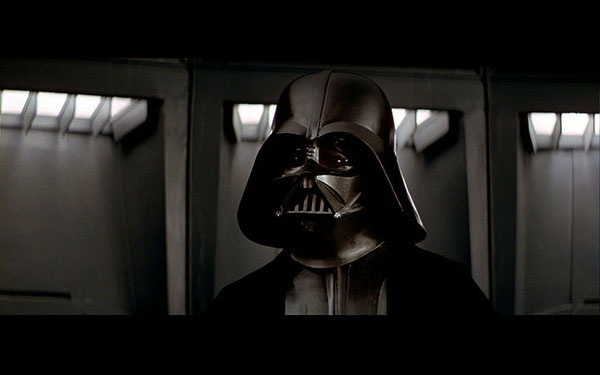
It’s been observed many times that muscles are crucial to human memory–that we remember things as much with our arms, legs, and fingers as we do with our brains. It stands to reason, then, that sounds can call up a range of memories about the experience with which they’re associated: sometimes in direct connection, sometimes not so direct. This new video by Rishi Kaneria takes us through the most familiar sounds of 1977’s ‘Star Wars Episode IV: A New Hope,’ which is a milestone in the memories of many viewers. In so doing, Kaneria reminds us that, thanks to the sound design of Ben Burtt, the auditory experiences of the film–R2D2’s beeps, C3PO’s Anglo-robotic accent, Chewbacca’s grunt-howl–were as much responsible for the movie’s penetration of the public consciousness as its entertainment value. Close your eyes, and listen to the sounds of the place where this particular story began–or where we began to hear it told.

Watch: What Makes Lynne Ramsay’s Films Poetic? A Video Essay

Watch: What Makes Lynne Ramsay’s Films Poetic? A Video Essay

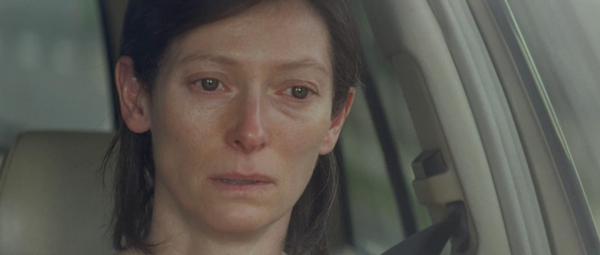
In his most recent ‘Every Frame a Painting‘ video essay, Tony Zhou does a couple of admirable things. One: He takes as his subject Lynne Ramsay, the director of such films as ‘We Need To Talk About Kevin,’ ‘Morvern Callar,’ and ‘Ratcatcher.’ To date, Ramsay has seen very little acute examination of her techniques, though her critical recognition has been substantial. So: it’s good to see such treatment, in watchable form, no less! The other admirable thing: Zhou tries to talk about what makes a film poetic, and succeeds. He talks about the importance of details, of repetition, even of characters’ faces, and how these elements can force viewers to put stories together in their minds, when those stories aren’t spelled out for them on the screen. It can be hard enough to discuss written poetry, let alone poetry on the screen, but Zhou comes as close as anyone could to describing the way we process poetic experience with this beautiful, thoughtful piece about an under-recognized cinema artist.

Watch: All of David Lynch’s Most Bizarre Moments… in Three Minutes!

Watch: All of David Lynch’s Most Bizarre Moments… in Three Minutes!

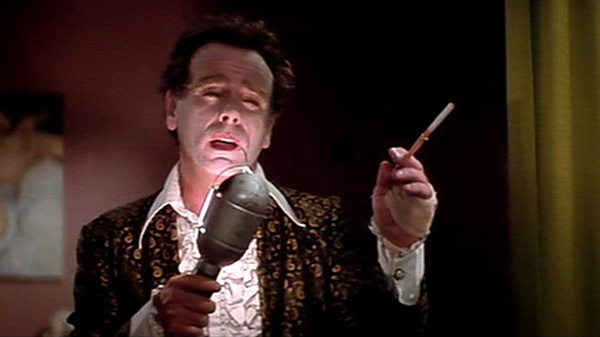
Each video in this series will trace a crucial element of a brilliant American director’s work throughout the director’s filmography–in three minutes. Our first subject: David Lynch.

The films of David Lynch are
certainly not the easiest to digest.  Lynch has two well-known
fascinations in filmmaking: the inexplicable and the bizarre.  Often in a
David Lynch-directed work, we are presented with isolated moments that
simply do not seem to fit with, or make any coherent connection to, the rest
of the piece.  Even after further analysis and repeated viewings, many
of these moments just cannot be logically explained.  In addition to
these moments, Lynch frequently employs bizarre, disturbing
visuals and situations.  Frequently, the bizarre and the inexplicable
work together to create a sensation that can only be experienced
through David Lynch.

The
filmmaker’s knack for the unsettling was apparent from the start with
the squirming cooked chicken spewing blood in his feature film debut, ‘Eraserhead,’ a film which is inexplicable, bizarre, and
disturbing in equal parts.  Lynch’s unique styling seemed to settle down a bit in his next
two films, ‘The Elephant Man‘ and ‘Dune,’ due to an abundance of studio
interference.  However, Lynch returned to independent filmmaking with
what many consider his masterpiece, ‘Blue Velvet,’ and solidified the
Lynchian style.  From here onwards, every one of his films, as well as his television
series, ‘Twin Peaks,’ screamed "David
Lynch."  In 1999, Lynch veered slightly off course and tried something
different with the G-rated film ‘The Straight Story,’ which was produced
by Disney.  The clearly self-aware title says it all, in this case.  However, despite the "normal" nature of the
film, there are still glints of Lynchian filmmaking peeking through the
modest picture. 

Here
is a look at some of Lynch’s trademark inexplicable and disturbing
moments, from the perplexingly caustic ‘Eraserhead’ to the hauntingly
beautiful mess ‘Inland Empire.’

Films included:

Eraserhead (1978)
The Elephant Man (1980)
Dune (1984)
Blue Velvet (1986)
Wild at Heart (1990)
Twin Peaks (series) (1990-91)
Twin Peaks: Fire Walk With Me (1992)
Lost Highway (1997)
The Straight Story (1999)
Mulholland Dr. (2001)

Inland Empire (2006)


Jacob T. Swinney is an industrious film editor and filmmaker, as well as a recent graduate of Salisbury University.

Watch: The History Behind Method Acting: A Video Essay

Watch: The History Behind Method Acting: A Video Essay

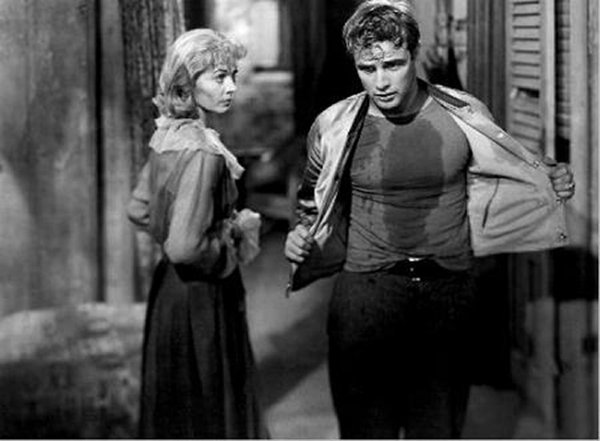
Forget Joaquin Phoenix. Forget Charlize Theron. Forget Christian Bale. Forget Daniel Day-Lewis. Forget Heath Ledger. Forget Jack Nicholson. Forget Philip Seymour Hoffman. Forget Robert DeNiro. Forget Cate Blanchett. Forget Tilda Swinton. Forget Meryl Streep. Forget Glenn Close. These are all actors who, at one time or another, have "disappeared" inside their roles. This sort of disappearance owes its existence in the present day to the early work of Marlon Brando and James Dean, in films like ‘A Streetcar Named Desire,’ ‘On the Waterfront,’ ‘The Wild One,’ ‘Giant,’ and ‘Rebel Without a Cause.’ Without this standard, as it were, the performances mentioned up top might not have taken place, because we would not have realized the potential of method acting to transform the screen. This nearly 30-minute video essay by FilmmakerIQ does a wonderful job of taking us through the developments (starting in ancient Greece!) that led to method acting and explaining its principles as laid out by Constantin Stanislavski. We also get, of course, a sampling of great method performances by Brando, James Dean, and others–as well as a glimpse inside the minds of Stella Adler, Lee Strasberg and other method proponents.

Watch: 50 Timeless Movie Moms

Watch: 50 Timeless Movie Moms

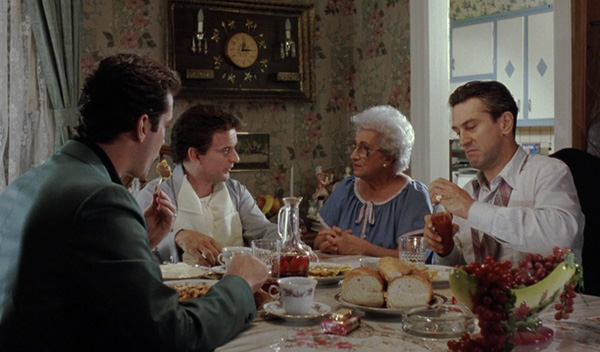
Who could forget the opening scene of Martin Scorsese’s masterpiece ‘Goodfellas‘? There’s the "in medias res" dynamic (the titular trio are
riding in a car with a supposed dead body in the trunk), the shocking
violence (the screen even dips to color in red during a gun shooting)
and then there’s Henry Hill’s (Ray Liotta) iconic voiceover line ("As
far back as I can remember, I always wanted to be a gangster"). What’s
most interesting about this scene is that when we circle around and
revisit it later in the film, it is juxtaposed against the tenderness of
the domestic scene that precedes it: the trio, in an effort to finish
the burial of Billy Batts’ corpse, makes a rendezvous to Tommy’s (Joe
Pesci) mother’s house to pick up a shovel. They’re surprised when
Tommy’s mother (played by Scorsese’s own mother Catherine) is awake and
forces them all to stop what they’re doing and eat a home cooked meal.
The scene is memorable for its warmth, its generosity and the
authenticity of having grown men respectfully obeying the authority and
presence of a home’s matriarch. For a film about gangsters doing
terrible things, this scene has the knowing power to anchor these
characters as real and ultimately vulnerable. That’s one of the many
strengths that mothers have: the uncanny ability to humble us. And
throughout the history of cinema, mothers have had an everlasting impact
on the screen characters we love. ‘Goodfellas’ is another prime example
of this. Even tough guys have moms too.

And here is a list of the moms appearing in this video essay, in order:

Flowers in the Attic
Mother (Victoria Tennant)

Sounder
Rebecca Morgan (Cicely Tyson)

Bambi
Bambi’s Mother (Paula Winslowe)

The Incredibles
Helen Parr (Holly Hunter)

Mrs. Miniver

Mrs. Miniver (Greer Garson)

Precious
Mary (Mo’Nique)

Gloria
Gloria Swenson (Gena Rowlands)

The Grifters
Lilly Dillon (Anjelica Huston)

Mask
Florence ‘Rusty’ Dennis (Cher)


Cinderella
Fairy Godmother (Verna Felton)

Not Without My Daughter
Betty Mahmoody (Sally Field)

Freaky Friday
Mrs. Andrews (Barbara Harris)

Mother
Beatrice Henderson (Debbie Reynolds)

Bloody Mama
‘Ma’ Kate Barker (Shelley Winters)

The Manchurian Candidate
Mrs. Eleanor Shaw Iselin (Angela Lansbury)

Mildred Pierce
Mildred Pierce (Joan Crawford)

Rosemary’s Baby
Rosemary Woodhouse (Mia Farrow)

New York Stories
Mother (Mae Questel)

Freaky Friday
Tess Coleman (Jamie Lee Curtis)

Ordinary People
Beth (Mary Tyler Moore)

Throw Momma From The Train
Momma (Anne Ramsey)


Mommie Dearest
Joan Crawford (Faye Dunaway)

Serial Mom
Beverly R. Sutphin (Kathleen Turner)

A.I. Artificial Intelligence
Monica Swinton (Frances O’Connor)

American Gangster
Mama Lucas (Ruby Dee)

Carrie
Margaret White (Piper Laurie)

The Brood
Nola Carveth (Samantha Egger)

Mother
Mother (Hye-ja Kim)

The Fighter
Alice Ward (Melissa Leo)

Terminator 2: Judgment Day
Sarah Connor (Linda Hamilton)

Psycho
Norma Bates (Virginia Gregg)

Mrs. Doubtfire
Mrs. Doubtfire (Robin Williams)

American Pie
Stifler’s Mom (Jennifer Coolidge)

The Kids Are All Right
Nic (Annette Bening)

Jules (Julianne Moore)

Mamma Roma
Mamma Roma (Anna Magnani)

Goodfellas
Tommy’s Mother (Catherine Scorsese)

Dumbo
Mrs. Jumbo (Verna Felton)

Sophie’s Choice
Sophie (Meryl Streep)

Philadelphia
Sarah Beckett (Joanne Woodward)

Terms of Endearment
Emma Horton (Debra Winger)

Aurora Greenway (Shirley MacLaine)

Boyz N The Hood
Mrs. Baker (Tyra Ferrell)

Monster’s Ball
Leticia Musgrove (Halle Berry)

The Passion of the Christ
Mary (Maia Morgenstern)

The Curious Base of Benjamin Button
Queenie (Taraji P. Henson)

Stepmom
Jackie Harrison (Susan Sarandon)

Forrest Gump
Mrs. Gump (Sally Field)


What’s Eating Gilbert Grape
Bonnie Grape (Darlene Cates)

The Fox and the Hound
Tod’s Mother (N/A)

Beaches
Hillary Whitney Essex (Barbara Hershey)

A Farewell to Arms
Catherine Barkley (Helen Hayes)

Nelson Carvajal is an independent digital filmmaker, writer and
content creator based out of Chicago, Illinois. His digital short films
usually contain appropriated content and have screened at such venues as
the London Underground Film Festival. Carvajal runs a blog called FREE CINEMA NOW which
boasts the tagline: "Liberating Independent Film And Video From A
Prehistoric Value System." You can follow Nelson on Twitter here.

Watch: Orson Welles: A Five-Minute Exploration

Watch: Orson Welles: A Five-Minute Exploration


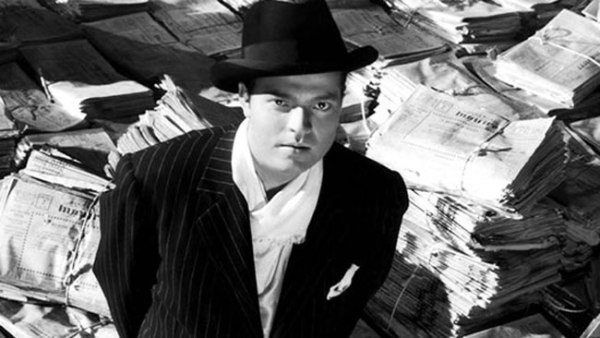
Citizen Kane,‘ ‘The Magnificent Ambersons,’ ‘Macbeth,’ ‘The Trial,’ and ‘F for Fake‘ are among the numerous films by Orson Welles turned over and examined in this thoughtful Fandor video essay by Jonathan Rosenbaum and Kevin B. Lee. Early on in the piece, Rosenbaum, author of Discovering Orson Welles, makes an assessment that could be true of any individual’s relationship with great artwork: one is constantly in the process of getting to know it. And get to know Welles we do: the video is not so much a chronology of Welles’ films as a highly personalized tour of Rosenbaum’s experiences of them. Welles would have been 100 this year, and with the passing of that milestone it is worth surveying and re-examining his work, even perhaps trying to view it freshly, unburdened of its substantial critical background.

Watch: Jean-Luc Godard and Anna Karina: A Marriage on Film

Watch: Jean-Luc Godard and Anna Karina: A Marriage on Film

[Extended transcript follows.]

[Jean-Luc] Godard contacted [Anna] Karina after seeing her in a Palmolive
commercial. He asked her to play a small role in ‘Breathless.’ She refused when
she found out the part required nudity. Godard cast her in the lead role of his
next film, ‘Le Petit Soldat.’ Halfway through production, the cast and crew
went out to dinner—including Karina and her boyfriend. Godard wrote her a note
and put it in her hand under the table. It said, “I Love you. Rendezvous at the
Café de la Paix at midnight.” Karina left her boyfriend and began a
relationship with Godard. They were happy. The production of Godard’s next
film, ‘A Woman is a Woman’, found the couple often arguing. Godard adjusted the
story to reflect the difficulties of their relationship in a humorous way.
Karina became pregnant over the course of filming. Godard proposed and they
were soon married. A friend and fellow filmmaker, Agnes Varda, cast the couple
in a small part of her film ‘Cleo From 5 to 7.’ Godard was usually preoccupied
with his work and would often leave Karina home alone. In the spring, she had a
miscarriage and fell ill. When her health returned, she acted in another film
while Godard attempted to set up a new project. Karina began an affair with her
co-star. In 1961, Karina decided to divorce Godard, but they made up and
started work on ‘Vivre sa vie.’ In 1963, Godard wrote and directed a film about
the end of a marriage titled ‘Contempt.’ It drew largely on his relationship
with Karina with many lines being things Karina actually said. Their divorce
was finalized at the end of 1964. Many of Godard’s subsequent films starring
Karina dealt with their relationship. In ‘Alphaville,’ Karina’s character does
not know the meaning of the word “love.” In ‘Pierrot le fou,’ Karina’s
character betrays the male lead. Their last film together, ‘Made in U.S.A.,’
has Karina shoot and kill a man meant to represent Godard himself. Despite the
bitterness on set, these films feature many close-ups of Karina, which seems to
suggest a longing. The last film in Godard’s cinematic period, titled
‘Weekend,’ depicts a harsh world littered with fiery car wrecks and rife with
anger and even cannibalism. The film ends with the words, “end of cinema.”

Tyler Knudsen, a San
Francisco Bay Area native, has been a student of film for most of his life.
Appearing several television commercials as a child, Tyler was inspired to
shift his focus from acting to directing after performing as a featured extra
in Vincent Ward’s
What Dreams May Come. He studied Film & Digital
Media with an emphasis on production at the University of California, Santa
Cruz and recently moved to New York City where he currently resides with his girlfriend.

Watch: ‘Whiplash’ Is a Story Told Through Sounds and Close-Ups

Watch: ‘Whiplash’ Is a Story Told Through Sounds and Close-Ups

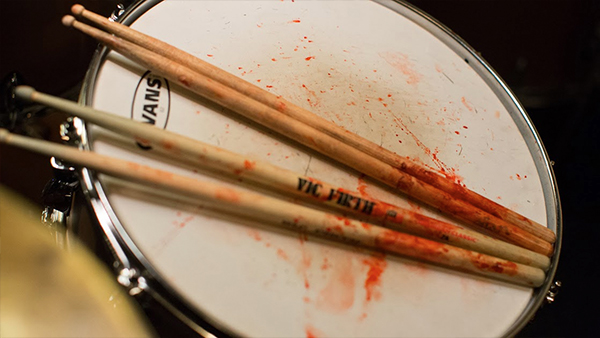
I often thought, while watching ‘Whiplash‘, that I might be able to get as much out of it with my eyes closed as I would with my eyes open. Damien Chazelle invested an incredible amount in the auditory effects of this film, as befits a movie about musicians–it’s in the actors’ voices, in the booming sound of J.K. Simmons’ voice or Miles Teller’s post-adoloscent rasp, but it’s also in the music, stopping and starting, proving exhilarating once we’re finally allowed to hear the title song continuously. That said, though, if you simply listened to the movie, you’d miss its odd use of close-ups: hands, drumsticks, drums, sheet music, car wheels, keys, clocks. As these images accumulate, they begin to give metaphorical weight to the film’s simple, old story, telling another story about the difficulties of learning, growth, and survival. This new piece by Jorge Luengo shows a side of the film that is, in the final analysis, the film’s better side: an underpinning of craft behind a vehicle for two talented actors.

Watch: Out of Nazi Germany and Into the Movies: Five Soundtrack Composers

Watch: Out of Nazi Germany and Into the Movies: Five Soundtrack Composers

What do Billy Wilder’s ‘Double Indemnity,’ Michael Curtiz’s ‘The Adventures of Robin Hood,’ Fritz Lang’s ‘Hangmen Also Die!,’ Max Ophuls’ ‘Caught,’ and Fred Zinnemann’s ‘The Nun’s Story‘ have in common? Their soundtracks were all created by composers who fled Nazi Germany during the 1930s: Miklós Rózsa, Erich W. Korngold, Hanns Eisler, Friedrich Hollaender, and Franz Waxman, respectively. These men either left out of opposition or because they were antagonized (to put it mildly), and the composed soundtracks for some of film’s most enduring masterpieces. As gathered here by Ian Magor, they’re quite entertaining–in particular Wilder’s Fred McMurray vehicle and, interestingly, Curtiz’s gift to Errol Flynn (and others).