Watch: The Books in Wes Anderson’s Films

Watch: The Books in Wes Anderson’s Films

Wes Anderson is the most bookish American filmmaker there is. You don’t watch his films, you read them, just as you might have done with Richard Linklater’s recent ‘Boyhood.’ There are no loud crashes, alarming close-ups, or slamming crescendos to grab your attention, nor is there any great rush through their narratives. They develop at a loping speed, at most, often more of a trot. It makes sense, then, that Anderson would feature books so prominently in his movies, given that if Anderson’s work has a spirit animal, it’s the hardcover child of Gutenberg. The A to Z Review has put together a gorgeous compendium of all the books (or the most notable ones) in Anderson’s films; watching it reminds us that the act of storytelling, less than that of creating suspense, developing characters, etc., is the foundation of Anderson’s work, from ‘Rushmore’ to ‘Moonrise Kingdom’ to ‘The Grand Budapest Hotel.’

Watch: Who Is Andrei Tarkovsky?

Watch: Who Is Andrei Tarkovsky?

A transcript follows:

There is no one in the history of cinema who photographs the poetic beauty of nature quite like Andrei Tarkovsky. He made only seven feature films and yet, his impact on cinema remains one of the most substantial. Tarkovsky was born in the Soviet Union on April 4th, 1932— his mother, a literature scholar and proofreader, his father, a famous Soviet poet. Having a poet for a father obviously influenced his own work greatly. His style can be appropriately described as ‘visual poetry.’ His stylistic trademarks consist of long unbroken takes, beautiful contemplative scenes of nature, unconventional narrative structures, and surreal imagery.
 
In 1954, he went to a film school in Moscow called the State Institute of Cinematography where he made his first short film titledThe Killers—based on the short story by Earnest Hemingway. His start in film school was very well-timed. Prior to 1953, there was much censorship in the Soviet Union because of Joseph Stalin. But after Stalin’s death in 1953, Nikita Khrushchev took over and reversed many of the censorship laws as part of his “de-Stalinization” which came to be known as the “Khrushchev Thaw.” Because of this, film students like Tarkovsky were now allowed to view films from outside of Russia including the films of Kurosawa, Buñuel, Bergman, Bresson, the Italian neorealism movement, and the French New Wave movement. These films were a big influence on him—he especially loved Bergman and Bresson. Bergman eventually returned the affection saying, “Tarkovsky for me is the greatest, the one who invented a new language, true to the nature of film, as it captures life as a reflection, life as a dream.”
 
In 1959, Tarkovsky teamed up with a classmate to make The Steamroller and the Violin. They wrote the screenplay together and Tarkovsky directed it. The film was his senior project and went on to win the First Prize at the New York Student Film Festival in 1961. In 1962, Tarkovsky directed his first feature film titled Ivan’s Childhood about a 12 year old orphan boy named Ivan during World War II. It was the only film he directed that he did not write the screenplay for, but he was around the same age as Ivan during the war and drew from his own experience while making the film.
 
Every film he made was somewhat autobiographical, but none more so than The Mirror, which touches on his experiences during the war, his mother, and the absence of his father. In 1939, he fled Moscow with his mother and sister to live with his grandmother in the countryside, which is reflected in the film. The Mirror is a beautifully haunting piece of filmmaking that evokes a dreamlike atmosphere.
 
The beauty of the natural world is a major theme in all of Tarkovsky’s work, but almost the entirety of his most famous film doesn’t take place on Earth at all—rather it takes place on a space station orbiting a planet known as Solaris. It was a considerable departure from his comfort zone being so removed from the naturalistic setting found in all of his other films and yet, Tarkovsky’s unique perspective shines through.
 
When asked what advice he would give to young directors, he said, “It requires sacrificing of yourself. You should belong to it, it shouldn’t belong to you. Cinema uses your life, not vice versa.”

Clips used:

Solaris (1972 dir. Andrei Tarkovsky)
Stalker (1979 dir. Andrei Tarkovsky)
The Mirror (1975 dir. Andrei Tarkovsky)
The Sacrifice (1986 dir. Andrei Tarkovsky)
The Killers (1956 dir. Andrei Tarkovsky, Marika Beiku, Aleksandr Gordon)
Yojimbo (1961 dir. Akira Kurosawa)
Un Chien Andalou (1929 dir. Luis Buñuel)
The Seventh Seal (1957 dir. Ingmar Bergman)
Pickpocket (1959 dir. Robert Bresson)
Rome, Open City (1945 dir. Roberto Rossellini)
Breathless (1960 dir. Jean-Luc Godard)
Andrei Rublev (1966 dir. Andrei Tarkovsky)
The Steamroller and the Violin (1961 dir. Andrei Tarkovsky)
Ivan’s Childhood (1962 dir. Andrei Tarkovsky)
Nostalgia (1983 dir. Andrei Tarkovsky)

Tyler Knudsen, a San Francisco Bay Area native, has been a student of film for most of his life. Appearing in several television commercials as a child, Tyler was inspired to shift his focus from acting to directing after performing as a featured extra in Vincent Ward’s What Dreams May Come. He studied Film & Digital Media with an emphasis on production at the University of California, Santa Cruz and recently moved to New York City where he currently resides with his girlfriend.

Watch: Want to request a Cannes-celation?

Watch: Want to request a Cannes-celation?

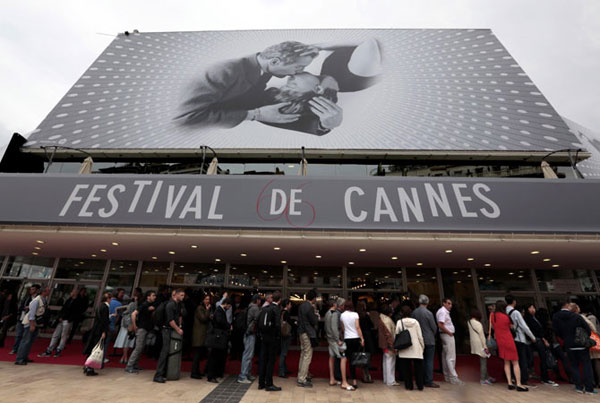
Sad you couldn’t go to the Cannes Film Festival this year? Tired of looking at pictures of people grinning gleefully as the southern French coastal sun beats down on them, while you’re huddled inside on a blustery, rainy day? Try a Cannes-celation! It’s a piece of software that… well, just try it and see.

Watch All Six ‘Star Wars’ Films at the Same Time. Literally.

Watch All Six ‘Star Wars’ Films at the Same Time. Literally.

Words to describe this film by ‘Archer’ animator Marcus Rosentrater, which superimposes all six ‘Star Wars’ movies, on top of each other, for a 2-hour 22-minute run time, could be: exhilarating. Exciting. Passionate. Detached. Confusing. Deranged. Brilliant. Turbulent. Regenerative. Transformative. Muddled. Cumulative. Or none of these, or maybe all of them at once, on top of each other. We’ve got R2D2 and C3PO melding into each other, sort of like Bergman’s ‘Persona,’ but different. Elsewhere, we’ve got Obi-Wan Kenobi having his head bisected by a large fighter plane. Anything you might imagine, in fact, you’ll find in here. So, watch it. You can focus on it, and slowly derange your senses. Or, you could use it as a backdrop, on a large-screen TV, as you do something mundane, like cleaning house or saving the galaxy.

Watch: ‘The Shining,’ The Twins, and You

Watch: ‘The Shining,’ The Twins, and You

There seem to be two general schools of thought on Stanley Kubrick’s timeless ‘The Shining.’ Either everything means something, or none of it means anything (and those who think otherwise are deluded). The two camps agree only on the fact that the film is terrifying. Rob Ager does a good job of straddling the two attitudes in his Collative Learning video essay on one of the oddest features of the film: the twins. Ager takes us through some details we may have missed (or may not have, if "we" are obsessive): the recurrence of the colors red and blue, the symmetrical relationship of the twins’ butchered bodies in one of Danny’s nightmares, a (possibly staged) making-of clip featuring two women who look quite a bit like the twins–as well as George Mason, of all people. (Not that surprising, given that Mason’s performance as Humber Humbert in Kubrick’s ‘Lolita’ was one of his greatest roles.) In any event, another thing all critical camps may agree on concerning ‘The Shining,’ and which this piece proves, is that you can never watch the film too much.  

Watch: What Makes ‘House of Cards’ A Success?

Watch: What Makes ‘House of Cards’ A Success?

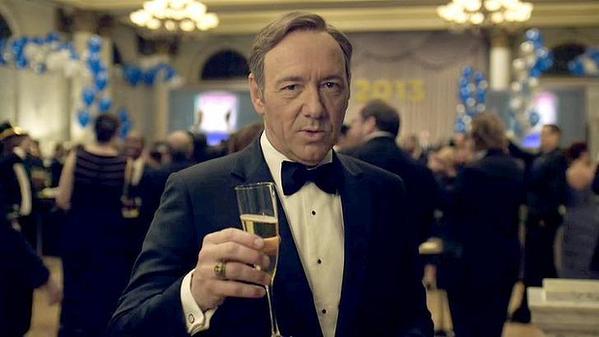
As I’m fond of saying, nothing happens without a reason. That film you love, the one you can’t stop re-watching? That scene you discuss for hours? That dramatic climax that caps anything you’ve seen before? It’s the product of deliberation, planning, calculation: a director whose work is memorable becomes that way because he or she wants it to be that way–and to do that, layers of hard work have to be poured on, making what seems to you like an effortless product but is in fact anything but. In the case of David Fincher’s ‘House of Cards,’ the first series to make Netflix a credible location for entertainment, there are several factors in play, some we know and some we don’t, nicely enumerated in this brief but dense analysis by Elena Ishchuk: breaking the 4th wall, dynamic use of lights and darks, determined use of blues and yellows, centralized shots, and others. If you haven’t yet dipped into what many deem an addictive series, powered by Kevin Spacey’s demonic drawl, this piece might be a nice introduction for you.

Watch: Xavier Dolan Makes Filmic Poems

Watch: Xavier Dolan Makes Filmic Poems

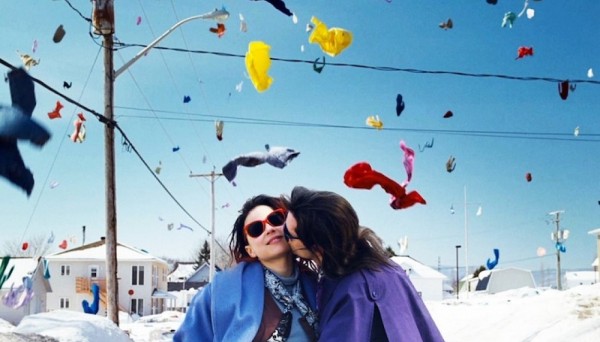
Watching a Xavier Dolan film is like having a poem smashed over your head. If you don’t know what I mean by that sentence, then you should watch Kevin B. Lee’s remarkable compilation video essay for Fandor on Dolan’s film ‘Laurence Anyways,’ above. Take a look, and let me know if I’m right. (And yes, I used the word "filmic" in the headline.)

Watch: Robert Altman’s Best Overlapping Dialogue … In Three Minutes!

Watch: Robert Altman’s Best Overlapping Dialogue … In Three Minutes!

While there are many trademarks that define his extensive body of work, Robert Altman’s films may be most easily recognized through the director’s unique approach to dialogue.  Rather than utilizing the more traditional give-and-take approach to a conversation, Altman would have two, three, or even entire rooms full of people delivering their lines at the same time.  This overlapping dialogue, while unconventional and often difficult to comprehend, created a sense of realism that became a staple of Altman’s films.  Altman never seemed to be overly concerned with creating a digestible piece of cinema–he recreated life and dropped us right in the middle of it.  We do not simply view a Robert Altman picture, we experience it in full immersion.  Here is a three-minute showcase of Altman’s famous approach to dialogue. 

Films featured, in order of appearance:

M.A.S.H.
McCabe and Mrs. Miller 
Thieves Like Us
Nashville
Popeye
The Player
Short Cuts
Kansas City
Dr. T & the Women
Gosford Park
The Company
A Prairie Home Companion

Jacob T. Swinney is an industrious film editor and filmmaker, as well as a recent graduate of Salisbury University.

Watch: ‘Twin Peaks’: A Short Video History

Watch: ‘Twin Peaks’: A Short Video History

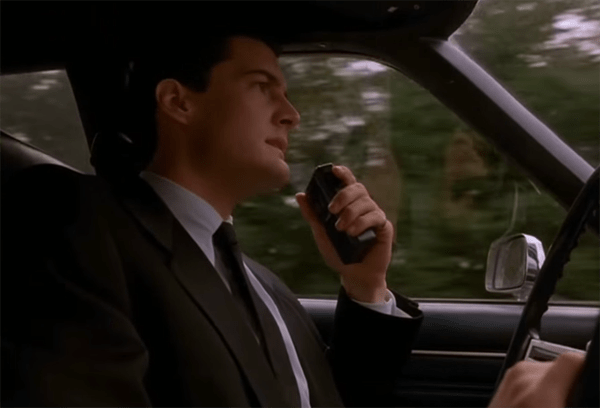
What is it that made ‘Twin Peaks’ so influential in so many different cultural areas? This is the question most often asked about David Lynch’s and Mark Frost’s pioneering television series–beyond, of course, "What’s it mean?" This video essay by YouTube user "Glit Boy" offers us a history of the show and, in so doing, provides a possible answer to the question, perhaps uninintentionally. The video shows us snippets of the show’s origins, alluding to Frost’s previous work with ‘Hill Street Blues,’ by way of saying that the show was wholly unconventional in a time at which the networks were dominated by police procedurals and other similarly plot-driven vehicles. After a run-down of the plot, we get an explanation of the show’s influence on video games such as ‘A Link to the Past’ and ‘Deadly Premonition,’ as well as series such as ‘The Killing’ and countless others. What all of this accumulated evidence indicates is that what made the series so influential may have been its confidence: not just its storytelling skill, or its cinematography, but the sense that all of its elements, from Agent Cooper’s love of coffee to the fixation of the Log Lady, were in place before Lynch even imagined them, that he simply walked into the world of the show and began filming.

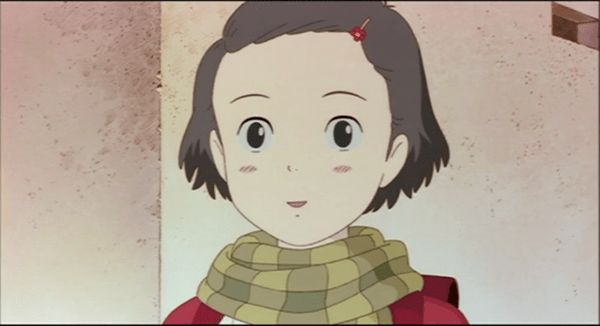
Watch: Studio Ghibli’s Heroines, and What They Have to Tell Us

Watch: Studio Ghibli’s Heroines, and What They Have to Tell Us

As the parent of a five-year-old girl, the relentless barrage of ‘Disney princess’ stuff targeted at her, from the films themselves to cuddly toys to the highly prized costumes, can be overwhelming. Snow White, Cinderella, ‘The Little Mermaid’’s Ariel, all have their charms, but, as most people would now acknowledge, these damsels-in-distress are hardly the most inspiring role models. And yes, times have changed, so that the likes of ‘Beauty and the Beast’’s Belle, Merida in Pixar’s ‘Brave’ or ‘Frozen’’s princess sisters, are a big evolutionary step up—even if the frocks remain pretty much the same.

However, for genuinely aspirational princesses, I’d bypass Magic Kingdom output altogether and head East: to the company whose 1997 film ‘Princess Mononoke’ introduces its lead female character, San, sucking blood from giant wolf’s bullet wound before glaring down its male hero; or whose most recent release, ‘The Tale of the Princess Kaguya,’ features a young woman who refuses to submit to imperial demands of subservient marriage, just because it’s expected.

Japan’s Studio Ghibli has been making hugely successful, highly acclaimed animation centred on smart, independent, complex female characters for over 30 years. From wide-eyed children (‘My Neighbour Totoro,’ ‘Spirited Away’) to battle-hardened warriors (‘Nausicaä of the Valley of the Wind, ‘Princess Mononoke’), rare are the Ghibli films that don’t foreground women. And this isn’t just a fixation of the company’s two main directors and figureheads, Hayao Miyazaki (‘Mononoke’) and Isao Takahata (‘Kaguya’): other directors—the late Yoshifumi Kondō (‘Whisper of the Heart’) or Hiromasa Yonebayashi (‘Arrietty’)—have helped make this trope practically the house style.

Entire theses can—and doubtless have—been written on the repercussions of switching heroines for heroes. Certainly Ghibli films are far less caught up in the machismo of most Hollywood tales of derring-do. In ‘Kiki’s Delivery Service,’ a trainee witch’s biggest battle is establishing her broomstick-led courier company. There are no overt villains in the bucolic, gentle ‘My Neighbour Totoro’ (my daughter’s all-time favourite movie), though several other films—’Spirited Away,’ ‘Mononoke,’ ‘Howl’s Moving Castle’—delight in their nuanced female antagonists. Ghibli is confident enough to move between rollicking adventure fantasies like ‘Castle in the Sky’ to more quotidian, intimate emotional stories like ‘Only Yesterday,’ varying narrative texture, tone and rhythm in ways practically unknown in mainstream Western animation.

Ghibli is also smart enough to realize that a “strong woman” isn’t limited to a kick-ass action heroine, the faddish template meant well but often haplessly shoehorned into revisionist versions of classic stories (see ‘The Lord of the Rings’’ Arwen or Tim Burton’s sword-wielding ‘Alice in Wonderland’). Ghibli female characters are brave and foolhardy, noble and spiteful, wise and naïve, hopelessly romantic and resolutely standoffish. In short, for all their 2D animation, they’re strong because they’re fully rounded and three-dimensional. They’re strong because they have agency. They’re strong because they truly matter in their stories.

As this video tribute seeks to show, there’s no better series of female characters to provide inspiration or aspiration for a young girl—or anyone, for that matter. Now if we could just start some San / Mononoke costumes trending—outfits absolutely not fit for a traditional princess – we’d really be ready to have a ball, and not just demurely go to one.

Leigh Singer is a freelance film journalist, programmer and filmmaker.  He has written or made video essays on film for The Guardian, The Independent, BBC online, Dazed & Confused, Total Film, RogerEbert.com and others. You can reach him on Twitter @Leigh_Singer or at www.leighsinger.com