Watch: 50 Timeless Movie Moms

Watch: 50 Timeless Movie Moms

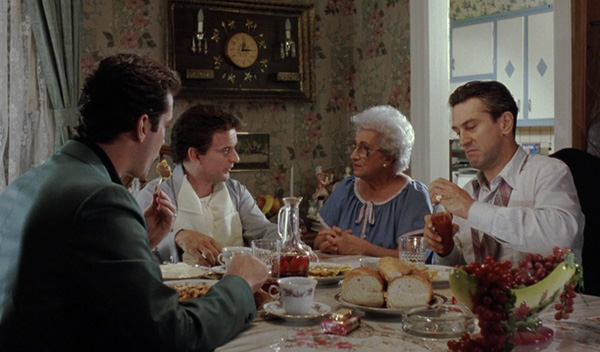
Who could forget the opening scene of Martin Scorsese’s masterpiece ‘Goodfellas‘? There’s the "in medias res" dynamic (the titular trio are
riding in a car with a supposed dead body in the trunk), the shocking
violence (the screen even dips to color in red during a gun shooting)
and then there’s Henry Hill’s (Ray Liotta) iconic voiceover line ("As
far back as I can remember, I always wanted to be a gangster"). What’s
most interesting about this scene is that when we circle around and
revisit it later in the film, it is juxtaposed against the tenderness of
the domestic scene that precedes it: the trio, in an effort to finish
the burial of Billy Batts’ corpse, makes a rendezvous to Tommy’s (Joe
Pesci) mother’s house to pick up a shovel. They’re surprised when
Tommy’s mother (played by Scorsese’s own mother Catherine) is awake and
forces them all to stop what they’re doing and eat a home cooked meal.
The scene is memorable for its warmth, its generosity and the
authenticity of having grown men respectfully obeying the authority and
presence of a home’s matriarch. For a film about gangsters doing
terrible things, this scene has the knowing power to anchor these
characters as real and ultimately vulnerable. That’s one of the many
strengths that mothers have: the uncanny ability to humble us. And
throughout the history of cinema, mothers have had an everlasting impact
on the screen characters we love. ‘Goodfellas’ is another prime example
of this. Even tough guys have moms too.

And here is a list of the moms appearing in this video essay, in order:

Flowers in the Attic
Mother (Victoria Tennant)

Sounder
Rebecca Morgan (Cicely Tyson)

Bambi
Bambi’s Mother (Paula Winslowe)

The Incredibles
Helen Parr (Holly Hunter)

Mrs. Miniver

Mrs. Miniver (Greer Garson)

Precious
Mary (Mo’Nique)

Gloria
Gloria Swenson (Gena Rowlands)

The Grifters
Lilly Dillon (Anjelica Huston)

Mask
Florence ‘Rusty’ Dennis (Cher)


Cinderella
Fairy Godmother (Verna Felton)

Not Without My Daughter
Betty Mahmoody (Sally Field)

Freaky Friday
Mrs. Andrews (Barbara Harris)

Mother
Beatrice Henderson (Debbie Reynolds)

Bloody Mama
‘Ma’ Kate Barker (Shelley Winters)

The Manchurian Candidate
Mrs. Eleanor Shaw Iselin (Angela Lansbury)

Mildred Pierce
Mildred Pierce (Joan Crawford)

Rosemary’s Baby
Rosemary Woodhouse (Mia Farrow)

New York Stories
Mother (Mae Questel)

Freaky Friday
Tess Coleman (Jamie Lee Curtis)

Ordinary People
Beth (Mary Tyler Moore)

Throw Momma From The Train
Momma (Anne Ramsey)


Mommie Dearest
Joan Crawford (Faye Dunaway)

Serial Mom
Beverly R. Sutphin (Kathleen Turner)

A.I. Artificial Intelligence
Monica Swinton (Frances O’Connor)

American Gangster
Mama Lucas (Ruby Dee)

Carrie
Margaret White (Piper Laurie)

The Brood
Nola Carveth (Samantha Egger)

Mother
Mother (Hye-ja Kim)

The Fighter
Alice Ward (Melissa Leo)

Terminator 2: Judgment Day
Sarah Connor (Linda Hamilton)

Psycho
Norma Bates (Virginia Gregg)

Mrs. Doubtfire
Mrs. Doubtfire (Robin Williams)

American Pie
Stifler’s Mom (Jennifer Coolidge)

The Kids Are All Right
Nic (Annette Bening)

Jules (Julianne Moore)

Mamma Roma
Mamma Roma (Anna Magnani)

Goodfellas
Tommy’s Mother (Catherine Scorsese)

Dumbo
Mrs. Jumbo (Verna Felton)

Sophie’s Choice
Sophie (Meryl Streep)

Philadelphia
Sarah Beckett (Joanne Woodward)

Terms of Endearment
Emma Horton (Debra Winger)

Aurora Greenway (Shirley MacLaine)

Boyz N The Hood
Mrs. Baker (Tyra Ferrell)

Monster’s Ball
Leticia Musgrove (Halle Berry)

The Passion of the Christ
Mary (Maia Morgenstern)

The Curious Base of Benjamin Button
Queenie (Taraji P. Henson)

Stepmom
Jackie Harrison (Susan Sarandon)

Forrest Gump
Mrs. Gump (Sally Field)


What’s Eating Gilbert Grape
Bonnie Grape (Darlene Cates)

The Fox and the Hound
Tod’s Mother (N/A)

Beaches
Hillary Whitney Essex (Barbara Hershey)

A Farewell to Arms
Catherine Barkley (Helen Hayes)

Nelson Carvajal is an independent digital filmmaker, writer and
content creator based out of Chicago, Illinois. His digital short films
usually contain appropriated content and have screened at such venues as
the London Underground Film Festival. Carvajal runs a blog called FREE CINEMA NOW which
boasts the tagline: "Liberating Independent Film And Video From A
Prehistoric Value System." You can follow Nelson on Twitter here.
Watch: A Video Essay About Albert Maysles’ Larger Than Life Film Subjects

Watch: A Video Essay About Albert Maysles’ Larger Than Life Film Subjects

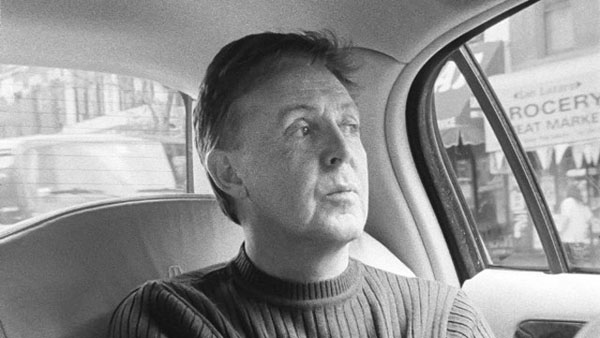
If you were going to teach a child about the Berlin Wall, it would probably be best to start by showing them one stone and explaining the story behind it. If you wanted to teach someone about Heironymous Bosch’s great painting "The Garden of Earthly Delights," you would go forward detail by detail, rather than trying to take in the whole painting at once. If you want to understand Beethoven’s Fifth, go after it note by note first. Similarly, the late Albert Maysles went after the details of his subjects’ lives, and magnified them, and in so doing showed us more about their enormity than twenty dense biographies might show, whatever those books scholarly attributes might be. In this touching and respectful video essay by Nelson Carvajal, we can see that what Albert Maysles was after in his documentaries was the details–he wanted a way to show the vastness of his subjects’ accomplishments, from Muhammad Ali to Vladimir Horowitz to Paul McCartney, and so he showed us the facial expressions, mannerisms, turns of phrase, and quirks of movement which characterized their off-camera moments, their time out of the public eye. In teaching us about their humanity, he showed in what sense they could be called greater than human.–Max Winter

Watch: A Video Essay on the 20 Black Best Actor Nominees Since the Beginning of the Academy Awards

Watch: A Video Essay on the 20 Black Best Actor Nominees Since the Beginning of the Academy Awards

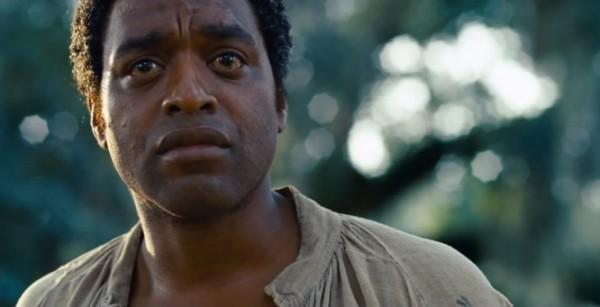
There have been 87 Academy Awards ceremonies thus far. As Nelson Carvajal’s latest video essay points out, only 20 black actors have been nominated in the Best Actor category. Carvajal takes us through these performances, one by one: Sidney Poitier, in The Defiant Ones; Will Smith, in Ali: Morgan Freeman, in The Shawshank Redemption; Denzel Washington, in X; Jamie Foxx, in Ray; Chiwetel Ejiofor, in 12 Years A Slave; and many more. The truth this record reveals is startling–as startling in its injustice as the thrill of the performances thus honored. This piece offers valuable food for thought, at a time when such thought is rightfully pounding its fists on the table, saying it’s time for dinner…

Watch: A Video Essay About Stanley Kubrick’s Influence on Wes Anderson and Others (NSFW, Maybe)

Watch: A Video Essay About Stanley Kubrick’s Influence on Wes Anderson and Others (NSFW, Maybe)

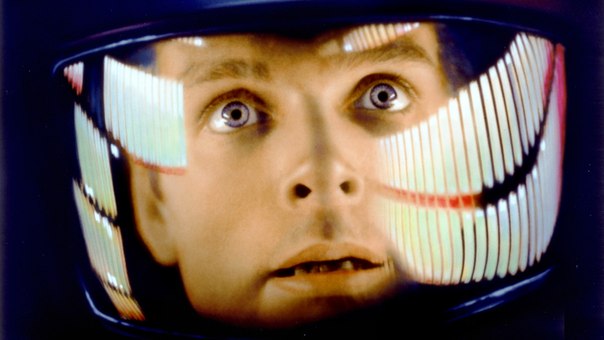
Press Play veteran Nelson Carvajal offers, with this video essay, a look at the ways Stanley Kubrick has visually influenced many directors, including Wes Anderson, Paul Thomas Anderson, Alfonso Cuaron, and others. As Carvajal superimposes one scene on top of another, you may spot connections you hadn’t made before–or perhaps some you had made without quite realizing it yet. To add to the fun, Carvajal has presented some of the clips in mirror fashion, like a kaleidoscope–all too appropriate, because, after all, the modern work reflects and builds upon its predecessors as much as it creates a world of its own. Right?

Watch: The Inherent Vice in Paul Thomas Anderson’s Films: A Video Essay

Watch: The Inherent Vice in Paul Thomas Anderson’s Films: A Video Essay

Throughout
his career, Paul Thomas Anderson has focused on human vulnerability. Films from
Punch Drunk Love to Magnolia to The Master to Inherent Vice to There Will Be Blood portray love as equal parts tender and strange. The
protagonists of Anderson’s films struggle with a range of
vices, from drug and sexual addiction, to anxiety and depression, to megalomania,
to gambling, to rage, to straight-up greed.

Anderson
uses vice as a way to explore different dimensions of human sadness. Each hero
is promised some kinds of greatness—Barry Egan wants to achieve success by collecting
frequent flyer miles from pudding box tops in Punch Drunk Love. Dirk Diggler hopes to keep up his fame and
recognition by virtue of his enormous package in Boogie Nights. Troubled Freddie Quell hopes to find both freedom
and family when he meets his mentor, the cult leader Lancaster Dodd, in The Master.

I was
first introduced to the world of P.T., as I affectionately called him, when I
watched Boogie Nights in a dingy
college dorm room, my sophomore year. There was a painting of an ocean on the
wall and a bottle of melatonin on the dresser, a tiny hand-me-down television
we borrowed from a friend that still played VHS tapes. At the time I spent full
days writing poems and songs and learning to be an artist and a writer. I was
smart, but I often didn’t live up to my potential and I wasn’t a particularly
good student. I have many good memories, but I have a lot of sad ones too. I
struggled throughout college with an eating disorder, I often had a strained
relationship with my parents, I rushed headfirst into a relationship that
taught me everything there is to appreciate about young love, and everything
there is to be wary of too.

In my
last year of college I’d walk past the elementary school at about noon every
day, on my way home from getting out of morning classes, and I’d see a sea of
children playing just over the horizon. My painful memories from college seem
blurry and imprecise, but images like these remain clear. At the time I didn’t
know it, but moments like these were slowly carving out my heart into the shape
it was meant to be.

Perhaps
P.T. Anderson strikes such an emotional cord in me because I discovered him at
a time when I was first learning to push back against cynicism. The truth may burn in a P.T. Anderson film, but even when it
does, we learn not to regret the scar. The
worlds that he explores are darkly sensual, hardboiled and masculine, but
softness and light always seem to linger somewhere in the periphery: sunlight
arching over an oil rig, a harmonium found next to a warehouse. We focus on tear-filled
faces throughout Magnolia, but the
final shot was still a close-up of a crying woman’s smile.–Arielle Bernstein

Arielle Bernstein is
a writer living in Washington, DC. She teaches writing at American
University and also freelances. Her work has been published in
The
Millions, The Rumpus, St. Petersburg Review and The Ilanot Review. She
has been listed four times as a finalist in
Glimmer Train short story
contests
. She is currently writing her first book.

Nelson Carvajal is an independent digital filmmaker, writer and
content creator based out of Chicago, Illinois. His digital short films
usually contain appropriated content and have screened at such venues as
the London Underground Film Festival. Carvajal runs a blog called FREE CINEMA NOW which
boasts the tagline: "Liberating Independent Film And Video From A
Prehistoric Value System." You can follow Nelson on Twitter here.
Watch: My Life as a Swedish Pop Star: The ABBA Videos of Lasse Hallström: A Video Essay

Watch: My Life as a Swedish Pop Star: The ABBA Videos of Lasse Hallström: A Video Essay

[The script of the video essay follows.]

Agnetha, Benny, Bjorn, Anna-Frid: their initials spell ABBA,
a nonsense word, childish, almost preverbal, as much a brand name as a
band.  Their distinctive image,
indivisible from their sound and their success, was in large part crafted by Lasse
Hallstrom, a director better known for his quirky comedies, like My Life as a Dog, What’s Eating Gilbert
Grape, Chocolat
, and The Hundred Foot
Journey
. Hallstrom was getting his start as a television director in
Stockholm when he was approached by ABBA’s manager, Stig Anderson, in 1974. Anderson
wanted Hallstrom to produce a series of promotional spots for the group.  He would go on to direct over thirty ABBA
videos. These videos created an indelible pop image and documented the
super-group’s meteoric rise and tragic fall. 

Before MTV, music videos were a novelty.  Elvis’ fifties musicals and Richard Lester’s
films for the Beatles in the 1960s established many of the conventions of the
genre. Swoony close ups, rhythmic jump cuts, and intimate, casual footage of
the band goofing off captured the experience of listening to the music, and
indulged the audience’s fantasy of hanging out with the group. Singers like Nancy
Sinatra and Lee Hazlewood filmed television specials that ran like mini-movies,
juxtaposing performance with narrative film-making, setting the singers against
exotic landscapes, creating fantasy visions of the songs’ lyrics.

Then along came ABBA. 
After struggling for years as solo artists, the members of the group
began looking beyond the shores of their native Sweden for popular
success.  They first gained it with their
victorious performance of Waterloo at the Eurovision song contest in 1974.  Already the band’s signature elements are in
evidence: Anna-Frid’s imposing perm, Agnetha’s flowing mane, glowing Swedish
complexions, and costumes that look like they were made by two teenage girls
left for an afternoon in the attic of their stage-actress grandmother.  By the time they approached Hallstrom,  their charming smiles and unaffected pleasure
in performance were so irresistible they almost disguised the rudimentary
choreography. Also, the singers’ sex appeal nearly made up for their goofy
looking male cohorts. ABBA may have been the first video stars in pop history.

Hallstrom’s earliest videos for the group were all seemingly
shot in a day in the same studio, with costume changes between songs. The
videos laid down a basic visual vocabulary that perfectly complemented the
music’s elegant simplicity.  Camera zooms
in, mascara, lipstick, dazzling smiles fill the screen; pan right, taking in
the whole band, swaying with the music’s rhythms; quick cuts in time with the simple
four/four beat.  The men, fixed in place,
rooted to their instruments, lend a visual anchor for the minimal movements of
the women, by contrast making them seem dynamic, vibrant.  And through it all, what costumes: flashes
of David Bowie, Marc Bolan, Gary Glitter, but always with a quaintly home-made,
theatrical quality that made ABBA approachable, and silly, but in a good way.

One of Hallstrom’s visual signatures came from an unlikely
source.  In Persona, fellow Swede Ingmar Bergman juxtaposed the faces of
actresses Liv Ullmann and Bibi Andersson in dreamlike sequences suggesting the
gradual merging together of their identities and the mental and emotional
confusion that follows.  Hallstrom
employed this motif in a humbler context to create a visual counterpart to the uncannily
sympathetic voices of the band’s two singers.

Eventually Hallstrom took the band out of the studio,
setting them against landscapes that complemented the band’s Nordic image;
frozen tundra, sunset at sea, eagle over mountains.  As their songs began to take on more esoteric
topics, Hallstrom created mini-films that dramatized their peculiar lyric
narratives.  It’s easy to forget how
preposterous it is for two Swedish women to be reminiscing about some long-ago
revolutionary battle with the song set against a roaring fire, Bjorn strumming
away on his acoustic guitar…at least until the camera pans back to reveal an
obviously fake starry sky above.  The
video for their most successful single, “Dancing Queen,” avoids disco glitz for
a decidedly more downmarket club experience; the dancers all seem to be
underage, underscoring the song’s wistful nostalgia, as the singers look across
the generation gap at a girl having the time of her life. 

As the band continued to climb international pop charts,
Hallstrom responded to their global fan base with videos that allow us to hang
out with ABBA, strolling down the streets of Stockholm, even sharing
breakfast.  These intimate moments made the
band resemble the most successful double date in pop history. 

But this happy intimacy wasn’t to last.  In January of 1979, Agnetha and Bjorn
announced their plans to divorce. 
Anna-frid and Benny followed in 1981. 
Although they’ve repeatedly claimed that “The Winner Takes it All” was
not autobiographical, the video begins with a montage of the band in happier
times, before cutting to Agnetha, her curls hanging limply, mascara smudged,
face pale from crying: this is one of more nakedly honest images of despair
ever shown in a music video.  Hallstrom’s
lighting is natural, intimate, the editing restrained, with only the occasional
freeze frame to suggest the happier moments are snapshots of a time now
lost. 

“One of Us” is even more abject, portraying Agnetha
unpacking alone in a new apartment.  The
lighting is stark, the contrast harsh; this is ABBA’s first film shot on actual
videotape, and the colors seem drained of all their former vibrancy.  For one brief moment there is a splash of
yellow across the screen, recalling happier days, brighter costumes. 

Played from beginning to end, Hallstrom’s videos for ABBA
can be watched like one of his wistful comedies, youthful eccentricity and
goofy innocence giving way to bitter experience. Beyond telling us more about
one of the great pop bands than any of the numerous documentaries and tell-all
biographies that followed the band’s last performance, these small films created
a visual vocabulary for the video era that followed.

Nelson Carvajal is an independent digital filmmaker, writer and
content creator based out of Chicago, Illinois. His digital short films
usually contain appropriated content and have screened at such venues as
the London Underground Film Festival. Carvajal runs a blog called FREE CINEMA NOW which
boasts the tagline: "Liberating Independent Film And Video From A
Prehistoric Value System." You can follow Nelson on Twitter here.
Jed Mayer is an Associate Professor of English at the State University of New York, New Paltz.

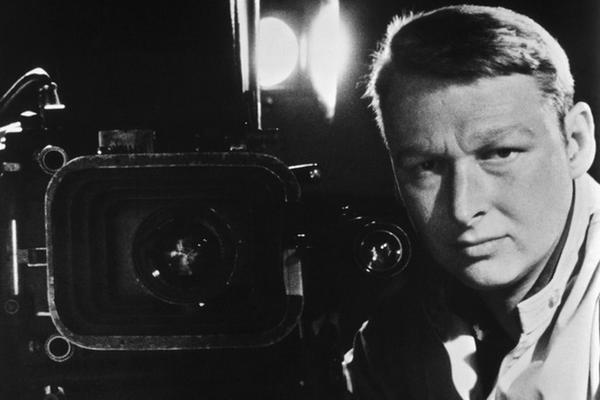
Watch: For Mike Nichols (1931-2014): A Video Essay

Watch: For Mike Nichols (1931-2014): A Video Essay

There were three big “Mike Nichols moments” in my life. The first was the universally shared one: watching The Graduate for the first time. I was a teenager and an interest in sexuality, excitement, and a nose for mischief were at their height. Watching Dustin Hoffman sleep with an older woman and then run off with her daughter, all to the tune of Simon & Garfunkel, even had me sweating as a so-called Generation Y-er. Visually, the film was doing interesting things with its pans and sudden zooms. They weren’t cheesy. They were oddly endearing. And to think that this film was made in the 1960s was all the more impressive. The next moment came when I saw Closer in the theatre back in 2004. I was well versed in the Nichols film canon (Primary Colors, Working Girl, etc.) and was expecting warmth and light at the end of the tunnel for this story of four miserable people who kept fucking each other over, literally and figuratively. But it never came. Yes, as per many Mike Nichols films, it was brilliantly acted. But this film was relentlessly blunt. It was cold. Was this really a Mike Nichols film? Yes, Nichols had made groundbreaking films in the past, but none that ever told America’s Sweetheart to “fuck off and die.” It had such a startling affect on me that when I re-watched some of his films (Wolf, Silkwood), I ardently searched to find even more tangible nastiness in some of those characters. I wanted to not like some of the fully realized, compassionate characters from those past films simply so I could connect them back to the characters of Closer—and ultimately give myself vindication as a viewer. But I couldn’t. I could never dislike Harrison Ford in Regarding Henry as much as I disliked Jude Law in Closer. But that’s okay. Nichols was showing me that he handled every type of person equally. By the time Nichols made Charlie Wilson’s War in 2007, it was obvious that Nichols really wasn’t interested in the dynamic movements of the camera; contrast that to The Graduate, which has something going on in nearly every frame. Nichols was basically creating a cinema of the theatre. He was going back to his roots. His camera was much more calm in the last feature films. He was just watching his players, smiling behind the camera. This speaks directly to the third Nichols moment for me, which happened a few years ago. I was on the “L” train in Chicago, headed downtown, listening to a podcast of Radiolab on NPR. The segment was on the origin of laughter. It opened by playing some archival audio of Nichols and Elaine May laughing hysterically as they attempted to get through a comedy bit. It was such an infectious sound, so hearty and real, that I kept playing it over and over. I was so obsessed with the clip that I found myself researching Nichols’ early comedic past, of which I was not too informed. I was shocked to learn that his original improv troupe (the Compass Players) was the predecessor to what would eventually become the Second City improv powerhouse of Chicago. Nichols was closer to my roots that I even realized.

At the end of the day, what these three moments signify was that Mike Nichols was always a filmmaker that kept surprising me. I never had him figured out. There was always a fascinating development or a piece of information about his life that was waiting to be discovered. I put this video essay together with a heavy heart. Aside from seeing such recent artists who have passed (like Philip Seymour Hoffman and Robin Williams) in the clips, the overwhelming fact that there were going to be no more films or pieces of theatre created by this great storyteller was piercing. But then I just remember that great laugh of his from that comedy sketch outtake. Something tells me that he still has some surprises waiting for me.

Nelson Carvajal is an independent digital filmmaker, writer and content creator based out of Chicago, Illinois. His digital short films usually contain appropriated content and have screened at such venues as the London Underground Film Festival. Carvajal runs a blog called FREE CINEMA NOW which boasts the tagline: "Liberating Independent Film And Video From A Prehistoric Value System." You can follow Nelson on Twitter here.
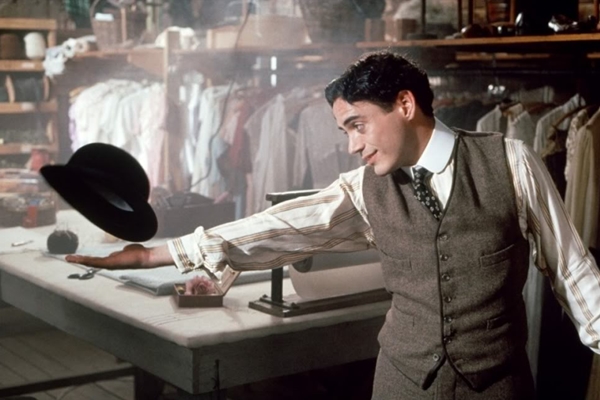
VIDEO ESSAY: In Memory of Richard Attenborough (1923-2014)

VIDEO ESSAY: In Memory of Richard Attenborough (1923-2014)

The scary doll, or puppet, or dummy, is, by now, a cliché of horror: films from
the Chucky movies to Poltergeist have
availed themselves of it, to the increasingly begrudging fright of their
viewers. For many (though not as many as there should be), the scary puppet
motif began (and possibly ended) with the 1978 film Magic, directed by Richard Attenborough, who passed away in late
August. The actor and director whom most would know either for his turn in Jurassic Park or for directing vast
films like Gandhi or Chaplin had other exploits up his sleeve
as well: an early film role was Pinkie in Brighton Rock, a movie about violence and terror on the English seaside birthed from
the fog-swept, crime-obsessed mind of Graham Greene. What’s most evident, in
watching Attenborough’s films and considering his career, is a sense of embodiment, of
polymathy. On the most basic level, this could mean he was able to act and direct
with equal ability. To play Pinkie as a young man and then play Santa Claus (in Miracle on 34th Street)
or a deranged scientist late in life suggests, at the very least, range, but it
also indicates that he possessed the kind of intelligence invaluable to successful
actors: the ability to imagine someone you have never met, and then
someone else, and then someone else, and never let anyone see the workings of your imagination. Carvajal’s fluid, deft piece shows us both sides of
this man, the acting side and the directing side–and reminds us of the great consciousness Attenborough obviously had of his audience. It is strange to remind one’s
self, when witnessing the expansiveness of a film like A Chorus Line, in which the only way to tell the story is to go
large, as large as possible, that the maker of these films also made a movie as
creepy and all-out frightening as Magic,
which captured the flitting, nervous intensity of Anthony Hopkins in his younger
days and, as with many movies of this period, put very little between the viewer
and the events unfolding on screen: there was little subterfuge, little music,
even, just the pure fright of what was unfolding. The phenomenon of the
actor-director is an old one, going back to Charlie Chaplin himself, or farther. It’s rare, though,
that an individual pulls off great success in both in one lifetime. The
projects an actor directs might take on the sheen of a “private project,” like
the films of Tim Roth or Ethan Hawke, or they might assume a stature separate
from their director’s reputation, like those of Sean Penn, in recent times, or,
in a different sense, Woody Allen. Although these shape-shifters do something
slightly different things with what might call their powers, the source is
clear: immersion in a discipline, which is, in this case, film. RIP Richard
Attenborough.—Max Winter

Nelson Carvajal is an independent digital filmmaker, writer and content
creator based out of Chicago, Illinois. His digital short films usually
contain appropriated content and have screened at such venues as the
London Underground Film Festival. Carvajal runs a blog called FREE CINEMA NOW
which boasts the tagline: "Liberating Independent Film And Video From A
Prehistoric Value System." You can follow Nelson on Twitter
here.

Max Winter is the Editor of Press Play.

VIDEO ESSAY: Our Scary Summer: 1979

VIDEO ESSAY: Our Scary Summer: 1979


[Jed Mayer’s script for the video essay follows.]

The cover of the June 1979 issue
of Newsweek featured an image of
Sigourney Weaver from Alien. The
caption read: "Hollywood’s Scary Summer." I was thirteen. The horror movies
released that summer would form a grotesque
carnival that mirrored my own and the world’s anxieties.  Earlier in the
spring there was the disastrous nuclear accident at Three Mile Island. That summer, major oil spills polluted the Gulf of Mexico
and the North Atlantic Ocean. This year, oil prices doubled, Margaret Thatcher
was elected, and the Ayatollah Khomeini rose to power.   I slowly came
into awareness of the political and environmental degradation around me that
year. The films I watched reflected that, as well as my own thirteen-year-old desires
and fears .

As tag-lines go, George Romero’s Dawn of the Dead sports a pretty good one: “When there’s no more
room in Hell, the dead will walk the earth.” I stared for weeks at the lurid
poster bearing these ominous words. It hung in the front windows of the
Maplewood Mall multiplex.  Looking back,
I think a more fitting tag-line might have come from a speech given by President
Jimmy Carter later that same summer: “Often you see paralysis and stagnation
and drift.  What can we do?”

Carter was addressing what he described as a “crisis of
confidence” in America. His July 15, 1979 address has been called “the malaise
speech” for its focus on the country’s financial woes and lack of
direction.  Like Romero’s film, the
speech offered a disturbing vision. It showed a world drained of vitality and
meaning.

What better setting for such a vision than a mall, where the
film’s protagonists hide out to weather the zombie apocalypse?  And what better place for me to have seen
this film, in the mall where I was to spend so many pointless afternoons,
wandering the aisles and riding the escalators like Romero’s zombies?

1979 was also the year when my family decided we needed
solutions to our own paralysis and stagnation. We sought it through family
therapy, proudly airing our co-dependencies and dysfunctions, along with many
other American families caught up in the family therapy movement. 

Few films expose the limitations of therapy narratives more
ruthlessly than David Cronenberg’s The
Brood
.  Cronenberg explored the
psychosexual demons haunting the individual human psyche in Shivers and Rabid. He then anatomized the late-70s zeitgeist by turning his attention
to the monsters lurking within the fractured family.

The poster advertising John Frankenheimer’s Prophecy featured a grotesque image of a
monstrous fetal creature wrapped in its placenta. I responded to this image with
equal parts fascination and horror.  After
seeing the film, however, I discovered that horror could help me to make sense
of the era’s toxic events.  With Prophecy, Frankenheimer wanted to create
an environmentally-conscious horror film that would raise the ethical stakes of
popcorn fare.  It can hardly be said that
he succeeded in this goal—the director has blamed his own alcoholism at the
time, as well as production issues, for the film’s relative failure. However,
the film did succeed in presenting images and settings that managed to distill the
toxic environments of the 1970s, at least for one young filmgoer. 

Star Wars was
predicated on an escapist premise that used science fiction conventions to
blast us into a galaxy far, far away. In the universe of Alien, on the other hand, space
is confined, claustrophobic.  It is a
universe very much like our own, subject to the laws of supply and demand.  As we watch a complex mass of space-borne
metal slide slowly across the screen, a superimposed text tells us this is the
commercial towing spaceship Nostromo. The
ship is hauling a refinery and twenty million tons of mineral ore.  Space, the final frontier, has become, like
all frontiers, a resource to be exploited. 

Although I wasn’t yet old enough to have a driver’s license,
like everyone in 1979 I was highly conscious of rising gas prices and their
effects.  I watched those daily images of
gas station lines so long they looked like shanty towns with a grim fascination.
They closely resembled the conjoined images of excess and destitution common to
those post-apocalyptic films I loved from that era. Films like The Omega Man, Damnation Alley, and Soylent
Green
seemed half in love with the world’s death.  What did the earth that the Nostromo’s crew
were trying to return to actually look like? 
Probably something much like the one depicted in these films. The images
I watched on the nightly news seemed to be offering a disturbing preview of
that world.

Nelson Carvajal is an independent digital filmmaker, writer and content
creator based out of Chicago, Illinois. His digital short films usually
contain appropriated content and have screened at such venues as the
London Underground Film Festival. Carvajal runs a blog called FREE CINEMA NOW
which boasts the tagline: "Liberating Independent Film And Video From A
Prehistoric Value System." You can follow Nelson on Twitter
here.
Jed Mayer is an Associate Professor of English at the State University of New York, New Paltz.

VIDEO ESSAY: From SLACKER to BOYHOOD: Cinematography in the films of Richard Linklater

VIDEO ESSAY: From SLACKER to BOYHOOD: Cinematography in the films of Richard Linklater

In the late fall of 2001, in a movie theater in New York, I
fell asleep during Richard Linklater’s Waking
Life
. Strangely enough, I think he might have welcomed that response. Or
at least his cinematographer’s camera would have. We’ve posted viewers’
reports of sleeping
during films before at Press Play, but this was a different
sort of sleep, guided, in a sense, by the camerawork. Cinematography occupies a
strange place in Linklater’s films. While the movies are, on the one hand,
quite speech-driven, which is to say that the dialogue characters say to
each other sometimes forms the entire story, as in the Before… trilogy, we cannot
say that watching one of his films is not a visual experience as well. But it’s
a curious sort of visual experience. At the time I fell asleep during Waking
Life
, I wasn’t dozing off out of boredom; it was out of comfort. Just over a
month before I saw the film, the World Trade Center had collapsed. Despite the
fact that New Yorkers were charging ahead with their lives all around me, the
air still smelled like burned flesh. I needed some relief. Sitting down to watch Waking
Life
, with its delicately drawn characters floating gently through their
delicately drawn world, brought a sense of reassurance, a sense that, in
artistic works, at least, one might dwell without fear of imminent harm. All
that would take place here, after all, was that characters would talk to each
other, and the camera would watch them, or rather would display them, moving in
the flickering manner of animated figures, easily, relaxedly. The figures on
the screen would move forward in their way, and I, in my seat, processing the
film and the events taking place in the world outside the theater, would move
forward in my way, in a spirit of peaceful coexistence. There was solace, there, but there was also engagement, of a kind. This is, indeed, the
way the camera has functioned in Linklater’s films from his earliest works
onwards. It doesn’t force itself on you, and yet nevertheless it brings you in.
The intimacy, for instance, of the “You’re gonna miss that plane” scene in Before Sunset would be far diminished if
it weren’t for its sense of strange stillness, created by the sensitive use of
the camera. You could say it’s a Taoist lens—it does very little, at least
little that we notice, and yet we feel utterly immersed when we watch this
director’s films. You can feel the heat in Slacker’s
Austin; you can smell the chalkdust in School
of Rock;
you can feel the night breeze in Dazed and Confused. And yet the camera here dosn’t have the aggressive, probing presence of that of a
Scorsese or an Allen or a Lynch. The cameras of Linklater’s numerous cinematographers–Lee Daniel, Pete James, Tommy Pallotta, or Maryse Alberti, or Rogier Stoffers, or Shane Kelly, or Dick Pope–share the characteristic of operating on a softer register, trying
less hard to get our attention than they might. And yet films like Boyhood would be far diminished without their sense of visual
scope, of the hugeness of the Big Bend, of the quietness of a Texas lake, of
the plainness and innocence and perplexity of a boy’s face, in close-up. Watching these films becomes an experience of gentle exchange, rather than spectatorship. And what do we, the viewers, get out of it? A sense of living differently, for an hour or two.–Max Winter

Nelson Carvajal is an independent digital filmmaker, writer and content
creator based out of Chicago, Illinois. His digital short films usually
contain appropriated content and have screened at such venues as the
London Underground Film Festival. Carvajal runs a blog called FREE CINEMA NOW
which boasts the tagline: "Liberating Independent Film And Video From A
Prehistoric Value System." You can follow Nelson on Twitter
here.
Max Winter is the Editor of Press Play.