


People love, in general, to talk about failure, especially as it applies to the movies: stories of bombs or flops or unmitigated disasters of any kind are the industry equivalent of celebrity gossip, and they usually run about as deep. But an even more salient topic of conversation than a perceived failure’s dismal performance at the box office is the lashing it receives at the hands of critics, which, if universal (and scathing) enough, often garners more attention than the failed film itself. And once that reputation has settled in, it’s practically impossible to shake: we still talk of The Phantom Menace in the hushed tones reserved for funeral processions, the very mention of its name cause for knowing snickers and recollections of widespread disdain; few could ever approach it for the first time free of those damning preconceptions. John Carter, Andrew Stanton’s ostentatious sci-fi epic and a colossal loser at the box office, is only the latest in a long line of anticipated blockbusters beset by pervasive pans and walk-outs, the harsh words hurled its way amplified, at record volume and in record time, by rapid-fire tweets warning others to stay away. It barely stood a chance: a nine-figure marketing budget was nothing compared to the trusted words of those who had seen it and sworn it off straight away, and it’s unlikely, even if it finds admirers, that its general reputation in the public consciousness will ever fully recover.
And yet, every so often, a film widely considered to be a failure reemerges years later as a newly respected critical favorite, its reputation salvaged on the grounds that it was once misunderstood. In some cases, the film finds a new audience through ironic reappraisal, which is often how bad films become cult classics–an odd or obscure work that couldn’t find love on the mainstream theatrical circuit finds fans on home video or as a midnight movie. Other times, though, the effect is more substantial: a younger generation of critics might heave a forgotten film up from the muck of its battered reputation, rediscovering it as a forgotten classic or great work never given its proper due. These films, the orphans taken in and dearly loved, are some of the most interesting cases of critical appraisal and reappraisal in cinema history, and it’s worth exploring how and why their reputations were rescued–as well as why their reputations were abysmal in the first place. What’s most fascinating, of course, are the implications for contemporary criticism: these considerations might cause one to hesitate before tearing into any new film, because what seems so obviously bad today might, in another thirty or forty years, come to be regarded as a masterpiece. And nobody wants to be the one to have short-sightedly slammed a classic in the making. Following are eight films which, at the time of release, received vicious reviews but have, in the years following, become lauded as great works, in one way or another.
The List:
8. Johnny Guitar (Nicholas Ray, 1954)
 Widely dismissed when it came out on implicitly sexist grounds—its overtly feminist bent didn’t sit well with the mid-50s status quo—Nicholas Ray’s Trucolor western epic Johnny Guitar has finally, over the last decade-plus, emerged as something of a critical darling, owing in no small part to its director’s ever-increasing prestige. Unavailable on Region 1 DVD for far too long, the film recently made its long-awaited home video debut, thanks to a sterling Bluray from Olive Films, whose efforts will undoubtedly introduce this daringly revisionist classic to the newly receptive audience it has always deserved. Scoring only one vote in the 2002 iteration of Sight And Sound’s once-per-decade poll of the greatest films of all time, Johnny Guitar appeared on an impressive 8 ballots this year—as good an indication as any of the film’s gradually ballooning reputation.
What The Critics Said Then:
– “Joan Crawford is as sexless as the lions on the public library steps and as sharp and romantically forbidding as a package of unwrapped razor blades. Neither Miss Crawford nor director Nicholas Ray has made it any more than a flat walk-through of western cliches. That’s about all there is to it…the color is slightly awful and the Arizona scenery only fair. Let’s put it down as a fiasco.” – Bosley Crowther, The New York Times
– “The maddest Western you are likely to encounter this year. It has not only male but female gunfighters. It was probably inevitable that sooner or later somebody would try to change the pattern of Westerns, but I can state authoritatively that this twist is doomed.” – John McCarten, The New Yorker
– “Just plain pathetic.” – Mae Tinee, Chicago Daily Tribune
What The Critics Say Now:
– “A miraculous movie that should never be far from screens, large or small . . . a proto-feminist masterwork.” – Richard Brody, The New Yorker
– “It’s about time it was acclaimed for what it really is: a genuine western film classic.” – TV Guide’s Movie Guide
– “For all its violence, this is a surpassingly tender, sensitive film, Ray’s gentlest statement of his outsider theme.” – David Kehr, Chicago Reader
Number of votes on Sight And Sound’s 2002 Poll: 1
Number of votes on Sight And Sound’s 2012 Poll: 8
7. Marnie (Alfred Hitchcock, 1964)
 While it’s true that Alfred Hitchcock’s Vertigo was received with an alarming amount of consternation in 1958, its status as a canonical classic has gone uncontested for so long that there wouldn’t be much point in speaking of its critical redemption here (though going from perceived failure to this year’s Sight and Sound-certified Greatest Film of All Time is indeed a commendable feat). Meanwhile, Hitchcock’s other misunderstood intellectual opus, the even more fiercely maligned psychological drama Marnie, must still contest with the glib dismissals of confounded critics to this day. Only outlier fans champion its heady, oblique virtues with any regularity, though it’s invigorating to see their numbers grow with each passing year: in a recent (and informal) poll of the Top 5 Hitchcock films conducting by film critics on Twitter, Marnie emerged as a surprise favorite, particularly among young, web-savvy cinephiles, for whom Marnie perhaps seems an appealingly obscure favorite. And considering Hitchcock’s tendency to split the vote (and Vertigo’s substantial win), 9 votes for Marnie in this year’s Sight And Sound poll is certainly an impressive showing in its own right.
What The Critics Said Then:
– “Hitchcock must plead guilty to pound foolishness, for Marnie is a clear miss. A strong suspicion arises that Mr. Hitchcock is taking himself too seriously—perhaps the result of listening to too many esoteric admirers. Granted that it's still Hitchcock—and that's a lot—dispensing with the best in acting, writing and even technique is sheer indulgence. When a director decides he's so gifted that all he needs is himself, he'd better watch out.” – Eugene Archer, The New York Times
What The Critics Say Now:
– “Universally despised on its first release, Marnie remains one of Alfred Hitchcock's greatest and darkest achievements.” – David Kehr, Chicago Reader
– “Viewed from the safe distance of four decades after its release, Marnie, perhaps even more than The Birds, emerges as the director’s definitive late-period masterpiece.” – Fernando F. Croce, Cinepassion.org
– “Considered a misfire at the time, it now looks like late-period Hitchcock at his most Hitchcockian.” – Keith Phipps, The AV Club
Number of votes on Sight And Sound’s 2002 Poll: 4
Number of votes on Sight And Sound’s 2012 Poll: 9
6. Zabriskie Point (Michelangelo Antonioni, 1970)
 Michelangelo Antonioni had, by 1970, long since established himself as one of the world’s premier art house directors, boasting a handful of already certified classics as well as a slew of newer, more daring coups. Blowup, his most recent effort, had seen his cache expand considerably, garnering characteristic acclaim but also, for the first time, making a remarkable dent in British and American popular culture by becoming a kind of crossover mainstream hit. The stage was thus set for Antonioni’s rising acclaim to accelerate, as he shfted the gaze of his perceptive Italian eye from the modish world of U.K. fashion photography (Blowup’s appealing milieu) to the similarly youth-oriented landscape of the American protest movement, where he would shoot Zabriskie Point. An unmitigated commercial and critical failure, Zabriskie was regarded as a failed replication of his previous success at best and an uniquely awful disaster at worst; it would bring Antonioni’s career to a grinding halt (he didn’t make the Jack Nicholson-starring existential drama The Passenger until 1975, a full five years later), and it would kill his box office prospects for good. It’s only recently, with the added clarity of historical distance, that Zabriskie Point has found itsself reclaimed by critics able to look past facile faults in acting or dialogue to see the clarity and intensity of its vision.
What The Critics Said Then:
– “This is such a silly and stupid movie . . . our immediate reaction is pity.” – Roger Ebert, Chicago Sun-Times
– “For the rest of us—with the possible exception of highway engineers (the film includes a lot of lovely aerial shots of macadam roads snaking into blue distances—Zabriskie Pointwill remain a movie of stunning superficiality, another example of a noble artistic impulse short-circuited in a foreign land.” – Vincent Canby, The New York Times
What The Critics Say Now:
– “Almost 40 years later, Zabriskie Point exists to teach us more exact and sensitive perceptions about a cultural moment that its original audience was too close to appropriately observe.” – Armond White, New York Press
Number of votes on Sight And Sound’s 2002 Poll: 0
Number of votes on Sight And Sound’s 2012 Poll: 3
5. The Exorcist (William Friedkin, 1973)
 It’s hard to believe given the nearly unanimous praise heaped upon it now (since its rerelease in the year 2000), but there was a time when William Friedkin’s horror classic The Exorcist was considered the height of insensitive vulgarity, a picture as trashy as it was needlessly provocative. And it wasn’t merely those offended by its overtly sacrilegious content that found themselves fervently opposed to the spectacle: perfectly respectable (and secular!) intellectuals turned their noses up in disgust at what was widely considered to be the exploitative pits. The grand irony, of course, is that The Exorcist stands now as a pillar of fright-night respectability, the horror genre’s premier prestige picture and basically its permanent gold standard. You still see it crop up whenever a contemporary slasher pic allegedly lowers the bar: critics beleaguered by cheap gross-out tactics and moral repugnancy yearn, by comparison, for the halcyon days of 1973, when level-headed filmmakers still knew how to deliver traditional, well-rounded scares. Go figure.
What The Critics Said Then:
– “A practically impossible film to sit through…establishes a new low for grotesque special effects. The care that Mr. Friedkin and Mr. Blatty have taken with the physical production…is obviously intended to persuade us to suspend disbelief. But to what end? To marvel at the extent to which audiences will go to escape boredom by shock and insult.” – Vincent Canby, The New York Times
– “Vile and brutalizing. Friedkin and Blatty seem to care nothing for their characters as people, only as victims—props to be abused, hurled about the room, beaten and, in one case, brutally murdered.” – Jay Cocks, TIME Magazine
What The Critics Say Now:
– “Some movies aren’t just movies. They’re closer to voodoo. They channel currents larger and more powerful than themselves.” – Owen Gleiberman, Entertainment Weekly
– “An early indication of how seriously pulp can be taken when religious faith is involved, this 1973 horror thriller is highly instructive as well as unnerving.” – Jonathan Rosenbaum, Chicago Reader
Number of votes on Sight And Sound’s 2002 Poll: 4
Number of votes on Sight And Sound’s 2012 Poll: 3
4. Heaven’s Gate (Michael Cimino, 1980)
 Lumped in for thirty-plus years with only the most notorious box office failures, Michael Cimino’s Heaven’s Gate is still to this day regarded as the ultimate industry cautionary tale, a warning of what happens when one man’s dictatorial demands are permitted to run free. The film bankrupted its studio, United Artists, and it remains one of the least financially successful films ever made. Stories from the set of its protracted, preposterously over-budget shoot sound like a producer’s worst nightmare: Cimino commanded his crew to construct elaborate sets with meticulous specifications, insisting they be torn down and reconstructed anew on a whim, and he would even, according to Steven Bach’s tell-all book Final Cut, have particular trees uprooted in order to replant them on sets where Cimino believed they’d fit. But anecdotes detailing the uncontrollable creative impulses of a director made out to be mad with power have an unfortunate (and deeply misleading) consequence: they eclipse the film as a work on its own, making it practically impossible to divorce Heaven’s Gate from its storied production. Thankfully, the critical tide is beginning to shift: a new director’s cut screened, to overwhelming acclaim, at this year’s New York Film Festival. That version is also being honored with a DVD and Bluray release from the Criterion Collection—a sure sign that, in some circles at least, Cimino’s efforts have finally been vindicated.
What The Critics Said Then:
– “A study in wretched excess. This movie is $36 million thrown to the winds. It is the most scandalous cinematic waste I have ever seen, and remember, I’ve seen Paint Your Wagon.” – Roger Ebert, Chicago Sun-Times
– “Fails to work on almost every level.” – Variety
– “An unqualified disaster.” – Vincent Canby, The New York Times
– “It really is a stinker.” – David Kehr, Chicago Reader
What The Critics Say Now:
– “For all the abuse heaped on it, this is a majestic and lovingly detailed Western which simultaneously celebrates and undermines the myth of the American frontier.” – Tom Milne, Time Out
– “A great movie which did not deserve the lousy reputation heaped on it by vituperative critics.” – Phil Hall, Film Threat
– “Seen again it its original, nearly four-hour form, the film plays like an opium vision of American bloodshed. Gorgeous.” – Michael Atkinson, Village Voice
Number of votes on Sight And Sound’s 2002 Poll: 1
Number of votes on Sight And Sound’s 2012 Poll: 5
3. Twin Peaks: Fire Walk With Me (David Lynch, 1993)
 In the early 1990s, it seemed that David Lynch could do no wrong: he was still feeling the afterglow of the critical and commercial success of both Elephant Man and Blue Velvet, two movies that introduced him to the American mainstream; his latest film, the madcap Nic Cage/Laura Dern fairy tale Wild At Heart, had just won the prestigious Palme D’Or at the 1990 Cannes Film Festival; and his co-authored television series, Twin Peaks, had unexpectedly captured the popular imagination, becoming an international sensation. Alas, all the critical goodwill in the world couldn’t help Lynch in 1993, when his beloved show’s feature-length prequel/sequel arrived in theatres to widespread confusion, discomfort, and anger. Rarely is such vitriol spewed from the mouths of professional critics, even toward the other films on this list: something about the combination of anticipation for the film and the pedigree of its director opened the floodgates for scorn and fury, and pan after pan flowed through. But I’m pleased to see that my personal favorite Lynch film—a profoundly moving story of abuse and the reverberations of turmoil it sets off—has finally begun to get its critical due, being increasingly revisited and reconsidered even by those who’d initially dismissed it. At a still-meager three votes, it’s yet to really make a dent in the Sight And Sound poll, but hey: that’s three more votes than it received in 2002. That’s progress.
What The Critics Said Then:
– “Everything about Fire Walk With Meis a deception. It’s not the worst movie ever made; it just seems to be. Its 134 minutes induce a state of simulated brain death, an effect as easily attained in half the time by staring at the blinking lights on a Christmas tree.” – Vincent Canby, The New York Times
– “Self-parody would seem too generous an assessment of Lynch’s aims and achievement.” – Geoff Andrew, Time Out
– “Profoundly self-indulgent.” – Rita Kempley, Washington Post
What The Critics Say Now:
– “Arguably Lynch’s most literal-minded creation. It’s also his most scatterbrained work—as well it should be considering that this undervalued, hallucinogenic gem should be approached as a collection of suffocated battles cries before Laura Palmer enters rapturously (and iconically) into the realm of the dead.” – Ed Gonzalez, SlantMagazine
– “Lynch’s finest film to date.” – Richard Luck, Film4
– “A Lynchian triumph.” Dan Jardine, All Movie Guide
Number of votes on Sight And Sound’s 2002 Poll: 0
Number of votes on Sight And Sound’s 2012 Poll: 3
2. Showgirls (Paul Verhoeven, 1995)
 Perhaps the most infamous critical failure on a list overloaded with them, Paul Verhoeven’s deeply misunderstood Showgirls has had a pretty brutal run over the last 17 years. Widely considered, both then and now, to be the epitome of shameless Hollywood trash, the film’s innumerable detractors have kicked its reputation for the dirt for so long and with such fervor that it seemed unlikely that its reputation could ever earn credibility even among its marginalized apologists. Even worse, though, are those young cynics who’ve endeavored to “redeem” Showgirls on the basis of relishing its apparent badness, cherishing it only with superficial so-bad-it’s-goodness irony; that makes the critical heavy-lifting of seeing Showgirls for the masterpiece it really is even more taxing and laborious, and it makes serious defenses of the film even harder to successfully mount (you know: those who detest Showgirls consider its defenders distasteful, while those who jokingly love Showgirls consider its other defenders elitist). You’d think, given Verhoeven’s reputation for smuggling exacting social satire into ostensibly low-brow entertainments, that critics would be more open to looking at Showgirls a little more closely. But serious reappraisals are popping up more and more frequently, and there are whispers throughout the critical community that suggest some welcome revisionism is imminent.
What The Critics Said Then:
– “The kind of movie that gives NC-17 a bad name. It’s exactly the kind of exercise in salacious pandering you already suspect it is. The story is so shabbily built that it can make no valid clam to motives other than the filmmakers’ mercenary desires to cash in on the public’s prurient interests. And even on this bottom-feeder level, Showgirls fails to deliver the goods.” – Marjorie Baumgarten, Austin Chronicle
– "Showgirls" is an overcoat movie for men who don't want to be seen going into a porno theater. – Rita Kempley, The Washington Post
– “Call Showgirls appalling, pornographic, silly, trashy — and the filmmakers might say, “No kidding.” But Showgirls fails even on its own terms.” – San Francisco Gate
What The Critics Say Now:
– “Showgirls is truly one of the only 90s films that treats pop culture as a vibrant field of social economics and cerebral pursuit, and not merely tomorrow’s nostalgia-masturbation fodder. It is the very definition of the term “essential”.” – Eric Henderson, Slant Magazine
– “Intelligently made by a smart director in full command of his powers.” – Tim Brayton, Antagony & Ecstasy
Number of votes on Sight And Sound’s 2002 Poll: 0
Number of votes on Sight And Sound’s 2012 Poll: 1
1. A Perfect Getaway (David Twohy, 2009)
 Though its still-recent release date and overall absence in any larger critical conversation make it a hard sell as a “redeemed” film in the same manner as Showgirls or Johnny Guitar, David Twohy’s criminally underappreciated thriller A Perfect Getaway is nevertheless a prime candidate for future reconsideration. Part of the problem with reevaluating failures, of course, is that it works best with the clarity of hindsight, and one can never know for sure what disasters will someday emerge as classics misunderstood in their own day. Still, the degree to which broadsheet journalists and mainstream critics of every variety misperceived A Perfect Getaway already baffles me, so perhaps it’s time to get an early start on the serious revisionism: Hardly the shallow, B-grade blockbuster it was made out to be in 2009, this is a film of surprising depth and nuance, a formally rigorous mystery intended as a critique of how audiences watch and understand the cinema, and in particular of our tendency to gather and process information only selectively. It articulates these themes with more sophistication than your average arthouse drama, and yet it unfolds with brisk economy of a classical Hollywood thriller (its visceral pleasures more than match its intellectual ones, to be sure). But it wasn’t even slammed as a pretentious failure; nobody cited excessive ambition or dreamy aspirations as the film’s fatal flaws. More tragically, nobody even noticed the depth of this thing: A Perfect Getaway was regarded by nearly every critic who saw it as, at best, a serviceable but ultimately very forgettable trifle. Only a handful of admirers saw through its thin veneer of sun-soaked beaches and tanned bodies to the near-perfect film beneath: the Toronto Film Critics Association very nearly awarded Timothy Olyphant their award for Best Supporting Actor (he walked away as the Runner Up), and several of the critics in that group have gone to bat for the film since (including Adam Nayman, perhaps its foremost defender, who has written extensively on the film’s merits for Reverse Shot). One only hopes that with the distance of time, more critics join the ranks.
What The Critics Said Then:
“A cringingly self-aware, painfully verbose and somewhat smug motion picture, Getaway is itching to keep audiences guessing, but it’s far more successful at putting viewers to sleep.” – Brian Orndoff, BrianOrndoff.com
“A failure, and a highly flawed one at that.” – Bill Gibron, Filmcritic.com
What The Critics Say Now:
“It’s really all so elegant: Twohy reverses his characters’ positions–and the audiences’ way of relating to each pair–and in the same instant embraces his own true, painstakingly sublimated nature as a recklessly unashamed visual stylist. Form and content, molten and melted into one. If that’s not the only definition of great moviemaking, it’s one that I think holds up fine.” – Adam Nayman, ReverseShot.com
Number of votes on Sight And Sound’s 2002 Poll: N/A
Number of votes on Sight And Sound’s 2012 Poll: 0
Calum Marsh is a frequent contributor to Slant Magazine.
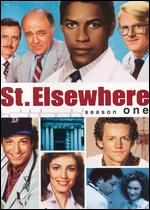

 ”When (Paltrow) got back and he saw the rushes, he didn’t like the look of the show at all, so he closed down. He fired the cinematographer. He put in a ceiling on the show so it wouldn’t look like Dr. Kildare – a sparkling hospital. We had to go to MTM to get permission to do that because they took quite a hit financially,” said William Daniels, who won two Emmys for playing chief of surgery Mark Craig. The changes extended further. Thomas Carter, who made his directing debut while playing Hayward on Paltrow’s previous series, The White Shadow, replaced Antonio in the director’s chair, and Sommer and Paymer’s roles were recast. “In the recasting, Ed Flanders came in. In Ed Flanders, you had one of the very best actors in America – one of the very best actors, underappreciated. There was none better than Ed Flanders,” Lloyd said. There were other changes as well, which Lloyd described: “They repainted the set to a color that was easier to take than the color that existed. In general, they changed everything. They decided that they didn’t want [Auschlander] to come from Vienna and [he became] a New York guy brought up in lower Manhattan. That saved the pilot, and the pilot came out very well indeed.”
 David Morse, who has accumulated quite a body of work since his days as Dr. Jack Morrison, still recalls exactly where he was when informed of the shutdown. “I remember being in The Sportsman’s Lodge when I got the call from Bruce saying for me not to worry, that he was happy with what I was doing, but they were going to shut down for awhile and retool, recast and think a little bit,” Morse said. “It’s a hard call to get, because even though we had only done a few days of shooting, you’ve already started to bond with that group of people, David Paymer especially. Josef Sommer was older, so we really didn’t have that kind of relationship, but you knew yourself that there already was a team coming together, and that was gone. It’s not easy to go through a kill patch with people. Obviously, good things came out of it—Howie (Mandel) or Ed Flanders, but . . . it’s not a great thing to go through for anybody. I’m sure it stung at the time, but (Sommer and Paymer have) both had pretty good careers.”
 “I had tried out for Terence Knox’s part, Dr. Peter White, and I didn’t get it. Instead of the regular part, the plum role that I wanted, Peter White, I got this other part, Ehrlich, that they merged with another character,” Begley said. “I thought, ‘Well, they threw me a bone, but I’ll make the best I can out of this part’ and Ehrlich turned out to be one of the best parts in the run of the show.” The role that Begley initially sought wasn’t supposed to last as long as Peter White did for Knox. Knox said, “They couldn’t decide what to do with me so they kept bringing me in for auditions . . . I got a call at my home from the casting director at NBC, Joel Thurm. He said, ‘They’re not sure what they’re gonna use you as, but they want to use you for something. Would you be interested in the part of Peter White?’ I said, ‘Sure, sure.’ He said, ‘Now, they’re probably gonna kill him off at the end of six episodes.’ I said, ‘I don’t care. I don’t care. I’ll take it. I’ll do anything.’ Originally he wasn’t supposed to be on that show very long because he was a screwup, you know, but that turned out to be a good storyline and they kept writing more stuff for me.”
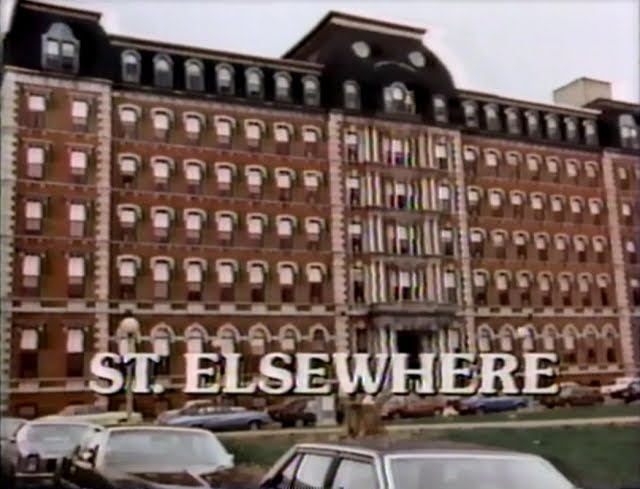
 “I thought the star of the show was the actual St. Elsewhere, the building, the hospital,” Pickles said. “The story was really about the heart and soul of this extraordinary, crumbling, generous place, filled with people trying to do their best work against all odds. When we left the hospital and went to somebody’s home . . . I thought it was never as exciting as staying in those halls and corridors and nurses’ stations.” Looking back at the first season now—
 The first time I saw an Adam Beckett film I was repulsed. What started as a structured sketch, in which quadrilaterals were progressively birthing more quadrilaterals, erupted into blobs of pastels and indiscreetly organic colors stretching and consuming each other in an orgy of what looked like sexy intestines. This was set to some of the most half-assed and unsystematic free jazz ululation I could imagine. It disgusted me at the second screening too; in my recreational pursuits, I was after a more refined sense of personal clarity than Sausage City could provide. This was indiscreet, self-indulgent, and haphazard.
 The role of a computer animator could be said to be that of an instructor showing a computer how to handle the material construction of an image. Pixillation juxtaposes painted images with computer-generated images, thus mixing the notion of an artist’s direct involvement with material and indirect rendering. Interestingly the painted images are captured in such a way that the effect is, from the perspective of the artist, seemingly more haphazard. Schwartz, rather than always filming a single image, allows the paint to flow at times, droplets intermingling in a predictable but naturally defined manner. This combination of traditional single-frame captures with jump cuts amounts to a unique effect. In contrast, every pixel of a computer-generated display must be chosen by an artist either manually or algorithmically.

 Ride is a portrait of a very old-fashioned kind of American ethos—where being on the open road means being unattached to anyone or anything. This idea of freedom is also found in the most complex and interesting examination of masculinity in our current cultural landscape—Breaking Bad. Throughout the series, the wide, empty open expanses of the Southwest are both intoxicatingly beautiful and dangerously deserted. Men inhabit these empty highways, driving cars, dealing meth, forging alliances, and killing off their enemies. Walter White’s (Bryan Cranston) meth production is often necessarily nomadic, constantly shifting locations, from the first RV that he and his friend, partner, and former student Jesse Pinkman (Aaron Paul) use to cook, to his use of Vamanos Pest Control as a front for moving from house to house. The few times when Walt settles into a routine, as when he has a stable job cooking for kingpin Gus Fring (Giancarlo Esposito), are the times when he feels most restricted. Walt’s journey from zero to anti-hero is driven by a desire for freedom, making the series, in a sense, a beautiful ode to an America where the world is yours for the taking, where you are never under someone else’s thumb.

 Speculative fiction has often examined contemporary anxieties, either consciously or not. In the 1990s, the fall of the Soviet Union led to a world quite different from the bilateral world most American TV writers and viewers of that time had grown up with. This world was characterized by a distrust of American governments, or governments similar to ours. The X-Files is the most famous example of this conspiracy-theory mindset, but it was joined by Star Trek: Deep Space 9—a relatively cynical take on the future compared to its utopian Star Trek predecessors—and Babylon 5, in which an American-style government called EarthGov was corrupted into dictatorship. The terrorist attacks of September 11th, 2001 pushed SF TV in a still more different direction. Shows like Battlestar Galactica, Firefly, Angel, and the literally and figuratively more realistic 24 all dealt with the moral issues and compromises of being a leader in a fight against evil.
 While both Revolution and The Walking Dead are clearly descended from these previous stories (imagine Rick, Shane, and Dale as Adama, Tigh, and Roslin from BSG during some of their ethical arguments, for example), their settings focus their cultural anxieties. The shows both take place on Earth, in a semi-recognizable America, after or during a massive population apocalypse caused by something that, at least at the beginning, is unknown. On Revolution, it's the end of electricity and modern technology; on The Walking Dead, it's a zombie plague. In both cases, it's a new, harsh world, where characters used to the amenities of modern life like the video game Portal or their iPhone have to cope with facts of day-to-day reality instead of the contrivances of society. And in both cases, civilization itself may have been the cause of the apocalypse. Both shows revolve around debates of how civilization is being reborn, whether it deserves to be reborn, and whether American ideals of rights and justice can work in apocalyptic settings.
 The core anxiety is straightforward: there are too many people for civilization to be sustainable. This is a common worry. For some people, the concern is that high-population areas are immoral, breeding grounds for sex and violence; for others, the thinking is that too many people consume too many resources, which leads to climate change. In both cases, there's a general belief that there are too many people whether they be sinning via sexuality or via energy consumption. The former attitude exists to a certain extent on both shows. Revolution's post-apocalyptic setting opens on a pastoral farming community whose peace is shattered by people who want to bring the worst of civilization back. Meanwhile, The Walking Dead moves out of the dangerous city to Herschel's farm, a seemingly safe chance for the characters to regroup and survive the apocalypse.
 These two shows clearly blame the apocalypse on the flaws of civilization, but they're not alone. 2011's short-lived Terra Nova—the Revolution of its Fall television season—was entirely explicit about this role. The show was set on normal Earth, hundreds of years after a slow environmental apocalypse, with the sky covered by pollution and society governed by rigidly enforced population controls. But a magical discovery led to the chance to travel back in time, and build the colony of “Terra Nova.” This was an idyllic colony set on dinosaur-dominated Pangaea millions of years in the past, with its name's translation, “New World,” demonstrating the show's focus. The characters even state that this colony offers a chance for them to rebuild civilization without making the mistakes, technological and moral, that forced humanity down a dark road. Terra Nova was a second chance, a do-over.
 Game Of Thrones' allegorical examination of climate change ties in directly with its concept of leadership. Almost all of its characters all ignore the impending climate and supernatural disaster. These men and women making crucial decisions in Westeros are small-minded and petty, or ambitious and self-serving, or in the best case, good people who are forced by honor or obligation to do the wrong thing. The latter is true even of the heroic Robb Stark, whose decision to march south for his family's honor and to attempt to repair the Seven Kingdoms is described as a mistake by Osha, a “wildling” whose time north of “The Wall” gave her direct experience of the impending apocalypse in the south. She says he should have turned his army north, toward winter and the supernatural invasion instead of south to fulfill the obligations of his political system.

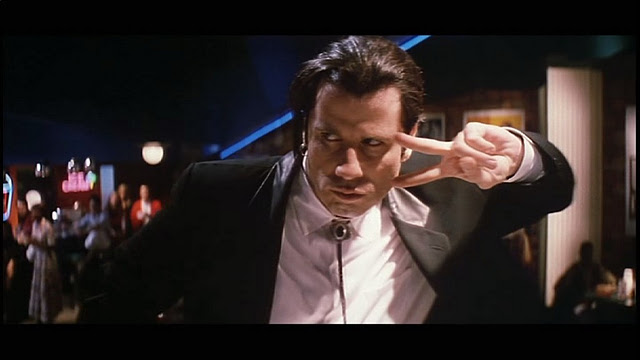
 Tarantino has been doing this from the start of his career, from the moment in Reservoir Dogs when the doomed Mr. Brown (played by Tarantino himself) waxed profane about the supposed true meaning of Madonna’s “Like a Virgin,” then promptly died of gunshot wounds behind the wheel of a getaway car. His second film, Pulp Fiction, moves this tendency into the foreground. Nearly all of the movie’s 150-minute running time features characters talking, talking, talking, about their personalities, their values, their world views, and about other characters, some of whom we don’t get to know—or even meet—for an hour or more. All the film’s major characters are modern, workaday cousins of the Great and Powerful Oz; the film builds them up by having others repeat their (often self-created) legends until they loom in our minds like phantoms, then tears away the curtain to reveal panicked little people desperately yanking levers. “Come on,” Jules tells Vincent in the film’s opening section, “let’s get into character.”
 Tarantino does this over and over again in Pulp Fiction. Mia Wallace is introduced as a sex goddess monitoring her date, Vincent, via surveillance cameras while mood-setting music (“Son of a Preacher Man”) thrums on the soundtrack, and then speaking to him through a microphone. Until Vincent’s car pulls into the parking lot of Jackrabbit Slims, she’s just a pair of lips and two bare feet, intriguing by virtue of her remoteness and sense of control. She seems a more strange and special person than the woman described earlier by Jules: a failed wannabe-star turned gangster’s trophy. “Some pilots get picked and become television programs,” Jules says. “Some don't, become nothing. She starred in one of the ones that became nothing.” But the date proves to be a complete disaster, as Mia mistakes Vincent’s heroin for cocaine while he’s in the bathroom and nearly dies of an overdose. And about that needle scene: Vincent and his drug dealer Lance’s terrified babbling about the right way to administer a heart injection refutes an earlier conversation in which they tried to make themselves seem like world-weary bad-asses. (Lance on his smack: “I'll take the Pepsi challenge with that Amsterdam shit, any day of the fuckin' week.” Vincent: “That’s a bold statement.”)
 “There's this passage I got memorized,” Jules tells Pumpkin, the would-be diner robber who has dared to steal his “Bad Motherfucker” wallet. “Ezekiel 25:17. ‘The path of the righteous man is beset on all sides by the iniquities of the selfish and the tyranny of evil men. Blessed is he who, in the name of charity and good will, shepherds the weak through the valley of darkness, for he is truly his brother's keeper and the finder of lost children. And I will strike down upon thee with great vengeance and furious anger those who attempt to poison and destroy my brothers. And you will know my name is the Lord when I lay my vengeance upon thee.’ I been saying that shit for years. And if you heard it, that meant your ass. I never gave much thought to what it meant. I just thought it was some cold-blooded shit to say to a motherfucker before I popped a cap in his ass. But I saw some shit this morning made me think twice. See, now I'm thinking, maybe it means you're the evil man, and I'm the righteous man, and Mr. 9 millimeter here, he's the shepherd protecting my righteous ass in the valley of darkness. Or it could mean you're the righteous man and I'm the shepherd, and it's the world that's evil and selfish. I'd like that. But that shit ain't the truth. The truth is, you're the weak, and I'm the tyranny of evil men. But I'm trying, Ringo. I'm trying real hard to be the shepherd.” – Matt Zoller Seitz

 Press Play Video Blog