Watch: 222 Heartbeats, Over 100 Films, From TRIP TO THE MOON to E.T. to BROKEBACK MOUNTAIN to GRAVITY and Onward

Watch: 222 Heartbeats, Over 100 Films, From TRIP TO THE MOON to E.T. to GRAVITY …

This rambunctious and rapacious video tribute to film history, featuring flashed images from over 100 films from Arrival of a Train at La Ciotat up to the present day, with a thumping heartbeat under its visuals for added intensity, is a sprint for the bases, derived from research which "Wandering Gio" details here. In fact, this piece is a tributary of a much larger piece, spanning the same time period, but with over 200 films included and at a much greater length. The current piece is just under five minutes long, and does truly take us from a man pointing a gun at an audience in The Great Train Robbery to the shower scene in Psycho to the rearing of the beast’s head in Alien to Anthony Hopkins’ mask in Silence of the Lambs up to Sandra Bullock spinning through space in Gravity. What’s interesting about watching a piece like this, beyond trying to see how many films you can identify out of the assemblage, is noting which films trigger the strongest reaction, nostalgic or otherwise. We all develop our own relationship with the flickering screen, after all, whether celluloid or digital, don’t we? As the poet Frank O’Hara famously said:

Mothers of America
                                     let your kids go to the movies!
get them out of the house so they won’t know what you’re up to   
it’s true that fresh air is good for the body
                                                                             but what about the soul   
that grows in darkness, embossed by silvery images…


METAMERICANA: TOO MANY COOKS Is a Political Statement Worth Hearing

METAMERICANA: TOO MANY COOKS Is a Political Statement Worth Hearing

The argument for the recent viral short Too Many Cooks
being a postmodern parody is easy to make—too easy, in fact. Sure, on the face
of it, Casper Kelly’s eleven-minute video for Cartoon Network’s “Adult Swim”
viewing bloc is a deconstruction of the opening credits often found on
cheesy 80s sitcoms, police procedurals, and sci-fi knock-offs. And yes,
the fact that the running conceit in the video is the power that language has
over us (the actors’ names, which appear beneath them in the usual way of all opening
credits, ultimately become a terrorizing force more human than the humans
they’re attached to) does tend to support the claim that the
postmodernist principle that we are all constructed by and in language is in play. But Too Many Cooks is mixing together too many opposite inclinations, effects,
and plot structures to be adequately described as “postmodern.” Instead, it
seems to intend, as so many Adult Swim videos do, to be inscrutable rather than
analytical, contradictory rather than instructive, and simultaneously
deconstructive and constructive rather than merely deconstructive.
 
For
all its fragmentation—the video moves rapidly between
television subgenres, even as it endlessly recycles the same theme song
(with
slightly different lyrics each time)—Too Many Cooks has a story to
tell that’s surprisingly conventional. First, there’s a villain: a
mysterious,
cannibalistic killer who’s introduced early on, whose name isn’t known,
whose
motives beyond bloodlust are inscrutable, who’s frightening in
appearance, whose
early victims are caught unawares, who understands his local environment
much
better than any of the good guys, and who towards the end of his
homicidal spree faces a “final girl” (an attractive young female more
canny than all the victims preceding her).
Sound familiar? It should, as it’s every horror movie ever made, other
than
meta-commentaries like Scream or Joss
Whedon’s A Cabin in the Woods. Too Many Cooks even features hapless law
enforcement, as several police officers fail to notice the killer even when
he’s literally right under their noses.
 
Just as it has a fairly conventional villain, Too Many
Cooks
has a hero whose placement is conventional even if certain of his
descriptive particulars are not. Smarf the Cat, described by The New Yorker
as the product of “Alf mating with a cat rather than eating
one,” is
introduced early on in a way that makes him endearing. Smarf has special
gifts that
others don’t immediately see (e.g., he can shoot rainbows from his hands
and
lasers from his eyes), has an apprehension of danger that exceeds that
of law
enforcement and all the other good guys, and in the end kills the
villain but is
gravely injured himself. Smarf’s role in Too Many Cooks is undergirded
by such a human inclination that it belies the fact he’s the only
non-human in the video: he’s trying to put everything back to normal.
“Back to normal,” in
the terms of the world of Too Many Cooks, means finally ending the
opening-credits loop all the characters in the video are caught up in;
Smarf, though grievously wounded, does
this by pressing a giant red button, after which he appears to die.
But—surprise!—he doesn’t die. In fact he’s fine, though the
cliff-hanging ending of Too Many Cooks suggests that Smarf’s still
caught up in the cycle of danger we’d assumed he’d escaped. All of which
should surprise no one,
as it’s exactly how the hero of a conventional horror film is dealt
with.
 
So why are so many commentators in major media (including not just The New Yorker, but also The Daily Beast and others) referring to "Too Many Cooks" as postmodern, or using terms common to postmodernist literary theory
(like “parody”) to explain the operations of Kelly’s intricately networked art-house flick? The
answer seems to be that “postmodern” is the term we use habitually, even
instinctively, for things we don’t understand and don’t really care to. Too
Many Cooks
is blindingly fast in its transformations, and
repeatedly obscure in its deconstructions of iconic images and ideas, so it
must be “postmodern” in some way—that is, beyond our understanding.
 
In fact, the new avant-garde in the arts, and particularly
in the visual arts, very much wants to
be understood. It wants you to be able to follow with little difficulty what
you’re seeing, even as the effect it has on you pushes you simultaneously
toward several internally contradictory extremes. Too Many Cooks is at once funny and
horrifying, mesmerizing and cloying, exhilarating and depressing, filled with
obvious references to popular culture and entirely disinterested in whether you
can catch even a fraction of them. If it seems in a sense ironic—as it clearly
does take a dim view of the formal constraints that typified 80s
television programs—it’s also earnest enough to want to give you everything you
expect from a fantasy: a villain, a hero, a plot, some tragedies, some
emotional manipulations, and a resolution that both satisfies and keeps you
guessing about what could come next.
 
“Classic” postmodern art emphasizes that meaning falls apart
at every critical juncture, and therefore usually requires specialized academic
training to fully interpret and appreciate. If and when it seeks a popular
audience, it does so to shock, distress, or otherwise disgust its viewers; even
Andy Warhol’s paintings, while easy enough to “get” on a first look, were
intended to provoke anxious debate over what is and is not art. Too Many
Cooks
is a different breed of artwork entirely because it requires little debate
regarding its central premise but still provokes significant emotional anxiety among
its viewership. If postmodern literature usually sends us running to our scholars for assistance, Too
Many Cooks
is much more likely to have you singing its theme song in
the shower. We’ve moved from a time when avant-garde art wanted to
unsettle our
minds to a time when it wants to unsettle our nerves and give us
immediate pleasure simultaneously. What’s at stake in this
movement from the postmodern paradigm to what’s lately being called
“metamodernism”? It’s a good question, and by now there’s enough visual
art like Too Many Cooks out there that we do well to consider the
omnipresence of contemporary art that ostentatiously combines opposing ideas in a way most of us can’t
readily process.
 
Metamodern art like Too Many Cooks is trying to
do an end-around past those institutions we once turned to for communal
sense-making: mass media, the academy, and non-academic "experts" within
their subfields.
When Too Many Cooks was released, everyone began forwarding it to
everyone
else via social media and email, whether or not anyone doing the
forwarding had
yet processed their emotional reactions to the video. The currency of Too Many
Cooks
became attention itself, not understanding, and the power to pass
on that currency resided in any person with access to the Internet, not
just those specifically empowered with cultural capital (for instance,
via
higher education) to tell everyone else what’s worth sharing and viewing
and
what isn’t. If we live in a time of great cynicism about media,
academic, and
of course political institutions, art that’s designed to virally
infect all of us with emotions we can’t process is subversive by definition.
 
Consider the way Too Many Cooks moved through the culture:
it at once became a hot topic on The New Yorker, New York Magazine,
and CNN websites,
even as it was still burning its way through every discussion board on
countercultural hotbeds Reddit and 4chan. The disconnect between those
two
audiences—one attracted to High Art, the other, broadly speaking, to
Low—was so
great that Reddit and 4chan users were heard loudly complaining that
their
enjoyment of Too Many Cooks was being coopted by those whose values
and tastes they didn’t and can’t share.
In other words, Too Many Cooks was destroying class distinctions by
appealing
to basic human emotions all of us contend with, regardless of income,
education, or
institutional affiliation. To call Too Many Cooks mere parody when it
deliberately speaks directly to and about longstanding story structures
and
psychosocial conventions unfairly casts it as deliberately obscure. It’s
a strange thing: we
live in an age in which we treat as obscure that which is simple in
order to avoid
seeing that it’s our simplicities that unite us, and that we all
struggle daily to resolve contradictory ideas and emotions. Too Many
Cooks
may suggest a worldview troubled by the overload of information
we all experience in the Internet Age,
but it’s also trying to remind us that, for now at least, we’re all in
the same kitchen
and eating the same food.

Seth Abramson is the author of five poetry collections, including two, Metamericana and DATA,
forthcoming in 2015 and 2016. Currently a doctoral candidate at
University of Wisconsin-Madison, he is also Series Co-Editor for
Best American Experimental Writing, whose next edition will be published by Wesleyan University Press in 2015.

Watch: Darren Aronofsky’s Cinema of Extremities: A Video Tribute

Watch: Darren Aronofsky’s Cinema of Extremities: A Video Tribute

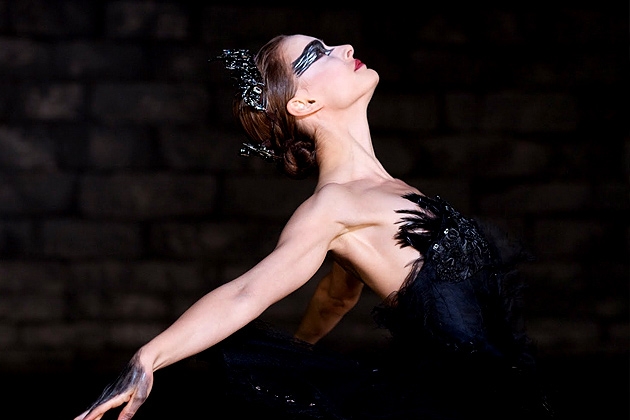
When watching this brief but dense video homage to Darren Aronofsky’s work by Edgar Martinez, one is reminded that Aronofsky never does anything by halves. The emotions he portrays are massive, embedded within timeless stories, and yet he manages, through his kinetic, sinewy style, to render these emotions with powerful detail, never short-changing their complexity. With The Wrestler, for example, Aronofsky managed to bring numerous unexpected shades to what could have been a cartoonish turn for Mickey Rourke–but at the same time, Rourke’s literal and figurative muscle was an unmistakable force in the film; part of the thrill of watching was following Rourke’s thrashing around his stage bounded by ropes, trying to correct there what he couldn’t fix outside those ropes. Black Swan displayed another aspect of Aronofsky’s work addressed here: relentless movement, a flow, for lack of a better word, that might make a film seem like one continuous, unpunctuated sentence, rather than a series of connected phrases. And Requiem for a Dream drew its energy from its daring–not trapeze-act daring, but a sense that the film was daring itself to go farther and farther into its portrayal of degradation and humiliation. There’s a tremendous amount of visual darkness in this tribute, which suits a director who seems to be constantly swimming in darkness and, at the same time, encouraging his viewers: come on in, the water’s fine. 

ARIELLE BERNSTEIN: Girl Found: GONE GIRL’s Boring Masochism

ARIELLE BERNSTEIN: Girl Found: GONE GIRL’s Boring Masochism

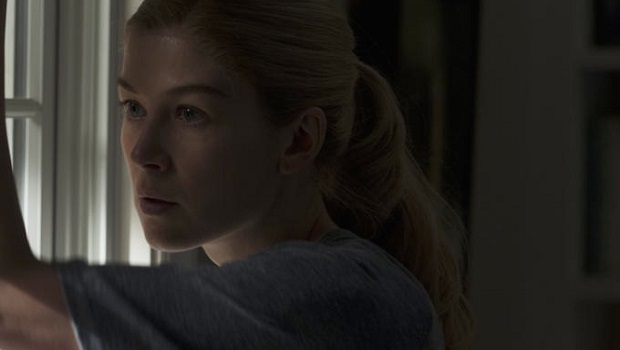
nullBefore I saw Gone
Girl,
I had seen enough plot spoilers to know that Amy Dunne was the icy
villain, a femme fatale who devours male victims like a praying mantis. I
expected rage; what I didn’t expect was her willingness to hurt herself. Amy’s
aggressive behavior and her ability to manipulate the system hinges on how she
cuts, bleeds, tears at and otherwise desecrates her own body. 

I know, I know. Feminist champions of Gone Girl claim that Amy’s ability to play with the cookie-cutter roles
that women are cast in is somehow triumphant, but Amy’s self-inflicted wounds,
coupled with her meticulously constructed calendar, complete with yellow sticky
notes questioning whether now would be a good time to kill herself, struck me
as boring, rather than subversive. While male villains like Batman’s The Joker and American Psycho’s Patrick Bateman thrill
us as they play the role of sadists, female villains, even at their most evil
and vindictive, are still relegated to the role of masochists.

Just as horror films love to torture their female victims,
feminist films and literature are often obsessed with female debasement. We
watch brilliant 19th century women slowly deteriorate into insanity
in stories like “The Yellow Wallpaper.” We lament the smart, talented young
women who try to off themselves in Girl
Interrupted
. We watch Dove ads where rows of normal looking women shed
tears when talking about the pressure to have poreless skin and gaps between
their thighs. From Beyonce’s “Pretty Hurts” to the return to Twin Peaks and its obsession with the
tragic death of the young and beautiful Laura Palmer, what defines femininity
today is pain. The recently released short animated feature, “Sidewalk” by
Celia Bullwinkel, shows a girl’s journey to womanhood and old age, during which
she is always uncomfortable in her skin. She endures stares and whistles from
men as she enters puberty, the discomfort of pregnancy, the pressures faced on
older women’s bodies and, finally, the invisibility of old age. “Sidewalk” is
touted as a journey to “self-love,” but when the protagonist reaches old age
and helps a young girl walk along the same sidewalk, the mood is one of
resignation, rather than joy, the path to womanhood still presented as an
obstacle, rather than a pleasure.

This downtrodden story of what it means to be a woman is
just as limited a view of the female experience as the more cheerful,
empty-headed views of womanhood portrayed in such musical numbers as “I Enjoy
Being a Girl” from the 1958 musical Flower
Drum Song
and “How Lovely to Be a Woman” from the 1963 musical Bye Bye Birdie. Both songs feature a
young, beautiful woman enjoying her sexy new curves and newfound attention from
men. Certainly these songs, along with 80s and 90s jams like Cindi Lauper’s,
“Girls Just Want To Have Fun” and Shania Twain’s “I Feel Like A Woman” aren’t
particularly deep or challenging of gender norms, but at least their view of
the female experience is upbeat.

In contrast our modern day obsession with female suffering
is as much a throwback to earlier tropes, as it is a kind of pushback against a
consumer culture that claims that by purchasing the right product women can be
happy and free. Amy Dunne’s desire to disappear certainly fits this model. In her
now famous “Cool Girl” speech, she describes the social pressure on women to
fit into a man’s fantasy, at once inhabiting and also casting off the “Cool Girl”
persona in the process.

Perhaps Amy’s “Cool Girl” theory would have been more
meaningful to me had I thought that Amy was truly making a feminist manifesto
and wasn’t just angry that her husband was having an affair with a “younger,
bouncier Cool Girl.”  Throughout the
film, Amy is not only vicious to her philandering husband and other men who she
tortures using her feminine wiles; she is also equally hostile to women,
speaking ill of the “stupid” neighbor she tries to quickly befriend, and
throwing venomous barbs at the large-breasted student her husband is having an
affair with. Amy’s self-involved, beautiful, blond, white, trust fund brand of
feminism just rings tone deaf to me in a world where women of all colors,
creeds and classes are claiming the feminist mantle in the name of justice,
rather than a plea to “have it all.” Amy’s self-victimization presents feminism
as its worst possible caricature: one of spoiled rage and privilege, rather
than a very real call for women’s stories to be told and women’s voices to be
heard.

In this way, Gone
Girl’s
heroine is not reclaiming her identity when she stages her escape;
she’s just another in a long line of self-destructive women, obsessed with
finding ways to disappear completely.

Arielle Bernstein is
a writer living in Washington, DC. She teaches writing at American
University and also freelances. Her work has been published in
The
Millions, The Rumpus, St. Petersburg Review and The Ilanot Review. She
has been listed four times as a finalist in
Glimmer Train short story
contests
. She is currently writing her first book.

Watch: David Bowie’s Film Roles: A Video Essay

Watch: David Bowie’s Film Roles: A Video Essay

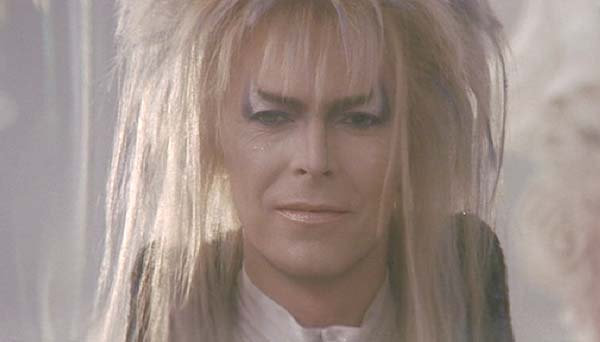
Seeing David Bowie appear in a film is always a vaguely unsettling experience, and Drew Morton’s video essay about the musician’s movie work takes us on a transfixing tour of that experience, inside and out. Bowie’s presence on camera is shaped as much by his carriage as by what we know about him. It can be said without too much exaggeration or nostalgia-laden reputation inflation that Bowie is one of the more original and enigmatic figures to record rock music in the last 50 years–he has cultivated an unearthly quality and perspective in his work practically from its outset. (There’s a reason "Space Oddity" was performed on the ISS, after all.) And in films, he projects an aura that does make it seem, at times, as if he had been teleported into the film from … elsewhere, to inject a factor of unpredictability into the work and, possibly, to stir recognition in older viewers, giving the film they’re watching a certain boost in credibility with a pop-culture wink. In the older films, like Labyrinth or The Man Who Fell to Earth or The Hunger, Bowie’s exotic, vaguely androgynous quality is all we see: his rock heritage is worn on his sleeve and empowers his performance. In the more recent The Prestige, Bowie’s performance was more buttoned-up as he played Nicola Tesla, but at the same time, the casting choice made perfect sense. Who better to play someone with as wild and untamed an imagination as Tesla’s than Bowie, the man who once dressed himself up as Ziggy Stardust, a man who communed with aliens? As Bowie’s musical career continues to develop, watching him in films like the ones sampled here should help to give well-deserved breadth to his accomplishments.     

Talking with Ted Melfi About Saints, Compassion, and Survival in Hollywood

Talking with Ted Melfi About Saints, Compassion, and Survival in Hollywood

nullTed Melfi has been in the movie industry for years. He’s worked in
commercials, produced shorts and started Goldenlight Films, a production
company, with his wife Kimberly Quinn. St.
Vincent,
though, is his first major feature film. He snagged Bill Murray as
his lead after finding him through a 1-800 number and, soon after, the
Weinstein Company came on to produce. The cast is incredible, the story is accessible,
and, from my experience, the audiences are responding. Watching St. Vincent at the Grove Theater in LA
on a Friday night, no one left during the credits. They rolled, Bill Murray
danced to Bob Dylan, and everyone stayed put, in awe. I whispered to my friend,
“People love this movie.”

Bill Murray plays
Vincent, an unemployed drunk in Brooklyn who loves to curse and make other people
feel inferior. When a single mother, Maggie (Melissa McCarthy) and her son
Oliver (Jaeden Lieberher) move in next door, Vincent takes the opportunity to
make some extra cash by babysitting Oliver. Although Vincent is initially
distant, surrounding himself with gambling, booze and a Russian prostitute Daka
(Naomi Watts), he and the boy soon form a bond. When Oliver is asked to pick a
saint at school, he insists that Vincent, who most view as a nightmare, is
actually a good guy, even a saint.

I met with Melfi at the Weinstein offices in LA. Walking
into the conference room, surrounded by hit movie posters, stiff chairs
and a massive glass table, I was immediately comforted by Melfi’s warm smile
and firm handshake. He was vulnerable right off the bat, confident but sincere.
I soon was convinced
that if I were Bill Murray, I’d say “yes” to this guy too.

Melfi got his start producing in a way that is both
unlikely and believable. He worked in an
Italian restaurant in Studio City. A guy walked in one day and started talking
about a story he had: “It’s about this African American kid back in the Midwest
trying to find himself as a writer.” Melfi was compelled by the story. The man offered Melfi
his script and asked if he had produced. He said, “yes,” with an apron on. Melfi had never produced before.

Thankfully, LA is about faking it till you make it. He spent
the next few months raising $600,000, and they were shooting the film weeks
later. Melfi knew,  “This is what I’m
going to do with my life and I’m 23.” 

He went on to write and shoot projects with his wife
Kimberly Quinn with their production company Goldenlight Films. Melfi completed
seven indie movies where he produced and wrote, but he refrained from
directing.  Meanwhile, he was writing
things on the side and trying to get agents all over L.A. All of his films were
released, but in today’s industry, that doesn’t mean you’re making a good
living. After eight years of producing, Kimberly said he had to get a real job.
She suggested commercials, having worked on a plethora of them as an actress.
Eventually, Melfi made specs and got lucky with MTV. He made a commercial
starring Ron Jeremy about pizza and porn and shot it for $1,200.  MTV bought the commercial for $10,000, and it
launched his commercial career.

Melfi doesn’t proceed to make fun of his Ron Jeremy venture
or discount his work in commercials, as many “artistic” filmmakers might. “I
love commercials,” he says. “I love telling stories in a short amount of time.”
He’s working on about “two a month” at this point in his career and assures me
“they all have their good spots.” Once Melfi established a life with a
consistent income for his family, he decided to get back to his first love, writing.

After completing a few screenplays, all praised by his
agents but none landing, Melfi wrote St.
Vincent.
The story has an extremely personal origin for Melfi.  His brother passed away at 38 with an
11-year-old daughter–the mother was not around. “My wife and I adopt her and
take her from Tennessee to Sherman Oaks, California. She gets this homework
assignment in her world religion class: find a Catholic Saint that inspires you
and find someone in your real life that mimics the quality of that saint and
draw a comparison.” Similar to the saint Oliver chooses in the film, she
chooses Saint William of Rochester, and then chooses Melfi himself. “It was,
like, healing for our family.” Ted couldn’t stop thinking of it, but knew it
would transform into the characters that soon became Bill Murray and Oliver.

Coupled with the personal experience of his daughter, Melfi
chose to base Vincent on his father in law. “My wife’s father was a Vietnam
vet, drank too much, smoked too much, gambled lied and cheated.” He stopped
talking to Kimberly when she was 9 and never spoke to her again. One day, she
decided to write a “Dear Dad” letter in attempt to re-connect.  Sure enough, he called soon after and they
talked for hours.  “He became her saint,
she became his saint. They reunited and became father and daughter for the last
10 years of his life. He realized he had value through her, and that’s what
Oliver does for Vincent.” Right there is the kernel of the project for Melfi, “It’s
about value.”

Upon learning the project is so personal, I’m curious how
Melfi actually approached writing the script. “The drawing board for me was to
sketch out the general structure and then to back away from it as far as I
could.” Vincent is 70, creating a generation gap between the drunken veteran
and Melfi, resembling Kimberly’s father more closely. Ted doesn’t write with
actors in mind, but people. 

“I think that the
most connected writing in the world is connected to something true and honest,
no matter what that is. Every character I write is based on something, some
personal part of me, someone I know, someone I’ve met. It just makes it clear
to my mind.”

Getting back to the crux of the story, value, I wondered
what was unresolved here. Was Melfi writing this as a form of catharsis, was it
out of a need to tell his audience, or perhaps himself, that they possess
worth? Melfi describes his experience with Jeff Kitchen, taking classes with
the screenwriting guru and learning a specifically helpful technique. “You
start any project with a question: what do I want to leave the audience with?”
With St. Vincent, it’s “every human
being has value.”

Melfi describes drawing arrows down from that point: how
will that happen? “You start to go backwards in time and all the sudden you get
to the drunk meets the kid.” After
the movie’s release, Ted has received many texts, tweets and emails, all saying
the same thing: “I cried.” He’s seen it for himself. He realized that perhaps
the reason they’re crying is because that last element landed. “That technique
has some value! He references Paul Thomas Anderson, saying that with all his
films he has an intention, whether or the movie is your taste or not.

You can fuck it up
shooting it, writing it. We fucked a lot of things up but we didn’t’ fuck that
concept up. It’s the intention that you have as a writer or director that made
that so.”

Still, Melfi hasn’t answered my question: did he need to
tell himself he had value? “Yea I
think everyone does. I think I’m a pretty good person. I’m in my forties, it
kind of happens later! Your value gets chipped away over time and the next
thing you know, you’re 65.” Melfi points out that everywhere people wonder is this it? They’re seventy, living on
retirement or social security, their kids are gone, what’s left with life? He
admits he’s thankful for his wife and family and feels valuable, but I wonder
about Kimberly’s father. “He spent his life trying to find his value and
ultimately I think life can be a lot for people. It was so much for him that he
bailed out.”

This sense of isolation compares to a moment in the film [spoiler!]
where Vincent sits next to his wife, who at this point, is just a box of ashes.
He’s broken, and when Oliver offers comfort, Vincent pushes him away with wit,
then anger. Melfi suggests, “The instinct is to push away because no one wants
to feel vulnerable, because if the dam breaks, the river is going to flow. And
it does not stop.”

This avoidance of vulnerability is fueled by Vincent’s
history as a veteran. “War is disgusting and disturbing and they’re there for us.” But when these veterans get home
that “one man’s life means nothing” doesn’t quite translate. Behaving in battle
like your life is meant for sacrifice, but having a family tell you they need
you can be confusing and propel one into that same isolation Vincent gravitates
towards. Melfi admits that our country and culture don’t take proper care of
veterans.  They’re the “bravest men and
women on the planet.” The audience may write Vincent off in the beginning of
the film, as do the characters surrounding him in the story. He’s crude, rude
and mean. But he’s also a war hero.

“You peel back the skin of the onion and start to go, this guy is amazing.” It’s the same
situation with Maggie, who Melissa McCarthy plays with both strength and palpable
weakness. She’s a hardworking mother stuck between work, a divorce and an
innocent son. “That mimics most closely to what life is. You don’t know a shit
about anyone. One day something will happen and you’ll go [makes a gibberish
noise and shakes his head in stupor].”

Melfi believes this compassionate philosophy, believing
people are more than they may appear. He still, though, must function as a
filmmaker in a town where not many are willing to let their appearances
crumble. “Los Angeles is a tricky town. I’m from New York, and in New York ‘Fuck
you’ means ‘Fuck you.’ A New Yorker will sit down and tell you his whole life
story.” LA, on the other hand, is about separation. “I don’t know how I survive
here. I have a family and I get out of here as much as I can.” Melfi is able to
pull back those layers of the people around him, eager to get his hands dirty.

“I’m an instigator
and an aggravator. I ask questions people don’t want to ask. I’m fascinated
with people. I think it’s what we’re here for.”

He believes we’re all one; his favorite film being It’s a Wonderful Life. St. Vincent has
the same message, telling people they do
matter; they can make an impact.
Recently, Melfi noticed two ladies talking outside a screening. One of them
says they cried, which was a marvel, given she’s on anti-depressants and can’t technically shed a tear.

“God forbid, there’s an emotion in a movie! It’s sentimental
and schmaltzy! What the fuck are you going to a movie for? If you don’t want an
emotion just go see action films…even Spiderman,
they have emotions! Go see those movies because you have lost sense of what art
is.” 

“Art is a catharsis. You
are supposed to go and get fucking mad and laugh and cry and have every
emotion. Otherwise, there’s no point to art. We might as well make network TV.”

He and I agree that much of that type of programming isn’t
connected to anything real. It’s a product. As much as St. Vincent could be called the same, released by the Weinsteins
and with a Hollywood cast, it’s not. If it turned out to be, that clearly wasn’t
Melfi’s intention.

“My generation and everyone below is now in a world that’s
disconnected. We have this illusion that social media, Twitter, texting these
things are connecting us more. Instead of dealing someone on the human level,
we don’t have to do that anymore. Human beings were designed, from the earliest
days as cavemen, to read faces, to fall in love with someone, to fall in
hate…to get them. We’re not emotionally connected. Entertainment has followed
suit. It has very little humanity.”

Melfi is taking a risk painting religion in a positive light,
if making a film that’s sentimental as opposed to cynical wasn’t enough. “My uncle
was a priest. My aunt was a nun. My mom was a nun.” He reveals a scandalous
love affair between his aunt Patty and uncle Tom who fell in love, got married,
and then were kicked out the church. It’s been 50 years now.  “Tom is the coolest mother on the planet.
He’s kind of the inspiration behind Chris O’Dowd’s character and a new look at
religion.” O’Dowd plays Brother Geraghty, Oliver’s teacher in school.  “I wanted a positive depiction of what an
honest Catholic priest would be today, where he has to embrace every religion,
and no religion, and try to get people to understand that God is whoever you
want him to be at this point in your life. If you find my particular God, okay,
if you don’t, okay, but you should learn the values of being a good person and
living some of your life for others.”

Melfi is encouraged about Pope Francis: “He’s going to make
it tangible for other generations who have shunned it. “ Melfi believes this action
is developing the view of religion and encouraging a freedom to find a personal
relationship with God. “I personally have seen enough of the Catholic Church
getting beat up. Everyone does a big ‘X out’ on religion because they have an
experience. Most people nowadays haven’t even had an experience; they have a
perception. They have no idea.”

Melfi’s mission is so pure; I wonder how he preserves it. It
is Harvey Weinstein after all. “Everything you do in life is a collaboration.” Although
Bill came with the project, Weinstein wanted a second and third big star in the film. Melfi
fought for Melissa, she even volunteered to audition, and Weinstein convinced
Melfi to make the prostitute Russian and cast (poor guy!) Naomi Watts. “I
fought when I needed to fight, and you collaborate when you need to collaborate.
Be open to being wrong. Directors get stuck in I’m an auteur, this is my baby, this is my vision. To some degree
that’s a trap. I come from the script is
the boss
.” Melfi was once a stage actor, which could explain his dedication
to text. 

“When the script is
good, the best thing a director can do is get out of the way.”
 

Melfi has multiple scripts about children seeking father
figures, a subject matter that also ties into St. Vincent’s quest for value.  It’s not until the last minutes of our conversation that Melfi reveals, “My dad disappeared 19 years ago and I never saw
him again. There’s a deep part of me that will always wonder what happened to
him.” Melfi goes to therapy, and he explores his own personal life outside art.
He’s no Lars Von Trier, who openly puts his painful, demented catharsis on
screen. Melfi just wants to create stories. “My favorite filmmakers are
personal filmmakers, Alexander Payne, Spike Lee, Frank Capra, even Steven Spielberg.
He’s telling great stories.”

Meredith Alloway is a Texas native and a freelance contributor for CraveOnline, Paste, Flaunt, and Complex Magazine. She is also Senior Editor at The Script
Lab. She writes for both TV and film and will always be an unabashed
Shakespeare nerd. @atwwalloway


Watch: Federico Fellini’s Influence on Wes Anderson: A Video Essay

Watch: Federico Fellini’s Influence on Wes Anderson: A Video Essay

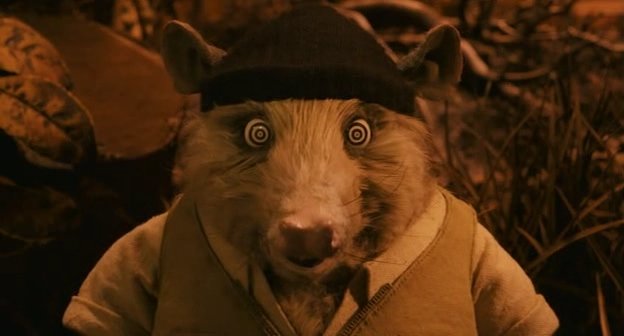
Is Wes Anderson influenced by Federico Fellini? Yes. Inasmuch, of course, as any American film director of the past 50 years might have been influenced by him. Fellini, Ingmar Bergman, Francois Truffaut, Jean-Luc Godard and others opened up a possibility for expansiveness and experiment in cinematic storytelling in the mid-years of the twentieth century that is as irreplaceable as it is hard to dispute. As this haunting piece by Andrew Infante shows, there’s a lot of similarity to note here, whether it’s the vaguely dreamlike way events occur in Anderson’s films, external logic giving way, beneath the surface, to something darker and stranger, or the lack of context for so many of the images and scenarios Anderson presents, from the garish outfit Max Fischer wears onstage in Rushmore to the strange silence of the hawk in Fantastic Mr. Fox and onwards. There’s also a sense of nostalgia, of looking backwards, in Anderson’s films that very much recalls Fellini classics like Amarcord or Juliette of the Spirits–in which the sense we get is not so much that the past was better, but that it was richer, even if that richness included equal parts suffering, temptation, and ecstasy. And is there decadence in Anderson’s films that rivals that shown in Fellini’s work? Yes. The older director filmed it: the parties, the orgies, the makeup, the wealth. Anderson embraces the same spirit, but works towards allowing his own imagination, the cult of one in which his vision is the founder and the sole acolyte, to steer his films. You could say "self-indulgent," but that’s not quite it: it’s a career in which, rather than killing his darlings, Anderson has multiplied them, magnified them and built them up to show the world the great benefit which has been reaped by keeping them alive.

Watch: What If RATATOUILLE Met THE WOLF OF WALL STREET? Two Trailers, Merged

Watch: What If RATATOUILLE Met THE WOLF OF WALL STREET? Two Trailers, Merged

So here’s the thing: the most resounding criticism of Martin Scorsese’s The Wolf of Wall Street was that its rambunctious, excessive, extreme, vulgar manner was not, in fact, satire but an endorsement, and in fact a glorification, of Wall Streeters’ behavior, without filter, without restraint, loud, in your face, and utterly unapologetic. No one made similar accusations of Ratatouille, for a number of reasons. It was a cartoon, so its viewers knew what to expect. Its storyline was not the sort of storyline that attracts such rage. Oh, and of course, lest I forget: Ratatouille was about RATS! In all other respects, though, the two films are quite similar. Could have been by the same director, in fact. And as if to prove it, we have Harrison Allen’s ingenious mix of the two films, right here. Once you watch this, you’ll wonder how you could have ever thought the films were all that different…

Watch: A Video Essay on the Structural Beauty of Martin Scorsese’s THE WOLF OF WALL STREET

Watch: A Video Essay on the Structural Beauty of Martin Scorsese’s THE WOLF OF WALL STREET

What Milad Tangshir has done with this extremely well-researched and well-edited video essay on Martin Scorsese’s The Wolf of Wall Street is actually several things. On the most basic level, he has broken down one of Scorsese’s best films of recent years into its components: a tightly structured plot; nuanced narration; camera techniques which allow us to inhabit the transformation at the heart of the movie. On another level, Tangshir places the film within the context of Scorsese’s other films, most directly Raging Bull and Mean Streets, showing us how, in films externally quite different from this one, Scorsese’s mind manifests in the way the film is pieced together, and is consistent. And on still another level, the piece shows how this film can be linked to other similar films from throughout film history, from Citizen Kane forwards. The essay might help diehard fans of Scorsese and his work renew their appreciation for Wolf–and it might help the many people who found the film bothersome appreciate the method at the heart of what is a maelstrom of satirical, Satyricon-worthy madness. Tangshir shows us Jordan Belfort’s ecstacy and his tragicomic decline in equal measure, taking us on a frightening ride through what Scorsese intimates, in one of the interview clips presented here, is our collective mind.

Watch: A Video Essay Ode to Martin Scorsese’s BRINGING OUT THE DEAD

Watch: A Video Essay Ode to Martin Scorsese’s BRINGING OUT THE DEAD

For the last year or so, Scout Tafoya has been posting a fantastic series of video essays called "The Unloved" at RogerEbert.com. The series takes as its subject films which were underappreciated  at the time of their release and which deserve, in Tafoya’s view, another look; other films in the series have been Alien 3, The Village, and John Carter. With each piece, Tafoya shows a great deal of passion for the work that goes into making these films, as well as for the passion of the directors themselves. Tafoya’s most recent installment was on Martin Scorsese’s Bringing Out the Dead, a film describing the crazed and vaguely hallucinatory careenings of a New York ambulance driver played by Nicolas Cage, thrust up against life and death at their most intense. Tafoya gets at the heart of a couple of irreplaceable elements in this film. One is the presence of New York, shown as only Scorsese could film it: dark, dangerous, wild, uncensored, gleeful, mournful, desperate, cacophonous, deathly silent. The other is Cage’s terrific performance, possibly one of his best in Tafoya’s estimation. The video essay does a beautiful job of making a point at its outset and following it through, managing to interrogate that point at various junctures along the way without going off course–and also managing to speculate meaningfully on why the film was not as critically revered as some of Scorsese’s other films have been. When presented in this light, its neglect becomes hard to understand.