Live Forever and Prosper: Leonard Nimoy, RIP

Live Forever and Prosper: Leonard Nimoy, RIP

null

Leonard Nimoy was many things. He was
an actor, poet, director, photographer, philosopher, and singer. To most he was
Spock, the half-Vulcan, half-human chief science officer of the USS Enterprise
in the 23rd Century on several different iterations of Star Trek.
Nimoy was even part of a plastic model kit from the 1970s, pointing his
phaser at this three-headed snake-thing that never appeared in any episode of
classic “Trek” that I can remember. The box for this model kit declares that
Mr. Spock is “Star Trek’s most popular character,” and this is true.

 
Nimoy wrestled with being made into
the kind of icon that begets action figures in his 1977 book I Am Not Spock,
before throwing in the towel with his 1995 follow-up, I Am Spock. And Spock
endured. He died in Star Trek II: The Wrath of Khan (1982), only to come back
to life in Star Trek III: the Search for Spock (1984). I still get choked up
when during Spock’s funeral in the earlier movie, even though I know—through
repeated viewings–that he really implanted his katra, or life essence, in Bones
before semi-sacrificing himself and assuring his resurrection. “Remember,”
Spock says, performing a stealth mind-meld on Bones. “The needs of the many
outweigh the needs of the few,” he tells Kirk as he is (kind of) dying. The
tears just well up in my eyes at this point.
 
Nimoy appeared as Spock in one of the
better story arcs in Star Trek: the Next Generation. He also played old Spock
alongside of Zachary Quinto’s young Spock in 2009’s Star Trek
reboot. Not even clueless Hollywood execs and J.J. Abrams’ destruction of
Vulcan itself could keep Nimoy from being one with Spock. He reprised the role
in Star Trek: Into Darkness” (2013) in what would be his last appearance as
the character, and by character, I mean himself.
 
When Nimoy, the man, the human being,
produced a book of nude photographs of large women called “The Full Body
Project” in 2007, it reminded us that he was actually pretty damned cool
without having to be half-Vulcan after all. But then again, in "Shekhina,”
the 2002 photographic series that started to get the actor more serious
attention as a photographer, he used black and white stills of nude women of
all body types as a rumination on the feminine manifestation of God in Jewish
mystical tradition. Nimoy fashioned the familiar V-shaped hand gesture that
became synonymous with Spock from the Hebrew character shin, the first letter
of Shekhina’s name. Nimoy the photographer was still Spock, or at least
half-Spock.
 
To me personally, Nimoy was a
barnstorming stage performer, working the “Star Trek” convention circuit until
a few years before his death last week at the age of 83. I first saw Nimoy
live in person at the San Mateo County Fairgrounds sometime in the early 1990s.
He worked the stage alongside William Shatner as Starfleet’s Odd Couple, arguing
back and forth with occasional truces to impart some reminiscence of the
original series on the rapt trekkers in attendance. Nimoy was pro “Next
Generation” all the way, while Shatner knocked what was then the current
"Trek," citing that it lacked the zest or machismo of the
original—or mostly, that it lacked Shatner. This red meat for trekkies
produced boos from one side of the room and cheers from the other, kind of like
a pro-wrestling show.
 
The last time I saw Nimoy was at Star
Trek Las Vegas in 2010. He once again took the stage with Shatner for some
playful back-and-forth, only this time they were joined by Patrick Stewart.
The whole scene may have been contrived by the convention’s organizers, but
this was a big moment. The positive energy of seeing those three icons on stage
in that bland, hotel ballroom was undeniable. It gave me chills, and a sense of
something bigger than myself that going to church or catechism never gave me. Star Trek was secular; Star Trek was rational (except for maybe in “Spock’s
Brain” or some of the other third season episodes)—but it was also religious.
 
Nimoy attended his last Star Trek
convention in Chicago in October 2011, nearly a year after I last saw him in
Vegas, but there was always a hope that he’d stroll onto those makeshift stages
again at some convention somewhere, preferably in San Francisco,
the home of Starfleet, where Spock once gave that Vulcan neck pinch to a
belligerent punk rocker on the Muni in “Star Trek IV”—the one with the whales.
We’ve had the benefit of most of the original actors making themselves available at
conventions for so long now that it’s hard to believe that they’ll not just live long
and prosper, but live forever and prosper.
 
For Nimoy that isn’t so, but I like to
think he mind-melded a little piece of Spock’s katra into all of us.
 
Bob Calhoun is the
author of “Shattering Conventions: Commerce, Cosplay and Conflict on the Expo
Floor
” (Obscuria Press, 2013). His work has appeared in RogerEbert.com, Salon, Gawker
and the San Francisco Chronicle. You can follow him on Twitter @bob_calhoun.
 

Watch: A Video Essay on How To Be a Cinephile

Watch: A Video Essay on How To Be a Cinephile

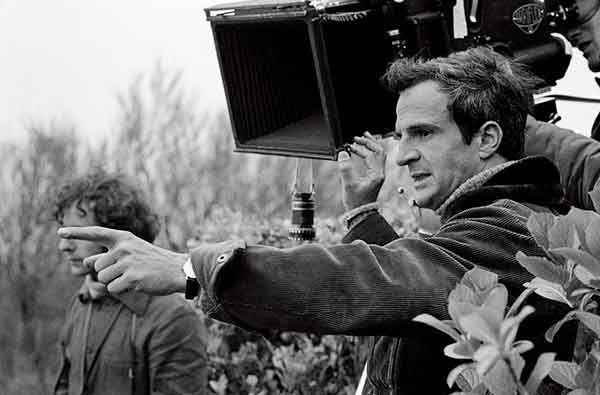
Am I a "film nerd," or cinephile? Possibly, or probably. My earliest experiences of film were at a very young age, with Fisher-Price filmstrips you could watch in a small viewer, and which I tended to watch over and over. Fast forward a decade or so, and foreign films entered in: Ingmar Bergman. Federico Fellini. Werner Herzog. And, very importantly, Truffaut. This open-hearted video essay by Shannon Strucci instructs the viewer on how to be a cinephile; this part of what will be a multi-part series focuses largely on the work of Francois Truffaut, starting with his work as a critic for Cahiers du Cinema and moving forward to his immortal film work. I could not be happier about the deference Strucci shows to The 400 Blows, a film I have always found fascinating from beginning to end–and which, if I’m allowed to indulge a cliche, "speaks" to everybody, to universally felt moments of pain and triumph. There are times, after all, when all you can do is run, as Antoine Doinel does–either into the distance or into the ocean of film itself.

Watch: David Fincher’s Eternal Return in ‘Gone Girl’: A Video Essay

Watch: David Fincher’s Eternal Return in ‘Gone Girl’: A Video Essay

Ah, the eternal return. History repeats itself. We think we change, but we don’t. You think someone may surprise you with unpredictable behavior–and then they don’t. Gone Girl is a perfect film to demonstrate this historical and, at bottom, psychological tendency; the most consistent thing about both Nick Dunne and Amy Dunne is their duplicitousness, and we keep seeing it over, and over, and over again throughout the film. And, as Jop Leuven points out in this brief but pointed video essay, the film’s visual structure mirrors this repetition; we see the same shots, with slight variations, repeated from the beginning to the end of the film. Amy lying on a pillow. Nick standing in front of a picture of his wife. Amy opening a door with mock innocence. And onwards. David Fincher is a master explorer of the works he adapts; he gets under the hood, assesses their potential, and, after a little bit of tinkering, takes us through them with such brio that the work he is adapting is utterly transformed. His adaptation of Gillian Flynn’s brilliant novel is no exception, as this video proves.

WATCH: Alejandro González Iñárritu’s Cinema of Self-Awareness: A Video Tour

WATCH: Alejandro González Iñárritu’s Cinema of Self-Awareness: A Video Tour

In Shakespeare studies, the term anagnorisis means a moment of self-recognition, when a character becomes blazingly aware of his or her place in the world, and of his or her relationship with other characters, after a long period of denial. Hamlet, Macbeth, King Lear, and Othello are practically bursting with anagnorisis; the central figures of these plays cannot withstand the truth about themselves and, watching them, we cannot withstand it either. The films of Alejandro González Iñárritu have anagnorisis to spare, as well. It does not always have to be tragic: Riggan Thompson’s (Michael Keaton) flight in Birdman is an example. However, in the films of this director, more often than not, anagnorisis signifies the shouldering of a weight one did not think one could bear: see Richard’s (Brad Pitt) moment of reckoning with his wife’s injury in Babel, or Jack Jordan’s (Benicio del Toro) tragic glance within himself in 21 Grams. Edgar Martinez’s beautiful video flight through Iñárritu’s work calls up these moments and thrusts them out for our attention. When presented in such an open manner, it is hard not to recognize Iñárritu’s strength as a storyteller, whatever what one might think of him as an overall filmmaker.

WATCH: A Video Essay on Shadows Through Cinema History

WATCH: A Video Essay on Shadows Through Cinema History

Shadows are a natural part of any given scene in a film–when the subject or an object interrupts a light source, an area of darkness is created.  But what happens when the shadow itself becomes the subject?  What happens when the darkness on the face of a character is something more than just the absence of direct light?  These types of shadows can communicate a variety of different tones and ideas. 

In ‘No Country for Old Men,’ Sheriff Ed Tom Bell opens the motel door to engage in what would be the climactic final shootout in a more traditional western.  The door slowly swings open, revealing the shadow of an iconic cowboy on the opposite wall. We see what Bell needs to be–something he simply cannot.  In ‘Raging Bull,’ the weight of Jake LaMotta’s imprisonment is expressed through the exaggerated, intruding shadows in his cell. His mental imprisonment becomes as apparent as his physical captivity.  In ‘There Will be Blood,’ a train moves across the sunset, creating a ripple of shadows on the face of the observing Daniel Plainview.  A train, the vehicle that both brought his son home and took him away, obstructs the direction of his progress. 
While many shadows in cinema are simply a complement of lighting, the very deliberate and thoughtful shadows in this video convey everything from fear to empowerment–from the empty to the iconic. 

Films used:
Nosferatu
Frankenstein (1931)
The Cabinet of Dr. Caligari
Raging Bull
Psycho (1960)
The Big Combo
Scarface (1932)
Rumble Fish
Sin City
Sin City: A Dame to Kill For
No Country for Old Men
Django Unchained
Raiders of the Lost Ark
Lawrence of Arabia
Punch-Drunk Love
Unbroken
The Thin Red Line
The Tree of Life
To the Wonder
The Assassination of Jesse James by the Coward Robert Ford
Forrest Gump
Drive
The Girl with the Dragon Tattoo
Jennifer’s Body
Unforgiven
The Big Lebowski
Skyfall
Apocalypse Now
Batman (1989)
The Dark Knight
Under the Skin
Inglourious Basterds
Only God Forgives
Strait-Jacket
Batman Returns
Man of Steel
Blade Runner
Pulp Fiction
Dallas Buyers Club
There Will be Blood
12 Years a Slave
Black Swan
V for Vendetta
Memento
Inside Llewyn Davis
Kill Bill Vol. 1
True Romance
The Departed
Panic Room
The Aviator
The Hurt Locker
Double Indemnity
The Man Who Wasn’t There
Shutter Island
The Godfather Part II
Lincoln
Batman Begins
Magnolia

Jacob T. Swinney is an industrious film editor and filmmaker, as well as a recent graduate of Salisbury University.

WATCH: Why DOES Quentin Tarantino Do Close-Ups in ‘Pulp Fiction’? A Video Study

WATCH: Why DOES Quentin Tarantino Do Close-Ups in ‘Pulp Fiction’? A Video Study

To say that Quentin Tarantino revels in exploitation is not an insult. One can exploit for one’s own gain as well as for the sake of a work. In ‘Pulp Fiction,’ Tarantino exploits everything there is to exploit. He exploits a wallet. He exploits a briefcase. He exploits running shorts. He even exploits John Travolta! He takes these images and figures–which aren’t real by the film’s end, having become refigured by his crazed imagination–and milks them for whatever he thinks their particular power might be. And afterwards, the images, people, actions acquire a rare charge, possibly symbolic, possibly merely electric–the kind of electricity generated when a director reaches out and touches the surface of the viewer’s imagination. And for this purpose he uses… the
close-up shot. Mark Fraser’s video montage shows us these close-ups in detail and, seen this way, their purpose becomes abundantly clear and immanent.

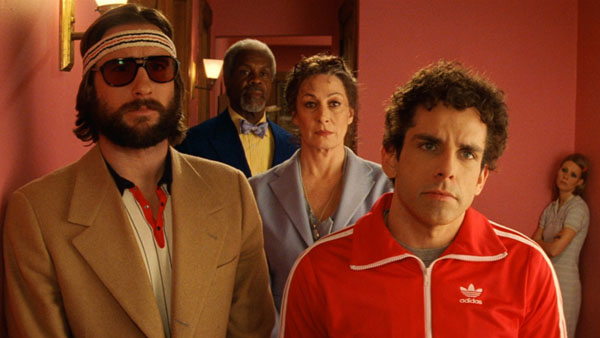
WATCH: A Video Essay on Wes Anderson’s Use of Red and Yellow

WATCH: A Video Essay on Wes Anderson’s Use of Red and Yellow

One can say that Wes Anderson is a master creator without implying that he is superior to other filmmakers. He is masterful in showing us that he is creating something, actively, onscreen–and moreover that we are creating it with him, in our reactions to it. He does this without seeming pretentious, overall. This video by Rishi Kaneria whips us through a cavalcade of Anderson’s films, showing off Anderson’s fascination with the colors red and yellow throughout the director’s work. Trying to assign a significance to the deep red of the carpet in the halls of the Grand Budapest Hotel, or the yellow of the Tenenbaum siblings’ tent, or the red of the curtain behind the awkward but confident Max Fischer is absurd. The deepest signficance is in the color itself–that Anderson has chosen it, and that he has left his mark on viewers’ retinas; the fact that it has personal significance for him should be all the "meaning" we need. Frustrated by this explanation? Don’t be. Watch this ever-so-brief but highly dense supercut, and enjoy.

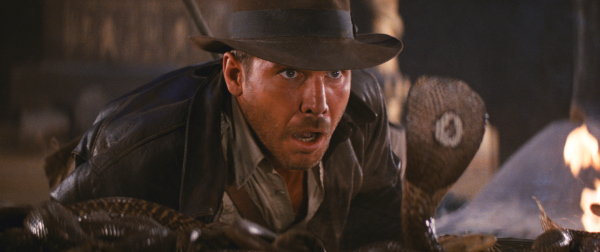
Indiana Jones and the Misunderstood Character Arc

Indiana Jones and the Misunderstood Character Arc

nullBack in October 2013, an episode of The Big Bang Theory ruined Raiders
of the Lost Ark
for many of its fans. In the episode, the geeky Sheldon
shows the movie (one of his “all-time favorites”) to his new girlfriend, Amy.
The moment the credits start to roll, he turns excitedly to ask her what she
thought of the film (as well as his taste). Her reaction is not what he had hoped
for. “It was good,” she shrugs, clearly underwhelmed. “It was very
entertaining. Except for the glaring story problem.” Incredulous, Sheldon insists
that Amy explain; she replies: “Indiana Jones plays no role in the outcome of
the story. If he weren’t in the film, it would turn out exactly the same. […] The
Nazis would have still found the ark, taken it to the island, opened it up, and
all died. Just like they did.” Sheldon’s mouth drops, followed by the mouths of
geeks worldwide. Amy’s criticism was picked up and passed around the Web, as writers
at various fan sites chimed in to voice their opinions on how the episode had gutted
Indiana Jones. At What Culture, Simon Gallagher explained “How
the Big Bang Theory Ruined Indiana Jones For Everyone
,” while at Cinemablend, Kristy Puchko asked, “Has
Big Bang Theory Ruined Indiana Jones Forever?
” (Such hyperbole is
typical of geek culture.) Suddenly, a previously undetected story problem was
eating away at the fabric of geekdom itself. But the problem, despite all the
hullaballoo, is that there is no problem, and there never was.


Amy’s argument, essentially, is that Indy isn’t a good protagonist
because he doesn’t advance the film’s plot. At the climax of the movie, he ends
up tied to a post, and doesn’t do anything to beat the Nazis. According to this
argument, he’s not a true hero because he fails to save the day by, say, punching
someone, or rigging an explosion. Instead, God steps in and wipes out Indy’s
foes, a modern-day version of deus ex
machina
.

But this argument fundamentally misunderstands the central
conflict in Raiders of the Lost Ark,
and what the film is ultimately about. To be sure, the Nazis are Indy’s
antagonists, and he struggles with them throughout the film. His motives stand
in clear contrast to theirs, and one of his goals is to stop them from
unearthing the lost Ark of the Covenant for their own nefarious ends. (Hitler’s
army, with the Ark at its forefront, would be unstoppable.) But Indiana Jones’s
true struggle isn’t ultimately with the Nazis, but with something else.

Let’s consider who Indiana Jones is. He’s a man of science,
an archaeologist who travels the world digging up priceless artifacts, then
putting them in museums—which is where, he repeatedly and gruffly insists, those
artifacts belong. In other words, Indy is devoted to uncovering the past,
bringing its remains to light, and adding them to the stockpile of human
knowledge. This is why he’s incensed by mercenary archaeologists like his rival
René Belloq, who work for private collectors; it’s also why he opposes the
Nazis, who would use the Ark as a weapon, and a tool of oppression. Belloq and
the Nazis might do archaeology, but their goal isn’t the enrichment of all humankind.
For Indy, securing an artifact for a museum is to secure it for everybody, to
put it on display where anyone can see it, and learn from it. (Of course, this ignores
the colonialist, imperialist aspects of archaeology, especially archaeology of
the 1930s, but let’s save that critique for another day.)

It’s with this goal in mind—the enrichment of public
knowledge via science—that Indy enters into a race against the Nazis. Can he
find the Ark before they do? But his primary struggle remains a conflict with himself. His arc, if you will (pun
intended), comes to a crisis when his devotion to science is tested, and he’s
confronted with the limits of secular, experiential knowledge.

Early in the film, Indy makes it clear that he doesn’t
believe in the legends surrounding the Ark. When explaining what the artifact is
to some visiting FBI agents, he calls it “the chest the Hebrews used to carry
around the Ten Commandments …  the actual
Ten Commandments, the original stone tablets that Moses brought down out of
Mount Horeb and smashed—if you believe in that sort of thing.” A little later, while
studying a picture of the Ark, the agents ask, “What’s that supposed to be
coming out of there?” Indy replies, “Lightning … fire … the power of God, or
something.” He agrees to locate the Ark before the Nazis do, but his
motivation is, as usual, to secure a great new piece for Marshall College’s museum.
As soon as the FBI agents leave, he confirms with his colleague Marcus Brody that the school’s museum
will get the Ark.

Brody chastises his friend, however, for taking the matter
too lightly: “For nearly three thousand years man has been searching for the
lost ark. It’s not something to be taken lightly. No one knows its secrets.
It’s like nothing you’ve ever gone after before.” Indy’s reaction couldn’t be
more flippant. Laughing, he says, “Oh, Marcus! What are you trying to do, scare
me? You sound like my mother. We’ve known each other for a long time. I don’t
believe in magic, a lot of superstitious hocus pocus. I’m going after a find of
incredible historical significance; you’re talking about the boogie man.
Besides, you know what a cautious fellow I am.” On that note, Indy tosses his
revolver into his suitcase. It’s a brilliant character moment in more ways than
one. Obviously Indy is a tough guy who can take care of himself in a scrap. But
he also believes that any threat he meets will be mortal—not divine.

The Ark, to Indy, is an artifact like any other. It’s rarer,
perhaps, and more celebrated, but it’s something made by man, and mystified by
human stories. His nonchalant manner regarding the artifact’s divine power
stands in exact contrast to his friend Sallah, who truly respects the Ark’s supernatural
power. Sallah echoes Marcus Brody’s warning to Indy, claiming, “It is not
something man was meant to disturb. Death has always surrounded it. It is not
of this earth.”

Lest any of this reading seem like embellishment, the
question of Indiana’s faith was central for Harrison Ford, who scribbled notes
in the margins of his script, wondering whether Indy was “a believer.” Recall
also Belloq’s line to Indy, when our hero is standing above him with a grenade
launcher, threatening to blow up the Ark. Belloq calls his rival’s bluff,
saying, “All your life has been spent in pursuit of archaeological relics.
Inside the Ark are treasures beyond your wildest aspirations. You want to see
it opened as well as I.”

Indy’s lack of faith is directly challenged at the climax of
the film, when the Nazis secure the Ark. He and Marion Ravencroft watch as the
villains prepare to open the chest—going so far as to document the moment on
film—and their hubris proves instructive. Whereas the Nazis believe
themselves to be God, or even superior to God, Indy realizes that he must
choose a different course of action. Famously, when the Ark is finally opened,
he shouts to Marion that she should close her eyes. In other words, at the very
moment when they are finally able to look upon the artifact they’ve been
chasing, Indy chooses to look away—to refuse to observe. He has come to agree
with Sallah that the Ark is a thing divine, and embodies knowledge that humans
are not supposed to have.

To misunderstand this is to misunderstand Indiana’s
character, and the whole point of the story. Ultimately, Raiders of the Lost Ark is a film about the limits of science, about its hero reaching a boundary where one kind
of knowledge (empiricism) breaks down, only to be replaced by a different kind
of knowledge (religion, faith). Unlike the Nazis, unlike Belloq, Indy humbles
himself, and makes what the film considers the right decision: to close his
eyes before God.

If there is a “glaring story problem” with the Indiana Jones
films, it’s that this basic conflict gets repeated in all of the movies. Temple of Doom, Last Crusade, and Kingdom of
the Crystal Skull
all effectively reset Indiana to square one, despite the
lessons he’s learned elsewhere. In each film, Indy starts out a man of science,
incredulous in the face of some greater power, only to relearn humility. Indeed,
the ending of Last Crusade depicts
him once again learning this lesson. Even worse, Temple of Doom takes place chronologically before Raiders, which means that Indy already
had some experience with the divine before setting out after the Ark—albeit the
divine of a different faith. (A separate article could be written on the
challenges that Temple poses to the monotheism
of Judaism.) To gripe about any of that would be a complaint worthy of a true geek,
rather than the weak tea with which the pretend nerds on Big Bang Theory flummox one another.

But of course, Raiders
got made first, and told the story best. Its crystal-skull-clear dramatization of
Indy’s crisis of faith—and his triumph via humility—is an essential part of why
it’s the greatest Indiana Jones film.

A.D Jameson is the author
of three books:
  Amazing Adult Fantasy (Mutable Sound, 2011), Giant Slugs (Lawrence and Gibson, 2011), and 99 Things to Do When You Have the Time (Compendium Inc., 2013). Other
writing of his has appeared
at
Big
Other
and HTMLGIANT, as well as in dozens of literary journals. Since August 2011 he’s been a PhD student at the University of Illinois at
Chicago. He is currently writing a book on geek cinema. Follow him on Twitter at
@adjameson.

Made To Be Free: An Interview with Damián Szifron, Director of ‘Wild Tales’

Made To Be Free: An Interview with Damián Szifron, Director of ‘Wild Tales’

null

Argentine director Damián Szifron’s Wild Tales
comprises six shorts, most dealing with the theme of revenge. They’re
not simple vigilante fantasies, but stories of people who’ve been pushed
too far by bureaucracy, road rage, or the lack of money. Both in content
and structure, the film resembles Jia Zhang Ke’s A Touch of Sin,
which Szifron swears he’s never seen. (That said, his sensibility is
far slicker.) The director has a background in TV, which shows: the
episodes of Wild Tales also resemble a memorable anthology
program. If it’s far from the Lucrecia Martel, Lisandro Alonso and
Matias Piñeiro films that are more commonly shown in North American
film festivals, Wild Tales offers a kind of mainstream
filmmaking that’s still intelligent and politically minded. No wonder
Pedro Almodovar hopped onboard as a producer.
Steven Erickson:
You’ve gone back and forth between TV and film. Do you think each
medium has its own advantages? Which one do you prefer? 
Damián Szifron:
Now TV is a very well-recognized place to work, but before, people thought
of it as something lower. The same thing happened with filmmaking. When
it started, intellectuals thought of it as a circus spectacle, lower
than the theater. Of course, you have different advantages. You can
spend time with characters in television. What I truly love about Mad Men
is that it’s full of scenes they would leave out of a film: long
silences. So you can get closer to literature in television than
filmmaking. It’s a more natural place to develop long situations. But as
a moviegoer, the possibility of being in a theater with a big screen in
silence with no interruptions is something I love. I’d say I prefer
film, but I see a lot of advantages in TV. 
Erickson: Is Argentine society as corrupt as you depict in Wild Tales
Szifron:
I would say it is. You have a lot of corruption there, but you have a
lot of corruption here. I would say the system that rules the world is
corrupt. In Argentina, you have some situations you probably don’t have
here. The episode of the rich father that tries to defend his son from
going to jail describes our society more than yours, but the rest of the
film could happen anyplace. 
Erickson:
There was a case of a teenage boy who killed several people while
driving drunk, and he was acquitted because his lawyer argued that he
was so rich he didn’t understand the consequences of his behavior. 
Szifron:
See, you have a different kind of corruption. I like that story!
Terrible. They should make a film about that. Good lawyer!
Erickson: In the press kit for Wild Tales, you’ve talked about how capitalism numbs people and the film as a response to that. Do you see it as a political film? 
Szifron:
I think it is. It’s not that I intended it that way. These characters
are not conscious of how the system works. They just live inside it
and feel the pressure and depression that it causes. Probably, we all
know that it’s not designed for our benefit but for the benefit of a
very concentrated group of powerful people. I think every time you pay a
tax and see that it’s used to save a bank or buy weapons, you
understand and see it clearly, but you just go on working and buying.
You lose a lot of time doing things you’re not interested in. Very
few people truly like their work. A lot of people waste their lives. I
think that causes a lot of suffering and depression. Some characters
explode. You read that in the newspapers. This is a film about them. 
Erickson: Do you think you’ll return to the notion of a feature made of shorts? 
Szifron:
I might do another one. I truly like the format of this film. It made
me a freer writer in a way, because sometimes you envy the way musicians
or painters can wake up one day and work on a different piece of art or
music. As a screenwriter, you have to live with the same characters and
universe for 6 months to a year. I was able to jump from character to
character very quickly. I enjoyed that freedom. I could do another one,
but it’s not the next thing I’m going to do. 
Erickson: Are any of your stories based on actual news events? 
Szifron:
No, but I know where the beginning of each episode comes from. Mostly,
it comes from my real life. For example, I remember this character who
was a loan shark that used to bother my family. So I invented the
character of the politician that goes to the bar, thinking of him, but
the rest, of course, is fiction. I was driving my car and got into a
discussion with another driver, and the guy insulted me. He went away
very fast. That was real, but then I imagined what would happen if the
asshole had a flat tire and this huge, muscular guy came across him. I
stopped in the middle of the desert just to write that story. The tow
truck took my car several times in places where it wasn’t clear you
couldn’t park. I went to discuss the fee, and I had to stand in line,
and then when it ended, I had to stand in another line. The bureaucracy
is perfectly designed so that you get tired and just pay. They could do
it faster and better and create a space where you can talk, but they
prefer that you shut up and pay. That’s the abuse of power. That
connects all the stories: the reaction towards the abuse of power. The
fictional part is the blow-up. I’ve been at weddings where everyone knew
something that the bride or groom didn’t know. I’m sure we could all
feel blame for characters who hurt us during our lives. I know where the
idea comes from. 
Erickson: Wild Tales began as a series of short stories. Are they adapted directly to film? 
Szifron:
I knew they were for the screen, because I think in terms of music,
acting and images. I like the elements of filmmaking. That’s the natural
space for me, rather than literature. But I didn’t know they were going
to become a film that soon. I thought I was writing something for the
future. But I felt the power of the whole thing when I finished it. When
I gave it to other people to read, their reactions were so enthusiastic
I thought, “I should do this first.” 
Erickson: Do you think the kind of loss of control you depict is becoming more common, or is it still a fictional element? 
Szifron: It’s a fictional element. I think you experience this film as if you were watching an episode of Alfred Hitchcock Presents or Amazing Stories.
There’s something fantastic about it, even if it doesn’t have
supernatural elements, but you experience it in that way. As fiction,
it’s all over the place. You can find these characters in real life in
Argentina, but also here. 
Erickson: It interests me that your film has ties to certain Asian films, not just A Touch of Sin but some of Park Chan-wook’s films. I think you’re dealing with something very universal about the world as it is now. 
Szifron:
As a filmmaker, you capture some things that are in the air and belong
to your generation and time. You turn these things into something that
connects with audiences. If you succeed, you’re talking about some very
real issues. But the themes behind the stories are eternal as well:
betrayal between men and women, the competition between two men, a man
against the system. I can imagine these stories in any country, in any
language. The desire to react against injustice is something we
experience very often because we are made to be free. We are animals in
the same way that a dog or bear is an animal. If you put a dog in a
cage and bother him with a stick and don’t feed him well, he will bite
when you open the cage because he’s defending his own territory. We’re
being bothered in that way too, as a species. You can expect reactions. 
Erickson: Do you feel at home in the Argentine film scene? Wild Tales feels a lot more mainstream than the Argentine films that typically play festivals. 
Szifron:
It was the biggest film ever in Argentine history. The amount of people
that saw it in Argentina was huge. I like the word “mainstream.” I want
to connect with a large number of people. Of course, I don’t like Transformers, but if I think back to the movies I adore the most, they were all, in their way, very popular, like The Godfather, 2001, Vertigo, Jaws, The Exorcist, The Apartment,
you name it. In their times, those were huge films. I think
filmmaking’s a popular art. If you think of a theater, there’s a lot of
seats that have to be filled. Of course, I do like a lot of smaller,
arthouse films, but I don’t have an issue with the concept of the
mainstream. 
Erickson: Are you also influenced by earlier Argentine directors like Leopoldo Torre Nilsson? 
Szifron:
Wow, you know about him. I like him, but the ones that truly made an
impact on me were Leonardo Favio and a guy who died young, Fabian
Bielinsky. They were both filmmakers who combined industry with art. 
Erickson: I’ve seen one Favio film, Juan Moreira. 
Szifron: Why did you see that film? I’m curious. 
Erickson:
The director Matias Piñeiro programmed a series of his favorite
Argentine films in New York last year. He chose that one. 
Szifron: I know him. Yes, I heard about that. 
Erickson: My favorite film out of the series was made by an Argentine director in Paris, Hugo Santiago: The Sidewalks of Saturn

Szifron: You should see his first film. That was very good, but you should see Invasion. He made a third film, The Night of the Centaurs,  and in fact he has a new film coming this year.

Steven Erickson is a writer and
filmmaker based in New York. He has published in newspapers and websites
across America, including
The Village Voice, Gay City News, The Atlantic, Salon, indieWIRE, The Nashville Scene, Studio Daily and many others. His most recent film is the 2009 short Squawk.

METAMERICANA: James Franco’s ‘Let Me Get What I Want’ Proves Once and For All That the Kid’s All Right

METAMERICANA: James Franco’s ‘Let Me Get What I Want’ Proves That the Kid’s All Right

Later
this year, Hollywood superstar James Franco will come out with a new film whose
animating concept is so confusing it takes an entire article to explain and
contextualize it. 

Here’s
what happened: a few years ago, Franco listened to some songs by The Smiths to
help him write poems that he later compiled into a poetry collection entitled Directing Herbert White. He then turned
those Smiths-influenced poems back into Smiths- and poetry-influenced songs. He
then gave those songs to high school students in Palo Alto and asked them to
translate the songs into a third creative genre—cinematic screenplay—and based
on the resulting screenplays, he and his band Daddy (yes, he has a band) wrote an
album’s worth of new Smiths-, poetry-, and screenplay-inspired songs. The
student screenplays have now been produced, and, with the aid of songs by
Daddy, comprise a film called Let Me Get
What I Want
.

You can watch the first music video to emerge from this project here.

The
upshot here is that Franco has engineered a compositional process that mirrors the
way culture moves in the Internet Age: from one genre to another, with each
successive genre translating (and also mistranslating) the same source material
in its own way. The best part is that not only is Franco letting us see the
results at each stage in the process, but his “final” product—a film and its accompanying
soundtrack—offers us both listenable music and watchable film, making it not
only a suitably complex concept-driven artwork but also a likely entertaining
one. If avant-garde literary artists and filmmakers are pissed at Franco, as
they usually and currently are, they have a right to be—but only because Franco
has a (to them) unimaginable budget, not because the ideas Franco is working
with are subpar. They’re not subpar; frankly, they’re pretty great. It’s not a
popular thing to say, but it’s not a difficult position to defend. If the late
novelist David Foster Wallace once criticized the American postmodernism of the
1980s and 1990s as “hellaciously un-fun,” and in doing so prophesied the
imminent demise of postmodernism (and its poster-child irony) as a generative
cultural paradigm, young artists like Franco have taken the hint and begun
producing avant-garde art that’s at once cerebral and a visceral delight.

In
lauding Franco as I do here, don’t misunderstand me: plenty of writers and
filmmakers are coming up with ideas just as good as Franco’s, they’re just not
coming up with as many of them all at once, and in so many different genres,
and all while living a life in the public eye that’s equal parts “hounded
celebrity” and “pariah for every disappointed artiste-cum-barista from Seattle
to D.C.” Those who hate Franco’s art, and the (to them) obscure motivations
that drive its production in such copious volume, are the sort of artists who have
always hated those who step outside anticipated roles. These artists often find
ways to double down on the status quo without seeming to be doing so—they
maintain their bohemian street cred even as they strangle in its crib any
audacious innovations in art. In the end, though, Franco’s critics are
profoundly misunderstanding what they’re critiquing. They believe themselves
superior to Franco as artists if they can (variously) write a better screenplay
than Franco, write a better poem than Franco, and so on—when in fact Franco’s
creative persona has nothing to do with quality per se, and everything to do with the new byword in the arts:
interdisciplinarity.

Franco
masterfully
coordinates multiple genres, discrete disciplines, and disparate
resources in a way the
rest of us can’t, not only because we’re poorer but because, generally,
we’re
not as smart or creative as Franco is within his own context—that
context being
a life of limitless resources, staggering visibility, and a restlessness
that
many celebrities deal with through moral sloth or gestural
charity work. While it’s true that much of Franco’s smarts and
creativity are
attributable to him being wealthy and famous enough to know and
collaborate with some very smart and talented people, even here we must
say
that the ability to aggregate talent is both rare generally and
vanishingly
rare among the Hollywood elite—even as it’s perhaps the most critical
skill an
artist can possess in our present age of collaboration and
intertextuality. Postmodern dialectics have given way to metamodern
dialogue, and Franco knows it.

In
other words, given his local and cultural contexts, Franco is, conceptually
speaking, hitting the ball out of the ballpark nine times out of ten. His
projects, both Let Me Get What I Want
and its immediate predecessors,
are conceptually astute even when (sometimes particularly when) they fail as
individual artworks. Is Directing Herbert
White
a particularly good book of poetry? No. Is it any good at all? Not
really, at least if we judge it using conventional standards of craft, form,
and imagination. But the concept behind the book, that being to have a famous
person unabashedly write earnest poems about what a celebrity’s life is
like—which, judging from American culture, is all anyone wants to know about
celebrities anyway—is ingenious in its way. We didn’t get that kind of fan
service from Jewel, or Billy Corgan, or Leonard Nimoy, or any of the other
Hollywood darlings who’ve decided to try their hand at poetry. Franco writes
poems entirely responsive to who he is to us as well as who he is to himself,
and in making that difficult and perhaps unintentionally selfless decision he’s
exhibited a sensitivity to context which, surprisingly, even today’s most
multi-generic artists seem to lack. Indeed, American poetry—by way of
example—has repeatedly made national headlines over the past couple years for
its brazen commitment to giving exactly no one in America what they want, for doing
almost nothing to write verse that reflects the culture in which it’s being
written, and meanwhile—on top of that—for arguing loudly about how it’s
preposterous to expect it to do otherwise. Franco has made a different
decision, and in the context of his cross-generic career it’s clear that that
decision was motivated by the actor’s artistic vision rather than financial
gain. Franco doesn’t need the cash, after all.

It’s
time
for the Franco hate to stop. Viewed at the level of a career rather
than
on the level of individual artworks, Franco is Hollywood’s most
interesting,
daring, and multi-faceted artist. Hating on him is not only easy to do
but also
easy to justify as coming from a protective instinct—that is, the idea
that the
arts must be protected from the intrusion of dilettantes like Franco. In
fact,
the anti-Franco madness is as retrograde, conservative, and reactionary
as any
inclination we find in the arts today. It says that not only should we
all stay
within our generic and subcultural boxes, but that delivering
anticipated
results is always preferable to displaying uncommon (even if only
intermittently winning) daring. In fact, the reverse is true, a premise
for
which Franco is the poster-child. In light of the age we live in, and
the
explorations of genre and how artists live and interconnect that should
be
happening right now across all genres, the truth is that James Franco is
as intelligent and creative as any of his peers, and perhaps much more
so.

Seth Abramson is the author of five poetry collections, including two, Metamericana and DATA,
forthcoming in 2015 and 2016. Currently a doctoral candidate at
University of Wisconsin-Madison, he is also Series Co-Editor for
Best American Experimental Writing, whose next edition will be published by Wesleyan University Press in 2015.