Watch: David Lynch’s ‘Blue Velvet’ and ‘The Elephant Man’ Have Eerie Similarities
Watch: Seijun Suzuki, A Director Who Influenced Tarantino, Jarmusch, Woo, and Others
If you enjoy the films of Quentin Tarantino, Park Chan-wook, John Woo, Takashi Miike, and Jim Jarmusch, then you might want to check out the man who influenced them all—Seijun Suzuki. Suzuki is responsible for some of Japan’s most stylish and sometimes downright insane action movies of the 1960s.
He was born in Tokyo, Japan in 1923. Suzuki failed the entrance exam for the University of Tokyo, so a friend convinced him to try taking film classes at Kamakura Academy. He started working as an assistant director in 1948 for a major studio named Shochiku.
In 1954, Suzuki started working for Nikkatsu—Japan’s oldest major studio. He started out as an Assistant Director at Nikkatsu, but in 1956, he directed his first feature film, a B movie called ‘Harbour Toast: Victory is in Our Grasp.’
In 1963, Suzuki worked with the chipmunk-cheeked Joe Shishido in the lead role of ‘Detective Bureau 2–3: Go to Hell, Bastards!’ about a private investigator who infiltrates a Yakuza clan. He teamed up with Shishido again for his next film, made in the same year, titled ‘Youth of the Beast.’ Even though both of these films share a very similar story and came out in the same year, ‘Youth of the Beast’ represents a turning point in Suzuki’s style.
Stunning use of color and creative shot choices made ‘Youth of the Beast’ stand out against the many other movies Nikkatsu released. And ‘many’ is an undserstatement—Nikkatsu’s schedule had them releasing two new films every single week.
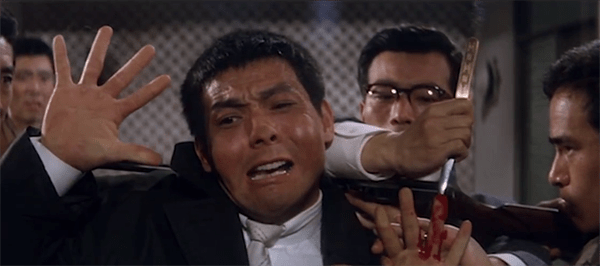
That style would fully develop in ‘Tokyo Drifter’ where we see a beautiful use of color and modern art production design in a way that appears almost theatrical. This film showcases his western influences and we even see an homage to the Hollywood western in this bar room brawl.
Shishido starred in only four Suzuki films, but despite their short-lived collaboration, their movies would be among Suzuki’s greatest and most well-known. Suzuki’s most well-known film—and let’s face it, clearly his best—was a huge financial failure. Its screenings were sparsely attended and Nikkatsu president, Kyusaku Hori called the film, ‘incomprehensible’ and fired Suzuki from Nikkatsu. It was his 40th film for the studio. The film is called ‘Branded to Kill’ and follows Hanada, the Yakuza’s number three best hitman on the run after a hit gets botched when a butterfly lands on the barrel of his sniper rifle causing him to miss his shot.
Suzuki’s experience and the perfecting of his style shines through in this creative masterpiece that includes everything you could want from an action movie—lots of sex, violence, and general badassery, but there is another level with ‘Branded to Kill’ that didn’t exist in his earlier program pictures. In order to write the film, Suzuki assembled a team of writers he called Hachiro Guryu (or ‘Group of Eight’). Suzuki didn’t spend a lot of time on pre-production and he never storyboarded his scenes, opting instead to come up with ideas as he shot. Since Nikkatsu was releasing two films a week, the shooting schedule was at a breakneck pace—the whole film from pre to post production was only 25 days and all of the editing and looping lines was completed in one day, which happened to be the day before its release.
Suzuki sued Nikkatsu for wrongful termination and won, but he was blacklisted by every studio for ten years. In 2001, he made a sequel to ‘Branded to Kill’ called ‘Pistol Opera’ and his latest film, ‘Princess Raccoon,’ (made in 2005) is a musical based on a folk tale from Japan. He’s still kicking at 92 years old with 54 films under his belt. While his days of filmmaking are over, there is no doubt that his work will continue to inspire others for many years to come.
Clips used:
Reservoir Dogs (1992 Dir. Quentin Tarantino)
Oldboy (2003 Dir. Park Chan-wook)
Hard Boiled (1992 Dir. John Woo)
Ichi the Killer (2001 Dir. Takashi Miike)
Ghost Dog: The Way of the Samurai (1999 Dir. Jim Jarmusch)
Branded to Kill (1967 Dir. Seijun Suzuki)
Harbour Toast: Victory is in Our Grasp (1956 Dir. Seijun Suzuki)
Detective Bureau 2-3: Go to Hell, Bastards! (1963 Dir. Seijun Suzuki)
Youth of the Beast (1963 Dir. Seijun Suzuki)
Tokyo Drifter (1966 Dir. Seijun Suzuki)
Youth of the Beast (1963 Dir. Seijun Suzuki)
Pistol Opera (2001 Dir. Seijun Suzuki)
Princess Raccoon (2005 Dir. Seijun Suzuki)
Music used:
Branded to Kill (1967 Dir. Seijun Suzuki)
Tokyo Drifter (1966 Dir. Seijun Suzuki)
Youth of the Beast (1963 Dir. Seijun Suzuki)
Sources used:
Schilling, Mark. No Borders, No Limits: Nikkatsu Action Cinema. Godalming, England: FAB, 2007. Print.
Tyler Knudsen, a San Francisco Bay Area native, has been a student of film for most of his life. Appearing in several television commercials as a child, Tyler was inspired to shift his focus from acting to directing after performing as a featured extra in Vincent Ward’s What Dreams May Come. He studied Film & Digital Media with an emphasis on production at the University of California, Santa Cruz and recently moved to New York City where he currently resides with his girlfriend.
Watch: How Steve McQueen’s Camera Highlights the Shame in ‘Shame’
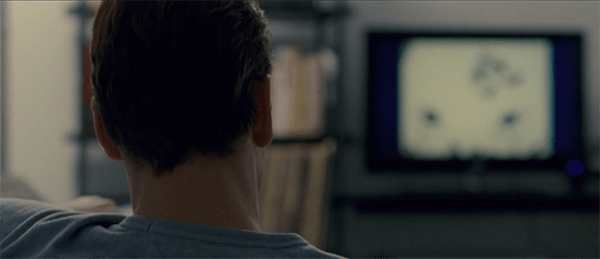
If your back is turned to another person, that usually indicates a number of things in conventional body language: Stay away. The conversation is over. Do not communicate with me. But it can also indicate a conscious disavowal of an action or state of affairs. If a camera, as in Steve McQueen’s ‘Shame,’ shows us someone’s back, it could mean a number of things–that the character is not someone whose full identity we are meant to know, for instance. Or, in ‘Shame,’ it could mean the character onscreen, namely Michael Fassbender’s Brandon, is not able to entirely face his actions. The newest entry for "Between Frames" on Vimeo shows us a collection of shots of Brandon from behind: as he moves through his apartment, as he enters the subway, as he has sex. These shots all build towards… what, exactly? It seems that McQueen is showing us Brandon as Brandon wishes to be seen, a curious move for such a controlled filmmaker. The character doesn’t want his addictive behavior to be entirely known, despite the fact that his compulsion drives him and shapes his life within the film. This is a chilling assembly of scenes which makes its point memorably.
Watch: Darren Aronofsky’s Assault on the Senses in ‘Requiem for a Dream’
‘The Stanford Prison Experiment’ Is an Essay on Performance
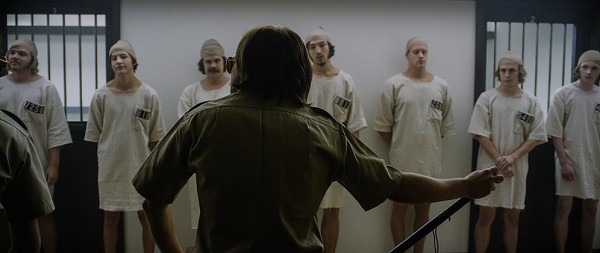
‘The Stanford Prison Experiment,’ Kyle Patrick Alvarez’s beautifully and intensely executed new film, is a hard film to say you “like.” Who wants, after all, to have humans’ latent inhumanity shoved in their face? Many viewers like the security of knowing that the expression of evil is contained within a carefully constructed plot, rather than within an account of actual events, as is the case with this film. That being said, the movie’s tale of a 6-day Stanford 1971 psychological group experiment gone wrong could be shown to visitors from outer space as an example of what debased behavior we people are capable of; within the limits of this film we witness violence, sexual aggression, and verbal abuse among people who don’t know each other, under the guise of role-playing: playacting at being prisoners and prison guards. In showing these interactions between individuals in a controlled circumstance, the film not only teaches us about human nature but about what it means, in a number of senses, to perform.
If you were so inclined, you could read the film as a distorted, souped-up revision of ‘The Breakfast Club.’ Characters’ defenses are broken down, and social leveling occurs—but not in a benign, easily digested manner. If one were looking for someone to embody “the detachment of scientific inquiry” to serve as the erstwhile chaperone/monitor of this group, you could choose no better actor than Billy Crudup. His rather blank eyes and face, since his turn as drug-addled FH in the film of Denis Johnson’s ‘Jesus’ Son,’ make him seem capable of doing or saying anything. Here, he portrays Dr. Philip Zimbardo, who chose 24 Stanford students to find the answer to a question that was, to be fair, one he should have been talked out of by peers: what would happen if you recreated prison-like circumstances for 2 weeks? How would subjects interact? How would their behavior change? How does this explain prisoner guard-relationships in current houses of detention? He pursues his ends with focus that ultimately tends towards dementia. The selection of the students is handled briskly; almost all of the long-haired, effete, mellow students say that would prefer to be prisoners, almost none guards—but in the end the roles are assigned randomly. Once “inside,” the individuals fall easily into their assigned parts—almost too easily, one thinks, until you remember that their acceptance of the assignment indicates interest in its performative aspect. And yet the performance promptly gives way to an ugly reality, as the guards brutalize and intimidate their charges without restraint, and the prisoners plot small revolts against the guards—within days.
Few of the actors here are household names, and yet one would hope the film garners them the recognition they deserve. Each individual here gives a crisp, independent performance; each character’s unraveling and debasement is rendered beautifully, fascinating to watch. One prisoner gets headaches without his glasses; one won’t say the word “bastard” even when threatened by a brutal “guard”; another takes his role as prisoner so seriously that he practically collapses from nervous exhaustion. The guards, as well, show great comfort in their meanness—the guard the scientists refer to as “John Wayne” (played with strikingly persuasive confidence by Michael Angarano) issues all of his commands in a relaxed drawl, while one of his colleagues stomps impassively through the hallways, expression concealed by reflecting sunglasses. Much of the dialogue we hear in the film comes from transcripts—very little had to be fabricated to make the film gripping to watch.
And yet there’s a question lurking here, beneath the film’s impressive, headlong momentum. Why? Why the experiment? Did Zimbardo think his experiment might make a social difference, or was there some intellectual game-playing behind it? We learn something in this film, in addition to lessons about the human psyche, about the nature of performance—about the different ways performers assume their roles, and about the different effects those roles can have. We play roles perpetually–in daily life, in our relationships, in our jobs. We feel things we don’t feel, we take actions we know by rote, the meant gesture and the unmeant gesture blur. And yet we never think about the cumulative effect all of this pretending has on our psyches.
Watch: Martin Scorsese’s Films Have a Lot of Crucifixion Poses. Why Is That?
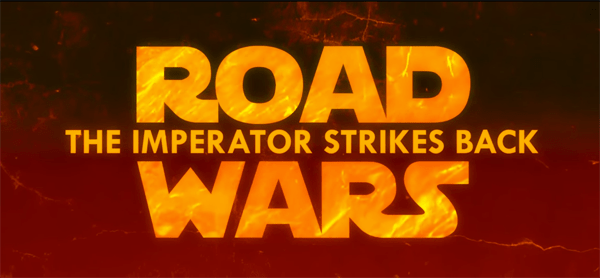
Watch: Mad Max Meets Star Wars in ‘Road Wars’
There are only so many stories, after all–and these days, ‘Mad Max: Fury Road’ is a part of all of them. How this particular mash-up hasn’t happened yet is beyond me, but the clever, tidily done work by Krishna Baleshenoi should make you either want to see ‘Fury Road’ or see ‘The Empire Strikes Back’ or see both–perhaps at the same time.
Watch: David Fincher: From Adidas to Benjamin Button
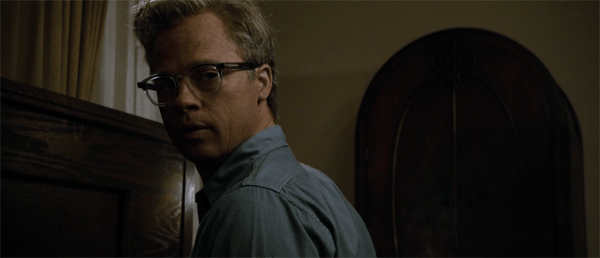
The latest installment in Raccord’s excellent series on David Fincher takes up some of his more knotty work–namely ‘Zodiac’ and ‘The Curious Case of Benjamin Button’–along with the commercial work addressed earlier in the series. We can see Fincher developing here, focusing in on a kind of intricacy that may have been akin to intellectual play for him in his early films, the fulfillment of an inner desire to communicate, but becomes a kind of ars cinematica as his work matures. By the end of this in-depth piece, which includes many clips of interviews with Fincher and others, the journey from the gangly robot of Fincher’s famous Adidas commercial to the wizened Brad Pitt of ‘Benjamin Button’ or the obsessive Jake Gyllenhaal of ‘Zodiac’ seems a quite logical one, almost inevitable.
Watch: How Chuck Jones Grew as a Cartoonist
In his latest "Every Frame A Painting" installment, Tony Zhou gives us the crucial components of the work of Chuck Jones, Warner Brothers’ genius master cartoonist, and in so doing shows us the laws of a small universe. The points Zhou focuses in, as we watch the pranks of Bugs Bunny, the stammering of Daffy Duck, the blundering of Wile E. Coyote, are the gag (assumptions vs. harsh reality), the character developments we witness, and the discipline–the way a character focuses on a particular task or conflict. Throughout, we get snippets of interviews with Jones himself, Steven Spielberg, and others, making this a departure for Zhou and a benchmark within his body of work.
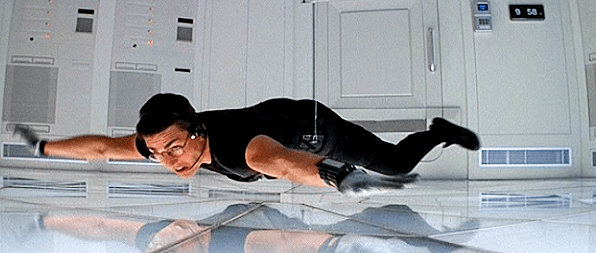
Watch: How the Famous ‘Mission: Impossible’ Heist Scene Was Made
If you’re like me, all you took away from the first ‘Mission: Impossible’ film, helmed by Brian De Palma, was the scene where Tom Cruise hangs, arms and legs outwards, suspended from a cable over the floor of an extremely well-protected computer vault as, below him, a rather retiring-looking fellow… types some stuff. One drop of sweat falls from Tom Cruise’s noble brow and: the rest is history. This new ‘Art of the Scene’ installment from Cinefix does the entertaining work of explaining how that scene was made, complete with a clip from, if I’m not mistaken, ‘Rififi.’