Watch: Gilbert Gottfried Reads from ‘Fifty Shades of Grey’

Watch: Gilbert Gottfried Reads from ’50 Shades of Grey’

I consider my estimation of Gilbert Gottfried to come in two distinct phases: before The Aristocrats and after it. Never before his rendition of the comedian’s standby shaggy-dog story have the words "But I digress" been used to better comic effect. And now, we have Gottfried contributing memorably to the ongoing–can we call it a conversation?–cultural moshing over Sam Taylor-Wood’s film Fifty Shades of Grey, based on E.L. James’ masterly tome, by the grace and generosity of College Humor. Behold.

WATCH: A Beautiful Video Essay on Ingmar Bergman’s Use of Mirrors

WATCH: A Beautiful Video Essay on Ingmar Bergman’s Use of Mirrors

Ingmar Bergman was my first love in film, and I suspect he will be my last. I was introduced to him, by way of Wild Strawberries, when I was 12, and although the subject matter of the film–growing old amid regrets–was lost on me, I nevertheless was astounded, even at a young age, by how complex and intellectually entertaining he had made the story. How many human mistakes, and quirks, and moments of discovery there were in this film! The rest of his work would continue to amaze me; the story lines he managed to address–a knight playing chess with death in The Seventh Seal, the misadventures of a traveling performance troupe in The Magician, the tortures of a young couple plagued by exterior and interior demons at odd hours in the middle of nowhere in The Hour of the Wolf–always represented the outer limits of what a filmmaker might accomplish. What better agent for Bergman’s dour narrative than the mirror, here lovingly explored by ::kogonada in this latest video essay, done for the Criterion Collection? When you look in the mirror, after all, there will most likely be no one else watching, and yet it also represents an arena in which you might take down your guard without being entirely alone. The essayist intelligently chooses the poetry of Sylvia Plath, balladeer of the inward-looking life, for a voiceover track for the piece–and beneath the audio, the haunted, sharp tones of a harpsichord composition by Vivaldi keep us marching through Bergman’s films, searching for meaning, certainly, but also trying to determine what it is that the characters see in the mirrors they gaze into. Is it some flaw they are trying to detect? Or are they, like their viewers, trying to determine, as goes the age-old question, what comes next?

Kicking Television: EXCLUSIVE Behind-the-Scenes Look at the USA Series DIG with Co-Star David Costabile

Kicking Television: EXCLUSIVE Behind-the-Scenes Look at the USA Series DIG with Co-Star David Costabile


In this
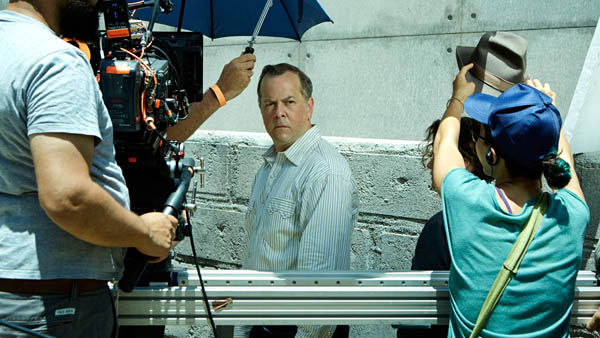
Indiewire exclusive, we go behind the scenes of the new USA series DIG with its co-star David Costabile (Suits, Breaking Bad, Damages). DIG,
from creators and executive producers Tim Kring (Heroes) and Gideon Raff (Homeland)
is the story of a murder in Jerusalem, but set against the backdrop of a much
larger mystery that takes viewers from Norway to New Mexico and into the
depths of the Holy Land. Costabile, recently praised
in this space
as an actor in need of a vehicle, plays Tad Billingham, a
deceptively charming author, TV personality, and leader of a cult who plays a
crucial role in the mystery.

The
series also stars Jason Isaacs (Awake),
Anne Heche (Save Me), Alison Sudol (A Fine Frenzy, Transparent), Richard E. Grant (Downton
Abbey
), Regina Taylor (The Unit),
Lauren Ambrose (Six Feet Under), Omar
Metwally (Non-Stop) and Ori Pfeffer (World War Z).

Watch: A Video Essay on Werner Herzog’s View of Nature

Watch: A Video Essay on Werner Herzog’s View of Nature

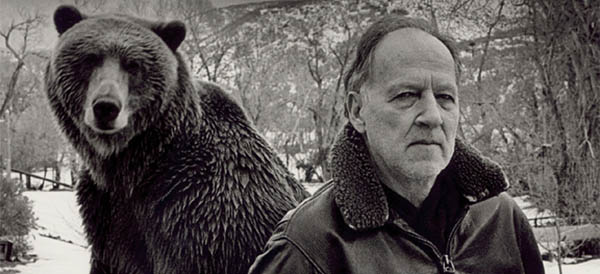
Peru, 1981. A moustached man appears mildly shaken against a jungle
background. His speaking voice reveals a German accent
and a hint of victimized violation as he spits out his diatribe: "Nature
here is vile and base. I wouldn’t see anything erotical (sic) here. I
would see fornication and asphyxiation and choking and fighting for
survival and… growing and… just rotting away." Such was my first
introduction into the world of Werner Herzog, a director whose aesthetic
I always assumed was that of the German nihilist to Terrence Malick’s
evangelical Christian, the way of nature versus the way of grace–the
thesis of my pitch for this very montage. Indeed, Herzog makes his views
on nature clear via voiceover narration, asserting that "the common
denominator of the universe is not harmony, but chaos, hostility, and
murder." What surprised me in marathoning his filmography was finding
the similarities to Malick, not the differences. The sun-kissed lens
flare, the close-ups of insects, even an overlapping playlist of
classical music would cause anyone to (at least momentarily) mistake the
two filmmakers. And ultimately, both share the common denominator of
their central theme that man is hubristic to believe that he can conquer
nature, but where Malick finds serenity in that surrender, Herzog finds
madness and destruction. This more cautionary admiration for the likes
of Timothy Treadwell, Brian Sweeney Fitzgerald, or suicidal penguins is
essential not only to his films (a more romantic version of Grizzly Man
could be one of the most dangerous films ever made), but also his own
sanity; only a person with a very grounded sense of self-preservation
could survive Klaus Kinski for more than one film. Through the jungle of
chaos, hostility and murder, Herzog ultimately emerges a humanist, for
when he praises Treadwell’s footage of animals unintentionally revealing
a look into ourselves, he might as well be talking about himself as a
filmmaker. Our hunger of violence and revenge in Into the Abyss, our need to research and document as a way of understanding our place in the universe in Encounters at the end of the World, and our inevitable desire for storytelling found in the cave paintings of Cave of Forgotten Dreams
are just a sampling of a much larger tapestry Herzog weaves in his
search for reason in the chaos of our decisions and the consequences,
which ultimately are the greater threats than nature. He admires
humanity, but against his better judgment.

Serena Bramble is a film editor whose
montage skills are an end result of accumulated years of movie-watching
and loving. Serena is a graduate from the Teledramatic Arts and
Technology department at Cal State Monterey Bay. In addition to editing,
she also writes on her blog Brief Encounters of the Cinematic Kind.

WATCH: The Shower Scene from Alfred Hitchcock’s ‘Psycho’: A Shot by Shot Analysis

WATCH: The Shower Scene from Alfred Hitchcock’s ‘Psycho’: A Shot by Shot Analysis

Try as you might, you’ll never entirely understand the shower scene from Alfred Hitchcock’s Psycho. And by understand, I mean grasp its technique: understand why Hitchcock made the choices he made, why he arranged images in the sequence he chose, why this scene seems, time after time, such a concentration of cinematic energy. You can poke and prod the scene, even map it out meticulously, as Lorenzo Gerbi has done in this excellent video essay–graphing it, monitoring the shifts in focus and the shifts in attenuation as the scene moves forward. And you will gain a certain kind of "understanding" from that activity. But you’ll never fully feel as if you’ve pinned it down, and, if the truth were told, the chances are good that Hitchcock himself would not be able to explain all the choices he made. As dangerous as it may be to make generalizations about creative works, it’s safe to say art doesn’t operate like that. The scene is a masterpiece of planning and deliberation, and as a result it is one of the most watched and talked-about scenes in the history of film. But it also maintains that status because lightning struck, and Hitchcock happened to be in the right place to absorb it, and he transformed his momentary electrocution into the transcendent sequence you can watch here.

Watch: A Video Essay About Sofia Coppola’s Dreamlike Aesthetic

Watch: A Video Essay About Sofia Coppola’s Dreamlike Aesthetic

What defines the Sofia Coppola aesthetic? Is it the sublime use of soft
and natural lighting? Is it the subtle pastels of the color pallet?
Maybe the handheld camera that dizzily floats around the characters?
All of these visual characteristics work together harmoniously to create
Coppola’s distinct dreamlike atmosphere. However, the aesthetic
reaches far beyond the idea of a visual trademark–Coppola’s atmosphere
seems to mirror the inner workings of her characters. As Charlotte
ponders a fully-realized life in Lost in Translation, the camera
stutters around her in a circular motion. She is washed away, her
clothing blending into the matching surroundings. In The Bling Ring,
the silhouetted bandits streak across the glittery horizon as they chase
their gaudy and tainted desires. In Marie Antoinette, the fanciful
nature shots portray a longing for freedom and self-fulfillment.
Coppola crafts these dreamscapes to show us not only who her characters
are, but who they want to be.

Watch: A Video Homage to David Cronenberg’s Unsettling and Rich Body of Work

Watch: A Video Homage to David Cronenberg’s Unsettling and Rich Body of Work

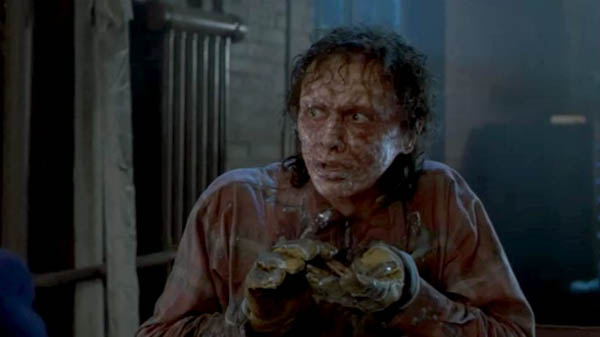
David Cronenberg’s work is analytical, eccentric, violent, and humane, all at once. It also has the power, when encountered at the right time, to make the viewer feel changed, transported, taken from one "place" in the mind to the other. Many years ago, I reviewed Naked Lunch and Steven Soderbergh’s Kafka back-to-back; I was startled to find, when I got home, a large cockroach in my bathtub. Had the film continued? Had I passed out? This piece by the prolific "Hello Wizard" flips us through 45-plus years of Cronenberg’s work at a fast clip. Throughout, you can feel the mixture of tones here, the blend of empathy, and horror, and panic, and mystification, and euphoria. When we see Jeff Goldblum late in his transformation stage into a fly, sure, we’re terrified–but we’re also sad. When a man’s face begins to rupture in Scanners, it’s difficult not to think of the special effects involved–but it’s also difficult not to think about what the face once looked like, and to try to read the emotions in the victim’s tortured features. Even in as sleek a film as Cosmopolis, the seeming coldness of the actors, their stylized slowness and blankness, read as mini-critiques, implied complaints, ultimately reminders of the humanity that could lie elsewhere. Cronenberg is a director to whom it is always exciting to return; he continues turning ideas over and over, always finding some new facet through which to view them.

WATCH: Fifty Shades of, Er-Hem, Steve Buscemi

WATCH: Fifty Shades of, Er-Hem, Steve Buscemi

Oh, why NOT? Sam Taylor-Johnson’s film adaptation, as you may have heard, of E.L. James’s Fifty Shades of Grey will be coming to American screens in almost no time (this Friday 2/13 in some cities), and in honor of its opening, Boo Ya Pictures has offered an alternative version, with a unique casting choice. Leather. Humiliation. Domination. Ecstasy. Steve Buscemi. Little more need be said: watch, and enjoy.

WATCH: How Nicolas Winding Refn’s ‘Bronson’ Turns the Prison Movie Genre on Its Head

WATCH: How Nicolas Winding Refn’s ‘Bronson’ Turns the Prison Movie Genre on Its Head

Although the primary charge in Nicolas Winding Refn’s Bronson derives from the electric performance of Tom Hardy, as one of Britain’s most violent criminals, the film builds on a number of sources. As this elegantly stated video essay by Jessie McGoff points out, directors from Jim Sheridan to Stanley Kubrick can be found inside this complex, alarming, surreal work. Refn, in this essayist’s estimation, rewrites the work of these ancestors, not so much exploiting them as putting a new face on them. And, in so doing, Refn updates our conception of the "prison film," a genre which one would think had run out of potential.

Watch: The Fantastic Animated Trailer for a Book on Wes Anderson’s ‘The Grand Budapest Hotel’

Watch: The Fantastic Animated Trailer for a Book on Wes Anderson’s ‘The Grand Budapest Hotel’

Roughly at the midpoint of this animated book trailer for The Wes Anderson Collection: The Grand Budapest Hotel, its author, Matt Zoller Seitz, gets punched in the face. Later, he gets his fingers chopped off. But this doesn’t deter him from guiding us through his new book on Anderson’s most recent film, due out from Abrams on February 10th, which includes interviews, essays, and intricate, quasi-acrobatic book design, along with a wonderful introduction by Anne Washburn. It’s like a circus in print, folks, and Seitz is its intrepid ringleader! This trailer is beautifully and cleverly animated by Kristian Fraga of Sirk Productions, using lovingly drawn figures by Max Dalton. The volume is an annex to Seitz’s masterful book, The Wes Anderson Collection, also available from Abrams, an equally stunning accomplishment. But, before you delve into either book, watch this trailer! It’s a masterpiece, in and of itself.