Watch: Lars von Trier Is the Filmmaker of Assault

Watch: Lars von Trier Is the Filmmaker of Assault

Though often packaged and presented immaculately, the films of Lars von Trier, from ‘Melancholia’ to ‘Dogville’ to ‘Dancer in the Dark’ to ‘Antichrist’ to ‘Manderlay’ to ‘Nymphomaniac’, are essentially assaultive. Oddly enough, though, you almost never expect the assaults they deliver. 

Ah, what beautiful music, with snow falling, a slow motion love sc–oh, wait, a baby just fell out a window.

Or: What a beautiful house, with gorgeously landscaped grounds. You’d never think the world was about to–wait, is that Kirsten Dunst, sprawled naked in some ferns?

Or: Nicole Kidman is a remarkably versatile actress, whose talents are well-suited to–oh, my God, what are they doing to her? Yeesh!

Or: I just love Bjork’s bizarre, personalized musical stylings. It’s so wonderful that she–god, I’m depressed. I’m not sure I can move my limbs, I’m so sad. Help!

Or: Gosh, this soda tastes good on such a hot–ouch! Watch that two-by-four, Willem!

You get the idea. In any event, Alex Kalogeropoulos’s video above succinctly and smartly captures the spirit of aggression running through von Trier’s work. So, get ready, and take a look.

Watch: ‘American Sniper’ Quotes ‘Team America: World Police’

Watch: ‘American Sniper’ Quotes ‘Team America: World Police’

It would be too easy to praise ‘Team America: World Police’ for taking down the black-and-white depiction of American patriotism at all costs, the same that many have claimed seeped through ‘American Sniper,’ or at the very least the real man Chris Kyle. But it’s a testament to both Trey Parker and Matt Stone’s democracy in attacking both ends of the political spectrum and their own talent as satirists that they boldly pointed out the "three kinds of people" rhetoric, frequently repeated in the Bush Administration under the "you’re with us or you’re with the terrorists" mantra, a good decade before it was brought back in Clint Eastwood’s ‘American Sniper.’ The notion that humans can be neatly divided into three categories is contradicting the very complicated nature of humanity, perhaps as a coping mechanism to make sense of chaos (as the original writer of the "Wolves, sheep and sheepdog" analogy, Lieutenant Colonel David Grossman, did in response to 9/11) but can also be the first step in dehumanizing the enemy and painting the speaker as a Campbellian Hero. As Parker and Stone suggest, maybe that’s the foundation of America.
Writer’s Note: For a history of Grossman’s "Wolves, sheep and sheepdog" analogy, if a politically charged write-up, read Michael and Erin Cumming’s piece at Slate: http://www.slate.com/blogs/browbeat/2015/01/21/american_sniper_s_wolves_sheep_and_sheepdogs_speech_has_a_surprising_history.html

Serena Bramble is a film editor whose montage skills are an end result of accumulated years of movie-watching and loving. Serena is a graduate from the Teledramatic Arts and Technology department at Cal State Monterey Bay. In addition to editing, she also writes on her blog Brief Encounters of the Cinematic Kind.

Watch: David Lynch’s ‘Blue Velvet’ and ‘The Elephant Man’ Have Eerie Similarities

Watch: David Lynch’s ‘Blue Velvet’ and ‘The Elephant Man’ Have Eerie Similarities

If I were to say that David Lynch’s ‘Blue Velvet’ was a pillar movie of my adolescence, and remains something of a gold standard against which I measure other films, that wouldn’t speak very well of me, in some senses. But in other senses, it might. The film is indelible for a number of reasons, chief among them being its opening: there are few films I can think of that start in such a settled way, as if the strange universe we are entering at the story’s start has always been there, waiting for us. So, I was delighted to discover this short piece by Liz Greene focusing on ‘Blue Velvet”s opening, honing in on its similarity to the opening of ‘The Elephant Man,’ another great Lynch film but one which has not, perhaps, lodged itself in the public consciousness to such a great extent as the later work. Viewed this way, side by side and simultaneously, all sorts of correlations arise: the movements, the visual cadences, even the music… Take a look. 

Watch: Seijun Suzuki, A Director Who Influenced Quentin Tarantino, Jim Jarmusch, John Woo, and Others

Watch: Seijun Suzuki, A Director Who Influenced Tarantino, Jarmusch, Woo, and Others

[A transcript follows.]

If you enjoy the films of Quentin Tarantino, Park Chan-wook, John Woo, Takashi Miike, and Jim Jarmusch, then you might want to check out the man who influenced them all—Seijun Suzuki. Suzuki is responsible for some of Japan’s most stylish and sometimes downright insane action movies of the 1960s.
 
He was born in Tokyo, Japan in 1923. Suzuki failed the entrance exam for the University of Tokyo, so a friend convinced him to try taking film classes at Kamakura Academy. He started working as an assistant director in 1948 for a major studio named Shochiku.
 
In 1954, Suzuki started working for Nikkatsu—Japan’s oldest major studio. He started out as an Assistant Director at Nikkatsu, but in 1956, he directed his first feature film, a B movie called ‘Harbour Toast: Victory is in Our Grasp.’
 
In 1963, Suzuki worked with the chipmunk-cheeked Joe Shishido in the lead role of ‘Detective Bureau 2–3: Go to Hell, Bastards!’ about a private investigator who infiltrates a Yakuza clan. He teamed up with Shishido again for his next film, made in the same year, titled ‘Youth of the Beast.’ Even though both of these films share a very similar story and came out in the same year, ‘Youth of the Beast’ represents a turning point in Suzuki’s style. 
 
Stunning use of color and creative shot choices made ‘Youth of the Beast’ stand out against the many other movies Nikkatsu released. And ‘many’ is an undserstatement—Nikkatsu’s schedule had them releasing two new films every single week.
 
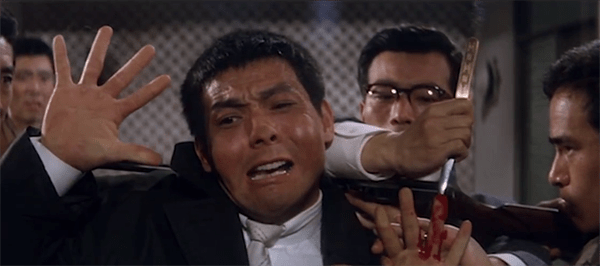
That style would fully develop in ‘Tokyo Drifter’ where we see a beautiful use of color and modern art production design in a way that appears almost theatrical. This film showcases his western influences and we even see an homage to the Hollywood western in this bar room brawl.
 
Shishido starred in only four Suzuki films, but despite their short-lived collaboration, their movies would be among Suzuki’s greatest and most well-known. Suzuki’s most well-known film—and let’s face it, clearly his best—was a huge financial failure. Its screenings were sparsely attended and Nikkatsu president, Kyusaku Hori called the film, ‘incomprehensible’ and fired Suzuki from Nikkatsu. It was his 40th film for the studio. The film is called ‘Branded to Kill’ and follows Hanada, the Yakuza’s number three best hitman on the run after a hit gets botched when a butterfly lands on the barrel of his sniper rifle causing him to miss his shot.
 
Suzuki’s experience and the perfecting of his style shines through in this creative masterpiece that includes everything you could want from an action movie—lots of sex, violence, and general badassery, but there is another level with ‘Branded to Kill’ that didn’t exist in his earlier program pictures. In order to write the film, Suzuki assembled a team of writers he called Hachiro Guryu (or ‘Group of Eight’). Suzuki didn’t spend a lot of time on pre-production and he never storyboarded his scenes, opting instead to come up with ideas as he shot. Since Nikkatsu was releasing two films a week, the shooting schedule was at a breakneck pace—the whole film from pre to post production was only 25 days and all of the editing and looping lines was completed in one day, which happened to be the day before its release.
 
Suzuki sued Nikkatsu for wrongful termination and won, but he was blacklisted by every studio for ten years. In 2001, he made a sequel to ‘Branded to Kill’ called ‘Pistol Opera’ and his latest film, ‘Princess Raccoon,’ (made in 2005) is a musical based on a folk tale from Japan. He’s still kicking at 92 years old with 54 films under his belt. While his days of filmmaking are over, there is no doubt that his work will continue to inspire others for many years to come.
 
Clips used:
Reservoir Dogs (1992 Dir. Quentin Tarantino)
Oldboy (2003 Dir. Park Chan-wook)
Hard Boiled (1992 Dir. John Woo)
Ichi the Killer (2001 Dir. Takashi Miike)
Ghost Dog: The Way of the Samurai (1999 Dir. Jim Jarmusch)
Branded to Kill (1967 Dir. Seijun Suzuki)
Harbour Toast: Victory is in Our Grasp (1956 Dir. Seijun Suzuki)
Detective Bureau 2-3: Go to Hell, Bastards! (1963 Dir. Seijun Suzuki)
Youth of the Beast (1963 Dir. Seijun Suzuki)
Tokyo Drifter (1966 Dir. Seijun Suzuki)
Youth of the Beast (1963 Dir. Seijun Suzuki)
Pistol Opera (2001 Dir. Seijun Suzuki)
Princess Raccoon (2005 Dir. Seijun Suzuki)
 
Music used:
Branded to Kill (1967 Dir. Seijun Suzuki)
Tokyo Drifter (1966 Dir. Seijun Suzuki)
Youth of the Beast (1963 Dir. Seijun Suzuki)
 
Sources used:
Schilling, Mark. No Borders, No Limits: Nikkatsu Action Cinema. Godalming, England: FAB, 2007. Print.

Tyler Knudsen, a San Francisco Bay Area native, has been a student of film for most of his life. Appearing in several television commercials as a child, Tyler was inspired to shift his focus from acting to directing after performing as a featured extra in Vincent Ward’s What Dreams May Come. He studied Film & Digital Media with an emphasis on production at the University of California, Santa Cruz and recently moved to New York City where he currently resides with his girlfriend.


Watch: How Steve McQueen’s Camera Highlights the Shame in ‘Shame’

Watch: How Steve McQueen’s Camera Highlights the Shame in ‘Shame’

If your back is turned to another person, that usually indicates a number of things in conventional body language: Stay away. The conversation is over. Do not communicate with me. But it can also indicate a conscious disavowal of an action or state of affairs. If a camera, as in Steve McQueen’s ‘Shame,’ shows us someone’s back, it could mean a number of things–that the character is not someone whose full identity we are meant to know, for instance. Or, in ‘Shame,’ it could mean the character onscreen, namely Michael Fassbender’s Brandon, is not able to entirely face his actions. The newest entry for "Between Frames" on Vimeo shows us a collection of shots of Brandon from behind: as he moves through his apartment, as he enters the subway, as he has sex. These shots all build towards… what, exactly? It seems that McQueen is showing us Brandon as Brandon wishes to be seen, a curious move for such a controlled filmmaker. The character doesn’t want his addictive behavior to be entirely known, despite the fact that his compulsion drives him and shapes his life within the film. This is a chilling assembly of scenes which makes its point memorably.

Watch: Darren Aronofsky’s Assault on the Senses in ‘Requiem for a Dream’

Watch: Darren Aronofsky’s Assault on the Senses in ‘Requiem for a Dream’

Given that the eyes and the ears are the only two sense organs film can access (setting aside ersatz experiments with scratch-and-sniff giveaways at theaters), if a director wanted to make sensory overload part of a film’s experience, the key would be to make visual and auditory elements larger than life, so that they practically jump out of the screen at the viewer. And that, it seems, is what Darren Aronofsky has done with ‘Requiem for a Dream," a film of addiction and humiliation for which the word "harrowing" would be a gross understatement. In this dynamic and startling video, Jorge Luengo focuses on Aronofsky’s jarring close-ups and aggressive in-your-ears sound effects to make an elegant point about the film: that its sensual experience is a mainline, if you will, to its thematic concerns. 

Watch: Martin Scorsese’s Films Have a Lot of Crucifixion Poses. Why Is That?

Watch: Martin Scorsese’s Films Have a Lot of Crucifixion Poses. Why Is That?

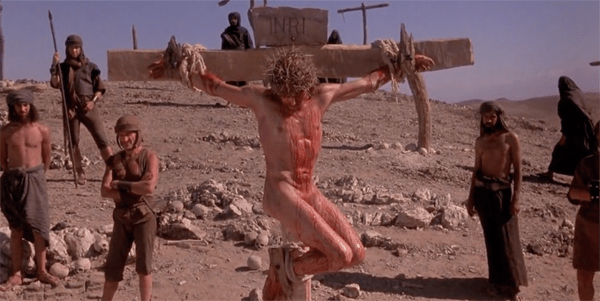
What do Travis Bickle, Howard Hughes, Jesus Christ, Rupert Pupkin, and Jordan Belfort have in common? Apart from being crucial figures in Martin Scorsese’s films, they have all made a gesture that could be described as a prototypical Scorsese gesture: arms outstretched, body (more or less) upright, body language that says to the universe: Do what you wish, think what you wish, say what you wish. Here I am. The gesture also, though, looks a great deal like a crucifixion–and in the case of Jesus, was one. Milad Tangshir examines the recurrence of this image in Scorsese’s films and, in so doing, makes one wonder if, by isolating and exposing his male figures this way, from ‘The Last Temptation of Christ‘ to ‘Taxi Driver‘ to ‘The Wolf of Wall Street,’ he is in fact, in a sense, crucifying them.

Watch: Mad Max Meets Star Wars in ‘Road Wars’

Watch: Mad Max Meets Star Wars in ‘Road Wars’

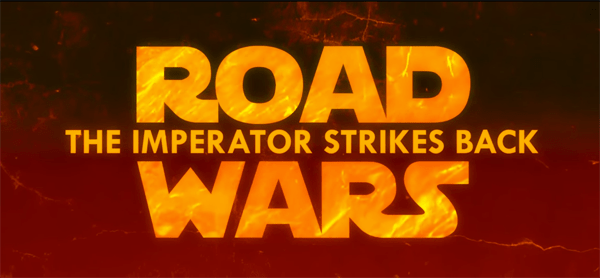
There are only so many stories, after all–and these days, ‘Mad Max: Fury Road’ is a part of all of them. How this particular mash-up hasn’t happened yet is beyond me, but the clever, tidily done work by Krishna Baleshenoi should make you either want to see ‘Fury Road’ or see ‘The Empire Strikes Back’ or see both–perhaps at the same time. 

Watch: David Fincher: From Adidas to Benjamin Button

Watch: David Fincher: From Adidas to Benjamin Button

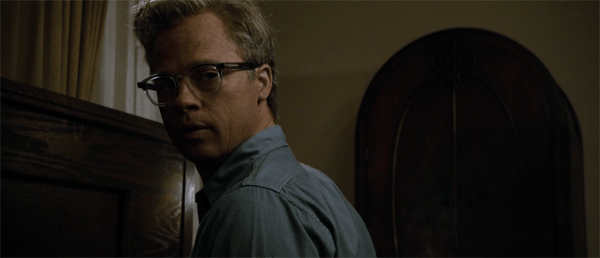
The latest installment in Raccord’s excellent series on David Fincher takes up some of his more knotty work–namely ‘Zodiac’ and ‘The Curious Case of Benjamin Button’–along with the commercial work addressed earlier in the series. We can see Fincher developing here, focusing in on a kind of intricacy that may have been akin to intellectual play for him in his early films, the fulfillment of an inner desire to communicate, but becomes a kind of ars cinematica as his work matures. By the end of this in-depth piece, which includes many clips of interviews with Fincher and others, the journey from the gangly robot of Fincher’s famous Adidas commercial to the wizened Brad Pitt of ‘Benjamin Button’ or the obsessive Jake Gyllenhaal of ‘Zodiac’ seems a quite logical one, almost inevitable.

Watch: How Chuck Jones Grew as a Cartoonist

Watch: How Chuck Jones Grew as a Cartoonist

In his latest "Every Frame A Painting" installment, Tony Zhou gives us the crucial components of the work of Chuck Jones, Warner Brothers’ genius master cartoonist, and in so doing shows us the laws of a small universe. The points Zhou focuses in, as we watch the pranks of Bugs Bunny, the stammering of Daffy Duck, the blundering of Wile E. Coyote, are the gag (assumptions vs. harsh reality), the character developments we witness, and the discipline–the way a character focuses on a particular task or conflict. Throughout, we get snippets of interviews with Jones himself, Steven Spielberg, and others, making this a departure for Zhou and a benchmark within his body of work.