Watch: What Props Do for The Films in Which They Appear, and Vice Versa

Watch: What Props Do for The Films in Which They Appear, and Vice Versa

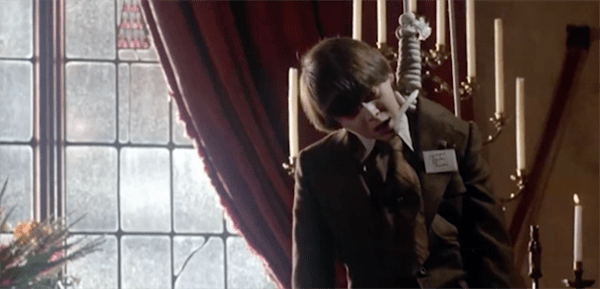
Can the heart of a film be its props? The light saber. The movie camera. The gun. The tape deck. These are all things we see as we watch our Spielberg, our Andersons, our Hitchcocks, our Godards, and yet we somehow view them as incidental. Rishi Kaneria argues, with this new video essay, that they are essential. He has set himself a difficult exercise here and exceeded its limits, taking us through the use of seemingly incidental items from the beginnings of film to its most recent developments.

Watch: What Is David Fincher’s Favorite Recurring Detail?

Watch: What Is David Fincher’s Favorite Recurring Detail?

If you guessed "the refrigerator," you’re correct! And yet chances are you didn’t. The refrigerator, for Fincher, is oddly enough a perfect locus for the sorts of stories he is drawn to; stories of containment and of personal degradation, going from ‘The Game’ to ‘Se7en’ to ‘Gone Girl.’ And, in balance, the good old ice box turns out to be a miniature stage for Fincher: inside its icy depths, you get to know a subject, from creepy introverts to jubilant young lovers to hard-working detectives. This new video by De FilmKrant takes us to the back of the fridge, as it were–and inside Fincher himself: inside his methods, inside the tools he uses to get the work of storytelling done. 

Watch: Hal Ashby, Filmmaker from the Edge of Darkness

Watch: Hal Ashby, Filmmaker from the Edge of Darkness

Hal Ashby was an American filmmaker whose quirky sense of humor and sentimental charm made him a unique voice in the American New Wave. His work spans from 1970 to his death in 1988—for the sake of time, I’m going to concentrate on his string of classics between 1971 and 1979. Ashby got his start in the 60s as an editor and ended up earning an Oscar nomination for the 1966 Norman Jewison comedy ‘The Russians Are Coming, the Russians Are Coming’ and he won the Oscar one year later for another Norman Jewison film titled ‘In the Heat of the Night.’
 
Despite being older than the Vietnam generation, he was very comfortable living the hippie lifestyle, which was apparent even in his first film titled ‘The Landlord,’ about a wealthy white man who becomes the new landlord of an urban apartment building for low-income tenants. He plans to evict all the residents and transform the building into a home for himself. The film is a moving satire of race and class relations that still rings true today.
 
Following ‘The Landlord’ Ashby directed several iconic films starting with 1971’s ‘Harold and Maude,’ about a death-obsessed young man who starts a close relationship with an eccentric old woman. The screenplay for the film was the master’s thesis of a UCLA student named Colin Higgins. Ashby shot the film in and around the San Francisco Bay Area, which, coupled with a beautiful soundtrack by Cat Stevens, perfectly encapsulated the atmosphere of the youth culture during the early 70s and the theme of coming to terms with an existential crisis and feelings of alienation. Even though it was Ashby’s second feature film, it is widely considered to be one of his best, but that wasn’t the case at the time—after its release, it was a critical and commercial failure.
 
His next film, titled ‘The Last Detail,’ follows two navy officers as they escort a young sailor across a few states to a prison for petty theft. On the way they decide to show him a good time. Ashby was originally doing pre-production on a different film when Jack Nicholson told him about ‘The Last Detail.’ Ashby abandoned the project in favor of working with Nicholson. The script was adapted by acclaimed screenwriter Robert Towne from a novel by Darryl Ponicsan and was quite controversial when it was released due to its pervasive use of profanity. ‘The Last Detail’ captures Ashby’s unique charm and sentimentality and contains one of Jack Nicholson’s greatest performances.
 
His next film, ‘Shampoo,’ takes place during the 1968 presidential election and follows a male hairdresser—played by Warren Beatty—who uses his position to meet and have sex with women. A year later he made ‘Bound for Glory’—starring David Carradine— about folk musician Woody Guthrie who decided to travel west during the Great Depression. The film is most notable for containing the first use of Garrett Brown’s Steadicam rig, which provided smooth motion without the use of a dolly.  
 
Ashby’s political themes started to take on a bigger role starting with his next film titled ‘Coming Home,’ which is about the Vietnam War, but doesn’t depict any combat whatsoever. Instead, it is about the veterans of that war coming back to America and coping with their injuries and the reality of what they did over there. It follows a recently paralyzed veteran who connects with the wife of a soldier at a VA hospital. The wife was played by Jane Fona who, along with her costar Jon Voight, won an Oscar for acting. Ashby also earned a nomination for Best Director. ‘Coming Home’ turns the media portrayal of the glory of being a soldier completely upside-down and shows the reality of what survivors face.
 
In 1979, Ashby made ‘Being There’ about a simple gardener who finds himself amongst the most powerful people in Washington who mistake his thoughts on gardening as profound metaphors. Chance the Gardener was brilliantly played by Peter Sellers in one of his most iconic roles. Ashby continued to make films until his death in 1988, but none were as beloved as his films from the 70s.

Films referenced:

‘The Landlord’ (1970 dir. Hal Ashby)
‘Harold and Maude’ (1971 dir. Hal Ashby)
‘The Last Detail’ (1973 dir. Hal Ashby)
‘Shampoo’ (1975 dir. Hal Ashby)
‘Bound for Glory’ (1976 dir. Hal Ashby)
‘Coming Home’ (1978 dir. Hal Ashby)
‘Being There’ (1979 dir. Hal Ashby)
‘The Russians Are Coming, the Russians Are Coming’ (1966 dir. Norman Jewison)

Tyler Knudsen, a San Francisco Bay Area native, has been a student of film for most of his life. Appearing in several television commercials as a child, Tyler was inspired to shift his focus from acting to directing after performing as a featured extra in Vincent Ward’s What Dreams May Come. He studied Film & Digital Media with an emphasis on production at the University of California, Santa Cruz and recently moved to New York City where he currently resides with his girlfriend.

Watch: In Alfred Hitchcock’s Films, We All Become Voyeurs

Watch: In Alfred Hitchcock’s Films, We All Become Voyeurs

Watch enough of Alfred Hitchcock’s films, and you will eventually notice that characters can repeatedly be seen simply watching. James Stewart’s Jeff Jefferies in ‘Rear Window’ watches his neighbors through binoculars. Ben McKenna in ‘The Man Who Knew Too Much’ watches his adversaries from a dark balcony. Norman Bates in ‘Psycho’ watches… well, you know what he watches. What does this watching represent, ultimately? In part, it’s bound to the films’ narratives, which all involve spectatorship of one kind or another–but in a broader sense, viewers are implicated, as if the very act of taking in a story involves voyeurism, of a kind. Jorge Luengo’s new video piece takes us through Hitchcock’s most poignant moments of said voyeurism with enthusiasm and verve.

Watch: Jim Jarmusch’s Best Traveling Sequences… In Three Minutes!

Watch: Jim Jarmusch’s Best Traveling Sequences… In Three Minutes!

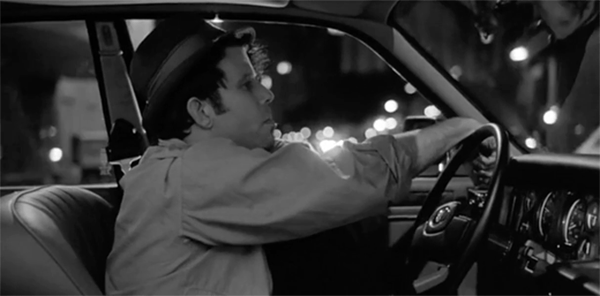
At first glance, the films of Jim Jarmusch may not seem to have many connections.  For example, what could a samurai-influenced hit man have in common with hard-rocking vampires?  Examining any two of Jarmusch’s films presents us with equally unusual comparisons.  However, all of Jarmusch’s feature films do indeed share a common thread–a journey. The characters in a Jarmusch film share the simple goal of starting somewhere and needing to get somewhere else.  The destination is not necessarily a physical place–most of the journeys are spiritual–but the process is visually communicated via traveling sequences.  There is something unique in the way Jarmusch presents traveling characters.  His camera lingers in confined spaces, communicating a strong sense of significance.  He focuses on facial expressions, which tend to be solemn and focused–they are on a mission, simply to arrive.  Here is a look at characters traveling throughout Jim Jarmusch’s film career.  

Films used:

Stranger Than Paradise (1984)

Down by Law (1986)

Mystery Train (1989)

Night on Earth (1991)

Dead Man (1995)

Ghost Dog: The Way of the Samurai (1999)

Broken Flowers (2005)

The Limits of Control (2009)

Only Lovers Left Alive (2013)

Jacob T. Swinney is an industrious film editor and filmmaker, as well as a recent graduate of Salisbury University.

Watch: Darren Aronofsky’s Symmetry Contains Explosive Energy

Watch: Darren Aronofsky’s Symmetry Contains Explosive Energy

It’s easy enough to comment on the excess running through Darren Aronofsky’s films: the sex, the flesh, the drugs, the decadence, the violence, the loneliness, the despair–but what if the allure of his films lies elsewhere? What if the real reason we pay attention to them is because of the way the excess is packaged: in symmetrical frames, and sometimes in spirals that offset those frames? This video by Studio Little dances us through Aronofsky’s films, from ‘Black Swan’ to ‘Requiem for a Dream’ to ‘The Wrestler’ to ‘Noah’ to ‘Pi,’ showing us that, time after time, the element keeping us watching is the order, not the disorder.

Watch: Sofia Coppola’s ‘Lost in Translation’: The One-Shots vs. the Two-Shots

Watch: Sofia Coppola’s ‘Lost in Translation’: The One-Shots vs. the Two-Shots

The crucial dichotomy at the heart of Sofia Coppola’s ‘Lost in Translation’ is the difference between being alone and being with someone else. The film doesn’t rank one above or below the other; it just places them side by side. As we observe Scarlett Johansson’s Charlotte and Bill Murray’s Bob going about their days separately and then together, we learn something about their characters and about ourselves–and the cinematography, with its contrast of one-shots and two-shots, helps us out. This video from Between Frames guides us through the film’s movement from isolation to cohabitation, with brio and the charisma of Jesus and Mary Chain in the background.  

Watch: Chantal Akerman’s Work Sustained Human Life

Watch: Chantal Akerman’s Work Sustained Human Life

Think about this, for a second: when someone says that art helps them to go on living, what they actually mean is that it helps them to go on making artworks, which is much the same thing, if you’re truly committed to your work. Scout Tafoya demonstrates this particular feeling in a recent video essay for Fandor, on the work of the late Chantal Akerman, adapted from an essay originally written for RogerEbert.com. Listening to Tafoya’s narrative of his experience with Akerman’s brilliant, revelatory work over clips from ‘Jeanne Dielman, 23, quai du Commerce, 1080 Bruxelles,’ ‘Je Tu Il Elle,’ and other films, one gets a clear sense of how artworks might keep one going when other things do not–and more importantly, how the sort of inspiration you get when you’re excited by someone else’s creation is, in all honesty, life-giving. 

Watch: Quentin Tarantino’s ‘Pulp Fiction’ Shaped Vince Gilligan’s ‘Breaking Bad’

Watch: Quentin Tarantino’s ‘Pulp Fiction’ Shaped Vince Gilligan’s ‘Breaking Bad’

Quentin Tarantino’s ‘Pulp Fiction’ left its stamp on everything following it. Menus. Radio stations. T-shirts. A legion of films. And so why not a television show as well, namely ‘Breaking Bad’? Jorge Luengo Ruiz‘s newest video shows us, fairly inarguably, the parallels between the film and Vince Gilligan’s auteur-ish show—shots, blocking, general affect, the story of a chemistry teacher’s deranged redemption—so that one might begin to wonder, faintly, when will Tarantino’s influence stop? Will it stop? Hopefully not.

Watch: Inarritu’s ‘Birdman’ Is a Collage of Edits, Not Just One Take

Watch: Inarritu’s ‘Birdman’ Is a Collage of Edits, Not Just One Take

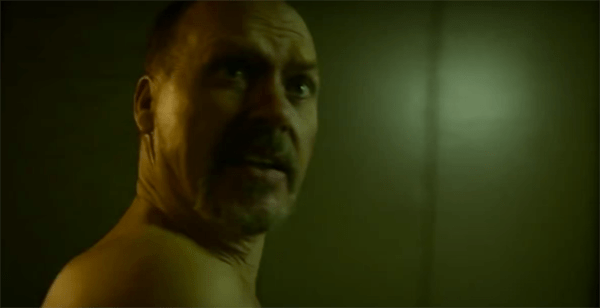
The kind souls at the YouTube channel The Film Theorists have served up a doozy with this piece on Alejandro González Iñárritu’s ‘Birdman," demonstrating not only that the film’s "single take" technique is actually the result of a myriad of takes, carefully spliced together and masked with the swerves of the camera–but also that this approach all started with Alfred Hitchcock’s 1948 film ‘Rope." Watch. Learn. Enjoy. Fly.