Watch: James Bond ‘Skyfall’ Title Sequence Wondrously Re-Invented

Watch: James Bond ‘Skyfall’ Title Sequence Wondrously Re-Invented

Regardless of what you may think of the James Bond films, you probably do know, or remember, or even have an emotional attachment to their title sequences. Knowing this, Heebok Lee has recreated the title sequence from Sam Mendes’ ‘Skyfall’ here, using Claudia Kim (from ‘Avengers: Age of Ultron’) as the central female figure and employing the choreography of renowned Korean dancer Soojin Choi to create something that looks like… well, what does it look like? A Miltonic, explosive, surreal, dreamlike, and frightening (in a good way) opening to one of the better films of the series.

Watch: In Alfred Hitchcock’s Films, We All Become Voyeurs

Watch: In Alfred Hitchcock’s Films, We All Become Voyeurs

Watch enough of Alfred Hitchcock’s films, and you will eventually notice that characters can repeatedly be seen simply watching. James Stewart’s Jeff Jefferies in ‘Rear Window’ watches his neighbors through binoculars. Ben McKenna in ‘The Man Who Knew Too Much’ watches his adversaries from a dark balcony. Norman Bates in ‘Psycho’ watches… well, you know what he watches. What does this watching represent, ultimately? In part, it’s bound to the films’ narratives, which all involve spectatorship of one kind or another–but in a broader sense, viewers are implicated, as if the very act of taking in a story involves voyeurism, of a kind. Jorge Luengo’s new video piece takes us through Hitchcock’s most poignant moments of said voyeurism with enthusiasm and verve.

Watch: Todd Haynes’ Isolated Women

Watch: Todd Haynes’ Isolated Women

One of the much-buzzed about events at the 51st Chicago International Film Festival was the spotlight screening of Todd Haynes’ latest film Carol. The film is an adaptation of Patricia Highsmith’s novel The Price of Salt and tells the story of the May-December relationship between two women, the young Therese (Rooney Mara) and the older, married Carol (Cate Blanchett). And while Carol adds further dimension to the Haynes LGBTQ filmography (Poison, Safe, Velvet Goldmine), it reinforces Haynes’ recurring cinematic trope of the isolated female figure, one who is often suppressed by the societal restrictions of her time and place. 
Consider, for example, the heroine of his Douglas Sirk-inspired Far From Heaven. In 1950s Connecticut, Cathy Whitaker (Julianne Moore, Haynes’ ubiquitous muse) finds herself to be the center of adoration and praise from the socialites in her suburban utopia. Cathy leads the ideal life; her husband (Dennis Quaid) is a successful company man, her house brims with beauty and warmth and Cathy herself is an ‘up and at ‘em woman of the times,’ dividing her work load between attending art shows and supporting the extracurricular activities of her kids. Once Cathy learns that her husband is a closeted homosexual, her picturesque life unravels internally—but for the sake of social upkeep she has to exude the familiar facade of familial normalcy (by the standards of that era anyway) on the outside. To make matters even more strenuous, she is coldly criticized by her peers once she embarks on a friendship with her African American landscaper Raymond Deagan (Dennis Halbert). And through all this, with music and art direction from the era, Far From Heaven never really falls into campy 50s melodrama. The brilliance of Haynes’ direction comes in its simplicity of staging; often his heroines are exposed quietly by judging third-party characters who simply stare at them; other times, these female protagonists become transparent beings in the frame, becoming more helpless as they fall into self doubt or defeat. It’s a subtly piercing yet bold choice in today’s kinetic moviemaking canon. 
Haynes, a Brown University graduate who majored in semiotics, reminds us that some of the strongest works of art come from the minimalist approach and by presenting us images of genuine pathos; we are forced to find a little bit of ourselves in those moments of introspection or grief. And in the films where Haynes does embellish a a flashy visual style (e.g. the different color palettes in the Bob Dylan experimental biopic I’m Not There), those choices are always grounded in the intense proximity and affinity he shares for the isolation felt by his screen protagonists. This was evident in one of Hayne’s early works, the 43-minute short film Superstar: The Karen Carpenter Story, which Haynes shot using barbie dolls in dollhouses and occasionally mixing in archival footage and music from The Carpenters discography. Here is the most potent case for Haynes’ theme of the isolated female figure: In presenting an unauthorized biopic on Karen Carpenter’s anorexia and untimely death using barbie dolls as the main actors, Haynes’ made a masterstroke comment on the cultural pressures placed on women from an early age. Carpenter was 32 years old when she died, and her death brought a bigger spotlight to eating disorders; so by using the barbie doll—the paramount cultural signifier for what “beauty” meant to little girls everywhere—as the main screen figure, Haynes stripped a tragic story to its elementary roots, transforming children’s play into a twisted, unnerving parable of isolation and depression. There’s a generosity in that filmmaking gesture of simplicity, an invite from a perceptive artist who dares us to expose our vulnerability collectively as an audience. An audience of isolated individuals, yearning to come together once the theatre lights go down.

Nelson Carvajal is an independent digital filmmaker, writer and content creator based out of Chicago, Illinois. His digital short films usually contain appropriated content and have screened at such venues as the London Underground Film Festival. Carvajal runs a blog called FREE CINEMA NOWwhich boasts the tagline: "Liberating Independent Film And Video From A Prehistoric Value System." You can follow Nelson on Twitter here.

Watch: Stanley Kubrick’s ‘2001: A Space Odyssey,’ Hal Ashby’s ‘Being There,’ and the Link between Them

Watch: Stanley Kubrick’s ‘2001: A Space Odyssey,’ Hal Ashby’s ‘Being There,’ and What Connects Them

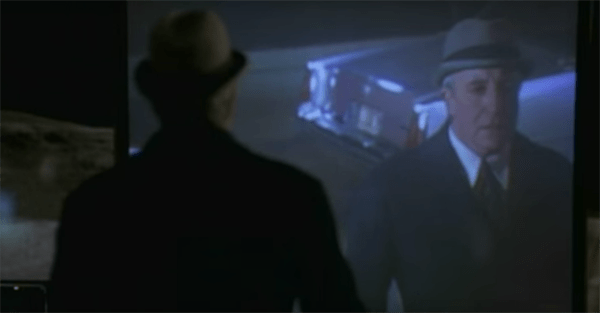
Stanley Kubrick’s ‘2001: A Space Odyssey’ was a landmark in science fiction films precisely because its line of questioning extended beyond the stuff of other science fiction films, into philosophical inquiry, social criticism, and elsewhere. Hal Ashby’s ‘Being There‘ was a landmark in comedy for similar reasons–it took a remarkable comic actor, Peter Sellers, and placed him in the middle of a philosophical question, in the form of a film: what if having a blank slate for a mind, and seemingly little intentionality. makes you the perfect leader of others? In an new video essay, Rob Ager explores the links between the two films, in great depth and with simultaneous care and ambition.

Watch: Jim Jarmusch’s Best Traveling Sequences… In Three Minutes!

Watch: Jim Jarmusch’s Best Traveling Sequences… In Three Minutes!

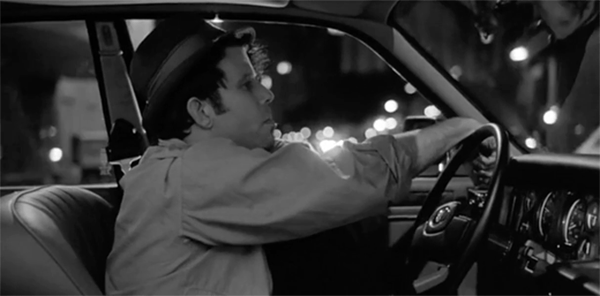
At first glance, the films of Jim Jarmusch may not seem to have many connections.  For example, what could a samurai-influenced hit man have in common with hard-rocking vampires?  Examining any two of Jarmusch’s films presents us with equally unusual comparisons.  However, all of Jarmusch’s feature films do indeed share a common thread–a journey. The characters in a Jarmusch film share the simple goal of starting somewhere and needing to get somewhere else.  The destination is not necessarily a physical place–most of the journeys are spiritual–but the process is visually communicated via traveling sequences.  There is something unique in the way Jarmusch presents traveling characters.  His camera lingers in confined spaces, communicating a strong sense of significance.  He focuses on facial expressions, which tend to be solemn and focused–they are on a mission, simply to arrive.  Here is a look at characters traveling throughout Jim Jarmusch’s film career.  

Films used:

Stranger Than Paradise (1984)

Down by Law (1986)

Mystery Train (1989)

Night on Earth (1991)

Dead Man (1995)

Ghost Dog: The Way of the Samurai (1999)

Broken Flowers (2005)

The Limits of Control (2009)

Only Lovers Left Alive (2013)

Jacob T. Swinney is an industrious film editor and filmmaker, as well as a recent graduate of Salisbury University.

Watch: Christopher Nolan’s Films Immerse You in the Moment

Watch: Christopher Nolan’s Films Immerse You in the Moment

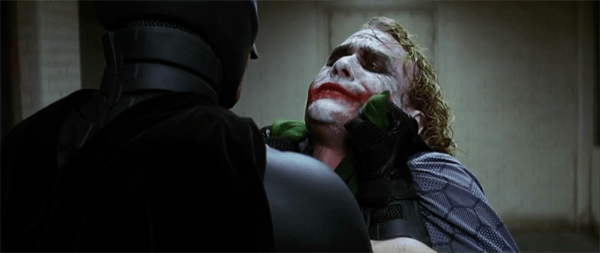
Though "realism" might be, in one sense, the last word you might use in association with Christopher Nolan, maker of ‘Inception‘ and the ‘Dark Knight’ films, in another sense, it fits him perfectly. If we take the term "cinematic realism" to mean immersing viewers completely within a depiction of a time or place through camera techniques, special effects, and other cinematographers’ tricks, then Nolan and his DP Wally Pfister have been making highly realistic films for years, from ‘Following‘ to "Memento’ to ‘Insomnia’ to, yes, ‘Inception’ and the Dark Knight films. Trevor Ball explores Nolan and Pfister’s work carefully and intelligently in this dynamic video essay. 

Watch: Darren Aronofsky’s Symmetry Contains Explosive Energy

Watch: Darren Aronofsky’s Symmetry Contains Explosive Energy

It’s easy enough to comment on the excess running through Darren Aronofsky’s films: the sex, the flesh, the drugs, the decadence, the violence, the loneliness, the despair–but what if the allure of his films lies elsewhere? What if the real reason we pay attention to them is because of the way the excess is packaged: in symmetrical frames, and sometimes in spirals that offset those frames? This video by Studio Little dances us through Aronofsky’s films, from ‘Black Swan’ to ‘Requiem for a Dream’ to ‘The Wrestler’ to ‘Noah’ to ‘Pi,’ showing us that, time after time, the element keeping us watching is the order, not the disorder.

Watch: Sofia Coppola’s ‘Lost in Translation’: The One-Shots vs. the Two-Shots

Watch: Sofia Coppola’s ‘Lost in Translation’: The One-Shots vs. the Two-Shots

The crucial dichotomy at the heart of Sofia Coppola’s ‘Lost in Translation’ is the difference between being alone and being with someone else. The film doesn’t rank one above or below the other; it just places them side by side. As we observe Scarlett Johansson’s Charlotte and Bill Murray’s Bob going about their days separately and then together, we learn something about their characters and about ourselves–and the cinematography, with its contrast of one-shots and two-shots, helps us out. This video from Between Frames guides us through the film’s movement from isolation to cohabitation, with brio and the charisma of Jesus and Mary Chain in the background.  

Watch: Chantal Akerman’s Work Sustained Human Life

Watch: Chantal Akerman’s Work Sustained Human Life

Think about this, for a second: when someone says that art helps them to go on living, what they actually mean is that it helps them to go on making artworks, which is much the same thing, if you’re truly committed to your work. Scout Tafoya demonstrates this particular feeling in a recent video essay for Fandor, on the work of the late Chantal Akerman, adapted from an essay originally written for RogerEbert.com. Listening to Tafoya’s narrative of his experience with Akerman’s brilliant, revelatory work over clips from ‘Jeanne Dielman, 23, quai du Commerce, 1080 Bruxelles,’ ‘Je Tu Il Elle,’ and other films, one gets a clear sense of how artworks might keep one going when other things do not–and more importantly, how the sort of inspiration you get when you’re excited by someone else’s creation is, in all honesty, life-giving. 

Watch: George Clooney Can Do Anything… With Just His Face!

Watch: George Clooney Can Do Anything… With Just His Face!

While one would think that it would take more than just George Clooney’s face to provide fodder for a video essay of any substance, it turns out that it doesn’t. This compilation of Clooney’s facial expressions from Burger Fiction, including clips ranging from the Coen Brothers’ upcoming "Hail Caesar!" (2016) to "Return to Horror High" (1987) shows that he has one of the most expressive and powerful visages in the film business. My personal favorite: the moment when he makes an otherwise healthy goat succumb from the sheer force of his gaze.