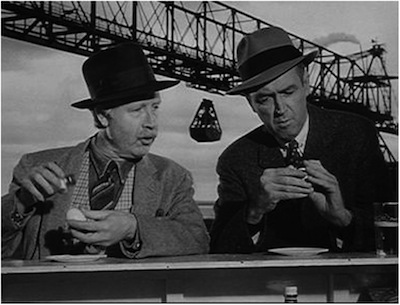
VIDEO – Motion Studies #27: Pass the Salt

VIDEO – Motion Studies #27: Pass the Salt

From now through April, the Oberhausen International Short Film Festival will present "Film Studies in Motion", a Web Series curated by Volker Pantenburg and Kevin B. Lee. This series, available on the festival's website and Facebook page, presents weekly selections of analytical video essays on the web, in preparation for Pantenberg and Lee's presentation  "Whatever happened to Bildungsauftrag? – Teaching cinema on TV and the Web", scheduled for April 28 at the festival.

Week Six: Personal Obsessions

The widespread accessibility of online video creation and sharing allows us to explore and indulge our fascinations with films in unprecedented ways, as seen in these four examples: a close scrutinizing of a seemingly throwaway moment in Preminger’s “Anatomy of a Murder;” extended, heartfelt contempt for the Star Wars prequel; a fixation on Hitchcock’s “Vertigo” and the “spectacular improbabilty of its plot;” the sensation of sleeplessly watching Cronenberg’s “Dead Ringers” after days of “Occupy Wall Street.” Immersed in distinctly personal perspectives, these videos make explicit what is implicit in all the videos presented in this series: that subjective engagement is what brings flavor and fire to our analytical endeavors.

Today's selection:

Pass The Salt


Christian Keathley (2006)

A seemingly harmless scene in Otto Preminger's Anatomy of a Murder becomes an object of fascination until it reveals a startling significance.

View all Motion Studies video selections.

Volker Pantenburg is assistant professor for moving images at the media faculty of the Bauhaus-Universität Weimar. 

Kevin B. Lee is Editor in Chief of IndieWire’s PressPlay Video Blog and contributor to Roger Ebert.com. Follow him on Twitter.

Nicolas Cage is big; it’s the pictures that got small

Nicolas Cage is big; it’s the pictures that got small

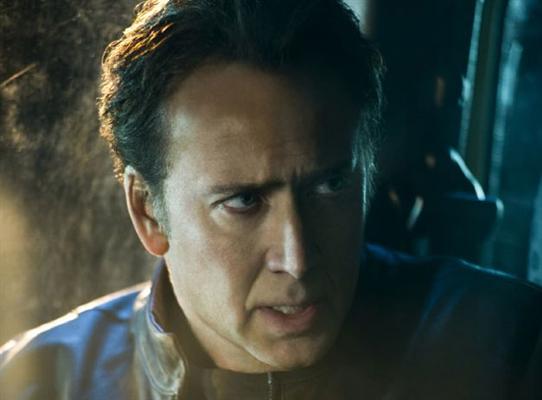
nullThe pictures may have gotten small, but Nicolas Cage is still BIG. More often than not, he acts in CAPS LOCK mode. He HOLLERS and SCREECHES and FLINCHES VIOLENTLY and SHUDDERS LIKE HE'S BEING LOWERED INTO ICY WATER and STARES IN TREMBLING AWE like a guy who just glimpsed a portal into another dimension and is trying to figure out WHAT THE FUCK THOSE CREATURES WITH THE TENTACLES ARE!!!

It took me a while—decades, actually—to accept a couple of facts about Nicolas Cage. One: when he's being subtle, as in National Treasure, It Could Happen To You, Windtalkers and a few other movies, he's good, sometimes affecting, but he tends to lose his special quality; and (2) there's something to be said for a performer whose screen presence is so ridiculously big, and often so knowingly anti-realistic, that it obliterates commonly accepted distinctions between good and bad, believable and unbelievable, and instead becomes an uncanny event, something you evaluate less than you witness. The CAPS LOCK nature of Cage's acting makes him a natural subject for video mash-ups—so much so that my friend Jason Mittell proposed the essay topic "Nicolas Cage as an Axiom of Remix Cinema." Everything Cage does is so vigorously sculpted, underlined, boldfaced and bracketed that you can lift moments from different movies out of context, string them together, and create firecracker-strings of weirdness. And a helluva lot of videos have done just that.

The best, for my money, is Harry Hanrahan's masterpiece "Nicolas Cage Loses His Shit," a symphony of shit-losing backed by a track from Clint Mansell's Requiem for a Dream score. The music track makes it — ties it together like The Dude's rug did his room — because Requiem for a Dream is about junkies being slowly dragged down into a whirlpool of masochistic yet unnervingly romantic agony. It's music fit for a star who can't help doing what he does: a man possessed.

The most troubling Cage mash-ups are the clip reels from Neil LaBute's remake of The Wicker Man. The first one (dated 2007) went viral in a huge way, soon to be held up as proof that the film was poop, its star the worst actor who ever lived. While the out-of-context clips of Cage freaking out are funny enough, they're also unfair to Cage because they shame him for doing something he was specifically hired to do—and does better, or at least more colorfully, than anyone else. I don't think the remake works, exactly, but when you're watching it, there's no doubt that its overheated ludicrousness is intentional: not kitsch, but about style. ("How'd it get burned how'd it get burned HOW'D IT GET BURNED??!!???") Who better than Cage to play a truth-seeker, cycling desperately through fairy tale woods, terrorizing little masked girls and disguising himself in a bear costume? Cage makes as much aesthetic sense in this movie as Gary Cooper did in High Noon. And yet YouTube burned The Wicker Man onto Cage's new calling card and cemented the public notion that he was a rotten actor.

The musical remixes of The Wicker Man were no less problematic, but at least they had a good beat and you could dance to them.

By 2011, the notion of Cage as Crazypants Mega-Ham was so pervasive that Conan O'Brien proposed Nicolas Cage film clips as a replacement for the US government's recently-discontinued "Threat Level" warning system.

Which brings us to Adam Lucas's mash-up "Cage Does Cage." Ostensibly a tribute to avant garde compose John Cage's "4'33" ", wherein musicians do nothing but sit for four minutes and thirty-three seconds, the piece collects snippets of Cage reacting, brooding, etc., without dialogue. Occasionally the actor exhales, sips a drink, or hems and haws while trying to figure out what to say, but for the most part the piece is a hell of a lot quieter than the Cage-mashup norm.

I wouldn't say the video works as a John Cage tribute, because, as Peter Guttmann points, out, the composer's piece "breaks traditional boundaries by shifting attention from the stage to the audience and even beyond the concert hall. You soon become aware of a huge amount of sound, ranging from the mundane to the profound, from the expected to the surprising, from the intimate to the cosmic – shifting in seats, riffling programs to see what in the world is going on, breathing, the air conditioning, a creaking door, passing traffic, an airplane, ringing in your ears, a recaptured memory. This is a deeply personal music, which each witness creates to his/her own reactions to life." Nothing like that happens while you're watching "Cage Does Cage." Let's face it, this video exists because the composer and the actor happen to share a last name. Rather than turn viewers' reactions into the subject of the piece, as "4'33"" does, "Cage Does Cage" keeps the focus on Cage the actor, whose subtlest moments as a listener/reactor/paralyzed spectator are still charged with intimations of future shit-losing. (Indeed, at one point Lucas uses a clip from Vampire's Kiss that was also used in the previously-linked "Nicolas Cage Loses His Shit," but cuts before Cage's pained, fearful expulsion of breath.)

Nevertheless, the video is intriguing, because it's so different from every other Cage mash-up. Its emphasis on reaction and silence casts further doubt on the notion that Cage is a bad actor, as opposed to a performer whose preferred aesthetic doesn't jibe with fashionable definitions of what's good. Even when Cage is being subtle, as he is in many of the clips collected by Lucas, there's an exaggerated (or perhaps "dancer-like") grandness to the way he listens, gathers his nerve, lies down on a floor, or stares out of a train compartment window. It's that silent-film thing again: small viewing window, big actor. But that's not a knock. There's an internal logic to what Cage does and how he does it. You can see this more clearly by observing the quiet Cage than the manic one.

Perhaps the most sensible response to Cage isn't, "What a freak" or "What a bad actor" but "Your mileage may vary." If all acting is small, acting itself becomes small, too; then cinema itself starts to shrink from stylistic risk, for fear of being thought too big, too wild, too "unreal." As Willem Dafoe recently told Press Play columnist Simon Abrams, "I think in many ways, naturalism has ruined movies … I often like understated performances where the actor disappears. I like that a lot. But this imitation-of-life stuff doesn’t always tap into what’s beautiful about the language and the poetry of film."

A critic, journalist and filmmaker, Matt Zoller Seitz is the publisher of Press Play and the TV critic for New York Magazine. His book-length conversation with Wes Anderson about his films, titled The Wes Anderson Collection, will be published in fall, 2012 by Abrams Books.

VIDEO ESSAY: The Alloy Orchestra Scores the WILD AND WEIRD

VIDEO ESSAY: The Alloy Orchestra Scores the WILD AND WEIRD

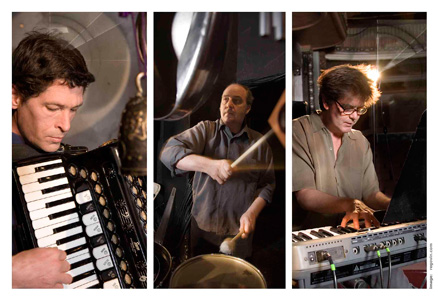
“What does it sound like when someone’s talking with a clarinet jammed in his skull?” asks Alloy Orchestra’s Ken Winokur. The Cambridge, Massachusetts-based trio brings antic humor, off-beat perspective, and consummate professionalism to the task of scoring silent films. With their latest endeavor, “Wild and Weird: The Alloy Orchestra Plays 10 Fascinating and Innovative Films 1906-1926” in Ebertfest (Roger Ebert’s 14th annual showcase in Champaign, Illinois) this month, I caught up with Winokur for a video essay tribute to the wild, weird, and fascinating process that has Alloy (Winokur, along with Roger Miller and Terry Donahue) opening up silent films to broader audiences.

Originally published on Fandor.

Kevin B. Lee is Editor in Chief of IndieWire’s PressPlay Video Blog and contributor to Roger Ebert.com. Follow him on Twitter.

VIDEO – Motion Studies #26: Jonathan Rosenbaum on GERTRUD and THE SUN SHINES BRIGHT

VIDEO – Motion Studies #26: Jonathan Rosenbaum on GERTRUD and THE SUN SHINES BRIGHT

From now through April, the Oberhausen International Short Film Festival will present "Film Studies in Motion", a Web Series curated by Volker Pantenburg and Kevin B. Lee. This series, available on the festival's website and Facebook page, presents weekly selections of analytical video essays on the web, in preparation for Pantenberg and Lee's presentation  "Whatever happened to Bildungsauftrag? – Teaching cinema on TV and the Web", scheduled for April 28 at the festival.

Week Six: Personal Obsessions

The widespread accessibility of online video creation and sharing allows us to explore and indulge our fascinations with films in unprecedented ways, as seen in these four examples: a close scrutinizing of a seemingly throwaway moment in Preminger’s “Anatomy of a Murder;” extended, heartfelt contempt for the Star Wars prequel; a fixation on Hitchcock’s “Vertigo” and the “spectacular improbabilty of its plot;” the sensation of sleeplessly watching Cronenberg’s “Dead Ringers” after days of “Occupy Wall Street.” Immersed in distinctly personal perspectives, these videos make explicit what is implicit in all the videos presented in this series: that subjective engagement is what brings flavor and fire to our analytical endeavors.

Today's selection:

Jonathan Rosenbaum on Gertrud and The Sun Shines Bright
Jonathan Rosenbaum and Kevin B. Lee (2008)

Critic Jonathan Rosenbaum offers his personal insights on his favorite films by John Ford and Carl Dreyer.

View all Motion Studies video selections.

Volker Pantenburg is assistant professor for moving images at the media faculty of the Bauhaus-Universität Weimar. 

Kevin B. Lee is Editor in Chief of IndieWire’s PressPlay Video Blog and contributor to Roger Ebert.com. Follow him on Twitter.

VIDEO: The Ultimate “Next on Mad Men” Preview Clip

VIDEO: The Ultimate “Next on Mad Men” Preview Clip

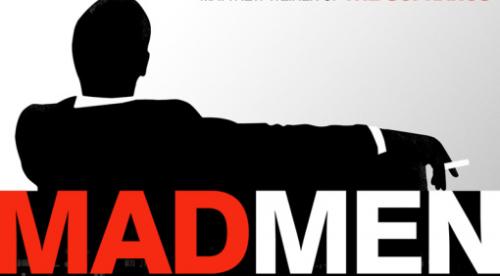
It's really become a perverse ritual by now for all us Mad Men fans. Every Sunday we groove on a new episode, and just as we are about to click off with the satisfaction of having taken in an exquisitely rendered hour of television, it happens.

"On the next new episode of Mad Men…"

Our ears perk up like Pavolvian dogs. We can't help ourselves. We'll devour anything, no matter how tiny or inconsequential the morsel. And they know it.

null

So what do we get? A 30 second string of soundbites taken totally out of context. 

"What happened?"

"I have to tell you something"

"Well that's something you don't see every day."

"Oh gosh!"

Sometimes it feels like the trained monkeys who make these montages are snickering at us through the clips: the newest one had lines like "They're like our slaves!" and "Some things never change." 

By now we're all kind of in on the joke that the joke's on us. But why should the folks at AMC have all the fun tormenting us, when we could do just as good a job? So here's our version. It's juicier, has more random lines taken out of context, is more absurd and more bluntly withholding of useful content:

Embed or share this clip. 

Compare this to the actual preview clip for next week's show and tell us which one you'd rather watch:

http://c.brightcove.com/services/viewer/federated_f9?isVid=1

GAME OF THRONES RECAP 4: GARDEN OF BONES

GAME OF THRONES RECAP 4: GARDEN OF BONES

null

Garden Of Bones was perhaps my least favorite episode of Game Of Thrones, period. The show has been such a success that seeing it struggle so much is a surprise. It’s still competent and watchable, but Garden Of Bones was frayed at the edges.

nullThe novel this season of Game Of Thrones is based on is called A Clash Of Kings, which makes the story clear: that of the civil war that followed Cersei’s coup and Ned’s execution. Despite the presence of multiple kings, none of them have “clashed” directly, either with blades or with words. Ever since the trailer showed bits and pieces of Stannis’ confrontation with Renly, I’ve been waiting for this scene, prepared to do an in-depth analysis of how it demonstrated the show’s themes surrounding power and legitimacy. Instead, what I got was an example of what’s wrong with Garden Of Bones, which could also make bigger problems for the show in the future.

Watch the scene here:

Two narrative questions arise immediately with the scene: why are Stannis and Renly fighting each other, and where are they fighting? Game Of Thrones’ issues with geography are highlighted here: we don’t know where Renly’s camp is, so we don’t know why this confrontation is meaningful. Shouldn’t Renly be surprised that his brother is attacking him, instead of the Lannisters? But there’s no buildup in either case—previous scenes from Renly’s camp are about the presence of Littlefinger, and it’s the first time in the episode we see Stannis at all. The stakes of this meeting are as high as any we’ve seen in the show, and instead, it’s confusing. 

Clarity has been lost in the translation from the page to the screen. In the novel, location questions are clearly answered. Renly has the strength of two of the Seven Kingdoms, Stannis, one weak kingdom. So Stannis launches a surprise attack against Renly’s capital, which makes Renly stop his march against Joffrey in the capital. There are both strategic and character-based reasons for the confrontation. The location is unclear, which tends to be when Game Of Thrones is at its weakest. (This is worsened in the episode’s final scene, when Davos smuggles Melisandre . . . somewhere?)

Once the characters start speaking, the confrontation becomes more he-said-she-said than tense and meaningful. Stannis makes small talk with Catelyn, she responds. Renly teases Stannis, he responds. More teasing, and Melisandre responds. It sounds a little bit like a radio play, where the actors record their lines in a studio at different times. This may be an intentional choice by the director: the Baratheon brothers have never gone to war with one another, so perhaps Game Of Thrones is portraying their internal struggle as externally stilted.

And it rings falsely. The worst offender is Cat Stark, whose “Listen to yourselves. If you were sons of mine I would knock your heads together until you remembered that you were brothers” is monumentally misguided (though the line is from the novel, it’s taken almost entirely out of context here). So far this season, Catelyn has been the voice of reason, telling Robb that sending Theon to Pyke was a bad idea, and recognizing Renly’s “summer knights” last week.  Here she comes across as peevish and undiplomatic, ruining whatever tiny chance this meeting had at being good for the realm.

Stephen Dillane’s performance as Stannis also leaves something to be desired. He’s supposed to be rigid, so certain of his claim to the throne that he doesn’t comprehend anything else. But what comes across is confusion and boredom. He tells Renly, “You think a few bolts of cloth will make you king?” and tilts his head like a cat. There’s no anger here, nor really anywhere in the entire scene, which would help it make more sense.

Some drama is salvaged at the end, after Stannis delivers an ultimatum. Melisandre turns to Renly and says, “Look to your sins, Lord Renly. The night is dark and full of terrors.” This is the first thing that gives any of the four characters speaking in the scene any pause, as Renly finally realizes the implications of the civil war he’s engaging in.

This scene isn’t the only weak one in Garden Of Bones. Robb Stark returns to our screen, winning a battle and then dealing with the aftermath. First he meets with one of his bannermen, a flaying-happy Lord Roose Bolton, then he meets a woman aiding the injured. I suppose we’re supposed to see some romantic chemistry here, but it comes across as just one more thing to keep track of.

Littlefinger’s visit to King Renly’s camp was dull as well. Why he’s there is never made clear—is he upset at Tyrion’s withdrawn promise of a new lordship? And how long did it take him to get to the camp? Is Renly so close to the capital? His scene with Margaery Tyrell frustrates as well. He bothers her about Renly’s sexuality, but this is such an ill-kept secret that Lannister soldiers were joking about it at the start of the episode. And there’s no real conclusion to the episode, simply Melisandre giving “birth” to something supernatural. It’s ominous, but detached from the story. Garden Of Bones has no narrative arc.

The other half of the episode does far better. Dany’s introduction to the city of Qarth, “the greatest city that ever was and ever will be,” gives it an immediate sense of place. Tyrion’s attempts to combat the worst impulses of Cersei and Joffrey are as entertaining and tense as ever, and he gets the line of the night with, “That was a threat. See the difference!” And Arya’s introduction to the Lannister stronghold of Harrenhal is ominous enough before she gets invited to be Lord Tywin Lannister’s cup-bearer. Garden Of Bones lays the groundwork for dramatic things to happen later with Robb Stark, Danaerys discovering Qarth, and Arya in the belly of the Lannister beast, but it’s worrying that the episode botches the most important scene of the season .

Adaptation:

Littlefinger’s presence in Renly’s camp at this point is a huge deviation from the novels, possibly the biggest of the series to date. It’s also an entirely negative deviation. The scene with Margaery was unpleasant. It’s his explicit offer to Cat from Tyrion that changes things the most, although most of that will take place in the future.

On the brighter side, I’m all for Arya interacting with Tywin Lannister, something that didn’t happen in A Clash Of Kings. And the depiction of Joffrey’s sociopathy, forcing prostitutes hired by Tyrion to beat each other for his pleasure, was different from the page in a way that was fairly necessary, since it had been shown previously via memory.

Still, I can’t help but compare the Stannis/Renly confrontation and shake my head at the missed opportunity. In the book, Renly eats a peach in the middle of it, adding an air of symbolic ambiguity that haunts Stannis afterward. There’s no peach on-screen, even though it probably would be better visually. And poor Cat looking like an idiot compared to lines like this:

“This is folly,” Catelyn said sharply. “Lord Tywin sits at Harrenhal with twenty thousand swords. The remnants of the Kingslayer’s army have regrouped at the Golden Tooth, another Lannister host gathers beneath the shadow of Casterly Rock, and Cersei and her son hold King’s Landing and your precious Iron Throne. You each name yourself king, yet the kingdom bleeds, and no one lifts a sword to defend it but my son.”

Where was this depth on the screen?

http://www.hbo.com/bin/hboPlayerV2.swf?vid=1249940


Rowan Kaiser is a freelance pop culture critic currently living in the Bay Area. He is a staff writer at The A.V. Club, covering television and literature. He also writes about video games for several different publications, including Joystiq and Paste Magazine. Follow him on Twitter @rowankaiser for unimportant musings on media and extremely important kitten photographs.

VIDEO ESSAY: THE AVENGERS: Marvel’s Redemption?

THE AVENGERS: Marvel’s Redemption?

Amazingly, the Marvel movie brand has been able to survive with an enthusiastic audience—even in the midst of artistic failure. To explain: Marvel’s track record at the box office is basically critic-proof. No matter how bad or silly a Marvel movie may be (e.g. Thor), the bottom line box office numbers speak to a broader truth (e.g. Thor eventually grossed $449 million in ticket sales). And now with The Avengers, the already highly successful Marvel economic phenomenon should increase exponentially. Regardless of whether or not you’re sick to death of superhero movies, this upcoming release of The Avengers deserves some close examination—if not optimistic thinking. You see, unlike the cavalcade of superhero movies that preceded it, Avengers is attempting to do something that no feature film has ever done; it will cinematically bring to life all of Marvel Comic’s core superheroes in one movie, a feat that should excite a wide spectrum of fan boys. The top tier cast is unmatched: Robert Downey Jr. (Iron Man), Mark Ruffalo (Hulk), Scarlett Johansson (Black Widow), Chris Hemsworth (Thor), Jeremy Renner (Hawkeye) and Chris Evans (Captain America). So the real question is this: Is The Avengers the light at the end of the tunnel for a nation of loyal Marvel fans?

Perhaps the best way to tackle this question is to go back to what captured fans’ hearts in the first place—the Marvel comic books. Consider: The heroes that were created under the Marvel umbrella transcended the quick-fix throwaway ethos found in traditional comic strips (e.g. brief standalone scenes) by maturing through long prose narratives. For example, a comic book hero like “Captain America,” birthed onto ink and paper at the start of World War II, sprouted brimming nationalism. On the other hand, the “X-Men” comic books (1963) took their crucial twist, the existence of mutant heroes, and illustrated a parallel narrative evoking the anxieties of the African-American Civil Rights Movement. Each of these Marvel superheroes was able to tell a never-ending American saga in comic book form. His or her iconic superhero outfits could always be updated, but the heart of each hero was linked to its cultural reference in the national timeline.

Underlying their messages, of course, was the immediate draw of the Marvel comics: pure unadulterated escapism. A billionaire who builds his own iron suit to fight world terror! A brilliant scientist who can morph into a giant green beast when he’s angry! A demigod who wields a hammer with the force of thunder! They’re all sky-reaching wonders. On top of all this, the syntax of a comic book—with its varying panel sizes and meshing of word balloons against vibrant images—projected these flights of fancy onto the imaginations of generations of readers.

So what went wrong with the Marvel movies?

To be fair, using the phrase “lost in translation” would be unjust. After all, the motion picture medium works with different gears (sight and sound); plus the Hollywood system was never one to choose artistic purity over dollar signs. Yes, these Marvel movies are telling the literal comic book stories of each superhero—but not without diluting the purity of each hero with laughable screen dialogue (as when the titular hero of Captain America asks if he has time to pee before undergoing his explosive transformation) and distracting product placement (Robert Downey Jr. sure does love his Burger King in Iron Man). In fact, nothing is really “lost” in the translation from page to screen: it’s as if the filmmakers mistook the comic book ads as pages to the main narrative. These Marvel movies are super sized to please the most aloof of moviegoers; throw in some A-list movie stars, an innumerable amount of CGI explosions and you got yourself a box office hit.

Which brings us back to The Avengers. Over the last few years, Marvel has been hinting at an eventual all-barrels-blazing motion picture adaptation: The comic book character of Nick Fury (aptly embodied by Samuel L. Jackson) appears after the end credits of recent Marvel movies, recruiting each titular superhero to join the Avengers team. Now we are literally days away from seeing this cinematic event hit screens across the nation. The sheer anticipation from hordes of loyal fans will surely churn out staggering box office figures come opening weekend (possibly giving the film legs to ride out the early summer). Though, the real challenge for The Avengers won’t be to save the world onscreen or to etch its place in box office history. The real challenge will be in the film’s ability—or inability—to redeem the historical iconography of its heroes, which would in turn reaffirm Marvel as a vital cultural phenomenon (and not just an economic phenomenon). Fortunately, writer-director Joss Whedon reveres the mythology behind the characters he brings to the screen (look no further than his highly-celebrated Buffy The Vampire Slayer TV series). Couple that with his knack for gleefully deconstructing cliché movie vehicles (like his witty and ingenious screenplay for the horror-comedy The Cabin In The Woods) and The Avengers seems destined to be that one-in-a-million blockbuster that actually has the brains to match its box office brawn. It just might be the miracle fan boys, as well as commercial moviegoers, have been waiting for.

Nelson Carvajal is an independent digital filmmaker, writer and content creator based out of Chicago, Illinois. His digital short films usually contain appropriated content and have screened at such venues as the London Underground Film Festival. Carvajal runs a blog called FREE CINEMA NOW which boasts the tagline: "Liberating Independent Film And Video From A Prehistoric Value System."
You can follow Nelson on Twitter here.

VIDEO – Motion Studies #25: A.I.: A Visual Study

VIDEO – Motion Studies #25: A.I.: A Visual Study

From now through April, the Oberhausen International Short Film Festival will present "Film Studies in Motion", a Web Series curated by Volker Pantenburg and Kevin B. Lee. This series, available on the festival's website and Facebook page, presents weekly selections of analytical video essays on the web, in preparation for Pantenberg and Lee's presentation  "Whatever happened to Bildungsauftrag? – Teaching cinema on TV and the Web", scheduled for April 28 at the festival.

Week Five: Auteur Studies

As auteur theory remains a central component of film studies, the medium of online video generates new perspectives and approaches to understanding the director’s vision and process. One remarkable aspect that can be found in this selection of videos is the extent to which the format allows the video creators to personalize their appreciation of a director’s work. These videos convey the creator’s individualized perspective through their narration or editing techniques, as well as the act of appearing on screen, even as they consciously incorporate or mimic the style of the director. This interplay between the creator and their subject gives video auteur studies a unique quality of its own.

Today's selection:

A.I.: A Visual Study
Ben Sampson (2009)

The first part of Benjamin Sampson's video essay which he edited in 2009 while studying cinema and media studies at UCLA. Read his introduction and watch part two.

View all Motion Studies video selections.

Volker Pantenburg is assistant professor for moving images at the media faculty of the Bauhaus-Universität Weimar. 

Kevin B. Lee is Editor in Chief of IndieWire’s PressPlay Video Blog and contributor to Roger Ebert.com. Follow him on Twitter.

VIDEO – Motion Studies #24: The Spielberg Face

VIDEO – Motion Studies #24: The Spielberg Face

From now through April, the Oberhausen International Short Film Festival will present "Film Studies in Motion", a Web Series curated by Volker Pantenburg and Kevin B. Lee. This series, available on the festival's website and Facebook page, presents weekly selections of analytical video essays on the web, in preparation for Pantenberg and Lee's presentation  "Whatever happened to Bildungsauftrag? – Teaching cinema on TV and the Web", scheduled for April 28 at the festival.

Week Five: Auteur Studies

As auteur theory remains a central component of film studies, the medium of online video generates new perspectives and approaches to understanding the director’s vision and process. One remarkable aspect that can be found in this selection of videos is the extent to which the format allows the video creators to personalize their appreciation of a director’s work. These videos convey the creator’s individualized perspective through their narration or editing techniques, as well as the act of appearing on screen, even as they consciously incorporate or mimic the style of the director. This interplay between the creator and their subject gives video auteur studies a unique quality of its own.

Today's selection:

The Spielberg Face
Kevin B. Lee (2011)

Read a French translation of this video by Rachid Oudad.

View all Motion Studies video selections.

Volker Pantenburg is assistant professor for moving images at the media faculty of the Bauhaus-Universität Weimar. 

Kevin B. Lee is Editor in Chief of IndieWire’s PressPlay Video Blog and contributor to Roger Ebert.com. Follow him on Twitter.

VIDEO – Motion Studies #23: Dreaming of Jeannie: John Ford’s STAGECOACH

VIDEO – Motion Studies #23: Dreaming of Jeannie: John Ford’s STAGECOACH

From now through April, the Oberhausen International Short Film Festival will present "Film Studies in Motion", a Web Series curated by Volker Pantenburg and Kevin B. Lee. This series, available on the festival's website and Facebook page, presents weekly selections of analytical video essays on the web, in preparation for Pantenberg and Lee's presentation  "Whatever happened to Bildungsauftrag? – Teaching cinema on TV and the Web", scheduled for April 28 at the festival.

Week Five: Auteur Studies

As auteur theory remains a central component of film studies, the medium of online video generates new perspectives and approaches to understanding the director’s vision and process. One remarkable aspect that can be found in this selection of videos is the extent to which the format allows the video creators to personalize their appreciation of a director’s work. These videos convey the creator’s individualized perspective through their narration or editing techniques, as well as the act of appearing on screen, even as they consciously incorporate or mimic the style of the director. This interplay between the creator and their subject gives video auteur studies a unique quality of its own.

Today's selection:

Dreaming of Jeannie: John Ford's Stagecoach
Tag Gallagher (2003)

View all Motion Studies video selections.

Volker Pantenburg is assistant professor for moving images at the media faculty of the Bauhaus-Universität Weimar. 

Kevin B. Lee is Editor in Chief of IndieWire’s PressPlay Video Blog and contributor to Roger Ebert.com. Follow him on Twitter.