GAME OF THRONES RECAP 6: THE OLD GODS AND THE NEW

GAME OF THRONES RECAP 6: THE OLD GODS AND THE NEW

null

Game Of Thrones is getting exciting again.

nullOne of the show’s defining features has always been its class system, which boils over in The Old Gods and the New. It’s painful for the people who live in that system. A butcher’s boy, like Micah, Arya’s friend from early in the first season, can be slaughtered at the whim of a prince. There’s not much room for class mobility, either. This has led to a focus on the most powerful in the Seven Kingdoms, since they’re the ones who drive the story, which makes the show seem to have a blind spot surrounding any character who doesn’t have a title. That all changes in this episode.

First, Theon Greyjoy captures Bran Stark and Winterfell, betraying the family that raised him for half his life as well as a king he swore allegiance to. Why? Theon’s torn between his blood father and his adopted brother: “I’m a Greyjoy. I can’t fight for Robb and your father at the same time.” He chooses his father, now-King Balon Greyjoy, because that way gives him the opportunity to become a prince, even a king, as long as he impresses his father. If he stays with Robb, he’s unlikely to rise above his current means.

Theon’s ambition makes him look pathetic, which Game Of Thrones plays up. A quick attack with his ironborn takes Winterfell while its troops are away, and Theon comes in expecting to be treated as a conquering prince. Instead, Bran Stark can’t believe that someone he grew up with, someone who saved his life recently, would turn into an enemy. Alfie Allen plays Theon’s confused posturing well, first in the scene with Bran, then in a scene where he tries to force Maester Luwin, then Ser Rodrik to acknowledge him as the lord of the castle. When the latter goes poorly, Theon’s entertainingly pathetic attempts at macho posturing turn horrifying, as he beheads Ser Rodrik in front of everyone.

While Theon may be trying to make his life as a noble better, Danaerys negotiates with the merchants of Qarth for ships to conquer the Seven Kingdoms with, more specifically addressing the issue of class mobility. Her ally, Xaro Xhaon Daxos, argues with his rival, the Spice King, about their origins. The Spice King’s grandfather was poor, his family having worked its way into wealth, while Xaro did the work himself. Meanwhile, Dany’s prime claim to power is her bloodline, and she justifies her entitlement by declaring that her dreams become reality, as they did with her dragons.

Oddly, the arguments used in this scene, particularly by the Spice King, seem particularly anachronistic. He claims that he’s ruled by logic, and he says “I make my trades based on the merits.” These entirely modern arguments stand out from most justifications used by other characters, like Ned Stark’s honor, or Cersei Lannister’s naked grabs at power. Nicholas Blane’s scenery-chewing performance as the Spice King is a delight, yes, but the scene’s attachment to modern tropes gets in the way of its drama.

The Old Gods And The New takes on class envy more directly in King’s Landing. The court sees Princess Myrcella off to Dorne, but on the way back, the people of the city get angry, with one of them throwing trash that hits Joffrey, who immediately escalates the situation into violence. Sansa Stark gets dragged away before being rescued by The Hound. As her handmaiden Shae cleans her, Sansa wonders why one of the men hates her so much. Shae responds: “Your horse eats better than his children.”

We’ve seen Game Of Thrones deal with the effects of war and chaos on its families and individual characters, but it hasn’t depicted those effects on the commoners very well. To be fair, a great deal of this has to do with issues of adaptation. There are only so many actors to hire, and only so many sets or locations to film on. Depicting the burnt-out farmlands of the Riverlands is far easier on a printed page or two than on an expensive show, and it doesn’t literally advance the story. This is part of the reason Littlefinger’s brothel has been used so prominently. Roz’s emotional collapse after the murder of the baby a few episodes back wasn’t just another way to demonstrate how nasty Littlefinger is, but also a way to show how ugly the city becomes as the nobles play their violent games.

That, combined with the appearance of the anti-Joffrey preacher last week, helps set up tonight’s riot as an organic development. The war isn’t just a game of nobles—it creates refugees and burns the crops they need to eat. This was, if you’ll recall, the Lannister strategy when the conflict began, late in the first season. But there are unintended consequences.

North of The Wall, Jon Snow has his first encounter with one of the “free folk,” as his new friend Ygritte calls herself. Yet as free as she may claim to be, she still follows the King-Beyond-The-Wall, wich also makes her an enemy of the Watch. The Watch is one of the few groups in Westeros that looks even slightly egalitarian, with promotions by merit, but still, Jon is somewhat tempted by Ygritte’s promises of freedom. Well, he’s probably more tempted by other charms—Rose Leslie as Ygritte is both dangerous and flirtatious, and it’s fun to watch.

Less fun: Jon’s brother Robb discovers girls as well. His romance with Tylisa remains as stilted as it was a few episodes ago, not surprising since it’s so detached from everything else going on (although the arrival of Catelyn and Brienna may change that). A bigger surprise: the episode’s weakest scene involves Arya, Tywin, and Littlefinger. Since Lord Baelish can recognize her, Arya tries to hide her identity, resulting in a farcical scene where she moves repeatedly to point her face away from his line of sight.

Turning Arya’s disguise into a sitcom trope is a misstep. Fortunately, the rest of the episode works around its few minor errors: the scenes at Winterfell and King’s Landing are particularly strong. The show gets better as its characters start to reach the point of no return. Theon Greyjoy has passed that point, and the other characters are approaching it.

Adaptation:

My belief that many of the show’s best scenes were invented for the show takes a beating tonight. The Spice King was specifically invented for the show, making his anachronistic conversation even more baffling. The problematic scenes with Dany, Arya, and Robb were all fabrications. Some of the better scenes, it turns out, were those that were adapted. (A more amusing anachronism: Jaime Lannister is dyslexic, but Tywin forced him learn to read conventionally anyway.)

The thing I’m most concerned about is the show’s altering of events to change motivations. In the novel, Qhorin Halfhand deliberately allows Jon to let Ygritte go, and Jon immediately returns—there’s no chase scene, no initial seduction. This has happened several times, like with Littlefinger offering to exchange Jaime for Cat’s daughters. In many cases, in attempting to be simpler, Game Of Thrones makes its story more confusing.

Rowan Kaiser is a freelance pop culture critic currently living in the Bay Area. He is a staff writer at The A.V. Club, covering television and literature. He also writes about video games for several different publications, including Joystiq and Paste Magazine. Follow him on Twitter @rowankaiser for unimportant musings on media and extremely important kitten photographs.
VIDEO – Motion Studies #34: John Cook’s SLOW SUMMER Revisited

VIDEO – Motion Studies #34: John Cook’s SLOW SUMMER Revisited

The Oberhausen International Short Film Festival presents "Film Studies in Motion", a Web Series curated by Volker Pantenburg and Kevin B. Lee. This series, available on the festival's website and Facebook page, presents weekly selections of analytical video essays on the web, in preparation for Pantenberg and Lee's presentation  "Whatever happened to Bildungsauftrag? – Teaching cinema on TV and the Web", scheduled for April 28 at the festival.

Episode 7: Critics and Scholars on Video

The online video essay format opened a new playing field for critical and scholarly analysis of movies, providing opportunities for innovative explorations of films while also challenging the established conventions and limitations of text-based film criticism and scholarship. In its early stages, the video essay format was legitimized by the involvement of such prominent critics as Jonathan Rosenbaum and Matt Zoller Seitz and scholars such as Nicole Brenez and Kristin Thompson. One characteristic of these early videos is that they often resembled narrations of written texts with the video serving a secondary role as illustration. Over time, the relationship between text and media has evolved into more sophisticated works that seek to fully utilize the potential of the medium to illuminate itself. As more people continue to adopt the medium to advance their scholarship, the creative and analytical possibilities of this emerging genre will continue to evolve.

Today's selection:

John Cook's Slow Summer Revisited

Michael Baute, Volker Pantenburg, Stefan Pethke (2008)

View all Motion Studies video selections.

Volker Pantenburg is assistant professor for moving images at the media faculty of the Bauhaus-Universität Weimar. 

Kevin B. Lee is Editor in Chief of IndieWire’s PressPlay Video Blog, Video Essayist for Fandor Keyframe, and contributor to Roger Ebert.com. Follow him on Twitter.

VIDEO – Motion Studies #33: Touching the Film Object?

VIDEO – Motion Studies #33: Touching the Film Object?

The Oberhausen International Short Film Festival presents "Film Studies in Motion", a Web Series curated by Volker Pantenburg and Kevin B. Lee. This series, available on the festival's website and Facebook page, presents weekly selections of analytical video essays on the web, in preparation for Pantenberg and Lee's presentation  "Whatever happened to Bildungsauftrag? – Teaching cinema on TV and the Web", scheduled for April 28 at the festival.

Episode 7: Critics and Scholars on Video

The online video essay format opened a new playing field for critical and scholarly analysis of movies, providing opportunities for innovative explorations of films while also challenging the established conventions and limitations of text-based film criticism and scholarship. In its early stages, the video essay format was legitimized by the involvement of such prominent critics as Jonathan Rosenbaum and Matt Zoller Seitz and scholars such as Nicole Brenez and Kristin Thompson. One characteristic of these early videos is that they often resembled narrations of written texts with the video serving a secondary role as illustration. Over time, the relationship between text and media has evolved into more sophisticated works that seek to fully utilize the potential of the medium to illuminate itself. As more people continue to adopt the medium to advance their scholarship, the creative and analytical possibilities of this emerging genre will continue to evolve.

Today's selection:

Catherine Grant (2011)

Touching the Film Object?

View all Motion Studies video selections.

Volker Pantenburg is assistant professor for moving images at the media faculty of the Bauhaus-Universität Weimar. 

Kevin B. Lee is Editor in Chief of IndieWire’s PressPlay Video Blog and contributor to Roger Ebert.com. Follow him on Twitter.

VIDEO: Motion Studies #32: David Bordwell on OXHIDE II

VIDEO: Motion Studies #32: David Bordwell on OXHIDE II

http://www.movingimagesource.us/flash/mediaplayer.swf?id=143/944

The Oberhausen International Short Film Festival presents "Film Studies in Motion", a Web Series curated by Volker Pantenburg and Kevin B. Lee. This series, available on the festival's website and Facebook page, presents weekly selections of analytical video essays on the web, in preparation for Pantenberg and Lee's presentation  "Whatever happened to Bildungsauftrag? – Teaching cinema on TV and the Web", scheduled for April 28 at the festival.

Episode 7: Critics and Scholars on Video

The online video essay format opened a new playing field for critical and scholarly analysis of movies, providing opportunities for innovative explorations of films while also challenging the established conventions and limitations of text-based film criticism and scholarship. In its early stages, the video essay format was legitimized by the involvement of such prominent critics as Jonathan Rosenbaum and Matt Zoller Seitz and scholars such as Nicole Brenez and Kristin Thompson. One characteristic of these early videos is that they often resembled narrations of written texts with the video serving a secondary role as illustration. Over time, the relationship between text and media has evolved into more sophisticated works that seek to fully utilize the potential of the medium to illuminate itself. As more people continue to adopt the medium to advance their scholarship, the creative and analytical possibilities of this emerging genre will continue to evolve.

Today's selection:

David Bordwell (2011)

Slow Food. Oxhide II and the art of dumpling making

View all Motion Studies video selections.

Volker Pantenburg is assistant professor for moving images at the media faculty of the Bauhaus-Universität Weimar. 

Kevin B. Lee is Editor in Chief of IndieWire’s PressPlay Video Blog and contributor to Roger Ebert.com. Follow him on Twitter.

VIDEO ESSAY: FAREWELL, MY LOVELY, The Last Philip Marlowe Movie

VIDEO ESSAY: FAREWELL, MY LOVELY, The Last Philip Marlowe Movie

For decades, the detective Phillip Marlowe has been iconic character in American cinema, but who is Phillip Marlowe? Is he the sly and dashing professional of The Big Sleep? The tough yet vulnerable man from Murder, My Sweet? Perhaps we may think of Marlowe as the stalking camera of Lady in the Lake, or even as the bumbling comic in Robert Altman’s The Long Goodbye. But perhaps none of these are the true Marlowe, the one present in the pages of Raymond Chandler’s fiction. What exactly makes Phillip Marlowe, and what if he couldn’t be Marlowe, anymore?

Made in the wake of the box office failure of The Long Goodbye, Dick Richards’s Farewell, My Lovely is an elongated and weary trip of nostalgia into the world of film noir, as well a melancholic lament for the passing of the Marlowe mythology. The film manages to be both an homage to film noir, as well as a bleak deconstruction of the Marlowe character. Richards and screenwriter David Zelag Goodman create something quite the opposite of Robert Altman’s film, which had a zany and esoteric approach, placing the classic hero in the modern age. Instead, they would transport us back to a slower time, but move Marlowe forward.

By casting Robert Mitchum, perhaps the most iconic star of film noir, Richards set the stage for a weary and tiring detective who must solve one last mystery, but not because he searching deeply for the truth. Marlowe’s story revolves around two cases: a missing girl and a sour deal that leaves a client dead.

But Marlowe’s interest in both cases is less motivated by pride or the professionalism of film adaptations past. Here instead it is guilt. An added character from the novel, Tommy Ray, is murdered early in the story, and Marlowe continually reminds us that this is why he can’t let go of the case.

Otherwise, Marlowe seems to be more inefficient than ever. He gets clocked, drugged, beaten, and saved by others at every moment. He also takes time out of his case work to find out the latest news about the Yankee baseball star, Joe DiMaggio.

During the summer of 1941, when the film is set, DiMaggio was on a legendary hitting streak, still the longest in baseball history. Marlowe identifies with DiMaggio’s record not out of talent, but the player’s ability to soldier on, one hit a day. The streak also allows him to ignore the impending doom of World War II.

The film slyly plays with this impending history. Marlowe blatantly ignores what could happen; he’s seen it all, and what’s another war compared to the crimes he’s seen? Richards and Goodman understand the pain that has followed Marlowe throughout the cases from his novels. Chandler’s Marlowe is not some professional who always finds himself two steps ahead of the bad guys. To paraphrase the author, he was a knight in an era with no need for knights.

The film’s visual palette also provides a world Marlowe can’t fit in. The film’s director of photography, John Alonso, had just come off Chinatown, and shot the film in Fujicolor, the first American film to do so. These textures not only give the film a soft 1940s-like palette, but give these intense colors that seem to soak Marlowe in blood red throughout the film. This is not film noir, but film rouge, with Marlowe unable to escape these distorted colors that now frame his world.

Goodman also changed the background narrative of the film by making race and gender a larger issue than either the film’s original adaptation in 1942 or even the novel by Chandler. The writer not only added additional African-Americans and Asian-Americans characters, but changed Amthor from a card reading psychic into a butch lesbian who runs a whorehouse. Such revisionism displaces Marlowe even further from the social pariahs he often identified with in the classic Hollywood films. His identity as a straight white male in the lower class seems more out of touch than usual, like a walking relic of an older time.

Like The Long Goodbye, Farwell revels in its Hollywood nostalgia. Marlowe makes a number of glib remarks containing cinematic references, and the film’s visual style includes a number of references from the classic Marlowe films. Even Jim Thompson, the writer of many classic crime novels from the 1950s, as well as Stanley Kubrick’s The Killing, makes a brief cameo. But he, like Marlowe, is too old to be a force within the narrative, and is instead played for a patsy.

But the most fascinating aspect of Farewell is Mitchum’s drained and battered performance. Like his work in The Friends of Eddie Coyle, Mitchum embodies his ghosts throughout. Pauline Kael once referred to Mitchum as an actor “who wore a gut as a badge of honor.” You don’t just see an old man trying to play Philip Marlowe; you see the tired heroes of film noir trying to fit into a new era of even grayer ambiguity and stronger institutional control. Mitchum’s slow and laborious walks, his almost tone deaf narration, and those soulful eyes that have seen too much all build into a very different, but in many ways, the most authentic, vision of Marlowe.

What happened to Phillip Marlowe? Like The Long Goodbye, Farwell, My Lovely suggests a world in which the era for Marlowe has finally passed. Marlowe was never an iconic hero, meant to last beyond his era. He got old. By the end, all he can do is walk out of the narrative. Some heroes are meant to last forever. But for the Marlowe myth, Farwell suggests it is the end.

Peter Labuza is a film writer in New York City originally from Minnesota. He has written for Indiewire, Film Matters, the CUArts Blog, the Columbia Daily Spectator, and MNDialog. He will be attending Columbia University in the fall for a Master in Film Studies, focusing on the history of American film genres. He currently blogs about film at www.labuzamovies.com. You can also follow him on Twitter.

MAD MEN RECAP 6: AT THE CODFISH BALL

MAD MEN RECAP 6: AT THE CODFISH BALL

"It’s the future. It’s all I ever wanted."

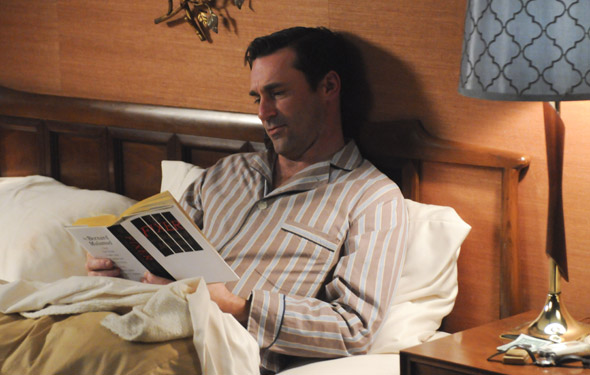
nullAfter weeks of dense, intricate episodes of Mad Men that have challenged my skills as a writer, it's something of a relief to experience the plain ol' symbolic, interesting, well-written, enjoyable quality of At the Codfish Ball. I strongly suspect that I don't have to spend the rest of my life analyzing this episode, and that I can derive all its meaning in two or three viewings.

Which is not a criticism! I loved this episode, and I love the more complex ones. I do, however, see the difference.

The lyrics of the song "At the Codfish Ball" are about dancing fish. Twice we see Sally confronted with the task of eating fish. The first time, she's served spaghetti—you know kids, they just won't eat grown-up food. The second time, at the banquet, she tries it, and it seems like she might be learning to like it. But, while the kids in Megan's commercial are having beans rather than spaghetti, in either case comfort food and comforting adults aren't available to girls who eat fish and stumble upon illicit blow jobs. (Watch if you dare!)

At the Codfish Ball is about passing the torch, about generations, about growing up, and about the changes from one generation to the next. It's especially apropos in 1966, which is approximately when the term "generation gap" was coined, but it's true for all of us, from cave men to people who eat beans on the moon. Because this is Mad Men, it aims to take a more honest look at the generations than Megan's commercial does, and it ends on a dark note (that tableau at the end of dinner—in the video above—is as striking as the elevator tableau at the end of The Beautiful Girls). Yet about three-quarters of the way through, I was wondering if I was watching the most optimistic episode of Mad Men ever made. As dark as some of it was, I still feel that way.

How is the torch passed? Let me count the ways. At work, Peggy is proud of Megan and explicitly states that she is seeing the torch passed. Joan is proud of Peggy, and happy for her. Perhaps for the first time she sees Peggy striking out on a path that isn't the one Joan herself laid out for Peggy in the very first episode of the show. Joan serves as a surrogate mother for Peggy, since Peggy's own mother refuses to approve of her, and even withdraws Peggy's father's approval from beyond the grave. That torch didn't pass quite so successfully. Sally is praised as a mature young lady, and she heroically saves the older generation—but she's still too young to wear makeup. Nonetheless, attending the banquet is a significant "graduation." When she sees Roger, she asks if he's her sitter, and in a way he is: He's her "date," and he passes a kind of torch to her, teaching her how to be an account person and a "wing man."

We've already discussed the way that Sally's journey into adulthood turns suddenly darker. Megan's journey into maturity is also both joyful and dark. Those are some tough parents! They seem to have trained Megan well for marriage to Don, accustomed as she is to adultery and drunkenness. Another torch passed.

I loved Pete's conversation with Emile Calvet. If you recall, way back in Season 1 (Episode 1.04: New Amsterdam), Pete's own father said he didn't understand what Pete did, and was disdainful. Now Pete has an answer for the question, and an elegant one. Pete's been difficult to like this season, but he has grown up!

One of the great things about this episode was the core character development. Every episode of Mad Men is structured around a theme, and almost everything happens because of that theme. What makes these writers extraordinary is that their characters still behave like themselves as their lives move forward. It would be hard enough to write these people authentically without making it all flow from one subplot to another! Yet, while we have to see Joan living with her decision, and Roger with his, and see how Don and Megan's marriage is doing, and so on, we must do so within the thematic context.

"I for one am not going to let a bunch of dirty teenagers in the paper disrupt the order of things."

Roger's conversation with Mona (video below) was one of the highlights of the episode, not because it was thematically important (although the quote above is certainly about the generation gap), but because these two actors are great together, because Mona has always been a terrific and underused character, and because the interplay sparkles.

So much of this episode simply sparkled. Hey everybody, catch a deep breath, let go of interpretation, and just enjoy! Peggy looked so cute in pink, and Katherine Olson is a great character, every mean bit of her. Mona and Katherine are two people the fans always want back, Glen Bishop's return is another treat, and as if that weren't enough, we have the stellar Julia Ormond as Marie Calvet, and Ray Wise's return as Ken's father-in-law. A real Codfish Ball of a guest cast!

Another motif of At the Codfish Ball is seeing others as they are, and not simply as they relate to you. Roger has suddenly discovered he's a member of the human race, and he thinks he's the first person to ever notice, bless him. It's funny, of course, and Don is bemused, but Don hasn't previously seen his new wife entirely as her own, separate human being either. Last week he treated her as no more than an extension of his whims. This week, he discovered Megan is actually a person with talent and ability, and lo and behold, it turns him on! Peggy is discovering the same thing about herself; that she has her own desires and needs, and that she may not need to live under the thumb of expectation.

Peggy expected the worst news from Abe. Oh, honey. Then Joan woke her up, and she was so . . . so . . . girlish. With a pink dress with a pink bow on the front and an unshakable grin. She was living the childhood dream of a wedding, one she thought was only for prettier girls, but even though she didn't get what she thought she wanted, she made an adult choice. She changed from little girl pink to a beautiful and womanly dress to talk to "Ma." In this case, Peggy is figuring out that she is a person.

Some additional thoughts:

  • Meta-generational fun: Creator Matt Weiner's son Marten plays Glen Bishop. Ray Wise was on Twin Peaks as someone who killed his own daughter (thanks to my sister Roberta for pointing that out). Julia Ormond played Sabrina in the remake of the same name (a remake of a Hollywood classic is, after all, a kind of "next generation").
  • Sally should simply stop opening double doors. There's always sex behind double doors.
  • Quote of the week usually goes to Roger, and he certainly had several runner-ups, but nothing beats Emile Calvet with: "Don, there’s nothing you can do. No matter what, one day your little girl will spread her legs and fly away."
  • The motif of wealth also played itself out in this episode. I haven't the space to explore it properly, although I probably will on my blog as the week unfolds. Emile is a Marxist who disapproves of what unearned wealth does to Megan's soul. Mona counsels Roger not to feel guilty for wealth (check the second video, above). The wealthy "establishment" doesn't trust Don, according to Ed Baxter (Ray Wise).

Deborah Lipp is the co-owner of Basket of Kisses, whose motto is "smart discussion about smart television." She is the author of six books, including "The Ultimate James Bond Fan Book."

Watch Mad Men Moments, a series of videos on Mad Men, produced by Indiewire Press Play.

GAME OF THRONES RECAP 5: THE GHOST OF HARRENHAL

GAME OF THRONES RECAP 5: THE GHOST OF HARRENHAL

 
One of the most appealing things about Game Of Thrones as a fantasy narrative is the lack of magic at the core of its story. Magic exists on the outskirts of the world—Danaerys in the Dothraki Sea with her dragons, Jon Snow and the Others beyond, at the wall—but the bulk of the story, taking place in the Seven Kingdoms, has entirely revolved around human concerns. “Fantasy” as a genre usually means Tolkien-esque heroic quests, filled with prophecies, gods, and wizards, making Game Of Thrones’ focus on entirely human-scale drama a breath of fresh air. All that disappears in tonight’s episode, when Melisandre’s shadow Stannis assassinates King Renly.

nullThe increased importance of Stannis and Renly as characters had built up dramatic potential in previous episodes. Both opposed the Lannisters, and both were sympathetic in many respects. But they also disdained Robb Stark’s claim as King In The North, and were more than willing to fight one another, proving that petty ambition mixed with righteous certainty could be a poisonous combination. That balance is gone, thanks to Melisandre, whose magical ability shattered the rules that govern Game Of Thrones’ world. It feels disappointing, more like a narrative cheat than a fascinating narrative twist. Out of nowhere, an interesting, major character like Renly is simply removed from the board. It feels like it breaks the rules of this world, which is negative, as opposed to Ned’s death, which was positive (if shocking) because it violated the expectations of narrative.

Despite the problematic nature of Renly’s death, it does help tie “Ghost Of Harrenhal” together. Arya Stark puts it best, if a little bit too blatantly: “Anyone can be killed.” The episode’s title comes from an alliance between Arya and Jaqen H’ghar, the odd foreign man she rescued from chains in the midst of a battle two episodes ago. Jaqen promises Arya three deaths for the three lives she saved. With her first, she asks for the torturer known as “The Tickler” to die, which happens. “The Ghost Of Harrenhal” is a pre-pubescent girl, acquainted with violence well beyond her years.

The chaos unleashed by the war and intrigue of Game Of Thrones doesn’t kill just “anyone,” though. It’s primarily the men that die. In some cases, it turns women into warriors. Arya Stark has killed before, stabbing a stable boy who attempted to capture her in the first season. Now she’s a righteous ghost, assassinating the most evil men when they hold too much power.

Brienne of Tarth, the show’s other female warrior, gets the spotlight in this episode. Serving as Renly’s guard when he gets assassinated by Melisandre’s shadow, she is instantly blamed for Renly’s death and is forced to kill two knights. She and Catelyn flee, and eventually, Brienne, confused about her future and shocked by Renly’s death, swears her allegiance to her fellow fugitive. It’s a wonderful little scene, about how war destroys the social order. The patriarchs—Renly and Ned, in this case—are dead, so these two women re-enact one of the strongest bonds of Westerosi patriarchy, the knighthood ceremony. Brienne’s confusion, and her immediate attachment to Cat’s strength, are more over the top than Gwendolyn Christie, but it works in the end: she really was that loyal to Renly, and that shaken up by his death. That scene appears below.

Two other women are thrust into power by death during this episode. Margaery Tyrell, with her husband dead and many of his lords transferring their loyalty to Stannis, has choices to make. Littlefinger approaches her and asks: “Do you want to be a queen?” “No. I want to be the queen.” His sly smile suggests a plan, and with Margaery embodying the powerful, wealthy House Tyrell on Game Of Thrones, this could be interesting as it develops.

There’s also Dany, a woman thrust into power by the deaths of two patriarchs: her brother Viserys, the former heir to the Targaryen crown, and her husband Drogo, the Dothraki Khal. Dany’s name, connections, and dragons maintain some level of power for her. But with only the power of influence, she has to negotiate constantly to maintain it, while increasing her more direct forms of power. I like where the show is going with Danaerys in Qarth. The city and its people are off-putting: her host proposes marriage, a warlock performs apparent magic for her, and a strange woman with her face almost entirely covered by a scaled mask talks to Ser Jorah. There’s a strong connection between the oddness of Dany’s surroundings and the precariousness of her situation. The foreign nature of Dany’s location of the story acts as an interesting balance to the more conventional culture of the Seven Kingdoms.

Anyone can be killed in the world of Game Of Thrones for any reason now, including magic. And while I may dislike the magical assassination that drives “The Ghost Of Harrenhal,” this is a story about the effects of war and death. If anyone can die, then anyone can pick up the pieces. And if it’s always the men who die, the pieces are left for the women.

Adaptation:

Many of the best scenes in “The Ghost Of Harrenhal” were actually taken primarily from the novels, like Catelyn and Brienne’s exchange, instead of being created for the show. There were a few minor changes, but seeing Littlefinger start negotiating with Margaery and demonstrating the specificity of her ambition to become queen was the only major change.

The most successfully adapted scene, though, was in Winterfell, as Bran filled in as lord with more confidence, quickly responding to petitioners with apparently beneficial effects, as when he sent two orphans to help an overburdened shepherd. Bran is probably the character who has been treated the worst in the adaptation from page to screen, as most of his chapters were primarily internal monologues, as he comes to terms with his injury as well as his connection to his direwolf. It may be a little late, but it’s a demonstration that Game Of Thrones remembers that there are important characters and places away from the front lines.

Rowan Kaiser is a freelance pop culture critic currently living in the Bay Area. He is a staff writer at The A.V. Club, covering television and literature. He also writes about video games for several different publications, including Joystiq and Paste Magazine. Follow him on Twitter @rowankaiser for unimportant musings on media and extremely important kitten photographs.

VIDEO ESSAY: Where Experiment Meets the Mainstream

VIDEO ESSAY: Where Experiment Meets the Mainstream

In an age of redundant remakes (Total Recall, Fright Night), attempted revamps (21 Jump Street, The Three Stooges) and even 3D re-launchings (Titanic 3D, Star Wars: Episode 1 – 3D) of past Hollywood fare, it’s easy to become disheartened at the current state of film and television. Then again, any sort of significant movement in cinema history stems from a desire to break free from the established filmmaking “norms” of that era (French New Wave, Italian Neorealism, etc.). Therefore, if today’s mainstream filmmaking temperament is rooted in simply remaking past scripts, movies and TV shows for new audiences—what is a strong way for select filmmakers to retaliate in an effort to create striking work? By absorbing the complex, original and impressionistic styles of post-1940s experimental cinema, the holy grail of non-traditional storytelling. And by surveying facets of some contemporary films, it becomes clear how influential experimental cinema is to today’s visual rhetoric.

One of the most important pieces of American experimental cinema, Meshes of the Afternoon (1943) by Maya Deren and Alexander Hammid, shows filmmakers turning the cinema of its time on its head. To read the script, Deren and Hammid’s film seems to be illustrating a woman’s feverish dream. Yet, at the time, audiences hadn’t witnessed a dream quite like this. Meshes took a conventional narrative, with characters, action, and music, and then restructured it into a circular story by repeating certain imagery, employing an offbeat editing rhythm, and using unusual camera angles to make everyday objects (a phonograph, a house key) seem ambiguously ominous. These stylistic traits are now readily evident in the works of such filmmakers as David Lynch (Inland Empire), Carolee Schneemann (Body Collage), Su Friedrich (Scar Tissue), and Barbara Hammer (Nitrate Kisses), among others. Further, the unforgettable visuals of Meshes—like a cloaked grim reaper with a mirror for a face—have bled into the pop culture via some music videos (e.g. Ambling Alp by Yeasayer).

There are even cases when Hollywood accidentally soars on the strength of some experimental films’ imagery—whether Hollywood realizes it or not. Case in point: Terry Gilliam’s 1995 sci-fi film 12 Monkeys is obviously inspired by (if not a remake of) Chris Marker’s La Jetée from 1962. La Jetée boldly told its story (of a man traveling through time in an attempt to save a post-apocalyptic Paris) simply by presenting a series of powerful still images and voiceover narration. But Gilliam’s film is not the only place a cinephile’s interest could be directed. For example, the image of the strained, blindfolded hero from La Jetée no doubt was in the mind of Steven Spielberg while making his Minority Report (2002). Who could forget the virtuoso sequence where Tom Cruise emerges blindfolded from an ice-cold tub to find a horde of crawling robotic spiders?  Cruise’s shocked face, frozen in time, mirrors the still image of the hero in La Jetée. In fact, imagery from Marker’s post-apocalyptic experimental masterpiece still shows up in other modern films (see the Jake Gyllenhaal character in Duncan Jones’ 2011 film Source Code) and music videos (e.g. Jump They Say by David Bowie) as well.

The most powerful impressions of experimental cinema in modern movies, though, are found in the works of filmmakers who are unabashedly rehashing the distinct styles of the avant-garde masters. For example, the abstract and vibrant visuals in Stan Brakhage’s film works (like The Dante Quartet, 1987) have left their mark on recent films by Paul Thomas Anderson (Punch Drunk Love, 2002) and Terrence Malick (The Tree of Life, 2011). Love splits up the chapters of its narrative by spraying abstract pieces of art on the screen; Tree features a sequence that flies by city storefronts until they bleed into vibrant, overlapping colors.

We could also look at the audacious narrative risks in an experimental classic like Michael Powell and Emeric Pressburger’s The Red Shoes (1948). The Red Shoes unexpectedly took its otherwise straightforward story about an ambitious ballerina and smothered it in psychedelic, voluminous colors and emulated elements of the surreal through bizarre imagery and costume design. The film was no doubt a psychological inspiration for Darren Aronofsky’s similarly ballet-themed Black Swan (2010). Swan even goes so far as to create similar fantastical characters (via hallucinations) and re-stage the earlier film’s distressed close-up shot on its heroine’s face during a climatic dance. In his Tetro (2009), Francis Ford Coppola takes it one step further by brilliantly restaging some Red Shoes-esque ballet dance sequences; Coppola even photographs them in the same 1:37:1 aspect ratio as Powell and Pressburger’s film.

In the end, perhaps the most profound (and possibly most important) sign of contemporary film’s wrestling with its experimental influence comes in 2001’s criminally underrated Vanilla Sky, by Cameron Crowe. Crowe’s film, like a plethora of other Hollywood films, is a remake of an already celebrated film (in this case, Alejandro Amenábar’s 1997 drama Open Your Eyes). In both films, a man is coming to terms with the life he lived and the (possible) life in front of him. Yet, unlike so many Hollywood remakes, Crowe is able to surpass the source material. Crowe does this by allowing the stylistic impressions of titan experimental filmmaker Jonas Mekas to enter Vanilla Sky. Mekas, known for his prolific filmography composed of personal film diaries (e.g. As I Was Moving Ahead Occasionally I Saw Brief Glimpses of Beauty [2000]), has developed a fragmentary visual style, created by quick edits and strategically inserted (handwritten) title cards. What separates Vanilla Sky from Open Your Eyes is the way Crowe capitalizes on Mekas’ visual strategy: Vanilla Sky unforgettably closes with a vomiting of personal archival footage in order to convey an internal reckoning of its hero.

What all of these examples show—other than how the unique styles of experimental cinema have become embedded in certain filmmakers’ techniques—is how vital it is to challenge the norms or ideas behind “traditional” moviemaking. If it weren’t for the risks of a select group of filmmakers, most directors would still be thumbing through Hollywood’s Rolodex of remake-ready titles.

Nelson Carvajal is an independent digital filmmaker, writer and content creator based out of Chicago, Illinois. His digital short films usually contain appropriated content and have screened at such venues as the London Underground Film Festival. Carvajal runs a blog called FREE CINEMA NOW which boasts the tagline: "Liberating Independent Film And Video From A Prehistoric Value System." You can follow Nelson on Twitter here.

VIDEO – Motion Studies #29: Vertigo Variations

VIDEO – Motion Studies #29: Vertigo Variations

http://www.movingimagesource.us/flash/mediaplayer.swf?id=158/976

From now through April, the Oberhausen International Short Film Festival will present "Film Studies in Motion", a Web Series curated by Volker Pantenburg and Kevin B. Lee. This series, available on the festival's website and Facebook page, presents weekly selections of analytical video essays on the web, in preparation for Pantenberg and Lee's presentation  "Whatever happened to Bildungsauftrag? – Teaching cinema on TV and the Web", scheduled for April 28 at the festival.

Week Six: Personal Obsessions

The widespread accessibility of online video creation and sharing allows us to explore and indulge our fascinations with films in unprecedented ways, as seen in these four examples: a close scrutinizing of a seemingly throwaway moment in Preminger’s “Anatomy of a Murder;” extended, heartfelt contempt for the Star Wars prequel; a fixation on Hitchcock’s “Vertigo” and the “spectacular improbabilty of its plot;” the sensation of sleeplessly watching Cronenberg’s “Dead Ringers” after days of “Occupy Wall Street.” Immersed in distinctly personal perspectives, these videos make explicit what is implicit in all the videos presented in this series: that subjective engagement is what brings flavor and fire to our analytical endeavors.

Today's selection:

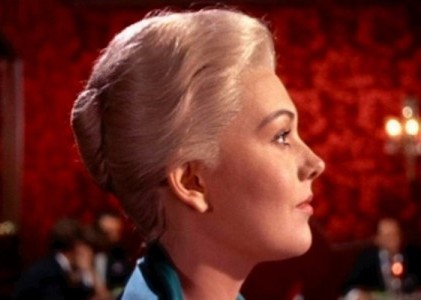
Vertigo Variations

B Kite (2011)

This first part of an hour long video essay spins an elaborate tale of a lifelong obsession with Hitchcock's masterpiece.

View all Motion Studies video selections.

Volker Pantenburg is assistant professor for moving images at the media faculty of the Bauhaus-Universität Weimar. 

Kevin B. Lee is Editor in Chief of IndieWire’s PressPlay Video Blog and contributor to Roger Ebert.com. Follow him on Twitter.

VIDEO – Motion Studies #28: Redlettermedia’s STAR WARS: THE PHANTOM MENACE

VIDEO – Motion Studies #28: Redlettermedia’s STAR WARS: THE PHANTOM MENACE

From now through April, the Oberhausen International Short Film Festival will present "Film Studies in Motion", a Web Series curated by Volker Pantenburg and Kevin B. Lee. This series, available on the festival's website and Facebook page, presents weekly selections of analytical video essays on the web, in preparation for Pantenberg and Lee's presentation  "Whatever happened to Bildungsauftrag? – Teaching cinema on TV and the Web", scheduled for April 28 at the festival.

Week Six: Personal Obsessions

The widespread accessibility of online video creation and sharing allows us to explore and indulge our fascinations with films in unprecedented ways, as seen in these four examples: a close scrutinizing of a seemingly throwaway moment in Preminger’s “Anatomy of a Murder;” extended, heartfelt contempt for the Star Wars prequel; a fixation on Hitchcock’s “Vertigo” and the “spectacular improbabilty of its plot;” the sensation of sleeplessly watching Cronenberg’s “Dead Ringers” after days of “Occupy Wall Street.” Immersed in distinctly personal perspectives, these videos make explicit what is implicit in all the videos presented in this series: that subjective engagement is what brings flavor and fire to our analytical endeavors.

Today's selection:

Star Wars the Phantom Menace

Redlettermedia (2009)

A viral sensation, this fanboy parody uses a multi-layered arsenal of disarming rhetoric, satirizing film geek analysis as a way to make its underlying film geek analysis palatable to a wide audience.

View all Motion Studies video selections.

Volker Pantenburg is assistant professor for moving images at the media faculty of the Bauhaus-Universität Weimar. 

Kevin B. Lee is Editor in Chief of IndieWire’s PressPlay Video Blog and contributor to Roger Ebert.com. Follow him on Twitter.