
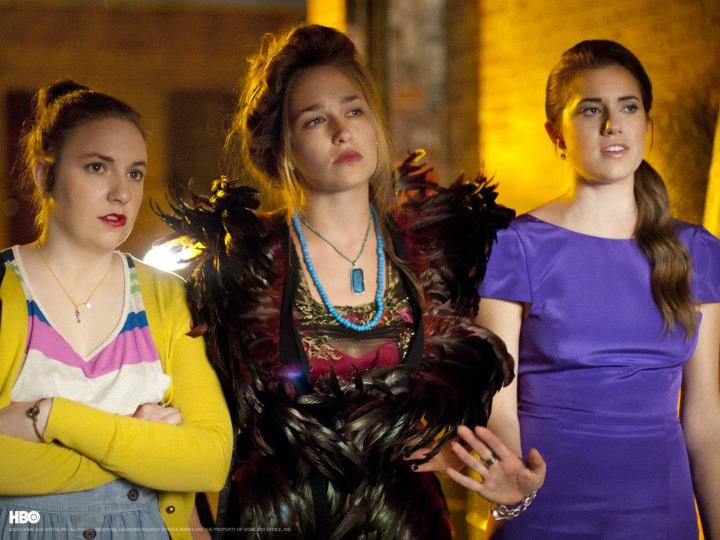
 For four episodes, Girls has stayed on the right side of believable. Not likeable or admirable, necessarily, when it came to the three leads and their behavior (I'll excuse Shoshanna from the discussion for the time being), but we don't have to like characters, or find them attractive physically or emotionally, to see something familiar in them and in the situations they move through. Our interest in a narrative isn't always about comfort, or escape. Sometimes, it's about recognition. I wouldn't characterize Girls as holding a pitiless mirror up to a generation or anything, but I think it gets at certain truths that lie underneath (and/or in) the pretension and self-absorption and unprofessional bumbling, or at least it tries to.
I don't know what "Hard Being Easy" was trying to do, besides annoy/baffle the audience. (Mission accomplished.) The episode has a handful of neatly observed moments, and the usual complement of too-awkward-to-watch bits . . . but the awkwardness didn't come from the characters this week. It came from Lena Dunham losing control of the material.
The Marnie/Charlie storyline picks up shortly after the end of the last episode, and it's well done—but it has to climb uphill from a ridonkulous beginning in which Charlie forces Hannah to read aloud from the journal in front of him and Marnie. Hannah goes along with this, despite the fact that 1) Charlie (well, mostly Ray, but whatever) violated her privacy, 2) Marnie threw a drink on her and called her a bitch, 3) neither of them apologized, and 4) whatever Hannah's involvement, the only credible action for any character would be to hole up elsewhere until the couple's storm blew over. And Hannah not only goes along with it, she corrects them, saying it's "notes for a book," not a journal, and asks for feedback on the writing. Yes, Hannah lives in her own bellybutton, but this isn't believable behavior from anyone.
The rest of Marnie's subplot resonates, though, from Ray overplaying the loyal-best-bud card, to the revelation that Marnie has never gone to Charlie's apartment (once there, she admiringly notes that it looks like "a Target ad"), to the flashback to college in which Marnie and Charlie meet. Marnie has taken an unknown drug at a party and is disappearing down a paranoia-hole. Hannah tends to her for a while, then heads off to dance with Elijah (to the Scissor Sisters, after Elijah "curates" Marnie's bangs with a flick of his forefinger. . . . Hannah really thought that guy was straight? For two years?), leaving Charlie to mind Marnie. The narrative pun on "high maintenance" aside, it makes perfect sense that this is how they met, that Charlie ministered to her from the beginning. (Charlie's wig, however, is inexplicable. I get why the actor is wearing one, but—that one? Did Charlie just come from an '80s-Stamos-impersonator contest?)
Their break-up/make-up/break-up talk the next day is dead-on. Marnie turns up in "my party dress and my sorry face," sure that she can change his mind. Charlie points out repeatedly that she isn't in love with him anymore; she asks repeatedly that he not break up with her. We've all had that convo, fumbling and protracted, desperate not to rip the Band-Aid off because "better the devil you know" and all that. This is where Marnie's at with it, refusing to admit the facts (and probably thinking she'd have been the one to do the dumping). Charlie purposely wounds her by saying he thought he recognized her at the party from a porn flick, Sophomore Sluts; she's shocked that he watches porn. (Ladies: they alllll watch porn. Even the Charlies. It's usually nothing pathological; please stop taking this personally. Thanks.) After she offers him the blowjobs she should be giving him anyway, they end up in his low-ceilinged bed nook, having sex, and he orders her to be nice to his friends and "act like [his] life is real." She agrees. He asks her to keep her face close to his. She does. Then he says either "say 'I love you'" or "stay; I love you"; either way, Marnie physically recoils, saying she can't, and whangs her head on the roof of the bed-nook. Immediately Charlie sits up to make sure she's okay: "I'm right here. I'm riiiight here." That's the problem, of course, and she whispers that she wants to break up.
And this is the least awkward sex in the episode.
Jessa gets it on with an ex-boyfriend, a subplot that seems to exist solely so the two of them can burst into Jessa and Shoshanna's apartment, pawing each other, before Shoshanna can announce herself or vacate. Shosh has to hide behind an Ikea curtain for the duration. The ex gets a high-dudgeon line about "a very tumultuous relationship in which one's Vespa gets destroyed for no reason" that I chuckled at; everything else flopped. Jessa finally notices Shoshanna and teases her for being a creeper, and Shoshanna, always talking at a high rate of speed prior to this point, doesn't say a word to contradict her. . . . What? We got the "virgin is both attracted and repelled" note last week, and we don't watch the show for slapstick—fortunately, since slapstick is demonstrably not its strength. What is this story doing?
Perhaps it's an effort to postpone the inevitable boinkfest between Jessa and Jeff Lavoyt—and that part of Jessa's story this week is sharp. Jessa's in the Lavoyts' bathroom, getting ready to meet the ex; Lavoyt's leaning boyfriendily in the doorway. Mrs. Lavoyt comes upon them there, chatting, and Kathryn Hahn is excellent in the scene, holding the awkward silence exactly the right amount of time, lying that it's okay that Jessa is using her lipstick ( . . . of course she is) because she doesn't want to come off like an unhip harridan.
It's also not really okay that Jessa, hearing about Hannah's boss's handsiness, suggests that Hannah "should hump" Richard "for the story." It's a hundred percent something Jessa would do, and most likely get away with, because she's a confident beauty who wears a kimono to her babysitting job. It's a hundred percent not something Hannah, as written to this point, would do, but, for reasons I can't fathom, she does it. Yeah, yeah, "for the story"—I don't see it. And based on the too-long, all-over-the-place scene that results, Dunham didn't either. Richard asks Hannah for a turkey sandwich; she tells him to cut the crap, because she knows he wants to fuck her. I write in my notebook, "Oh, this is a dream sequence." It isn't, and it's interminable, Hannah insisting that it's what Richard wants, Richard asking if she's high, Hannah switching gears and threatening to sue, Richard snorting that "there's no suing app on your iPhone" but adding that he's not going to fire her because she's "great," Hannah offering to forget about suing for one thousand dollars . . . it just. Keeps. Going. Richard is still trying to convince her to calm down and go back to work when Hannah whines, "I just tried to fuck you, sue you, and extort you! I'm fuckin' nuts, why would you want me in your office?" Perhaps that's Dunham signaling that she knows the twist is ridiculous, but the plot doesn't work, as farce or as commentary. (Hannah's big kiss-off line—"Someday I'm gonna write an essay about you? And I am not gonna change your name. And then you can sue me"—is just weak.)
Alas, the script isn't finished taking an idea over the top and then not knowing how to get back—but like others in the ep, this week's Hannah/Adam sequence starts from an interesting premise about the things we choose to hear. Hannah goes over to Adam's house to find him wearing a shirt. . . . Just kidding. He never, ever wears a shirt. At this point, I know that guy's nips better than I know my own. When Hannah tells him what went down at work (sort of; she says "there was a sex scandal"), he grunts, "Sometimes you say shit that sounds made up"—an on-point comment, since she's also "made up" the idea that her straight talk in the prior episode (and their ensuing intercourse) has bonded them into a couple. "Surprise": Adam didn't hear it that way. What he heard is her saying they shouldn't have sex anymore. But then you kissed me, Hannah points out. "Because you were sad," Adam shrugs. And then we had sex, she points out. "Because we were kissing," Adam duhs, before telling her, "These things have an expiration date—six months or until you stop having fun," and Hannah isn't.
That 100-monkeys-typing brand of observation, simultaneously precise and insensitive, is one of the things that makes the Adam character ring true for me. Hannah, trying to make Adam jealous by over-sharing that she "almost" fucked Richard, buys time with a trip to the bathroom, and as she sits on the toilet, her eyes well up. She's wearing another dress that doesn't suit her—she looks like a hacky-sack with bad posture—and all of that rings true for me too.
But then she comes out to find Adam in his bedroom, jerking it. That he's doing it while Hannah's still there, after turning her down for sex, is galling, as she notes, but it's still in character for both of them—and it's still in character that she can't make herself get angry and/or leave. But then Adam prompts her to verbally abuse him as a turn-on, and she goes along with it, and the scene is once again too long and too aimless, and Dunham’s direction doesn’t illuminate why Hannah is doing this or what she's feeling about it, and when Hannah demands cab fare as part of the "you're a bad boy" stroke-fest, it loses me completely. I don't buy Adam as the masochist when he's gotten off on degrading dirty talk in the past, I don't buy Hannah taking control in this fashion, and the editing is a hash, but the primary problem is a flatness. The scene feels calculated to provoke, theoretical.
That's the ep as a whole. The plots begin with recognizable situations, but veer into almost academic explorations: what if we said this, what if we made her do that, wouldn't it be funny if the other thing. It's not the lack of "realism" (realism isn't always good storytelling, vis. the sixth season of Buffy the Vampire Slayer and the accurate but repetitive downward spiral of its heroine). It's that I can't relate to these situations, or these characters in them, and based on the faltering humor and tempo of the episode, I'm not sure Dunham could relate to them either.
Sarah D. Bunting co-founded TelevisionWithoutPity.com, and has written for Seventeen, New York Magazine, MSNBC.com, Salon, Yahoo!, and others. She's the chief cook and bottle-washer at TomatoNation.com.
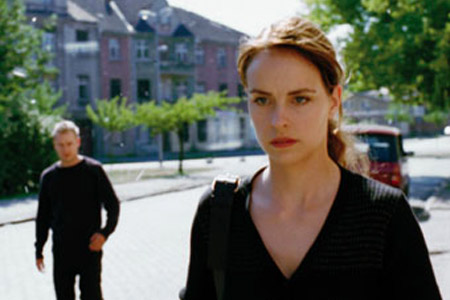
 On a basic level, his recent films, like Yella, Jerichow, and Dreileben: Beats Being Dead, work as entertaining dramas centered on themes of sex, greed, and loyalty. The major characters are all driven by the desire for a better life, and they give each film a restless, seeking energy. But they find themselves caught between different worlds. In Yella, a woman from economically depressed eastern Germany seeks a promising career in western venture capital, but the past catches up with her in the form of her estranged, down-on-his-luck husband. In Jerichow, an unemployed ex-soldier finds work with a Turkish businessman, only to fall for his German wife. In Beats Being Dead, an ambitious medical intern with falls in love with a working class Bosnian refugee.

 Green’s utopian impulses not only affect the subjects he chooses to film, but also how he presents them to his audience. In 2009, Green and Dave Cerf went on a world tour of live screenings of four short films all dealing with Utopia, presented with live narration by Green and a live musical accompaniment performed by the band The Quavers. The touring show, known as Utopia in Four Movements, brought a fresh gust of innovation and energy to the theatrical experience of cinema, at a time when movie theaters are trying to reinvent themselves in the age of online movies. Green will continue his “live documentary” work by offering an in-person cinematic narration with live accompaniment by the band Yo La Tengo at his SFIFF screening of The Love Song of Buckminster Fuller.
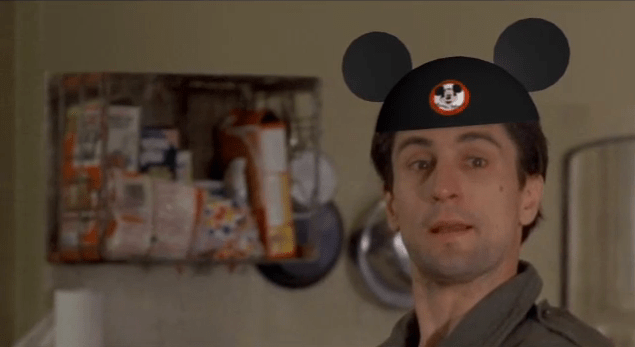
 Bryan Boyce's brilliant short film "Walt Disney's Taxi Driver" cherry-picks scenes between psychotic cabbie Travis Bickle and his love object Betsy in Taxi Driver, but substitutes Disney imagery for Travis' obsession with urban decay. This is a masterstroke: not a gimmick, but a flourish. Much writing on Taxi Driver tends to situate the film within its era, and fixate on certain details established by director Martin Scorsese, screenwriter Paul Schrader and star Robert DeNiro: specifically Travis' traumatic experience in Vietnam and his culturally reactionary response to seedy New York circa 1976. Part of what makes "Walt Disney's Taxi Driver" so wonderful is the way that it lifts Travis' character out of context without actually losing the context, so that you can see him more clearly as a literary creation, and recognize that his mania is adaptable and timeless. The 1976 New York setting turns out to be important in this mash-up, but not until the very end. The first part of the video disentangles Travis from his world, lifts him out of the muck (and the almost purely subjective structure of Scorsese's film) so you can get a better look at him. When it returns him to his context, Boyce's short becomes a cinematic time machine, connecting Travis' past and our present. Watch it here:


 Filming in gorgeous black and white, Mario Bava was both the cinematographer and the director for Black Sunday, which has proven to be more than just a meaningless homage to the Universal visual standard. In the decades before Bava’s film, horror had become the subject of parody and pastiche. Classic monster figures suddenly had brides, reverted back to teenagers, and had mutated into radioactive amalgamations, thanks to a wave of low-budget science-y gimmicks. Bava's chiaroscuro masterpiece harkened back to a simpler time, when horror relied on tense atmospheric emotions, technical skills and claustrophobic mise-en-scene and blocking. Bava was able to accomplish this entirely on the Galatea backlot, utilizing the masters’ techniques with a distinctively innovative approach. Keeping his camera on a dolly at all times, the film moves with restless fluidity, creating an ambience unmatched in its time. When Kruvajan first arrives at Vajda Castle, the camera tracks through endless corridors and secret-passageways before leading him to Asa's tomb. It's sometimes hard to believe that Bava was able to create such a genuinely creepy atmosphere entirely on set, but his technical background elevated all the tired horror tropes to engaging new levels. Bava also found an excellent leading lady in Barbara Steele, who would later become the scream queen of Italian horror because of Black Sunday. Notoriously difficult to work with, Steele created problems for Bava in every regard. Costumes had to be changed or altered, false vampire teeth had to be remolded (then only to be removed from the film completely), and once Steele refused to come on set because she was convinced the Italians had developed a camera that could shoot through clothing. But even she remembered fondly Bava's ability as a director and as a cameraman. Somewhat shy about her status as a horror icon, she attributes her standing to Bava and what he was able to accomplish with Black Sunday.
 But listen to the color of your dreams
 In the Season 2 episode of Mad Men called A Night to Remember, Betty needs, finally, to confront Don. She wakes him in the middle of the night. It's a stark moment of deep revelation (discussed in our

 Press Play Video Blog