Watch: A Video Essay About Stanley Kubrick’s Influence on Wes Anderson and Others (NSFW, Maybe)

Watch: A Video Essay About Stanley Kubrick’s Influence on Wes Anderson and Others (NSFW, Maybe)

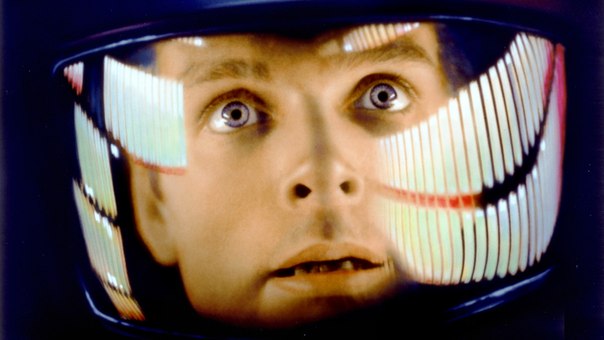
Press Play veteran Nelson Carvajal offers, with this video essay, a look at the ways Stanley Kubrick has visually influenced many directors, including Wes Anderson, Paul Thomas Anderson, Alfonso Cuaron, and others. As Carvajal superimposes one scene on top of another, you may spot connections you hadn’t made before–or perhaps some you had made without quite realizing it yet. To add to the fun, Carvajal has presented some of the clips in mirror fashion, like a kaleidoscope–all too appropriate, because, after all, the modern work reflects and builds upon its predecessors as much as it creates a world of its own. Right?

Watch: Eyes in the Films of Darren Aronofsky: A Video Appreciation

Watch: Eyes in the Films of Darren Aronofsky: A Video Appreciation

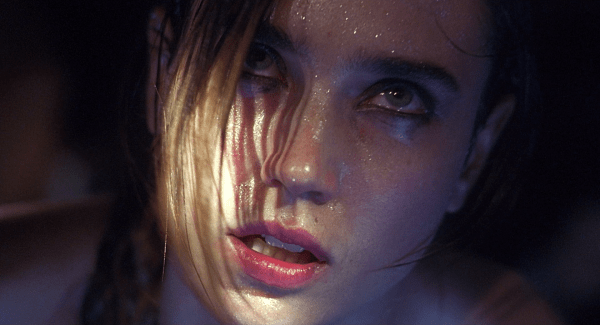
When Darren Aronofsky focuses on a character’s eyes, the story told will be different than the story told when Hitchcock does it, or Bergman does it. Aronofsky uses eyes to show precariousness, to show how close we all are to falling, at every moment. In Requiem for a Dream, we could say that Marion has already fallen. In The Wrestler, we could say that Randy knows he has fallen but is struggling to right himself, to pull himself back up. In Black Swan, Nina knows she is falling, but the particular fall she takes provides her with a toxic charge. This video mix by Vimeo user "WarmBakedBread" gives us a laparoscopic glimpse of the lives Aronofsky portrays, and invites us to witness de-evolution at its most thrilling.

Watch: Why DO the Characters in Quentin Tarantino’s PULP FICTION Spend So Much Time in the Bathroom?

Watch: Why DO the Characters in Quentin Tarantino’s PULP FICTION Spend So Much Time in the Bathroom?

Of the myriad questions raised by Quentin Tarantino’s now-classic Pulp Fiction, I would have to confess that one of them was not, for me, "Why do the film’s characters spend so much time in the bathroom?" And yet this video essay by Michele Bucci raises the question, and answers it, and argues for its validity. The answer is more complicated than you might think–it reaches towards both the true definition of pulp, as well as examining what’s going on (beyond the obvious) when Vincent Vega, Mia Wallace, et al. are in that little room. Enjoy!

Watch: A Video Essay on Setpieces Throughout Film History

Watch: A Video Essay on Setpieces Throughout Film History

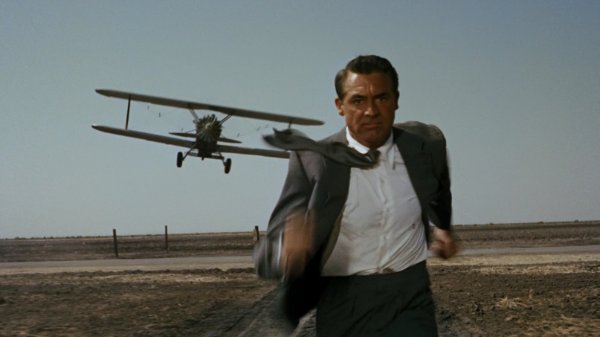
Screenwriter John August describes a setpiece as "a scene or sequence
with escalated stakes and production values, as appropriate to the
genre… Done right, set-pieces are moments you remember weeks after
seeing a movie." Proper setpieces should serve as spikes within the
plotline. In contemporary cinema, a setpiece can range from an edgy gag
in a romantic comedy, to a multi-million dollar CGI-infused battle
scene in an action film. Regardless, a setpiece always seems to be
"that scene" when discussing movies. Here is a look at some of the
biggest, priciest, and most recognizable setpieces in cinema.

List of Films (in order of appearance):

There Will be Blood

The Dark Knight Rises


Die Hard


Django Unchained


Inception


The Matrix


Swordfish


Apocalypse Now


North by Northwest


X-Men: Days of Future Past


Spider-Man 2


Kill Bill Vol. 1


Magnolia


The Dark Knight


The Lone Ranger


Guardians of the Galaxy


Terminator 2: Judgment Day


Titanic


The Wolf of Wall Street


Flight


Children of Men


The Matrix Reloaded


Mission Impossible


Scarface (1983)


E.T.


Jurassic Park


Jaws


King Kong (2005)


Man of Steel


The Avengers


Inglourious Basterds


Gangs of New York


World War Z


True Lies


Batman Begins


Raiders of the Lost Ark


Stand by Me


Super 8


Godzilla (2014)


Star Wars


Twister


The Perfect Storm


Lord of the Rings: Return of the King


300


The Shining


Psycho (1960)


Taxi Driver


The Shawshank Redemption


Gravity

Music: "Mind Heist" by Zack Hemsey

Jacob Swinney is an industrious film editor and filmmaker, as well as a recent graduate of Salisbury University.

VIDEO ESSAY: Anita Ekberg: Artist and Model

VIDEO ESSAY: Anita Ekberg: Artist and Model

Even as a 16-year-old, it was impossible not to fall in love with Anita Ekberg in La Dolce Vita.
Her childlike glee when howling with the coyotes could melt the coldest
of hearts, and her physical curves made Marilyn Monroe, the clear
inspiration for her American starlet Sylvia, look like a stick figure.
As I tried to explain to my mom at age 16, "The word ‘voluptuous’ was
created for this woman!" (Now, at age 25, I still imagine gaining 15
pounds so I too can dress up in a black strapless dress and dance to
"Ready Teddy" one day on Halloween.) In Fellini‘s world view about the
shallowness of the 60s jet set, you still want to believe that Sylvia’s
joie de vivre will pull herself, and Marcello, out of the sadness of the
celebrity culture into which they find themselves sinking. 
In
a modern context, we might cynically categorize Sylvia as a "Manic
Pixie Dream Girl," the childlike foil whose purpose to the script is to
be emotionally available to a vacant man and give him a reason for
living, but even the term’s coiner, Nathan Rabin, would be against that,
for Fellini’s greatest gift to Ekberg’s career was to contextualize
her–and, yes, her curves as well–into the emotional territory of his
scripts, instead of merely making her a sex object or plot device, as many of her
American films did before Fellini granted her cinematic immortality. He
celebrates her body in La Dolce Vita and Boccaccio 70, where
Ekberg plays a billboard come to life, but in both films, her sexual
prowess is used to expose the insecurity of man while capitalizing on
Ekberg’s trademark wit and comedic timing. On screen, she was the dream
you never wanted to stop chasing, even though you knew she’d never give
you her full attention. But she gave hope in an otherwise depraved
world, who knew that la dolce vita boils down to this simple line: "I like lots of things, but there are three things I love most: Love, love, and love."

Serena Bramble is a film editor whose
montage skills are an end result of accumulated years of movie-watching
and loving. Serena is a graduate from the Teledramatic Arts and
Technology department at Cal State Monterey Bay. In addition to editing,
she also writes on her blog Brief Encounters of the Cinematic Kind.

Watch: “I sing a song about bananas…”

Watch: “I sing a song about bananas…”

There’s more than one way to do a video essay. Many of the video essays we run here are forms of film criticism. However, these pieces can also be instructional. But about bananas? Yes. This piece, the newest offering from the narrative geniuses at Delve, tells the story of why bananas are so cheap, and how we happen to eat them in such large quantities. The tale has something to do with a company called United Fruit (Heard of them? If you eat bananas, you have), but also something to do with the U.S government. There’s conspiracy, there’s bloodshed, there’s capitalism… and there’s a small, innocuous-seeming yellow fruit from Nicaragua. This piece teaches us something about the relationship between the Americas, the Red Scare, and the sad way in which business is sometimes conducted, in a snappily edited and highly entertaining fashion.

Watch: LEBOWSKI DRIVE, A Mix of The Coen Brothers’ THE BIG LEBOWSKI and David Lynch’s MULHOLLAND DR.

Watch: LEBOWSKI DRIVE, A Mix of THE BIG LEBOWSKI and MULHOLLAND DR.

There are few American directors whose work has not been touched, in one way or another, by the work of David Lynch, and the team of Joel and Ethan Coen is no exception. The surreal touches. The ersatz humor. The pristine cinematography. The recurring dream sequences. And the plots. Vimeo users Jae et Gail have construed a similarity between the Coens’ mixed-up-identity drama The Big Lebowski and Lynch’s famously warped tale of two identities which are swirled together and spat out, Mulholland Dr.–and they have made a small and at times decidedly NSFW film out of it. Is it a video essay? Sure. Is it a collage? Sure. A mash-up? That too. A supercut? Maybe. Its own entity? Definitely.

Watch: Motion in the Films of Tony Scott: A Video Appreciation

Watch: Motion in the Films of Tony Scott: A Video Appreciation

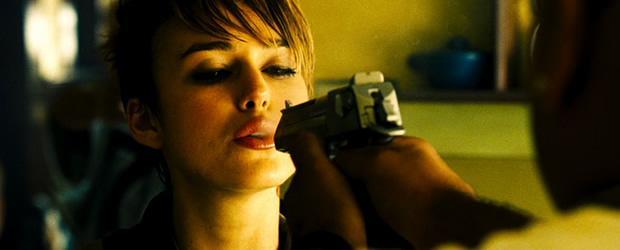
Say what you will about the films of Tony Scott–and you will say plenty, because his films are often divisive–one thing unifies them, and in fact links them to the rest of cinema history: their movement. When Eadward Muybridge brought the world his zoopraxiscope films back in the 19th century, the miraculous thing about them was that they were moving, and animated, little figures of the imagination come to life, even if they weren’t doing anything out of the ordinary. Scott has preserved the quality the earliest filmmakers found so magical. In every single shot Tom Kramer shows us in this terrific video homage, as he runs through the director’s images and themes–gunshots, explosions, dramatic, head-on looks at faces, death, danger, moral precariousness–is relentless, breakneck movement. Whether it’s the spinning planes of Top Gun (one of his more divisive films), the car speeding towards the lovers of True Romance, who have paused for a private moment, or the world that spins around Denzel Washington’s Creasy in Man on Fire, progress through space, even if it’s not necessarily linear progress, is essential. Even in the most still shots, as we see here, there is motion: it could be a flicker of activity in the background of an unmoving figure, or it could be, simply, a heat shimmer, casting everything into and out of focus, simultaneously. In Tony Scott’s films, the motion in the frame parallels the motion in characters’ lives, amplifying it, glorifying it, making it more, at times, than the movie screen can contain.

Watch: Terrence Malick’s Visual Motifs: A Video Homage

Watch: Terrence Malick’s Visual Motifs: A Video Homage

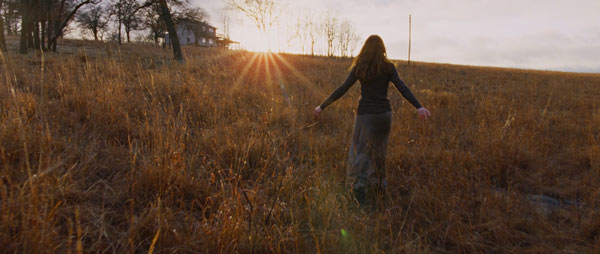
For better or for ill, Terrence Malick is a poet’s filmmaker. It could be argued that to make a film requires that one force a compromise between the desire to tell a story and the need to immerse viewers in the experience they are having, to access their minds on a level that’s not quite describable, the way poems, and also music operate. There’s no "and what happened next" in the way a poem operates–or if there is, it’s a far cry from the same element in a well-told story. Malick is exemplary and distinctive in allowing both impulses to flourish, perhaps more the latter than the former. Malick has never been one to be overly concerned about plot construction. As this excellent and touching tribute by Rachel Glassman shows, great effort here goes into visual meditation: on fields of grain, on the ocean, on the play of light around human figures in a landscape as wide as the souls of the characters inhabiting it. Regardless of what story a film might be telling–whether it’s the story of Texas farmers in Days of Heaven, or desperate criminals in Badlands, or World War II travails in The Thin Red Line, or the story of John Smith in The New World–in Malick’s hands, the work always looks inwards by looking outwards. By showing us the physical world with such precision and also grandness, he also shows us the world within ourselves.

Watch: The Inherent Vice in Paul Thomas Anderson’s Films: A Video Essay

Watch: The Inherent Vice in Paul Thomas Anderson’s Films: A Video Essay

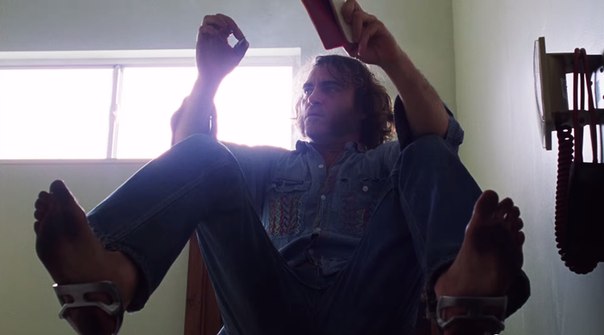
Throughout
his career, Paul Thomas Anderson has focused on human vulnerability. Films from
Punch Drunk Love to Magnolia to The Master to Inherent Vice to There Will Be Blood portray love as equal parts tender and strange. The
protagonists of Anderson’s films struggle with a range of
vices, from drug and sexual addiction, to anxiety and depression, to megalomania,
to gambling, to rage, to straight-up greed.

Anderson
uses vice as a way to explore different dimensions of human sadness. Each hero
is promised some kinds of greatness—Barry Egan wants to achieve success by collecting
frequent flyer miles from pudding box tops in Punch Drunk Love. Dirk Diggler hopes to keep up his fame and
recognition by virtue of his enormous package in Boogie Nights. Troubled Freddie Quell hopes to find both freedom
and family when he meets his mentor, the cult leader Lancaster Dodd, in The Master.

I was
first introduced to the world of P.T., as I affectionately called him, when I
watched Boogie Nights in a dingy
college dorm room, my sophomore year. There was a painting of an ocean on the
wall and a bottle of melatonin on the dresser, a tiny hand-me-down television
we borrowed from a friend that still played VHS tapes. At the time I spent full
days writing poems and songs and learning to be an artist and a writer. I was
smart, but I often didn’t live up to my potential and I wasn’t a particularly
good student. I have many good memories, but I have a lot of sad ones too. I
struggled throughout college with an eating disorder, I often had a strained
relationship with my parents, I rushed headfirst into a relationship that
taught me everything there is to appreciate about young love, and everything
there is to be wary of too.

In my
last year of college I’d walk past the elementary school at about noon every
day, on my way home from getting out of morning classes, and I’d see a sea of
children playing just over the horizon. My painful memories from college seem
blurry and imprecise, but images like these remain clear. At the time I didn’t
know it, but moments like these were slowly carving out my heart into the shape
it was meant to be.

Perhaps
P.T. Anderson strikes such an emotional cord in me because I discovered him at
a time when I was first learning to push back against cynicism. The truth may burn in a P.T. Anderson film, but even when it
does, we learn not to regret the scar. The
worlds that he explores are darkly sensual, hardboiled and masculine, but
softness and light always seem to linger somewhere in the periphery: sunlight
arching over an oil rig, a harmonium found next to a warehouse. We focus on tear-filled
faces throughout Magnolia, but the
final shot was still a close-up of a crying woman’s smile.–Arielle Bernstein

Arielle Bernstein is
a writer living in Washington, DC. She teaches writing at American
University and also freelances. Her work has been published in
The
Millions, The Rumpus, St. Petersburg Review and The Ilanot Review. She
has been listed four times as a finalist in
Glimmer Train short story
contests
. She is currently writing her first book.

Nelson Carvajal is an independent digital filmmaker, writer and
content creator based out of Chicago, Illinois. His digital short films
usually contain appropriated content and have screened at such venues as
the London Underground Film Festival. Carvajal runs a blog called FREE CINEMA NOW which
boasts the tagline: "Liberating Independent Film And Video From A
Prehistoric Value System." You can follow Nelson on Twitter here.