Watch: A Video Homage to David Cronenberg’s Unsettling and Rich Body of Work

Watch: A Video Homage to David Cronenberg’s Unsettling and Rich Body of Work

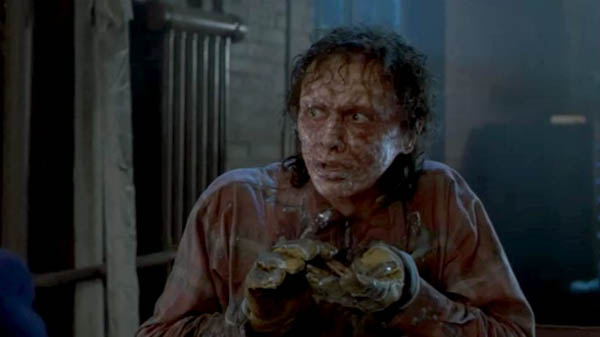
David Cronenberg’s work is analytical, eccentric, violent, and humane, all at once. It also has the power, when encountered at the right time, to make the viewer feel changed, transported, taken from one "place" in the mind to the other. Many years ago, I reviewed Naked Lunch and Steven Soderbergh’s Kafka back-to-back; I was startled to find, when I got home, a large cockroach in my bathtub. Had the film continued? Had I passed out? This piece by the prolific "Hello Wizard" flips us through 45-plus years of Cronenberg’s work at a fast clip. Throughout, you can feel the mixture of tones here, the blend of empathy, and horror, and panic, and mystification, and euphoria. When we see Jeff Goldblum late in his transformation stage into a fly, sure, we’re terrified–but we’re also sad. When a man’s face begins to rupture in Scanners, it’s difficult not to think of the special effects involved–but it’s also difficult not to think about what the face once looked like, and to try to read the emotions in the victim’s tortured features. Even in as sleek a film as Cosmopolis, the seeming coldness of the actors, their stylized slowness and blankness, read as mini-critiques, implied complaints, ultimately reminders of the humanity that could lie elsewhere. Cronenberg is a director to whom it is always exciting to return; he continues turning ideas over and over, always finding some new facet through which to view them.

WATCH: Fifty Shades of, Er-Hem, Steve Buscemi

WATCH: Fifty Shades of, Er-Hem, Steve Buscemi

Oh, why NOT? Sam Taylor-Johnson’s film adaptation, as you may have heard, of E.L. James’s Fifty Shades of Grey will be coming to American screens in almost no time (this Friday 2/13 in some cities), and in honor of its opening, Boo Ya Pictures has offered an alternative version, with a unique casting choice. Leather. Humiliation. Domination. Ecstasy. Steve Buscemi. Little more need be said: watch, and enjoy.

WATCH: How Nicolas Winding Refn’s ‘Bronson’ Turns the Prison Movie Genre on Its Head

WATCH: How Nicolas Winding Refn’s ‘Bronson’ Turns the Prison Movie Genre on Its Head

Although the primary charge in Nicolas Winding Refn’s Bronson derives from the electric performance of Tom Hardy, as one of Britain’s most violent criminals, the film builds on a number of sources. As this elegantly stated video essay by Jessie McGoff points out, directors from Jim Sheridan to Stanley Kubrick can be found inside this complex, alarming, surreal work. Refn, in this essayist’s estimation, rewrites the work of these ancestors, not so much exploiting them as putting a new face on them. And, in so doing, Refn updates our conception of the "prison film," a genre which one would think had run out of potential.

Watch: The Fantastic Animated Trailer for a Book on Wes Anderson’s ‘The Grand Budapest Hotel’

Watch: The Fantastic Animated Trailer for a Book on Wes Anderson’s ‘The Grand Budapest Hotel’

Roughly at the midpoint of this animated book trailer for The Wes Anderson Collection: The Grand Budapest Hotel, its author, Matt Zoller Seitz, gets punched in the face. Later, he gets his fingers chopped off. But this doesn’t deter him from guiding us through his new book on Anderson’s most recent film, due out from Abrams on February 10th, which includes interviews, essays, and intricate, quasi-acrobatic book design, along with a wonderful introduction by Anne Washburn. It’s like a circus in print, folks, and Seitz is its intrepid ringleader! This trailer is beautifully and cleverly animated by Kristian Fraga of Sirk Productions, using lovingly drawn figures by Max Dalton. The volume is an annex to Seitz’s masterful book, The Wes Anderson Collection, also available from Abrams, an equally stunning accomplishment. But, before you delve into either book, watch this trailer! It’s a masterpiece, in and of itself.

Watch: The Expansiveness of Alejandro González Iñárritu: A Video Homage

Watch: The Expansiveness of Alejandro González Iñárritu: A Video Homage

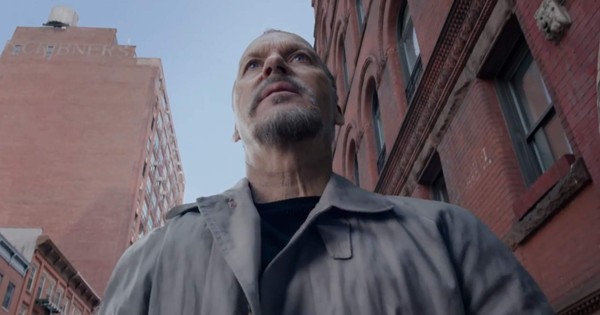
Alejandro González Iñárritu’s glance is always outwards. If a woman should be shot in the head while on a bus in a desolate mountain pass, as in Babel, the question is less Will she live? than What will the ramification of the event be for her loved ones in the present and future? If a washed-up actor of dubious talent is revealed to have special powers of telepathy and even flight, as in Birdman, the question is less How does he do that? than What does this mean for him, for his grasps at redemption? Do these powers make a difference? This expansiveness operates at a plot level, but it also operates cinematically. With its swoops, its close-ups, its lens flares, Iñárritu’s cinematography helps us to understand on a visceral level ideas which we might not immediately understand on an intellectual level. This video homage by Steven Thomas brings us into Iñárritu’s perceptive approach with intimacy and grace; this is a memorable tribute to a director who has carves out a place in film history with alarming speed.

WATCH: Steve McQueen’s Lingering Camera: A Video Essay

WATCH: Steve McQueen’s Lingering Camera: A Video Essay

In an era that is saturated with lavish and complex camera movement,
Steve McQueen stands out for implicating the contrary. McQueen often
employs the static shot in crucial situations, a technique that
partially defines the unique style of the director’s three
feature-length films: 12 Years a Slave, Shame, and Hunger. Rather than using a slow dolly or handheld
movement to convey poignancy, McQueen chooses to simply leave the camera
be. In doing so, he urges us to fully absorb the moment–there are no
pans to guide us away, or even a rack focus to slightly divert our
attention. McQueen seems to especially favor the static shot during
gruesome struggles and times of extreme distress. He often lingers on
these moments for extended periods of time, yet the camera remains
motionless. Like the characters, we cannot escape the moment and we are
forced to endure every second.

Jacob T. Swinney is an industrious film editor and filmmaker, as well as a recent graduate of Salisbury University.

Watch: A Video Essay on the Coen Brothers’ Search for Truth

Watch: A Video Essay on the Coen Brothers’ Search for Truth

At one point in this intensely clever video essay, Jeff Bridges, as The Big Lebowski’s "The Dude," says, "I am not Mr. Lebowski." Immediately, William H. Macy, as Fargo‘s Jerry Lundegaard, responds, blankly but nervously, "Yeah?" The two carry on a brief rapport, and then the piece moves on. Steven Benedict looks at the ways the Coen brothers’ films "talk" to each other, by presenting the lines from disparate films as parts of an actual dialogue. The effect is hypnotic, and the message is clear. In the films of the Coen brothers, little is certain–except for one thing: the search for whatever certainty there might be. Benedict has offered up films from across the brothers’ career. Barton Fink (often). O Brother, Where Art Thou? The Hudsucker Proxy. A Serious Man. Miller’s Crossing. Inside Llewyn Davis. And the list goes on! Benedict’s arrangement succinctly and beautifully orchestrates the gleeful discombulation of these films into a harmonious whole.

WATCH: What One Critic Learned from Watching Jean-Luc Godard’s ‘Breathless’: An Interactive Video Essay

WATCH: What One Critic Learned from Watching Jean-Luc Godard’s ‘Breathless’

Tyler Knudsen, who goes by "CinemaTyler" on YouTube, has posted a remarkable video essay about what he learned, or rather what a viewer could learn, by watching Jean-Luc Godard’s Breathless. This comprehensive piece takes us through the movie, its history, and the labors required to get it made with great deftness–and to top it off, it’s interactive! What this means is that, at regular points during the video, you (if you’re watching on a desktop) can click on buttons which will lead you to supplemental videos which discuss key terms or films, such as "Hollywood renaissance," or "The 400 Blows." The breadth of Knudsen’s scholarship is impressive, and the things Knudsen says he has learned from the film are impressive as well. The first of these? "There are no rules in art."

This video is part of a fantastic series–you can take a look at Knudsen’s other subjects here.

Watch: The Influences on Luc Besson’s ‘Lucy’: A Video Essay

Watch: The Influences on Luc Besson’s ‘Lucy’: A Video Essay

According to "Mr. Tea and a Movie," the influences on Luc Besson’s Scarlett Johansson vehicle Lucy are many and various. Francis Ford Coppola was an influence. David Fincher was an influence. Stanley Kubrick was an influence. And there are many others. Feelings about Mr. Besson’s films themselves are mixed. Some viewers will see anything he makes, and some wouldn’t touch him for any amount of money. Some saw this mind-bending futuristic thriller because it starred human tabula rasa Johansson, and they will see any film in which she stars. (And they wouldn;t be wrong to do so, necessarily.) Whatever the case, this thorough and thoughtful (and brisk) video essay is well worth a watch, or maybe even two, just for the skillful editing).

WATCH: How David O. Russell’s Characters Find Happiness: A Video Montage

WATCH: How David O. Russell’s Characters Find Happiness: A Video Montage

The characters in David O. Russell’s films find happiness, but it’s usually hard-won. There’s always a fight involved. Some of these fights are between individuals. In American Hustle, as the struggle for business success involves deceiving others, and the struggle for romantic contentment involves the painful process by which two people rub the rough spots off of each other–or don’t. Some of these struggles take place within one’s self: in Silver Linings Playbook, a man has to master his unruly mind to achieve contentment–and then finds that that’s only half the battle. Some of these battles take place on every conceivable arena: in The Fighter, skirmishes take place on class lines, on physical lines, and on lines of lineage. This video homage by Frank Perez takes us through these battles fluidly and economically, preserving their intensity while reminding us that, in a sense, they are all part of the same eternal, nameless battle.