Watch: The Movie References in ‘True Detective’ (Including Some Shockers)

Watch: The Movie References in ‘True Detective’ (Including Some Shockers)

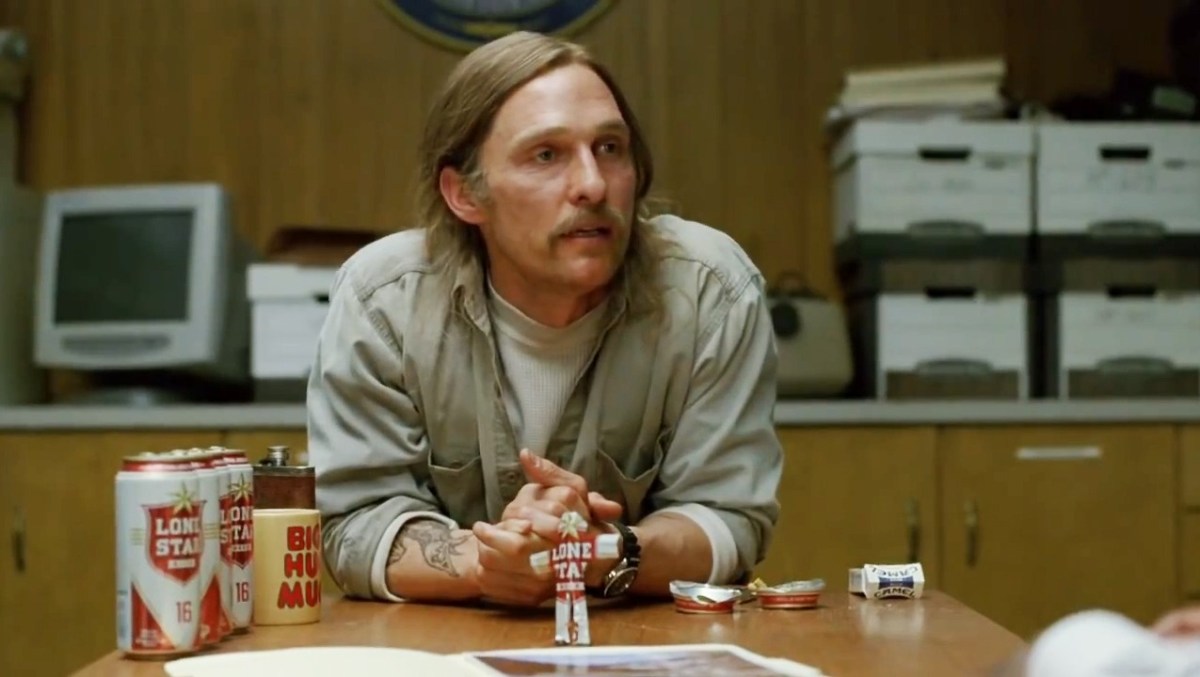
One of the reasons the first season of HBO’s ‘True Detective‘ was so fascinating for so many viewers was that its ambition–shown by the development of the tormented relationship between detectives Rust Cohle (Matthew McConaughey) and Marty Hart (Woody Harrelson), the spiraling exploration of a murder investigation, the multi-layered nature of the narrative–was of a type that, though we wouldn’t necessarily say it out loud, we would typically expect from a film rather than a television show, even in the Golden Age of Television. Decades of historic restraint of narratives on the small screen to fit into a one-hour format can still make television shows like ‘True Detective’ or its "prestige" brethren stand out. So it’s no surprise that the influences collected in this short piece by "Tea and a Movie" range from David Fincher to Jonathan Demme to (oddly enough) Andrei Tarkovsky. The piece highlights yet another part of the show’s allure, and filmic quality: its visuals (thanks to Adam Arkapaw’s cinematography), which might act on the viewer without the viewer’s awareness. Plenty have chatted about various filmmakers’ influence on the series, but seeing these similarities illustrated with such clarity could provoke further examination–where there’s smoke, there’s fire.   

Watch: David Letterman: The Late Night Television Anti-Hero

Watch: David Letterman: The Late Night Television Anti-Hero

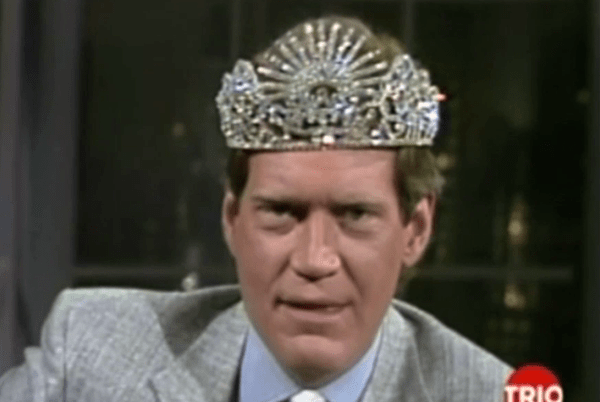
If you were alive in the 1980s and you turned on NBC at 12:35 AM,
the very last activity you would have seen David Letterman doing on
“Late Night” is fawning over baby pictures—as he did during his final
days of public life. 

In fact
Letterman was TVs first and now its last grumpy old man, except he was
in his thirties at the time and looking at this video essay, it’s hard
to believe a guy this thorny, someone who spent
this much time torching his bosses and ripping away at a pretentious
celebrity modus operandi—could be on television for more than three
minutes, much less over 30 years.

How does one explain his success?

In interviews
Letterman likes to give all the credit away for his success to his hero,
the great Johnny Carson, and more than occasionally, he even
acknowledges the influence of Steve Allen, the first helmsman of that
NBC institution known as the Tonight Show and perhaps its most talented
performer.  (Before anyone insists Jimmy Fallon takes the crown on this
point, take a look at Steve Allen’s “Meeting of Minds,” which he created
and wrote for PBS, and tell me if our latest occupant of Tonight could
pull off something so erudite.)

While
Letterman’s approach to late night TV may have channeled his
predecessors in certain ways—like Letterman, Johnny Carson could
belittle and destroy his guests in a single sentence—the Letterman who
rose to cultural prominence at the end of the Cold War was a singularly
crass, awkward, slightly misogynistic, fearless truth-teller. 

And that’s why we loved him. 

Letterman’s
eternal brilliance lies in his expansive mastery of the components of
humor: the set-up and the punchline, i.e. the story and the funny
climax.

First, unlike
the 2015 version of himself, Letterman in the 1980s was absolutely not a willing member of America’s celebritocracy—that cult of celebrity
which had always been a large part of show business culture. 

But, what
Letterman possessed from the beginning was an uncanny ability to search
for comedic set-ups in visual, verbal and intellectual spaces where no
other performer thought to look. He was intelligent, well read and
lightening fast. Any sentence uttered—stupid or intelligent—on “Late
Night with David Letterman” could be made a slave to his opportunistic,
devastating punchlines—with emphasis on the word “punch.” 

And it didn’t
matter who you were—network executives, respected celebrities, stupid
humans, stupid pets and his most prolific target of all, Letterman
himself. No wonder Cher called him an asshole. No one was safe.

Before he
leaves for good, one must acknowledge his huge influence. “Late Night
with David Letterman” taught an entire generation not only how to search
for the perfect comedic set up but also what it means to deliver a
foolproof punchline. In college I watched this sweet anarchy day after
glorious day, as the comedian casually lobbed stick after stick of
verbal dynamite into the key light biosphere, this wanton behavior
continuing unabated for a decade and a half.

But, young
David Letterman was not stupid. He understood himself and his audience
extremely well, and he walked the line between hero and anti-hero,
between TV pioneer and social pariah for as long as he could and as he
aged and matured, he even knew when to step away from that line. 

So, here he
is again in full “Dave,” before the anti-depressants, before the lessons
of the sex scandal, before the birth of his son Harry, before his
heroes had ascended to the next life and left him alone.  

I was recently waiting in line at the post office. 

The lines are
long these days at the busy location in central Plano, Texas because
that branch has staffed down, and one can be sure that sending a parcel
these days is a deeply boring and cynical experience as an impersonal
staff and an uninterested system wastes your time and pisses you off.

A half hour
or so later, I had placed my package in the system, and I was walking
toward the exit. I spied a middle-aged African-American man shaking
his head and sighing in frustration. He was at the end of a very long
line. 

I walked up to him and extended a hand which he grasped as if it were a life line.

“The cocktail waitress will be around in a few minutes,” I said to him. “Buy yourself a rum and Coke. I hear they’re amazing.”

The man smiled and laughed. 

For those of us who watched it, “Late Night with David Letterman” continues.

Serena Bramble is a film editor whose
montage skills are an end result of accumulated years of movie-watching
and loving. Serena is a graduate from the Teledramatic Arts and
Technology department at Cal State Monterey Bay. In addition to editing,
she also writes on her blog Brief Encounters of the Cinematic Kind.

Ken Cancelosi is the Publisher and Co-Founder of Press Play.

Watch: Why WERE the Lights Always Flickering in ‘Twin Peaks’?

Watch: Why WERE the Lights Always Flickering in ‘Twin Peaks’?


In the world of ‘Twin Peaks," the lights are on the fritz. Transformers buzz. Electrocutions may occur. Events of great significance take place almost entirely through circuitry, be it on a television screen or through a phone wire. What does it all mean? Everything and nothing. In David Lynch’s vision, the electric spark is the clash of small-town sensibilities and big-city decadence, between the past and the more modern world, between human life and the shadowy world beyond it where Laura Palmer and "Bob" dwell, between the baffling, horrific day-world and the world of dreams. This video essay by A. Martin and C. Álvarez López takes us through the short-circuitry of ‘Twin Peaks,’ at times hilarious, at times awful–it’s a beautiful, uncomfortable, ride. Enjoy.

Watch: A ‘Better Call Saul’ Supercut on Point of View

Watch: A ‘Better Call Saul’ Supercut on Point of View

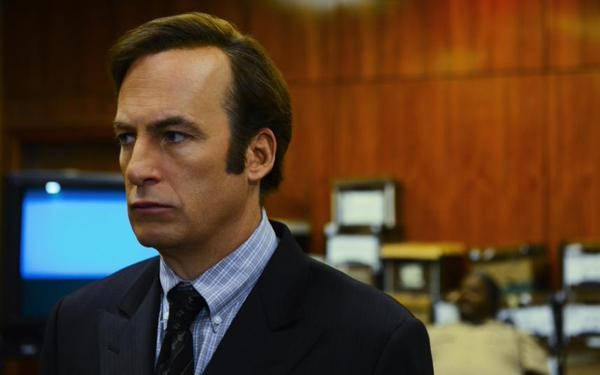
It makes perfect sense that point of view would be significant in the cinematography of ‘Better Call Saul‘ or its long-toothed predecessor, ‘Breaking Bad.’ After all, point of view is both shows’ stock in trade: the story lines take viewers inside the minds of characters whose thoughts and aspirations would otherwise be repugnant to them–either the ethically challenged lawyer Saul Goodman on the one hand or the chemistry-teacher-made-bad Walter White on the other. You could ask why this particular journey fascinates viewers, or you could watch Jaume Lloret‘s brief but dense melange of POV shots (and other shots) from ‘Better Call Saul,’ which showcases Arthur Albert’s wonderful cinematography, or you could do both, with impunity, and learn from the experience. Enjoy!

Watch: All of Sterling Archer’s Literary References: A Video Essay

Watch: All of Sterling Archer’s Literary References: A Video Essay

Secret Agent. Asshole. Book nerd? Sterling Archer, the modern take-down of James Bond on Adam Reed’s cult animated show ‘Archer,’
is many things, but that last detail has always been a quirk in the
show, with literary references spouted out almost as often as jokes
about oral sex. Often, these references in V and films don’t stick as
well as they should, coming off less as wit and more as self-indulgent
name-dropping–it never made sense to me that Buffy Summers lamented
that her slaying duties got in the way of her social life, yet was still
able to stay on top of her pop culture references. Reed has admitted
that the show’s many literary references, including the many from other
characters not included for time, are the remnant of his tenure as a
frustrated English major, yet their contrast with the more deplorable
aspects of Archer’s personality was probably the first indicator of his
humanity, his intelligence when he chose to use it, and maybe even an
indication of his lonely, friendless childhood and adolescence. Plus, of
all the mixed-up characters on Archer, Reed seems to know that
it’s most fun to hear the debonair, narcissistic spy mention an obscure
Herman Melville book at gunpoint, read 10 Babysitter’s Club books
in preparation for guarding his daughter, or wonder out loud if he’s gay
for Tolkien. You won’t find Sean Connery or Daniel Craig saying that
with a straight face any time soon.

Serena Bramble is a film editor whose
montage skills are an end result of accumulated years of movie-watching
and loving. Serena is a graduate from the Teledramatic Arts and
Technology department at Cal State Monterey Bay. In addition to editing,
she also writes on her blog Brief Encounters of the Cinematic Kind.

Watch: Why the Colors of ‘The Unbreakable Kimmy Schmidt’ Are So Important

Watch: Why the Colors of ‘The Unbreakable Kimmy Schmidt’ Are So Important

On what level do we notice the colors a director of a film or TV show chooses? When we watch, we’re noticing all kinds of other things: the dialogue, the intrigues, the humor, the suspense. We don’t necessarily always consciously notice the way directors help these things work together; we don’t necessarily instantly analyze what’s happening on screen; we don’t necessarily think of film as a visual phenomenon first. And why should we? Why should we view these works with special technique-detecting goggles on? We shouldn’t, but, as Todd VanDerWerff points out in this excellent Vox video essay, there may be a reason for our positive response to a show or film, and that reason may lie with the director’s ingenuity, rather than the twistings and turnings of individual taste. It’s a simple point, possibly, and almost tautological, but one worth making, lest we see ourselves as mindless amoebae, wondering from one stimulus response to another. VanDerWerff trains his sights here on The Unbreakable Kimmy Schmidt, one of the more interesting serial dramas around at this moment, novel for both its storyline and its hyper-caffeinated, fresh-from-left-field approach to storytelling; there have been precious few TV dramas that made cults an integral part of their storyline, though they might have appeared in the occasional school-of-Law-&-Order procedural every now and then. The piece clues us in to the director’s ingenious use of colors here, primarily, also giving us a small glimpse of enough TV history, via a clever timeline and some fast shots of older shows, to drive home the idea that experimentations with the clash of Day-Glo colors and milder hues, of the colors of emotional overdrive with its bland opposite, are yet another indication of the rare and strange period of TV history in which we live. A piece like this reminds me of what a writing teacher once said after a rather long monologue on technique: "These are terrible things to think about, but they’re wonderful things to have thought about." If you’re a fan of this show, maybe this careful examination will make you more aware of technique the next time (or two) you watch.

ARIELLE BERNSTEIN: How ‘The Unbreakable Kimmy Schmidt’ Skewers Empowerment Culture

ARIELLE BERNSTEIN: How ‘The Unbreakable Kimmy Schmidt’ Skewers Empowerment Culture

nullBack in the early 2000s, a friend and I worked together on
creating a musical medley based on all our favorite songs. We featured artists from
Ani Difranco to Radiohead. Our favorite silly addition was a song by Ja Rule
and Ashanti called “Mesmerize” which was utterly and fantastically terrible. In
my favorite line of this atrocious song Ashanti sings about how, for a woman,
love is always pain, to which Ja Rule sweetly and patronizingly replies, “It’s
a man’s world. But I understand.” 

Barring the fact that these lyrics seem like a complete non
sequitur, the assertion that female pain is a kind of status quo smacked deeply
of condescension. The fact that this catchy and absurd song got airplay
multiple times a day, as if we all could seemingly care less about what a dumb message
this was sending us, made it feel as though it were actually benign.

I laughed when I first heard the lyrics. I grew up in a home
where a woman’s identity was measured by suffering. In the world of my mother’s
telenovelas, women were constantly
beating their breasts and crying and cursing the heavens. To be a woman was to
endure various pains—the pain of childbirth, the pain of philandering boyfriends
and husbands, often the pain of domestic abuse. Young beautiful women
experienced pain at being harassed, and older, less beautiful women faced
instead the pain of invisibility.

I think for a long time I felt that if I could be as “American”
as possible I could be free from this old-fashioned and debilitating portrait
of what it meant to be female. After all, in America I received lots of
messages of “girl power.” But these messages never seemed to reach the women of
my generation, myself often included, and, ten years later, many of my young
American female students are consumed with the same fears and kinds of sadness
that I tried to shut my eyes to when I was young. They worry about how they
look, and if they are likeable enough. They worry about if they are too girly,
or not girly enough. They worry about whether they’ll be objectified or
ignored. Room after room of young women who feel no more empowered than I did
at their age. Room after room of young women who laugh off a sexist song
because it just hurts too much to actually confront what it means.

The Unbreakable Kimmy
Schmidt
is about a woman who was kidnapped by an insane preacher when she
was 14 years old, and held underground in a bunker for 15 years. When she
emerges she’s ebullient. Her personality is infectious. Her desire to rebuild
her life and not be seen as a victim is palpable. In the opening credits, we
get this nifty autotuned theme song with the catchy lyrics, “White dudes hold
the record for creepy crimes. But females are strong as hell.”

This idea of female strength and solidarity pervades the
entire series, as Kimmy offers words of wisdom to her boss, Jacqueline, who is
struggling to come to terms with her life after her divorce. “I survived,”
Kimmy opens up to her, “because that’s what women do. We eat a bag of dirt,
pass it in the kiddie pool and move on.” In one episode, Kimmy attempts to give
a pep talk to a bunch of women awaiting plastic surgery. In another, Kimmy
helps rescue a bunch of women from an exercise-based cult.

One of the most subversive things about The Unbreakable Kimmy Schmidt is the way the show satirizes the way
that survivors are often victimized by a culture that cares more about juicy
details than actual healing. The show also demonstrates how the “women are
strong” narrative that emerges from this culture might not be as feminist as
one might hope. On the one hand, the narrative of female strength frees women
from the stereotype of femininity as weak and submissive. On the other, it
presents female strength as deriving entirely from the ability to endure
patriarchal injustice after patriarchal injustice over and over again. In this
way, The Unbreakable Kimmy Schmidt also
skewers “empowerment culture,” from the girl power ethos of the 90s to today’s #yesallwomen
activism. Women in empowerment culture band together out of necessity, not
necessarily because they have a lot in common as individuals, or truly want to
be friends, or comrades in arms. The four “mole women” could not be more
different from each other in interests, attitudes in life, cultural background,
or intellectual ability. Similarly, Kimmy and Jacqueline bond over their
identity as women and survivors, but could not be more different in about every
other way imaginable.

Over the last several years, funny women like Tina Fey, Amy
Poehler and Amy Schumer have been heralded as ushering in a new wave of
feminist comedy. I feel lucky to be living in a time period where women’s
rights provide a topic of popular conversation, but I can’t help but also sometimes
feel frustrated by the popular response to shows like these, where we’ll laugh
at how terrible sexism is but feel powerless to actually change the current
culture. While humor is an effective way to get people to think more critically
about sexism, I also worry that many people are completely content to laugh and
then go along with the status quo.

And sometimes I do feel like a “humorless feminist” when it
comes to certain topics. I don’t think domestic violence or rape or eating
disorders are funny. When people talk about women’s strength as coming from
surviving these types of experiences, the only thing I can think of is that
dumb Ja Rule lyric from over a decade ago. It’s still a man’s world. I don’t
want to be told I’m strong anymore. What I want is for the culture to actually change.

In one of my favorite moments in the series, Kimmy’s close
friend Titus offers to be in charge of music for her birthday party (all of
Kimmy’s musical knowledge is based on 90s hits from when she was barely out of
middle school). After playing a bunch of house music, Kimmy asks for some music
with lyrics and gets the charming little ditty, “I beat that bitch with a bat,”
of which there is both a club version, and slower acoustic version. It’s
shocking and funny and ridiculous, except that we’ve all been to a party like
that, where we’ve heard similar kinds of lyrics. We laughed at it until we
didn’t, and then the words just faded quietly into the sound of everything
else.

Arielle Bernstein is
a writer living in Washington, DC. She teaches writing at American
University and also freelances. Her work has been published in
The
Millions, The Rumpus, St. Petersburg Review and The Ilanot Review. She
has been listed four times as a finalist in
Glimmer Train short story
contests
. She is currently writing her first book.

KICKING TELEVISION: An Ambitious DIG

KICKING TELEVISION: An Ambitious DIG

nullTelevision
is like most of my failed relationships. Much of what I desire leaves me too
soon, unfulfilled, unresolved, unloved. Tangential and peripheral lesser characters,
often caricatures, play too large a role. Expectations are high. Infidelity abound. But good television, like love, is ambitious, patient, and true to
itself. Often TV is none of these. Series are rushed to order based on a
premise and not a realization. Unappealing actors are forced into unsuitable
roles. Katherine Heigl is involved. Most often, though, TV is a victim of its
own parameters. It’s designed to live infinitely, or at least for enough episodes
to be syndicated. Narrative arcs are left open, because to close them is
suicide. In recent years, however, the mini- (or event) series has returned to
prominence. The successes of True
Detective
and American Horror Story
have revitalized the genre, giving birth to new opportunities for
storytelling and for actors. Even love has a complete cycle, and USA’s DIG (premiering March 5th) is
an example of how a mini-series can be successful by limiting its life.

DIG is particularly ambitious in its theological concerns and the international scope of its narrative. Action takes
place in Norway, New Mexico, and Jerusalem. The event series centers on an FBI
agent stationed in Jerusalem, Peter Connelly (Jason Isaacs), who while
investigating the murder of a young American becomes embroiled in a 2000-year old
mystery. The series also stars Anne Heche as Connelly’s superior and lover, and
David Costabile as Tad Billingham, an enigmatic cult leader. The cast is
rounded out by a uniquely diverse cast including Ori Pfeffer, Regina Taylor, Alison
Sudol, and David Ambrose, which in and of itself separates DIG from what we are accustomed to on TV. It’s multiracial,
multi-generational, and multilingual. Yes, DIG
has subtitles. SUBTITLES! How will the American viewing public cope?

Frankly,
DIG doesn’t care. Nor should it. The
best TV is made with story in mind, not demographics or live plus seven numbers
or syndication. DIG comes to USA from
Homeland executive producer Gideon
Raff and Heroes creator Tim Kring. To
combine the credits of the two to make a series is a good recipe for TV
that goes beyond simple loglines and average ambition. Star Jason Isaacs was
also intrigued by the unlikely collaboration, noting “generally showrunners
like running the show” and not as a duet. But, Raff and Kring are “enormously
successful at telling stories on television. Both leapt at the chance to do
what they were born to do, which was tell a story with a beginning, middle, and
end.” And when taken through the elements of the story, it “scared the living
shit” out of him.

Isaacs
was excited to work within the mini-series medium, and it suits his tremendous
talent. He’s a leading man without wearing it on his sleeve. He found DIG “inherently satisfying, like telling
a joke with a punchline.” His last series, Awake,
was an event series trapped in the body of a planned serial. The premise, a cop
awakes in two realities, was ahead of its time (way back in ’12) and its
aesthetic was too progressive for network TV. If it had premiered today on
Netflix or Amazon or, indeed, USA, it would have had a better life and place in
the canon of great television.

But,
according to Isaacs, maybe it lived long enough: “When you make 12 hours of
complicated satisfying television, as we did with Awake, and it works, that’s a triumphant achievement. In the UK,
drama series are only six episodes long. [Awake]
was two drama series. In America [as opposed to the UK] if it doesn’t run for a
decade people look down . . . with slight embarrassment in their voice. I thought
[with Awake] we did a remarkable
thing. Not sure that we would have sustained it or done many more. Twelve hours
is as much as I want to see about most things.”

And
that perfectly illustrates the inherent flaw of the multi-year serial. It
becomes a victim of its own immortality. Awake
may have died prematurely, but DIG is
set to live the perfect life. Heche calls the event series “its own art form,
as opposed to ‘let’s see where it all goes,’ which is what we’re used to on
television. [As opposed to viewers wondering] am I still going to be hooked
after six years?”

Not
unlike Awake, what is immediately
striking about DIG is its aesthetic.
It has a grainy filter that very much suits its diversity of locals and gives
the series an unvarnished feel. It reminds the viewer of international series
more likely to come out of Canadian-Croatian co-productions, and I mean that in
the most positive way. Costabile mentions “the risk that the network was
taking… and their [USA’s] interest in going outside of what had been
successful for them. Much bigger, much more provocative, and much more
challenging to their audience.” And DIG most certainly takes, and conquers,
those risks.

Unfortunately,
as many a good TV show has discovered, simply being good and ambitious isn’t
enough. The TV graveyard is full and caskets are falling into the creek behind
the chapel. It wasn’t too long ago when a show wasn’t on one day, and the next
day it was. Now, there are multi-platform rollouts for even the smallest of
shows. From social media to YouTube to interactive websites to junkets by the
dozen. DIG had a multi-city touring installation
called DIG: Escape the Room, which allowed viewers to indulge in the spirit of the show long before they could revel in its
reality. Heche, who is excellent in what is essentially an unforgiving and
forgotten role, notes that the scope of what goes into promoting a show is
“incredible. You have to bombard the public. It’s not just, ‘I’m going to go do Letterman and I’ll do The Today Show and then I’ll be home.’”

Every
series needs its antagonist, and DIG
is very fortunate to have Costabile play Billingham, who’s somehow part of the
theological mystery at the heart of the show. A few weeks ago in this space I wrote about how Costabile was in
need of a vehicle to match his incredible talent. In DIG, he is the villainous edge the series needs. But the best
villain can’t know they’re the bad guys, and only in that can the character
succeed. The Joker doesn’t know he’s evil, Michael Corleone is a good man, he
thinks. Jason is just out for a walk with a machete and a hockey mask. Says
Costabile, “when people do things that look at and consider bad or morally
bankrupt or morally questionable it’s dangerous for me, as a performer, to villainize
them. You’ll lose out on the possibility that they could be charming or
likeable in need of something else in a loving way. [Tad Billingham] has a misguided
sense of the world, but if I played him that way he’d appear at odds with
himself.”

Costabile
is a veteran of the most interesting television of the past
decade: DamagesBreaking BadThe WireHouse, The Office, Flight of the
Conchords, United States of Tara… His
IMDB page reads like a Labor Day weekend marathon binge of the best of the
past decade. Once again, in DIG, he
is the best thing onscreen, which is a huge accomplishment, as his co-stars are
wonderful.

DIG is not quite in the pantheon of
TV’s most noted endeavors, but nor does it want to be. It wants to be
something special, if just for a moment. It wants to indulge in itself, its
aesthetic, and its contextual universe, and it does so with a delicate touch,
patient exposition despite its finite nature, and superb storytelling. And it
can stand as a sea change in how interesting and dynamic television can be fed
to a North American audience. Simply put, DIG
is great television. If television is indeed like a relationship, DIG is a lover you can spend some time
with, guilt-free, unencumbered by commitment or the future. It is a moment in
your life, a moment in your television life. And it’s worth the time.

Mike Spry is a writer, editor, and columnist who has written for The
Toronto Star, Maisonneuve, and The Smoking Jacket, among
others, and contributes to MTV’s
 PLAY
with AJ
. He is the author of the poetry collection JACK (Snare
Books, 2008) and
Bourbon & Eventide (Invisible Publishing, 2014), the short story collection Distillery Songs (Insomniac Press,
2011), and the co-author of
Cheap Throat: The Diary of a Locked-Out
Hockey Player
(Found Press,
2013).
Follow him on Twitter @mdspry.

Watch: What Does A Graphic Designer Do? These Films and TV Shows Won’t Tell You…

Watch: What Does A Graphic Designer Do? These Films and TV Shows Won’t Tell You…

If you watch enough films, you begin to see where filmmakers’ creativity flags. There’s the aerial shot of wooded landscapes that often precedes films of suspense; there’s the rock music that blasts in first-day-of-school scenes during teen comedies; there’s the ubiquitous shot of someone waking up and slapping an alarm clock right after the opening credits have finished. And, when someone is asked what their job is, it’s often… "graphic designer." This job title has popped up in many films, from Prelude to a Kiss to Friends to Girls to Parenthood to Juno, and yet do we learn what the job entails? Not really. Is it a good job? Not sure. Does it fill out the script? Yes it does. This funny supercut by Ellen Mercer and Lucy Streule fills us in–or doesn’t–on the recurrence of this job, from the small screen to the big screen. Enjoy!

Live Forever and Prosper: Leonard Nimoy, RIP

Live Forever and Prosper: Leonard Nimoy, RIP

null

Leonard Nimoy was many things. He was
an actor, poet, director, photographer, philosopher, and singer. To most he was
Spock, the half-Vulcan, half-human chief science officer of the USS Enterprise
in the 23rd Century on several different iterations of Star Trek.
Nimoy was even part of a plastic model kit from the 1970s, pointing his
phaser at this three-headed snake-thing that never appeared in any episode of
classic “Trek” that I can remember. The box for this model kit declares that
Mr. Spock is “Star Trek’s most popular character,” and this is true.

 
Nimoy wrestled with being made into
the kind of icon that begets action figures in his 1977 book I Am Not Spock,
before throwing in the towel with his 1995 follow-up, I Am Spock. And Spock
endured. He died in Star Trek II: The Wrath of Khan (1982), only to come back
to life in Star Trek III: the Search for Spock (1984). I still get choked up
when during Spock’s funeral in the earlier movie, even though I know—through
repeated viewings–that he really implanted his katra, or life essence, in Bones
before semi-sacrificing himself and assuring his resurrection. “Remember,”
Spock says, performing a stealth mind-meld on Bones. “The needs of the many
outweigh the needs of the few,” he tells Kirk as he is (kind of) dying. The
tears just well up in my eyes at this point.
 
Nimoy appeared as Spock in one of the
better story arcs in Star Trek: the Next Generation. He also played old Spock
alongside of Zachary Quinto’s young Spock in 2009’s Star Trek
reboot. Not even clueless Hollywood execs and J.J. Abrams’ destruction of
Vulcan itself could keep Nimoy from being one with Spock. He reprised the role
in Star Trek: Into Darkness” (2013) in what would be his last appearance as
the character, and by character, I mean himself.
 
When Nimoy, the man, the human being,
produced a book of nude photographs of large women called “The Full Body
Project” in 2007, it reminded us that he was actually pretty damned cool
without having to be half-Vulcan after all. But then again, in "Shekhina,”
the 2002 photographic series that started to get the actor more serious
attention as a photographer, he used black and white stills of nude women of
all body types as a rumination on the feminine manifestation of God in Jewish
mystical tradition. Nimoy fashioned the familiar V-shaped hand gesture that
became synonymous with Spock from the Hebrew character shin, the first letter
of Shekhina’s name. Nimoy the photographer was still Spock, or at least
half-Spock.
 
To me personally, Nimoy was a
barnstorming stage performer, working the “Star Trek” convention circuit until
a few years before his death last week at the age of 83. I first saw Nimoy
live in person at the San Mateo County Fairgrounds sometime in the early 1990s.
He worked the stage alongside William Shatner as Starfleet’s Odd Couple, arguing
back and forth with occasional truces to impart some reminiscence of the
original series on the rapt trekkers in attendance. Nimoy was pro “Next
Generation” all the way, while Shatner knocked what was then the current
"Trek," citing that it lacked the zest or machismo of the
original—or mostly, that it lacked Shatner. This red meat for trekkies
produced boos from one side of the room and cheers from the other, kind of like
a pro-wrestling show.
 
The last time I saw Nimoy was at Star
Trek Las Vegas in 2010. He once again took the stage with Shatner for some
playful back-and-forth, only this time they were joined by Patrick Stewart.
The whole scene may have been contrived by the convention’s organizers, but
this was a big moment. The positive energy of seeing those three icons on stage
in that bland, hotel ballroom was undeniable. It gave me chills, and a sense of
something bigger than myself that going to church or catechism never gave me. Star Trek was secular; Star Trek was rational (except for maybe in “Spock’s
Brain” or some of the other third season episodes)—but it was also religious.
 
Nimoy attended his last Star Trek
convention in Chicago in October 2011, nearly a year after I last saw him in
Vegas, but there was always a hope that he’d stroll onto those makeshift stages
again at some convention somewhere, preferably in San Francisco,
the home of Starfleet, where Spock once gave that Vulcan neck pinch to a
belligerent punk rocker on the Muni in “Star Trek IV”—the one with the whales.
We’ve had the benefit of most of the original actors making themselves available at
conventions for so long now that it’s hard to believe that they’ll not just live long
and prosper, but live forever and prosper.
 
For Nimoy that isn’t so, but I like to
think he mind-melded a little piece of Spock’s katra into all of us.
 
Bob Calhoun is the
author of “Shattering Conventions: Commerce, Cosplay and Conflict on the Expo
Floor
” (Obscuria Press, 2013). His work has appeared in RogerEbert.com, Salon, Gawker
and the San Francisco Chronicle. You can follow him on Twitter @bob_calhoun.