The Mystery of Werner Herzog: Two Video Essays and One Text Essay

The Mystery of Werner Herzog: Two Video Essays and One Text Essay

DOES MR. JONATHAN SMITH CRY IN HIS PILLOW AT NIGHT?: THE UNIRONIC WORLDS OF WERNER HERZOG

One of the most revealing statements in the book Herzog on Herzog appears early on, when Werner Herzog tells interviewer Paul Cronin that from the time he was a young child he has suffered a particular "communication defect": he has no sense of irony.

Whether Herzog the actual human being does or doesn't have a sense of irony is itself a minor point, a bit of autobiographical gossip. But there is a useful truth in extrapolating the insight to his work: Understanding and appreciating Herzog's films means giving up on the pleasures of irony. (It is difficult to imagine a satire written and directed by Werner Herzog.) What is entertaining and meaningful in Herzog's movies and his public persona is a peculiar earnestness — the earnestness of the straight man in comedy routines, but less oblivious, more mystical. Various labels can and have been applied to his work: Romantic, Expressionist, Existentialist. But they are inevitably incomplete and unsatisfying because their orientation is toward analysis, systematization, precepts, and principles—where Herzog's philosophy is more like a garden of intuitions, or a collection of koans written on scraps of paper and scattered across the floor of an abandoned monastery atop some far-off mountain where the wind never settles down.

The title of Nelson Carvajal's new video essay, "Werner Herzog Looks at Man's Futility," is full of tricks and traps. What is Werner Herzog: the filmmaker, his films, the actual human being for whom that is a byline, the public figure we know from interviews and guest appearances and YouTube videos? Looks: How? With eyes or camera? Are we looking with him, through him? Man's Futility: "Man" as a macho revanchist term for "humanity"? Or literally of men: the futility of men, the futility of masculinity, men adjusting their lives to the fact of futility . . . (The video's first image, from Stroszek, is of a woman being beaten by men.)

Carvajal's work can speak for itself; its juxtapositions are rich with possibility and ambiguity. The choice of the word futility is what most strikes me. A quick glance at Herzog's oeuvre might cause an inattentive viewer to see it as nihilistic, as celebrating or at least embracing the futility of living: human life is inconsequential, nature is great and unknowable, death and failure are ever-present, hopes and dreams are naïve. But that is not it at all. Instead, Herzog encourages us toward the sublime, toward awe and humility when faced with great mystery—toward, indeed, the seeking and celebration of such mystery. Toward an epistemology that is not irrational but sur-rational, that thrives between the lines of all we could ever know. It is not that we live in a meaningless universe, but rather that our intellectual tools for measuring the meaning of the universe are about as well developed as those of a mosquito contemplating how Manhattan came to be so tall.

Existence is its own meaning. Thus, the need for pushing existence toward its limits and extremes, for exploration and adventure. Every worthwhile encounter happens at the end of some world. Facts are not truth, and truth is not a product of careful measurement and objective observation, but of ecstasy, and ecstasy requires the knowledge of the senses, the trust of intuition, the cultivation of mystery. Teleology leads to ruin, but knowledge and enlightment come from the fact of life's force: Aguirre, on a monkey-covered raft at the end of his adventures, doomed and clearly mad because still he dreams of conquest; Fitzcarraldo failing at what he set out for and achieving much he did not; Dieter Dengler clinging to existence with the same strength as the premature baby grips the doctor's hand in Stroszek. Life's force and the power of chance determine the aesthetic, with shots and scenes included not for reasons of cause and effect, not for obvious or metaphorical association, but because they feel right. Animals and objects take on mercurial meaning: the albino crocodiles in Cave of Forgotten Dreams, the fiery oil fields of Lessons of Darkness, the basketball in My Son, My Son, What Have Ye Done, the chickens in everything. Chance and chaos rule over all: the volcano in La Soufrière might explode at any moment, the actors in Heart of Glass are hypnotized and thus strange and unpredictable, the squirrels in the story told in Into the Abyss could have been killed if not for good brakes on a golf cart.

Herzog's truths emanate from estrangement. The worlds and peoples he portrays are always exotic, and so there is a consistent unity to his work from its earliest days—each film displays a contempt for nothing except dominant normality. No person or place is exotic to itself, but we do not have access to these selves. Few, if any, of Herzog's characters are "knowable" in the sense familiar from the genre of psychological realism. Psychologizing is futile. Worse than futile: boring. The camera's fascination adheres to anyone and anything that confounds simple analysis, that lives outside predictable boundaries, that does not look like commercial, homogenized culture. We discover (through cracks, crevices, abandoned pathways, extremes of distance, altitude, weather) the panoply of ways of living.

"I want the audience with me in wild fantasies in something that illuminates them," Herzog said in an appearance on The Colbert Report in June of 2011. Wild fantasies illuminate. Wild fantasies bring us beyond the banal, commodified dreams that haunt our days of sleepwalking. "You see if I were only fact based—you see, the book of books in literature then would be the Manhattan phone directory: four million entries, everything correct. But it dusts out of my ears and I do not know: do they dream at night? Does Mr. Jonathan Smith cry in his pillow at night?" Knowledge requires imagination, empathy, curiosity. Anything else is at best facts, and, as David Byrne once sang, "Facts are living turned inside out."

Herzog makes a point of differentiating his lack of a sense of irony from a lack of a sense of humor. Irony and humor, he says, are very different things. This is a truth borne out by Herzog's films, which are often filled with sly and absurd humor. By desaturating his work and words of irony, Herzog adds another layer of ambiguity to his films, provoking laughter at moments where we might not know why we are laughing, or what we are laughing at, and complicating those moments with other emotions.

I recognized this effect most forcefully when, on a lark, I re-edited the trailer for Baz Luhrman's upcoming adaptation of The Great Gatsby to be, instead, a preview for a Herzog movie. My intentions were entirely silly. But once I started editing the video, I realized that by inserting Herzog into the glitzy stylistics of the movie, and positing him as a director of the hollow shell of a character that is Gatsby (the opposite of the obsessed dreamers he often films, for Gatsby, though obsessed, lacks their gravitas, their mysticism, their madness), that the silliness of the premise was undercut.

Even when Herzog is at his most humorous and least meaningful, his affect is one of absolute sincerity, which heightens his humor but also adds other layers. When he reads Go the Fuck to Sleep, for instance, there is no fear that he will ever break into giggles, no chance that he will laugh along with us, no suspicion that he is even inviting us to laugh (imagine the contrast if an irony-besotted comedian like Stephen Colbert read it). Irony insists that we know there is a joke, that we see the opposite meanings, that we smirk inside because we get it. It can be a lot of fun, and even quite meaningful. But it's never what Herzog is up to.

A mien of sincerity can be as shallow and tiresome as an endless array of ironies—who wants to live in a world of anchorites, pamphleteers, and true believers? Gnomic pronouncements get old fast when all you want to know is whether you should eat at the restaurant on the corner. But ours is a culture of winks and spins, of campaign slogans, billboards for Jesus, self-help politics, and an endlessly Googled Earth. Every imaginable court bursts with jesters. We need a few people with no sense of irony to see through it all. We need enigmatic images to steal our dreams back from their corporate mergers.

Men are futile, yes, in every sense, and Herzog, whose movie worlds are mostly made of men, knows this as well as anybody. "Get over it," he seems to say. What does our futility matter if we can share our wild fantasies? Give up on the wonders of your gender, stop venerating your species. Are we so different from radioactive albino crocodiles? In the movie, they're just as real as we are. — Matthew Cheney

Nelson Carvajal is an independent digital filmmaker, writer and content creator based out of Chicago, Illinois. His digital short films usually contain appropriated content and have screened at such venues as the London Underground Film Festival. Carvajal runs a blog called FREE CINEMA NOW which boasts the tagline: "Liberating Independent Film And Video From A Prehistoric Value System."
You can follow Nelson on Twitter here.

Matthew Cheney's work has been published by English Journal, One Story, Web Conjunctions, Strange Horizons, Failbetter.com, Ideomancer, Pindeldyboz, Rain Taxi, Locus, The Internet Review of Science Fiction and SF Site, among other places, and he is the former series editor for Best American Fantasy. He teaches English, Women's Studies, and Communications & Media Studies at Plymouth State University.

VIDEO ESSAY: Ninja Turtles: Generation Y in a Half Shell

VIDEO ESSAY: Ninja Turtles: Generation Y in a Half Shell

“Ugh. Where do they come up with this stuff?” groans a frustrated Raphael, the brooding, red-bandana-wearing member of the Ninja Turtles, whilst walking out of a New York movie theater that’s playing the 1980s creature feature Critters. Here’s why this is an important scene in director Steve Barron’s live-action film Teenage Mutant Ninja Turtles: The 1980s saw an explosion of brawny, Reagan-infused cartoon TV series (e.g. Transformers and G.I. Joe) and live-action romps (e.g. the American family battling the furry aliens in Critters is yet another microcosmic representation of Reagan’s war against international terrorism), but when TMNT hit cinemas in the spring of 1990, its band of sewer-dwelling, skateboard-riding (mutant) outcasts aligned themselves with what we call Generation Y (people born between the late 70s and early 90s), leaving behind the pandemic seriousness of the 80s (industrializing economies, wars in the Middle East, etc.) and embracing a childlike irreverence, a burgeoning urban terrain and yes, lots of pizza with no anchovies. The Turtles were in a pop culture class all by themselves. After emerging as an overnight sensation with comic book fans (Ninja Turtles’ creators Peter Laird and Kevin Eastman only printed 3,000 copies of the original black and white magazine-style comic book in 1984), the Ninja Turtles quickly became a phenomenon both onscreen (its popular animated TV series debuted in 1987) and off (Playmates Toys began producing Turtles action figures in 1987, becoming regular “must-haves” for the youth). Considering all of this Turtlemania, it’s remarkable that Barron’s live-action Turtles film was able to thwart the “Saturday morning” innocence of its source material and create a dark, atmospheric film which dug a little deeper into the themes that would interest its target audience—Generation Y.

In many ways, the Ninja Turtles were the perfect mirrors for the angst-driven Generation Y’ers. Take the case of the family unit, for example. Unlike the generation that came before theirs (Generation X), a substantial number of Generation Y’ers were born into single-parent families. The four Ninja Turtles—Leonardo, Michelangelo, Donatello and Raphael—were no different, living only with their father Splinter (a giant rat), in the most poverty-stricken of homes: a sewer lair. And like most young Generation Y’ers, the Turtles dealt with their anxieties by turning familiar behavioral schemes into occasionally distracting daily routines: The Turtles blended the speech patterns of 1989’s Bill & Ted’s Excellent Adventure into their own vernacular (“Cowabunga!”), while also applying the Ninjutsu practices of 1988’s Bloodsport during their ventures onto the battle worn streets of New York.

Throughout TMNT, isolation is opposed to acceptance. Although the Turtles have a haven in their reclusive sewage den, the rest of New York’s teenage population (i.e. the movie’s “real” Generation Y) seeks acceptance (and shelter) from the Foot Clan, an underground gang overseen by the villainous Shredder. In a disarming scene, Shredder addresses his hordes of loyal teen followers: “You are here because the outside world rejects you. THIS is your family. I am your father.” The dark, striking images in these sections of TMNT (pre-teens smoking cigarettes, young kids fighting each other as part of the training to become a “foot soldier”) are a precursor to future Generation Y films of the 90s that follow teens desperately seeking acceptance, even in the midst of violence (e.g. Menace II Society, Juice and The Basket Ball Diaries). And for a PG-Rated “children’s movie,” the Ninja Turtles talk in a shockingly racy way, too (on more than one occasion, Raphael angrily yells out “Damn!”).

Perhaps the one aspect of TMNT that is not directly linked to Generation Y is its technical accomplishment. The Jim Henson Creature Shop (famous for introducing The Muppets to the world) made an indelible impression on young hearts and minds in multiplexes during the spring in 1990. The lifelike turtle bodysuits that the performance actors wore had movable mouths and blinking eyes. Even the skin of these turtle bodysuits seemed to sweat and pulsate. Detractors of the film always point to the obvious absurdity of watching four grown men high-kicking in giant turtle costumes. But to get hung up on that would ignore how special a film like this can be when it’s done right (as in Spike Jonze’s 2009 live-action film Where The Wild Things Are). And TMNT gets it right. Like the best children’s stories, fables and films, the Teenage Mutant Ninja Turtles movie earns its place as a seminal work of popular fiction by acting as a cultural prism through which viewers (in this case Generation Y) can develop a more profound sense of their identity—depending on their cultural and historical vantage point. As the Turtles would say: “Totally tubular, dude!”

Nelson Carvajal is an independent digital filmmaker, writer and content creator based out of Chicago, Illinois. His digital short films usually contain appropriated content and have screened at such venues as the London Underground Film Festival. Carvajal runs a blog called FREE CINEMA NOW which boasts the tagline: "Liberating Independent Film And Video From A Prehistoric Value System."

VIDEO ESSAY: THE DARK KNIGHT: NOLAN’S MODERNIZED MYTH

VIDEO ESSAY: THE DARK KNIGHT MYTH

When director Christopher Nolan first conceived of his Batman film trilogy, the challenge was revitalizing a hero who had previously been buried in cinematic fantasy shtick—a de-evolution that started with Tim Burton’s promising Batman and ended with Joel Schumacher’s laughably bad Batman & Robin. And Nolan wasn’t a franchise superhero movie director either. From the get-go, Nolan was an unlikely choice to take over such a mammoth cash cow for Warner Bros. Nolan’s previous films—Following, Memento and Insomnia—were small by comparison with the Batman films but shared the common narrative thread of a protagonist struggling to find moral redemption amidst the chaotic (psychological) forces of each film’s unique environment.  Therefore, the Batman mythos and its dark, enigmatic origin story of a billionaire turned self-made vigilante proved an apt fit for the intellectual Nolan—ultimately helping the director edge out the likes of Boaz Yakin (Remember The Titans), Darren Aronofsky (Black Swan) and Wolfgang Petersen (Air Force One) for the job of rebooting the series.

In his first entry, Batman Begins, Nolan’s masterstroke lay in envisioning Gotham City as a modern, real city. Gone were the colorful, circus-like set pieces from earlier Batman films. There weren’t any fantastical lairs or alternate dimensions. Nolan’s Gotham had public transportation, seedy corporate suits, corrupt court systems and even a lower-income housing area only accessible by street bridges. By positioning a beloved comic book superhero in a very accessible and believable environment, Nolan transcended the dated source material and forced audiences to re-evaluate Batman’s role. In other words, it wasn’t so much about what outrageous predicament Batman would have to punch (Pow!) his way out of. It was more of seeing how this new Batman could plausibly function within the day-to-day operations of the modern urban world.

After establishing a parallel “real” society in Batman Begins, Nolan raised the stakes with The Dark Knight. By zeroing in on the very relevant, modern topic of terrorism, Nolan recreated the post-9/11 atmosphere of dread and fear for the citizens of Gotham. In The Dark Knight, Nolan separated the villainous Joker character from his silly, cartoonish origins and recreated the Joker as “an agent of chaos”—a volatile criminal hell-bent on demoralizing the citizens of Gotham. The Joker’s plan was simple: If he could invoke the fear of death at every corner for every Gotham citizen, a radical unbiased social structure based on elemental fear would emerge. Thus, this society would be in constant stasis; the people of Gotham would be united by fear but torn apart by their animalistic instincts to outlive one another.

Putting Batman in the backseat in a Batman film was an important gesture for this movie and for Nolan’s work—as well as a first in the Batman filmography. In The Dark Knight, Batman himself was unusually absent from the screen, allowing for an array of equally compelling characters to come through. By building the film this way, Nolan deconstructed the mythology behind the Batman figure. Specifically, this once indomitable hero from comic book legend now became as vulnerable as anybody else in Gotham (or the real world for that matter).

Still, the fundamentals that Batman stood for as a comic book hero—justice, social order and establishing a sense of collective moral hope for Gotham—were evident in Nolan’s interpretation of the caped crusader (e.g. Batman reconciled both his and Gotham’s disillusionment with faux heroism by taking the blame for Harvey Dent’s murderous rampage in The Dark Knight). More interestingly, Nolan’s modernized Batman redefined the function of the traditional myth. Consider: The comic book Batman’s original Sociological Function was to establish a proper social order by existing outside the parameters of society, as an elite hero. In the comic book and earlier film adaptations, Batman was only accessible to Gotham’s police (via a red telephone or a bat signal in the sky); this exclusivity positioned Batman to exist as an intangible, incorruptible and unbelievably fantastic heroic figure. Yet, in Nolan’s screen narrative, Batman has been dethroned from his once-elusive crime fighter status. In an obscenely modern twist, Nolan looks to argue that order in any society cannot rest solely on an elected or officially prominent figure.

The promotional clips for Nolan’s third and final entry, The Dark Knight Rises, show Batman in the war zone streets, fighting alongside the citizens of Gotham. This is fitting imagery for Nolan’s modernization of this once-romantic comic book myth. The new Batman mythology isn’t meant to serve as adventurous escapism. The new Batman mythology reflects our very modern world, a society desperately trying to restore order amidst all the chaos—without having to always flash a bat signal in the sky.

Nelson Carvajal is an independent digital filmmaker, writer and content creator based out of Chicago, Illinois. His digital short films usually contain appropriated content and have screened at such venues as the London Underground Film Festival. Carvajal runs a blog called FREE CINEMA NOW which boasts the tagline: "Liberating Independent Film And Video From A Prehistoric Value System."

VIDEO ESSAY: Cocaine du Cinema

VIDEO ESSAY: Cocaine du Cinema

For roughly the last one hundred and thirty years cocaine has been the drug of choice for the working class—in fact, for even longer than that, common workers often used it as an energizer. South American indigenous populations in the Andean Region survived centuries of arduous living conditions (rough terrain, high elevations) by chewing on the cocaine leaf; in North America, during the 1890s, African American workers were actually given cocaine by their employers in an effort to help them pummel through the harsh working conditions of railroad construction and mining. The modern world, however, has seen the cocaine drug go down two polar, simultaneous routes: the “crack” cocaine circuit in poverty-stricken inner-cities, and the elite, expensive distribution rings among the rich and powerful urban elite. And in today’s pop culture, cocaine has retained its rebellious status of being an exciting and attractive goad, especially on the silver screen. It’s no surprise that Scarface’s Tony Montana remains a better-known figure than say, To Kill A Mockingbird’s Atticus Finch.

But cocaine’s presence in movies is a tricky object to dissect. It’s never really a MacGuffin. Audiences are very familiar with cocaine’s societal significance. It is, after all, a destructive catalyst in the never-ending, off-camera narrative called The War on Drugs. Still, even with an awful, bloody contemporary history under its belt, cocaine seems to be the “cool” drug for modern cinematic heroes and heroines. Unlike marijuana, which often inspires bum-lazy comedies (Half Baked, Up In Smoke) or heroin, which provokes stark warning-label movies (Requiem For A Dream, Trainspotting), cocaine is usually presented as the “Fonzie” of narcotics: in style and very much the life of the party. Sure, there are the occasional movies offering instructive principles on the perils of cocaine addiction (Less Than Zero comes to mind) but for the most part, movies treat cocaine with zeal and elation. Johnny Depp defined his crime kingpin character with a badass stroll through the airport—with suitcases of cocaine in hand—to the tune of Ram Jam’s “Black Betty” in Blow. Uma Thurman snorted some lines of coke in the Jack Rabbit Slims women’s restroom before partaking in a show-stopping dance with John Travolta in Pulp Fiction. Even when it’s the punch line of comedies (Walk Hard, Corky Romano), cocaine miraculously dodges any serious negative connotation. Cocaine is the naughty drug that no one in the movie auditorium will dare admit to being drawn to—a narcotic pastiche that’s continually expanding its cinematic iconography.

Ultimately, in the movies—as in life—the cocaine-laden screen heroes get their comeuppance. Who could forget Uma’s near-fatal mistaking of a bag of heroin for cocaine in Pulp Fiction? Or Mark Wahlberg almost getting his head shot off during a botched coke deal at the end of Boogie Nights? Strangely, such climactic, nightmarish instances aren’t what moviegoers tend to recall or replay in their heads.  Moviegoers like to remember Tony Montana as a king perched behind his cocaine-piled desk, and not as a dead body floating in a mansion lobby fountain. As on the wretched morning after a wild party, it’s always easier to cling on to the previous night’s happier moment. And for audiences, this may be the safest of vicarious pleasures; a gateway drug to cinematic escapism, without having to face the reality of cocaine addiction and violence.

Nelson Carvajal is an independent digital filmmaker, writer and content creator based out of Chicago, Illinois. His digital short films usually contain appropriated content and have screened at such venues as the London Underground Film Festival. Carvajal runs a blog called FREE CINEMA NOW which boasts the tagline: "Liberating Independent Film And Video From A Prehistoric Value System."

VIDEO ESSAY: Ridley Scott’s PROMETHEUS Timeline

VIDEO ESSAY: Ridley Scott’s PROMETHEUS Timeline

It’s perplexing to survey the recent surge of excitement from sci-fi movie fans about Ridley Scott. Sure, Scott’s two directorial sci-fi films—Alien and Blade Runner—set the benchmarks for the sci-fi horror and the sci-fi futuristic thriller, respectively, but Scott hasn’t directed a sci-fi film in thirty years. In fact, Scott hasn’t garnered much critical or financial success for a large chunk of his recent work (Body of Lies, Robin Hood, Kingdom of Heaven and A Good Year). So this excitement must be the result of two forces: 1) the studio’s clever marketing strategy of highlighting the fact that Scott only directed the original Alien, thus forgiving those late, lackluster spin-offs in the franchise; and 2) moviegoers’ desperate yearning for a credible companion piece to that same landmark 1979 film (e.g. Roger Ebert on the fourth Alien film: “There is not a single shot in the movie to fill one with wonder”). Considering these notions, Scott’s newest film, Prometheus, is destined to come under harsh scrutiny.

For starters, Prometheus was long thought to be a prequel to Alien—until Ridley Scott vehemently insisted that Prometheus was not a “prequel” per se, but a film that occupied the same fictional universe—a dark, capitalism-gone-awry space frontier full of privately funded space vessels and government-manned cargo ships—Scott created with Alien. This notion clashes with the studio’s marketing strategy of anchoring both Scott and Prometheus with Alien trademarks (the similar font for its title in the trailer, a strong female lead battling monstrous beings, etc.). As a result, much Internet speculation has surfaced regarding the possible linkage between Alien and the new Prometheus; where would Scott’s new film take place and would it feature the franchise’s aliens? The irony here is that Prometheus—once shrouded in secrecy—has become one of the year’s more transparent blockbusters. After releasing three (yes, three!) teaser videos announcing the arrival of its first theatrical trailer back in December 2011, Prometheus began a viral marketing campaign illustrating the visual history of its own place in Scott’s fictional universe. And if one were to do some homework and logical placement of events, the Prometheus-universe timeline would look something like this:

2023 – Weyland Industries Founder Peter Weyland gives a bold speech at a TEDTalks event, declaring humans’ new roles as Gods because of their ability to create human-like “cybernetic” individuals (a reality embodied in the Alien franchise, with Androids like Bishop and Call).

2089 – Archaeologist Elizabeth Shaw discovers an ancient map in a cave and then sets off a series of events leading to a space expedition to discover the origins of human life.

2093 – The Weyland Industries expedition crew, aboard the spaceship named Prometheus, lands on the distant moon LV-223. Instead of the origins of human life, they discover destructive beings (but not the titular monsters from Alien). The crew is killed. In the end, one of these destructive beings evacuates LV-223 in an ancient space pod of some sort.

The next date is not a Prometheus viral video; it is a known event from the original Alien film.

2122 –The crew of USCSS Nostromo (the cargo vessel carrying Alien heroine Ellen Ripley) investigates the planetoid LV-426 (which wouldn’t be too far from LV-223) and discovers a wrecked alien ship. Lo and behold, they find the fossilized remains of the destructive being from Prometheus.

In conclusion, Scott seems to have created a “peripheral prequel” to his historic sci-fi horror film Alien. There are no direct character lineages (outside of Weyland Industries) or same alien threats (presumably). The important difference between Alien and Prometheus seems to come down to Scott’s polarizing themes. With Alien, Scott set out to rewrite the space opera (e.g. Star Wars, Star Trek) into a terrifying gore fest. Judging from the ideas and content in the Prometheus viral videos (the origins of life, man’s ambition to play God), Scott now looks to expound on the hazards of ambition and hubris. If that’s the case, then maybe Scott’s thirty-year absence from sci-fi is worth the wait.

But this is all speculation. Maybe Scott just wants another monster to pop out of someone’s chest. We’ll find out on June 8th.

Nelson Carvajal is an independent digital filmmaker, writer and content creator based out of Chicago, Illinois. His digital short films usually contain appropriated content and have screened at such venues as the London Underground Film Festival. Carvajal runs a blog called FREE CINEMA NOW which boasts the tagline: "Liberating Independent Film And Video From A Prehistoric Value System."

VIDEO: The Magnificent Andersons

VIDEO: The Magnificent Andersons

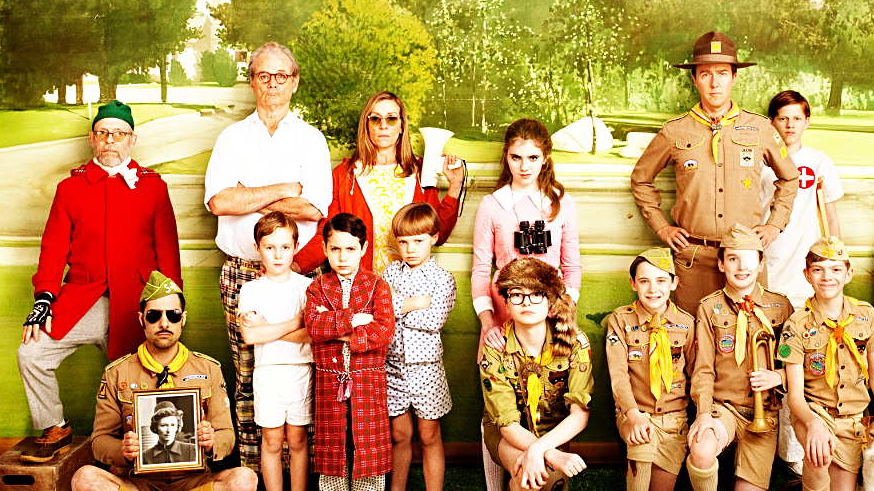
Wes Anderson has established himself as an irreplaceable and elusive American storyteller. At age 43, Anderson has already made films about the romance of crime (Bottle Rocket), a philanderer's gullibility (Rushmore), the unraveling of a family unit (Royal Tenenbaums), another family’s vitality (Life Aquatic), existential self-examination (Darjeeling Limited) and the impermanence of existence (Fantastic Mr. Fox–in animated form!). Anderson’s new film, Moonrise Kingdom, tackles the perils of young love.

nullYet, for a director who addresses such heavy themes in his work, Anderson himself remains an enigma. His public persona—sporting a hipster-ish corduroy and scarf-laden wardrobe—suggests that he is quiet, quirky, and undeniably cerebral. His films all share the borrowed visual scheme of his “pantheon of artistic heroes” (Martin Scorsese, Mike Nichols, and Orson Welles, among others). But trying to create a unified director profile for him is trite. Although Anderson seems quite the beaming poster-boy auteur, his films all contain a powerful undercurrent of much darker truths (the negligent father, the denial of failure, 21st century fatalism). If one looks past all the nifty camerawork, droll humor, and spot-on folk-rock soundtracks in the Anderson filmography, it’s obvious that Anderson is conveying the great American narrative of today: a narrative that follows fatherless children, refusing to grow up in an increasingly absurd world.
Nelson Carvajal is an independent digital filmmaker, writer and content creator based out of Chicago, Illinois. His digital short films usually contain appropriated content and have screened at such venues as the London Underground Film Festival. Carvajal runs a blog called FREE CINEMA NOW which boasts the tagline: "Liberating Independent Film And Video From A Prehistoric Value System."

VIDEO ESSAY: Depp Shadows: Tim Burton’s Cinema

VIDEO ESSAY: Depp Shadows: Tim Burton’s Cinema

“Basically Johnny Depp is playing Tim Burton in all his movies.” – Scott Rudin (Producer of Sleepy Hollow)

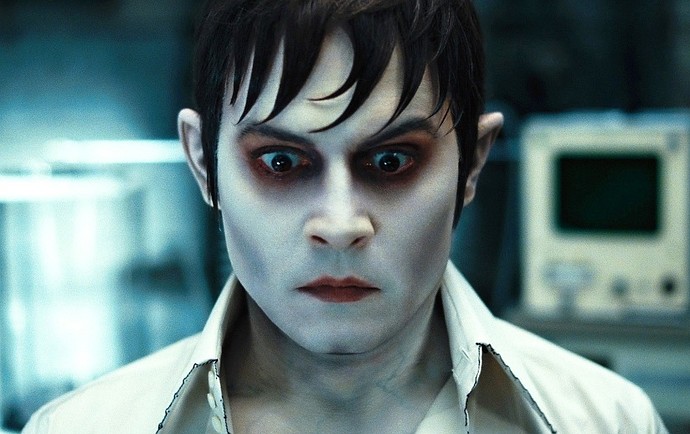
This ubiquitous quote by Rudin is often the throwaway summation found in most writings on, and dissections of, the cinematic works of Tim Burton with Johnny Depp. Which is a shame, really. The quote is not only too broad—it’s blazingly deceptive. Unlike other repeated director-actor pairings (from Martin Scorsese-Robert De Niro to Pedro Almodovar-Penelope Cruz), each succeeding film in the Burton-Depp canon actually becomes less about “digging” into an unknown abyss (e.g. as Scorsese faced male insecurity in Raging Bull and Almodovar celebrated female power over male dominance in Volver) than about the overall art direction of each film. Even though Burton’s prolific filmography boasts its share of critically (Big Fish) and financial successful (Planet of the Apes) non-Depp-starring movies, it’s worth studying the pattern behind those eight Burton-Depp projects. All together, those eight films have broken numerous box office records and have catapulted Burton into a tier of top-dollar directors. Currently, Burton is one of the few directors who could harness a towering financial investment from a studio in order to bring to any stylized, eye-pleasing idea he has to life.  In fact, if one were to examine the Burton-Depp filmography from top to bottom, it’s quite easy to see the shift from the personal to the pizzazz-filled.

Burton’s first two films with Depp are still his strongest and best works because each film subtly emoted shades of its creator: the shy, social outcast in Edward Scissorhands and the ambitious young filmmaker in Ed Wood. Even with impressive set pieces and dazzling costume design, both films were dominated by Johnny Depp’s carefully nuanced performances. It was the perfect marriage between Burton’s striking, visual storytelling and Depp’s risk-taking performance-art-style acting. Even though most films employ such marriages of talents, Scissorhands and Wood are unique in that they operate on two levels: the surface level looks and sounds like big budget Hollywood but (after repeated viewings) the pulse and internal workings of those films speak to more personal truths (i.e. the anxieties of the outcast), largely because Depp and Burton channeled one another’s sensibilities toward the material, thus giving those films a palpable vitality.

But then something happened. On their third collaboration, Sleepy Hollow, signs of a new Burton cinema began to emerge. This new Tim Burton cinema canon was more concerned with pushing the boundaries of its production design. In Sleepy Hollow, Depp’s (oft-underappreciated) turn as a morbidly grossed-out Ichabod Crane takes a backseat to the moody set pieces and strong work by the FX team. Gone were the quirky tableside manners of Scissorhands or cross-dressing revelations of Wood; in their place were the technically accomplished renderings of ghouls and the gothic. And Burton’s next two live-action films, Charlie and the Chocolate Factory and Sweeney Todd (both remakes), pushed the eye-candy envelope even further. Chocolate Factory basically forced Depp to become a peripheral player in the Burton blueprint of euphoric, candy-centric visualizations. Although Depp scored a Best Actor nomination for Sweeney Todd, his performance—which largely depended on Depp’s ability to always look sullen—is hardly a return to his intimate, versatile turns in Burton’s earlier works. Todd was based on a revered musical, and Depp rose to the occasion with singing chops; Burton turned in some strong visionary work once again (the bloody and bestial barbershop is a beaut), winning Burton the Best Director prize from the National Board of Review. So there’s that.

The real abomination came after the pair’s animated stint in Corpse Bride (which rehashed the stop-motion gothic fare of the Burton-produced Nightmare Before Christmas) and ironically enough became their biggest commercial success: Alice In Wonderland. A mammoth at the box office but overall critical dud, what Wonderland proved was that the new Burton-Depp formula had reached an apex. Early Burton films like Scissorhands had embedded themselves in pop culture to the point where audiences were simply content with knowing that Johnny Depp would be playing an unusual Burton-esque character in an unusual Burton-esque universe (a world somewhere between a Halloween-themed prom and alternate dimension “Saturn” from Beetlejuice). And it’s not that Burton doesn’t know how to make a surefire blockbuster that is also his own singular work of art (see Batman). In the end, the massively financially successful groove that Burton and Depp are in is probably the natural progression that some artists can make after churning out those intimate stories about dying (Beetlejuice), isolation (Edward Scissorhands) and finding your bicycle (Pee-wee’s Big Adventure). So if the latest Burton-Depp vehicle, Dark Shadows, is not a return to earlier form for the pair, at least it will deliver unmatched art direction and unrivaled commercial success. And if that’s the case, maybe Depp really is playing Burton in all of his movies; only now Burton isn’t the isolated, hungry filmmaker he once was.

Nelson Carvajal is an independent digital filmmaker, writer and content creator based out of Chicago, Illinois. His digital short films usually contain appropriated content and have screened at such venues as the London Underground Film Festival. Carvajal runs a blog called FREE CINEMA NOW which boasts the tagline: "Liberating Independent Film And Video From A Prehistoric Value System."

VIDEO ESSAY: Where Experiment Meets the Mainstream

VIDEO ESSAY: Where Experiment Meets the Mainstream

In an age of redundant remakes (Total Recall, Fright Night), attempted revamps (21 Jump Street, The Three Stooges) and even 3D re-launchings (Titanic 3D, Star Wars: Episode 1 – 3D) of past Hollywood fare, it’s easy to become disheartened at the current state of film and television. Then again, any sort of significant movement in cinema history stems from a desire to break free from the established filmmaking “norms” of that era (French New Wave, Italian Neorealism, etc.). Therefore, if today’s mainstream filmmaking temperament is rooted in simply remaking past scripts, movies and TV shows for new audiences—what is a strong way for select filmmakers to retaliate in an effort to create striking work? By absorbing the complex, original and impressionistic styles of post-1940s experimental cinema, the holy grail of non-traditional storytelling. And by surveying facets of some contemporary films, it becomes clear how influential experimental cinema is to today’s visual rhetoric.

One of the most important pieces of American experimental cinema, Meshes of the Afternoon (1943) by Maya Deren and Alexander Hammid, shows filmmakers turning the cinema of its time on its head. To read the script, Deren and Hammid’s film seems to be illustrating a woman’s feverish dream. Yet, at the time, audiences hadn’t witnessed a dream quite like this. Meshes took a conventional narrative, with characters, action, and music, and then restructured it into a circular story by repeating certain imagery, employing an offbeat editing rhythm, and using unusual camera angles to make everyday objects (a phonograph, a house key) seem ambiguously ominous. These stylistic traits are now readily evident in the works of such filmmakers as David Lynch (Inland Empire), Carolee Schneemann (Body Collage), Su Friedrich (Scar Tissue), and Barbara Hammer (Nitrate Kisses), among others. Further, the unforgettable visuals of Meshes—like a cloaked grim reaper with a mirror for a face—have bled into the pop culture via some music videos (e.g. Ambling Alp by Yeasayer).

There are even cases when Hollywood accidentally soars on the strength of some experimental films’ imagery—whether Hollywood realizes it or not. Case in point: Terry Gilliam’s 1995 sci-fi film 12 Monkeys is obviously inspired by (if not a remake of) Chris Marker’s La Jetée from 1962. La Jetée boldly told its story (of a man traveling through time in an attempt to save a post-apocalyptic Paris) simply by presenting a series of powerful still images and voiceover narration. But Gilliam’s film is not the only place a cinephile’s interest could be directed. For example, the image of the strained, blindfolded hero from La Jetée no doubt was in the mind of Steven Spielberg while making his Minority Report (2002). Who could forget the virtuoso sequence where Tom Cruise emerges blindfolded from an ice-cold tub to find a horde of crawling robotic spiders?  Cruise’s shocked face, frozen in time, mirrors the still image of the hero in La Jetée. In fact, imagery from Marker’s post-apocalyptic experimental masterpiece still shows up in other modern films (see the Jake Gyllenhaal character in Duncan Jones’ 2011 film Source Code) and music videos (e.g. Jump They Say by David Bowie) as well.

The most powerful impressions of experimental cinema in modern movies, though, are found in the works of filmmakers who are unabashedly rehashing the distinct styles of the avant-garde masters. For example, the abstract and vibrant visuals in Stan Brakhage’s film works (like The Dante Quartet, 1987) have left their mark on recent films by Paul Thomas Anderson (Punch Drunk Love, 2002) and Terrence Malick (The Tree of Life, 2011). Love splits up the chapters of its narrative by spraying abstract pieces of art on the screen; Tree features a sequence that flies by city storefronts until they bleed into vibrant, overlapping colors.

We could also look at the audacious narrative risks in an experimental classic like Michael Powell and Emeric Pressburger’s The Red Shoes (1948). The Red Shoes unexpectedly took its otherwise straightforward story about an ambitious ballerina and smothered it in psychedelic, voluminous colors and emulated elements of the surreal through bizarre imagery and costume design. The film was no doubt a psychological inspiration for Darren Aronofsky’s similarly ballet-themed Black Swan (2010). Swan even goes so far as to create similar fantastical characters (via hallucinations) and re-stage the earlier film’s distressed close-up shot on its heroine’s face during a climatic dance. In his Tetro (2009), Francis Ford Coppola takes it one step further by brilliantly restaging some Red Shoes-esque ballet dance sequences; Coppola even photographs them in the same 1:37:1 aspect ratio as Powell and Pressburger’s film.

In the end, perhaps the most profound (and possibly most important) sign of contemporary film’s wrestling with its experimental influence comes in 2001’s criminally underrated Vanilla Sky, by Cameron Crowe. Crowe’s film, like a plethora of other Hollywood films, is a remake of an already celebrated film (in this case, Alejandro Amenábar’s 1997 drama Open Your Eyes). In both films, a man is coming to terms with the life he lived and the (possible) life in front of him. Yet, unlike so many Hollywood remakes, Crowe is able to surpass the source material. Crowe does this by allowing the stylistic impressions of titan experimental filmmaker Jonas Mekas to enter Vanilla Sky. Mekas, known for his prolific filmography composed of personal film diaries (e.g. As I Was Moving Ahead Occasionally I Saw Brief Glimpses of Beauty [2000]), has developed a fragmentary visual style, created by quick edits and strategically inserted (handwritten) title cards. What separates Vanilla Sky from Open Your Eyes is the way Crowe capitalizes on Mekas’ visual strategy: Vanilla Sky unforgettably closes with a vomiting of personal archival footage in order to convey an internal reckoning of its hero.

What all of these examples show—other than how the unique styles of experimental cinema have become embedded in certain filmmakers’ techniques—is how vital it is to challenge the norms or ideas behind “traditional” moviemaking. If it weren’t for the risks of a select group of filmmakers, most directors would still be thumbing through Hollywood’s Rolodex of remake-ready titles.

Nelson Carvajal is an independent digital filmmaker, writer and content creator based out of Chicago, Illinois. His digital short films usually contain appropriated content and have screened at such venues as the London Underground Film Festival. Carvajal runs a blog called FREE CINEMA NOW which boasts the tagline: "Liberating Independent Film And Video From A Prehistoric Value System." You can follow Nelson on Twitter here.

VIDEO ESSAY: THE AVENGERS: Marvel’s Redemption?

THE AVENGERS: Marvel’s Redemption?

Amazingly, the Marvel movie brand has been able to survive with an enthusiastic audience—even in the midst of artistic failure. To explain: Marvel’s track record at the box office is basically critic-proof. No matter how bad or silly a Marvel movie may be (e.g. Thor), the bottom line box office numbers speak to a broader truth (e.g. Thor eventually grossed $449 million in ticket sales). And now with The Avengers, the already highly successful Marvel economic phenomenon should increase exponentially. Regardless of whether or not you’re sick to death of superhero movies, this upcoming release of The Avengers deserves some close examination—if not optimistic thinking. You see, unlike the cavalcade of superhero movies that preceded it, Avengers is attempting to do something that no feature film has ever done; it will cinematically bring to life all of Marvel Comic’s core superheroes in one movie, a feat that should excite a wide spectrum of fan boys. The top tier cast is unmatched: Robert Downey Jr. (Iron Man), Mark Ruffalo (Hulk), Scarlett Johansson (Black Widow), Chris Hemsworth (Thor), Jeremy Renner (Hawkeye) and Chris Evans (Captain America). So the real question is this: Is The Avengers the light at the end of the tunnel for a nation of loyal Marvel fans?

Perhaps the best way to tackle this question is to go back to what captured fans’ hearts in the first place—the Marvel comic books. Consider: The heroes that were created under the Marvel umbrella transcended the quick-fix throwaway ethos found in traditional comic strips (e.g. brief standalone scenes) by maturing through long prose narratives. For example, a comic book hero like “Captain America,” birthed onto ink and paper at the start of World War II, sprouted brimming nationalism. On the other hand, the “X-Men” comic books (1963) took their crucial twist, the existence of mutant heroes, and illustrated a parallel narrative evoking the anxieties of the African-American Civil Rights Movement. Each of these Marvel superheroes was able to tell a never-ending American saga in comic book form. His or her iconic superhero outfits could always be updated, but the heart of each hero was linked to its cultural reference in the national timeline.

Underlying their messages, of course, was the immediate draw of the Marvel comics: pure unadulterated escapism. A billionaire who builds his own iron suit to fight world terror! A brilliant scientist who can morph into a giant green beast when he’s angry! A demigod who wields a hammer with the force of thunder! They’re all sky-reaching wonders. On top of all this, the syntax of a comic book—with its varying panel sizes and meshing of word balloons against vibrant images—projected these flights of fancy onto the imaginations of generations of readers.

So what went wrong with the Marvel movies?

To be fair, using the phrase “lost in translation” would be unjust. After all, the motion picture medium works with different gears (sight and sound); plus the Hollywood system was never one to choose artistic purity over dollar signs. Yes, these Marvel movies are telling the literal comic book stories of each superhero—but not without diluting the purity of each hero with laughable screen dialogue (as when the titular hero of Captain America asks if he has time to pee before undergoing his explosive transformation) and distracting product placement (Robert Downey Jr. sure does love his Burger King in Iron Man). In fact, nothing is really “lost” in the translation from page to screen: it’s as if the filmmakers mistook the comic book ads as pages to the main narrative. These Marvel movies are super sized to please the most aloof of moviegoers; throw in some A-list movie stars, an innumerable amount of CGI explosions and you got yourself a box office hit.

Which brings us back to The Avengers. Over the last few years, Marvel has been hinting at an eventual all-barrels-blazing motion picture adaptation: The comic book character of Nick Fury (aptly embodied by Samuel L. Jackson) appears after the end credits of recent Marvel movies, recruiting each titular superhero to join the Avengers team. Now we are literally days away from seeing this cinematic event hit screens across the nation. The sheer anticipation from hordes of loyal fans will surely churn out staggering box office figures come opening weekend (possibly giving the film legs to ride out the early summer). Though, the real challenge for The Avengers won’t be to save the world onscreen or to etch its place in box office history. The real challenge will be in the film’s ability—or inability—to redeem the historical iconography of its heroes, which would in turn reaffirm Marvel as a vital cultural phenomenon (and not just an economic phenomenon). Fortunately, writer-director Joss Whedon reveres the mythology behind the characters he brings to the screen (look no further than his highly-celebrated Buffy The Vampire Slayer TV series). Couple that with his knack for gleefully deconstructing cliché movie vehicles (like his witty and ingenious screenplay for the horror-comedy The Cabin In The Woods) and The Avengers seems destined to be that one-in-a-million blockbuster that actually has the brains to match its box office brawn. It just might be the miracle fan boys, as well as commercial moviegoers, have been waiting for.

Nelson Carvajal is an independent digital filmmaker, writer and content creator based out of Chicago, Illinois. His digital short films usually contain appropriated content and have screened at such venues as the London Underground Film Festival. Carvajal runs a blog called FREE CINEMA NOW which boasts the tagline: "Liberating Independent Film And Video From A Prehistoric Value System."
You can follow Nelson on Twitter here.

VIDEO ESSAY: 2001/The Dawn of Blood

VIDEO ESSAY: 2001/The Dawn of Blood

Paul Thomas Anderson is a director who wears his cinematic influences on his sleeve. From sprawling dramas that echo Robert Altman’s work (Short Cuts, Nashville) to the signature camera movements found in Martin Scorsese movies (most notably Scorsese’s Copacabana Nightclub tracking shot in Goodfellas, which Anderson employs during a television studio walkthrough in Magnolia), the filmography of Paul Thomas Anderson is the direct result of passionate cinephilia merged with mastery in filmmaking. And Anderson’s last film There Will Be Bloodis the kind of staggering, challenging and singular piece of cinema that launches a director into the stratosphere, to be hailed as an “auteur.”

In Blood, it’s the influential work of Stanley Kubrick’s 2001: A Space Odyssey that permeates the body of the film. To say that There Will Be Bloodis only about the dawn of twentieth century capitalism is about as valid as describing 2001: A Space Odyssey as merely an astronaut’s adventure tale. Consider: Anderson’s masterpiece opens with a wordless, quietly haunting sequence, which in many ways mirrors “The Dawn of Man” section in 2001. Next, both films heavily rely on unnerving, sweeping pieces of music to drive key scenes; in 2001, György Ligeti’s “Requiem” brings malice to the mysterious black monolith, while Jonny Greenwood’s disconcerting Blood score suggests a volatile turn of the century American frontier. Finally, if one considers the framing of certain shots—apes around a black monolith, workers around an oil derrick—and the implications they carry, it’s obvious that Anderson is channeling Kubrick’s powerful visualization on the primordial nature of humanity, amidst the frail, dangerous act of discovery.

Nelson Carvajal is an independent digital filmmaker, writer and content creator based out of Chicago, Illinois. His digital short films usually contain appropriated content and have screened at such venues as the London Underground Film Festival. Carvajal runs a blog called FREE CINEMA NOW which boasts the tagline: "Liberating Independent Film And Video From A Prehistoric Value System."