Watch: Jonathan Demme and the Close-Up Shot: A Video Essay

Watch: Jonathan Demme and the Close-Up Shot: A Video Essay

The close-up may
be one of the most beautiful and conventional shots in cinema.  The shot
is used abundantly and is usually one of the first concepts discussed
in a filmmaking course.  While many close-ups share the same
conventions, Jonathan Demme put a signature twist on this old
and practical technique.  Most filmmakers choose to employ the close-up
shot during scenes of crucial dialogue–the scene cuts back and forth to
the characters’ respective close ups, each character looking to the
opposite side of the screen in order to mine the 180 line.  This is a
standard, yet effective, procedure and is seen in almost any film.  On
the other hand, Demme prefers to line up his characters in the center of
the frame and have them look directly into the lens of the camera.  As
the scene cuts back and forth, the characters usually match placement
and seem to be looking right at us, conveying a unique sense of urgency
or poignancy. 
Demme’s
approach to the close-up is effective on many emotional levels, and
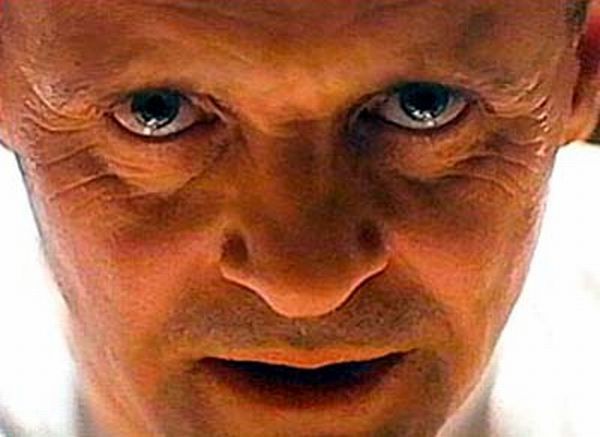
this is largely due to the eye/lens relationship.  When Dr. Hannibal
Lecter hisses at Agent Clarice Starling, we feel equally victimized.  As
Andrew Beckett succumbs to AIDS, we feel an overwhelming sensation of
sympathy.  These characters seem to be looking at us, and we therefore
connect on a deeper level.  Examining a Demme close-up out of context
may seem like breaking the fourth wall, but within the film, Demme
utilizes the shots so naturally and fluidly that we never leave the
cinematic realm.  Demme’s technique has also been copied by some of
today’s most respected auteurs, most notably Paul Thomas Anderson, who
has paid homage in ‘Hard Eight,’ ‘Boogie Nights,’ ‘Magnolia,’ and ‘The Master.’ 
While Demme has gravitated away from his signature approach to close-ups in recent years, the technique was a defining characteristic of a
Jonathan Demme picture from 1986–2004.  Here is a look at Demme’s
signature shot in seven of his feature films.
‘Something Wild’ (1986)
‘Married to the Mob’ (1988)
‘The Silence of the Lambs’ (1991)
‘Philadelphia’ (1993)
‘Beloved’ (1998)
‘The Truth About Charlie’ (2002)
‘The Manchurian Candidate’ (2004)

Jacob T. Swinney is an industrious film editor and filmmaker, as well as a recent graduate of Salisbury University.
Watch: The Power of Reflection in 120 Films (in Five Minutes)

Watch: The Power of Reflection in 120 Films (in Five Minutes)

Reflections
are a common find in every type of film, but what can we learn from them? 
What does it mean when a character gazes emptily into his or her own
reflection?  What is communicated when the filmmaker decides to focus on
the characters’ reflections rather than on their actual bodies? 
  There are several ways a reflection may be presented to us–we see
them in mirrors, windows, water, shiny surfaces–each holding numerous symbolic
interpretations.  Of course, just as sometimes a "cigar is just a
cigar," a reflection is often just a reflection.  If a character is
grooming in the bathroom, a reflection would clearly be a natural part of the
scene.  But even in cases such as this, the way the said reflection is
presented to us may hold deeper significance.

A recurring
idea expressed through reflections is duality.  Travis Bickle talking to
his reflection in Taxi Driver, the gasoline puddle foreshadowing Harvey Dent’s
disfigurement in The Dark Knight, and the overwhelmingly disorienting
mirror placement in Black Swan are prime examples of duality expressed through
reflections.  Reflections shown in the mirror of a vehicle can often
express regret, dwelling on the past, and isolation.  In Brokeback
Mountain
, Jack watches as Ennis becomes belittled by the distance in his side-view
mirror.  In Drive, we are frequently presented with the driver reduced
down to eyes in the rear-view mirror–this is all he has.  Sometimes
reflections are manipulated to help us feel the inner turmoil of a
character.  Rayon is pigeonholed into the tiny makeup mirror reminiscent
of his lifestyle in Dallas Buyers Club, Lou Bloom’s inner disconnect is
portrayed through his fragmented reflection in Nightcrawler, and Ed Avery’s
unpredictable state of mind is visually expressed through his fractured mirror
in Bigger Than Life.  Reflections presented in reflective surfaces other
than mirrors seem to suggest an intrusion of some sort.  As the elevator
doors close in Lost in Translation, Bob’s own identity is forced into his
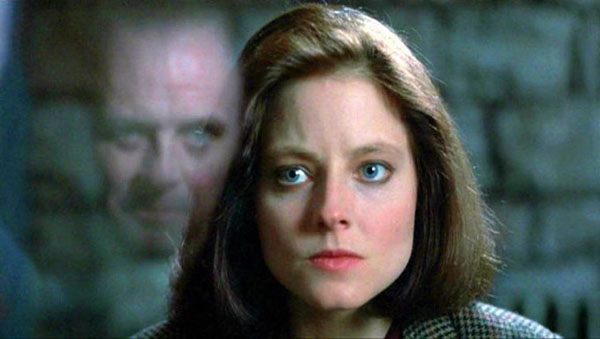
view.  During Clarice’s close-up in Silence of the Lambs, Dr. Hannibal
Lecter’s reflection in the prison wall monopolizes the frame–he is in
control. 

When used in a
significant manner, reflections can effectively communicate intricacies of a
character’s thoughts, feelings, and secrets that would otherwise not be
expressed visually.  Here is a look at significant reflections in 120
films. 

Watch: What Do David O. Russell’s Characters All Have in Common?

Watch: What Do David O. Russell’s Characters All Have in Common?

A character in a David O. Russell film cannot
be easily described in a few words. Russell’s characters tend to
possess a variety of contradicting qualities that spin and twist
throughout the duration of the film. It started in 1994 with the
quirky, baby-faced pre-med student who just so happens to have an
incestuous relationship with his mother (Spanking the Monkey). There’s
also the romantic and volatile mental patient who wants nothing more
than companionship (Silver Linings Playbook). And let’s not forget the
pudgy, comb-over-sporting con artist with a heart of gold (American
Hustle
). With all of Russell’s characters, we often witness a turbulent
assortment of emotions, ranging from one end of the spectrum to
the other–we see greed and sympathy, violence and tenderness,
neurosis and confidence. These characters are clearly not simple,
but ironically enough, they usually have one simple desire. And while
these characters may seem to be unlikeable on paper, in spite of their
tedious and often aggravating complexities, we cannot help but like
them. Here is a look at David O. Russell’s unpredictable characters
from 1996’s Flirting with Disaster to 2013’s American Hustle.

Films used:
Flirting with Disaster (1996)
Three Kings (1999)
I Heart Huckabees (2004)
The Fighter (2010)
Silver Linings Playbook (2012)
American Hustle (2013)

Jacob T. Swinney is an industrious film editor and filmmaker, as well as a recent graduate of Salisbury University.
Watch: 70 Films That Go Inside Characters’ Minds

Watch: 70 Films That Go Inside Characters’ Minds

Cinema
is no stranger to exploring the realms of dreams, memories, and
fantasies.  We’ve all been fooled by a strategically placed dream
sequence or been clued into opinion-shifting information via
flashbacks.  But visually speaking, how do we know that we are currently
viewing something created in a character’s mind?

Often, the
filmmaker chooses not to employ any visual cues that would suggest
something is not quite what it seems.  For instance, David Fincher’s
Gone Girl (2014) presents us with several lie-laced flashbacks that are
visually cohesive with the rest of the film.  In doing so, the film uses
manipulation tactics similar to that of Amy Dunne.  Christopher Nolan’s
Inception (2010) frequently tricks us into believing that dreams are
realities by not differing from the film’s overall visual look.  Nolan
seems to slowly introduce different visual elements as he is ready to
show his hand.  The same applies to Wes Craven’s A Nightmare on Elm
Street
(1984).  Craven often wants us to think that the characters are
awake and experiencing reality when they are actually dreaming.  It is
not until it is revealed that the character is in a dream that the look
of the film begins to change.  Little by little, aesthetics tend clue us
into the truth.  Sometimes a film completely blurs the aesthetic
boundaries of reality and fantasy and we have a rather difficult time
even deciphering what is and is not real.  David Lynch is notorious for
hindering the comprehension of his audience in this way. 

On
the other hand, sometimes a filmmaker decides to immediately let us know
that we are experiencing something within the mind of a character. 
This "aesthetic of the mind" is clearly different from the overall
look of the film and can be expressed in a vast variety of ways.  In
regard to flashbacks, there are two major types: a scene
that takes place at a time previous to the rest of the narrative, and a
scene that replicates the memories of a character.  The former tends to
use the same aesthetic approach as the rest of the film, while the
latter usually displays visual differences to mimic the perception of a
character.  The change could be as simple as the switching from color to
black and white in Spider-Man (2002), or the overly shaky camera
movement in Blue Valentine (2010).  While effective, these visuals can
often be misleading as we become overly connected to a character.  We
see things only as he or she remembers them, which may or may not be
entirely faithful to the truth.  For example, over-saturation can often
fool us into interpreting pleasant realities, while the opposite can
lead us to believe false negativity.  The idea of subjectivity is
especially amplified in films like Pulp Fiction (1994), where a flashback
is presented to us in a POV shot. 

Dreams and fantasies are a
bit less complicated when it comes to their aesthetic makeup.  Since neither of these elements are ever anchored in reality, the
filmmaker has an endless supply of visual tools at his or her disposal. 
The changes can range from the simple soft focus used in Ralphie’s
daydream in A Christmas Story (1983), to the CGI filled, vibrantly
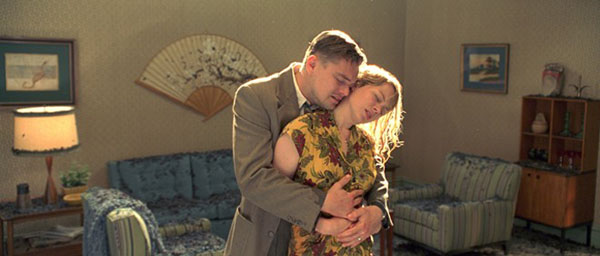
colored dream sequence in Shutter Island (2010).  Even viewing these
scenes out of context, the viewer would most likely suspect the action
is not taking place in reality.  These are the types of scenes being
investigated in this video–the scenes that clearly stand out as
non-reality due to noticeable aesthetic differentiation.  These scenes
showcase a few of the infinite visual techniques used to express the
ever powerful and manipulating mind.

Films used (in order of appearance):
American Beauty
American Hustle
Her
The Virgin Suicides
Django Unchained
Batman Begins
Shutter Island
The Shining
Vertigo
Kill Bill Vol. 1
Apocalypse Now
Mulholland Drive
I Heart Huckabees
The Big Lebowski
A Nightmare on Elm Street (1984)
Eternal Sunshine of the Spotless Mind
Fight Club
Noah
The Secret Life of Walter Mitty (2013)
Super
Scott Pilgrim vs. the World
Requiem for a Dream
Blue Valentine
Dallas Buyers Club
Watchmen
Brokeback Mountain
Silver Linings Playbook
Memento
Gladiator
Bronson
Inception
Blade Runner
Wish I Was Here
The Skeleton Twins
The Machinist
Warm Bodies
Man of Steel
Eternal Sunshine of the Spotless Mind
Terminator 2: Judgment Day
It’s Kind of a Funny Story
(500) Days of Summer
Happy Gilmore
Old School
Harold & Kumar Go to White Castle
Walk Hard: The Dewey Cox Story
This Is the End
The Hangover Part II
Zombieland
Pulp Fiction
Ray
The Crow
The Lovely Bones
The Bourne Ultimatum
Rambo
25th Hour
Kill Bill Vol. 2
The Green Mile
The Curious Case of Benjamin Button
Amélie
The Butterfly Effect
X-Men 2
Batman Forever
Spider-Man
Tusk
Raising Arizona
Papillon
The Big Lebowski
Fast Times at Ridgemont High
A Christmas Story
The Wizard of Oz

Jacob T. Swinney is an industrious film editor and filmmaker, as well as a recent graduate of Salisbury University.
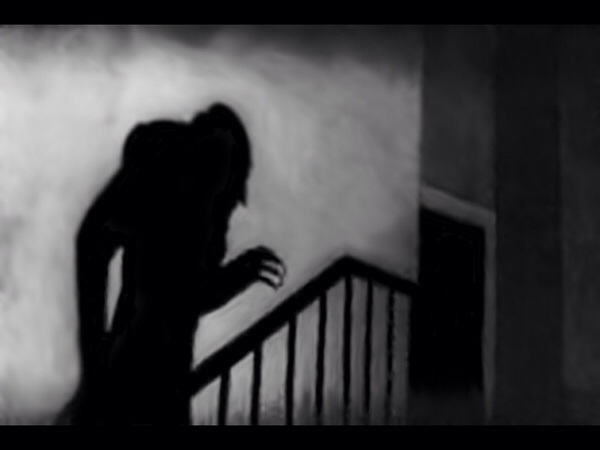
WATCH: A Video Essay on Shadows Through Cinema History

WATCH: A Video Essay on Shadows Through Cinema History

Shadows are a natural part of any given scene in a film–when the subject or an object interrupts a light source, an area of darkness is created.  But what happens when the shadow itself becomes the subject?  What happens when the darkness on the face of a character is something more than just the absence of direct light?  These types of shadows can communicate a variety of different tones and ideas. 

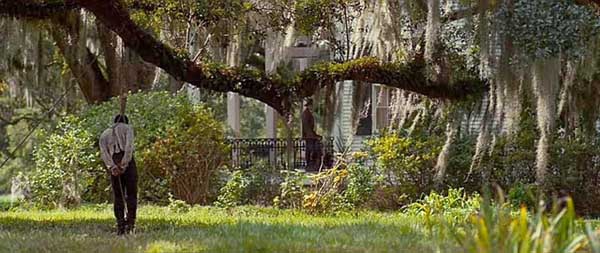
In ‘No Country for Old Men,’ Sheriff Ed Tom Bell opens the motel door to engage in what would be the climactic final shootout in a more traditional western.  The door slowly swings open, revealing the shadow of an iconic cowboy on the opposite wall. We see what Bell needs to be–something he simply cannot.  In ‘Raging Bull,’ the weight of Jake LaMotta’s imprisonment is expressed through the exaggerated, intruding shadows in his cell. His mental imprisonment becomes as apparent as his physical captivity.  In ‘There Will be Blood,’ a train moves across the sunset, creating a ripple of shadows on the face of the observing Daniel Plainview.  A train, the vehicle that both brought his son home and took him away, obstructs the direction of his progress. 
While many shadows in cinema are simply a complement of lighting, the very deliberate and thoughtful shadows in this video convey everything from fear to empowerment–from the empty to the iconic. 

Films used:
Nosferatu
Frankenstein (1931)
The Cabinet of Dr. Caligari
Raging Bull
Psycho (1960)
The Big Combo
Scarface (1932)
Rumble Fish
Sin City
Sin City: A Dame to Kill For
No Country for Old Men
Django Unchained
Raiders of the Lost Ark
Lawrence of Arabia
Punch-Drunk Love
Unbroken
The Thin Red Line
The Tree of Life
To the Wonder
The Assassination of Jesse James by the Coward Robert Ford
Forrest Gump
Drive
The Girl with the Dragon Tattoo
Jennifer’s Body
Unforgiven
The Big Lebowski
Skyfall
Apocalypse Now
Batman (1989)
The Dark Knight
Under the Skin
Inglourious Basterds
Only God Forgives
Strait-Jacket
Batman Returns
Man of Steel
Blade Runner
Pulp Fiction
Dallas Buyers Club
There Will be Blood
12 Years a Slave
Black Swan
V for Vendetta
Memento
Inside Llewyn Davis
Kill Bill Vol. 1
True Romance
The Departed
Panic Room
The Aviator
The Hurt Locker
Double Indemnity
The Man Who Wasn’t There
Shutter Island
The Godfather Part II
Lincoln
Batman Begins
Magnolia

Jacob T. Swinney is an industrious film editor and filmmaker, as well as a recent graduate of Salisbury University.

Watch: A Video Essay About Sofia Coppola’s Dreamlike Aesthetic

Watch: A Video Essay About Sofia Coppola’s Dreamlike Aesthetic

What defines the Sofia Coppola aesthetic? Is it the sublime use of soft
and natural lighting? Is it the subtle pastels of the color pallet?
Maybe the handheld camera that dizzily floats around the characters?
All of these visual characteristics work together harmoniously to create
Coppola’s distinct dreamlike atmosphere. However, the aesthetic
reaches far beyond the idea of a visual trademark–Coppola’s atmosphere
seems to mirror the inner workings of her characters. As Charlotte
ponders a fully-realized life in Lost in Translation, the camera
stutters around her in a circular motion. She is washed away, her
clothing blending into the matching surroundings. In The Bling Ring,
the silhouetted bandits streak across the glittery horizon as they chase
their gaudy and tainted desires. In Marie Antoinette, the fanciful
nature shots portray a longing for freedom and self-fulfillment.
Coppola crafts these dreamscapes to show us not only who her characters
are, but who they want to be.

WATCH: Steve McQueen’s Lingering Camera: A Video Essay

WATCH: Steve McQueen’s Lingering Camera: A Video Essay

In an era that is saturated with lavish and complex camera movement,
Steve McQueen stands out for implicating the contrary. McQueen often
employs the static shot in crucial situations, a technique that
partially defines the unique style of the director’s three
feature-length films: 12 Years a Slave, Shame, and Hunger. Rather than using a slow dolly or handheld
movement to convey poignancy, McQueen chooses to simply leave the camera
be. In doing so, he urges us to fully absorb the moment–there are no
pans to guide us away, or even a rack focus to slightly divert our
attention. McQueen seems to especially favor the static shot during
gruesome struggles and times of extreme distress. He often lingers on
these moments for extended periods of time, yet the camera remains
motionless. Like the characters, we cannot escape the moment and we are
forced to endure every second.

Jacob T. Swinney is an industrious film editor and filmmaker, as well as a recent graduate of Salisbury University.