Watch: David Fincher’s Early Film Work: A Video Essay

Watch: David Fincher’s Early Film Work: A Video Essay

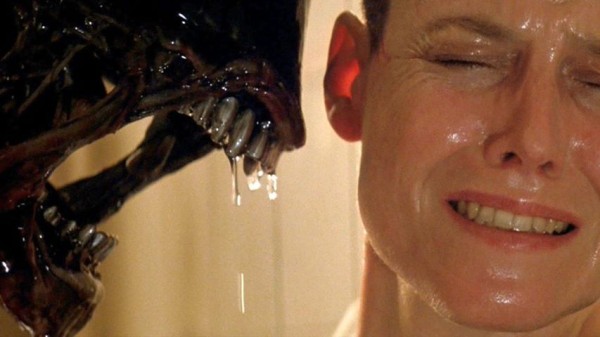
The early years of David Fincher were, to watch this installment in the excellent Directors Series by the Raccord collective, very different from the later years, at least in content. The nearly-half-hour-long piece details how he got his start making music videos for the likes of Rick Springfield, Paula Abdul, and The Motels, even making a documentary about Springfield called The Beat of the Live Drum. We’re given a hint of the discomfiting approach to come in a short film Fincher made for the American Cancer Society in 1984 featuring a (cigarette-) smoking fetus, modeled after the Star Child from Stanley Kubrick’s 2001: A Space Odyssey. (Watch it: it’s truly disturbing.) We also learn about his travails with the maligned Alien 3, his first feature film. What’s happening here, with these early projects of Fincher’s, is what would be best called the finding of a form. Just as you might be able to tell a lot about a writer by reading his or her first book, we can see a lot of the later Fincher in his 1980s videos–the steely sheen that lies over everything, the sense of perfection, and the sense of pure mania that lies beneath that perfection. For anyone who wants to learn a little about artistic development, and in particular about Fincher’s development, this would be a good piece to watch.

Watch: David Fincher’s Eternal Return in ‘Gone Girl’: A Video Essay

Watch: David Fincher’s Eternal Return in ‘Gone Girl’: A Video Essay

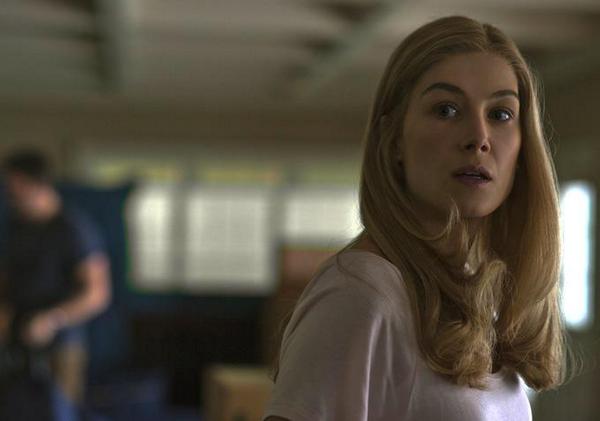
Ah, the eternal return. History repeats itself. We think we change, but we don’t. You think someone may surprise you with unpredictable behavior–and then they don’t. Gone Girl is a perfect film to demonstrate this historical and, at bottom, psychological tendency; the most consistent thing about both Nick Dunne and Amy Dunne is their duplicitousness, and we keep seeing it over, and over, and over again throughout the film. And, as Jop Leuven points out in this brief but pointed video essay, the film’s visual structure mirrors this repetition; we see the same shots, with slight variations, repeated from the beginning to the end of the film. Amy lying on a pillow. Nick standing in front of a picture of his wife. Amy opening a door with mock innocence. And onwards. David Fincher is a master explorer of the works he adapts; he gets under the hood, assesses their potential, and, after a little bit of tinkering, takes us through them with such brio that the work he is adapting is utterly transformed. His adaptation of Gillian Flynn’s brilliant novel is no exception, as this video proves.

Watch: Title Sequences: The Leap from Alfred Hitchcock to David Fincher

Watch: Title Sequences: The Leap from Alfred Hitchcock to David Fincher

Alfred Hitchcock and David Fincher have made remarkable thrillers, and they have also been responsible for some wildly imaginative title sequences. This video essay by Susana Sevilla shows us how, as filmmakers have transitioned to digital filmmaking, the images they present us with have changed as well. Savila focuses on contrasting the angular, stylish titles of Psycho or North by Northwest with the more surreal, dreamlike sequences of films like Se7en or Panic Room. Both directors’s openers are disorienting, certanly; they bring us from the day-world outside the theater into the night-world within it, and they drive home that what we are watching on the screen is not real, never will be real, and will force us into direct contact with the more discombobulating parts of our imaginations. Because the directors are using different tools, though, their ways of easing us into the strange dream of their movies is different; a different visual language is being spoken by Saul Bass in the older films than the one being spoken by Kyle Cooper in the later films. Whatever the language, though, this well-researched piece makes a concise point deftly and elegantly. Watch it, and behold title sequences that are like small movies by themselves.

GONE GIRL’s Cool Girl: Hero or Villain?

GONE GIRL’s Cool Girl: Hero or Villain?

nullSpoiler Alert: The following piece contains spoilers.

Gone Girl is a prickly, cerebral film, not unlike the dazzling villain who sets Gillian Flynn’s immaculately constructed
story into motion. It’s shot in bruised grays, with cold, antiseptic lighting;
the plot leads to a  dénouement that has sparked a thousand
thinkpieces and awkward dinner date conversations about gender and violence,
and the nature of marriage itself. However, I left the theater thrumming with
emotion: inchoate half-thoughts made more potent by their rawness. I couldn’t
articulate the power of what I’d seen until the following night, when I sat in
the back row of a burlesque show. One of the performers took the stage in a
gold sheath dress, fabric wings, and a dragon mask.  She whipped her lithe, muscular body around
the stage, shimmying out of her dress, down to g-string and pasties; towards
the end of the song—Lorde’s “Royals”—she removed her mask, revealing an
elaborate make-up of jewel-bright gold, blue, and green that made her face look
as if it were covered in scales. Underneath her dragon’s head was a female
body, pale and pliant. Woman as fantasy. Woman as monster. Object of desire.
Destroyer of worlds.

I
return to this image, and the awe it inspired in me, as I take stock of the
discussions buzzing around Gone Girl, film and novel alike: the importance of
likeability in male and female protagonists; the ethics of constructing a
central character like Amy Elliott Dunne, who falsely accuses men who’ve
angered her of rape and abuse; and feminist deconstructions of the Cool Girl.
Gone Girl is a sardonic horror story that upends the tired Primetime tropes of
the suburban hubby with a heart of darkness beating under his pastel polo
shirt and his angelic-looking blonde victim by repositioning that
angelic-looking blonde as the predator. The story has a chokehold on the zeitgeist because it offers something
exceedingly rare and unimpeachably vital: a protagonist who shows that women
don’t have to be the sheep fleeing as the winged shadow swoops down. We can, in
fact, be the beasts with the long teeth.

In an essay
excoriating our cultural scab-picking over “likeable” female characters, the novel’s author and the film’s screenwriter Gillian Flynn writes: “[Men] have
a vocabulary for sex and violence that women just don’t. And we still don’t
discuss our own violence … women have spent so many years girl-powering
ourselves—to the point of almost parodic encouragement—we’ve left no room
to acknowledge our dark side. Dark sides are important.” Most mentally healthy
women who settle down in the dark to watch Amy Elliott Dunne frame her
philandering husband, Nick, for her murder, and take a box-cutter to the throat
of her Nice GuyTM ex-boyfriend, the king of condescending micro-aggressions,
certainly wouldn’t follow suit or agree that her reactions were proportional to
the offenses against her. Similarly, most men who watch American Psycho don’t
get their jollies shooting homeless people with nail guns. And yet, any woman
who has ever been cast aside for “a younger, bouncier Cool Girl” or had a man
explain to her what her best interests are has burned with the incandescent
rage that lights Amy’s torch, that glints off the axe she grinds.

Gone
Girl
is the first film in recent memory, and, arguably, one of the few films,
period, to offer a female villain who isn’t just the token henchwoman to the
true nemesis—the figure who exists so that the hero, amidst the rock ‘em-sock
‘em violence, can demonstrate his fundamental goodness by agonizing over
whether he can hit a woman, as in Scott Pilgrim vs. The World; or so that
the hero’s love interest can prove her pluck (and be counted as a “strong
female character”) by relieving him of the burden and fighting the evil bitch
herself, as did Mariko in The Wolverine—but
a vicious mastermind out for her own ends. Her drive for power and control
doesn’t manifest in a rah-rah “girls run the world” way; it emerges with an
arctic darkness that aligns her with characters like Michael Corleone or
Patrick Bateman or Walter White. These men’s violence and cunning often
articulate—and complicate—particular modes of masculinity: the boss of all
bosses, the soulless executive, the one who knocks.

The novel winks
slyly at the conventions of the anti-hero, the man who transfixes us
despite—or, more likely, because of—his badness. Nick is a case study in
internalized misogyny: “… my father, a mid-level phone company manager who
treated my mother at best like an incompetent employee … his pure, inarticulate
fury would fill the house for days, weeks, at a time, making the air humid,
hard to breathe … He just didn’t like women. He thought they were stupid,
inconsequential, irritating.” At first, we think we’re reading yet another
account of another white man struggling with his savage nature; then Amy wrests
the narrative from him in ways that the Carmela Sopranos and Sklyer Whites, or
the countless movie femme fatales who need the love of a good man to get out
from under a bad man’s thumb, never do.

The
machinery of Amy’s plot whirls and grinds on the standards and ideals of
feminine identity: “Amazing Amy … Ultimate-Frisbee Granola and Blushing Ingénue
and Witty Hepburnian Sophisticate. Brainy Ironic Girl and Boho Babe … Cool Girl
and Loved Wife and Unloved Wife and Vengeful Scorned Wife.”  Her Lecter-like precision in orchestrating
Nick’s trip up the river; the machete-sharpness of her observations about
gender, power, and identity; and the tremulous divide between the Amy who
outlines her plan and her motives with a crisp alacrity and the Amy who churns
with a pure, inarticulate fury make her a more compelling, even charismatic
character and a more effective predator.

Amy shifts through
a Kaleidoscope of identities to court, hold, and ultimately destroy the man of
her dreams. More than that, she wants to thrive—to win—in a world that still
just doesn’t like women. She uses the tropes of female victimhood—“a wonderful
good-hearted woman—whole life ahead of her, everything going for her, whatever
else they say about women who die—[who] chooses the wrong mate and pays the
ultimate price”—as the scaffolding of her plan. She is Snidely Whiplash in
damsel’s clothing, and this feels like a liberating alternative when women’s
suffering is treated like the wallpaper decorating so much of our
entertainment.

The week before Gone
Girl
was released in theaters, I saw The Equalizer, an extravaganza of
slow-motioned, nü-metal soundtracked, fetishized violence; the scene in which
our hero, a former black ops assassin, drives a corkscrew into his mafioso
opponent’s throat is almost loving in its meticulousness. However, his
berserker fury is acceptable, even heroic, because he is taking on the Russian
mob to ostensibly save a teenager trafficked into sex work—a character that
only exists to sport mini-skirts and black eyes, to be beaten and degraded so
that our hero can be stirred into righteousness. By contrast, Amy is her own
avenger; she will play victim, but she will not be one.

Gone Girl has been
rightfully praised as a satire of our media’s bloodlust, especially for the
stories of violated women: kidnapped co-eds, teenage sex slaves, battered
wives, rape victims; stories that are intended, on the surface, to shock and
appall with the scope of women’s suffering but can, instead (and perhaps
deliberately) turn that suffering into something titillating. Amy weaponizes
this suffering. When she’s forced to turn to Desi, her controlling ex, for
shelter and support, she plies him with sob stories of being beaten into a
miscarriage, fearing for her life; to con him, she becomes a fusion of broken
girl and happy housewife. In a New York Times interview, Flynn says that, “She
embodies [these stereotypes] to get what she wants and then she detonates
them.” And after Amy murders Desi—slitting his throat mid-coitus in a moment of
Grand Guignol that rivals Hannibal Lecter’s face-eating or Patrick Bateman
shimmying to “It’s Hip to be Square” as he hacks a rival to death—she plays to
the chivalric impulses of the mostly male FBI team handling her case, spinning
a graphic yarn of rape, torture and debasement; the things that, on some level,
every woman fears when she walks through a parking garage with her keys between
her knuckles or leaves a Match.com date’s name, number, and photo with a good
friend. 

As she gives good
victim, Amy wears the blood of the man she fucked and killed, blood that mocks
the willful naiveté and complacency of the cops—who prove all of her theories
about how men regard complex, difficult women correct when they silence the
lone woman detective who dares to ask probing, potentially damning questions.
Home from the hospital, she strips down in front of her husband, and that blood
is war paint; her naked body isn’t an object to be punished or desired—it is a
threat. The remainder of the film is a sly inversion of the typical domestic
violence narrative: one shot of Nick locking himself in the spare bedroom,
pensively staring at the door as the monster-he-married sleeps one room over,
is a mirror image of “Diary Amy,” the persona Amy created to frame Nick,
cowering under the covers, confessing on the page that the man of her dreams
may truly kill her. That shot provoked a nervous twitter of laughter throughout
the theater I attended, a sign that we’re still so ill at ease with a woman
assuming the full potency of the villain archetype, an archetype that will keep
its hold on us as long as there are slasher flicks and crime dramas, action
blockbusters and gritty indies.

There’s been a lot
of editorial hand-wringing over whether Amy’s actions make her Bad For Women.TM
Yet, we don’t wonder whether Patrick Bateman, skinner of women, represents a
misandrist’s wet dream. We don’t insist that Hannibal Lecter or Alex De Large serve
as exemplars of masculinity, or Michael Corleone be led away in handcuffs for
ordering the hit on his brother—in fact, we don’t want to see him humbled or
reduced. We want the vicious, vicarious thrill of watching him get away with
it. Think of the fans who study that diner scene that ended The Sopranos as if
it were the Zapruder film, searching for proof that Tony lives to lie and
scheme and kill another day.  Male
characters don’t have to be moral in order to be complex or aggressive.

Novel Nick unwittingly
articulates how our culture’s supposedly full-throated endorsement of the
strong, independent woman is, in some ways, merely a hiccup: “I can celebrate
and support and praise—I can operate in sunlight, basically—but I can’t deal
with angry or tearful women. I feel my father’s rage rise up in me in the
ugliest way.” We embrace Katniss Everdeen and Danerys Targaryen and Michonne
because they are heroes (even if they don’t want to be). Though they can be
killers, their anger and tears are funneled into liberating innocents and
protecting the people they love. Each of these women is an important,
empowering figure; still, she is lethal, but not dangerous. And we need
dangerous women on-screen; women who can claw open and bite down into the scarred
center of any woman (every woman) who has suppressed an unfathomable anger, a
will-to-power that can’t be contained in a pin-stripe suit. We need women whose
talons break through skin and spread bones to rip out the great, thick
throbbing heart. We need women who breathe fire. 

Laura Bogart’s work has appeared on The Rumpus, Salon, Manifest-Station,
The Nervous Breakdown, RogerEbert.com and JMWW Journal, among other
publications. She is currently at work on a novel.

The Unknown Unknowns: Just How “Ambiguous” is David Fincher’s ZODIAC?

The Unknown Unknowns: Just How “Ambiguous” is David Fincher’s ZODIAC?

Editor’s note: The following is a conversation about David Fincher's 2007 film Zodiac. It was inspired by Twitter conversation about whether it is, in fact, an ambiguous movie, as many have claimed, or if it only seems that way; if it's open, closed, or somewhere in between.

The participants are Sarah D. Bunting, publisher of TomatoNation and the true-crime blog The Blotter; Mike D’Angelo, film critic for the Las Vegas Weekly and a regular contributor to The A.V. Club, among other outlets; and Matt Zoller Seitz, TV critic of New York and co-founder of Press Play.

DARKNESS VISIBLE

Matt Zoller Seitz: Zodiac is very much an open-ended, in some ways deliberately frustrating movie. David Fincher directed the script by James Vanderbilt, which was based mainly on the writings of the film’s main character, the cartoonist turned amateur detective Robert Graysmith (Jake Gyllenhaal). One of the things that makes the movie stand out from other thrillers is how it sticks with a pretty conventional structure, and yet in the end, we don't know who did it. The frustration of knowing that we don’t know is at the heart of the film’s power.

nullSarah D. Bunting: It is and it isn't ambiguous. It's ambiguous about whodunnit, certainly, and has no choice in that regard; the case is unsolved, and it's not one of those "technically open" cases (op. cit. Lizzie Borden) where everyone's basically in agreement as to who did it but no charges were filed. Even the casting is ambiguous. The IMDb entry for the film lists four Zodiacs, played by three different dudes, none of whom is John Carroll Lynch’s character Arthur Lee Allen, or that creeper film archivist played by Bob Vaughn. So there's that.

But where I think the film is unambiguous is in its understanding that everyone involved with the case needs to have it solved, or to believe something; that until something final is arrived at, it's going to torture the cops and the columnists and Graysmith.

Mike D’Angelo: I lean more much toward isn’t than is.

Zodiac was based on two books by Graysmith, both of which attempt to make the case that Arthur Leigh Allen was the killer. Indeed, the second book is called Zodiac Unmasked, and clearly means to accomplish precisely that.  And the film, to its slight detriment (I do like it overall), follows Graysmith closely. In particular, the last 10 minutes make what I consider a pretty unequivocal case that Allen was the perp, and I just don't see the maddening uncertainty claimed by the movie's most rabid fans.

But I'm willing to be convinced!

Matt: I see Graysmith becoming increasingly convinced that he knows who did it, and increasingly frustrated that he can't definitively prove it. But I feel like the movie draws a clear line between what Graysmith believes, or wants to believe, and what the script is telling that we can believe.

It kind of goes back to what Sarah was saying: that so much of the film's energy comes from tapping that incredibly fierce desire to believe something, to have a definite answer. One of my favorite sayings is that I like ambiguity in art and certainty in life. Zodiac gets that, and I think to some degree, it's about that. The story is ambiguous even though certain characters feel certain.

And here I want to share a fragment of a piece I wrote for my first blog, The House Next Door, back when Zodiac came out:

null"It's conventionally structured but unconventionally conceived and shot—a long, deliberately repetitious movie with an inconclusive ending about people whose obsession with justice bore no fruit. Its three central characters—[Detective Dave] Toschi, San Francisco Chronicle reporter Paul Avery (Robert Downey, Jr.) and editorial cartoonist Robert Graysmith believe, like all driven movie heroes, that they can succeed where others failed; obsession gives them delusions of grandeur, alienates them from their colleagues and families and leads them to the edge of madness, but never to the truth.

Zodiac's 158-minute running time contains scenes that repeat as the story unfolds; the versions have different, often frustrating outcomes. About a dozen years after the killer's first appearance, Toschi's original partner (Anthony Edwards) retires, and Toschi lamely tries to repeat the shtick with his new partner, who isn't having it; likewise, after Avery flames out from paranoia and substance abuse, his acolyte Graysmith tries to re-create their unlikely newsroom friendship with Avery's replacement (Adam Goldberg) who can't be bothered. Time changes everything but the narrative's forgone conclusion (or non-conclusion). Nearly four decades after Zodiac's first kill, his identity is still shrouded in darkness."

Sarah: Yeah, I think you have three belief systems here: what the viewer believes; what Graysmith believes; and what the film believes.

It's clear Graysmith believes that Allen is the guy; viewers will believe . . . that, maybe, or will look at the chyron postscript about Allen's DNA (and the refusal of various jurisdictions to rule him out based on that) and think it's not him.

I have to say, I don't think the film "believes" anything one way or the other. It's not as interested in the answer as it is in why these people have become so obsessed with the question.

Mike's comment about the inconclusive ending being "maddening" to fans is interesting, though. Who would be a fan of this movie if they couldn't tolerate not getting a definitive ruling at the end? (Unless you just really like Downey's performance, which, fair enough.)

Mike: See, I feel like all three of the belief systems Sarah enumerates converge at the end. (Prior to that, I'm in complete agreement with both of you.) What Graysmith believes is clear. But in the last few minutes, we see him persuade Toschi; everything about Ruffalo's performance in that scene conveys dawning respect.

And the final scene, which I think was a huge mistake, doesn't involve Graysmith at all—it depicts one of the Zodiac's surviving victims positively identifying Allen from a photo lineup. Then every single sentence of the chyron scrawl at the end implicates Allen, apart from a couple of details they had to mention like the DNA mismatch (which gets undermined in the very same sentence). It's not just Graysmith. The film buys into it too.

“THE PROBLEM IS CONTENT, NOT FORM”

Matt: It fascinates me, Mike, this take you've got going here. It's almost like you're saying the film is pretending to be something it really isn't, and I just don't get that at all.

Mike: I don't think it's pretending to be something it's not. I think it loses its way at the end because it's sticking so closely to Graysmith's book (which ends exactly the same way the film does).

Sarah: For the record, I love that ending. I like that the investigator (James LeGros and his awesome/awful hair) is trying, and kind of failing, not to prompt Mike Mageau into sticking with that first ID of Allen.

I also think if we'd gone out on that staredown between Graysmith and Allen in the hardware store, that would have felt pat and unsatisfying in a different way.

But I don't think Mike and I are that far apart. I'm just interpreting certain moments as having more "but on the other hand…" in them than he is. I also think that if the movie were more accurate in its characterization of Graysmith as an obsessive-compulsive know-it-all, vs. a cute pest who looks like Jake Gyllenhaal, we might see it differently.

Matt: Mike, can you elaborate a little on how you think the movie "loses its way" at the end? I mean, in terms of form and content, I guess. What's it doing, or doing wrong?

Mike: The problem is content, not form. If the film means to leave us with the idea that the Zodiac case made obsessive near-madmen out of the people struggling to solve it, or just come to terms with it, there's way too much in the way of a closing argument and not nearly enough undermining of said argument.

nullThat's what I'd like to hear from you especially, Matt. What's happening on the surface is pretty plain: Graysmith lays out all the evidence against Allen, a victim IDs Allen, etc. How is Fincher (and/or Vanderbilt) complicating that? What are we seeing/hearing that should make us doubt the certitude of the characters?

Matt: The look of the film, for one thing. The style. The whole vibe of it.

What cinches the ambiguous take for me is Fincher's emphasis on revealing darkness. That's partly a function of how he shot the film, in very low light with an HD camera, and also the use of screen space: lots of acreage, lots of shots that diminish the character or shroud people in shadow. That sets up a fascinating contrast between what the film is telling us about these investigators—right up to and including the ending—and what the characters are feeling.

Mike: There’s not a lot of darkness in the end stretch I'm talking about, though. The diner, the hardware store, the airport room where the photo lineup happens—all well, conventionally lit. I'm talking specifically about the last ten minutes. As I say, I do think that prior to that, your interpretation is on the money.

Matt: See, I think it's important, and that it works, that we see less darkness at the end. It's an ironic and appropriate way to shoot that final stretch, because we think we're getting closer to The Answer, but we stop short of it.

It's this movie's version of the horror movie strategy, gradually revealing more and more of the monster. Only here, we really don't see the monster. The movie denies us that clear look, even as it's making us crave it.

THE LAND OF TINFOIL HATS

Sarah: Graysmith undermines his own argument, frequently. Not in the last ten minutes. But some of the connections he draws in his research (and the film actually minimizes the miasma of bonko that attends some of his writings in real life) are from the land of tinfoil hats.

Mike: Sarah, I think Graysmith is dead wrong, for the record. Having spent a lot of time researching the case (from long, long before the movie was made—starting in 1981), I'm convinced Allen was not the Zodiac. Just a sidenote.

Sarah: I don't think it's him either. He has the most circumstantial evidence arrayed against him; it wouldn't have gotten him convicted. I do think the movie wants us to think that it's probably Allen…despite Graysmith, not because of Graysmith.

Matt: It's kind of funny in retrospect to see Zero Dark Thirty, knowing about its production history. It went into preproduction before they caught Bin Laden, and it was supposed to be more like Zodiac, as I understand it: a movie about living with not knowing, or without justice, whatever that means to you. Then they killed Bin Laden, and there was closure! History intervened with notes instead of the studio. And yet the two movies still have a lot in common, including a kind of mysterious, the-ground-is-shifting-under-our-feet vibe, coupled with a definite outcome and a lone wolf protagonist that we root for, and believe might be right.

nullI'm fascinated by movies like Zodiac — movies that adopt what seem to be very conventional approaches and then frustrate the hell out of us. Our moviegoing DNA is encoded with particular expectations, which Zodiac refuses to satisfy. We get a few inches from the finish line, but we don't go over. In some ways I think that’s more radical than if it had taken a more "art film" approach, a Blow-Up or The Conversation kind of approach.

Sarah: I wonder if that says more about the subject than the directorial approach?

Matt: Maybe it says more about the audience!

Sarah: It does in my case. Heh. “Lindbergh baby? I hope you bitches packed a lunch.”

Mike: See, in the end, for me, it kind of boils down to this: If your goal is to reveal more and more and more but ultimately leave the viewer hanging in the way you describe, why in heaven's name would you have the last thing in the movie be a victim saying, very forthrightly, "Last time I saw this face was July 4, 1969. I'm very sure that's the man who shot me." CUT TO BLACK. (Followed by a bunch of chyrons further implicating Allen.) It just doesn't make sense to me.

Matt: Well, I think you're making the ending sound more definite than it actually feels — or more definite than it felt to me, anyway. We know they never caught the Zodiac. All they had were hunches.

THE WORLD ACCORDING TO GRAYSMITH

Sarah: I didn't find the ending bothersome, or have those expectations for it, but I have read so much about unsolved cases that that's no longer an issue for me. There's a quote from John Douglas, the FBI profiler sensei, with regard to JonBenet Ramsay, where he says that every case has a bunch of misleading/irrelevant "evidence" that doesn't fit, and you have to learn to live with that. I always think of that quote when I watch the end of Zodiac.

But I disagree with Mike that the ending is that forthright"It could also be this guy…he had a face like this. No, sorry, it's the first guy I pointed at." Followed by a chyron saying Allen was not indicated by the DNA sample.

Mike: Ah, but he doesn't say "it could also be this guy." He's very clear at all times that it's Allen. He uses one of the other photos as a way of noting how Allen's face at the time of the incident differs from his driver's license photo. But he doesn't waver about the ID. At all.

Sarah: I don't see it that way. I think he was being influenced somewhat by Det. LeGros's eagerness for a firm ID. (I don't recall whether Mageau was this definitive in real life.)

What the film seems to want us to see in that moment is how badly the investigators, and by extension we, need a solid answer, something they can move on, whether that answer is "correct" or not. LeGros is practically vibrating. 

But your argument is solid. I'm not mad at it.

Mike: We see that very differently. (I just watched it again, twice, earlier today.) LeGros seems to me very concerned that Mageau will make a false positive ID. Tells him twice before they start that just because he's showing him a bunch of photos doesn't mean the killer is necessarily one of them.

nullAnd then when Mageau points to another photo (again, just by way of comparing faces—saying "his face was fatter then" would have conveyed the same information and been less confusing), LeGros asks "are you changing your identification to this person?"

I don't see him striving to steer Mageau back, or to necessarily get an ID at all. (Which is in keeping with the book, where the cop in question says he had no expectations at all and was just doing it to be thorough, which is why it happens in a freakin' airport.)

Sarah: I don't think he's steering him either, quite, but Mageau is not unaware of his importance as the only living person who saw the guy's face and how important this makes him to the investigation. 

“I’M VERY SURE THAT’S THE MAN WHO SHOT ME”

Matt: There's a quote in Graysmith's book The Zodiac that jumped out at me: "Of the 2500 Zodiac suspects, only one remains that excites the investigators' interest and my own. Bob Hall Starr, the ‘gut-feeling choice’ of most detectives. Nobody knows who Zodiac is, but based on the evidence I have seen, Starr is the best choice by far."

I think that last sentence sums up the film's approach for me. The part before the first comma is Fincher. The rest of the sentence is the film's hero, Graysmith.

Those two parts can coexist in a work of art. But I think the first part—the fact that we just don't know who the Zodiac was — takes precedence onscreen.

That's what I was left with.

Mike: By definition, then, Matt, there's no way any film about the Zodiac could be anything but ambiguous.

Matt: Not if it's being honest, no. Otherwise you end up with something like that second How-Truman-Capote-wrote-In Cold Blood movie, where Capote is having an affair with Perry Smith behind bars, or that horrible Hitchcock, where the director is hallucinating encounters with Ed Gein. And I think Zodiac is honest.

Sarah: Do we know much about the film’s investigation of various witnesses etc.? Graysmith refers to it in an interview, that Fincher had his own P.I. team trying to find Mageau, I think?

Matt: Fincher did invest a lot into sort of re-investigating the case. Supposedly he spent a year and a half in the lead-up.

Mike: I feel like they dug something up, because "at least an eight" (Mageau's answer about how sure he feels on a scale of one to 10) isn't in Graysmith’s follow-up to Zodiac, Zodiac Unmasked. I thought it was, but upon checking found that I was wrong. And I doubt they would make that up. So they talked to somebody.

I'd be curious to know if anyone asked Fincher for his opinion about whether Allen was the Zodiac, if he has one. The end of the film really makes me feel like he wound up buying into Graysmith's argument.

I just feel like there are an infinite number of ways Fincher could have ended the film on a note of uncertainty that would be more effective than "I'm very sure that's the man who shot me."

Matt: I feel like the ending says that Fincher wanted to buy it — any artist empathizing with his subject would want that! — but he stopped just short.

Sarah: Or that the movie was already nearly three hours long, and trying to explain why another suspect is a better bet is going to push the shit into Shoah territory.

Matt: A nine-hour version of Zodiac. Some people would really dig that, I bet.

Sarah: I'd watch it. Zodiacholas Zodiackleby.

THE GAME (1997): Fincher Flips MISSION: IMPOSSIBLE on Its Head

THE GAME (1997): Fincher Flips MISSION: IMPOSSIBLE on Its Head

null

Long unavailable (domestically) in a proper home edition, David Fincher's unsung puzzle thriller The Game finally gets its due this week thanks to Criterion's shiny new Blu-ray upgrade of their own 1998 laserdisc release. The new Criterion release confirms that Fincher's film—and its hokey premise of a 1-percenter put through his paces in a punishing experiential game—plays as well if not better than it did when I first saw it theatrically fifteen years ago. After all, is there any way to watch Michael Douglas' shallow, well bespoke Nicholas Van Orton—a lonely investment tycoon with a pile of human debris (an ex-wife, a recovering addict for a brother) left behind in his wake—and not think of Mitt Romney? Especially in one scene where his car gets a flat, and he asks his ne'er-do-well brother Conrad (Sean Penn), "Do you know how to change a tire?" Van Orton’s investment banking career, his slicked-back hair, the way he addresses his underlings, his slicked-back hair and expensive taste in suits . . .  even his pinky ring, all reek of a privileged upbringing. Then there’s the long, powerful shadow cast by his late father. Van Orton’s similarities with Romney rob him of a little of the sympathy I'd normally reserve for a movie protagonist.

But The Game's central conceit reminds me of something else. At one point, Fincher was in talks to direct an entry (the third) of the Mission: Impossible franchise. At first blush, that's not too difficult to envision after watching the fastidious Fincher so expertly execute this plot-heavy exercise, dependent on so many contrivances and coincidences. This goes a way back, I admit, but one of the stock scams employed in the 60's Mission: Impossible series (in episodes like "The Train," for instance) was for the team to con one of their marks into participating in some kind of fake adventure of which the IMF team was in total control. This might involve role-playing, movie-like sets, surveillance devices, rerouting of phone lines, etc., all in a manner designed to create a false reality for their target, one in which the IMF team could manipulate the person into doing something uniquely antithetical to his or her true nature.

Similarly, Van Orton is a pawn manipulated by Consumer Recreation Services (CRS), the organization he hires to provide him with an initially amusing but ultimately life-threatening, all-pervading diversion he can't seem to escape. While not too different from the plot puzzles of Mission: Impossible, the one major schism is perspective. While the fun for viewers of the old spy show lies in knowing how the mark is to get his comeuppance at the hands of the IMF team, in The Game, Fincher puts us in the position of the mark himself, in this case Nicholas Van Orton. Fincher takes great pains to hide the strings pulling on Van Orton (this metaphor is perpetuated by the film's marketing team who actually used a CGI-rendered marionette in The Game's teaser) so that even the viewer only gets glimpses behind the scenes when Van Orton does. For example, when Van Orton happens upon the set dressing that adorns the flat belonging to his companion (guide?) Christine (Deborah Kara Unger)—a refrigerator devoid of any food or drink, faucets where the water isn't turned on, a bookcase housing only the spines of a book collection—should we believe that he is finally onto something? Has Van Orton cleverly sussed out a resolution to the all-encompassing game designed by CRS? Or is his discovery merely another meta-layer peeled back to entice Van Orton further into CRS's labyrinth?

The reason Fincher might have passed on directing an entry in the Mission: Impossible franchise is that he more readily identifies with the person being manipulated than with the manipulator. Like Ripley in Alien 3, Detective David Mills in Se7en, and even subsequent protagonists like the narrator of Fight Club and Zodiac's Robert Graysmith, Van Orton struggles to grasp the events around him, ultimately forced to succumb to the currents dragging him along and hope to emerge intact or changed (for the better) on the other side of The Game's looking glass. Think how interesting a picture would be painted of M:I's IMF team if a movie took the point of view of one of their victims. The Game comes closest to offering just such a view. More than when The Game was initially released in 1997, Van Orton is an antihero of our times, a capitalist humiliated into submission by intellectuals outmaneuvering him. And believe me, this target's punishment, just as it may be, is a little too disturbing for your simple, run-of-the-mill action franchise. Mission: Impossible audiences hungry for empty-headed derring-do from Tom Cruise would never accept siding with the enemy or the complicated implications Fincher’s subversion of his premise might provoke.  

Atlanta-based freelance writer Tony Dayoub writes about film and television for his blog, Cinema Viewfinder, and reviews DVDs and Blu-rays for Nomad Editions: Wide Screen, a digital weekly. His criticism has also been featured in Slant’s The House Next Door blog, Opposing Views and Blogcritics.org. Follow him on Twitter.

GREY MATTERS: ALIEN VS. PREDATOR VS. ALIEN VS. PROMETHEUS

GREY MATTERS: ALIEN VS. PREDATOR VS. ALIEN VS. PROMETHEUS

null

For months Twentieth Century Fox has been frothing us up over Sir Ridley Scott’s return to the Alien business with Prometheus. But for me, this is an occasion to not only celebrate the uncelebrated—Paul W.S. Anderson’s fantastic Alien vs. Predator—but to see through Scott’s contributions and mourn their horrible legacy.

First: Scott didn’t think up Alien’s feminist hero angle. All reports indicate that just sort of happened at the behest of producers David Giler and Walter Hill. Nor did he think up the paradigm-shifting H.G. Giger bio-mechanical alien design. Nor the story.

What he deserves credit for is saying yes to those elements.

But above and beyond that, what Scott—an ace adman whose Chanel #5 ads fused wealth, sex and property to almost pornographic levels—really brought to Alien (1979) was class. And Class.

Writing about Prometheus recently in Box Office, James Rocchi, after trashing the unimportant Alien vs. Predator (2004), just up and said it’s “nice to have Sir Ridley classing the neighborhood back up.”

Yes, ‘Sir”. As in knighted by The Queen. And “classing” things up, one assumes, like he classed up Hannibal with those splendidly art-directed, scrumptiously-lit scenes of Ray Liotta eating his own brains.

But why would you need "class" in a films about chest-bursting phallus monsters? Knowingly or not, Rocchi had used the correct verb.

Back in the late 70s, there’s no way that Scott could help but understand the discomfort we colonials felt around art and the class struggles we’re not supposed to suffer from. Watching Alien, you can see how he capitalized on that discomfort, on the way many Americans were still not quite sure how to process, say, a Bergman film. Did you act as if you got the long pauses, unfamiliar allusions, and the beauty for its own sake? Or should you just walk out, and fear being judged an idiot?

Doing what worked so well in the Chanel ads, he slathered Alien with style and class, and with the glacial pace, mood lighting, anti-hero casting, and doleful music he guessed we’d associate with "serious films." By the time the first finished print rolled through a projector with a really long, 2001-looking spaceship named after Joseph Conrad’s Nostromo and Howard Hanson's august Symphony No. 2 ("Romantic") rolling over the end credits, Scott may have imagined Americans who wouldn’t be caught dead seeing low-class fare like Friday the 13th feeling downright continental about watching what Scott himself called “the Texas Chain Saw Massacre of science fiction."

A Chain Saw, that is, about working-class stiffs deceived by an upper-class android, in which a blue-collar girl (Sigourney Weaver) kills the Giger menace.

British critics like the indispensible Kim Newman (author of Nightmare Movies) saw through the class story, seeing a pose that hid a monster/gore/Ten Little Indians hybrid whose plot required its characters to seek out dark places where they might get killed. But for Americans, that cold, humorless seriousness was the key to what made Alien so damned scary.

James Cameron understood that "serious" was a one trick pony: his war movie remix sequel, Aliens (1986), went for creature battle and feminism, blowing Scott’s pretense and future grunge chic out the air locker: the film was a huge success.

Alas, both Alien 3 (1992), wrought by the future king of high faux seriousness, David Fincher, and Alien: Resurrection (1997) both behaved as if somber, existential gloom—the Sir Ridley touch currently being pimped in the Prometheus teasers like the “Happy, Birthday, David” viral videos, which are basically ruling-class Danish modern architecture porn disguised as futurism—were the key to Alien riches. This proved incorrect.

But then came Paul W.S. Anderson, egalitarian king of deep focus mayhem and why-the-hell-not, ripping any shred of swank out of both the Alien franchise and its déclassé Predator brother, an 80s rasta hunter-monster that was either all developing-world anger-subtext or just a super bad-ass space demon, in a film that pitted one against the other to the death! Finally, some fun, for fuck’s sake!

Anderson is the creator of the terrifyingly strange Event Horizon (1997), the neo-grindhouse exploitationer Death Race (2008), and Resident Evil: Afterlife (2010), which proved that he demonstrably owns the most visionary sense of spatial geometry in modern cinema. He loves mixing, matching, and fusing ideas, conveys a palpable sense of sheer cinema-making glee, and most critics despise him as an aesthetically base-born, second-rate creator of vulgar garbage. 

But beyond these inaccurate judgments lie deeper, troubling, truly dispiriting things that go far beyond anything in any Alien film. I’ll get to that in a minute.

In Anderson’s alternately inspired and nutso screenplay for Alien vs. Predator (or AvP), an African American environmental scientist Alexa (Sanaa Lathan) leads a crew of experts to the Antarctic, where they discover a vast sub-glacier pyramid in which the titular Reagan-era monster icons are about to do battle.

But first, a whopper of a casually sacrilegious backstory posits humanity as just another race, made intelligent enough by predators to farm and worship predator gods, sacrifice themselves, and unknowingly become impregnated with aliens, assuring predators of awesome hunts. And if that doesn’t work out, they can blow up the city and start all over again a millennia later.

And then, back to the present day, amid the pyramid’s Aztec, Cambodian and Egyptian wall carvings, Alexa teams up with Predator to battle the alien queen mother, whose twice the size of either of them.

Anderson stages the main event like some Aztec SF Götterdämmerung, but it’s spiritually the original Kong v. Dinosaur with 21st century technology.

For anyone who’s loved the wonders of Willis O'Brien, Jan Švankmajer, Ray Harryhausen, the men-in-suits of Toho, or other toilers in the strange discipline of bringing the inanimate to life, AvP is like a screaming memorial to gods and monsters made of dead materials.  If Neil Gaiman had relayed this, or if Guillermo Del Toro had filmed the same story, there would be worship.

But Anderson? Too low class, honey. But like I mentioned, it’s more than director issues.

I worry that our always-coded class agita and blind reverence for high seriousness over all considerations has so mangled our appreciation of genre values that people might walk out of Mario Bava’s transcendentally gorgeous Hercules in the Haunted World (1961) or Gareth Edwards’ Lovecraft-in-the-jungle Monsters (2010), because the effects are so “unrealistic” (code-phrase for “not enough money”) and the dialogue “not good enough” (code-phrase for “not ironic, hiply detached, or displaying another luxury commodity trait prized by entitled classes”).

No doubt, Prometheus will offer the usual Scott attributes—as with Blade Runner (1982) and Alien, the out-sourcing of designs to the most exclusive and expensive creators on Earth; the ice-blood mise-en-scene; and gold standard blood and guts effects.

But Anderson? He does what only he can do: His unique mental mad lab, cutting and pasting an endless fountain of pop art, geographic, child-dream, King Kong, multi-culti-architectural, exploitation, Chariots of the Gods, and Lord knows what other fantasies. I imagine him laughing, maybe a little crazily, while the sparks fly.

Ian Grey has written, co-written or been a contributor to books on cinema, fine art, fashion, identity politics, music and tragedy. Magazines and newspapers that have his articles include Detroit Metro Times, gothic.net, Icon Magazine, International Musician and Recording World, Lacanian Ink, MusicFilmWeb, New York Post, The Perfect Sound, Salon, Smart Money Magazine, Teeth of the Divine, Venuszine, and Time Out New York.

OSCARS DEATH RACE: THE GIRL WITH THE DRAGON TATTOO

OSCARS DEATH RACE: THE GIRL WITH THE DRAGON TATTOO

null

[EDITOR'S NOTE: Fearless Sarah D. Bunting of Tomatonation.com is making it her mission to watch every single film nominated for an Oscar before the Academy Awards Ceremony on February 26, 2012. She is calling this journey her Oscars Death Race. For more on how the Oscars Death Race began, click here. And you can follow Sarah through this quixotic journey here.]

nullA disgraced journalist, Mikael Blomkvist (Daniel Craig), is called to the home of aging magnate Henrik Vanger (Christopher Plummer) to investigate an ancient crime in the magnate's family — the disappearance and presumed death of Vanger's niece, Harriet, decades ago. Parked in a drafty cabin on the island where many of the Vangers still live (and back-bite), Blomkvist looks into the locked-room mystery, and as matters become more complex, he requires a research assistant — the same researcher, it turns out, who dug into him at Henrik Vanger's request. This researcher is, of course, the eponymous Girl, Lisbeth Salander (Rooney Mara): pierced, bony, rendered by turns mute and blunt by traumas past and present.

(Spoilers ahead.)

It takes about 45 minutes for their paths to converge, but the time is enjoyable. The entire movie is enjoyable, even when it's difficult (That Scene) (also, That Other Scene), or predictable (you can throw as much Stellan Skarsgard at the trope as you want, but it's still a Talking Killer), or disappointing (it's not a travesty that Mikael and Lisbeth start Doing It or anything, and it leads to a couple of good lines, but Craig and Mara had such sparky and fun partner chemistry that that subplot came off lazy). I hadn't read the books or seen the previous version of the filmed story, so I had no preconceptions about Fincher's version — except that I would only spend two and a half hours plus with that material because of Fincher.

nullI should warn you now that I'm one of Those Zodiac Cultists who bangs on about how the Academy jobbed that movie, Downey is awesome in it, blah blah blah, and I'll skip the bulk of the harangue, but that film showcases what I liked about Dragon Tattoo: the little moments in longtime/working relationships. Fincher's good with a credits sequence (Panic Room) and good with a tricksy time lapse (Zodiac), he varies his shots in their angles and lengths and his cutting team keeps things interesting and on pace. But my favorite Fincher thing is how he lets his actors work with each other, letting gallows humor percolate up, waiting for that exchanged eye-roll. There's an understanding that the characters have interior lives, opinions about sushi and double-parking, entirely outside of the film's plot. Some of that proceeds from the scripting, obviously, but it's seldom the same writer on each movie, and that wouldn't explain the seemingly uniform respect the films have for the partnership vibe. Nobody gets better play on an actor's face when his/her character is struggling not to call a higher-up a fucking moron than David Fincher. Probably not what he wants on his tombstone, but it's nice for Rooney Mara under the circumstances.

Mara's very good; she doesn't take shortcuts where many actors would, and her stoniness isn't uniform — sometimes it's just stony, blank, but at other times her face wavers, and you can see the effort of control and how tightly the lid is clamped. She lets us know Lisbeth as who she is, not just what we get to see her do. That nuancing is one of those "if you don't notice it, that's how you know it's good" things, so it's nice to see it recognized by the Academy even if the performance functionally can't win. Mara works fantastically with Craig, too; at the end of the movie, I was bummed, not because of the lonely-hearts twist (that was merely annoying) but because I wanted to keep watching them hang out together. I felt the same way at the end of Zodiac — can't Downey and Jake Gyllenhaal get a TV show and solve cases together while wearing terrible '70s scarves? One that airs every day? At…my house? Kudos to Fincher for getting these performances, and also to his casting director(s), who always set him up nice. (Robin Wright, usually not my jam, turns in the second textured performance of the year that I loved and nobody else noticed. And yes, I am also That Guy Who Won't Shut Up About Rampart.)

Probably the best possible treatment of the material, based on what I know of it; solidly captivating and nice to look at. Hard to say why it didn't get a Best Director nod, but it wouldn't have won that anyway, and it likely won't win anything else. Still, as my man Joe Reid says, it's a good sit.

Sarah D. Bunting co-founded Television Without Pity.com, and has written for Seventeen, New York Magazine, MSNBC.com, Salon, Yahoo!, and others. She's the chief cook and bottle-washer at TomatoNation.com. For more on how the Oscars Death Race began, click here.