Predictions You Can’t Refuse: Previewing the Sight and Sound Greatest Films Poll, Part III

Predictions You Can’t Refuse: Previewing the Sight and Sound Greatest Films Poll, Part III

nullEDITOR'S NOTE: This summer Sight and Sound, the magazine of the British Film Institute, will issue the seventh edition of their international poll of critics and directors on the greatest films of all time. While there have been plenty of lists and polls of this kind conducted over the years by innumerable publications, websites and other outlets, the Sight and Sound poll occupies a special place among them. It polls a select number of participants that rank among the most respected authorities on film (the 2002 edition polled 145 critics and 108 directors). To my knowledge it is the longest-running poll of its kind, having first been conducted in 1952, and conducted only once every ten years.

To discuss the poll, its history and relevance to film culture, and possibly indulge in a bit of prognosticating, I’ve organized an online discussion with David Jenkins, UK-based film critic for the website Little White Lies, Vadim Rizov, US-based film critic for Sight and Sound and other publications, and Bill Georgaris, Australian-based creator of the website They Shoot Pictures, Don’t They and keeper of the massive list of 1000 greatest films, compiled from over 2100 such lists, including each edition of the Sight and Sound poll. (His list was what inspired me to start my own blog Shooting Down Pictures, in which I watched and researched all 1000 films on the list, a project that did as much towards expanding my film knowledge as anything I’ve done.) – KBL

Read Part One: Not Simply the Best

Read Part Two: A Top Ten Dilemma

KEVIN B. LEE: Since we touched on a bit of trendspotting in our discussion, I wanted to take some observations from the historical results of the poll. If we look at the last five editions of the critics' top tens and make a newspaper headline for each, it would go like this (click on each year to see the results that inspired their headline)

1962: Humanism Is Out (Bicycle Thieves, Chaplin), Formalism Is In (L’Avventura, Citizen Kane)

1972: Kane, Rules of the Game, Potemkin Cement Canon Status; Fellini, Antonioni, Bergman Lead 60s Vanguard

1982: Kurosawa and Singin’ in the Rain Shift Spotlight to non-Western and Genre Films

1992: Ozu, Satyajit Ray Broaden International Canon; Dreyer, Vigo Lead Early Cinema Resurgence

2002: Godfather Films Break Silent Embargo on Post-1970 Cinema

That last one is only half-facetious. It’s flat-out crazy that at the time of the 2002 poll, the last 30 years of film accounted for only 1 of the top ten and one sixth of the top 50. And the only reason the Godfather films placed so high is that the compilers kinda sorta fudged and counted votes of the two films together, regardless of whether they were voted on as a tandem.

In case anyone is curious, here’s a list of the top films from the cinematic wasteland known as 1970-2002, based on votes from the last poll:

null1. The Godfather and The Godfather II, 1972 (actual placement #4, 23 votes)
2. Barry Lyndon, 1975 (actual #27, 7 votes)
3. Fanny and Alexander, 1982 (actual #35, 6 votes)
tie. Taxi Driver, 1976
5. Blade Runner, 1982 (actual #45, 5 votes)
tie. Mirror, 1976
tie. Shoah, 1985
tie. The Travelling Players, 1974

You’ll notice nothing from the 90s (I believe the top placer was Pulp Fiction with 3 votes). Had I taken part in the poll, I almost certainly would have included Jia Zhangke’s Platform, a 2000 film.

Thinking back to the Robin Wood Rule discussed earlier, I understand the logic of it, but frankly I admire those crazy critics in 1962 that had no compunctions about putting 2 and 3 year old movies like L’Avventura, Hiroshima Mon Amour and Pickpocket among their top tens. I think members of my generation who live and breathe the films of today have a duty to make the best case for the films of our time – if we don’t, who will? At least one or two titles wouldn’t hurt.

MOVERS AND LOSERS FROM THE LAST POLL

There were some big ascenders back in 2002 (see full list here) from the 1992 results (see full list here). It’s curious to speculate what films might do the same this year. Barry Lyndon is on my short list, so its relatively meteoric rise in the 2002 poll – up about 105 spots from 1992, up to #27 – was heartening to see, moreso than the Godfather I & II’s 26-spot ascension to the top ten. The single biggest mover was Mizoguchi’s The Story of the Late Chrysanthemums, up at least 108 spots to the top 25. I’m not sure I can account for its rise the way I can Au hasard Balthazar’s 43-spot leap to #19 (that 1999 worldwide Bresson retrospective made a difference, I imagine), or Rashomon’s remarkable 80-rung catapult to #13 (the '90s rage of non-linear, multi-subjective narratives in everything from Pulp Fiction to Satantango made this film a hot ur-text). 

nullOn the flip side, the biggest loser of 2002 was Roberto Rossellini, whose Paisan fell from #18 out of the top 60 – Journey to Italy didn’t do much beter. Bicycle Thieves fell 34 spots, just as it was on the fringe of making it back to the top 10 for the first time in 40 years. Seems that Italian neo-realism fell out of favor – as did its Indian cousin Satyajit Ray, whose Pather Panchali fell out of the top ten. Surprisingly, Rear Window dropped 35 spots even as Vertigo nudged into the #2 spot, seriously challening Citizen Kane – you have to wonder if the Hitchcock contingent somehow collectively agreed to go all in on Vertigo. But the biggest surprise for me is seeing Raging Bull lose support, falling out of the top 50 after being the #1 post-1970 film in the ‘92 poll. (Note in the list above that Taxi Driver placed higher, so the Scorsese contingent may have shifted their focus). Maybe it just goes to show that it’s hard for recent films to gain momentum; and that it’s not that there aren’t any worthy of being the greatest, but perhaps too many for any one to attract consensus.

Bill, I agree with your observations about the directors’ lists vs. the critics’ lists; I find the latter more inspiring and credible from the standpoint of breadth and depth. Though there were some fascinating individual lists (Richard Linklater’s, Michael Haneke’s and Terence Davies’ top tens really illuminated their sensibilities for me), and particularly the comments of some like Catherine Breillat and Michael Mann (who sounds like he should write a dissertation, or at least should be writing on film more often).

Scorsese didn’t take part in 2002, but I remember in his ‘92 ballot he listed only five films and said that these are the titles he will always stand by (off the top of my head, it was Citizen Kane, 8 ½, The Leopard, The Red Shoes, The Searchers – five is easy to remember!). Interesting and perhaps disheartening that one of the most literate of directors is so rigid with his list. But I admire his loyalty to certain films and filmmakers, it may be what gives him an anchor for his own visions. My own tastes and values can feel downright unfocused and promiscuous in comparison.

I currently don’t have any loyalties to auteurs informing my agenda. Looking back at David’s questions, I’m not particularly interested in genre representation, except perhaps a desire to include at least one documentary and/or avant garde film. However, I think I will make it a point not to include any of the top ten from 2002, and not to include more than one film from a given country (and possibly a given decade). Perhaps this makes my potential list sound too calculated or draconian in its design. But the fact is that there are too many great and worthy films and these restrictions are one way of narrowing it down.

And I completely know where Vadim is coming from with his point about ad hominem gauntlet-throwing, even though it has a tinge of cynicism to it – but heck, this whole conversation rings of a cynicism, or at least a loss of innocence or naivete (whichever connotation you prefer) about how canons are formed and what they mean. But it’s necessary.

And to Bill’s point, it will be interesting to see how many of them I’ve actually seen in a theater. The holy movie theater, another sacred cow, like film canons, in need of re-evaluation under threat of irrelevance.

BILL GEORGARIS: This is a bit of a calculated guess. I've added up all the noteworthy lists that I've compiled since the last Sight & Sound poll. This may be a reasonable guide to the forthcoming results.

null1. Vertigo
2. The Godfather
3. Citizen Kane
4. The Rules of the Game
5. The Seven Samurai
6. Sunrise
7. Au hasard balthazar; Lawrence of Arabia
9. 2001: A Space Odyssey; 8 1/2; Dr. Strangelove; Taxi Driver
13. The Wild Bunch
14. Some Like it Hot
15. The Magnificent Ambersons; Once Upon a Time in the West
17. The Bicycle Thieves; The Shop Around the Corner; Singin' in the Rain; The Third Man; Tokyo Story
22. The Godfather Part II; Jaws; Playtime

The above list is based on 182 critics/filmmakers. It is a very decent sample. Battleship Potemkin is the only film from the 2002 S&S Top-10 not included in the list above.

I, personally, will be quietly elated if a Robert Bresson film makes the top-10. If that occurs, then maybe Humanism is Back In. In terms of a headline, how about "Internet cinephiles crash BFI server(s)".

In terms of a bold pronouncement, I am going to be mechanically-boring and side with the results of the list above, and assert that Citizen Kane will not top the poll this time around. And, I predict, will never top it again. Furthermore, an obvious point perhaps… If either The Godfather or Vertigo are number one, it will the first time a colour/widescreen film will rule the roost.

A more uneducated pronouncement would be that films from the last decade-or-so will poll strongly. Just my gut feeling. I think many critics, especially those being polled for the first time, will want to bring something fresh to the table and I think they will draw from recent cinema for that freshness. Among films of the 21st century, I expect In the Mood for Love, Mulholland Dr. and Yi Yi to do quite well. Also There Will Be Blood and 4 Months, 3 Weeks and 2 Days will probably get some recognition.

[Editor's Note: See Bill's compilation of the 21st Century's Most Acclaimed Films, compiled from countless critics' polls of the past decade plus change.]

DAVID JENKINS: Bill and Kevin have offered their predictions based on hard fact and considered conjecture. So I thought it best to offer some totally spurious thoughts on how things may go down…

nullIt's interesting to see that Bill predicts The Godfather will rise in the rankings. I was under the impression that it would, if not crash and burn, then at the very least fall out of the top ten. Coppola has hardly been churning out the copper-bottomed classics of late (20 years since the last decent film?), and perhaps his recent slump could affect participants' memories his early hits. Of course, it'd be churlish to think that too many participants would question their love of The Godfather on the basis of the director's more recent work, but for those formulating their lists by picking favourite directors and then narrowing things down from there, it could be swing the vote in small but meaningful ways.

Again, an entirely spurious proclamation, but I think (hope!) the lists sent in by "internet cinephiles" will reflect a reaction to – and possibly a rejection of – past consensus. Considered gauntlet throwing, if you will. Just recently I was nosing in on an Twitter back-and-forth which espoused the relative merits of De Palma's neglected Mission to Mars, to cite just one tiny example. It'd be disingenuous to dismiss this strain of criticism as wilful contrarianism (which some more established critics have) as it's clear in the reading that the large majority of these critics possess the necessary deep background to back up their claims.

I agree with Vadim that there is an all-mouth-and-no-trousers critical contingent (a practice which I'll admit I'm occasionally guilty of myself) but for the purposes of this list, being bold – justified or otherwise – can only make the final results more interesting. Whether these bold decisions will galvanise in any way seems less likely. I'd love it if a group of critics rallied together for an act of cine-terrorism and tactically voted Soul Man into the upper echelons of the canon.

Interested in Bill's belief that the last decade will poll strongly. More interested to see where those votes come from – critics covering the weekly theatrical releases or bloggers who have more opportunity to cover the back catalogue?

I'll also go further and say that not only will Kane fall from the top spot, it'll fall out of the top ten. Major backlash.

Personally, I'm against Kevin's idea of creating a list that cosily covers bases. There are some Russian films I love and would absolutely put them in my top ten, but I wouldn't do so because they were Russian. It also seems a shame that, say, French cinema should be covered with a single film. So you've had your Bresson and that's adios Melville, Godard, Renoir, etc… I've tried my best to make my list as expansive as possible, but I've gauged this expansiveness in terms of style and, to a lesser extent, time of production rather than geography.

Apropos of nothing (and somewhat off-message), my method has been to select 100 films, personal favourites mainly, rewatch as many as possible and then gradually hone them down to ten. I kinda felt that there just isn't time to make new discoveries, but more than that, there's not the time to be able to process them properly. All bar one of my top ten I originally saw at the cinema, though that did not affect my selections.

nullKEVIN B. LEE: Looking at Bill's predictions, I would be thrilled if Balthazar makes the top ten. Bresson is one of a handful of directors I would ever consider devoting a lifetime to study, and Balthazar along with L'Argent are my very favorites of his inimitable corpus. And I would be even more pleased – and perhaps a bit ashamed – if he makes it in without my vote. Because I'm pretty sure I'll be selecting another film and master as my lone representative from France.

Reading David's comment in response to my "one film per country" requirement, I sense the incredulousness that such an approach may meet among others. But I don't see it as "cosily covering the bases" (it's not like I can select a film from every country that I think has an all-time great film) as it is spreading the field in a way that I think is valuable. And I really don't see it as any more or less risible than, say, the auteurist thinking that typically dominates this kind of list-making, and that in my view has been taken too far. The glorification of the film artist gets taken to the point that people undervalue the importance of film as a global, social phenomenon, almost always made by groups of people instead of individuals. Creativity and innovation spring as much from social forces and cultural developments than they do from individual genius.

nullI struggled with these matters a lot concerning one film that is one of my favorites and will continue to inspire me for years to come, but I ultimately will not select. That film is Godard's Histoire(s) du Cinema, which is in some respects the greatest essay film ever made, and as a film about films is the kind of work I could only dream of making. I know at least one film critic who has it in their top ten ballot. But I ultimately decided not to include it because, as a work that seeks to explore film, its worldview in regard to cinema history and cinema's relevance to world culture is so baldly, unapologetically provincial that many times it feels antithetical to my understanding of film. Of course it is a reflection of Godard's Eurocentric orientation, but whatever the case the work embodies a lot of assumptions about what film is that, in the 21st century, can no longer be taken for granted.

The conventional way of thinking about films, as discrete, self-contained works whose value is self-evident according to received aesthetic criteria, often ignores the larger cultural forces that shape our way of evaluating them, including the Sight and Sound list. My framework for creating my own list seeks to address that. It is not just shaking things up for the sake of being bold, controversial or un-boring. I want my list to express a set of principles that I consider to be crucial ways to understand cinema. As I mentioned in my first entry, I'd rather see a list espousing ten ways to watch a movie than a list of the ten "best" films. There are so many films out there worthy of being called the best than can't possibly fit in a list of 10, 20 or 100. I think we are at a point in the history of the movies where it is more important to think about how we watch films than about which films to watch. Or at least the latter should serve the former.   

Speaking of where we are in film history, at least David and I agree on spreading the field according to decade – this is the last possible decade where one could make a top ten list with a feature film from each decade in cinema history. And maybe that's a framework that we have to let go of as well, insofar that it holds us back from thinking about the future. After all, a list of the greatest films of all time should be less a reflection of what the best of cinema has been, but of what it can be.
VIDEO ESSAY: The Alloy Orchestra Scores the WILD AND WEIRD

VIDEO ESSAY: The Alloy Orchestra Scores the WILD AND WEIRD

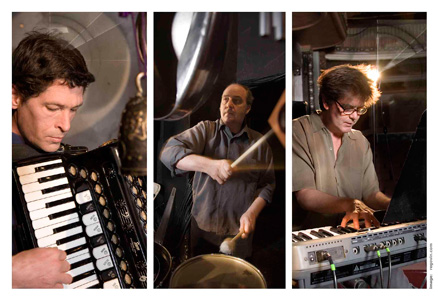
“What does it sound like when someone’s talking with a clarinet jammed in his skull?” asks Alloy Orchestra’s Ken Winokur. The Cambridge, Massachusetts-based trio brings antic humor, off-beat perspective, and consummate professionalism to the task of scoring silent films. With their latest endeavor, “Wild and Weird: The Alloy Orchestra Plays 10 Fascinating and Innovative Films 1906-1926” in Ebertfest (Roger Ebert’s 14th annual showcase in Champaign, Illinois) this month, I caught up with Winokur for a video essay tribute to the wild, weird, and fascinating process that has Alloy (Winokur, along with Roger Miller and Terry Donahue) opening up silent films to broader audiences.

Originally published on Fandor.

Kevin B. Lee is Editor in Chief of IndieWire’s PressPlay Video Blog and contributor to Roger Ebert.com. Follow him on Twitter.

VIDEO – Motion Studies #26: Jonathan Rosenbaum on GERTRUD and THE SUN SHINES BRIGHT

VIDEO – Motion Studies #26: Jonathan Rosenbaum on GERTRUD and THE SUN SHINES BRIGHT

From now through April, the Oberhausen International Short Film Festival will present "Film Studies in Motion", a Web Series curated by Volker Pantenburg and Kevin B. Lee. This series, available on the festival's website and Facebook page, presents weekly selections of analytical video essays on the web, in preparation for Pantenberg and Lee's presentation  "Whatever happened to Bildungsauftrag? – Teaching cinema on TV and the Web", scheduled for April 28 at the festival.

Week Six: Personal Obsessions

The widespread accessibility of online video creation and sharing allows us to explore and indulge our fascinations with films in unprecedented ways, as seen in these four examples: a close scrutinizing of a seemingly throwaway moment in Preminger’s “Anatomy of a Murder;” extended, heartfelt contempt for the Star Wars prequel; a fixation on Hitchcock’s “Vertigo” and the “spectacular improbabilty of its plot;” the sensation of sleeplessly watching Cronenberg’s “Dead Ringers” after days of “Occupy Wall Street.” Immersed in distinctly personal perspectives, these videos make explicit what is implicit in all the videos presented in this series: that subjective engagement is what brings flavor and fire to our analytical endeavors.

Today's selection:

Jonathan Rosenbaum on Gertrud and The Sun Shines Bright
Jonathan Rosenbaum and Kevin B. Lee (2008)

Critic Jonathan Rosenbaum offers his personal insights on his favorite films by John Ford and Carl Dreyer.

View all Motion Studies video selections.

Volker Pantenburg is assistant professor for moving images at the media faculty of the Bauhaus-Universität Weimar. 

Kevin B. Lee is Editor in Chief of IndieWire’s PressPlay Video Blog and contributor to Roger Ebert.com. Follow him on Twitter.

VIDEO: The Ultimate “Next on Mad Men” Preview Clip

VIDEO: The Ultimate “Next on Mad Men” Preview Clip

It's really become a perverse ritual by now for all us Mad Men fans. Every Sunday we groove on a new episode, and just as we are about to click off with the satisfaction of having taken in an exquisitely rendered hour of television, it happens.

"On the next new episode of Mad Men…"

Our ears perk up like Pavolvian dogs. We can't help ourselves. We'll devour anything, no matter how tiny or inconsequential the morsel. And they know it.

null

So what do we get? A 30 second string of soundbites taken totally out of context. 

"What happened?"

"I have to tell you something"

"Well that's something you don't see every day."

"Oh gosh!"

Sometimes it feels like the trained monkeys who make these montages are snickering at us through the clips: the newest one had lines like "They're like our slaves!" and "Some things never change." 

By now we're all kind of in on the joke that the joke's on us. But why should the folks at AMC have all the fun tormenting us, when we could do just as good a job? So here's our version. It's juicier, has more random lines taken out of context, is more absurd and more bluntly withholding of useful content:

Embed or share this clip. 

Compare this to the actual preview clip for next week's show and tell us which one you'd rather watch:

http://c.brightcove.com/services/viewer/federated_f9?isVid=1

MAD MEN RECAP 5: FAR AWAY PLACES

MAD MEN RECAP 5: FAR AWAY PLACES

"You always say I never take you anywhere."

nullThere are episodes of Mad Men that I've had to watch over and over. There are secrets hidden in the way scenes are cut, the way shots are composed, the way words are repeated. Last night I saw something beautiful, and confusing, and challenging. There's no way I can do it justice after only one viewing, but I'll try. 

Far Away Places was about a lot of things. It was about echoes: about memory, reliving, and things that recall other things. The echoes begin, but don't end, with the same day repeated—relived—three times. The episode was about time—it was filmed in a time-distorted way (the same day motif was not Rashomon, although I imagine someone will say it is; unlike that great film, Far Away Places took us to three different far away places). Jane says that time is just numbers on a clock, Don and Peggy both reference the time, and we see Don looking at his watch. At the LSD party, the Beach Boys sing “I Just Wasn't Made For These Times,” which sounds like a shot at Roger, worrying over his white hair, but Roger seems, suddenly, to be genuinely renewed. Maybe he is made for these times after all.

When I wrote about Signal 30, I suggested it was about identity and secret selves. Certainly, Far Away Places addresses that as well, but it's more about being known, rather than about being secret. Peggy's pitch is about being included, and feeling safe, but no one feels safe. Jane is sure that Roger is laughing at her, and Don is sure that Megan and her mother talk about him behind his back. Paranoia runs deep around here; Ginzo wants private conversations when he's in an open office and when he's standing in a public hall—like that'll happen, ever.

No one here feels truly known: Am I a Martian? An orphan? A covert sex goddess? (Hey, let's watch Peggy give another hand job—that'll never get old!) Perhaps we are all more than anyone imagines when they look at us.

Most importantly, it's about relationships. The three fights these three couples had are hard to describe because they swirled around the very heart of what it means to be in a relationship, to try to touch another soul, to know and be known, and inevitably, to fail, because even the most loving and connected couple is composed of two people who are separate individuals and will never fully know each other.

All that blather at the LSD party about truth and reality and neurosis and logic never really got to the point for Roger or Jane, but it is about truth: Jane wants Roger to like her, and to know her, and to really see her, to notice she's there. When Jane realizes that Roger never even heard her say they were going to drop acid, she knew exactly how invisible she was.

Roger, too, wants the truth, although he'd be the last person to admit it. But the truth, even the truth that he doesn't like his wife or want to be married to her, is liberating. Roger, of all people, has been freed.

Why this order, though? Why Peggy, then Roger, then Don? Ending with Roger might have created more of a sense of optimism, since the truth was told—or pessimism, since the relationship was over. (It's striking how much younger and prettier Jane looked in the post-LSD scenes, as if artifice and unhappiness aged her.) Maybe Roger's story is a kind of warning for Don: Tell the truth to one another before it's too late.

"Every time we fight it just diminishes us a little bit."

When Roger and Jane tell each other the truth, they are lying on their backs on the rug. When Don and Megan get to the end of their fight, they are in the same position. (Watch it again here–it's an amazing piece of physical acting.)

Throughout the episode, what we see is couples fighting over the intersection of work and life, unable to find a way to just be together, but needing one another for comfort. Roger and Jane don't fight about work; she's trying to bring him into her life. Don and Megan are struggling to find a balance. It's funny that she doesn't want to get pulled away from the Heinz team, just as Bert Cooper doesn't want Don to pull her away—it's like everyone is lining up and telling Don to just work already, while it's pretty clear that the message for Peggy is the opposite: don't work so much. Again, that's the message from Abe and from Bert, who tells Don quite pointedly that he's making a "little girl" do his work for him.

It's almost ridiculous to ask how Peggy's story parallels Don's; it's never been so clear that Peggy is Don, and yet simultaneously wants nothing more than to be Don. We see a close-up of her smoking, we see her berate a client about having feelings, we see her drinking, we see her leaving the office in the middle of the day to see a movie, we see her having illicit, unfaithful sex in the middle of the day and then washing up afterwards (remember Don washing his hands in disgust after a similar encounter with Bobbi Barrett?), we see her fall asleep on her office couch, and we see her being woken up by a secretary—Don's secretary, in fact. We've seen Don Draper do every single one of these things, and I look forward to analyzing certain scenes shot-by-shot, because I'm pretty sure that the compositions of some of them are identical (the hand waking Peggy, for example).

Peggy declares her fidelity to Don in the opening scene, when she's looking for the special candy he gave her as a good luck charm before the pitch—candy, we learned in Season 2, that Don associates with a memory of his father. Can Don be painted any more clearly as Peggy's father-figure?

While she's in the process of finding her "I am becoming Don" magic candy, she's having a fight with Abe that is clearly every fight Don ever had with Betty: You don't include me, all you do is work, I'm an afterthought. Peggy is so sure she's being abandoned at every moment that she doesn't know how to just have the fight: she just can't speak truthfully with Abe without being sure he's leaving her. Abe doesn't want to leave, he wants to connect. He wants what Jane finally got, but too late. And Peggy wants someone she can please: hence a hand job. She moved Stoner Guy's hand away from pleasing her. She wasn't seeking her own pleasure, she just wanted to know, at the end of the day, that someone was happy with her. If it wasn't her boyfriend and it wasn't her client, Stoner Guy (politely credited as "Man") would do.

Another way the three couples parallel each other? Each main character has a partner who declares his or her foreignness. Abe says "I'll say a  brucha" (the Hebrew word for a blessing prayer). Roger recalls that Jane spoke Yiddish while she was tripping (he thought it was German). Megan and Don argue over the fact that Megan speaks French with her mother.

Finally, this episode is about parents, and about being an orphan: parents who are foreign, inaccessible, or both. Don talks to Marie (his mother-in-law). Megan thoughtlessly tells Don to call his mother. Ginzo is visited by his father, but then declares, "He’s not my real father." Roger sees Bert—a father-figure for him—in his money. Peggy wants Don's good luck candy, which is multi-generational; it's from his father, and it symbolizes him as a father to her. Don, trying to be a good father, forgets Gene, who he claims will never even know that he was slighted (like Don never knew his mother, like Ginzo never knew his mother).

Parenting is somehow identified as foreign: Megan's mother is French, Jane's father speaks Yiddish, Ginzo's father has a thick accent. Ginzo was born in a place of death, a Concentration Camp, which so disturbs Peggy that she needs Abe (reaching for comfort and safety, like her college kids by the campfire eating beans).

Some additional thoughts: 

  • Don did talk to his mother—last week, when he visited a whorehouse.
  • Was the advertisement of the guy with gray/black hair a real one? I bet it'll be all over the Internet by the time I get up in the morning.
  • Quote of the week again goes to Roger: "Well, Doctor Leary, I find your product boring."
  • I love that Mad Men is a show that doesn't force Contractually Obligated Scenes with characters who aren't integral to each week's episode. This week we had no Harry, no Betty or Henry, no Lane or Joan, because none of them were necessary for the story Far Away Places had to tell.
  • LSD was legal to possess in the United States until 1968. California was the first state to make it illegal, in October of 1966.

Deborah Lipp is the co-owner of Basket of Kisses, whose motto is "smart discussion about smart television." She is the author of six books, including "The Ultimate James Bond Fan Book."

Watch Mad Men Moments, a series of videos on Mad Men, produced by Indiewire Press Play.

GIRLS RECAP 2: VAGINA PANIC

GIRLS RECAP 2: VAGINA PANIC

http://www.hbo.com/bin/hboPlayerV2.swf?vid=1250877


"Vagina Panic" is an attention-getting episode title—but nobody's really panicking in the second episode of Girls except Hannah, whose takeaway from a childhood viewing of Forrest Gump is an obsessive fear of contracting AIDS from "stuff that gets up around the sides of condoms." "Vagina Denial" might cover the subject a bit better.

nullHannah is, of course, still in denial about Adam's potential as a nurturing whatever-mate. We open with another awkward-because-it's-completely-on-point Hannah/Adam sex scene, in which our favorite graduate of Berlitz's porn-talk immersion course is jackhammering Hannah while carrying on about how she's a tween junkie in an alley carrying a Cabbage Patch lunchbox. Hannah plays along with "you're a dirty whore and I'm going to send you home to your parents covered in come"; and with Adam sort of clumsily choking her out with a cat-steps-on-your-face-at-6-AM maneuver; and with him ordering her to call him for permission to have an orgasm if she's touching herself at home. "You want me to call you?" she asks, touched; this is the part she chooses to hear, not the submissive role she's supposed to play for him . . . and does play, more or less. After Adam finishes, she sighs, "That was so good. I almost came," and instead of making sure she does come, he takes the comment as a compliment, and offers her a Gatorade.

It's utterly obvious to everyone but Hannah that Adam is not and will not become the guy she's telling herself he is, but kudos to the script for giving Adam's character a moment that explains why women tolerate that type for so long. During a grim convo that makes it clear Adam is 1) sleeping with other women and 2) not using condoms with them, he muses that Hannah's insistence on rubbers must be why it takes him forever to "nut" with her. Hannah's face collapses like a Vegas building demolition, but Adam catches his snap for once, saying she has "total freak-out face" and quickly reassuring her that he's "fine" with the sex they're having. And that's how Adams keep you on the hook, too—that one moment of acknowledgment, every few weeks, that you're doing a rockin' job as VP of Doormats.

Marnie's assessment of this situation is sugar-free. She informs Hannah that Adam isn't allowed to say the little-whore stuff to her: "He's not your boyfriend." Leaving aside the idea that apparently hooker-john role-play exists only in the privileged relationship space, the "not your boyfriend" nerve is the raw one.

Not that Marnie's interested in any truth-telling about her boyfriend, who she can't bring herself to look at during sex. That sex scene opens with Charlie suggesting that they stare into one another's eyes when they come; Marnie has her head turned away and eyes screwed shut. Her next move is to propose switching to doggie-style, so she's not even facing him, but it's still Charlie back there, and he seems to have confused "thrusting" with "continental drift." The next day, Marnie bitches at Charlie to . . . well, act more like Adam, to get pissed at her and not care what she thinks: "It's what men do." Then she mocks his testicles.

Hannah, eating a yogurt, observes that it's okay if Marnie is just bored. Marnie defensives, "That is a really simplistic explanation of what's going on." It's also . . . the actual explanation of what's going on, and Marnie should just break up with Charlie, but she doesn't want to be the kind of girl who breaks up with The Most Solicitous Man In New York, so she tells herself it's more complicated than that.

Jessa is also in denial, to a degree. She's moody during the first half of the episode, broodily smoking pot with her headphones on, then lashing out at Hannah and Shoshanna when they have the gall to defend a The Rules-ish self-help book about dating. (Hannah doesn't defend it so much as laughingly admit that she "hate-read" it at the airport, which is exactly what I did with the actual The Rules.) After bombasting that she's "offended by 'supposed-tos'" like those the author posits, Jessa bitches at Hannah for studying her face for "one of [her] novels," then announces that she wants kids someday, and she's going to be "amazing" at it. Of course you do, Hannah says, and of course you are—but Jessa's not done: "I want to have children with many different men of different races."

This United Jessa of Benetton declaration seemed random at first, and I didn't know how to react to it initially, other than to conclude that a character who considers her future offspring multi-racial-chic accessories should absolutely not have a baby right now. But I think that's the point—and it's touched on elsewhere in the episode, too, when Adam and Hannah discuss the abortion. Adam deems it "kind of a heavy fucking situation," but Hannah wonders if it really is: "I mean, I feel like people say that it's a huge deal, but how big a deal are these things actually."

Hannah then gets concerned that Adam thinks she's too flip about the issue, because of course it's a big deal—but the dialogue raises some interesting, sticky questions about how our culture and our narratives treat abortion. Specifically, I mean the tendency of many, many films and TV shows to classify an abortion as an incomparable trauma, as Marnie does in so many words; Hannah's raised eyebrows note, sans dialogue, that she can think of more traumatic situations—sexual assault, for example, or the death of a partner. And this is on the few occasions when the script goes through with it, versus having the character miscarry or otherwise sidestep the issue (see: Julia on Party of Five, et al.). Is that appropriate? Or do writers default to that position because it's the least likely to cause offense? Of course an abortion is a game-changer for some women, and not a positive one—but for others who avail themselves of that choice without regrets, I think there's a pressure to suffer, to grieve, to be seen as paying somehow.

The show is not necessarily equipped to answer these questions, and wisely doesn't try. Certainly Jessa isn't delving into them; she's dressed for the procedure in harem pants and complicated lace-up heels. She's also late for the procedure because she's in a bar, drinking White Russians, pontificating about the sinking of Venice (of course she is), and making out with a stranger who borrowed her cell phone—which is how she finds out she won't need the procedure in the first place, because her period is late too, but now it's here. Menses ex machina!

Everyone else has gathered at the clinic, though, to support Jessa and/or get tested for STDs. Marnie is incensed that Jessa is late, except she actually loves it, because she gets to feel a better, more responsible martyr than Jessa, which is what her whole relationship with Jessa is about. But when Hannah goes in for her appointment, Shoshanna can't maintain her denial any longer, confessing to Marnie that she's a virgin. Marnie is taken aback, but shrugs that it's no big deal and sex is "overrated" anyway. She assumes that Shoshanna has given BJs, right? "Yes! . . . No!" Maybe it's because we just saw Chris Eigeman in last week's ep, and he's a lead in Kicking and Screaming, but that put me in mind of the running gag with Otis in that movie. "Is that a pajama top, Otis?" "No! . . . Yes."

We end the episode with Hannah facing one fear head-on as she slides into the stirrups. This is Hannah, so she's babbling more or less uncontrollably to the GYN about how having HIV does in fact have its up sides: it's a great excuse to bail on your job hunt, say, or get really mad at the guy who gave it to you. (She should do that anyway, of course, but: you know. Denial.) Maybe she's not afraid of getting AIDS, she says; maybe she actually wants to get it. The GYN informs her that that's a ridonkulous thing to say, and disgorges a PSA's worth of stats about women's infection rates, and that response is no doubt the result of a network note to the effect of "please make it clear that we're not expected to think this is funny." (It put me in mind of the My So-Called Life pilot, and Angela Chase observing that Anne Frank was "lucky" because she was stuck in an attic with a boy she really liked.)

I didn't think we needed the prod, because the episode keeps coming back to a question about certain charged topics and conversations, namely: How much of what we do, of our reactions, is what we think we "should" do? It's in Adam's "little-whore stuff," which is cast as goofy rather than threatening. It's in Hannah’s wondering if abortion is always a really big deal every time, for everyone, and her frightened Googling about rogue semen. It's in Marnie’s not wanting to come off like a bitch, and coming off like an even bigger bitch as a result. And it's in that disastrous job interview Hannah goes on, when she starts out acing it on a vibing-with-the-interviewer level, then unfortunately feels comfortable enough to make a date-rape joke and shoots herself in the foot. She's supposed to feel that that isn't an "office-okay" topic or tone, because obviously it isn't—but why will she censor herself and her disappointment with Adam, then push the "humor" envelope in an interview? Why does what she "should" do, the idea of "being good," pertain more in this farkakte romantic relationship?

I don't know the answers; I don't think the show does either. But in spite of some kludgy, on-the-nose dialogue in spots this week, the episode successfully showed that issues and people are complicated, and don't resolve in 30 minutes. Or ever, sometimes.

Sarah D. Bunting co-founded TelevisionWithoutPity.com, and has written for Seventeen, New York Magazine, MSNBC.com, Salon, Yahoo!, and others. She's the chief cook and bottle-washer at TomatoNation.com.

GAME OF THRONES RECAP 4: GARDEN OF BONES

GAME OF THRONES RECAP 4: GARDEN OF BONES

null

Garden Of Bones was perhaps my least favorite episode of Game Of Thrones, period. The show has been such a success that seeing it struggle so much is a surprise. It’s still competent and watchable, but Garden Of Bones was frayed at the edges.

nullThe novel this season of Game Of Thrones is based on is called A Clash Of Kings, which makes the story clear: that of the civil war that followed Cersei’s coup and Ned’s execution. Despite the presence of multiple kings, none of them have “clashed” directly, either with blades or with words. Ever since the trailer showed bits and pieces of Stannis’ confrontation with Renly, I’ve been waiting for this scene, prepared to do an in-depth analysis of how it demonstrated the show’s themes surrounding power and legitimacy. Instead, what I got was an example of what’s wrong with Garden Of Bones, which could also make bigger problems for the show in the future.
Watch the scene here:

Two narrative questions arise immediately with the scene: why are Stannis and Renly fighting each other, and where are they fighting? Game Of Thrones’ issues with geography are highlighted here: we don’t know where Renly’s camp is, so we don’t know why this confrontation is meaningful. Shouldn’t Renly be surprised that his brother is attacking him, instead of the Lannisters? But there’s no buildup in either case—previous scenes from Renly’s camp are about the presence of Littlefinger, and it’s the first time in the episode we see Stannis at all. The stakes of this meeting are as high as any we’ve seen in the show, and instead, it’s confusing. 

Clarity has been lost in the translation from the page to the screen. In the novel, location questions are clearly answered. Renly has the strength of two of the Seven Kingdoms, Stannis, one weak kingdom. So Stannis launches a surprise attack against Renly’s capital, which makes Renly stop his march against Joffrey in the capital. There are both strategic and character-based reasons for the confrontation. The location is unclear, which tends to be when Game Of Thrones is at its weakest. (This is worsened in the episode’s final scene, when Davos smuggles Melisandre . . . somewhere?)

Once the characters start speaking, the confrontation becomes more he-said-she-said than tense and meaningful. Stannis makes small talk with Catelyn, she responds. Renly teases Stannis, he responds. More teasing, and Melisandre responds. It sounds a little bit like a radio play, where the actors record their lines in a studio at different times. This may be an intentional choice by the director: the Baratheon brothers have never gone to war with one another, so perhaps Game Of Thrones is portraying their internal struggle as externally stilted.

And it rings falsely. The worst offender is Cat Stark, whose “Listen to yourselves. If you were sons of mine I would knock your heads together until you remembered that you were brothers” is monumentally misguided (though the line is from the novel, it’s taken almost entirely out of context here). So far this season, Catelyn has been the voice of reason, telling Robb that sending Theon to Pyke was a bad idea, and recognizing Renly’s “summer knights” last week.  Here she comes across as peevish and undiplomatic, ruining whatever tiny chance this meeting had at being good for the realm.

Stephen Dillane’s performance as Stannis also leaves something to be desired. He’s supposed to be rigid, so certain of his claim to the throne that he doesn’t comprehend anything else. But what comes across is confusion and boredom. He tells Renly, “You think a few bolts of cloth will make you king?” and tilts his head like a cat. There’s no anger here, nor really anywhere in the entire scene, which would help it make more sense.

Some drama is salvaged at the end, after Stannis delivers an ultimatum. Melisandre turns to Renly and says, “Look to your sins, Lord Renly. The night is dark and full of terrors.” This is the first thing that gives any of the four characters speaking in the scene any pause, as Renly finally realizes the implications of the civil war he’s engaging in.

This scene isn’t the only weak one in Garden Of Bones. Robb Stark returns to our screen, winning a battle and then dealing with the aftermath. First he meets with one of his bannermen, a flaying-happy Lord Roose Bolton, then he meets a woman aiding the injured. I suppose we’re supposed to see some romantic chemistry here, but it comes across as just one more thing to keep track of.

Littlefinger’s visit to King Renly’s camp was dull as well. Why he’s there is never made clear—is he upset at Tyrion’s withdrawn promise of a new lordship? And how long did it take him to get to the camp? Is Renly so close to the capital? His scene with Margaery Tyrell frustrates as well. He bothers her about Renly’s sexuality, but this is such an ill-kept secret that Lannister soldiers were joking about it at the start of the episode. And there’s no real conclusion to the episode, simply Melisandre giving “birth” to something supernatural. It’s ominous, but detached from the story. Garden Of Bones has no narrative arc.

The other half of the episode does far better. Dany’s introduction to the city of Qarth, “the greatest city that ever was and ever will be,” gives it an immediate sense of place. Tyrion’s attempts to combat the worst impulses of Cersei and Joffrey are as entertaining and tense as ever, and he gets the line of the night with, “That was a threat. See the difference!” And Arya’s introduction to the Lannister stronghold of Harrenhal is ominous enough before she gets invited to be Lord Tywin Lannister’s cup-bearer. Garden Of Bones lays the groundwork for dramatic things to happen later with Robb Stark, Danaerys discovering Qarth, and Arya in the belly of the Lannister beast, but it’s worrying that the episode botches the most important scene of the season .

Adaptation:

Littlefinger’s presence in Renly’s camp at this point is a huge deviation from the novels, possibly the biggest of the series to date. It’s also an entirely negative deviation. The scene with Margaery was unpleasant. It’s his explicit offer to Cat from Tyrion that changes things the most, although most of that will take place in the future.

On the brighter side, I’m all for Arya interacting with Tywin Lannister, something that didn’t happen in A Clash Of Kings. And the depiction of Joffrey’s sociopathy, forcing prostitutes hired by Tyrion to beat each other for his pleasure, was different from the page in a way that was fairly necessary, since it had been shown previously via memory.

Still, I can’t help but compare the Stannis/Renly confrontation and shake my head at the missed opportunity. In the book, Renly eats a peach in the middle of it, adding an air of symbolic ambiguity that haunts Stannis afterward. There’s no peach on-screen, even though it probably would be better visually. And poor Cat looking like an idiot compared to lines like this:

“This is folly,” Catelyn said sharply. “Lord Tywin sits at Harrenhal with twenty thousand swords. The remnants of the Kingslayer’s army have regrouped at the Golden Tooth, another Lannister host gathers beneath the shadow of Casterly Rock, and Cersei and her son hold King’s Landing and your precious Iron Throne. You each name yourself king, yet the kingdom bleeds, and no one lifts a sword to defend it but my son.”

Where was this depth on the screen?

http://www.hbo.com/bin/hboPlayerV2.swf?vid=1249940


Rowan Kaiser is a freelance pop culture critic currently living in the Bay Area. He is a staff writer at The A.V. Club, covering television and literature. He also writes about video games for several different publications, including Joystiq and Paste Magazine. Follow him on Twitter @rowankaiser for unimportant musings on media and extremely important kitten photographs.

VIDEO ESSAY: Spike Lee’s free-floating, dolly shots collected, stitched together and deconstructed

VIDEO ESSAY: Spike Lee’s free-floating, dolly shots collected, stitched together and deconstructed

This video essay by Richard Cruz collects Spike Lee's loopy, free-floating dolly shots into a music video. In the process, it makes them less jarring than they were when they first appeared in Lee's films. You know what I'm talking about: a shot where a major character is still, or perhaps moving subtly, while the background moves at an unrealistically fast speed or whirls wildly, creating the sense that the character is sort of hovering through the air, or perhaps moving on a conveyor belt or turning on a merry-go-round.

Every time I've seen a Lee film in a theater, audiences have begun tittering and pointing at the screen whenever Lee busted out this type of shot. It's as disruptive as it is flamboyant — deliberately so, I'm guessing. The Spike Lee dolly seems to be trying to find a way to signify "subjectivity", or otherwise put a conceptual frame around a certain moment in a story. This is typical of Lee. His features are never, strictly speaking, "realistic." They're more expressionist, like the films of Martin Scorsese, one of Lee's biggest influences. As such, they give themselves the freedom to bend the visuals and suggest what characters are feeling, or maybe what the filmmaker is feeling about the characters at that point in the story.

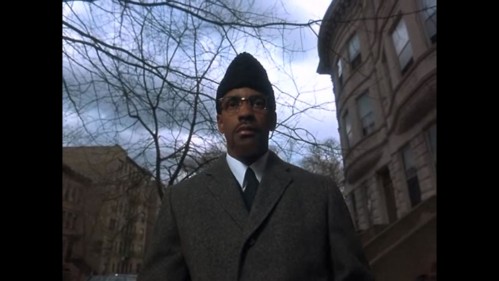
Sometimes the device works brilliantly, or at the very least, in such a way that you can see what the director was going for, even if he didn't pull it off; my favorite examples are Larry Fishburne seeming to glide through campus at the end of School Daze — a musical polemic of a movie — hollering "Waaaake uuuup!"; Anna Paquin's private school student, drunk and high, floating through a nightclub in The 25th Hour ; Theresa Randle in Girl 6, gliding through her apartment while jazzed on her own sensuality or fearing an attack by a creep who's phone-stalking her. But other times the Spike Lee dolly just feels weird. The shot of Lee's gambling addict gliding through the park in Mo' Better Blues made the character seem as though he'd been replaced by a Muppet (maybe because Lee's gestures were so stylized and herky-jerky). In the finale of Malcolm X, when Malcolm heads toward the church where he's about to be assassinated, I think we're supposed to feel as if he's being pulled along by destiny or history or somesuch; but because the more conventional parts of the sequence convey this so effectively already, it just feels like a bad idea that somehow made it into the final cut. (When I saw the movie on opening night in 1992, the crowd burst into ironic applause and laughter when that Malcolm X  people-mover shot appeared onscreen, and somebody behind me said, "And here I was, thinking he might get all the way through a movie without doing that!")

Most of Lee's floating dollies owe a debt to shots in Scorsese's Mean Streets. Scorsese filched the idea from Vincente Minnelli's 1949 film of Madame Bovary, which conveyed romantic delirium at a grand ball by putting the actors on a fast-whirling dolly platform so that they seemed to be whooshing around the ballroom like astronauts in centrifuge training. Over the last quarter-century, though, Lee has pretty much owned this kind of shot, and he's explored it in increasingly surprising, sometimes bizarre ways. I used to call this type of shot "the Spike Lee people-mover shot," because it was usually framed so that we were looking at the characters head-on while the background receded behind them; the effect reminded me of riding a conveyor belt in an airport terminal. But Lee has gone way beyond that since the early 90s, to the point where we go into a new Spike Lee movie wondering what sort of variation he'll wring on it this time.

What I love most about this video is how it neutralizes whatever observations one might have about the appropriateness or inappropriateness of a shot in a given Spike Lee film by placing them all together in a single short video. The shots' inventiveness, showiness and beauty take center stage. You're no longer watching characters in a story, but living sculptural objects driving through a series of spectacular and sometimes haunting settings.

Matt Zoller Seitz is publisher of Press Play and TV critic for New York Magazine. Richard Cruz lives in New York City and you can visit his web page here.

GREY MATTERS: Cabin in the Woods, Horror in the Dumps

GREY MATTERS: Cabin in the Woods, Horror in the Dumps

null

***SPOILER ALERT: The following piece is one huge spoiler. So, if you haven’t seen this movie yet, consider yourself forewarned.***

If we’re lucky, The Cabin in the Woods will shut down the debased American horror movie machine for a good long while. God knows the damned thing has been creatively moribund for decades and hasn’t had a new idea since Scream, unless you count turning cinemas into torture porn abattoirs as new.

And actually, that was a main reason Joss Whedon co-wrote Cabin with friend and Buffy the Vampire Slayer writer Drew Goddard a few years back: as a protest of Hostel and movies of its ilk.

But Cabin—directed by Goddard—got stalled during MGM’s bankruptcy, and here it is, a dark echo of The Hunger Games, another film about kids trapped in psychotically violent arenas. This one, though, gives equal time to the people behind those funny games.

We know this because, right off, the words “CABIN IN THE WOODS” are hilariously stamped over a freeze frame of said masterminds, a bunch of middle management types in lab coats played by Richard Jenkins (delightfully worn out), Bradley Whitford, and Whedon regular Amy Acker. They joke, place bets, and work as surrogates for anyone grinding another massacre movie out during this period of the genre’s debasement.

Meanwhile, five teens get ready to vacation at the eponymous cabin. There’s Jules (Anna Hutchison), the blond who’s only dumb, it turns out, because her Clairol was secretly doped by agents of the lab (!). And Dana (Kristen Connolly), the “mostly virgin” redhead. And Curt (Chris Hemsworth), the hunk, and Holden (Jesse Williams), who’s the nice guy. And stealing the movie like he stole Whedon’s Dollhouse is Fran Kranz, as Marty the stoner.

As the teens drive “off the grid,” the stations of the Craven/Raimi cross are dully ticked off: road to nowhere. Creepy in-bred dude at gas station. And, finally, the saggy-roof cabin itself, courtesy of Evil Dead.

Once inside, Weird Shit happens. Freaky mirrors. Creepy toys. A text written in Latin is read aloud. Zombies rise. And then the violence begins, and we realize that this “cabin” and “woods” were controlled by the lab from the start of the movie, part of a vast underground installation that makes everyone do stupid horror movie stuff ending in sacrificial deaths meant to appease an Entity older than Time, blah blah blah….

Goddard/Whedon stage the first kill with savage efficiency. Three shots: girl gets aroused. Girl shows breasts. Girl gets bloodily skewered. Hip male critics love to excuse this in other films—well, Cabin says, excuse this. (Would the apologists be so enthused if films routinely showed penises being violently, bloodily liberated from their original owners? I know, I know: “Ian, you’re, like, so literal.”)

Generic zombies terrorize and kill in an efficient parody of the prototypical zombie story, which unfortunately drags the film until Marty and Dana break into the installation and find hundreds of Plexiglas cube-cages housing as many monsters for every possible teen kill scenario.

As a black opps cadre confronts Marty and Dana, the latter locates a Staples-style red button that, when pushed, handily opens the cube-cages, and . . . cowabunga! It’s the greatest monster mash in movie history!

It’s as if these beasts flew, crawled and slithered straight out of the last time American horror seethed with invention, due to a cultural cauldron boil of Thriller, the anxieties of Mutually Assured Destruction and AIDS, heavy metal, MTV, MIDI, perms, and a general global urge to out-crazy the next guy. The 80s.

The 80s could cough up an allegory for identity existentialism in the ever-shifting surrealist monster of John Carpenter’s The Thing, or the sexed-up, Lovecraftian latex abstractions from From Beyond, and still have time to create a monster metaphor for AIDS in The Fly. (And because Joss is such an Anglophile, Hellraiser and its Pinhead, the poster boy for S&M perversity in the plague years, are directly riffed on here in the form of another leather/razor creature, named “Fornicus, Lord of Bondage and Pain” in the credits.)

Speaking of politics—and you could—George Romero practically screamed his zombie-metaphor leftism in Day of the Dead while Wes Craven reported Haiti’s long suffering under dictator “Papa Doc” Duvalier in The Serpent and the Rainbow.

All of those movies, plus Gremlins, An American Werewolf in London, A Nightmare on Elm Street, Poltergeist, and dozens more comprise what turned out to be the final flowering of America’s dark imagination, and that’s what’s celebrated in Cabin’s monster mash.

And when all that’s left is a vast pool of blood, it’s like a sanguine sigh, because we all know there’s no room for such lunatic invention in American cinema, not any more.

But I digress.

Cabin ends with a trans-supernatural “Director” urging the campers to use their "free will" to die the way she tells them to. Marty and Dana choose to smoke one last doobie and let the world go to hell. What Whedon asks is: is a species that enjoys watching the graphic rape of a decapitated girl's head and worse in movies like, say, the French High Tension really worth the bother?

Cabin can’t help but be the most slight of Whedon’s efforts, mostly because even a mood master can’t quite negotiate the switches from slaughter to light comedy needed—he’s just not heartless enough. We’re just getting used to the idea that our pitiful heroes might escape, for instance, when one of them motorbikes into what turns out to be a force field that fries him like a gnat in a bug zapper. Cool effect. Which is kind of hilarious. Except then you’re like, "Wait, wasn’t I starting to like this guy?" And yeah, everyone knows Whedon is hoisting us on the petards of our affections—except we never had enough time to really like the zapped biker, so we’re in emotional limbo.

Still, what works is often funny. Goddard directs his first feature with impressive élan, and damned if that monster melee doesn’t inspire: it’s made by people who know that horror cinema can be great art or even awesome trash, carrying out a holy war against what it’s turned into. Plus—if you miss the evil white unicorn, you have nobody to blame but yourself.

But Whedon just can’t hew to the mission statement of creating teen kill archetypes: unable to resist the urge to create characters, he lands somewhere in between sometimes. He can’t even hate the engineers before starting to understand what it would be like having such a soul-killing job. He’s just too humane.

Cabin could, of course, actually fail in its intentions, as it inspires the industry to issue idiot look-alikes about entrapment scenarios that reference other movies, leading us to find, yet again, that nothing can drive a stake in the postmodern monster, because it lives freely on past dreams of the dead, no matter how much you scream.

Ian Grey has written, co-written or been a contributor to books on cinema, fine art, fashion, identity politics, music and tragedy. Magazines and newspapers that have his articles include Detroit Metro Times, gothic.net, Icon Magazine, International Musician and Recording World, Lacanian Ink, MusicFilmWeb, New York Post, The Perfect Sound, Salon, Smart Money Magazine, Teeth of the Divine, Venuszine, and Time Out New York.

VIDEO ESSAY: The Art of Film and TV title design from PBS’ OFF BOOK

VIDEO ESSAY: The Art of Film and TV title design from PBS’ OFF BOOK

Editor's Note: The opening credits to a movie or TV show are more than just a title and names. They’re an opportunity to set the tone of the story to come. They can provide necessary background and setting for the drama to follow. Creators of title sequences often create powerful visual experiences that pull the viewer into a new visual world. In this episode of PBS Off Book, meet Peter Frankfurt and Karin Fong, the creators of the iconic Mad Men sequence; Ben Conrad, who was behind the hilarious Zombieland opening and "rules" sequences;  and Jim Helton, who developed the stirring end credits from Blue Valentine. Please take a moment to view the video linked above. If you would like to view other episodes of Off Book, go here. Thanks! — Kevin B. Lee