Watch: The Fantastic Animated Trailer for a Book on Wes Anderson’s ‘The Grand Budapest Hotel’

Watch: The Fantastic Animated Trailer for a Book on Wes Anderson’s ‘The Grand Budapest Hotel’

Roughly at the midpoint of this animated book trailer for The Wes Anderson Collection: The Grand Budapest Hotel, its author, Matt Zoller Seitz, gets punched in the face. Later, he gets his fingers chopped off. But this doesn’t deter him from guiding us through his new book on Anderson’s most recent film, due out from Abrams on February 10th, which includes interviews, essays, and intricate, quasi-acrobatic book design, along with a wonderful introduction by Anne Washburn. It’s like a circus in print, folks, and Seitz is its intrepid ringleader! This trailer is beautifully and cleverly animated by Kristian Fraga of Sirk Productions, using lovingly drawn figures by Max Dalton. The volume is an annex to Seitz’s masterful book, The Wes Anderson Collection, also available from Abrams, an equally stunning accomplishment. But, before you delve into either book, watch this trailer! It’s a masterpiece, in and of itself.

Watch: The Expansiveness of Alejandro González Iñárritu: A Video Homage

Watch: The Expansiveness of Alejandro González Iñárritu: A Video Homage

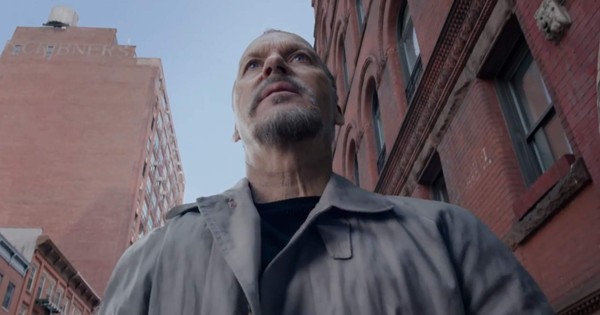
Alejandro González Iñárritu’s glance is always outwards. If a woman should be shot in the head while on a bus in a desolate mountain pass, as in Babel, the question is less Will she live? than What will the ramification of the event be for her loved ones in the present and future? If a washed-up actor of dubious talent is revealed to have special powers of telepathy and even flight, as in Birdman, the question is less How does he do that? than What does this mean for him, for his grasps at redemption? Do these powers make a difference? This expansiveness operates at a plot level, but it also operates cinematically. With its swoops, its close-ups, its lens flares, Iñárritu’s cinematography helps us to understand on a visceral level ideas which we might not immediately understand on an intellectual level. This video homage by Steven Thomas brings us into Iñárritu’s perceptive approach with intimacy and grace; this is a memorable tribute to a director who has carves out a place in film history with alarming speed.

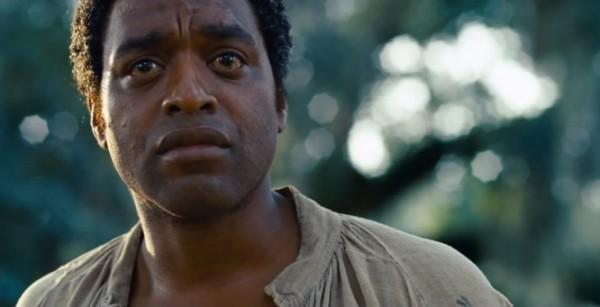
WATCH: Steve McQueen’s Lingering Camera: A Video Essay

WATCH: Steve McQueen’s Lingering Camera: A Video Essay

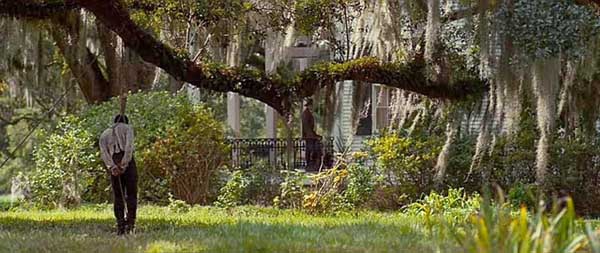
In an era that is saturated with lavish and complex camera movement,
Steve McQueen stands out for implicating the contrary. McQueen often
employs the static shot in crucial situations, a technique that
partially defines the unique style of the director’s three
feature-length films: 12 Years a Slave, Shame, and Hunger. Rather than using a slow dolly or handheld
movement to convey poignancy, McQueen chooses to simply leave the camera
be. In doing so, he urges us to fully absorb the moment–there are no
pans to guide us away, or even a rack focus to slightly divert our
attention. McQueen seems to especially favor the static shot during
gruesome struggles and times of extreme distress. He often lingers on
these moments for extended periods of time, yet the camera remains
motionless. Like the characters, we cannot escape the moment and we are
forced to endure every second.

Jacob T. Swinney is an industrious film editor and filmmaker, as well as a recent graduate of Salisbury University.

Watch: A Video Essay on the Coen Brothers’ Search for Truth

Watch: A Video Essay on the Coen Brothers’ Search for Truth

At one point in this intensely clever video essay, Jeff Bridges, as The Big Lebowski’s "The Dude," says, "I am not Mr. Lebowski." Immediately, William H. Macy, as Fargo‘s Jerry Lundegaard, responds, blankly but nervously, "Yeah?" The two carry on a brief rapport, and then the piece moves on. Steven Benedict looks at the ways the Coen brothers’ films "talk" to each other, by presenting the lines from disparate films as parts of an actual dialogue. The effect is hypnotic, and the message is clear. In the films of the Coen brothers, little is certain–except for one thing: the search for whatever certainty there might be. Benedict has offered up films from across the brothers’ career. Barton Fink (often). O Brother, Where Art Thou? The Hudsucker Proxy. A Serious Man. Miller’s Crossing. Inside Llewyn Davis. And the list goes on! Benedict’s arrangement succinctly and beautifully orchestrates the gleeful discombulation of these films into a harmonious whole.

WATCH: What One Critic Learned from Watching Jean-Luc Godard’s ‘Breathless’: An Interactive Video Essay

WATCH: What One Critic Learned from Watching Jean-Luc Godard’s ‘Breathless’

Tyler Knudsen, who goes by "CinemaTyler" on YouTube, has posted a remarkable video essay about what he learned, or rather what a viewer could learn, by watching Jean-Luc Godard’s Breathless. This comprehensive piece takes us through the movie, its history, and the labors required to get it made with great deftness–and to top it off, it’s interactive! What this means is that, at regular points during the video, you (if you’re watching on a desktop) can click on buttons which will lead you to supplemental videos which discuss key terms or films, such as "Hollywood renaissance," or "The 400 Blows." The breadth of Knudsen’s scholarship is impressive, and the things Knudsen says he has learned from the film are impressive as well. The first of these? "There are no rules in art."

This video is part of a fantastic series–you can take a look at Knudsen’s other subjects here.

Watch: The Influences on Luc Besson’s ‘Lucy’: A Video Essay

Watch: The Influences on Luc Besson’s ‘Lucy’: A Video Essay

According to "Mr. Tea and a Movie," the influences on Luc Besson’s Scarlett Johansson vehicle Lucy are many and various. Francis Ford Coppola was an influence. David Fincher was an influence. Stanley Kubrick was an influence. And there are many others. Feelings about Mr. Besson’s films themselves are mixed. Some viewers will see anything he makes, and some wouldn’t touch him for any amount of money. Some saw this mind-bending futuristic thriller because it starred human tabula rasa Johansson, and they will see any film in which she stars. (And they wouldn;t be wrong to do so, necessarily.) Whatever the case, this thorough and thoughtful (and brisk) video essay is well worth a watch, or maybe even two, just for the skillful editing).

WATCH: How David O. Russell’s Characters Find Happiness: A Video Montage

WATCH: How David O. Russell’s Characters Find Happiness: A Video Montage

The characters in David O. Russell’s films find happiness, but it’s usually hard-won. There’s always a fight involved. Some of these fights are between individuals. In American Hustle, as the struggle for business success involves deceiving others, and the struggle for romantic contentment involves the painful process by which two people rub the rough spots off of each other–or don’t. Some of these struggles take place within one’s self: in Silver Linings Playbook, a man has to master his unruly mind to achieve contentment–and then finds that that’s only half the battle. Some of these battles take place on every conceivable arena: in The Fighter, skirmishes take place on class lines, on physical lines, and on lines of lineage. This video homage by Frank Perez takes us through these battles fluidly and economically, preserving their intensity while reminding us that, in a sense, they are all part of the same eternal, nameless battle.

WATCH: Film Noir Basics from THE MALTESE FALCON to BOUND to INHERENT VICE: A Video Essay

WATCH: Film Noir Basics from THE MALTESE FALCON to BOUND to INHERENT VICE: A Video Essay

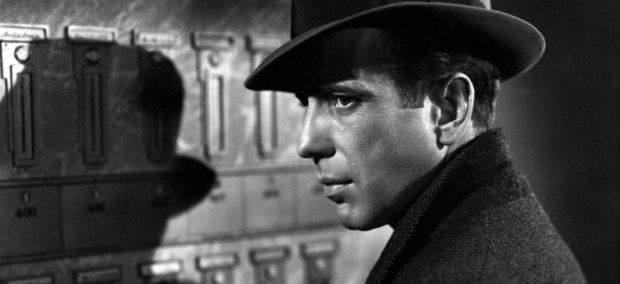
What exactly is film noir?  Is it a movement, a mode, a style, or a
genre?  These questions have preoccupied film scholars for decades. According to filmmaker Paul Schrader, noir
began with The Maltese Falcon and ended with Orson Welles’s
Touch of Evil.
 He’d add that it was largely an American movement that applied certain
stylistic (high contrast lighting, voice over narration, non-linear
storytelling) and thematic (existentialism,
the cruel mechanizations of fate, amour fou) elements in genres ranging from
melodramas to detective films. Another film scholar might add that
directors like Fritz Lang and Billy Wilder never described their films
as being "noir."  They thought they were making
thrillers. Film noir?  That’s a term the French critics applied
retroactively.  

This video essay series takes the fairly provocative stance that
film noir became a genre.  Essentially, in its golden age during the
1940s, noir was a mode/movement that was superimposed onto other genres.
 In the words of genre theorist Rick Altman, genres
can start off as "adjectives"–fragments of the style and theme might
be there, but the genre has yet to fully solidify because the filmmakers
and audiences haven’t quite gotten their heads around it yet.  However,
by the time Robert Aldrich was making
Kiss Me Deadly in 1955, the writings of the French critics had
made it stateside (in fact, there’s a picture of him reading Borde and
Chaumeton’s
Panorama du Film Noir on the set of Attack!), and perhaps
the filmmakers and audiences had finally begun to think of noir as being
a noun.  When neo-noir flourished in the 1970s (thanks to filmmakers
like Schrader), the movement emerged–fully
formed as a genre–from its black-and-white cocoon.  
I write this trajectory into this introduction to the series because I
can imagine that some of my colleagues might have been troubled by a
video essay that calls film noir a genre. I am more than aware of the
history of this debate, and I will cover it in a subsequent
piece (Part I just covers semantics, Part II will focus on genetic
syntax, Part III on pragmatics–so the noir genre discussion will
primarily rest there, and Part IV will focus on evolution.  There will
be a Part V on international noir, so don’t think I’ve
forgotten about that either!).  What I’m attempting to do here is to
craft the video essay equivalent of an encyclopedia entry on film noir
for the undergraduate student with a new episode each month.  If you’re
already familiar with the films and the key
debates, you may not find much in the way of "new" knowledge here.  My
main audience–at least in terms of an intellectual presentation–is
the uninitiated.  I assume the pleasures of the more
advanced fans and scholars of noir will be found
in the aesthetics of the pieces, although maybe they’ll be surprised by
a "new" recommendation (I love
Key Lime Pie, a fantastic animated short by Trevor Jimenez.  In any case, I hope you enjoy the first part
of this ongoing series, and I look forward to the debate it encourages.  Stay tuned for more! 

Dr. Drew Morton is an Assistant Professor of Mass Communication at Texas A&M University-Texarkana.  He the co-editor and co-founder of
[in]Transition:  Journal of Videographic Film and Moving Image Studies, the first peer-reviewed academic journal focused on the visual essay and all of its forms (co-presented by MediaCommons and
Cinema Journal).  [in]Transition recently won an award of
distinction in the annual SCMS Anne Friedberg Innovative Scholarship
competition.  His publications have appeared in
animation: an interdisciplinary journal, The Black Maria, Flow, In Media Res,
Mediascape, Press Play, RogerEbert.com, Senses of Cinema,
Studies in Comics, and a range of academic anthologies.  He is
currently completing a manuscript on the overlap between American
blockbuster cinema and comic book style.

Watch: Andrei Tarkovsky and Fire: A Video Homage

Watch: Andrei Tarkovsky and Fire: A Video Homage

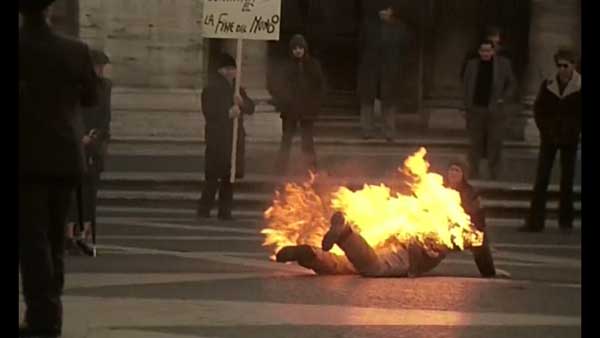
Andrei Tarkovsky is as divisive a filmmaker as one might possibly dream up. When, back in 2011, one journalist used Tarkovsky as the crux of a piece about how certain films and directors are thought of as essential viewing whether or not their work is consistently compelling to all viewers, a verbal battle was started in the film-critical community that lasted for quite some time. And yet, watching the clips collected in this video essay from Good Alternative, even if one didn’t find Tarkovsky’s work, from Solaris to Stalker to Andrei Rublev, to be compelling–and no one says you have to, really–the evocativeness of the fire imagery present is, at the very least, interesting. In Tarkovsky’s films, fire moves, fire breathes, fire interacts with characters on screen as if it were one of them. As portrayed through Tarkovsky’s lens, fire becomes a source of change and motion in an otherwise still plane. What the fire means is less important than the fact that it is present–which, in this director’s hands, is quite enough.

Watch: A Video Essay on the 20 Black Best Actor Nominees Since the Beginning of the Academy Awards

Watch: A Video Essay on the 20 Black Best Actor Nominees Since the Beginning of the Academy Awards

There have been 87 Academy Awards ceremonies thus far. As Nelson Carvajal’s latest video essay points out, only 20 black actors have been nominated in the Best Actor category. Carvajal takes us through these performances, one by one: Sidney Poitier, in The Defiant Ones; Will Smith, in Ali: Morgan Freeman, in The Shawshank Redemption; Denzel Washington, in X; Jamie Foxx, in Ray; Chiwetel Ejiofor, in 12 Years A Slave; and many more. The truth this record reveals is startling–as startling in its injustice as the thrill of the performances thus honored. This piece offers valuable food for thought, at a time when such thought is rightfully pounding its fists on the table, saying it’s time for dinner…