Watch: Wes Anderson’s Films Are More Violent Than You Think

Watch: Wes Anderson’s Films Are More Violent Than You Think

If you like Wes Anderson’s films, and you probably do, do you ever wonder if the reasons you like them aren’t quite the reasons you profess? He’s widely accepted as a master of aggressive whimsy, of believably awkward intimacy, and of the soundtrack, period. But what about the less comfortable moments, the moments of jarring violence? What about Royal Tenenbaum’s stabbing in ‘The Royal Tenenbaums‘? What about Max Fischer’s pummeling in ‘Rushmore‘? And what about M. Gustave’s rough treatment in ‘The Grand Budapest Hotel‘? Is it possible that what keeps you coming back to this director’s films is not the combination of humor and tenderness and charm, but the fact that here might be another ingredient in the stew, one that, if you’re not careful, might choke you? Dávid Velenczei’s wide-awake supercut raises this question eloquently and with great vivacity. If you’ve asked yourself this question before, no reason not to watch: it’s a question that can be turned over more than once without risk of diminishing it.

Watch: Martin Scorsese’s ‘The Age of Innocence’ Tells a Story Through Concealment

Watch: Martin Scorsese’s ‘The Age of Innocence’ Tells a Story Through Concealment

When Martin Scorsese’s ‘The Age of Innocence’ was released, I was stunned. I knew him as a fabulist of gangster tales, mired firmly in the present or the not-so-distant past. It did not seem to me that he would be able to handle delicacy or nuance, at least in the form delivered in Edith Wharton’s great novel. Wrong I was! This film turned out to be a masterwork of great subtlety, among the more complex of Scorsese’s films. Milad Tangshir does the film great justice with this beautiful 17-minute examination, which includes commentary from Scorsese and also from Thelma Schoonmaker, his wondrous collaborator in the editing room; among the many good points he makes here is one which he keeps coming back to, which is that Scorsese used the camera in his film as a way of both telling the story and expressing his emotional involvement with the book itself. Additionally, the essay makes the very good point that concealment, ritual, lace, formality, and all such associated restrictions heighten the eroticism in the story, rather than squelching it.

Watch: Exploring the Set-Ups in ‘One Flew Over the Cuckoo’s Nest’

Watch: Exploring the Set-Ups in ‘One Flew Over the Cuckoo’s Nest’

If
we search for the setups that contribute to the climax of ‘One Flew Over the
Cuckoo’s Nest
,’ we will find two that are very important to the emotional
payoff of the film’s conclusion. By studying these scenes, we can better
understand how these setups were cleverly concealed. In most cases, a setup
should not call attention to itself.  Even a close-up of an object will
convey to an audience that the object is significant and will be revisited
later in the film. The trick that is employed in ‘One Flew Over the Cuckoo’s
Nestseems to be the consolidating of setup scenes with character building
scenes. ‘Cuckoo’s Nest’ is a character-driven story; how R.P. McMurphy
behaves dictates the direction of the plot. The sink scene—a scene that centers
entirely on the idea of a payoff that will ultimately come to pass—can still
manage to hide the setup by using the scene as a way to show that McMurphy
believes that he can triumph over the system when he can’t.

Tyler Knudsen, a San
Francisco Bay Area native, has been a student of film for most of his life.
Appearing several television commercials as a child, Tyler was inspired to
shift his focus from acting to directing after performing as a featured extra
in Vincent Ward’s
What Dreams May Come. He studied Film & Digital
Media with an emphasis on production at the University of California, Santa
Cruz and recently moved to New York City where he currently resides with his girlfriend.


For more of Tyler’s video essays, check out his channel at
youtube.com/cinematyler.

Watch: David Fincher, From His Commercials Up to ‘Se7en’: A Video Essay

Watch: David Fincher, From His Commercials Up to ‘Se7en’: A Video Essay

This piece, the second part of a prolonged series on David Fincher, takes us inside the work leading up to ‘Se7en.’ Fincher made, prior to this remarkable film, a number of inspired and influential commercials for Nike, Coca-Cola, and other companies. And it could be said that he brought his gift for rattling around inside a form to ‘Se7en’: just as he did with the constraint of creating an advertisement, he took what could have been a fairly routine police procedural and transformed it into a horror-show on more levels than just the "what’s in the box" level–professional integrity, marital stability, and the nature of masculinity are all questioned and examined inside a film that unfolds like the best yarn you’ve ever heard. The Raccord collective is making a significant contribution to film scholarship with their directors series, and it behooves any earnest film fan to take heed.

Watch: Where Does the Term ‘Film Noir’ Come From?

Watch: Where Does the Term ‘Film Noir’ Come From?


What exactly is film noir?  Is it a movement, a mode, a style, or a
genre?  These questions have preoccupied film scholars for decades.
According to filmmaker Paul Schrader, noir began with The
Maltese Falcon 
and ended with Orson Welles’s Touch of Evil.
 He’d add that it was largely
an American movement that applied certain stylistic (high contrast
lighting, voice over narration, non-linear storytelling) and thematic
(existentialism, the cruel mechanizations of fate, amour fou) elements
in genres ranging from melodramas to detective films.
Another film scholar might add that directors like Fritz Lang and Billy
Wilder never described their films as being "noir."  They thought they
were making thrillers. Film noir?  That’s a term the French critics
applied retroactively.  

This video essay series takes the fairly provocative stance that film
noir became a genre.  Essentially, in its golden age during the 1940s,
noir was a mode/movement that was superimposed onto other genres.  In
the words of genre theorist Rick Altman, genres
can start off as "adjectives"–fragments of the style and theme might
be there, but the genre has yet to fully solidify because the filmmakers
and audiences haven’t quite gotten their heads around it yet.  However,
by the time Robert Aldrich was making Kiss
Me Deadly 
in 1955, the writings of the French critics had made it
stateside (in fact, there’s a picture of him reading Borde and
Chaumeton’s Panorama
du Film Noir 
on the set of Attack!),
and perhaps the filmmakers and audiences had finally
begun to think of noir as being a noun.  When neo-noir flourished in
the 1970s (thanks to filmmakers like Schrader), the movement
emerged–fully formed as a genre–from its black-and-white cocoon.  

I write this trajectory into this introduction to the series because I
can imagine that some of my colleagues might have been troubled by a
video essay that calls film noir a genre. I am more than aware of the
history of this debate, and I cover it in this
essay on pragmatics.  (Part IV will focus on evolution.  There will be a
Part V on international noir, so don’t think I’ve forgotten about that
either!). What I’m attempting to do here is to craft the video essay
equivalent of an encyclopedia entry on film
noir for the undergraduate student with a new episode each month.  If
you’re already familiar with the films and the key debates, you may not
find much in the way of "new" knowledge here.  My main audience–at
least in terms of an intellectual presentation–is
the uninitiated.  I assume the pleasures of the more advanced fans and
scholars of noir will be found in the aesthetics of the pieces, although
maybe they’ll be surprised by a "new" recommendation.  In any case, I
hope you enjoy the first part of this ongoing
series, and I look forward to the debate it encourages.  Stay tuned for
more! 

Dr.
Drew Morton is an Assistant Professor of Mass Communication at Texas A&M University-Texarkana.  
He
the co-editor and co-founder of
[in]Transition: 
Journal of Videographic Film and Moving
Image Studies, the first peer-reviewed academic journal focused on the
visual essay and all of its forms (co-presented by MediaCommons and
 Cinema Journal).  [in]Transitionrecently

won an award of distinction in the annual SCMS Anne Friedberg
Innovative Scholarship competition.  His publications have appeared in
animation: an interdisciplinary journal, The Black Maria, Flow, In Media Res, Mediascape, Press Play, RogerEbert.com, Senses
of Cinema, Studies in Comics, and a range of academic anthologies.  He is currently completing
a manuscript on the overlap between American blockbuster cinema and comic book style.

Watch: 7 Reasons Why KISS ME DEADLY Is the Greatest Noir Film of All Time

Watch: 7 Reasons Why KISS ME DEADLY Is the Greatest Noir Film of All Time

Quentin Tarantino in ‘Pulp Fiction.’ David Fincher in ‘Se7en.’ David Lynch in ‘Lost Highway.’ These directors, and many others, were all influenced by Robert Aldrich’s 1955 film noir milestone ‘Kiss Me Deadly.’ In this haunting and frequently inspired piece, 

Alexandra
Königsburg lists seven reasons why the film is so important–and in so doing she manages to bring in everything from ‘Friends’ to Ronald Reagan. The film itself was a bizarre masterpiece, but this analysis by Königsburg is a challenging work on its own, acquiring independent power as it moves along.

Watch: What Does ‘Daredevil’ Owe to ‘Oldboy’? A Video Essay

Watch: What Does ‘Daredevil’ Owe to ‘Oldboy’? A Video Essay

This finely attuned video essay from Cineflect on the similarities between the fight scenes in Neflix’s ‘Daredevil’ and the 2003 film ‘Oldboy‘ would be what they call "insider baseball" these days if it were not for the fact that the Netflix Marvel series is rapidly becoming a favorite on the strengths of its acting, its cinematography, and its fight scenes, and ‘Oldboy’ has long been a cult favorite on the strengths of at least two of those qualities. As you watch J.S. Lewis’s well-narrated and well-organized examination of these two films, you can see the beauty of well-honed influence–influence without anxiety, that is.

Watch: How Are Nolan’s ‘Interstellar’ and Kubrick’s ‘2001: A Space Odyssey’ Linked? Let Us Count the Ways…

Watch: How Are Nolan’s ‘Interstellar’ and Kubrick’s ‘2001: A Space Odyssey’ Linked?

If you’re an imaginative filmmaker in the present day, Stanley Kubrick is your father and Maya Deren is your mother, to paraphrase something a writing teacher once told me. Christopher Nolan’s ‘Interstellar‘ was one fairly huge example of that; the film wore its ‘2001: A Space Odyssey’ influences on its sleeve in grand fashion. Nevertheless, seeing the similarities spelled out cleverly and with brevity, as Jorge Luengo has done with this video essay, is unsettling and entertaining, in equal parts.

Watch: A ‘Better Call Saul’ Supercut on Point of View

Watch: A ‘Better Call Saul’ Supercut on Point of View

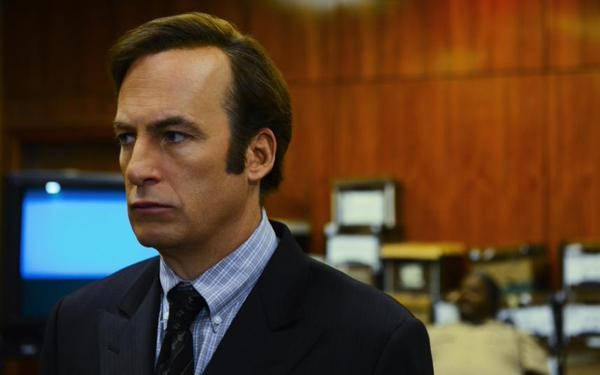
It makes perfect sense that point of view would be significant in the cinematography of ‘Better Call Saul‘ or its long-toothed predecessor, ‘Breaking Bad.’ After all, point of view is both shows’ stock in trade: the story lines take viewers inside the minds of characters whose thoughts and aspirations would otherwise be repugnant to them–either the ethically challenged lawyer Saul Goodman on the one hand or the chemistry-teacher-made-bad Walter White on the other. You could ask why this particular journey fascinates viewers, or you could watch Jaume Lloret‘s brief but dense melange of POV shots (and other shots) from ‘Better Call Saul,’ which showcases Arthur Albert’s wonderful cinematography, or you could do both, with impunity, and learn from the experience. Enjoy!

Watch: Breaking the Fourth Wall in Film: The Sequel

Watch: Breaking the Fourth Wall in Film: The Sequel

A little over two years ago, I put together a video
compilation on 
Breaking the 4th
Wall
: a selection of movies that directly acknowledge the
watching audience by looking at or talking to them, or in some other way
demonstrating that they’re a fictional construct. It was my first ‘video essay’—I called it a ‘supercut’, which I’ve since learned kind of breaks down along
the serious-‘films’-vs.-frivolous-‘movies’ divide—and tentatively sent a link
to a critic I much admired, both for his written and video work, Matt Zoller
Seitz. 

The response was more than I could’ve ever expected. Matt
not only expressed his enthusiasm for the piece, he promptly featured it on Press
Play, which he co-founded and ran at the time, and even wrote a generous accompanying
essay. This stellar support undoubtedly helped the video go viral, garnering
well over 200,000 views within days and being picked up by websites around the
world. I did various interviews about the video; a film studies teacher from Slovenia
asked to use it in one of his classes; and it connected me with talented and
prolific video essayists (Kevin B. Lee, Nelson Carvajal and others) and highly
respected film academics, notably Catherine Grant, founder of the great Film Studies for Free website and passionate audiovisual essay advocate; and Tom Brown, who’d been exploring this field under
the far more erudite title "Direct Address."

For me, these connections are a vital, integral part
of this kind of work. I’d asked for feedback, good or bad, along with other
examples of 4th Wall Movie Breaking that people enjoyed, almost as a
courtesy, and was blown away at how many people responded. Some clips—Eddie Murphy in Trading Places or The Big
Lebowski
—came up numerous times and were clips I knew, but just couldn’t
shoehorn into the original cut. Others—the spectacularly mulleted George
Clooney in Return of the Killer Tomatoes,
or early examples by all-time greats like Max Ophuls or Luis Bunuel—were
wonderful eye-openers.

So I resolved to make another video using all new
films and, if I used their suggestions, to credit those people who made the
effort to contribute. I guess it’s inspired by what the UK Guardian’s new
editor-in-chief Katharine Viner described in her influential 2013 ‘Rise of the Reader’ speech—a way to encourage
active participation and collaboration and redefine the relationship between
online author and audience.

That said, anyone who writes or makes videos for the
web knows the perils of the Comments sections. There’s an incredible amount of
casual vitriol (one original 4th Wall comment claimed “90%” of the
clips were invalid, the video “uneducates [sic] people” and signed off with “F***
you.”) that can be wearying. But the far more lasting revelation is just how
many people out there are looking to constructively engage and discuss. For all
its flaws, the Internet provides an unparalleled forum that, if harnessed
properly, is still so potent at breaking down walls, fourth or otherwise, and
finding new ways to truly connect.

April 2015

Leigh Singer is a freelance film journalist, filmmaker and screenwriter.
Leigh studied Film and Literature at Warwick University, where he
directed and adapted the world stage premiere of Steven Soderbergh’s
‘sex, lies and videotape’. He has written or made video essays on fllm for The Guardian, The Independent, BBCi,
Dazed & Confused, Total Film, RogerEbert.com
and others, has appeared on TV and radio as a film critic and is a
programmer with the London Film Festival. You can reach him on Twitter
@Leigh_Singer.