METAMERICANA: Watch: ‘Dawn of the Planet of the Zombies and the Giant Killer Plants on Some Serious Acid’

METAMERICANA: Watch: ‘Dawn of the Planet of the Zombies and the Giant Killer Plants on Some Serious Acid’

A phenomenon we’ve been seeing a lot of lately is the creation of ornate trailers for feature-length films that will never be produced. On some level this is a textbook avant-garde maneuver: artists centralizing things (like movie trailers) that are usually peripheral to the publication and dissemination of art. What makes these most recent faux trailers unique is that they’re not merely deconstructions of the Hollywood milieu, but free-standing artworks with independent artistic merit. 
A recent example of this emerging subgenre is "Dawn of the Planet of the Zombies and the Giant Killer Plants on Some Serious Acid," a trailer for a nonexistent dystopian film that’s both slickly produced and a little confusing–as "Dawn" lacks the obvious thematic throughline of most action films. While we’ve all seen post-apocalyptic films in which the zombified dead wreak mass havoc, and while to an extent that does happen in "Dawn," the truly omnipresent destructive force in the film is actually a living and life-giving one–the Earth itself. In "Dawn," the Earth is both anthropomorphized (as numberless towering hands and arm-like tendrils) and conspicuously pissed. 

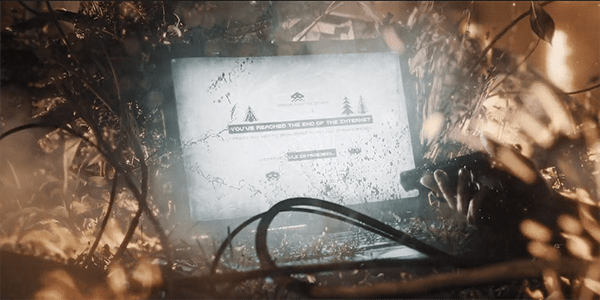
The plot of "Dawn," as deduced from its "trailer," involves a dystopian future that was once imagined comedically by South Park, but isn’t actually so unthinkable in the age of cyberterrorism: the Internet goes down permanently. Suddenly bereft of a longstanding addiction, individual social media users turn violent and wage open warfare against the government. While it’s not clear why the loss of social media access would herald an immediate anti-government revolution in the U.S. (unless we assume that the government of "Dawn," having–much like our own–created the Internet in the 1960s, also wrongly felt entitled to pull the plug on it). What’s even more inexplicable is the End of the Internet causing a spontaneous and possibly global outbreak of bloodthirsty plant-life.

The metaphor behind the film’s depiction of Earth is obvious enough: Technology and Nature are in a zero-sum death-match, so the death of the former must (the thinking goes) imply the triumph of the latter. Yet the politics animating the metaphor really aren’t. Is Alf Lovvold, the artist behind the trailer, decrying the ubiquity of social media platforms and their pernicious influence on civil society, or spoofing our paranoid fear that technology is the primary cause of worldwide political, economic, and cultural decline? The former suggests a deep cynicism, and the latter a sort of benighted optimism: after all, if social media isn’t really destroying American culture, maybe the whole idea that culture and language are being daily degraded–an idea central to postmodernism–is just overheated rhetoric. 

The fictional film’s tagline–"When Social Media Died, the Socially Deprived Walked the Earth"–doesn’t direct its viewers toward a clear reading of the film either. For instance, "walking the earth" would be a great thing for men and women to do if it meant "socializing outside rather than tooling around on the Internet," and a very bad thing if it were being used here merely as a euphemism for cannibalism. Likewise, the trailer’s observation that in the world of "Dawn" mankind "lost everything (even Facebook)" would be parodic if the trailer only showed the Internet going down, but given that acid-fed plantlife is the ultimate cause of Earth’s destruction in "Dawn," Lovvold’s "everything" might actually be intended literally. In other words, the film is obviously "for" or "against" something, and it certainly exploits common Hollywood tropes to make whatever point it’s making, but when you really drill down on what you’re seeing it doesn’t add up to a political spectacle so much as an entirely philosophical and "metamodern" one: the juxtaposition of extreme positions for the purpose of making extreme positions look ridiculous.

The idea of taking common Hollywood tropes and turning them into entirely original material isn’t itself a new one, though it’s received renewed attention lately due to the much-heralded release of a crowd-funded NSFW film called Kung Fury. Though this summary does a disservice to its manic creativity, Kung Fury is more or less an attempt to–in just a half-hour–juxtapose nearly every major action-film trope ever committed to the big screen. 

The popular video-anthology series Robot Chicken was an even earlier adopter of this particular subgenre of metamodern art, as its long-running series of Star Wars-themed sketches turned Boba Fett and Emperor Palpatine into substantially more interesting characters than they ever were in the hands of George Lucas. In a very attenuated way, the humor generated by these sketches was ironic because it played off what we already "knew" about certain fictitious characters; more commonly, however, the humor lay in the construction of the characters themselves. In other words, the alternate-universe Star Wars characters offered up by Robot Chicken were funny primarily because–well–they were funny, not because they reminded us of anything or anyone else. In this sense "Boba Fett" and "Emperor Palpatine" were neither original constructions nor deconstructions of previous constructions, but "reconstructions" of characters who had already been endlessly valorized and critiqued in popular culture. When we speak of "reconstruction" as a metamodern principle, this is the sort of thing we mean: characters who are wholesale reboots of figures we’re already familiar with. Such characters can’t help but be a little ironic (simply by virtue of being recognizably related to their prior appearances), but they function equally well as earnest and entirely original artistic creations.

The brief sketches of Robot Chicken are only one-off or limited-run mini-narratives, however. What Bad Lip Reading has given us recently are fully self-contained artworks reconstructed from existing ones. Consider the genius of the trailer for Medieval Land Fun-Time World, a Bad Lip Reading production that doesn’t so much parody HBO’s Game of Thrones as re-imagine wholesale all its characters and plot-lines. If previous Bad Lip Reading creations had reveled in being nonsensical, Medieval Land Fun-Time World tried to carefully reconstruct believable characters using an editing technique that had previously been purely parodic. For instance, when "Bobby B" (King Robert Baratheon) explains why he’s fat, or "Terry" (Tyrion Lannister) jive-talks with his fellow "park employees," their mannerisms and self-justifications make sense and establish character in an almost conventional way–something we’d never seen before in the frenetic, nonsensical mash-ups of Bad Lip Reading. Or, we can consider the self-contained "song" and "music video" for "Carl Poppa (La Jiggy Jar Jar Do)," a Bad Lip Reading tribute to Carl Grimes of The Walking Dead which, while largely gibberish, is also credible as contemporary nerd rap. The only connection between Carl Grimes and "Carl Poppa" is that both express anger toward their show-stealing father; otherwise, what makes Poppa significant is not so much the way he deconstructs Grimes but plays off the animosity many Walking Dead fans feel toward the young lead. Bad Lip Reading explores this amorphous gestalt in a way The Walking Dead itself never could.

Sometimes making a trailer for a movie that won’t ever be produced makes possible the eventual production of that very movie. A widely circulated script for the movie Deadpool was D.O.A. until (allegedly) its writers leaked the script and some "test footage" of Ryan Reynolds as the titular anti-hero. Suddenly, fans were mad for the film and made such a racket about it that they got exactly what they wanted: the film’s now due out in 2016. While "Dawn of the Planet of the Zombies and the Giant Killer Plants on Some Serious Acid" may not ever end up in theaters, the idea of fan-art–or art somehow promoted and prompted by fans–becoming centralized in popular culture is not one that’s going away anytime soon. Already, the website Twitch allows videogame players of no particular skill or distinction to livestream their personal video game play. This means that an activity formerly both private and a little shameful (at least as to the amount some people play videogames, if not the fact of playing them at all) has suddenly become worthwhile public entertainment. The livestreams that result don’t have to be thrilling to become popular, either; if the players livestreaming themselves are particularly bad at the game they’re playing, or are particularly funny about their own shortcomings, or if the graphics of the game they’re playing are so astounding that merely watching them unfold feels as enjoyable as viewing a decent CGI-heavy action film, the livestream will find an audience. This only underscores that the "new art" in several different media–whether it’s film, television, videogames, or even literature, where self-expressive remixing is becoming increasingly popular–is often the art we already have. This "re-art" is not a vehicle for postmodern critique or ironic deconstruction but an authentic reconstruction that optimistically and creatively refreshes its source material. The possibilities for "re-art" going forward are, it goes without saying, both nearly endless and–if you’re an aspiring artist yourself–well worth exploring with the care and ingenuity Alf Lovvold and others have lately displayed.

Seth Abramson is the author of five poetry collections, including two,Metamericana and DATA, forthcoming in 2015 and 2016. Currently a doctoral candidate at University of Wisconsin-Madison, he is also Series Co-Editor forBest American Experimental Writing, whose next edition will be published by Wesleyan University Press in 2015.
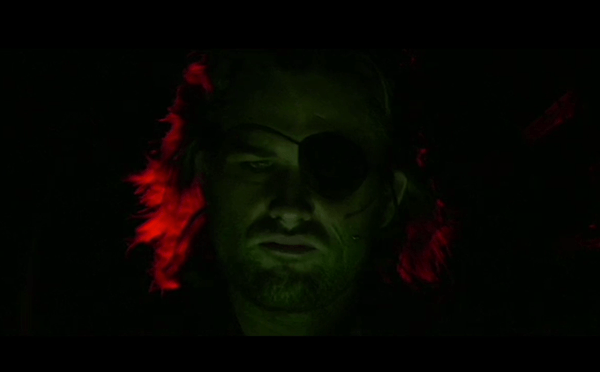
Watch: John Carpenter, Subversive Auteur

Watch: John Carpenter, Subversive Auteur

Up until recently, I had a difficult time grasping the cult of John
Carpenter. Out of the small handful of films I had seen from him across
the past decades (‘Halloween,’The Thing,’ ‘Escape from L.A.,’ and ‘Vampires‘), I found one great film (‘Halloween’), one good film (‘The Thing,’ which felt a bit too much like ‘Alien‘ in Antarctica for me), and two pretty mediocre films (‘Escape from L.A.’ and ‘Vampires’).
Yet, many cinephiles and friends I respect kept urging me to give him a
proper chance. I spent a week or so with about half of his filmography
and I found a director who uses generic pulp for the best of all
possible uses: as a capsule for philosophy and more radical ideology. John Carpenter seems to gravitate towards the subversive, be it in the
form of critiquing American ideology in ‘They Live‘ (1988) or building an action star out of former Disney child actor Kurt Russell with ‘Escape from New York‘ and ‘The Thing’ before destroying that image with the ineffectual man of action—Jack Burton—in ‘Big Trouble in Little China‘ .  

What
I found during my journey through his output was not a perfect
filmmaker, but almost always an interesting one.  A film like
Carpenter’s ‘Prince of Darkness‘ is hampered by a low budget
and bloated running time, but it’s overflowing with Lovecraftian
nuggets (the anti-God, psychic television signals from the future) and
surreal images (the bug man, the broadcasts).  Even his director for
hire adaptation of Stephen King’s ‘Christine‘ (1983) features some
of his finest work with actors, finding a real friendship between the
two male leads in one of the worst of King’s novels.  Across all of his
films, there are poetic images, radical ideas, innovative musical
compositions, an idiosyncratic pace, and abrupt shifts in tone (all of
which Nicole Alvarado and I have attempted to capture within our essay)
that define his cinematic voice.  He is, like his hero Howard Hawks, an
auteur.  
Dr. Drew Morton is an Assistant Professor of Mass Communication at Texas A&M University-Texarkana.  He the co-editor and co-founder of [in]Transition: 
Journal of Videographic Film and Moving Image Studies, the first
peer-reviewed academic journal focused on the visual essay and all of
its forms (co-presented by MediaCommons and
 Cinema Journal).  [in]Transitionrecently
won an award of distinction in the annual SCMS Anne Friedberg
Innovative Scholarship competition.  His publications have appeared in 
animation: an interdisciplinary journal, The Black Maria, Flow, In Media Res, Mediascape, Press Play, RogerEbert.com, Senses of Cinema, Studies in Comics, and
a range of academic anthologies.  He is currently completing a
manuscript on the overlap between American blockbuster cinema and comic
book style. 

Nicole Alvarado is an animation buff and research analyst.  This is her first video essay.

Watch: ‘Mad Max: Fury Road’ Meets Buster Keaton (Really)

Watch: ‘Mad Max: Fury Road’ Meets Buster Keaton (Really)

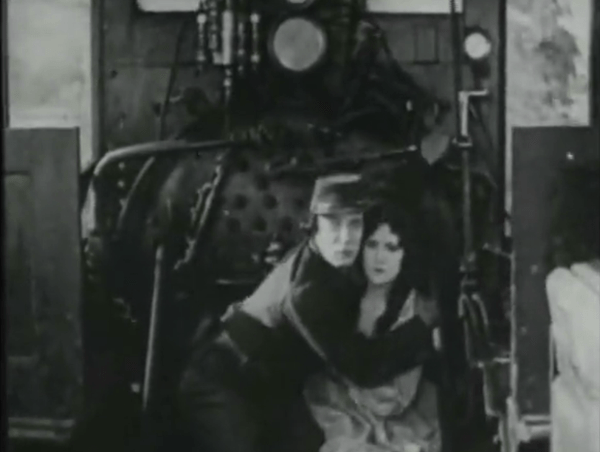
Once upon a time, there were two directors. One was named George Miller and the other was named Buster Keaton. They lived many, many years apart, and their films were very, very different from each other. George Miller directed the ‘Mad Max’ films, a series of apocalyptic car chase action social commentary science fiction road movie romance thrillers (set in Australia, maybe), while Buster Keaton directed and starred in silent comedies, dependent largely on slapstick and a vast Rolodex of remarkable facial expressions. One day, a film editor named Walter Rafelsberger discovered that if he put the soundtrack to ‘Mad Max: Fury Road‘ (2015) behind a famous chase scene from a Keaton film called ‘The General‘ (1926), the two parts… just… fit! And the result is what you see above.

Watch: The Intimate Side of Alejandro González Iñárritu

Watch: The Intimate Side of Alejandro González Iñárritu

It’s easy, when considering the work of Alejandro
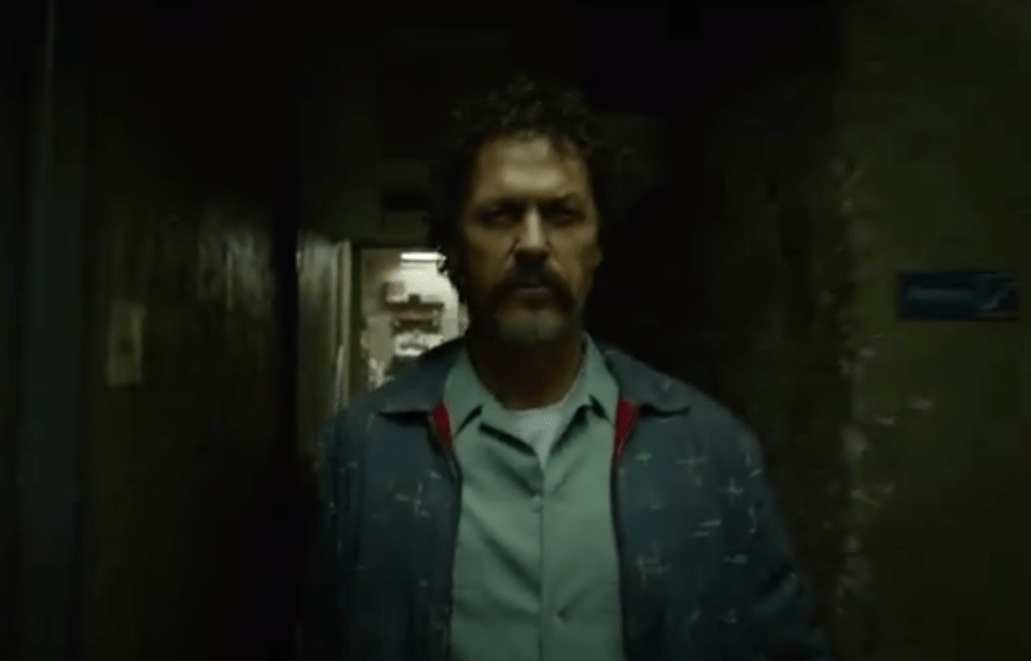
González Iñárritu, to think he’s a master showman, an aficionado of the emotional grandstand, given to stadium-sized themes, maybe even a little maudlin. You would be justified in thinking that, in fact. It’s important to remember, though, that Iñárritu is also interested in the more shy, quiet side of emotional trauma and conflict, and how these stressors reveal themselves in the human face. Does Brad Pitt look glamorous when he’s sobbing in ‘Babel‘? No. Does Michael Keaton remind you of Bruce Wayne when he’s stomping around backstage in ‘Birdman‘ in a silly wig? No, and yet in both cases, the characters the actors play are withstanding Herculean challenges whose strain we can see in their humanized and imperfect appearance. Miguel Branco‘s lyrical and swift but also staggering homage to Iñárritu plays up a side of the director’s work which deserves longer shrift than it commonly receives: enjoy.

Watch: ‘Mad Max: Fury Road’: It’s All in the Framing

Watch: ‘Mad Max: Fury Road’: It’s All in the Framing

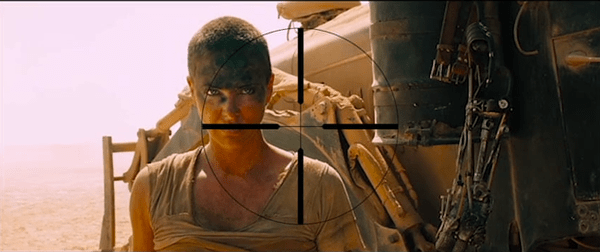
We’ve looked, elsewhere, at how the use of point-of view shots made the original Mad Max movies compelling–here, in Vashi Nedomansky’s recent piece, we discover a secret of the success of George Miller’s ‘Mad Max: Fury Road‘: the editing. Or, more specifically, the framing. Each shot is center-framed, meaning that the eye’s intended focal point will always be in the center of the frame. Nedomansky has helpfully added crosshairs to make us see this a bit more clearly, along with a voice-over from John Seale, the film’s director of photography.

Watch: Who Were the Great International Noir Directors?

Watch: Who Were the Great International Noir Directors?

What
exactly is film noir?  Is it a movement, a mode, a style, or a genre?
 These questions have preoccupied film scholars for decades. According
to filmmaker Paul Schrader, noir began with The Maltese Falcon and ended with Orson Welles’s Touch of Evil.
 He’d add that it was largely an American movement that applied certain
stylistic (high contrast lighting, voice over narration, non-linear
storytelling) and thematic (existentialism, the cruel mechanizations of
fate, amour fou) elements in genres ranging from melodramas to detective
films. Another film scholar might add that directors like Fritz Lang
and Billy Wilder never described their films as being "noir."  They
thought they were making thrillers. Film noir?  That’s a term the French
critics applied retroactively. 

This
video essay series takes the fairly provocative stance that film noir
became a genre.  Essentially, in its golden age during the 1940s, noir
was a mode/movement that was superimposed onto other genres.  In the
words of genre theorist Rick Altman, genres can start off as
"adjectives"–fragments of the style and theme might be there, but the
genre has yet to fully solidify because the filmmakers and audiences
haven’t quite gotten their heads around it yet.  However, by the time
Robert Aldrich was making Kiss Me Deadly in
1955, the writings of the French critics had made it stateside (in
fact, there’s a picture of him reading Borde and Chaumeton’s Panorama du Film Noir on the set of Attack!),
and perhaps the filmmakers and audiences had finally begun to think of
noir as being a noun.  When neo-noir flourished in the 1970s (thanks to
filmmakers like Schrader), the movement emerged–fully formed as a
genre–from its black-and-white cocoon.  

I
write this trajectory into this introduction to the series because I
can imagine that some of my colleagues might have been troubled by a
video essay that calls film noir a genre. I am more than aware of the
history of this debate and it was covered in Part III on Pragmatics.
 Part V is a shift in gears.  There isn’t much in the way of an academic
argument regarding noir or genre to be found here; it’s simply a poetic
supercut of international noir films that the interested viewer should
check out (a list of films – in the order they appear – can be found
below).  

What
I’m attempting to do here is to craft the video essay equivalent of an
encyclopedia entry on film noir for the undergraduate student with a new
episode each month.  If you’re already familiar with the films and the
key debates, you may not find much in the way of "new" knowledge here.
 My main audience–at least in terms of an intellectual presentation–is
the uninitiated.  I assume the pleasures of the more advanced fans and
scholars of noir will be found in the aesthetics of the pieces, although
maybe they’ll be surprised by a "new" recommendation (in this case, I
obviously love Elevator to the Gallows!).
 For those who have followed me through this five part series, I thank
you for watching, sharing, and for the wonderful words of encouragement.
 For those new to the series, I welcome you and urge you to start at
the beginning.  

FILMS (IN THE ORDER OF APPEARANCE, INCLUDING REPEATED CLIPS): 
OSSESSIONE

BREATHLESS

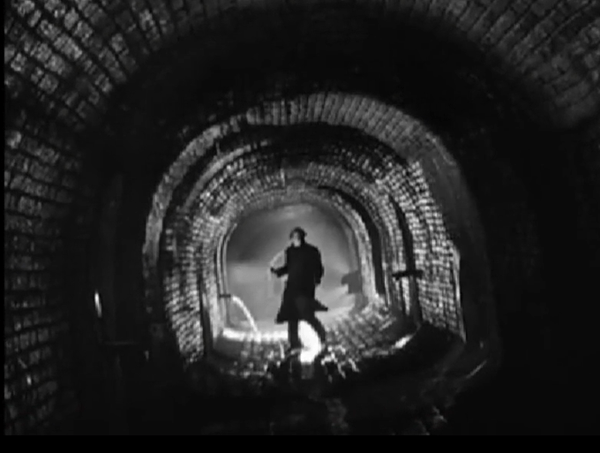
THE THIRD MAN

ELEVATOR TO THE GALLOWS

DRUNKEN ANGEL

ODD MAN OUT

PIERROT LE FOU

ELEVATOR TO THE GALLOWS

BAND OF OUTSIDERS

SERIE NOIRE

STRAY DOG

RIFIFI

TOUCHEZ PAS AU GRISBI

BOB LE FLAMBEUR

THE CRYING GAME

TOKYO DRIFTER

MADE IN U.S.A.

DRUNKEN ANGEL

LA BETE HUMAINE

SHOOT THE PIANO PLAYER

BAND OF OUTSIDERS

ALPHAVILLE

JE JOUR SE LEVE

LE SAMOURAI

ELEVATOR TO THE GALLOWS

SERIE NOIRE

SHOOT THE PIANO PLAYER

LE SAMOURAI

DRUNKEN ANGEL

TOKYO DRIFTER
BREATHLESS

STRAY DOG

ODD MAN OUT

Dr. Drew Morton is an Assistant Professor of Mass Communication at Texas A&M University-Texarkana.  He the co-editor and co-founder of[in]Transition:  Journal of Videographic Film and Moving Image Studies, the first peer-reviewed academic journal focused on the visual essay and all of its forms (co-presented by MediaCommons and Cinema Journal).  [in]Transitionrecently won an award of distinction in the annual SCMS Anne Friedberg Innovative Scholarship competition.  His publications have appeared inanimation: an interdisciplinary journal, The Black Maria, Flow, In Media Res, Mediascape, Press Play, RogerEbert.com, Senses of Cinema, Studies in Comics, and a range of academic anthologies.  He is currently completing a manuscript on the overlap between American blockbuster cinema and comic book style.

ARIELLE BERNSTEIN: The Women in Noah Baumbach’s Films: Gentleness as Strength

ARIELLE BERNSTEIN: The Women in Noah Baumbach’s Films: Gentleness as Strength

nullIn Noah Baumbach’s most recent
film, ‘While We’re Young,’ the smartest person in the room is Darby (Amanda Seyfried), a talented
ice cream maker and the young wife of an ambitious young film director named
Jamie (Adam Driver), who, we find out later on, is also stealing many of her ideas. While the
film on surface is about aging and art, a major subtext of ‘While We’re Young’
has to do with the ways that gender dynamics shape relationships. After all,
even though there is a twenty-year age gap between Josh (Ben Stiller) and Cornelia (Naomi Watts), and Jamie
and Darby, the men in both couples push away the possibility for true
collaboration with their wives.

In A.O. Scott’s review of the film,
he argues that gender is a major blindspot in Baumbach’s films. He comments on
the fact that Baumbach, like many other male film directors, treats ambition
like it’s “…a guy thing. Men make movies. Women make ice cream and babies, or
help the men make the movies.” But where Scott sees a pat dismissal of the
female experience, I think Baumbach is actually doing something more
challenging with his female characters. In a world where we often doubt whether
female characters can still be perceived as “strong” if they long for romance
or babies, Baumbach offers a vision of femininity in which there is power in being
gentle.

Films like ‘The Squid and The Whale’, ‘Greenberg,’ and ‘While We’re Young’ are fascinated with the lives of men who are
often disdainful of their female companions, too self-absorbed to acknowledge
them as having an interior world that is equally as complex as their own. 

In ‘The Squid and The Whale,’ for
example, we see husband Bernard (Jeff Daniels), expressing contempt for his ex-wife’s
burgeoning literary accomplishments as he flounders and fails to write a
successful new novel. The father’s frustration with his wife’s success
manifests as misogynistic instructing of his own son, Walt. He implores him not
settle down too soon, and seems to be unimpressed by the looks and talent of
his son’s girlfriend, who is portrayed as exceptionally warm, smart and kind,
actually reading the books her boyfriend professes to have read.

Likewise, in ‘Greenberg,’ Florence (Greta Gerwig),
the young housekeeper who is trying to figure out life, is portrayed as far
more stable, dependable, smart and interesting than older and supposedly wiser
Roger (Ben Stiller), who suffers from extreme anxiety, and just as extreme narcissism. It is
clear throughout ‘Greenberg’ that Florence could do a lot better than Roger, but
the criticism that Florence is not a developed character, or exists merely to
inspire change in Roger, seems patently unfair. Throughout the film Florence is
portrayed as bright and vivacious, though she is very insecure, and the film
begins and ends by focusing on her perspective, rather than Roger’s.

As a feminist critic I’ve been
taught to be wary of female characters like Florence, young, talented and
beautiful, yet strangely vulnerable, and willing to put up with a lot of male
bad behavior. We’re in an anti manic pixie dream girl moment, perhaps the
backlash from a few years where every female character on screen seemed to have
a bit of manic pixie dream girl magic about her. Initially meant to describe a
particular type of inspirational female character who existed to help a male
narrator along his journey, the term came to mean any female character who was
portrayed as quirky, gentle, and offbeat. 

Even the creator of the term,
Nathan Rabin, would eventually apologize for inadvertently creating the clichéd buzzword.  In his 2014 piece for Salon, he argues that
the term is actually being used to devalue female characters, rather than
criticize the limited roles that women have on screen. The term manic pixie
dream girl is used to criticize a particular kind of girl, one who likes Zooey
Deschanel bangs, and kittens, and quirky, gentle things, like knitting and
xylophones and pretty art.

In short, the term has evolved as a
kind of catch-all to dismiss female artistic potential. Youthful male energy is
cast as exhilarating, creative and powerful, while youthful female energy is presented
as lacking gravitas. (A male ice-cream maker with the kind of talent Darby
exhibits would be presented as a talented businessman, not a burgeoning
housewife, as AO Scott suggests in his review.)

As Eva Wiseman argues in her review
of Miranda July’s latest novel, ‘The First Bad Man,’ female creative talent is often dismissed
with words like quirky, as if liking glitter and kittens is antithetical to
producing work that is serious and substantive.

She says of July’s novel, “Loneliness is not trivial. Death is not cute.
To call stories like this quirky is to admit that you haven’t really listened.
Occasionally a male artist is labelled quirky, but usually because his style is
perceived as feminine. ‘Surreal.’ In fact, male artists who are similar to
July, whose work is unusual and prolific and who divides critics, are likely to
be labelled geniuses. A genius, perhaps, is a male artist whose work is
difficult to define. While with a female artist we have the word right here,
ready. It’s ‘quirky’.”

Later in her article, Wiseman goes
on to suggest that the use of manic pixie dream girls in films contributes to
invalidating the importance of female creativity. In reality, I think it’s the
disdain for femininity that leads us to assume that delicate female characters
are unworthy of respect or recognition. The female characters in Baumbach’s
films may often be dealing with men who have the potential to lash out and be
abusive, but that doesn’t mean they are shrinking violets.  At the end of ‘The Squid and The Whale,’ a son
who idealizes his father learns to see their divorce from the perspective of
his mother. At the end of ‘Greenberg,’ Florence listens to a rambling message
from Roger. At the start of the movie she pleaded with traffic, “Are you going
to let me in?” In the end, she is the one who gets to answer that question.
Will she continue to date Roger? Will she let him go? Florence’s becoming aware
of her own power is just as important in the film as Roger coming to terms with
his being an abusive jerk a lot of the time.

A look at Noah Baumbach’s women
would be incomplete without a consideration of the brilliant and beautiful
film, ‘Frances Ha,’ a film that is first and foremost about female friendship. In
it, two young women, Frances and Sophie, grow together and apart from each
other, as they each struggle to make it, both professionally and personally, in
New York. In one of the most moving and memorable moments in the movie, Frances
drunkenly describes what she wants out of a relationship to a few acquaintances
she has just met at a dinner party:

“It’s that thing when
you’re with someone, and you love them and they know it, and they love you and
you know it… but it’s a party… and you’re both talking to other people, and
you’re laughing and shining… and you look across the room and catch each
other’s eyes… but—but not because you’re possessive, or it’s precisely
sexual… but because… that is your person in this life. And it’s funny and
sad, but only because this life will end, and it’s this secret world that
exists right there in public, unnoticed, that no one else knows about. It’s
sort of like how they say that other dimensions exist all around us, but we
don’t have the ability to perceive them. That’s—That’s what I want out of a
relationship. Or just life, I guess.”

Towards the very end
of the film, Baumbach presents a scene at a party celebrating Frances’
choreography for a modern dance show, where we see Frances and Sophie lock
eyes. “That’s Sophie. She’s my best friend.” While a show like ‘Girls’ often
paints girliness as vapid or cruel (we spend a lot of time waiting for Hannah
and her friends to grow up and stop being girls, after all), ‘Frances Ha’ insists
on a vision of female friendship that is imperfect, but also genuinely tender.

There were echoes of
this kind of gentle warmth in another one of my favorite films about women’s
lives and relationships, ‘Blue is the Warmest Color’ (another film about women
directed by a man) where the young lovers meet again, years later at an art
show. At a time when many feel skeptical about the ability of male artists to
effectively convey the female experience, I remain heartened by the idea that
the creation of interesting, complex characters is not limited by one’s
experience of gender. At a time where “strong female characters” are still
often thought of in regards to the “warrior” archetype (the Ripleys and
Furiosas of the screen), it’s refreshing to see a portrayal of femininity that
doesn’t need to be pumped up or loud or physically powerful. It just needs to
be genuinely human.

Arielle Bernstein is
a writer living in Washington, DC. She teaches writing at American
University and also freelances. Her work has been published in
The
Millions, The Rumpus, St. Petersburg Review and The Ilanot Review. She
has been listed four times as a finalist in
Glimmer Train short story
contests
. She is currently writing her first book.

Watch: ‘The Wire’ Is ‘The Wire’: All of the Show’s Tautologies in One Supercut

Watch: ‘The Wire’ Is ‘The Wire’: All of the Show’s Tautologies in One Supercut

In addition to bringing the phrase "True dat" and the word "S************************************************it" into the public lexicon, David Simon’s ‘The Wire,’ as YouTube user Propolandante’s supercut shows, flooded us with tautologies. Ah, the tautology: that simple statement with a matching subject and predicate nominative: "It is what it is," "what’s done is done," "let bygones be bygones." Here, these statements are replaced by "The game is the game," "the street is the street," and other tough utterances. The tautology can be used to provoke reflection, to invite us not to make more of something than it is, but in the case of Simon’s gritty-is-an-understatement Baltimore drama, the tautology is like a strong hand, swiveling the viewer’s head around and forcing a reckoning with reality.

Watch: The POV Shots in the ‘Mad Max’ Movies Make All the Difference

Watch: The POV Shots in the ‘Mad Max’ Movies Make All the Difference

Even if you don’t like action movies, don’t like cars, don’t like Mel
Gibson, or don’t like Australia (or the apocalypse), it would be hard to
be immune to the charms of George Miller’s original, primal Mad Max
films. As the newest installment, ‘Mad Max: Fury Road,’
blazes a trail of high ticket sales through cineplexes across the land,
it’s more than worth a look back at these earlier films, which might
show up as examples if you were to look up the term "action film" in an encyclopedia. Because that’s what they were: pure, unmitigated action. As Rishi Kaneria points out in this excellent 3-minute toe-curling video head-trip, the source of the movies’ effectiveness was, at least in (large) part their use of point-of-view shots. Since those shots were most often deployed to place the viewer in the seat of a fast-moving vehicle speeding away from or towards a conflagration, explosion, or desolate spot outlined against a limitless hoizon, you might often finish one of the films feeling both winded and scared for humankind. If you aren’t familiar with the earlier films, take a peek at this video and then: start your engines.

Watch: Spike Lee’s ‘Do the Right Thing’: The Camera Work Behind the Tension

Watch: Spike Lee’s ‘Do the Right Thing’: The Camera Work Behind the Tension

I have often thought that if there were one director who could direct a film version of Shakespeare’s ‘Titus Andronicus,’ it would be Spike Lee. Why that play? Because it’s one of Shakespeare’s bloodiest, most violent works. Why Spike Lee? Because he understands how to  portray violence: his fight scenes, specifically those portraying hand-to-hand combat between humans, are among the most thrilling of such scenes portrayed in cinema. But why are these fight scenes so successful? Because Lee understands tension. A fist fight is usually the eruption of profound tension–sometimes built slowly, sometimes in a millisecond. And Lee always gives us both halves of the occurrence. In this video essay on Lee’s seminal ‘Do the Right Thing,’ "Film-Drunk Love" shows how Lee, through clever cuts and angle shifts, manages to show the tension between the actor and the lens and between one character and another, in the opening credits and in an altercation between Bug-Out and a bigoted neighbor.