Watch: David Fincher and Bong Joon-Ho: Two Directors Obsessed with Perspective

Watch: David Fincher and Bong Joon-Ho: Two Directors Obsessed with Perspective

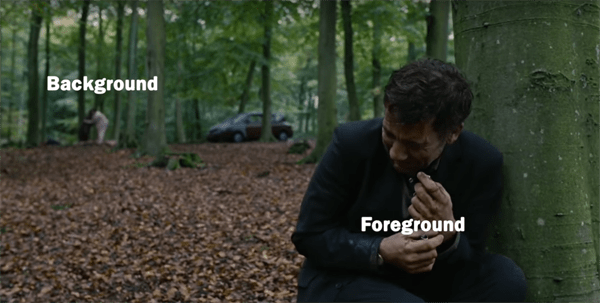
In one sense, and a very large one, in fact, a story is only as good as the perspective from which it is told. Great Expectations might be a lesser tale without the semi-annoying Pip to tell it. Think of Gillian Flynn’s Gone Girl without the author’s relentless play with points of view. Lewis Criswell’s video essay not only shows us how Bong Joon-Ho’s ‘Memories of Murder‘ influenced David Fincher’s ‘Zodiac‘–and convincingly, given that, as presented here, the one often looks like a blueprint for the other, down to characters’ facial expressions–but also that stories like the one told by both of these films, in which the center of the story, the serial murderer, remains elusive, must rely on the perspectives of their tellers, the characters within the story. Reliable or not, the individuals wrestling with the problem at the story’s heart become our guides through the film. If the mystery remains unresolved, so, too, do the characters remain unresolved or unreachable within viewers’ minds.

Watch: In Alfonso Cuaron’s ‘Children of Men,’ The Story Is in the Background

Watch: In Alfonso Cuaron’s ‘Children of Men,’ The Story Is in the Background

Rarely, when watching a film, do we look to the background for crucial information–although directors from Alfred Hitchcock to the Coen Brothers have encouraged us to do otherwise. In this new video essay in his Nerdwriter YouTube series, Evan Puschak takes Alfonso Cuaron’s dystopian ‘Children of Men,’ a film which has more than enough going on in its foreground to keep most viewers fully occupied, and looks at its background. Puschak pushes the meaning of the word ‘background,’ examining the film’s range of reference, from Pink Floyd to George Orwell and everything in between–the nods Cuaron makes become as significant as the desolate, chaotic physical background he offers us.

Watch: Before ‘Everest’: The Allure of the Mountain Climber’s Tale

Watch: Before ‘Everest’: The Allure of the Mountain Climber’s Tale

In his review of Franc Roddam’s 1992 mountain climbing movie ‘K2,’ Roger Ebert wrote: "If I ever fell off a mountain, I would shout ‘Stupid! Stupid!’ at myself all the way down, for having willingly and through great effort put myself in a position to fall to my death." I thought about that line as I watched the trailer for the new star-studded film Everest, which traces the real life events—and lives lost—from the disaster at Mount Everest in 1996. ‘Everest‘ is a film that I find of particular interest: a red-blooded survival tale set in one of the world’s most unforgiving, freezing and deadly mountains. There’s no doubt I will be engrossed by the setting of this film alone, but Ebert’s blunt take-down of the genre—and of the real life mountain climbing sport in general for that matter—made me revisit some favorite mountain movie titles from my childhood, such as ‘Cliffhanger‘ and ‘Alive.’ Those were two films about two very different sets of people stranded in the snowy mountains: one concerns heroes who are professional mountain climbers fighting armed henchmen and the other recreates a bizarre, true story survival tale of a Uruguayan rugby team that resorted to cannibalism after their plane crashed in the Andes mountains. I thought about the films’ differences in regard to their respective plots and what was at stake—but this consideration was soon eclipsed by the bigger, more worldly theme of mortality. At the end of the day, these mountains serve as domineering and unnatural environments for us; we probably shouldn’t be up there climbing in the first place. No matter how different one mountain-climbing film is from the next one, they all share the same absolute truth, in that we are deeply humbled by how deadly these snowy wonders of Earth are. And when some of these films look at a mountain’s visual majesty as a means for spirituality, they only get to that personal epiphany after putting their protagonists through tragic loss or defeat. The mountain is supposed to represent life’s hurdles, life’s challenges. Even when we reach the top of the mountain, we are reminded of how small, frail and, in some instances, alone we are in the grand scheme of things. And there’s a terrifying beauty and an unapologetic humanity in that. So if one were to look at it that way, maybe falling from the mountain is an act of humility; it’s the most outward physical gesture that proves we tried elevating ourselves in the first place.

Nelson Carvajal is an independent digital filmmaker, writer and content creator based out of Chicago, Illinois. His digital short films usually contain appropriated content and have screened at such venues as the London Underground Film Festival. Carvajal runs a blog called FREE CINEMA NOWwhich boasts the tagline: "Liberating Independent Film And Video From A Prehistoric Value System." You can follow Nelson on Twitter here.

Watch: Hannibal Lecter: Three Actors, One Mutating Identity

Watch: Hannibal Lecter: Three Actors, One Mutating Identity

Who’s your Lecter? A more serious question than it might seem, posed in this excellent montage by Matthew Morettini. Morettini has taken the three people to play Thomas Harris’s famous villain–Brian Cox, Anthony Hopkins, and Mads Mikkelsen, in chronological order–and interwoven their portrayals around a famous scene in which profiler Will Graham goes to interview Lecter about a serial killing. The idea behind the scene is clear; the characters are not so much talking to each other as dancing around each other, each man trying to find out how the other man ticks, neither man getting an entirely satisfying result, both men heading off into the abysses of their own selves after the conversation is over.  In this survey of Michael Mann’s exploration in ‘Manhunter,’ Brett Ratner’s exploration in ‘Red Dragon," and Bryan Fuller’s examination in ‘Hannibal,’ we see three faces attached to one rotting core, all saying something slightly different when interrogated–not different in the words they say, but in the way they say those words, which ends up making all the difference.

Watch: Christopher Nolan Meets Wes Craven in a Mix of ‘Inception’ and ‘A Nightmare on Elm Street’

Watch: Christopher Nolan Meets Wes Craven in a Mix of ‘Inception’ and ‘Nightmare on Elm Street’

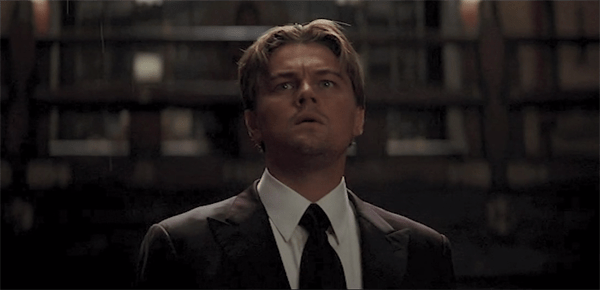
Christopher Nolan and Wes Craven? Mash-up partners? Sure. They are linked in a number of ways. Both are obsessed with the dream-life and its interaction with the waking life, they both look unflinchingly at nightmares, and they both–and this is perhaps their point of greatest similarity–hold little back stylistically. Indeed, the heavy, emotion-laden atmosphere of a film like ‘Inception‘ or a film like ‘A Nightmare on Elm Street‘ sits on top of the film like a crouching demon, both daring the viewer to enter the filmmaker’s world and scaring the viewer with what lies within that world. So Pablo Fernández Eyre, far from making a stretch with this video, makes a significant, provocative connection between the two directors’ work.

Watch: ‘Mad Men’ Recalls Edward Hopper’s Paintings in Frame after Frame after Frame

Watch: ‘Mad Men’ Recalls Edward Hopper’s Paintings in Frame after Frame after Frame

If you’re still unconvinced that ‘Mad Men’ remains the most exquisitely crafted examination of loneliness, then study the ways the show closes out each episode. Resting on the power of its compositions over witty dialogue, the numerous backwards tracking shots, framing Don, Peggy and others dwarfed in their work and home environments, often framed within doorways and other frames, is as poignant in its reflection of urban solitude as any Edward Hopper painting. And it’s clear that Hopper would have adored ‘Mad Men’: just as Matthew Weiner so subtly captured the lives of ordinary, extraordinary New Yorkers over the course of 8 years, Hopper was obsessed with capturing the privacy of everyday people. In solitary bedrooms, offices, movie theaters, often solitary characters reflect in their environments, yet even when couples are together, as in Hopper’s Room in New York, they are occupied with their own devices and do not interact with each other, their intimacy as unattainable as Don’s constant chase for happiness in the beds of other women, or a new wife. 

nullnull

That isn’t to say that every shot ended in a back tracking wide shot; the close-ups of Don’s conflicted face accentuated his existential dilemma, and the frames within frames only heightened how trapped the characters were in their own fears and longings. But the back tracking shots are a basic staple of editing: start wide, go in, end, in a way that punctuates how far you’ve come. And that is exactly what makes the contrast between Don’s constant fading away, his dismayed face and the final filmed shot, a push-in to Don’s smiling face, so poignant. Stripped of his possessions, his family, his home of New York, he has found something close to internal peace at a hippie retreat on the California coastline, finding himself and, perhaps, a Coca Cola ad in the process.
Editor’s Note: The ending scenes are not in strict chronological order, to allow for some editing creative licensing. However, their respective seasons remain firmly in order. And I will be reminded that Don’s smile is not technically the last shot, or even the penultimate shot, of the series. A helicopter shot from the famous Coke commercial is the last shot seen of the series. However, it was the last scene of the original footage shot for the series, and for that, it is arguably the true final shot of the series. 

Serena Bramble is a film editor whose montage skills are an end result of accumulated years of movie-watching and loving. Serena is a graduate from the Teledramatic Arts and Technology department at Cal State Monterey Bay. In addition to editing, she also writes on her blog Brief Encounters of the Cinematic Kind.

Watch: Sergio Leone’s Western Journey

Watch: Sergio Leone’s Western Journey

How could it be that one of the greatest directors known for directing films about the American west was not an American himself?
 
Sergio Leone was born in 1929 in Rome, Italy to parents already working in the silent film industry—his father was a director and his mother was an actress. He became inspired to start a career in film himself after visiting his father’s film shoots. He met his frequent collaborator, Ennio Moriconne, at a young age while they were classmates in school.
 
At 18 years old, he got his first job in the industry as Vittorio de Sica’s assistant during the classic film ‘The Bicycle Thief.’ After a period of writing screenplays, he went on to work as an assistant director for more than 30 films including the 1959 William Wyler epic ‘Ben Hur.’ He worked on many epics similar to ‘Ben Hur’ as an assistant director, but when he worked on a film titled ‘The Last Days of Pompeii,’ he took over the job as director when the original director got sick during the beginning of production. He continued working as an assistant director after this, but soon these “sword and sandal” epics (as they were called) started flopping at the box office. Because of this, the Italian film industry decided to switch to making westerns, after the westerns coming over from Hollywood started to gain popularity. So, the Italian film industry started to produce films in Italy about the American west and had their directors use more American sounding names to try and trick Italian audiences into thinking that they were authentic Hollywood westerns—and thus began the era of the “Spaghetti Western.”
 
His first “Spaghetti Western” was titled ‘A Fistful of Dollars,’ which was only produced as a way to earn back money spent on a larger film titled ‘Guns Don’t Talk.’ ‘A Fistful of Dollars’ would cost much less money to make because it would use all the same sets, costumes, and other materials made for ‘Guns Don’t Talk.’ However, A ‘Fistful of Dollars’ was significantly more successful than ‘Guns Don’t Talk’ and it ended up becoming the first “Spaghetti Western” to make it to America. Because of this, Leone was able to use his real name.
 
‘A Fistful of Dollars,’ which would become the first in a trilogy that also contained ‘For a Few Dollars More’ and ‘The Good, the Bad, and the Ugly,’ was more or less a reimagining of an earlier Akira Kurosawa samurai film titled ‘Yojimbo.’ Clint Eastwood, who played the protagonist of ‘A Fistful of Dollars,’ was relatively unknown at this time ,and Leone actually discovered him as a cast member of a television show called ‘Rawhide.’
 
Directly after the ‘Dollars Trilogy,’ Leone started another trilogy—the first installment, an epic titled ‘Once Upon a Time in the West,’ shocked audiences with Hollywood ‘good guy’ Henry Fonda cast as a brutal child murderer. The next installment, titled ‘Duck, You Sucker’ (also known as ‘A Fistful of Dynamite’ or ‘Once Upon a Time… the Revolution’) takes place during the Mexican Revolution. It would be Leone’s last western film.
 
The third installment (and Leone’s last film) was released 13 years later and is set in New York City during the prohibition era. This would be the first and only time that Leone would work with Robert De Niro who played the lead character, Noodles. What binds these three films together is the greed and corruption in the shaping of America from the turn of the century up to the 1960s. Each takes Leone’s personality and style to an even grander scale and reveals the breadth of his artistry. Even though ‘Once Upon a Time in America’ is not a western as many of his iconic films were, it was a beautiful and fitting end to a remarkable career.

Clips used:

‘The Bicycle Thief’ (1949 dir. Vittorio De Sica)
‘Ben Hur’ (1959 dir. William Wyler)
‘The Last Days of Pompeii’ (1959 dir. Mario Bonnard, Sergio Leone)
‘The Searchers’ (1956 dir. John Ford)
‘A Fistful of Dollars’ (1964 dir. Sergio Leone)
‘Guns Don’t Talk’ (1964 dir. Mario Caiano)
‘For a Few Dollars More’ (1965 dir. Sergio Leone)
‘The Good, the Bad, and the Ugly’ (1966 dir. Sergio Leone)
‘Yojimbo’ (1961 dir. Akira Kurosawa)
‘Once Upon a Time in the West’ (1968 dir. Sergio Leone)
‘Duck, You Sucker!’ (1971 dir. Sergio Leone)
‘Once Upon a Time in America’ (1984 dir. Sergio Leone)

Tyler Knudsen, a San Francisco Bay Area native, has been a student of film for most of his life. Appearing in several television commercials as a child, Tyler was inspired to shift his focus from acting to directing after performing as a featured extra in Vincent Ward’s What Dreams May Come. He studied Film & Digital Media with an emphasis on production at the University of California, Santa Cruz and recently moved to New York City where he currently resides with his girlfriend.

Watch: Wes Craven’s ‘A Nightmare on Elm Street’: A Journey Through Sound

Watch: Wes Craven’s ‘A Nightmare on Elm Street’: A Journey Through Sound

The ears are gateways to the emotions as frequently as the eyes are, though culturally, no one dwells on auditory phenomena as much. The ever-more-prolific Jacob T. Swinney has put together a short but telling homage to late horror director Wes Craven’s use of sound in his masterpiece ‘A Nightmare on Elm Street‘ that is as tight as a drum. Watch–but also listen.

Watch: The Early ‘Star Wars’ Images Predict the Later Ones

Watch: The Early ‘Star Wars’ Images Predict the Later Ones

Taking its inspiration from a quote by George Lucas in which he compares the way images echo each other in the ‘Star Wars’ films to the way they correspond in poetry, Pablo Fernández Eyre has produced a very persuasive video essay; watching the images cycle and reiterate themselves between the 1970s films and those of more recent times is a thrill. Enjoy!

Watch: The Coen Brothers Show Their Humanity Through the POV Shot

Watch: The Coen Brothers Show Their Humanity Through the POV Shot

Why do we watch films? Beyond entertainment, beyond distraction, beyond visual dazzlement, what I look for in the movie theater is a sense of recognition, a sense that I understand or have felt previously an emotion expressed on the screen, be it sadness, terror, joy, or confusion. One of the most obvious ways a director can stir identification of this sort is through cinematography. The Coen brothers, for instance, use the POV shot to their advantage, as well they should, given that many of the scenarios they describe are beautifully outlandish and, being so, require extra nudging to bring them within the range of most viewers’ identification. This fun and discombobulating video essay by frequent Press Play contributor Jacob T. Swinney takes us through the Coens’ numerous POV explorations: watch, and see if you don’t feel something for the bedraggled, flung-around, assaulted, and entrenched characters in these films, from ‘The Big Lebowski‘ to ‘Inside Llewyn Davis‘ to ‘O Brother, Where Art Thou?‘ and onwards.