Watch: Jim Jarmusch’s Best Traveling Sequences… In Three Minutes!

Watch: Jim Jarmusch’s Best Traveling Sequences… In Three Minutes!

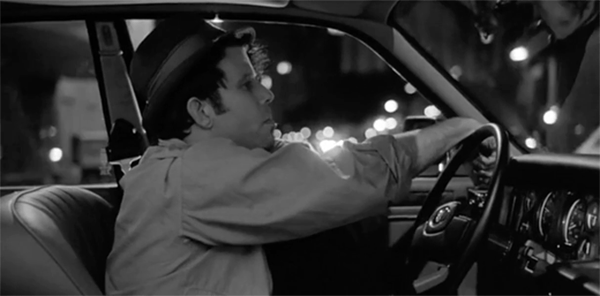
At first glance, the films of Jim Jarmusch may not seem to have many connections.  For example, what could a samurai-influenced hit man have in common with hard-rocking vampires?  Examining any two of Jarmusch’s films presents us with equally unusual comparisons.  However, all of Jarmusch’s feature films do indeed share a common thread–a journey. The characters in a Jarmusch film share the simple goal of starting somewhere and needing to get somewhere else.  The destination is not necessarily a physical place–most of the journeys are spiritual–but the process is visually communicated via traveling sequences.  There is something unique in the way Jarmusch presents traveling characters.  His camera lingers in confined spaces, communicating a strong sense of significance.  He focuses on facial expressions, which tend to be solemn and focused–they are on a mission, simply to arrive.  Here is a look at characters traveling throughout Jim Jarmusch’s film career.  

Films used:

Stranger Than Paradise (1984)

Down by Law (1986)

Mystery Train (1989)

Night on Earth (1991)

Dead Man (1995)

Ghost Dog: The Way of the Samurai (1999)

Broken Flowers (2005)

The Limits of Control (2009)

Only Lovers Left Alive (2013)

Jacob T. Swinney is an industrious film editor and filmmaker, as well as a recent graduate of Salisbury University.

Watch: Christopher Nolan’s Films Immerse You in the Moment

Watch: Christopher Nolan’s Films Immerse You in the Moment

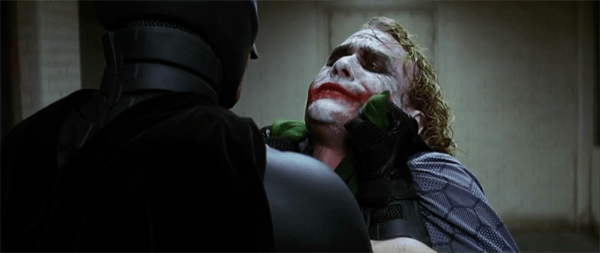
Though "realism" might be, in one sense, the last word you might use in association with Christopher Nolan, maker of ‘Inception‘ and the ‘Dark Knight’ films, in another sense, it fits him perfectly. If we take the term "cinematic realism" to mean immersing viewers completely within a depiction of a time or place through camera techniques, special effects, and other cinematographers’ tricks, then Nolan and his DP Wally Pfister have been making highly realistic films for years, from ‘Following‘ to "Memento’ to ‘Insomnia’ to, yes, ‘Inception’ and the Dark Knight films. Trevor Ball explores Nolan and Pfister’s work carefully and intelligently in this dynamic video essay. 

Watch: Darren Aronofsky’s Symmetry Contains Explosive Energy

Watch: Darren Aronofsky’s Symmetry Contains Explosive Energy

It’s easy enough to comment on the excess running through Darren Aronofsky’s films: the sex, the flesh, the drugs, the decadence, the violence, the loneliness, the despair–but what if the allure of his films lies elsewhere? What if the real reason we pay attention to them is because of the way the excess is packaged: in symmetrical frames, and sometimes in spirals that offset those frames? This video by Studio Little dances us through Aronofsky’s films, from ‘Black Swan’ to ‘Requiem for a Dream’ to ‘The Wrestler’ to ‘Noah’ to ‘Pi,’ showing us that, time after time, the element keeping us watching is the order, not the disorder.

Watch: Sofia Coppola’s ‘Lost in Translation’: The One-Shots vs. the Two-Shots

Watch: Sofia Coppola’s ‘Lost in Translation’: The One-Shots vs. the Two-Shots

The crucial dichotomy at the heart of Sofia Coppola’s ‘Lost in Translation’ is the difference between being alone and being with someone else. The film doesn’t rank one above or below the other; it just places them side by side. As we observe Scarlett Johansson’s Charlotte and Bill Murray’s Bob going about their days separately and then together, we learn something about their characters and about ourselves–and the cinematography, with its contrast of one-shots and two-shots, helps us out. This video from Between Frames guides us through the film’s movement from isolation to cohabitation, with brio and the charisma of Jesus and Mary Chain in the background.  

Watch: Chantal Akerman’s Work Sustained Human Life

Watch: Chantal Akerman’s Work Sustained Human Life

Think about this, for a second: when someone says that art helps them to go on living, what they actually mean is that it helps them to go on making artworks, which is much the same thing, if you’re truly committed to your work. Scout Tafoya demonstrates this particular feeling in a recent video essay for Fandor, on the work of the late Chantal Akerman, adapted from an essay originally written for RogerEbert.com. Listening to Tafoya’s narrative of his experience with Akerman’s brilliant, revelatory work over clips from ‘Jeanne Dielman, 23, quai du Commerce, 1080 Bruxelles,’ ‘Je Tu Il Elle,’ and other films, one gets a clear sense of how artworks might keep one going when other things do not–and more importantly, how the sort of inspiration you get when you’re excited by someone else’s creation is, in all honesty, life-giving. 

Watch: George Clooney Can Do Anything… With Just His Face!

Watch: George Clooney Can Do Anything… With Just His Face!

While one would think that it would take more than just George Clooney’s face to provide fodder for a video essay of any substance, it turns out that it doesn’t. This compilation of Clooney’s facial expressions from Burger Fiction, including clips ranging from the Coen Brothers’ upcoming "Hail Caesar!" (2016) to "Return to Horror High" (1987) shows that he has one of the most expressive and powerful visages in the film business. My personal favorite: the moment when he makes an otherwise healthy goat succumb from the sheer force of his gaze. 

Watch: Michel Gondry’s Relentlessly Mercurial Creative Mind

Watch: Michel Gondry’s Relentlessly Mercurial Creative Mind

Michel Gondry is a French filmmaker most famous for directing and co-writing the 2004 film ‘Eternal Sunshine of the Spotless Mind’ for which he, Charlie Kaufman, and Pierre Bismuth won the Academy Award for Best Original Screenplay. Prior to his feature film debut titled ‘Human Nature,’ he made a name for himself as a music video director—working with such artists as Daft Punk, The Chemical Brothers, Bjork, and The White Stripes. He often incorporates his personal thoughts and fears from his childhood into his work—most notably, a recurring nightmare in which his hands grow to an enormous size.
 
Gondry actually got his start as a music video director after making music videos for his own band called Oui Oui—he was the drummer. Icelandic singer Bjork noticed his work and hired him to direct the music video for her song ‘Human Behavior.’ He has also directed a variety of television commercials and one he made for Levi’s holds the Guinness World Record for ‘most awards won by a TV commercial.’ His style most resembles that of a creative child. Everything is inventive and crafty—with practical effects and production design often made from ordinary materials. And this mise-en-scène always fits the narrative of his films, which often follow creative and child-like protagonists. Gondry has described himself as someone who has been twelve years old ‘forever.’
 
Two years after directing ‘Eternal Sunshine of the Spotless Mind,’ Gondry directed the first film he wrote entirely himself titled ‘The Science of Sleep,’ which follows a quirky young man who falls in love with his neighbor. The film plays heavily with dreamlike imagery, which Gondry has had a strong interest in since his early work. After ‘The Science of Sleep,’ he wrote and directed the Jack Black/Mos Def comedy ‘Be Kind Rewind.’ The film wholly incorporated his hand-made budgetless aesthetic, which ignores imperfections in favor of creative solutions. In ‘Be Kind Rewind,’ a video store clerk and his friend must remake or ‘swede’ all of the movies they carry after the tapes get erased. They go on to remake the movies using whatever they have on hand, much in the same way children might creatively play around with a video camera. With the era of YouTube in full swing, people from around the world were encouraged to express their creativity and ‘swede’ their favorite movies in short form with whatever materials they had. This included a remake of ‘Taxi Driver’ by Gondry himself.
 
Gondry followed ‘Be Kind Rewind’ with 2011’s ‘The Green Hornet,’ which was a slight departure from his low-budget aesthetic. ‘The Green Hornet’ applied Gondry’s inventive charm to a more mainstream and high budget studio film. Gondry was originally attached to the project back in 1997 and the film was going to be his feature film debut. After the film entered ‘development hell,’ many other directors were attached and then removed until it finally ended back with Gondry as the director.
 
He returned to the low-budget indie world the following year with ‘The We and the I,’ a film that takes place entirely on a bus as students travel home from their last day of high school. The film was an American production shot in New York City, but he would return to France for his next two films—the first of which was an adaptation of a 1947 novel— ‘Froth on the Daydream’ by Boris Vian. The film is titled ‘Mood Indigo’ and follows the relationship of a couple as they fall in love and the woman falls ill. The film is tremendously clever and whimsical, despite such an ultimately tragic story.
 
Gondry has also done three documentaries—‘Dave Chappelle’s Block Party,’ ‘The Thorn in the Heart,’ and his most recent, ‘Is the Man Who is Tall Happy?’ in which Gondry animates a conversation he had with notable philosopher Noam Chomsky. His latest film titled ‘Microbe & Gasoline’ for which Gondry was the sole writer, follows two young boys who build a house/car hybrid to travel away from their hometown and all the people who mistreat them. Gondry said that the first half of the film is based on his actual experiences growing up and the second half is a fantasy. The film perfectly mixes Gondry’s unique personality and creativity and sheds light on his personal perspective.
 
“I really had the complex that my father had at some point— to not be good enough. And then I decided I would go for it. I decided I would be as good as Picasso or whatever and obviously there is a difference. But, I mean, at some point, if you want to consider yourself as somebody who creates things, you have to just ignore all that and just say okay, what you’re doing, what you’re putting out is different because you put yourself into it.”

Clips used:

‘Human Nature’ (2001 dir. Michel Gondry)
‘Eternal Sunshine of the Spotless Mind’ (2004 dir. Michel Gondry)
‘The Science of Sleep’ (2006 dir. Michel Gondry)
‘Be Kind Rewind’ (2008 dir. Michel Gondry)
‘The Green Hornet’ (2011 dir. Michel Gondry)
‘The We and the I’ (2012 dir. Michel Gondry)
‘Mood Indigo’ (2013 dir. Michel Gondry)
‘Microbe & Gasoline’ (2015 dir. Michel Gondry)
‘Dave Chappelle’s Block Party’ (2005 dir. Michel Gondry)
‘The Thorn in the Heart’ (2009 dir. Michel Gondry)
‘Is the Man Who Is Tall Happy?’ (2013 dir. Michel Gondry)
‘Around the World’ by Daft Punk (Music Video dir. Michel Gondry)
‘Let Forever Be’ by The Chemical Brothers (Music Video dir. Michel Gondry)
‘The Hardest Button to Button’ by The White Stripes (Music Video dir. Michel Gondry)
‘Human Behavior’ by Björk  (Music Video dir. Michel Gondry)
‘Bachelorette’ by Björk  (Music Video dir. Michel Gondry)
‘Everlong’ by Foo Fighters (Music Video dir. Michel Gondry)
‘Drugstore’ by Levi’s (Commercial dir. Michel Gondry)
 ‘Junior Et Sa Voix D’Or’ by Oui Oui (Music Video dir. Michel Gondry)
 ‘Dance Tonight’ by Paul McCartney (Music Video dir. Michel Gondry)
‘Be Kind Rewind Sweded Trailer’
‘Taxi Driver Sweded by Michel Gondry’
‘I’ve Been 12 Forever’ (2004 dir. Michel Gondry)
 

Music: 
‘Generique Stephane’ by Jean-Michel Bernard
‘Around the World’ by Daft Punk
‘If You Rescue Me’ Science of Sleep Sountrack
‘Theme’ by Jon Brion

Tyler Knudsen, a San Francisco Bay Area native, has been a student of film for most of his life. Appearing in several television commercials as a child, Tyler was inspired to shift his focus from acting to directing after performing as a featured extra in Vincent Ward’s What Dreams May Come. He studied Film & Digital Media with an emphasis on production at the University of California, Santa Cruz and recently moved to New York City where he currently resides with his girlfriend.

Michael Almereyda’s ‘Experimenter’ Is a Multi-Dimensional Look at Our Desire to Obey

Michael Almereyda’s ‘Experimenter’ Is a Multi-Dimensional Look at Our Desire to Obey

nullMichael Almereyda’s films don’t move forward, backward, upwards, or downwards; they just move. His characters’ bearings are fairly consistent, from film to film: detached, fixated on some distant point, murmuring more than they speak; as a result, his works tend to be characterized as prototypical “art-house” films, as far removed from the blockbuster arena as they could be. And yet “Experimenter,” his marvelous, polyvalent new film about famed and infamous psychologist Stanley Milgram (Peter Sarsgaard), whose most famous experiment involved making subjects believe they were giving other participants electric shocks, points up both a populist strain in his work as well as a slowly growing sense of the comic; his work is not so much mellowing, in terms of his subject matter, as expanding. He tells ever larger stories, with an ever-expanding reach.

As the film begins, we see two men led into Milgram’s lab, as Milgram observes them from behind a two-way mirror. The tone, here and elsewhere, is soft, restrained, little dialogue above normal conversational decibel levels; at first you might think the restraint is purposeful, to reflect scientific detachment—or deep-rooted repression. While either is possible, what becomes evident as the film progresses is that it is an affable work, as movies go; it doesn’t raise its voice because it wants to keep the level of dialogue comfortable and rational, so that the numerous experiments described in this quasi-biopic will sink in. The experiment at the outset is a curious one, and one for which Milgram would receive intense criticism—and yet it sets a slightly comic mood that lingers for the rest of the film. One person in the experiment is the teacher, the other the learner. The learner goes into a room and awaits questions from the teacher, based on a list of word pairs read rather rapidly by the teacher. If, upon being read a word, the learner remembers the word it was paired with originally, they proceed to the next question—if not, the teacher administers electric shocks to the learner, in increasing amounts with each new wrong answer. Or thinks he does. In reality, the “learner” is a plant, who sits with a tape recorder and plays clips such as "ouch" and "Aa–ahhh" at appropriate moments. As the various "teachers" march through–among them John Leguizamo and Tamryn Manning, both memorable in brief spots–their distress becomes palpable with each increasing application of the shock, but a monitor placed in the room forbids them from stopping, and, by and large, they don’t stop. They challenge, and they question, and they argue, but they obey orders, ultimately. The root motivation for this experiment is quite serious; Milgram, whose parents died in the Holocaust, is trying to determine what would have compelled so many humans to kill so many other humans. But here, one can’t help thinking the experiment is played for semi-laughs. The seriousness of the monitor’s delivery, the histrionics of the "teachers," the retiring quality of the "learner," played relaxedly by Jim Gaffigan, all combine to induce amusement rather than alarm, reflection rather than disturbance.

The film tells another story, as well, threaded through Milgram’s successive experiments—that of the love between Milgram and  his wife Sasha (Winona Ryder). Although the progress of Milgram’s career wouldn’t seem to have anything to do with their relationship, work ultimately inscribes itself upon life, as it will. Sarsgaard and Ryder give remarkable performances here, both stepping out of their range significantly. Ryder has, since her first appearances in films like ‘Heathers’ or ‘Beetlejuice,’ combined animation with sultriness, poise with awkwardness. Fitting Sasha into life with Milgram requires a different energy from Ryder, and she plays it elegantly, essentially telling the story of the relationship in her face. Milgram meets her as he is in the midst of his early experiments and on the brink of notoriety. The early flirtation between them combines nuance, wit, and affection, in stark contrast to the rest of the film’s stillness. As the film progresses, we watch Ryder’s face become more severe and lined, bespeaking both Sasha’s alienation within her marriage and the toll the work she and her husband do has taken on her. Granted, the experiments Milgram does are fairly benign; one involves looking up at a skyscraper, in order to see if others will follow suit, while another involves gauging individuals’ reactions to pictures of themselves and another involves identifying strangers on might see everyday on a train platform in a photo of that platform. Nothing overtly harmful here, but in the other hand, the experiments have in common a certain built-in alienation whose cumulative effect, one imagines, is akin to the effect repeated exposure to uranium had on Pierre and Marie Curie. Milgram feels this, as well. Sarsgaard gives one of his most self-effacing and modest performances ever here; from the beginning, Milgram seems to consider and momentarily retract every word he says, not so much deliberating as interrogating himself–and in so doing, oddly enough, he seems to place a barrier between himself and others. Sasha is is the only figure here with whom we see him interacting in anything like a direct fashion; his initial romantic proposition to her is razor-efficient, surrounded by a swirl of prevarication with others. Paradoxically, Milgram speaks to the camera for much of the film–however, this breaking of the fourth wall ultimately comes to seem like yet another avoidance technique for Milgram, another way for him to put his work between himself and everyone else. Of course, this work takes its toll on Milgram, as well; we watch his body decay as his work loses its initial fire.

The key question the film seems to want to ask is this: To what extent can the actions we perform tell us something about ourselves? In one segment set in the seventies, Milgram has sprouted an aggressive and somewhat awkward beard. Watching Sarsgaard declaim to the camera, I scolded myself inwardly for chuckling at him until (it was a street scene) a man dressed as Abraham Lincoln passed by. Milgram notices the Lincoln-esque man, and even engages with him–as if to point up, albeit humorously, his awareness of his own odd appearance, and his astonishment that there might be a corollary for it outside himself. The chief irony here is that the obedience which Milgram examines, which would have caused the Nazi officials to execute millions of people, plays itself out within his own life, seemingly without his knowledge. His duties to his job damage his relationship–how stable could a couple be if a husband has his wife as a secretary, as Milgram did, and as one of his students notices, with a sneer. There’s not a story arc here, to speak of. If there is is one, it most resembles the path the earth traces around the sun, as night turns into day, and with each sunrise, we are brought into increased awareness of who we are, and what it is we are doing, exactly, on this planet.  


Watch: Robert Zemeckis’s Three ‘Back to the Future’ Films, Side by Side, Echo by Echo

Watch: Robert Zemeckis’s Three ‘Back to the Future’ Films, Side by Side, Echo by Echo

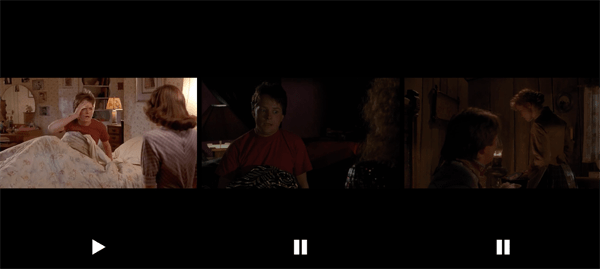
Robert Zemeckis is in the midst of being re-evaluated, currently, due to the splash ‘The Walk’ has made in theaters. Why not re-evaluate his ‘Back to the Future’ films more closely with this remarkable video piece by Davide Rapp, which places the three films side-by-side, revealing surprising and even disturbing visual echoes between them?

Watch: Quentin Tarantino’s ‘Pulp Fiction’ Shaped Vince Gilligan’s ‘Breaking Bad’

Watch: Quentin Tarantino’s ‘Pulp Fiction’ Shaped Vince Gilligan’s ‘Breaking Bad’

Quentin Tarantino’s ‘Pulp Fiction’ left its stamp on everything following it. Menus. Radio stations. T-shirts. A legion of films. And so why not a television show as well, namely ‘Breaking Bad’? Jorge Luengo Ruiz‘s newest video shows us, fairly inarguably, the parallels between the film and Vince Gilligan’s auteur-ish show—shots, blocking, general affect, the story of a chemistry teacher’s deranged redemption—so that one might begin to wonder, faintly, when will Tarantino’s influence stop? Will it stop? Hopefully not.