VIDEO ESSAY: MEN IN BLACK: Three Reasons for Criterion Consideration

VIDEO ESSAY: Three Reasons: MEN IN BLACK

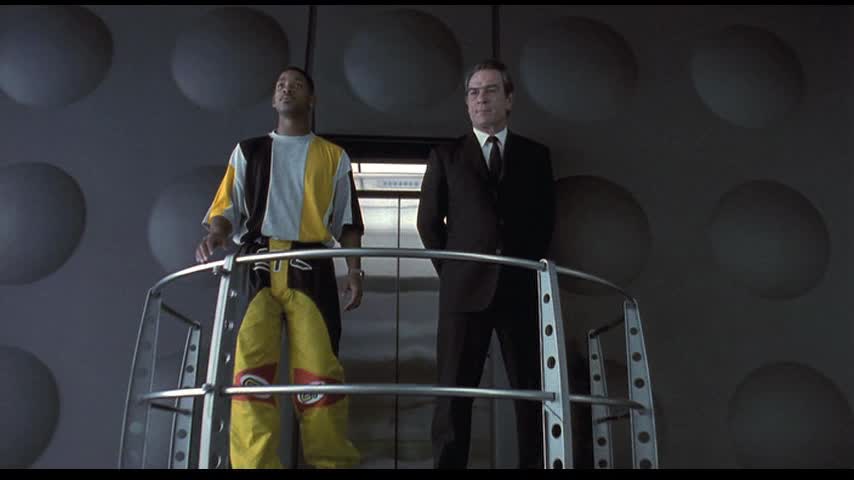
For this month’s Criterion Consideration, coming up with a suitable equivalent to Barry Sonnenfeld's latest film, Men in Black III, was a bit of a challenge.  In many ways, the franchise can’t be compared to other films of the genre.  How exactly would you categorize MIB?  An odd couple buddy-cop sci-fi comedy?  Immediately I thought of Ghostbusters, which has been threatening recently to corrupt its origins with an unnecessary sequel, but Ghostbusters had already had its day in the sun when Criterion was still pumping out laserdiscs. I could easily have tried to loosely tie a thousand different titles to MIB III, but really, the only reasonable association is the first film in the franchise.  Like most things, the original is always the best, leaving its successors in the dust.  It's been a decade since we all sat through the utterly intolerable MIB II, and no matter how fresh and shiny Sonnenfeld's latest effort may attempt to be, it will ultimately only remind us of the power of the original film.

Based on the comics by Lowell Cunningham, the original film was an inventive reworking of the Men in Black mythology, a phenomenon that emerged in American pop culture shortly after that supposed UFO-crash incident in Roswell, New Mexico in 1947. Sonnenfeld took further inspiration from the resurgence of conspiracy theory permeating 1990's pop culture. The paranoid visions that pervade The X-Files are rendered to ridiculous extremes as Earth's resident aliens hide in plain sight. What makes Sonnenfeld's film work is the business-as-usual approach that the Men in Black take toward in their daily routine. The black-suited men of mystery are merely intergalactic immigration officers, content to anonymously survey all alien activity in the New York area. Contrary to the shameless marketing strategies that would befall the franchise, the film's offbeat deadpan sensibilities were a welcome break from those of the mainstream blockbusters of that time.

This perfect combination of elements made MIB exceptionally ambitious and artistically innovative.  Sonnenfeld's experience behind the camera (notably with the Coen Brothers' early films) brought a subtle visual wit to an otherwise flashy elaborate blockbuster.  The decision to cast underrated comedians in minor character roles also added class to seemingly minor scenes.  Ed Solomon's writing provided some endlessly quotable one-liners, and helped reinforce the chemistry between Tommy Lee Jones and Will Smith.  The way they play off each other appears genuine, with Jones' straight-faced delivery pitted against Smith's posturing wisecracks.  Rick Baker, the special effects wizard behind every notable sci-fi/horror film from the past thirty years, is allowed to let his imagination run wild, creating some remarkable alien life.

Oddly enough, the qualities that made the first MIB so engaging are exactly what killed its first sequel.  The formula for its success became so immediately apparent that even the original risked losing its charm.  Celebrities quietly suspected of being aliens were now given needless cameos, CGI took over most of the creature effects, and although the relationship between Agent K and J still works quite well, the rest of the film does not.  Early reviews of MIB3 have been mixed, but overall the formula remains unchanged.  Try as Sonnenfeld might to neurolize any trace of Men in Black II, his latest installment might very well be the long-awaited end to a nearly forgotten franchise.

Robert Nishimura is a Japan-based filmmaker, artist, and freelance designer. His designs can be found at Primolandia Productions. You can follow him on Twitter here.

VIDEO ESSAY – The Sight and Sound Film Poll: An International Tribute to Roger Ebert and His Favorite Films

VIDEO ESSAY – The Sight and Sound Film Poll: An International Tribute to Roger Ebert and His Favorite Films

This week Press Play introduces Sight and Sound Film Poll: Critics' Picks, a series of video essays featuring prominent film critics on films they selected for Sight and Sound magazine's poll of the greatest films of all time. New videos will premiere each week until the poll results are announced later this summer. 

To start off the Critics' Picks series, why not have the most famous film critic in the world? Roger Ebert needs no introduction, but his impact on film culture is something we have long taken for granted, and extends beyond his 45 years of film reviewing and television celebrity. His reach is felt even within the Sight and Sound Poll – as I wrote in Press Play's roundtable discussion of the poll, it was Ebert who first brought the poll to my attention as a teenager reading his Movie Home Companion, where he analyzed the 1982 poll results and shared his own top ten, distilled in a series of exquisitely crafted paragraphs. That book and those paragraphs initiated my own love of film criticism, and form the basis for this video essay. 

The passages that serve as the video's narration cover the four films from Ebert's 1982 list that remain on his freshly minted top ten for the 2012 Sight and Sound poll. In its own way, the video reflects more significant developments in his life than his updated top ten list. When a fight with cancer left Ebert unable to speak, he took to the web to express himself, convening a international community of movie lovers around his website and blog. That in turn led to the creation of a special section on his website, Roger Ebert's Far-Flung Correspondents, featuring film reviews and articles from people around the world. The site celebrates movies as a global phenomenon bringing people together across languages and cultures.

To honor that vision, this video features many of the Far-Flung Correspondents speaking Ebert's words in their own language. The video also reunites the two hosts of Ebert Presents at the Movies, Christy Lemire and Ignatiy Vishnevetsky, with Vishnevetsky bringing a multilingual twist to his voiceover. Also taking part are contributors to Roger Ebert's Demanders, the section of his site reviewing video on-demand titles.

It was extremely fortuitous that the production of this video coincided with Ebertfest, Ebert's personally curated annual film festival held at his alma mater, the University of Illinois Urbana-Champaign. Most of the participants of this video travelled to Ebertfest, making it the perfect opportunity to record them. Others recorded themselves remotely and sent their audio via email. All told, there are 20 contributors speaking ten languages, discussing four favorite films of one man whose writing proves that not only great films, but great film writing, can transcend humankind's boundaries. – Kevin B. Lee

null

Roger Ebert's Far-Flung Correspondents

Ali Arikan (Turkish)
Olivia Collette (Canadian French)
Wael Khairy (Arabic)
Scott Jordan Harris
Michael Mirasol (Tagalog)
Omer Mozaffar
Michal Oleszczyk (Polish)
Krishna Shenoi
Gerardo Valero (Spanish)
Pablo Villaça (Brazilian Portugese)
Grace Wang (Mandarin)

Roger Ebert's Demanders

Steven Boone
Jim Emerson
Odie Henderson
Kevin B. Lee
Donald Liebenson
Jana Monji
Jeff Shannon

Ebert Presents At the Movies

Christy Lemire
Ignatiy Vishnevetsky (Russian)

VIDEO ESSAY: Law and Disorder in Ying Liang’s THE OTHER HALF

VIDEO ESSAY: Law and Disorder in Ying Liang’s THE OTHER HALF

Chinese director Ying Liang cannot return to his country. On April 28, Ying debuted his film When Night Falls at the Jeonju International Film Festival in South Korea. The film is based on the true story of Yang Jia, who killed six policemen after allegedly suffering police brutality, and whose trial stirred controversy and protest over the fairness and due process of the legal system in China. After the film was shown in Jeonju, Ying’s family, in Shanghai, and his wife’s family, in Sichuan, were visited by Chinese authorities, who also tried “to buy the rights to the film.” Ying also learned that he would be arrested if he were to return to mainland China. He currently lives and works in Hong Kong, trying to manage the well-being of his relatives back home (asking them to document every interaction with local authorities), as well the fate of his new film.

When Night Falls has brought unprecedented scrutiny and pressure upon Ying Liang, but it’s not the first time his films have offered a sharply critical view of China’s societal dysfunction. Ying’s debut Taking Father Home examined the breakdown of families in the era of migrant labor. Good Cats views labor exploitation from the opposite end, following a young man’s entry into the inner circle of business and corruption in his hometown. Ying’s best feature, The Other Half, is perhaps the most thematically aligned with When Night Falls, as it also deals explicitly with the failure of China’s legal system to address the problems of its people. New Yorker film critic Richard Brody selected The Other Half as one of his ten best films of the 2000s, heralding Ying’s ability to bring a “laser-like analytical eye to the crossroads of private life and oppressive authority.” This video essay further explores the film and Ying’s ability to bring the “other half” of China into a stark spotlight.

Originally published on Fandor. Read a transcript of the video.

Kevin B. Lee is Editor in Chief of IndieWire’s PressPlay Video Blog, Video Essayist for Fandor Keyframe, and contributor to Roger Ebert.com. Follow him on Twitter.

VIDEO ESSAY: DIAL K FOR KUROSAWA

VIDEO ESSAY: Dial K for Kurosawa

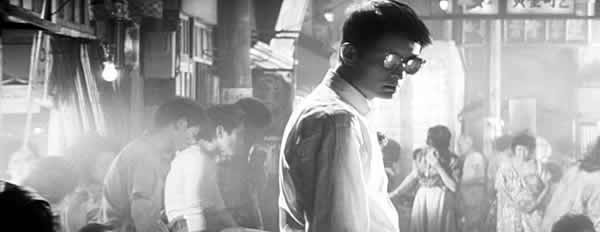
The perfect crime, the wrong man, the speeding train, and the surprising MacGuffin. High and Low has all the best elements of a great Alfred Hitchcock film. But it isn’t Hitchcock—it’s Akira Kurosawa, the Japanese director better known for his samurai flicks and complex moral tales.

When Kurosawa adapted works of Western fiction, he often chose from the greats: Shakespeare, Dostoevsky, Gorky. But High and Low (1963) is not adapted from a literary giant or even a Japanese author, but a minor 1950s American pulp novel entitled King’s Ransom by Ed McBain. King’s Ransom was part of a series of novels following the stories of the 87th police precinct, and while it has its literary qualities, the novel’s style bears no resemblance to the serious tone and moral complexity of Kurosawa’s film.

However, one director in Western cinema made his entire career through the meshing of high and low art: Hitchcock. The master’s reputation stemmed from spinning popular murder and suspense stories while engaging critics and scholars with morbid and psychological themes. High and Low feels as much indebted to Hitchcock as Kurosawa’s samurai films show the influence of John Ford’s westerns. Like Hitchcock, Kurosawa explores the roles of duality, ubiquitous guilt, and the incapacity to understand evil in a frightening and ultimately despairing fashion. High and Low ultimately paints a disturbing portrait of humanity, where evil simply exists within each person without explanation, creating a world similar to the sadistic one Hitchcock often presented.

The film seems ripe for comparison to Hitchcock from the opening shot, as the camera never leaves the home of Gondo. Like Rope, Lifeboat, Dial M for Murder, and especially Rear Window, Kurosawa limits himself by never staging a sequence outside of Gondo’s mansion—even the credits are framed from the large window looking down. Other classic Hitchcock tropes play large roles in the film: a train—essential in the narratives of North by Northwest and Shadow of a Doubt—literally bridges the two sections of the film. And we can see intense shadows, symbolic staircases, voyeurism, and grotesque death, other Hitchcock trademarks.

But High and Low’s most noted motif is the use of doubles and opposites as a sign of similarities between good and evil. Strangers on a Train, Shadow of a Doubt, Frenzy, and countless other Hithcock works explored this topic, and Kurosawa forges the same relationship between Gondo and Takeuchi. Kurosawa foreshadows the duality with the use of the two children, who are so identical that Gondo’s wife confuses them when they switch clothes while playing cops and robbers. The children’s outer appearance might suggest their societal roles, but under the surface, both Gondo and Takeuchi are both conniving and malicious—Gondo simply confines his immoral practices to business.

Kurosawa builds this philosophy into the film’s structure. Like Hitchcock’s Psycho, the narrative breaks into two parts with a protagonists in the center of each part. The film’s first half centers around Gondo and his moral dilemma of whether to save Shinichi. The second half of the film focuses on Takeuchi, operating on an opposing plane. Set in multiple locations, often with crowded frames, the genre of the film changes from morality play to police procedural in this part. The film bears down on Takeuichi’s story—his background, identity, and methodology—as the cops investigate and arrest him. When Gondo and Takeuchi meet face-to-face in the film’s final scene, Kurosawa uses the glass to literally reflect their faces onto each other, a technique that recalls the penultimate shot of Psycho as Norman’s mother’s face is superimposed over Norman’s.

So why does such a fate fall on Gondo? In High and Low, the kidnapping narrative is not just set up as coincidence, but as a fate that Gondo is punished for. As soon as the Osaka deal is set, Takeuchi calls almost immediately with news of the kidnapping. The placement of the phone is made to seem not like coincidence but fate—even one of the rival businessmen later reflects that it was “divine retribution.” Gondo hasn’t done anything terribly wrong, but he does recall Roger Thornhill in North by Northwest.. Before Thornhill becomes a case of mistaken identity (as Shinichi is here), we watch him pretending his secretary is ill, to grab a taxi quicker. Thornhill likes playing pretend, and thus his punishment is an extreme version of that.

Plus, Gondo’s not the only one to be punished. During the first half, Akoi, Gondo’s driver, seems like a humble man who deserves to have his son back. But in the second half, we see how poorly he treats his child, and that perhaps deserves the shame. And during the film’s harrowing alley sequence, we watch an addict suffer at the hands of Takeuchi. Her death seems inevitable, but it only happens because the police, the men responsible with her protection, allow it to happen so they may arrest Takeuchi. As Kurosawa’s camera shoots up to reveal her discarded body on the floor, he reveals that the height of evil is also its lowest point.

These ubiquitous punishments of the not-so-innocent relate to the worldview that both Hitchcock and Kurosawa seem to subscribe to: an evil that is ever prevalent and simply incapable of explanation. In Hitchcock, evil is often presented as kindness and without any precise motivation. Psycho’s famous psychiatrist speech has always had a humorous tone to it, more than one of essential exposition. And what motivation could one even begin to ascribe to the titular animals of The Birds?

In the second half of the film, the main narrative tension derives from the mystery surrounding the identity of the kidnapper and his rationale. The fact that High and Low leaves the spectator with an unsatisfactory answer is only more significant in examining the evil that surrounds the film. Takeuchi turns out to be a simple medical intern who is also a drug dealer, but nothing establishes him as a unique case. In the last sequence, he reveals that he wanted Gondo present to show that he was not afraid to die, but he soon screams in anguish, making him more pathetic than villainous.

The final moment in High and Low, where Gondo stares at his own image, answers the question of where such evil lies. Hitchcock suggested this answer too, but so often, his endings left us with a smile. Kurosawa never mentioned the influence of Hitchcock in any of his interviews, but I can’t imagine watching this modern day crime story and not think of the master of suspense. Kurosawa may have seen Hitchcock’s cinema, but instead of exiting the theater with a smile, he would have left with a chilled face.

And whatever happened to Ed McBain, the author who inspired this masterpiece? His real name was Evan Hunter, and he went on to write a little film called The Birds.

Peter Labuza is a film writer in New York City, originally from Minnesota. He has written for Indiewire, Film Matters, the CUArts Blog, the Columbia Daily Spectator, and MNDialog. He will be attending Columbia University in the fall for a Master in Film Studies, focusing on the history of American film genres. He currently blogs about film at www.labuzamovies.com. You can also follow him on Twitter.

Click here to donate to the NFPF!

In 2011, the New Zealand Film Archive discovered part of The White Shadow, a film directed by Graham Cutts, and written, edited, and assistant directed by the legendary Alfred Hitchcock. The first three reels of this lost work have been arduously restored, but the film has only had a single public screening. For this year’s For the Love of Film: The Film Preservation Blogathon, we are asking for donations to the National Film Preservation Foundation. If we can raise $15,000, the Foundation will provide free streaming of The White Shadow for four months, and record a new score by Michael Motilla. To donate, simply click here. And for more information on the blogathon, please visit Ferdy on Films, the Self-Styled Siren, and This Island Rod. Every donation counts, and we thank you for your continued support of film.

VIDEO ESSAY – Deceptive Surfaces: The Films of Christian Petzold

VIDEO ESSAY – Deceptive Surfaces: The Films of Christian Petzold

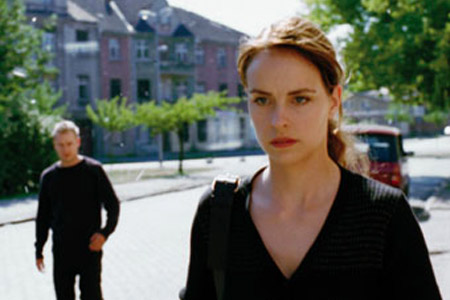
If one wants to call Christian Petzold the most important German filmmaker of the last decade, it’s because his films operate on multiple levels whose complexities lie just beneath a deceptively simple surface.

nullOn a basic level, his recent films, like Yella, Jerichow, and Dreileben: Beats Being Dead, work as entertaining dramas centered on themes of sex, greed, and loyalty. The major characters are all driven by the desire for a better life, and they give each film a restless, seeking energy. But they find themselves caught between different worlds. In Yella, a woman from economically depressed eastern Germany seeks a promising career in western venture capital, but the past catches up with her in the form of her estranged, down-on-his-luck husband. In Jerichow, an unemployed ex-soldier finds work with a Turkish businessman, only to fall for his German wife. In Beats Being Dead, an ambitious medical intern with falls in love with a working class Bosnian refugee.

Read the rest of the transcript at Fandor.

Kevin B. Lee is Editor in Chief of IndieWire’s PressPlay Video Blog, Video Essayist for Fandor Keyframe, and contributor to Roger Ebert.com. Follow him on Twitter.

VIDEO ESSAY – In Praise of Maya Deren

VIDEO ESSAY – In Praise of Maya Deren

Sunday, April 29, 2012 was the 95th birthday of Maya Deren, the undisputed matron of avant-garde cinema. To commemorate the event, this video looks at Maya Deren’s magnum opus, Meshes of the Afternoon, with commentary by film programmer and scholar Livia Bloom.

Originally published on Fandor.

Livia Bloom curates cinema retrospectives. Her writing and interviews regularly appear in the film journals Cinema Scope; Filmmaker Magazine, and Film Comment, and she is the editor of the book Errol Morris: Interviews. Ms. Bloom is also Director of Exhibition and Broadcast for Icarus Films.

Kevin B. Lee is Editor in Chief of IndieWire’s PressPlay Video Blog, Video Essayist for Fandor Keyframe, and contributor to Roger Ebert.com. Follow him on Twitter.

null

VIDEO ESSAY: Super: A Brief History of Superhero Films

VIDEO ESSAY: Super: A Brief History of Superhero Films

With the unparalleled box office success of The Avengers, superheroes are back in the spotlight. Most comic book aficionados are delighted with the recognition. But believe it or not, there are those such as myself who are dismayed at how superhero films, though more popular than ever, seem to be losing their luster.

When I was in grade school, nothing seemed more interesting than comic books, with their amazing feats, super powers, hyper masculine (sexist) images and monumental battles. Their visual flair and storytelling style proved more vivid and effective than any textbook. But they also engrossed me in their attempts to personify concepts both political and abstract. I learned about discrimination from the X-Men, about eternity and death from the Secret Wars, about the trauma of war from Sgt. Rock. If anything, comic book heroes complemented my school education more than I could have imagined.

When I had finished the Secret Wars II series, there was nothing I wanted more than to see it as a film. I first imagined it in animation with Jim Lee (my favorite illustrator at the time) illustrating it to the minutest detail. Later I would envision it in live action, with Arnold Schwarzenegger playing Colossus, Jack Nicholson playing Wolverine, and Jean-Claude Van Damme playing Gambit.

The last decade or so was a phenomenal time for the superhero movie genre, both thematically and financially. It wasn't uncommon to have four such films a year, grossing over a billion dollars annually. This period saw some of the most profitable film franchises of all time, as well as a few of the most ambitious and creative takes on our most memorable costumed crime fighters.

But as the decade came to a close, the genre started to have less lofty goals. Since 2008, when the great pairing of Iron Man and The Dark Knight bookended that year's Summer Blockbuster season, there hasn't been a single worthy successor mentioned in the same breath. Some might argue that Watchmen fits that bill, but depending on who you speak to, no superhero movie has captured the same kind of critical and commercial acceptance comic book fans have been searching for (that includes The Avengers, which I'll get to in a minute).

This sentiment was encapsulated by A.O. Scott in his essay "How Many Superheroes Does It Take to Tire a Genre?" In it, Scott surmised that 2008 may have been the peak of the genre's powers, noting the rules by which its films have to live by.

"The climax must be a fight with the villain, during which the symbiosis of good guy and bad guy, implicit throughout, must be articulated. The end must point forward to a sequel, and an aura of moral consequence must be sustained even as the killings, explosions and chases multiply. The allegorical stakes in a superhero are raised—it's not just good guys fighting bad guys, but Righteousness against Evil, Order against Chaos—precisely to authorize a more intense level of violence."

It's these predictable conventions in Scott's claims that ultimately restrict the genre. The over-reliance on elaborate special effects. The insistence on spelling things out.

The problem I see is not so much in the genre's conventions, as they harken back to youthful and more innocent notions in all of us. My issue lies, especially with most superhero films of the last few years, in the lack of resonance and ambition. This ultimately leads to a question we fans have to ask ourselves: what do we want superhero films to be?

The Birth of the Genre

Such films entered the collective consciousness as Saturday Movie Serials in the 1940s. Some of their earliest protagonists were Captain Marvel, Batman, the Phantom, Captain America, and Superman. Find these films on YouTube and you'll discover how the heroes look anything but super in retrospect. Yet in their time, these movies provided an escape for millions of children during World War 2. They served their purpose well.

Politics, in the form of the Comics Code Authority, momentarily torpedoed the comic book industry, and with it went the serials that were inspired by them. Superheroes were only to be found on TV, most notably in Adam West's Batman, which remained securely in the corners of camp comedy and children's entertainment. But by the 70s, the children watching these shows had all grown up, and so did special effects. Richard Donner surely must have seen what Steven Spielberg and George Lucas did with summer blockbusters in Jaws and Star Wars. Thus arrived the Godfather of all superhero films, Superman.

What made Superman so great, aside from casting Christopher Reeve and utilizing John Williams's immortal score, was that it evoked the almost mythological reverie young fans hold for their heroes. The first shot of a young hand turning a comic book page, while a child's voice narrates the exploits of the Daily Planet, is arduous and perfect. The film's ambitions were so grand that they couldn't be contained, eventually spilling over to its equally majestic sequel (Richard Donner's version).

It was also a product of great creativity, utilizing shots and techniques that maximized the capabilities of special effects despite the limitations of their time. So much so that no other contemporary of its genre in the following decade came close to it. That is until Tim Burton revolutionized the feel of the superhero film with his gothic vision of Batman (1989). Until then, superheroes had to live up to Kal-El's sunlit glory. But Burton upended this notion with his dedication to darkness and shadow, reveling in the caped crusader's menacing intimidation.

Both of these heroes set the bar well into the 80s and 90s, becoming the genre's yin and yang, determining the stylistic paths their heirs would take. Superman's children would be Condorman, Supergirl, Captain America (1990) and The Phantom. Batman's would be The Punisher, Darkman, The Crow, The Shadow, Spawn, and Blade.

Post 9/11: The Cinematic Golden Age

Just as World War 2 ushered in the age of the comic book superhero, 9/11 ushered in the genre's cinematic golden age. From then on, it wasn't enough to herald a great champion or premise. The conflicts had to involve soul-searching. The stakes had to be grave.

Christopher Nolan's Batman Begins (2005) revealed the true nature of Batman's dark notion of justice, digging deep behind Bruce Wayne's trauma and patiently building the legend. Miraculously, The Dark Knight (2008) raised the stakes by presenting an equally determined anarchist who embodied our all-too grounded anxiety of complete chaos.

Ang Lee's introspective Hulk (2003) contemplated immeasurable power as more of a curse than a blessing. It is also the most daring and artistic interpretation of any superhero adaptation, choosing very human conflicts (Bruce and Betty with their unreliable fathers) at the heart of the story, as well as depicting the green goliath not simply as a monstrous beast, but as a child.

Brad Bird's The Incredibles (2004) never felt as grave as others from this era, yet it presented itself as a lighthearted ode to the fading ideal of the nuclear family. It was also the best "Superhero Team" movie ever made, with the ultimate team: mommy, daddy, brother and sister. The real fantastic four.

The X-Men films have always focused on discrimination, with their demigod cast-outs; Brett Ratner's The Last Stand (2006) and Matthew Vaughn's First Class (2011) also juxtapose the political and historical (respectively) more intimately than any other in the genre.

Many saw Jon Favreau's Iron Man (2008) as a showcase of Robert Downey Jr.'s immense gifts, but it was also (unintentionally or not) a surprising and satisfying ode to America's wish to finally use its unmatched corporate, technological and military might to do actual good.

Guillermo Del Toro's Hellboy (2004) was amazing in its portrayal of a demon's touching desire to do well by man. Of all the superheroes in film, this horned red-hided monstrosity is the most fun, relatable and humane. He wisecracks without malice, and has a soft spot for kittens. Hellboy II: The Golden Army (2008) continued this sentiment, and added to it by ruminating on man's distancing from myth, in a manner reminiscent of Hayao Miyazaki's films.

Of all superhero films, Spider-Man 2 (2004) is the genre's conscience. Though Peter Parker wasn't ordinary, his not so extraordinary abilities made him a more empathetic character compared to someone who can fly. Sam Raimi used a hero who wasn't super-intelligent, wealthy or powerful to somehow convey the awesome responsibility and sacrifice of doing the right thing.

The Throwaways Return

As with any celebrated era, there is always an inevitable decline. Just as in the 90s, throwaways are coming back. Let's face it, would anyone consider the personal dilemmas of The Green Hornet (spoiled brat), Thor (big dumb alcoholic blonde) andGreen Lantern (a pilot afraid of admitting fear) worthy of heroism? Captain America (2011) might have brought back fuzzy nostalgia for the good ole' days, but did it have to be fuzzy in hindsight, overlooking something like racism? Not only were these examples devoid of aspiration, they were also utterly predictable.

The same can be said about The Avengers, whose main claim to satisfaction is catering to known comic book lore. There is nothing interesting about Cap's boring nobility, Thor's one-dimensionality, or Loki's whining theatricality. The film wants to meet our expectations, but not surpass them. It hits its targets, but aims low.

Yes, superheroes by their very nature are fantasies, originally conceived to make us feel good and have us suspend logic for the short time we have with them. But even we fanboys want our genre to be taken seriously too, don't we? At what point do we stop sacrificing the aesthetics of interpretation, storytelling and characterization, at the altar of our often inflexible passion for youthful folklore? If fairy tales can be re-imagined, why not comic book characters?

And for those of us who are seeking that Superman or Batman moment, of seeing an awesome sight for the first time, those moments are going the way of the dodo. CGI has made the incredible familiar. The time has come for the genre to tantalize us not just with outlandish imagery, but new ideas.

Fertile ground is there for the taking. Look where James Bond went in Casino Royale (2006) exploring how he came to be and the roots behind his sexism. Take a look at Chronicle, which explored how teenagers deal with superhuman abilities with all their angst and insecurity. Recent Westerns grew out of their predictability, as they were able, "to find ambiguities and tensions buried in their own rigid paradigms," as A.O. Scott noted.

Superhero films have grown and must continue to grow rather than simply being about simple themes or fanciful images. It wouldn't hurt if they actually had something to say. In Superman Returns (2006), Kal-El flies into the highest reaches of the stratosphere, listening in on how to help mankind. It's an inspiring scene followed by madness. Does he help resolve Middle Eastern conflicts? Help stop ethnic cleansing in Sudan? Rid North Korea of nukes? No. He stops a bank robbery.

Do we want the familiar? Or the new?

Michael Mirasol is a Filipino independent film critic who has been writing about films for the past eleven years. He briefly served as film critic for the Manila Times and now writes occasionally for Uno Magazine and his blog The Flipcritic. Last year he was named by Roger Ebert as one of his "Far Flung Correspondents", and continues to contribute written and video essays on film.

VIDEO ESSAY: Depp Shadows: Tim Burton’s Cinema

VIDEO ESSAY: Depp Shadows: Tim Burton’s Cinema

“Basically Johnny Depp is playing Tim Burton in all his movies.” – Scott Rudin (Producer of Sleepy Hollow)

This ubiquitous quote by Rudin is often the throwaway summation found in most writings on, and dissections of, the cinematic works of Tim Burton with Johnny Depp. Which is a shame, really. The quote is not only too broad—it’s blazingly deceptive. Unlike other repeated director-actor pairings (from Martin Scorsese-Robert De Niro to Pedro Almodovar-Penelope Cruz), each succeeding film in the Burton-Depp canon actually becomes less about “digging” into an unknown abyss (e.g. as Scorsese faced male insecurity in Raging Bull and Almodovar celebrated female power over male dominance in Volver) than about the overall art direction of each film. Even though Burton’s prolific filmography boasts its share of critically (Big Fish) and financial successful (Planet of the Apes) non-Depp-starring movies, it’s worth studying the pattern behind those eight Burton-Depp projects. All together, those eight films have broken numerous box office records and have catapulted Burton into a tier of top-dollar directors. Currently, Burton is one of the few directors who could harness a towering financial investment from a studio in order to bring to any stylized, eye-pleasing idea he has to life.  In fact, if one were to examine the Burton-Depp filmography from top to bottom, it’s quite easy to see the shift from the personal to the pizzazz-filled.

Burton’s first two films with Depp are still his strongest and best works because each film subtly emoted shades of its creator: the shy, social outcast in Edward Scissorhands and the ambitious young filmmaker in Ed Wood. Even with impressive set pieces and dazzling costume design, both films were dominated by Johnny Depp’s carefully nuanced performances. It was the perfect marriage between Burton’s striking, visual storytelling and Depp’s risk-taking performance-art-style acting. Even though most films employ such marriages of talents, Scissorhands and Wood are unique in that they operate on two levels: the surface level looks and sounds like big budget Hollywood but (after repeated viewings) the pulse and internal workings of those films speak to more personal truths (i.e. the anxieties of the outcast), largely because Depp and Burton channeled one another’s sensibilities toward the material, thus giving those films a palpable vitality.

But then something happened. On their third collaboration, Sleepy Hollow, signs of a new Burton cinema began to emerge. This new Tim Burton cinema canon was more concerned with pushing the boundaries of its production design. In Sleepy Hollow, Depp’s (oft-underappreciated) turn as a morbidly grossed-out Ichabod Crane takes a backseat to the moody set pieces and strong work by the FX team. Gone were the quirky tableside manners of Scissorhands or cross-dressing revelations of Wood; in their place were the technically accomplished renderings of ghouls and the gothic. And Burton’s next two live-action films, Charlie and the Chocolate Factory and Sweeney Todd (both remakes), pushed the eye-candy envelope even further. Chocolate Factory basically forced Depp to become a peripheral player in the Burton blueprint of euphoric, candy-centric visualizations. Although Depp scored a Best Actor nomination for Sweeney Todd, his performance—which largely depended on Depp’s ability to always look sullen—is hardly a return to his intimate, versatile turns in Burton’s earlier works. Todd was based on a revered musical, and Depp rose to the occasion with singing chops; Burton turned in some strong visionary work once again (the bloody and bestial barbershop is a beaut), winning Burton the Best Director prize from the National Board of Review. So there’s that.

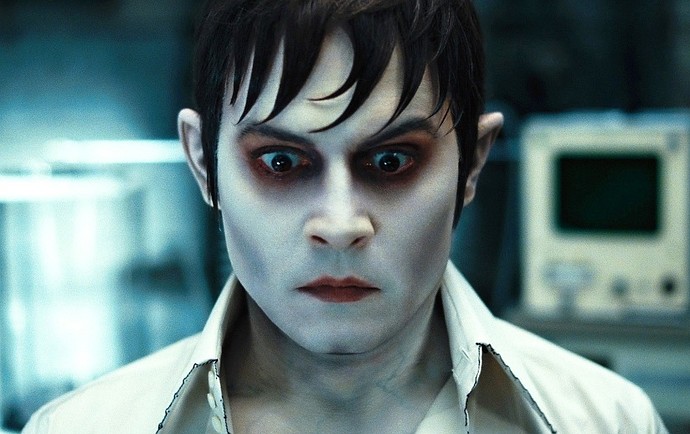
The real abomination came after the pair’s animated stint in Corpse Bride (which rehashed the stop-motion gothic fare of the Burton-produced Nightmare Before Christmas) and ironically enough became their biggest commercial success: Alice In Wonderland. A mammoth at the box office but overall critical dud, what Wonderland proved was that the new Burton-Depp formula had reached an apex. Early Burton films like Scissorhands had embedded themselves in pop culture to the point where audiences were simply content with knowing that Johnny Depp would be playing an unusual Burton-esque character in an unusual Burton-esque universe (a world somewhere between a Halloween-themed prom and alternate dimension “Saturn” from Beetlejuice). And it’s not that Burton doesn’t know how to make a surefire blockbuster that is also his own singular work of art (see Batman). In the end, the massively financially successful groove that Burton and Depp are in is probably the natural progression that some artists can make after churning out those intimate stories about dying (Beetlejuice), isolation (Edward Scissorhands) and finding your bicycle (Pee-wee’s Big Adventure). So if the latest Burton-Depp vehicle, Dark Shadows, is not a return to earlier form for the pair, at least it will deliver unmatched art direction and unrivaled commercial success. And if that’s the case, maybe Depp really is playing Burton in all of his movies; only now Burton isn’t the isolated, hungry filmmaker he once was.

Nelson Carvajal is an independent digital filmmaker, writer and content creator based out of Chicago, Illinois. His digital short films usually contain appropriated content and have screened at such venues as the London Underground Film Festival. Carvajal runs a blog called FREE CINEMA NOW which boasts the tagline: "Liberating Independent Film And Video From A Prehistoric Value System."

VIDEO ESSAY – Utopia Online?

VIDEO ESSAY – Utopia Online?

Director Sam Green knows a few things about utopia. His Oscar-nominated 2002 film The Weather Underground chronicled the film’s titular radical group’s violent path towards creating an ideal society; his new film The Love Song of R. Buckminster Fuller, which screened at the San Francisco International Film Festival, revisits the futurist designer’s attempts to transform the landscape of the San Francisco Bay.

nullGreen’s utopian impulses not only affect the subjects he chooses to film, but also how he presents them to his audience. In 2009, Green and Dave Cerf went on a world tour of live screenings of four short films all dealing with Utopia, presented with live narration by Green and a live musical accompaniment performed by the band The Quavers. The touring show, known as Utopia in Four Movements, brought a fresh gust of innovation and energy to the theatrical experience of cinema, at a time when movie theaters are trying to reinvent themselves in the age of online movies. Green will continue his “live documentary” work by offering an in-person cinematic narration with live accompaniment by the band Yo La Tengo at his SFIFF screening of The Love Song of Buckminster Fuller

What does it mean, then, that some of the short films from Green’s innovative Utopia performances are now available to watch online? The occasion makes one pause to reflect on the qualitative differences between the theatrical and online experiences of movies. The point is raised by an essay by Rebecca Solnit, in which she posits the movie theater experience as a utopia in danger of fading out as online, small screen modes of viewing threaten to replace them:

A lot of us now look back at the golden age of cinema as a bygone paradise, a minor but sublime coexistence of strangers in the dark drawn together to see a flicker of projected light come to life onscreen. Television chopped up movies with commercials and put them in the middle of domestic distraction, but that was nothing compared to this moment when films are on your iPhone and your laptop and in fuzzy tiny windows on YouTube. The worst thing about these new modes of viewing isn’t that they diminish cinema as visual and imaginative spectacle. The worst thing is that they’re watched furtively and alone. Cinema, which was once a great banquet in a dream palace is now often a snack devoured absentmindedly in isolation. And only in society, only together, do we have the power to live out those old dreams, or new ones. Is watching movies online a solitary, un-social experience that smacks of absent-minded consumption and a diminished appreciation of what’s being watched?

The following video is offered as a counterpoint to show what special qualities can be gotten from watching a movie online, in a way that demonstrates interactivity, sociability and an enhanced appreciation of the movies. It is also filmed in real time, as a way to pay tribute to the live, in-the-moment experience experienced in Green’s Utopia performances. Perhaps the real point of this video is that, whether you’re in a movie theater or in front of a computer, the experience of being “live,” like utopia itself, may not be tied to a place, but to a state of mind.

Originally published on Fandor.

Kevin B. Lee is Editor in Chief of IndieWire’s PressPlay Video Blog, Video Essayist for Fandor Keyframe, and contributor to Roger Ebert.com. Follow him on Twitter.

AUDIOVISUALCY: How to “Perform” the Video Essay

AUDIOVISUALCY: How to “Perform” the Video Essay

In “La caméra-stylo: Notes on Video Criticism and Cinephilia” , Christian Keathley argues persuasively that the current landscape of video essays, including commercial DVD supplements and web-embedded features, is defined by a continuum of explanatory and poetical works. Explanatory video essays follow a thesis and are language-based: “Images and sounds – even when carefully and creatively manipulated in support of an argument – are subordinated to explanatory language.” Essays that lean more towards the poetical register, by contrast, are driven by the basic language of cinema: “These videos resist a commitment to the explanatory mode, allowing it to surface only intermittently, and they employ language sparingly, and even then as only one, unprivileged component.”

Keathley’s text provides a useful framework to assess the video essay as an emerging form of criticism. And it emphasizes that it is more than just an explanation or a poetic meditation. It is a performance piece. The critic uses the film’s very own properties to write cinematically (hence the reference to Alexandre Astruc’s pioneering concept of the caméra-stylo). But, more than that, the critic also uses her voice, her actual voice, in addition to prose, both written and cinematic. Voice-over commentary, the way an essay is narrated, has a profound effect on its impact.

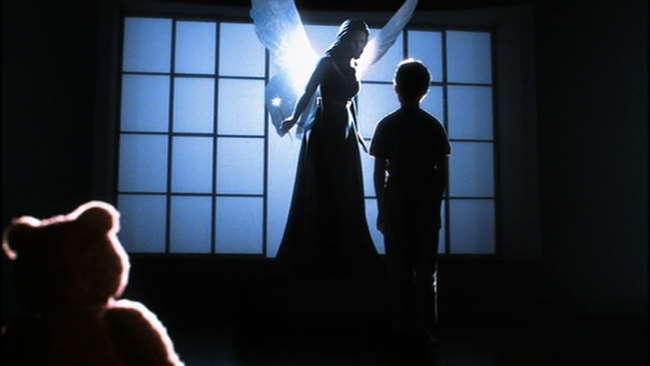
The essay that we are highlighting today is one of the most beautiful examples of the form, and not simply because it remediates a film by Steven Spielberg (and a longtime project by Stanley Kubrick). A.I. Artificial Intelligence – A Visual Study, produced by Benjamin Sampson, a doctoral candidate in the cinema and media studies department at UCLA, is an exploration of some of the titular film’s essential themes and aesthetics. It projects a lucid and cohesive argument with captivating imagery. Sampson uses minimal voice-over. He chooses his words carefully and the deliberate pace and soft pitch with which he narrates the essay lend the presentation a nostalgic, almost magical note.

The essay is, overall, driven by an aesthetically judicious style. The themes are broached verbally, but the full communication occurs via the film’s scenes and Sampson’s own editorial work. Except for chapter breaks and the credits, the essay uses no textual inserts and instead relies on elegantly rendered dissolves, split screen effects, and superimpositions. Sampson manages to create an aesthetic space where the film comments upon itself. The essay seems so natural, so organic, it could be mistaken for a poetic, explanatory epilogue. This is probably why it prompted me to revisit Spielberg’s film, to find new appreciation for it. Is this not the best kind of criticism? Beautiful, stimulating, impactful, all the while in sync with the work it critiques. A.I. Artificial Intelligence – A Visual Study inspires new or awakens old curiosity about the film. And it does so by virtue of an exceptional performance.

Matthias Stork is a film scholar and filmmaker from Germany who is studying film and television at UCLA. He has an M.A. in Education with an emphasis on American and French literature and film from Goethe University, Frankfurt. He has attended the Cannes film festival twice (2010/2011) as a representative of Goethe University's film school. You can read his blog here.