VIDEO ESSAY: LIFE OF PI and the CGI Animal Kingdom of Rhythm & Hues

VIDEO ESSAY: LIFE OF PI and the CGI Animal Kingdom of Rhythm & Hues

I made this video essay last month for Sight & Sound magazine upon the release of Life of Pi in the UK. Going into the making of this video, I wanted to address one criticism that was made upon my previous contribution to Sight & Sound, the video essay on Paul Thomas Anderson's camera movements. The criticism was that the piece was too narrowly focused on exploring Anderson's auteurial vision and did not sufficiently acknowledge the contributions of the cinematographer in devising the shots. That made me think more about focusing on the work of non-directors and in what way they contribute to the overall artistic vision of a film.

I found a perfect case study with the work of Rhythm & Hues, a CGI effects company that has won two Oscars and made a fortune creating computer generated animals for Hollywood movies, specifically those that can talk. They practically enabled a new subgenre of "Talking Animals" children's films that have made billions of dollars and turned the company into an internatonal operation of animators and computer engineers. But they're not nearly as household a name as Pixar, since they mostly don't produce their own fllms and work behind the scenes as technicians enabling the visions of other directors and producers to come to fruition. However, I argue that, in the specific nature of their work, one can trace a highly focused creative throughline, one that has major ramifications for how we are and will experience reality and living beings on screen.  In this context, Life of Pi can be seen as their masterpiece, one that was 20 years in the making. 

Just watch the first two minutes of this video and see where it takes you. 

You can read the full article accompanying the video, as well as some snazzy infographics illustrating the impact of CGI animals in Hollywood movies, at Sight & Sound.

VIDEO ESSAY: Who Would Have Won the Oscars 90 Years Ago?

VIDEO ESSAY: Who Would Have Won the Oscars 90 Years Ago?

The Oscar race for the films of 2012 is officially in high gear, with the nominations announced just yesterday. Now the onslaught commences for prognostications of who will win and pitches over who should win. But before we look ahead, why not resolve some long unfinished Oscar business? With the Academy Awards initiated in 1927, there’s a good decade-plus of feature filmmaking left without with the coveted golden statues to designate their finest achievements. Let’s turn the clock back a good 90 years and hand out some Oscars to the best filmmaking of 1922.

Lending a big hand in this enterprise are the ever-invaluable film scholar tandem of David Bordwell and Kristin Thompson. Each December for the past several years, they’ve channeled all the year-end best-of hoopla into creating their own top ten lists for films made 90 years earlier. This past New Year’s Eve, they came through once again with their top ten of 1922, a list loaded with remarkable canonical titles. As a companion piece to their annotated list, I’ve made a short video (above) highlighting clips from their list, set to one of that year’s top hits (I suppose it was the “Gangnam Style” of its time?).

With all those films in mind, plus a few others of note, I’ve come up with my own personal ballot for which films and talents should have won Oscars in 1922.  Looking at the field of contenders, there were no obvious choices, especially for Best Picture, Actor or Director. I could have easily gone for Foolish Wives, Dr. Mabuse the Gambleror Nosferatu in any of those categories. Through the mirror of hindsight, Nosferatu would appear the towering choice given its stature and tremendous impact on atmospheric filmmaking, especially horror. But Mabuse is possibly the most contemporary film of the lot, virtually projecting its multi-faceted, sinister worldview upon the likes of David Fincher and other systemic storytellers. And Foolish Wives, reportedly the first million-dollar movie, is a staggering vision of opulence and corruption, with an observational subtlety offsetting its visual splendor that a film like Baz Luhrmann’s upcoming Gatsby is almost assured of lacking.

But there’s plenty of room for debate (I admit I don’t have the freshest memory of some of these films) as well as discovery (there are many other films not mentioned that I haven’t seen). Please chime in with your own ballot and winners in the comments, and let’s see if a consensus emerges for these categories. And this won’t be our only Oscar coverage: starting next week we’ll return to 2013 to weigh in on who should win this year’s Oscar races.

And now… the nominations and winners (in bold) of the 1922 Academy Awards.

Best Picture
Dr. Mabuse, the Gambler
Foolish Wives
Nosferatu
Orphans of the Storm
La Roue

A super tough call between the extraordinarily complex Mabuse and the haunting, dreamy Nosferatu, but I have to go with the latter. It’s a testament to Murnau’s artistry that his images can still chill the blood.

Best Actor
Douglas Fairbanks, Robin Hood
Maurice de Féraudy, Crainquebille
Rudolf Klein-Rogge, Dr. Mabuse the Gambler
Max Schreck, Nosferatu
Rudolph Valentino, Blood and Sand

Valentino or Fairbanks probably would have won in real life, as they stood at the very top of Hollywood royalty at the time. But Klein-Rogge was arguably the most talented actor in Weimar Germany and his personification of a larger-than-life villain is much more complex than even Schreck’s iconic turn as cinema’s first vampire.

Best Actress
Leatrice Joy, Manslaughter
Aud Egede Nissen, Dr. Mabuse the Gambler
Dorothy Gish, Orphans of the Storm
Lillian Gish, Orphans of the Storm
Anna Mae Wong, The Toll of the Sea

This may be wishful thinking on my part, but Wong’s fresh-faced, from out of nowhere performance deserves it – transforming a slight colonialist fairy tale into an experience as lyrical as Madame Butterfly.

Best Director
Germaine Dulac, La Souriante Madame Beudet
Robert Flaherty, Nanook of the North
Fritz Lang, Dr. Mabuse, the Gambler
F.W. Murnau, Nosferatu
Erich von Stroheim, Foolish Wives

Murnau announced himself as a major director with the perfect fusion of technical innovation and poetic vision. His lighting, staging and editing effects in this film took a great leap forward in the state of the art and still hold sway over horror and experimental filmmaking today.

Best Supporting Actor
Bernhard Goetzke, Dr. Mabuse the Gambler
Cesare Gravina, Foolish Wives
Joseph Schildkraut, Orphans of the Storm
Gustav von Wangenheim, Nosferatu
Morgan Wallace, Orphans of the Storm

Best Supporting Actress
Clara Bow, Down to the Sea in Ships
Mae Busch, Foolish Wives
Maude George, Foolish Wives
Greta Schröder, Nosferatu
Anna Townsend, Grandma’s Boy

Best Original Screenplay
Fritz Lang, Norbert Jacques, Thea von Harbou, Dr. Mabuse, the Gambler

Best Adapted Screenplay
Henrik Galeen, Nosferatu

Best Documentary
Nanook of the North

Best Cinematography
William H. Daniels, Ben F. Reynolds, Foolish Wives

Best Editing
Marguerite Beauge, La roue

Originally published on Fandor.

Kevin B. Lee is Chief Video Essayist for Fandor’s Keyframe, Editor in Chief of IndieWire’s PressPlay Video Blog, and a contributor to Roger Ebert.com. Follow him on Twitter @alsolikelife.

VIDEO ESSAY: When Movies Meet Video Games

VIDEO ESSAY: When Movies Meet Video Games

One of Press Play's favorite video essayists, film scholar Matthias "Chaos Cinema" Stork, recently unveiled an exciting new video on UCLA's film studies website Mediascape. The video, "Transmedia Synergies: Remediating Films and Video Games," is an eye-opening look at the evolving relationship between movies and video games, and how each is influencing the other to create what Stork terms a "transmedia aesthetic." As popular and pervasive as "Chaos Cinema" is, I think this is an even better video in terms of what it explores as well as how. 

Stork's video gets into pretty brainy territory by touching on numerous concepts circulating in contemporary visual media culture, but the observations and theories are made coherent, palpable, and yes, even fun, through his brilliant use of the video essay form. We get to dive through an arresting array of images from cinematic video games like Resident Evil and Grand Theft Auto, as well as video game-like movies such as Scott Pilgrim vs. the World, The Matrix and The Amazing Spiderman. Stork makes inspired use of this rich image bank: split-screens to compare similar elements between video games and movies, and a playful, game-like progression through each phase of his thesis. The clever use of gaming icons, video game fonts and sound effects suggest a video essay version of Super Mario Brothers

This is essential viewing for anyone who wants to see what elements are driving the evolution of our entertainment. Just press play!

– Kevin B. Lee

Stork's own introduction to his video can be found at Mediascape.

Matthias Stork is currently an M.A. student in the Cinema and Media Studies program at UCLA. He is interested in the intersections of cinema and digital media, especially the synergies between films and video games, the aesthetics of neo-spectacle, and video essays as emergent forms of film criticism and scholarship. You can see his video essay experiments at http://vimeo.com/cineessais.

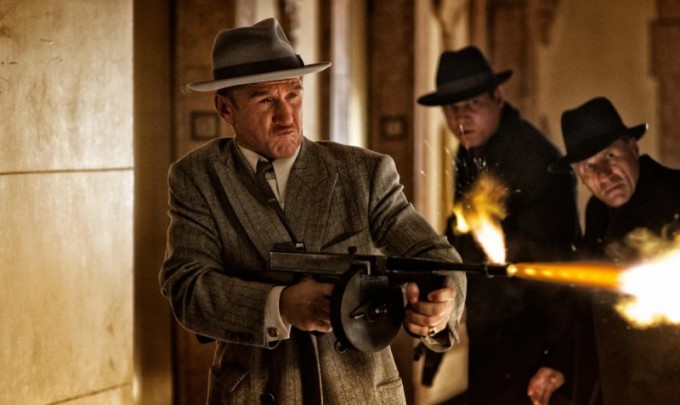
VIDEO ESSAY: Gangster Culture in the Movies

VIDEO ESSAY: Gangster Culture in the Movies

"He used to be a big shot." That's how a gangster's girlfriend describes him as she cradles his corpse at the end of The Roaring Twenties. But the line could be plugged into any gangster film that ends with a tough-talking, two-fisted, hot-tempered alpha male cooling his heels in prison, frying in an electric chair or bleeding out in an alley. In these films, death comes to kingpins and flunkies alike. If you're part of the underworld, you have to accept this as a given: one minute you're swaggering down the street with a curvy dame on your arm, thinking about your next big score and tipping bartenders $100 just for keeping the ice cubes cold, and the next minute you're being led into a room you thought would contain an open bar and a card game, only to find it empty save for two big guys with handcuffs and a couple of crowbars.

nullBut isn't it always thus, even for yeggs what's been to college? Death falls on the just and the unjust alike, on big shots and little fish. No genre save horror is as comfortable with the possibility, nay, certainty, of sudden, horrendously violent extinction. Gangster pictures are populated almost exclusively by characters who've made peace with that scary reality; deep down, everyone knows life could end at any moment, but the gangster feels it more acutely, living like there's no tomorrow because as far as he knows, there isn't one. What's the threat of prison to somebody whose line of work guarantees they might get plugged, stuck, beaten to a bloody pulp or run over with a shiny new car for the sin of being on the wrong side of the law, or a turf war, or history? And who wouldn't find a character like that appealing, especially if the story ends, as it invariably does, with the gangster getting ventilated like a Cagney character, checkmated into witness protection a la GoodFellas's Henry Hill, or pinched for tax evasion like Capone in The Untouchables? When we watch gangster films, we get to indulge the fantasy of living life without rules, plus a reminder of why people shouldn't do that: party on Saturday, church on Sunday, with a bit of the old ultraviolence tossed into the mix. No genre balances attraction and repulsion more deftly, or manages to be so immoral, amoral, and moralistic all at once. 

The gangster picture is as ritualized as the Western, and is in some ways the pessimistic antithesis of the western, a genre that was all about the future, about possibilities, about the likelihood of exerting will on the universe and remaking your life so that it resembles your fantasies. There's a reason why critics keep quoting Robert Warshow's piece "The Gangster as Tragic Hero" in essays like this one: because he sensed this link and elucidated it so beautifully. "Those European moviegoers who think there is a gangster on every corner in New York are certainly deceived," he wrote, "but defenders of the 'positive' side of American culture are equally deceived if they think it relevant to point out that most Americans have never seen a gangster. What matters is that the experience of the gangster as an experience of art is universal to Americans. There is almost nothing we understand better or react to more readily or with quicker intelligence. The Western film, though it seems never to diminish in popularity, is for most of us no more than the folklore of the past, familiar and understandable only because it has been repeated so often. The gangster film comes much closer. In ways that we do not easily or willingly define, the gangster speaks for us, expressing that part of the American psyche which rejects the qualities and the demands of modern life, which rejects 'Americanism' itself." Or as Henry Hill puts it, "To us, those goody-goody people who worked shitty jobs for bum paychecks and took the subway to work every day, and worried about their bills, were dead. I mean they were suckers. They had no balls." Henry, sweetheart, half-Mick, half-Guinea: wherever you are, on behalf of the silent majority of ball-less suckers who'll be queuing up for Gangster Squad this weekend no matter what the critics say, I salute you.–Matt Zoller Seitz

Nelson Carvajal is an independent digital filmmaker, writer and content creator based out of Chicago, Illinois. His digital short films usually contain appropriated content and have screened at such venues as the London Underground Film Festival. Carvajal runs a blog called FREE CINEMA NOW which boasts the tagline: "Liberating Independent Film And Video From A Prehistoric Value System."
You can follow Nelson on Twitter here.

Matt Zoller Seitz is the co-founder of Press Play.

VIDEO ESSAY: Steadicam Progress – the Career of Paul Thomas Anderson in Five Shots

VIDEO ESSAY: Steadicam Progress – the Career of Paul Thomas Anderson in Five Shots

With The Master winning the Best Cinematography award from the National Society of Film Critics over the weekend, here's a look at the evolution of Paul Thomas Anderson's approach to his films' camerawork over his first five features. The video above and essay posted below originally appeared in Sight & Sound.

One thing I wish I had explored in some way was the contribution of Anderson's longtime cinematographer Robert Elswit, who shot Anderson's first five features. The video makes the implicit auteurist assumption that the visions being expressed through the camerawork are that of the director, with the cinematographer acting as a technical facilitator. This of course is a gross oversimplifcation of the collaborative dynamic between director and cinematographer that perhaps gives too much credit to one party.

My dissatisfaction with this reductive approach informs the topic of my subsequent video essay for Sight & Sound, an exploration of the creative contribution of special effects team Rhythm & Hues, as a postulation of the artistic visions brought about by technical craftsmanship.

—–

Thinking on what sets The Master apart from Paul Thomas Anderson’s earlier films, what strikes me most vividly is a marked difference in camera movement and staging. I wouldn’t be surprised if a proper cinemetric analysis found that up to half of the film’s running time consists of close-ups with little to no camera movement.

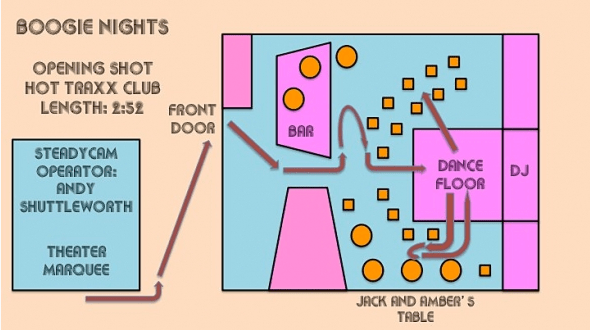
This is a far cry from the run-and-gun days of Boogie Nights and Magnolia with their stunning array of sweeping Steadicam shots, push-ins and whip pans. But upon surveying his career film by film, one can trace an evolution in his technique. This video essay examines one signature tracking shot from each of Anderson’s five previous features, showing how each epitomises his cinematography at each point, from the flashiness of his earlier films to a more subtle approach that favours composition over movement.

While The Master offers a couple of swirling tracking shots in a department store, and later a pair of straight-line lateral tracking shots to match the onanistic thrill of motorcycle joyriding, the film settles more often into shot/reverse shot dialogues in cozy interior sets. It seems that Anderson’s camera strategy here has less in common with ScorseseAltman or even Kubrick (with all of whom he’s frequently compared) than with Jonathan Demme. Indeed, in the DVD commentary of Boogie Nights, Anderson expresses a profound emulation of Demme, though Demme himself couldn’t recognise a shot from Boogie Nights that Anderson claimed to have blatantly derived from him.

Here the connection is apparent as never before, in a film that seems less concerned with riding the kinetic thrill of a camera set in motion than in tapping the psychic voltage of physiognomies seen up close. In his most psychologically intimate film to date, Anderson largely foregoes his signature camera movements in order to tunnel into the human mind.

Kevin Lee is a film critic, filmmaker, and leading proponent of video form film criticism, having produced over 100 short video essays on cinema and television over the past five years. He is a video essayist and founding editor of Fandor, and editor of Indiewire’s Press Play blog, labelled by Roger Ebert as “the best source of video essays online.” He tweets at @alsolikelife.

VIDEO ESSAY: New Year’s Irresolutions with Richard Linklater’s SLACKER

VIDEO ESSAY: New Year’s Irresolutions with Richard Linklater’s SLACKER

New Year’s Day: my first film viewing of 2013 is Richard Linklater’s Slacker. My revisit was prompted by its inclusion last month in the National Film Registry of the Library of Congress for preservation as part of America’s essential film heritage. What I didn’t count on was that the film would serve as ideal New Year’s viewing. From the initial image of a bus traveler (played by Linklater) opening his eyes to the first blue of dawn, there’s an invigorating sense of life viewed with a fresh lens.

That vision is carried like a baton over 95 minutes among 99 characters across roughly 141 shots, including some impressively sustained tracking movements over the wide streets of Austin, Texas. Bela Tarr, Gus Van Sant and others would be feted in years to come for this kind of cinematographic showmanship, but when Slacker improbably became a cause célèbre in 1991, it had almost nothing to do with its virtues as a work of cinema. It was hitched to the issue du jour of the Gen X “slacker” generation and what it stood for, almost solely by virtue of its title. (I remember, as an industrious teenager, avoiding Slacker for fear of the title alone, that it would corrupt me with the values it represented and thus derail me from getting into a good college).

Seeing it 22 years later, one can no longer file the film as a time-capsule curiosity, because it is stunningly current in both style and content. The film’s wall-to-wall ruminative dialogue has for too long been tentatively embraced as part of the film’s charms, attributable to the endemic quirk of indie film, the weird collegiate culture of of Austin or the intellectual wheel-spinning of a tragically underachieving generation. But if dialogue is art, nothing of the past two decades comes close to this communal roundelay of words and world views, the bracing onslaught of private mental activity unleashed in public spaces. And what once might have been dismissed as harmlessly creepy (a guy driving around with loudspeakers declaring that everyone should carry weapons) now hits almost too close to home. Maybe it took a decade of war on terror, an increasingly uncivil and polarized political discourse and the fresh memory of the most tragic mass shooting to date, but the frequent moments where the free-for-all mental musings take turns towards violent fantasy now seem downright prophetic.

However our present crises are resolved, by projecting beyond its era onto ours, Slacker contains multitudes of people, perspectives and predicaments. It pulls off a very difficult feat of presenting a Joycean cavalcade of people’s naked, borderline risible mental activity, but never for jest or terminal judgment. It helps that the opening monologue by Linklater’s character sets the stage: he relates a dream he had where he experienced alternate realities branching from each decision point in his life, extending infinitely even to the point where one alternate reality may actually be dreaming the one he presently is in. It’s a cosmic vision that’s both awesomely terrifying and liberating, where one conceives of his self and many alternate and even anti-selves, which may very well be represented by all the subsequent characters in the film. To perceive everyone around us in all their glorious and horrific humanity, to hear the noise and music of their thoughts; to find oneself large and open enough, if only for a moment, to entertain this grand parade perpetually teetering into chaos yet proceeding. It’s not a bad way to start the year.

The open, accepting quality of this vision is virtually antithetical of that annual tradition of self-improvement-cum-self-flagellation, the New Year’s Resolution. Perhaps true to its name, Slacker is beautifully irresolute in its procession from one set of characters to the next, no matter how seemingly resolute each individual worldview may be expressed (there’s always a juxtaposition or tonal counterpoint to keep it from being one-dimensional). So here’s a video extracting ten moments of New Year’s “irresolutions,” statements that sound like New Year’s Resolutions bent upside down and sideways. And as a tribute to our nation’s narrow escape from the fiscal cliff, the video closes with a shot that literally jumps off a cinematic cliff. Slowed down, this filmic free-fall has its own arresting beauty both violent and lyrical.

Brief notes on the “irresolutions:”

1. I wanted to find a way to spotlight the film’s wondrous camerawork, specifically the many tracking shots of people traversing the screen from one encounter to the next, moments that resonate with the entering of new realities that Linklater’s character prattles on about. I also love how Linklater’s visionary mapping of alternate existences shrinks into a final statement of regret. There’s something indelibly human about that trajectory, and you see that undertow exert itself again in the film.

2. Speak of the devil: the lovelorn speaker of this monologue is quoting a Russian novel because it describes a man’s moment of realization of his woman’s infidelity, but the existential ramifications of the statement go well beyond an expression of being jilted to something approaching the liberating significance of being unhinged from the shackles of a linear existence. Shouldn’t he feel happier about that?

3 + 4. A couplet of clips about the action of inaction.

5. This clip does have a time capsule quality, as the woman’s monologue amounts to a string of pseudo-philosophical aphorisms that were fashionable across the ’90s.

6: Delivered by a character who reportedly held his dissertation reviewers hostage and killed them. The act of self-taping one’s homicidal/suicidal intent is a little too prescient.

7. Delivered by one of the film’s most intriguing characters, a disaffected old man who seems a bit too enamored of anarchistic acts of violence without having taken part in any himself, but is eager to foster this mentality in a impressionable young man.

8. A polite duel of coping mechanisms over amorous disaffection, verging on a sober gaze into the nature of unhappiness before reeling back into passive-aggressive admonishment.

9. Beautifully tranquil and lucid, and yet cut at the end by the noise of the world, unconcerned with what wisdom this man has arrived at over a lifetime. 1

0. Sadly, I don’t find this scene nearly as absurd as when I watched it years ago.

Originally published on Fandor.

Kevin B. Lee is Editor in Chief of IndieWire’s PressPlay Video Blog, Video Essayist for Fandor’s Keyframe, and a contributor to Roger Ebert.com. Follow him on Twitter.

VIDEO ESSAY: ON THE Q.T., CHAPTER 4: KILL BILL: The Female Archetype vs. The Goddess

VIDEO ESSAY: ON THE Q.T., CHAPTER 4: KILL BILL: The Female Archetype vs. The Goddess

Volume 1:

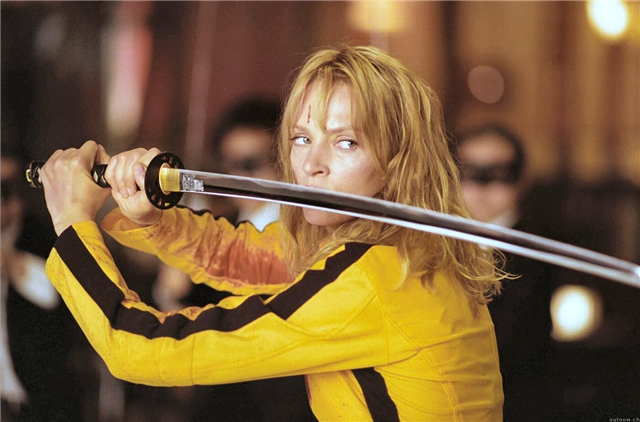
Withhold information, then release it. Set up expectations, then subvert them. Tease, then gratify. This is how you construct an epic. This is how Quentin Tarantino, block by block, builds up Kill Bill. It's disorienting at first. The story starts in medias res, and you have to stop and ask yourself, "Who is this woman? How did she get here?" Then you wait a long time for any real answers. But that's Tarantino's game. That's how he draws audiences into his vision, makes us crave more detail, makes us really feel the size of the story. He wields information like the Bride swings her Hanzo sword: aggressively but precisely, every expository word dropped just where it needs to be. Because as Tarantino is well aware, few moviegoing phenomena are as pleasure-inducing, as viscerally satisfying, as the one we call a surprise. Confusion, then clarity. That two-step process is the key to Kill Bill's thrills.

The most obvious technique by which Tarantino sets and springs these traps is also the one most closely identified with his name: nonlinear narrative. Reservoir Dogs, Jackie Brown, and Pulp Fiction each employed those loops and curlicues from present to past and back again to an extent, but here it's magnified. Volume 1 alone jumps with wild abandon across a span of four and a half years, and even travels back decades for "The Origin of O-Ren." So we get a series of revenge narratives—O-Ren's, the rape-revenge tale of Buck and the Bride, the vengeance she extracts from Vernita Green—nested inside one another like Matryoshka dolls, illustrating Hattori Hanzo's adage that "revenge is never a straight line. It's a forest." The Bride's lost there, and so are we, wandering from one intertwining cycle of violence to another, trying to pick up clues and context as we go along.

Let's zero in on that fight with Vernita, the suburban homemaker. First and most obviously, it's a fight. It's audience-sating spectacle. But it also undercuts expectations by ending abruptly just after Vernita suggests that "we have ourselves a knife fight." It throws us off balance. Then it uses Vernita's daughter to suggest that although this particular fight may be over, the Bride's vendetta is starting a wildfire. Finally, it flashes two unexplained details across the screen: the name "O-Ren Ishii," scrawled in pen but crossed out, and the words "Pussy Wagon" emblazoned on the back of our heroine's flamboyant yellow truck. Their respective meanings are as yet unknown to us, but they imply a recent, bloody past. This, all of this, is what critic Jim Emerson describes as the movie "teach[ing] you how to watch it." In this short vignette, we learn that although Kill Bill may be action-packed, its action will be morally and structurally complicated. And we learn that, as the saga grows more and more textured by detail, we won't necessarily understand how all those details fit together. Explanations lie buried in the Bride's past, as well as in her future.

Another device Tarantino uses to tease us while easing us into each new portion of Kill Bill is perhaps his most traditional: the title card. Both movies are punctuated by them, demarcating narrative borders with their suitably oblique chapter headings. "The Blood-Splattered Bride," for example, or my personal favorite, "The Man from Okinawa." So suggestive, so tantalizing, telling us just enough about Hattori Hanzo without telling us anything at all. It reminds me of Tarantino's own short "The Man from Hollywood," or one of his major inspirations, Leone's "Man with No Name." Or farther afield, the film Vivre sa vie by Tarantino's idol, Jean-Luc Godard, which employs similar intertitles but to more overtly Brechtian ends. The phrase "The Man from Okinawa" is so taciturn that it sets a stage without spoiling any of Sonny Chiba's surprise, revealing that he isn't just a man—he's the man.

This strategy pays off heavily when we actually meet Hattori Hanzo. Although he's posing as a buffoonish sushi chef (like the Bride, who's posing as a clueless tourist), that title card has primed us to see Hanzo as a crucial, enigmatic figure. And sure enough, their mutual ruse wraps up the second she starts speaking fluent Japanese. No matter how thoroughly they change their appearance or lifestyle, every one of Kill Bill's warriors remains a function of their messy, blood-soaked past, a past now embodied by the resurrected Bride. So for the viewer, the story becomes a daisy chain of revelation and revenge; a 4-hour epistemic quest tackling questions like "who?" and "why?": Who was this person in a past life? Why did they hurt the Bride? How, in the end, will she kill them?

As each of these mysteries is stripped away, we get closer and closer to the absolute truth, which lies deep inside the Bride's relationship with Bill.

Volume 2:

The climax of Kill Bill Volume 1, "The Showdown at the House of Blue Leaves," is as gargantuan as melees get. Dozens of bodies lie dismembered; O-Ren Ishii lies dead. It's all so huge, so satisfying, that even if Volume 2 were wall-to-wall carnage, there'd be no hope of topping it. So instead of trying to one-up all this swashbuckling and spilled blood, Tarantino delivers a pay-off that goes beyond action. He doesn't go bigger; he goes deeper, down into the relationship that prompted all this grisly revenge in the first place. Because the longer secrets go untold, the more potential energy they gather. For two hours now, we've been wondering: Who are these people, really? What's the Bride's real name? What does Bill look like? Our sustained curiosity supplies Volume 2 with its power.

Normally, seeing an actor's face is no big deal. But the pains that Tarantino takes to shoot around David Carradine in Volume 1 give his performance as Bill a halo, an aura of mystery. They turn him into what film sound theorist Michel Chion describes as an "acousmêtre": a being who derives power from being heard but not seen. And they root him in the tradition of other such masterminds: Bond archnemesis Blofeld, Inspector Gadget's Dr. Claw, and Charlie from Charlie's Angels. So we're forced to judge Bill from Carradine's soft, silken drawl alone—until, that is, he's introduced in the flesh through a visual nod to John Ford's The Searchers. Now, seeing the history etched into Carradine's weather-beaten face, we know we're getting close to the heart of the story; we can sense our proximity to Kill Bill's real, deep truth. After being hidden for so long, that face has an impact.

Contrast this with our introduction to Tommy Plympton, the Bride's fiancé. No fanfare, no impact, he's just there, played by makeup artist Christopher Allen Nelson in one of the saga's least stylized, least memorable performances. He has a few lines, but the only one that really stands out is "I guess I just believe in living dangerously" because it's so thick with unknowing irony. While alive, he's only defined through his relationship to the Bride, and after his death she doesn't mourn him. His only real significance is that he's so absolutely normal. He's never killed anyone and has no connection to the Bride's past. This alone, this lack of mythical back story, makes Tommy the ideal husband for the Bride and father to her child. He's her ticket to a stable, conventional life, the same kind pursued by Vernita Green, the same kind derided by Bill. Onscreen, he's a cipher. But symbolically, he's the opposite of Bill and a representation of this hypothetical future.

But no matter how fast and far you run, the past will always catch up with you. This is the moral of Kill Bill, the thematic basis for its labyrinthine chronology. Every act of violence, we learn, has a cause somewhere in the past and an effect somewhere in the future. Nothing is isolated. By killing Vernita, O-Ren, Buck, Elle, and Bill, the Bride thinks she can tie up all of her loose ends. But she never anticipates the loosest end of all: her daughter. B.B. is Volume 2's last-act bombshell, and her presence turns the Bride's last, titular objective into a complex, emotionally fraught showdown. If her grudge against Bill was about hate, no matter how intense, it would be much easier to deal with, but here Tarantino pulls a heartbreaking reversal: it's actually about love. It's about the Bride's moral obligation to kill the love of her life for the sake of her daughter. She has to sever all ties, cut herself and her daughter free, because that's the cost of a terminally impossible relationship.

Now all questions have been resolved. All these layers of mystery and secrecy have culminated in the Bride's single, poignant point: "She deserved to be born with a clean slate." That one desire, to bring B.B. into a world away from Bill, triggered all this plotting and bloodshed. This is the real pay-off Tarantino gives us, bubbling up from beneath the sheen of "cool," of fight choreography and stylization and homage. This is the real catharsis of Kill Bill. I don't often think of Tarantino's movies as being especially wise or profound, but I do think he gets relationships. Whether we're talking about Mr. White and Mr. Orange, Max Cherry and Jackie Brown, or Bill and the Bride, I think he understands how we invest ourselves in the people who are worst for us. The people who will hurt us. The people, metaphorically or otherwise, we may someday have to kill.

Nelson Carvajal is an independent digital filmmaker, writer and content creator based out of Chicago, Illinois. His digital short films usually contain appropriated content and have screened at such venues as the London Underground Film Festival. Carvajal runs a blog called FREE CINEMA NOW which boasts the tagline: "Liberating Independent Film And Video From A Prehistoric Value System."
You can follow Nelson on Twitter here.

Andreas Stoehr was born inside the Arctic Circle, has a BA in Cinema and Media Studies, and has written about film somewhere or other (especially on Pussy Goes Grrr and Twitter) since 2008. Passions include comics, dessert, and Marlene Dietrich.

MUSIC VIDEO ESSAY: The Year’s Best Foreign Films, Gangnam Style

MUSIC VIDEO ESSAY: The Year’s Best Foreign Films, Gangnam Style

“Gangnam Style” by South Korean pop star PSY became the first video to ever break through one billion views on YouTube. This feat, one that no U.S.-made video has yet to match, is all the more remarkable since most likely less than 1 percent of all those who watched it knew what he was saying.

If a foreign language music video can be so phenomenally popular, why not foreign language movies? Especially when there was such a wealth of wonderful foreign films this year? According to the Indiewire annual poll of film critics, the best movie of 2012 is Holy Motors by the mad French genius Leos Carax, with four other foreign films making the top ten: Amour, This Is Not a Film, Once Upon a Time in Anatolia and The Turin Horse.

This may be as many foreign films to have made the top ten since Indiewire started conducting the poll (though I can’t verify this since the results of previous Indiewire polls are no longer available on Indiewire!) And yet this was also the first year that the poll discontinued listing its Best Foreign Film category. Perhaps, given the prominence of foreign films this year, the site felt it was no longer necessary to make a distinction. But I think these movies still deserve their own moment in the spotlight.

As it turns out, so does PSY. Careful translation of the “Gangnam Style” video reveals that the lyrics are actually a celebration of the glories of foreign language cinema—as revealed in this translated version of the video, re-edited with clips from the movies that are the object of the pudgy Korean pop star’s praise. And with the karaoke lyrics added, you can even sing along!

Here are the top ranked foreign language films in the 2012 Indiewire poll, all included in the video:

1. Holy Motors
4. Amour
5. This Is Not a Film
8. Once Upon a Time in Anatolia
9. The Turin Horse
11. Tabu
15. Oslo, August 31st
17. The Kid with a Bike
22. Barbara
25. Rust and Bone
27. Neighboring Sounds
32. Elena
34. The Raid: Redemption
36. Almayer’s Folly
43. Footnote

Originally published on Fandor.

Kevin B. Lee is Editor in Chief of IndieWire’s PressPlay Video Blog, Video Essayist for Fandor’s Keyframe, and a contributor to Roger Ebert.com. Follow him on Twitter.

VIDEO ESSAY: The Essential Online Videos of 2012

VIDEO ESSAY: The Essential Online Videos of 2012

While “Gangnam Style” was an international phenomenon of unprecedented viral proportions, I’m not sure what the video has to say about the world we live in other than that the ersatz elements of both contemporary music and music videos have now reached global pandemic levels. On the other hand, the improbable spread of this utterly disposable South Korean pop artifact was a breathtaking demonstration of how a worldwide social media infrastructure can be exploited in full. Just imagine what the world would be like if such a network could be utilized to spread things of actual value.

With that in mind, let me use what small piece of the virtual ecosystem I have to shed light on five online videos that did more than just offer a moments’ distraction. Each of them left me with much to think about in how vividly they reflect the world we live in, and how they function as art in their own surprising ways. Taking stock of all of them at once, the prevailing theme is one of public vs. private. Putting Girl Walk // All Day next to Mitt Romney’s notorious “47 percent” video provides a startling contrast between two classes of people and how they find their power in two types of spaces: closed doors vs. open streets.

Tensions between public and private also bubble up as a new kind of popular performance art: in a six-year-old’s recording of her first ski jump, and in a prankster’s punking of private online chats set to 2012′s most ubiquitous love song. At their best, online videos do more than let us escape into secret worlds (i.e. a pop fantasy version of Korea that doesn’t exist) but reflect back on our own lives, whether in public or private.

Thanks to Wes Kim, John Lichman, Bart Verbanck, Tom McCormack and others for helping me discover these gems.

Originally published on Fandor, where you can read the full transcript of the video.

VIDEO ESSAY: Twelve for ’12 – The Best Films of the Year

VIDEO ESSAY: Twelve for ’12 – The Best Films of the Year

From start to finish, 2012 boasted films of remarkable variety and splendor; even the worst films of the year had something going for them (In The Hunger Games, it’s the scowl Jennifer Lawrence wears while withstanding lectures by Woody Harrelson and Lenny Kravitz; in The Dark Knight Rises, it’s Ann Hathaway knocking Christian Bale to the floor; inArgo… well never mind).

Here are twelve that stayed with me the most. But not far behind are: Abendland, Attenberg, Barbara, Bernie, Bestiaire, The Color Wheel, Girl Walk // All Day, Life of Pi, Looper, Moonrise Kingdom, The Turin Horse, Two Years at Sea, Whore’s Glory, Woman in the Septic Tank, Wuthering Heights and You Are Here.

And extra special mention to five undistributed films I saw this year that I hope will get deserved exposure in 2013: So Sorry (dir., Ai Weiwei), When Night Falls (dir., Ying Liang), The Three Disappearnces of Soad Hosni (dir., Raina Stephan), Golden Slumbers (dir., Davy Chou) and Jerry and Me (dir., Mehrnaz Saeed-Vafa).

Originally published on Fandor.

Kevin B. Lee is Editor in Chief of IndieWire’s PressPlay Video Blog, Video Essayist for Fandor’s Keyframe, and a contributor to Roger Ebert.com. Follow him on Twitter.