FAST CLIP: Video for Waxahatchee’s “Misery over Dispute” by Joshua Mikel

FAST CLIP: Video for Waxahatchee’s “Misery over Dispute” by Joshua Mikel

At their best, music videos can function as small films unto
themselves, underscoring the talents of their subjects by placing them
within scenarios that enhance lyrics, music and ambience all at once. In
so doing, these filmlets may recall, either
consciously or subliminally, other films. It is difficult, when watching
Joshua Mikel’s
recent video for southern rocker Waxahatchee’s (Katie Crutchfield)
“Misery Over
Dispute,” not to think of a few different films. The two that ring the
loudest
bells, though, are “Singin’ in the Rain” and “Raging Bull.” An
appropriate mix,
perhaps, for the story the song tells. In 12 lines, the song describes a
collapsed relationship, with the singer’s departure the only option, a
choice
of “misery over dispute.” The video is just under two minutes long,
pounded out
in the musician’s signature fashion, guitars heavy, voice somewhat
raspy, in
some senses more a chant than a song, melodic arc absent, almost
irrelevant in
a song this brief. The singer spends most of her time dancing, under a
spotlight, kicking dust up around her, and catching what look like
cinders as
they fall. Tom Waits fans may find some corollary here to some of the
stunts
Waits has pulled in his live shows, with scattered sparkles and a
semi-shuffle
that kicks up a glowing cloud around him. But what a contradiction of
impulses
this is. The freedom of the dance Crutchfield does here recalls the way
Gene
Kelly danced in a puddle in “Singin’ in the Rain,” with a seamless
optimism
that would be both foreign to contemporary viewers and something of a
standard
to reach toward—reflective, here, of the singer’s ability to leave,
leave and
not look back, choosing loneliness over argument. But, on the other
hand, when
Jake LaMotta dances alone, under dim lights, in a boxing ring, in “Raging
Bull,” we
see a figure who relishes battle, who relishes conflict, and whose
movements
around the ring have acquired, with time, an epic quality, however raw
and crude
his activities while actually boxing might be. As Waxahatchee sings of
feeling
“spineless and sick in your eyes,” we can’t help but feel the pull of
the
battle, of argument, of rage, a feeling conveyed in very few words. The
director has chosen a dark, shadowy room and soft, black-and-white hues
for the
video, usually code for realism, but in this case a code for the
dreamlike
state we find ourselves in when within that most beguiling of situations, the
human
relationship.

Max Winter is the Editor of Press Play.
VIDEO ESSAY: Terry Gilliam: The Triumph of Fantasy

VIDEO ESSAY: Terry Gilliam: The Triumph of Fantasy

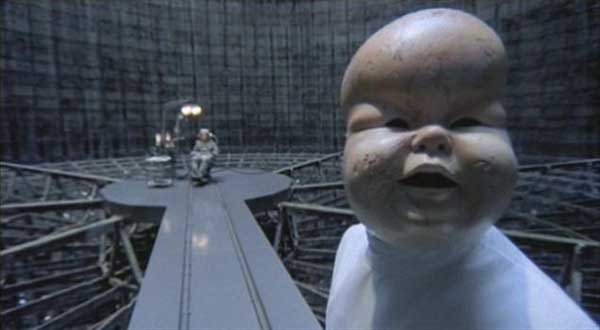
In a 1988 interview with David Morgan for Sight and Sound, Terry Gilliam proposed that the most common theme of his movies had been fantasy vs. reality, and that, after the not-entirely-happy endings of Time Bandits and Brazil, The Adventures of Baron Munchausen offered the happiness previously denied, a happiness made possible by “the triumph of fantasy”.

That
triumph is not, though, inherently happy. Gilliam’s occasional happy
endings are not so much triumphs of fantasy as they are triumphs of a
certain tone. They are the endings that fit the style and subject matter
of those particular films. More often than not, his endings are more
ambiguous, but fantasy still triumphs. Even poor Sam Lowry in Brazil
gets to fly away into permanent delusion. Fantasy is sometimes a
torment for Gilliam’s characters, but it is a torment only in that it is
haunted by reality, and reality in Gilliam is a land of pain,
injustice, and, perhaps worst of all, ordinariness.

For
if there is, generally, an overarching theme to Gilliam’s work, it is
one familiar from fairy tales, comic books, science fiction stories, and
so many other works of popular culture: the yearning of an ordinary
person to be, in truth, extraordinary — a hero, a savior, a king, a
master of the universe. (Time Bandits is Harry Potter
avant la wand, and it’s no surprise that, according to Gilliam, J.K.
Rowling and others hoped he would direct one of the movies.) Gilliam is
especially sensitive to the ins and outs of this power fantasy, and as
much as he wants to maintain the pure, innocent wonder of children’s
experience, he recognizes that in adults such wonder may be far from a
blessing. Notice, for instance, how in many of his films, including his
most recent, The Zero Theorem,
there’s a component of gendered, heterosexual fantasy: an awkward (even
schlubby) male builds up a fantasy of a beautiful (often blonde) woman
who ushers him into his heroism.

Thus, the theme song for The Zero Theorem,
Karen Souza’s sultry cover of Radiohead’s “Creep”, is deeply
appropriate not only for that film but for so much of Gilliam’s work
overall. The point of view is that of a person who sees someone as “just
like an angel” and feels not merely inadequate but repulsive: “I’m a
creep. I’m a weirdo.” Some of Gilliam’s protagonists become heroes in
the world of the film, and get to trade in their status as weirdo and
experience the life of the lauded; others have their ideas of heroism
challenged and subverted, their dreams transformed so that they can
better live in everyday life, but still: the desire to transcend
ordinary existence is common to most of them.

For
all his love of fantasy, Gilliam is enough of a realist to know that
most creeps and weirdos don’t get the girl of their dreams, or the girl
of their dreams turns out to be more human than they’d bargained for,
and so what they are left with is the pure, perfect bliss of the dream —
the triumph of fantasy. Whether, in the end, we see such a triumph as
pitiful and escapist or heartwarming and nourishing — or somewhere in
between — is up to us. The greatest triumph may be the sort we see at
the end of The Fisher King,
where after all the delusions and madness and quests and tears and
dreams we are encouraged to seek not girls to fantasize about or dragons
to slay, but ordinary moments to infuse with wonder.

Matthew Cheney’s work has been published by English Journal, One Story, Web Conjunctions, Strange Horizons, Failbetter.com, Ideomancer, Pindeldyboz, Rain Taxi, Locus, The Internet Review of Science Fiction and SF Site, among other places, and he is the former series editor for Best American Fantasy. He is currently a student in the Ph.D. in Literature program at the University of New Hampshire.

VIDEO ESSAY: Electric Sheep: How Female Power Is Limited By Consumer Culture

VIDEO ESSAY: Electric Sheep: How Female Power Is Limited By Consumer Culture

[The script for the video essay follows.]

In the opening montage to Do The Right Thing, Tina, played by Rosie Perez, dances to “Fight
The Power,” the only figure in an otherwise empty urban landscape. In this opening sequence, Tina symbolizes
everything we associate with female power: a delicate body in a kung fu pose,
her big beautiful eyes coupled with tight fists. In the world of the “strong
female character,” sex is a snarl, fingers are clenched and punches are thrown,
even though the camera zooms in and lingers on curves.

In the opening credits Tina seems active and empowered, In
the actual film, Tina is house-bound. We see moments of her talking to Mookie,
begging him to come home or lecturing him about being a man. However, we don’t
have any scenes of interiority, where Tina is established as a character, with
her own hopes and dreams. 

Her existence in Do
The Right Thing
is less about unpacking the world that women of color live
in than showing a sexy female figure in a poor urban landscape. After that
opening sequence, Tina is actively disempowered. Her role goes from
revolutionary to mere eye candy. Tina’s big moment in a film about individuals
making hard choices is when Mookie finally shows up and rolls an ice cube over
her segmented body.

The image of the female revolutionary has often been adapted
to fit different time periods. In the 1928 film, The Passion of Joan of Arc, we see close ups of Joan’s face
crying. In a ’48 version we see Joan in full armor leading the charge, as well
as images of her bound and crying. In
the 1999 film, The Messenger, Joan’s
hair is shorn, her eyes looking intently, her lip curled into a snarl. Is Joan
of Arc’s strength from her religious conviction, or her prowess on the
battlefield? 

We focus less on the substance of icons of female strength
than we do on their image. We worry about what Wonder Woman is going to wear
when she fights evil. We get concerned about whether Super Girl’s breasts look
fake. We cheer when Beyonce dresses up as Rosie The Riveter; her curled bicep
is lauded as a powerful statement about female empowerment. We care less about
what celebrities actually do to help women than whether or not they are
willing and proud to proclaim themselves feminists. We want the quick sound byte,
the 3:00 minute Upworthy video, the clever meme.

We don’t want women to be objects, but we sure as hell want
them to be symbols. 

The powerful woman is defined first by how she looks and how
she holds her body. The “strong female lead” is always beautiful and fierce,
sexy and tough. She has a tragic back-story and a yearning for justice as solid
and strong as any male action hero. In today’s world, Xena, Buffy, The Bride,
and Lara Croft, as well as superheroes like Wonder Woman and Super Girl, are read
as powerful because of their physical prowess. Often their power is meant to
surprise us precisely because, despite their physical strength, they appear
pretty, delicate, and sweet.

The ubiquity of these images of female strength and power is
exacerbated in a world of Instagram images and constantly generated GIFs.
Beyonce’s allusion to Rosie the Riveter is one part homage and one part
marketing initiative. It’s a beautiful, brazen and, above all, familiar image,
a picture of feminism that we generally don’t question, an idea about power we
all agree we can get behind.

Beyonce and Janelle Monae are two artists at the forefront
of today’s feminist movement. Beyonce is deeply invested in claiming space for
female experience in a man’s world and insists on a woman’s right to “have
it all.” In contrast, Monae demands change. Monae doesn’t want us to “ban
bossy” or “lean in”, she wants us to open our minds. To embrace creativity,
queerness, sensuality.

There’s a reason Beyonce can be heralded as both a feminist
icon, and also have her lyrics used to support a mainstream film like Fifty Shades of Grey, which is less
about S&M than a relationship that meets all the criteria for abuse. In
reality, Queen Bey isn’t worried about power dynamics as long as she gets to
call the shots, which is why her rallying call of “bow down bitches!” is less a
call for female revolution than an assertion that she wants a seat in the boys
club.

Beyonce’s feminist message, though visible and important,
does not actively disrupt the mainstream. In contrast, Janelle Monae is an
R&B artist who is actually deeply invested in dismantling the way we think
about power. In her debut studio album, The
ArchAndroid
, Monae plays the character Cindi Mayweather, an android who
time travels to save a civilization from forces trying to suppress freedom and
love. In her recently released Q.U.E.E.N.,
Monae also calls for revolution. She encourages solidarity amongst the
disenfranchised, the wacky and the just plain weird. Women in Monae’s videos
don’t bump and grind, objects for the camera, the way they do in almost every
single music video. They smile, they dance, they play records, they sing.  While Beyonce croons slow ballads about
yearning to be an object of allure for her husband, Monae tells a male lover on
“Prime Time,” “I don’t want to be mysterious with you.”

In a world where female sexuality and power is
still often obscured, rendered strange, unintelligible, or made to exist to
fulfill a male fantasy, Monae’s insistence on being seen as a full person is
far more radical than any power pose you can copy and share on Facebook or
Instagram. While Beyonce’s brand of feminism might be a more attractive model
for consumer culture, it’s artists like Monae, who insist on questioning the
ways we are labeled, that will ultimately help us do what Tina in Do The Right Thing strives for in her
opening dance, but never ultimately achieves: get a chance to actually fight the
power.

Arielle Bernstein is
a writer living in Washington, DC. She teaches writing at American
University and also freelances. Her work has been published in
The
Millions, The Rumpus, St. Petersburg Review and The Ilanot Review. She
has been listed four times as a finalist in
Glimmer Train short story
contests
. She is currently writing her first book.


Serena Bramble is a film editor whose
montage skills are an end result of accumulated years of movie-watching
and loving. Serena is a graduate from the Teledramatic Arts and
Technology department at Cal State Monterey Bay. In addition to editing,
she also writes on her blog Brief Encounters of the Cinematic Kind.

VIDEO ESSAY: In Memory of Richard Attenborough (1923-2014)

VIDEO ESSAY: In Memory of Richard Attenborough (1923-2014)

The scary doll, or puppet, or dummy, is, by now, a cliché of horror: films from
the Chucky movies to Poltergeist have
availed themselves of it, to the increasingly begrudging fright of their
viewers. For many (though not as many as there should be), the scary puppet
motif began (and possibly ended) with the 1978 film Magic, directed by Richard Attenborough, who passed away in late
August. The actor and director whom most would know either for his turn in Jurassic Park or for directing vast
films like Gandhi or Chaplin had other exploits up his sleeve
as well: an early film role was Pinkie in Brighton Rock, a movie about violence and terror on the English seaside birthed from
the fog-swept, crime-obsessed mind of Graham Greene. What’s most evident, in
watching Attenborough’s films and considering his career, is a sense of embodiment, of
polymathy. On the most basic level, this could mean he was able to act and direct
with equal ability. To play Pinkie as a young man and then play Santa Claus (in Miracle on 34th Street)
or a deranged scientist late in life suggests, at the very least, range, but it
also indicates that he possessed the kind of intelligence invaluable to successful
actors: the ability to imagine someone you have never met, and then
someone else, and then someone else, and never let anyone see the workings of your imagination. Carvajal’s fluid, deft piece shows us both sides of
this man, the acting side and the directing side–and reminds us of the great consciousness Attenborough obviously had of his audience. It is strange to remind one’s
self, when witnessing the expansiveness of a film like A Chorus Line, in which the only way to tell the story is to go
large, as large as possible, that the maker of these films also made a movie as
creepy and all-out frightening as Magic,
which captured the flitting, nervous intensity of Anthony Hopkins in his younger
days and, as with many movies of this period, put very little between the viewer
and the events unfolding on screen: there was little subterfuge, little music,
even, just the pure fright of what was unfolding. The phenomenon of the
actor-director is an old one, going back to Charlie Chaplin himself, or farther. It’s rare, though,
that an individual pulls off great success in both in one lifetime. The
projects an actor directs might take on the sheen of a “private project,” like
the films of Tim Roth or Ethan Hawke, or they might assume a stature separate
from their director’s reputation, like those of Sean Penn, in recent times, or,
in a different sense, Woody Allen. Although these shape-shifters do something
slightly different things with what might call their powers, the source is
clear: immersion in a discipline, which is, in this case, film. RIP Richard
Attenborough.—Max Winter

Nelson Carvajal is an independent digital filmmaker, writer and content
creator based out of Chicago, Illinois. His digital short films usually
contain appropriated content and have screened at such venues as the
London Underground Film Festival. Carvajal runs a blog called FREE CINEMA NOW
which boasts the tagline: "Liberating Independent Film And Video From A
Prehistoric Value System." You can follow Nelson on Twitter
here.

Max Winter is the Editor of Press Play.

VIDEO ESSAY: What Is Composition?

VIDEO ESSAY: What Is Composition?

The idea of composition has a long history, one that gestures toward the very beginnings of visual art.

At
its most basic and dictionary definition, composition is about the
arrangement of elements, about combination, about parts joining into a
whole.

The
question for composition is not only the selection of elements, but
their arrangment. A major question for painters, for instance, became
that of the point of view of the image, the vantage point of the
spectator.

With
the arrival of photography in the 19th century, the question of point
of view and vantage point became more technical: Where do you place the
camera?

The first movies faced the same question.

At first, cinematic composition assumed the position of the onlooker or the audience member.

As
fictional narrative came to prominence, composition began to interact
with mise-en-scene. What the camera saw was no longer merely a matter of
selection, of where the camera stood. The world did not have to be
accepted as it was. Now, what the camera saw could be constructed, and
its point of view could be large or small, wide or narrow, deep or
shallow. Composition gained a new level of design.

Soon,
directors and cinematographers began to think more like photographers
and painters than like theatre directors limited by a proscenium. They
discovered the freedom to use composition to direct the viewer’s eye and
emotions.

A dominant style developed, but for any dominant style, there are variations, as well as challenges to its dominance.

Composition could even be a tool to overcome other limitations. Darkness, for instance, could be its own compositional element.

The
arrival of color added new considerations to composition and a new tool
for attracting the viewer’s eye and affecting their emotions.

The
shape of the picture matters, too, as anyone who has tried to watch a
widescreen movie on a small, square television screen knows.

With
the rise of computer generated effects, we may seem to be in a new era.
This is true in terms of the freedom to design almost anything
imaginable, but the fundamentals of composition remain mostly the same.
Line, shape, lightness and darkness, color, perspective, balance,
weight, height, depth . . . these remain the words people use to talk
about composition.

The
challenge of composition for narrative cinema remains what it was when
the first story was spliced together from different pieces of film:
where should the viewer look, and at what? What might the arrangement of
elements help the viewer understand or feel?

Matthew Cheney’s work has been published by English Journal, One Story, Web Conjunctions, Strange Horizons, Failbetter.com, Ideomancer, Pindeldyboz, Rain Taxi, Locus, The Internet Review of Science Fiction and SF Site, among other places, and he is the former series editor for Best American Fantasy. He is currently a student in the Ph.D. in Literature program at the University of New Hampshire.

VIDEO ESSAY: R.I.P. Lauren Bacall

VIDEO ESSAY: R.I.P. Lauren Bacall

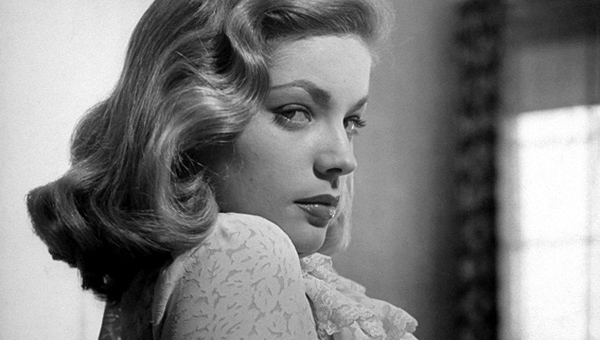
What defines sex appeal on the big screen? This is a question that has been pondered in countless essays, sometimes with extensive scholarship attached, sometimes not, but the answer remains elusive, as it should. When watching Lauren Bacall in her early films, it is impossible not to think of "sexy" as one of the adjectives to describe her, and yet where is that sexiness coming from? In part, it comes from a sort of conversational fear, a sense that she, or rather one of the characters she plays, might say something barbed, or worse, at any turn, and that if she doesn’t, she’s choosing not to. There’s a "nothing ventured, nothing gained" quality in the act of watching her; unless there’s some risk involved in any experience–in this case, the risk of shock–there’s no point in having the experience, or so the platitude goes. There’s her voice, of course, the deep-toned, husky, "bedroom" voice, which is, in its own way, permissive; it sends a mood of acceptance, as well as engagement. I first saw Bacall in The Big Sleep when I was quite young, almost too young to understand her, or the importance of the film, or Bogart’s presence in it–but I did understand that she represented a comfort with, and an embodiment of, specifically adult sexuality, for grown-ups, a quality I still consider somewhat removed or Parnassian, even at my current, seemingly mature age. She seemed then, and she seems in retrospect, like a pinnacle, evidence of a time when on-screen sex appeal might emanate from other sources than it does currently.

For now, what we consider sexy has a not-so-subtle price tag attached to it. Many viewers only consider the star or starlet a sex symbol if their image has appeared a certain number of times, on a certain number of billboards, in a certain number of high-profile films. The quality of that appearance is a factor, as well. Viewers know how much money is invested in the films in which the Symbol appears. They know how much money the Symbol is paid for each film. They know who the highest paid stars are. They know what the most expensive films are. Or they can easily find out. They know that technology can easily modify a star’s appearance to make it look however a filmmaker might want it to look. We know that this equipment is highly costly. They know that the said Symbol eats expensive food, gets exercise through an expensive trainer, and wears more expensive clothes than are imaginable to us–or if they’re imaginable, they aren’t within financial reach. All of this ultimately enters, oddly enough, into popular conceptions of sex appeal–and because of the integration of star culture into the larger body of cultural or even news reporting, one might begin to take a matter-of-fact attitude towards this appeal itself. Is the set of reactions, subtle and not-so-subtle, physical and otherwise, to sexiness, lessened with this development? Somewhat. It’s not so much that the stars of yesterday were better, or sexier, it’s that they may have been playing by a slightly different set of rules.

Which brings me to Bacall’s face. When she was introduced to me as a classic sex symbol as a child, my very first thought was Her? Really? She looks so . . . normal. And then I caught on. There is an approachability in her features that doesn’t bear much similarity with the Pitts, the Jolies, the Greens, the Stones, or even the Geres, the Fondas, or the Dickinsons. As theatrical as her movements, her carriage, and her phrasings might be, there’s a sense of the human being beneath it, there, as well; as she herself said, "the look" began because she was lowering her head to keep from shaking too much. In the right light, watching Lauren Bacall could be a powerful reminder of the difference between being an actor and being a human being, and how the best actors show viewers both experiences. Sex appeal at present is more likely to be measured in near-mathematical terms: are the proportions correct? How perfect are the features? If we compare the Symbol to other Symbols, how does this Symbol match up? The simplest way of saying it is that viewers have gotten colder, and the simplest question about a star—sexy? or not sexy?—is filtered through a set of criteria that have little to do with lust and more with what makes a good screensaver. It would be difficult to trace the series of cultural seismic shifts that have led to this attitude, but one thing remains certain. To say Bacall represents another era in moviemaking is unquestionable, and to say that era is bygone is an understatement.–Max Winter  

Serena Bramble is a film editor whose
montage skills are an end result of accumulated years of movie-watching
and loving. Serena is a graduate from the Teledramatic Arts and
Technology department at Cal State Monterey Bay. In addition to editing,
she also writes on her blog Brief Encounters of the Cinematic Kind.

Max Winter is the Editor of Press Play.
VIDEO ESSAY: Our Scary Summer: 1979

VIDEO ESSAY: Our Scary Summer: 1979


[Jed Mayer’s script for the video essay follows.]

The cover of the June 1979 issue
of Newsweek featured an image of
Sigourney Weaver from Alien. The
caption read: "Hollywood’s Scary Summer." I was thirteen. The horror movies
released that summer would form a grotesque
carnival that mirrored my own and the world’s anxieties.  Earlier in the
spring there was the disastrous nuclear accident at Three Mile Island. That summer, major oil spills polluted the Gulf of Mexico
and the North Atlantic Ocean. This year, oil prices doubled, Margaret Thatcher
was elected, and the Ayatollah Khomeini rose to power.   I slowly came
into awareness of the political and environmental degradation around me that
year. The films I watched reflected that, as well as my own thirteen-year-old desires
and fears .

As tag-lines go, George Romero’s Dawn of the Dead sports a pretty good one: “When there’s no more
room in Hell, the dead will walk the earth.” I stared for weeks at the lurid
poster bearing these ominous words. It hung in the front windows of the
Maplewood Mall multiplex.  Looking back,
I think a more fitting tag-line might have come from a speech given by President
Jimmy Carter later that same summer: “Often you see paralysis and stagnation
and drift.  What can we do?”

Carter was addressing what he described as a “crisis of
confidence” in America. His July 15, 1979 address has been called “the malaise
speech” for its focus on the country’s financial woes and lack of
direction.  Like Romero’s film, the
speech offered a disturbing vision. It showed a world drained of vitality and
meaning.

What better setting for such a vision than a mall, where the
film’s protagonists hide out to weather the zombie apocalypse?  And what better place for me to have seen
this film, in the mall where I was to spend so many pointless afternoons,
wandering the aisles and riding the escalators like Romero’s zombies?

1979 was also the year when my family decided we needed
solutions to our own paralysis and stagnation. We sought it through family
therapy, proudly airing our co-dependencies and dysfunctions, along with many
other American families caught up in the family therapy movement. 

Few films expose the limitations of therapy narratives more
ruthlessly than David Cronenberg’s The
Brood
.  Cronenberg explored the
psychosexual demons haunting the individual human psyche in Shivers and Rabid. He then anatomized the late-70s zeitgeist by turning his attention
to the monsters lurking within the fractured family.

The poster advertising John Frankenheimer’s Prophecy featured a grotesque image of a
monstrous fetal creature wrapped in its placenta. I responded to this image with
equal parts fascination and horror.  After
seeing the film, however, I discovered that horror could help me to make sense
of the era’s toxic events.  With Prophecy, Frankenheimer wanted to create
an environmentally-conscious horror film that would raise the ethical stakes of
popcorn fare.  It can hardly be said that
he succeeded in this goal—the director has blamed his own alcoholism at the
time, as well as production issues, for the film’s relative failure. However,
the film did succeed in presenting images and settings that managed to distill the
toxic environments of the 1970s, at least for one young filmgoer. 

Star Wars was
predicated on an escapist premise that used science fiction conventions to
blast us into a galaxy far, far away. In the universe of Alien, on the other hand, space
is confined, claustrophobic.  It is a
universe very much like our own, subject to the laws of supply and demand.  As we watch a complex mass of space-borne
metal slide slowly across the screen, a superimposed text tells us this is the
commercial towing spaceship Nostromo. The
ship is hauling a refinery and twenty million tons of mineral ore.  Space, the final frontier, has become, like
all frontiers, a resource to be exploited. 

Although I wasn’t yet old enough to have a driver’s license,
like everyone in 1979 I was highly conscious of rising gas prices and their
effects.  I watched those daily images of
gas station lines so long they looked like shanty towns with a grim fascination.
They closely resembled the conjoined images of excess and destitution common to
those post-apocalyptic films I loved from that era. Films like The Omega Man, Damnation Alley, and Soylent
Green
seemed half in love with the world’s death.  What did the earth that the Nostromo’s crew
were trying to return to actually look like? 
Probably something much like the one depicted in these films. The images
I watched on the nightly news seemed to be offering a disturbing preview of
that world.

Nelson Carvajal is an independent digital filmmaker, writer and content
creator based out of Chicago, Illinois. His digital short films usually
contain appropriated content and have screened at such venues as the
London Underground Film Festival. Carvajal runs a blog called FREE CINEMA NOW
which boasts the tagline: "Liberating Independent Film And Video From A
Prehistoric Value System." You can follow Nelson on Twitter
here.

Jed Mayer is an Associate Professor of English at the State University of New York, New Paltz.

VIDEO ESSAY: Slow Motion Movie Supercut

VIDEO ESSAY: Slow Motion Movie Supercut


LOOK. PAY ATTENTION. NOTICE THE MOVEMENT.

If you grew up during the 1970s, and first came into
sentient moviegoer-ship during the 1980s, then one slow-motion scene
which probably dented your consciousness was the running scene at the beginning
of Chariots of Fire, showing the film’s
two heroes running down a beach to the tch-tch-tch-tch-tch-tch of a
much-imitated Vangelis soundtrack. The purpose of the slo-mo here turns out to
be one of the key purposes of this technique—to give dignity to an action whose
speed we might otherwise take for granted. The slow motion impresses upon us
the gravity of the movement, its meaning above and beyond mere movement. In the
same way, a director might present someone walking in slow motion to show,
somehow, that the character in question has hit his or her stride; the crooks
of Reservoir Dogs might be leaving brunch to go to work, in one sense, but the
work they are doing is sinister, however darkly and semi-comically confused it
might become after that brunch. Sometimes that slo-mo walk might simply show a
character who is at ease inside her own identity, as in the case of Gwyneth
Paltrow’s Margot, gliding towards her brother to Nico’s frail voice in The Royal Tenenbaums; unhappy as she may
be, she has full possession of her unhappiness. Motion may be slowed down to
draw out the tension of a scene like pulling, pulling, pulling on a rubber band, with the understanding that if
the scene were played in real time, the action might be too explosive for us to
bear—but also raising the question as to whether the motion is so much more
bearable in slowness. Think of the falling carriage in The Untouchables: step,
after step, after step, bullets flying, but achingly, achingly slowly… And yet what about the
cases in which slow motion seems to be presented for its own sake, to show us
the terrible beauty of things blown apart: glass windowpanes, buildings, cars,
even human heads? Or to show us what a bullet looks like as it flies to its
destination, or, as in the case of Wanted, is deflected by Angelina Jolie’s wrist?
Leigh Singer’s video shows us 113 different films featuring slow motion, dating
from 1936 to the present, demonstrating that, above all, the use of the
technique forces us to do what any film worth its salt should do: LOOK. Singer
wisely places a crucial, classic slo-mo scene near the piece’s very end: a shot
of the apes, the earliest human ancestors, pounding bone with bone in 2001: A Space Odyssey. Kubrick used
slow motion in this case for one reason, and one reason only, to make sure we
would not forget our history. And at this speed, who could, indeed, forget it?–Max Winter

Leigh Singer is a freelance film journalist, filmmaker and screenwriter.
Leigh studied Film and Literature at Warwick University, where he
directed and adapted the world stage premiere of Steven Soderbergh’s
‘sex, lies and videotape’. He has written or made video essays on fllm for The Guardian, The Independent, BBCi,
Dazed & Confused, Total Film, RogerEbert.com
and others, has appeared on TV and radio as a film critic and is a
programmer with the London Film Festival. You can reach him on Twitter
@Leigh_Singer.

Max Winter is the Editor of Press Play.
VIDEO ESSAY: From SLACKER to BOYHOOD: Cinematography in the films of Richard Linklater

VIDEO ESSAY: From SLACKER to BOYHOOD: Cinematography in the films of Richard Linklater

In the late fall of 2001, in a movie theater in New York, I
fell asleep during Richard Linklater’s Waking
Life
. Strangely enough, I think he might have welcomed that response. Or
at least his cinematographer’s camera would have. We’ve posted viewers’
reports of sleeping
during films before at Press Play, but this was a different
sort of sleep, guided, in a sense, by the camerawork. Cinematography occupies a
strange place in Linklater’s films. While the movies are, on the one hand,
quite speech-driven, which is to say that the dialogue characters say to
each other sometimes forms the entire story, as in the Before… trilogy, we cannot
say that watching one of his films is not a visual experience as well. But it’s
a curious sort of visual experience. At the time I fell asleep during Waking
Life
, I wasn’t dozing off out of boredom; it was out of comfort. Just over a
month before I saw the film, the World Trade Center had collapsed. Despite the
fact that New Yorkers were charging ahead with their lives all around me, the
air still smelled like burned flesh. I needed some relief. Sitting down to watch Waking
Life
, with its delicately drawn characters floating gently through their
delicately drawn world, brought a sense of reassurance, a sense that, in
artistic works, at least, one might dwell without fear of imminent harm. All
that would take place here, after all, was that characters would talk to each
other, and the camera would watch them, or rather would display them, moving in
the flickering manner of animated figures, easily, relaxedly. The figures on
the screen would move forward in their way, and I, in my seat, processing the
film and the events taking place in the world outside the theater, would move
forward in my way, in a spirit of peaceful coexistence. There was solace, there, but there was also engagement, of a kind. This is, indeed, the
way the camera has functioned in Linklater’s films from his earliest works
onwards. It doesn’t force itself on you, and yet nevertheless it brings you in.
The intimacy, for instance, of the “You’re gonna miss that plane” scene in Before Sunset would be far diminished if
it weren’t for its sense of strange stillness, created by the sensitive use of
the camera. You could say it’s a Taoist lens—it does very little, at least
little that we notice, and yet we feel utterly immersed when we watch this
director’s films. You can feel the heat in Slacker’s
Austin; you can smell the chalkdust in School
of Rock;
you can feel the night breeze in Dazed and Confused. And yet the camera here dosn’t have the aggressive, probing presence of that of a
Scorsese or an Allen or a Lynch. The cameras of Linklater’s numerous cinematographers–Lee Daniel, Pete James, Tommy Pallotta, or Maryse Alberti, or Rogier Stoffers, or Shane Kelly, or Dick Pope–share the characteristic of operating on a softer register, trying
less hard to get our attention than they might. And yet films like Boyhood would be far diminished without their sense of visual
scope, of the hugeness of the Big Bend, of the quietness of a Texas lake, of
the plainness and innocence and perplexity of a boy’s face, in close-up. Watching these films becomes an experience of gentle exchange, rather than spectatorship. And what do we, the viewers, get out of it? A sense of living differently, for an hour or two.–Max Winter

Nelson Carvajal is an independent digital filmmaker, writer and content
creator based out of Chicago, Illinois. His digital short films usually
contain appropriated content and have screened at such venues as the
London Underground Film Festival. Carvajal runs a blog called FREE CINEMA NOW
which boasts the tagline: "Liberating Independent Film And Video From A
Prehistoric Value System." You can follow Nelson on Twitter
here.

Max Winter is the Editor of Press Play.

VIDEO ESSAY: Total Cinema: SNOWPIERCER

VIDEO ESSAY: Total Cinema: SNOWPIERCER

In its narrative, Snowpiercer is not a
subtle film. Its characters are broadly drawn, like figures in a myth,
or maybe an allegory. Its themes are repeated and reiterated through the
plot, dialogue, and mise en scène. This is all to its benefit, because
the complexities of Snowpiercer enrich its margins, silences, and
shadows.

On one hand, Snowpiercer is an engrossing sci-fi action movie, a
great addition to the blockbuster season. Take it for that and nothing
but that, and you will enjoy most of it. But even if you manage to
ignore the various signs that there is more going on than what’s on the
surface, the film’s resolution won’t leave you thinking this is just a
bunch of summer fun. The last section of the film is provocative, and
the final scene is among the most audacious of any recent movie I know.
(I won’t tell you anything about it here, since the film is new and in
relatively limited release, but it is certainly an ending that deserves
discussion.) This is typical of director Bong Joon-Ho—when I first saw
them, the endings of Memories of Murder and Mother both sent me quickly
back to re-watch the entire movie, as the conclusions made those movies
into something more than I’d known them to be during the initial
viewing. Bong loves telling stories from within familiar genres because
genres encourage certain expectations, and those expectations can then
be exploited. Much of the power of Snowpiercer comes from the desires
our expectations command: we think we know where the story is going,
because we think we know what kind of story it is, and we want it to go
in certain directions—to stay on the track of its genre, as it were—and it seems to be going there, but then … no … and no … and no…
The effect is almost that of Brecht’s Verfremdungseffekt: we are
alienated from our desires, distanced into reflection, to wondering why
we wanted the journey to follow a particular path in the first place.

The distancing doesn’t wait till the end, though. From early on,
Bong uses multiple techniques to keep us from ever settling down into
knowing exactly what the film is up to. Serious scenes of violence
suddenly shift to broad humor, and vice versa. The mix of tones in
Snowpiercer is jarring at first, because it’s hard to get our bearings.
Is this an earnest political parable? Is it satire? Is it a comment on
human nature, or revolution, or maybe race or nationality? The only
answer is: Yes.

Its multitude of tones and apparent purposes are equalled by the
multitude of references to other movies (passionate cinephiles could
spend at least one viewing just looking for allusions), some obvious and
some not, as well as its own occasional meta moments, for instance a
character referring to the uprising among the people at the back of the
train as "a blockbuster production with a devilishly unpredictable
plot."

It’s a slumgullion stew, this movie, but it’s all held together by
the clear, simple movement of the plot, the quest of the characters to
get to the front of the train. It’s a focused quest, a narrow one, and
it structures the characters’ actions and the viewers’ hopes and fears.
It’s like tunnel vision—and, indeed, tunnel vision is an important
element of one of the most impressive sequences in the film. The ending
recontextualizes it all, however, and offers a new vision, one that
opens the film to ambiguous and perilous meanings, and sends us back to
wonder about our own world, the one we return to when the movie ends.
What is the engine that powers the train that keeps us on our own
tracks? What structures our own actions, hopes, fears? What lenses let
us see in tunnels but hide the possibilities beyond, the invisible
dreams in our periphery?

Matthew Cheney’s work has been published by English Journal, One Story, Web Conjunctions, Strange Horizons, Failbetter.com, Ideomancer, Pindeldyboz, Rain Taxi, Locus, The Internet Review of Science Fiction and SF Site, among other places, and he is the former series editor for Best American Fantasy. He is currently a student in the Ph.D. in Literature program at the University of New Hampshire.