WATCH: Why DOES Quentin Tarantino Do Close-Ups in ‘Pulp Fiction’? A Video Study

WATCH: Why DOES Quentin Tarantino Do Close-Ups in ‘Pulp Fiction’? A Video Study

To say that Quentin Tarantino revels in exploitation is not an insult. One can exploit for one’s own gain as well as for the sake of a work. In ‘Pulp Fiction,’ Tarantino exploits everything there is to exploit. He exploits a wallet. He exploits a briefcase. He exploits running shorts. He even exploits John Travolta! He takes these images and figures–which aren’t real by the film’s end, having become refigured by his crazed imagination–and milks them for whatever he thinks their particular power might be. And afterwards, the images, people, actions acquire a rare charge, possibly symbolic, possibly merely electric–the kind of electricity generated when a director reaches out and touches the surface of the viewer’s imagination. And for this purpose he uses… the
close-up shot. Mark Fraser’s video montage shows us these close-ups in detail and, seen this way, their purpose becomes abundantly clear and immanent.

WATCH: A Video Essay on Wes Anderson’s Use of Red and Yellow

WATCH: A Video Essay on Wes Anderson’s Use of Red and Yellow

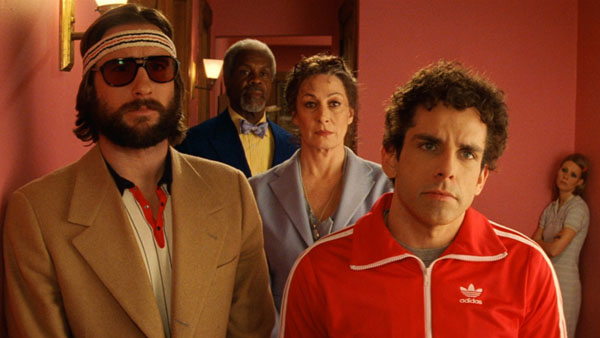
One can say that Wes Anderson is a master creator without implying that he is superior to other filmmakers. He is masterful in showing us that he is creating something, actively, onscreen–and moreover that we are creating it with him, in our reactions to it. He does this without seeming pretentious, overall. This video by Rishi Kaneria whips us through a cavalcade of Anderson’s films, showing off Anderson’s fascination with the colors red and yellow throughout the director’s work. Trying to assign a significance to the deep red of the carpet in the halls of the Grand Budapest Hotel, or the yellow of the Tenenbaum siblings’ tent, or the red of the curtain behind the awkward but confident Max Fischer is absurd. The deepest signficance is in the color itself–that Anderson has chosen it, and that he has left his mark on viewers’ retinas; the fact that it has personal significance for him should be all the "meaning" we need. Frustrated by this explanation? Don’t be. Watch this ever-so-brief but highly dense supercut, and enjoy.

WATCH: A Montage of the Sensuous Close-Ups in Paul Thomas Anderson’s ‘Boogie Nights’

WATCH: A Montage of the Sensuous Close-Ups in Paul Thomas Anderson’s ‘Boogie Nights’

The first time I saw Paul Thomas Anderson’s Boogie Nights, and the second, the sexuality which gives the film its essential underpinning didn’t make much of an impression on me. I was aware that vaguely lewd things were going on onscreen, and I suppose I should have been more interested in–if that’s the right way to phrase it–Roller Girl’s proud nudity, in Amber Waves’s sad sexuality, in Dirk’s Diggler, but really, I wasn’t. In all honesty, the appearance of the film was more interesting to me–its flash, its swagger, its Scorsese-esque movement–than its insight into the porn world, or its sexual excesses. That may have been the point, but it’s a little hard to say, in Anderson’s case, because so often his films revel in the depths to which they penetrate, and sexual over-indulgence is certainly one color in his palette, as Press Play has indicated previously. Nevertheless, given that, the close-up shot is an effective tool for Anderson–perhaps just as effective as the long shot. What’s interesting is what Anderson does with the technique: rather than using it for suspense, or to drive narrative, he’s trying to force us to look at something, really look at it, and perhaps get lost in its strangeness for a while. The object could be a camera lens, a cup of coffee being poured, a zipper: regardless, Anderson drives us inward. And we find, as this excellent, if spontaneously executed, montage by Justin Barham shows, that the journey can be very exciting indeed.  

Watch: The 2015 Oscar Nominees in Their Early Roles: A Video Homage

Watch: The 2015 Oscar Nominees in Their Early Roles: A Video Homage

We are, at times, blissfully naive about our favorite actors. It’s easy, when watching someone perform brilliantly onscreen, to imagine that they sprang forth fully formed, talents intact. And yet… this new Flavorwire video on the 2015 Oscar nominees by Jason Bailey indicates otherwise. Exhibit A: Julianne Moore in Tales from the Darkside: The Movie (1990). Exhibit B: Michael Keaton, on the show Mary Hartman, Mary Hartman (1977). Exhibit C: Patricia Arquette on the show thirtysomething (1990). And the list goes on. Robert Duvall, Mark Ruffalo, Ethan Hawke, Eddie Redmayne, Keira Knightley… All of these actors had to start somewhere–and it’s fascinating to watch the transformation-in-reverse in this video.

WATCH: A New Sleater-Kinney Music Video Featuring the ‘Bob’s Burgers’ Cast!

WATCH: A New Sleater-Kinney Music Video Featuring the ‘Bob’s Burgers’ Cast!

It’s entirely conceivable that you’re a Sleater-Kinney fan. The band’s fan-base has expanded considerably since Carrie Brownstein’s star turn on hit TV show Portlandia.  It’s also conceivable that you’re a fan of Bob’s Burgers, the show we raved about here not so long ago. If both these things are true, you’ll love this new music video for the song "A New Wave," from their newest album No Cities to Love. The video brings these two pillars of our culture together in Tina Belcher’s bedroom–which makes sense if you know anything about Tina, or about growing up. So: why not take a minute, put on some flannel, and press play? 

Watch: A Video Essay on Satan in Film History

Watch: A Video Essay on Satan in Film History


…horror and doubt distract
His troubl’d thoughts, and from the bottom stir

The Hell within him, for within him Hell

He brings, and round about him, nor from Hell

One step no more then from himself can fly

By change of place… 

—John Milton, Paradise
Lost
, Book IV 

The character of Satan seems far more appealing to
filmmakers than the character of God. This may be for reasons of propriety: one
should not, perhaps, make too many images of God. But since when has Hollywood
cared about anything other than money and stardom? God isn’t any good for
either. Omnipotence is just too boring.

There are devils in most films, because most films are
melodramas of one sort of another, and no melodrama works very well without
some embodiment of evil. But Satan himself (or herself or theirself or anyself
— Satan, like every angel, fallen or not, is any gender and every gender) is a
less common figure. One of the most powerful Satanic representations in film
history wasn’t even technically of Satan: it was Mephistopheles in Murnau’s Faust, still one of the most visually
interesting portrayals of satanic power. 

The problem with portraying Satan is that it is difficult to
capture the full horror he is supposed to be capable of. Less is more: the
films that go for gothic bombast tend to end up causing laughter more than
horror. Satans with horns and tails are downright goofy, and rarely appear in
anything except broad (and usually unfunny) comedies. 

But the Satans that seem most human — the Satans that
reflect the satanic desires we ourselves carry within us  — those Satans can dig deep into our
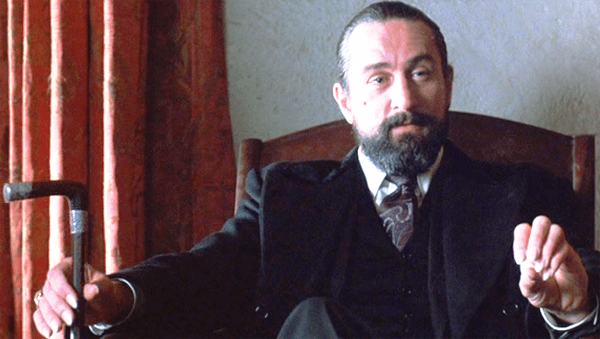
nightmares. I’ve never forgotten Robert DeNiro in Angel Heart since I first saw the movie as a teenager. DeNiro was a
truly frightening Satan not just because he’s a great actor, but also because
he’s a great actor who’s played Satanic humans such as Travis Bickle in Taxi Driver. These days, it seems to me,
the most Satanic character on our screens is Mads Mikkelsen’s Hannibal, who
vividly, frighteningly captures the charisma that still exudes from the pages
of Milton’s Paradise Lost, about
which scholars still argue whether Milton was, as William Blake insisted, “of
the Devil’s party.”

Given the horror available around the world every day,
perhaps we hold no real fear of Hell, and so no real fear of Satan. What could
Satan do that humans don’t already do to each other all the time? Filmmakers
seem to have realized this, and thus the relative rarity of seriously scary
Satans. We are more horrifying than any of our myths or fantasies. Anything
ascribed to Satan is something a person has already imagined.

The devil is a human dream, a dream of the human, and that’s
what makes him frightening.

WATCH: An Animated Interview with Lou Reed, Talking Trash, Reigning Supreme

WATCH: An Animated Interview with Lou Reed, Talking Trash, Reigning Supreme

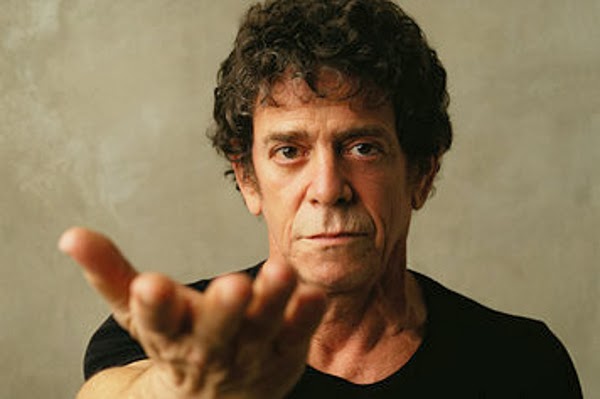
The day that Lou Reed died was a sad day for me, not only because of my admiration for his music, but because he represented a certain kind of toughness and irascibility in rock musicians that is not necessarily reproduced in the ill-conceived brashness of today’s younger stars. This interview, animated gorgeously by Patrick Smith for PBS, in a style which is appropriate for the restless intellect of its subject, shows us Reed in 1987. The Velvet Underground hero is in a state of high dudgeon, or perhaps what amounts to standard dudgeon for him. The piece is full of quotable quotes, of which my favorite, for its directness and not for its sentiments, is: "I never liked the Beatles, I thought they were garbage." 

WATCH: A Video Essay Based on a New Book about Wes Anderson’s ‘The Grand Budapest Hotel’

WATCH: A Video Essay Based on a New Book about Wes Anderson’s ‘The Grand Budapest Hotel’

If there were an Endowed Chair in Wes Anderson studies, Matt Zoller Seitz would probably occupy it. The man has immersed himself as thoroughly as one might conceivably immerse one’s self in the director’s work for untold years, and two great books have come out of it: The Wes Anderson Collection, a remarkable survey of Anderson’s work, and now a supplementary volume devoted solely to The Grand Budapest Hotel. This video essay for RogerEbert.com, which is based on the new book, is in and of itself a master class, of sorts, thanks to the collaboration of Seitz and expert video editor Steven Santos. If you ever wanted to know how to time a voice track over film clips in a video essay, watch this piece. If you ever wanted to know how to avoid saying too much in a video essay, watch this piece; Seitz says quite a bit with a remarkably economical script. And, if you ever wanted to know how to teach others how to appreciate a director’s work, watch this piece: Seitz’s enthusiasm for Anderson’s films, particularly this one, fed by admirable scholarship, is infectious.

Watch: A Video Essay on Guillermo del Toro’s Colors

Watch: A Video Essay on Guillermo del Toro’s Colors

In the work of Guillermo del Toro, color is as important as fantasy; the director has the color sense of a Van Gogh or Rembrandt, merged with an imagination worthy of H.P. Lovecraft, Italo Calvino, and Luis Bunuel all rolled into one. This video essay by Kian Lanares is a luxuriant walk through some of Del Toro’s lush creations, moving from early films like Cronos or The Devil’s Backbone through such later films as Pan’s Labyrinth, or the Hellboy series. The stories told in these films are, at times, somewhat light, but the coloration is so intense and so nourishing that it tells a story which might contradict the plot on screen, much as if a composer took the basic notes of "Mary Had a Little Lamb" and cast them with ominous, deep chords. In any event, this piece is a well-composed delight, both intellectually and visually.

WATCH: A Video Essay about Faith and IDA

WATCH: A Video Essay about Faith and IDA

**ALERT: This video essay contains spoilers.**

The title of this piece, "Framing the Faith of IDA," is appropriate: when watching Pawel Pawlikowski’s film, the element that stands out most is, indeed, the visual framework. Walls. Roofs. Squares. Diagonals. Triangles. Rectangles. These shapes merge and conspire to press downwards against the film’s heroine, as she, in turn, frees herself (if only momentarily) from the constraints of faith, or at least finds out what life is like on the other side of it. Steve Vredenburgh’s video essay for the Brehm Center neatly takes apart structural elements of the film, such as the differences in characters’ clothing, or the film’s drab colors, and examines the ways in which they support this dramatic, strange, unforgettable film’s exploration of the hazards and benefits of faith.