Watch: 88 Films, 88 Rude Awakenings: A Video Tribute

Watch: 88 Films, 88 Rude Awakenings: A Video Tribute

You’re being chased. You’re being strangled. You’re lost in a maze. You’re running through the jungle. A lion is after you. A bear is after you. Two bears are after you. You’re falling off a cliff. You’re being hit by a car. You’re about to be hit by a car. You’re being smothered. You’re being punched. The walls are closing in. There’s no escape. And so what do you do? 

You wake up, with a start. You scream. It’s all a terrible, terrible dream.

This supercut by Roman Holiday, running at just under 2 minutes, shows 88 scenes of such "rude awakenings," in films ranging from ‘Vertigo’ to ‘The Matrix’ to ‘Pulp Fiction’ to ‘The Manchurian Candidate’ to ‘Pee-Wee’s Big Adventure," with the unlikely but strangely appropriate Vivaldi composition ‘Winter’ in the background. Take a look at this piece, and see if it jolts you awake…

Watch: Was Luis Buñuel a Fetishist? A Video Essay

Watch: Was Luis Buñuel a Fetishist? A Video Essay

The question of the hour! Was Luis Buñuel a fetishist? Quite possibly. As you watch the array of feet, fancy shoes, lingerie, stockings, and other typical objects of fetishism drift through this lovely video essay Cole Smithey recently made for Criterion, it would be hard to think he was anything else. And yet what about that, in his work? Are these semi-prurient images from such great, frustrating films as The Phantom of Liberty or Belle de Jour meant to be satisfaction of the viewer’s depraved cravings or are they, in fact, studies of these cravings? Is each fetish meant to be seen in quote marks, as a commentary on humans’ uncontrollable impulses? It will probably be best for you to watch this short piece, to the tune of the Hallelujah chorus, and decide for yourself.

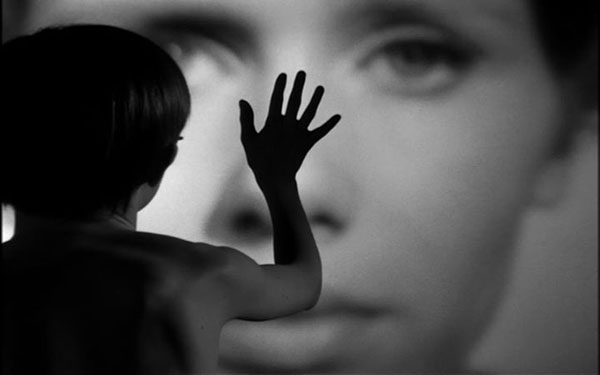
Watch: 29 Movies Shaped by (and Preceding) Ingmar Bergman’s ‘Persona’: A Video Essay

Watch: 29 Movies Shaped by (and Preceding) Ingmar Bergman’s ‘Persona’: A Video Essay

The influence of Ingmar Bergman’s Persona is legion. Using 29
other films, this essay positions his masterpiece in terms of what came after
it and what went before. It shows how Bergman visualized his central theme of identity
by way of reflections, splitting the screen, and shadows.

Films Referenced in This Piece:

Poltergeist (Tobe Hooper, 1982)
Persona (Ingmar Bergman, 1966)
Orphée (Jean Cocteau, 1950)
The Truman Show (Peter Weir, 1998)
Shadows (John Cassavetes, 1959)
Mulholland Drive (David Lynch, 2001)
The Talented Mr. Ripley (1999)
Don’t Look Back (Marina de Van, 2009)
Don’t Look Now (Nicolas Roeg, 1973)
Apocalypse Now (Francis Ford Coppola, 1979)
Vertigo (Alfred Hitchcock, 1958)
Performance (Nicolas Roeg, Donald Cammell, 1970)
Stardust Memories (Woody Allen 1980)
Old Boy (Park Chan-wook, 2003)
The Double Life of Veronique (Krzysztof Kieswlowski, 1991)
The Tenant (Roman Polanski, 1976)
Talk to Her (Pedro Almodovar, 2002)
The Crying Game (Neil Jordan, 1993)
Dead Ringers (David Cronenberg, 1988)
Minority Report (Steven Spielberg, 2002)
Les Biches (Claude Chabrol, 1968)
Black Swan (Darren Aronofsky, 2010)
3 Women (Robert Altman, 1977)
Angel Heart (Alan Parker, 1987)
Splice (Vincenzo Natali, 2009)
The Silence of the Lambs (Jonathan Demme, 1991)
Fight Club (David Fincher, 1999)
Heat (Michael Mann, 1995)
Dr. Jekyll & Mr. Hyde (Victor Fleming, 1941)
Psycho (Alfred Hitchcock, 1960)

Watch: A Video Essay That Breaks Down the Beatles Film ‘A Hard Day’s Night’ Shot By Shot

Watch: A Video Essay That Breaks Down the Beatles Film ‘A Hard Day’s Night’ Shot By Shot

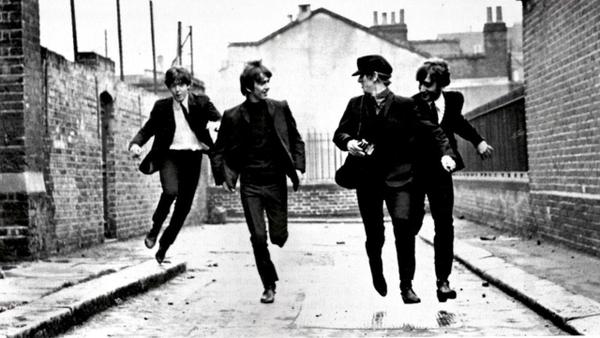
It’s easy enough to take The Beatles for granted: Oh, them. Of course. I’ve heard it all. Hey Jude. Help. Let It Be. Here Comes the Sun. Sure. They’re great. Whatever. Part of the reason one does this so easily is that their music is engrained within many listeners’ ideas of what constitutes good music, whether the listeners know it or not. We compare every soulful ballad with "Hey Jude." We compare every punk anthem, believe it or not with "Revolution." And, as time passes, it begin to seem as if this is not by accident: we become ever more aware of the ways the band shaped its image with the express purpose of permeating the music of an era, of making themselves into legends. This is no less true of such great Beatles films as Yellow Submarine, Help!, or A Hard Day’s Night; they set a high bar for the films of their type that followed, such as Pink Floyd’s The Wall or Tommy, and it’s not clear that these films have ever measured up. In his most recent video essay for Fandor, Kevin B. Lee uses cinemetrics, a technique he’s used before, to better understand the way the opening sequence of A Hard Day’s Night works; is it true that the opener shows the band seemingly at war with an ocean of fans, or is something else going on? Lee uses frames (labeled cleverly as "Beatle Cam," "Paul Cam," or "Fan Cam") to show the screen time given to all of the different players in the sequence–and in so doing, he teaches us something about the way the film is put together. While it might seem as if the struggle between the band and its admirers is perpetual, in fact the fans take up a fraction of the screen time the band takes up; the worshippers’ presence here is slight but powerful. In examining the film this way, Lee gives us a very significant insight into the way the band constructed the larger-than-life, eternal impression it made on fans worldwide.

Watch: What Does A Graphic Designer Do? These Films and TV Shows Won’t Tell You…

Watch: What Does A Graphic Designer Do? These Films and TV Shows Won’t Tell You…

If you watch enough films, you begin to see where filmmakers’ creativity flags. There’s the aerial shot of wooded landscapes that often precedes films of suspense; there’s the rock music that blasts in first-day-of-school scenes during teen comedies; there’s the ubiquitous shot of someone waking up and slapping an alarm clock right after the opening credits have finished. And, when someone is asked what their job is, it’s often… "graphic designer." This job title has popped up in many films, from Prelude to a Kiss to Friends to Girls to Parenthood to Juno, and yet do we learn what the job entails? Not really. Is it a good job? Not sure. Does it fill out the script? Yes it does. This funny supercut by Ellen Mercer and Lucy Streule fills us in–or doesn’t–on the recurrence of this job, from the small screen to the big screen. Enjoy!

Watch: The 30 Saddest Scenes in Recent Movie History: A Supercut

Watch: The 30 Saddest Scenes in Recent Movie History: A Supercut

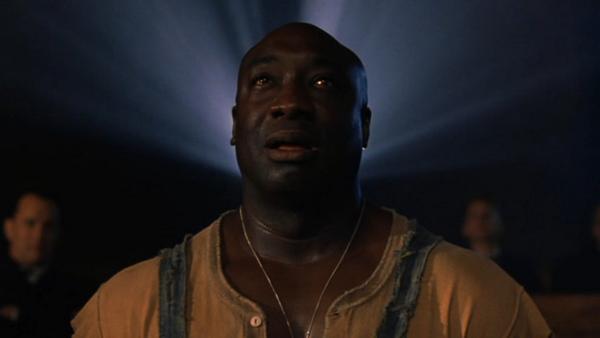
I have only cried during two movies. The first time was during Ingmar Bergman’s Shame, when I was 13, and the other was during Mark Romanek’s Never Let Me Go, almost 30 years later. The first tearful outburst was, perhaps, my fault. My parents were attending a local screening of the film, and they decided to bring me along, a decision primarily inspired by my avowed passion for foreign films. In this case, my passion was driven by the film’s R rating, catnip to my cinephilic tendencies. Also, I was, after all, 13, and I had used my understanding of cinema to determine that an R-rating might mean any number of things would appear on screen. Nudity? Sex? Shocking violence? The sky was the limit! What excitement! I felt proud of myself for having eased my way into the film so cleverly. But: Was there nudity? Was there sex? Was there wrenching violence? Not so sure. What did happen was that, near the end of the film, the two main characters ate some poison berries and killed themselves, on a boat in the middle of the ocean, having lost all of their possessions. Needless to say, this wasn’t what I was expecting. Tears followed, along with profound disappointment. Anyhoo, the second movie I cried during, and I mean really sobbed, was Never Let Me Go, Romanek’s 2010 adaptation of Kazuo Ishiguro’s heartbreaking and rashly dystopian novel. Many of the characters in the film were facing having all their organs removed for a massive cloning experiment, and something about the low-key despair of the film brought many deep sobs out of me. In fairness, I cried while reading the book too. Invenire Films has created a compendium of movie scenes from recent years that, for one reason or another, might have caused viewers to weep. Many great films are here–The Shawshank Redemption, Saving Private Ryan, One Flew Over the Cuckoo’s Nest–clipped together in a frenzied way that nevertheless pays due homage to the poignance of the original works. The collection raises a question: what is it, exactly, that makes us cry while watching a film? Usually, it’s over-empathy. When a drama is powerful enough, or confident enough in its methods, you forget it’s a drama, and some part of your mind begins to believe that the events in the film are happening to you. At moments of victory, you feel exhilarated; in moments of rage, you feel your blood pressure rise. And at moments of great sadness, you may cry because you can’t see how to avoid confronting the problems characters are wrestling with–and you think things may not get better. You know they will internally, but the terms of your viewer’s contract with the film won’t let you do anything but cry, as if you might never stop.

Watch: A Video Essay on How To Be a Cinephile

Watch: A Video Essay on How To Be a Cinephile

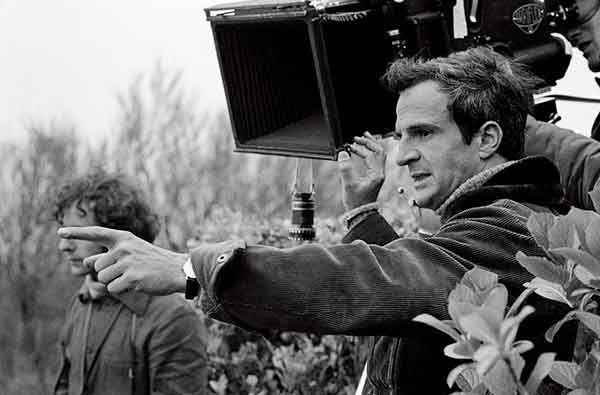
Am I a "film nerd," or cinephile? Possibly, or probably. My earliest experiences of film were at a very young age, with Fisher-Price filmstrips you could watch in a small viewer, and which I tended to watch over and over. Fast forward a decade or so, and foreign films entered in: Ingmar Bergman. Federico Fellini. Werner Herzog. And, very importantly, Truffaut. This open-hearted video essay by Shannon Strucci instructs the viewer on how to be a cinephile; this part of what will be a multi-part series focuses largely on the work of Francois Truffaut, starting with his work as a critic for Cahiers du Cinema and moving forward to his immortal film work. I could not be happier about the deference Strucci shows to The 400 Blows, a film I have always found fascinating from beginning to end–and which, if I’m allowed to indulge a cliche, "speaks" to everybody, to universally felt moments of pain and triumph. There are times, after all, when all you can do is run, as Antoine Doinel does–either into the distance or into the ocean of film itself.

Watch: David Fincher’s Eternal Return in ‘Gone Girl’: A Video Essay

Watch: David Fincher’s Eternal Return in ‘Gone Girl’: A Video Essay

Ah, the eternal return. History repeats itself. We think we change, but we don’t. You think someone may surprise you with unpredictable behavior–and then they don’t. Gone Girl is a perfect film to demonstrate this historical and, at bottom, psychological tendency; the most consistent thing about both Nick Dunne and Amy Dunne is their duplicitousness, and we keep seeing it over, and over, and over again throughout the film. And, as Jop Leuven points out in this brief but pointed video essay, the film’s visual structure mirrors this repetition; we see the same shots, with slight variations, repeated from the beginning to the end of the film. Amy lying on a pillow. Nick standing in front of a picture of his wife. Amy opening a door with mock innocence. And onwards. David Fincher is a master explorer of the works he adapts; he gets under the hood, assesses their potential, and, after a little bit of tinkering, takes us through them with such brio that the work he is adapting is utterly transformed. His adaptation of Gillian Flynn’s brilliant novel is no exception, as this video proves.

WATCH: Alejandro González Iñárritu’s Cinema of Self-Awareness: A Video Tour

WATCH: Alejandro González Iñárritu’s Cinema of Self-Awareness: A Video Tour

In Shakespeare studies, the term anagnorisis means a moment of self-recognition, when a character becomes blazingly aware of his or her place in the world, and of his or her relationship with other characters, after a long period of denial. Hamlet, Macbeth, King Lear, and Othello are practically bursting with anagnorisis; the central figures of these plays cannot withstand the truth about themselves and, watching them, we cannot withstand it either. The films of Alejandro González Iñárritu have anagnorisis to spare, as well. It does not always have to be tragic: Riggan Thompson’s (Michael Keaton) flight in Birdman is an example. However, in the films of this director, more often than not, anagnorisis signifies the shouldering of a weight one did not think one could bear: see Richard’s (Brad Pitt) moment of reckoning with his wife’s injury in Babel, or Jack Jordan’s (Benicio del Toro) tragic glance within himself in 21 Grams. Edgar Martinez’s beautiful video flight through Iñárritu’s work calls up these moments and thrusts them out for our attention. When presented in such an open manner, it is hard not to recognize Iñárritu’s strength as a storyteller, whatever what one might think of him as an overall filmmaker.

WATCH: A Video Essay on Shadows Through Cinema History

WATCH: A Video Essay on Shadows Through Cinema History

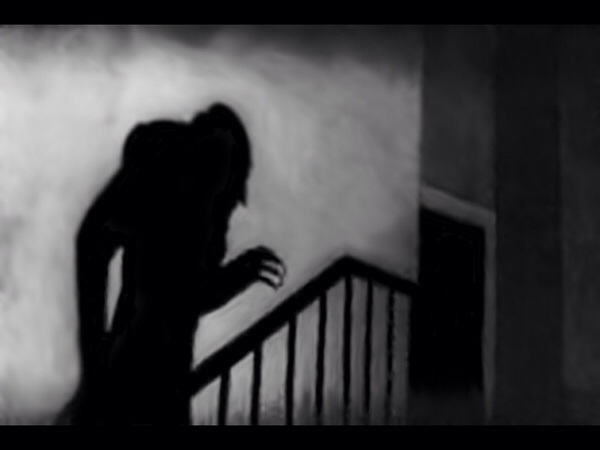
Shadows are a natural part of any given scene in a film–when the subject or an object interrupts a light source, an area of darkness is created.  But what happens when the shadow itself becomes the subject?  What happens when the darkness on the face of a character is something more than just the absence of direct light?  These types of shadows can communicate a variety of different tones and ideas. 

In ‘No Country for Old Men,’ Sheriff Ed Tom Bell opens the motel door to engage in what would be the climactic final shootout in a more traditional western.  The door slowly swings open, revealing the shadow of an iconic cowboy on the opposite wall. We see what Bell needs to be–something he simply cannot.  In ‘Raging Bull,’ the weight of Jake LaMotta’s imprisonment is expressed through the exaggerated, intruding shadows in his cell. His mental imprisonment becomes as apparent as his physical captivity.  In ‘There Will be Blood,’ a train moves across the sunset, creating a ripple of shadows on the face of the observing Daniel Plainview.  A train, the vehicle that both brought his son home and took him away, obstructs the direction of his progress. 
While many shadows in cinema are simply a complement of lighting, the very deliberate and thoughtful shadows in this video convey everything from fear to empowerment–from the empty to the iconic. 

Films used:
Nosferatu
Frankenstein (1931)
The Cabinet of Dr. Caligari
Raging Bull
Psycho (1960)
The Big Combo
Scarface (1932)
Rumble Fish
Sin City
Sin City: A Dame to Kill For
No Country for Old Men
Django Unchained
Raiders of the Lost Ark
Lawrence of Arabia
Punch-Drunk Love
Unbroken
The Thin Red Line
The Tree of Life
To the Wonder
The Assassination of Jesse James by the Coward Robert Ford
Forrest Gump
Drive
The Girl with the Dragon Tattoo
Jennifer’s Body
Unforgiven
The Big Lebowski
Skyfall
Apocalypse Now
Batman (1989)
The Dark Knight
Under the Skin
Inglourious Basterds
Only God Forgives
Strait-Jacket
Batman Returns
Man of Steel
Blade Runner
Pulp Fiction
Dallas Buyers Club
There Will be Blood
12 Years a Slave
Black Swan
V for Vendetta
Memento
Inside Llewyn Davis
Kill Bill Vol. 1
True Romance
The Departed
Panic Room
The Aviator
The Hurt Locker
Double Indemnity
The Man Who Wasn’t There
Shutter Island
The Godfather Part II
Lincoln
Batman Begins
Magnolia

Jacob T. Swinney is an industrious film editor and filmmaker, as well as a recent graduate of Salisbury University.