The Axis of Cool in DRINKING BUDDIES, and How It Tilts

The Axis of Cool in DRINKING BUDDIES, and How It Tilts

null

Warning: This piece contains aggressive and open use of spoilers. In fact, spoilers are crucial to the piece. So, if you don’t want to hear about the surprise ending, where everyone leaves on a bal–oops. Never mind.

In the late 1980s, radio commentator Ian Shoales said he didn’t like The Big Chill‘s characters because he was positive none of them would have been friends with him in high school, or words to that effect. The four friends who form the center of Drinking Buddies, though not unlikeable, give off a similar whiff of coolness—so much so, in fact, that they resemble archetypes of young, urban hipsters. This is only worthy of mention, really, because coolness, or its lack, is a defining part of the film, and where each character falls on the film’s coolness axis at any given moment in the film is inversely proportional to that character’s ability to resonate with the unassuming, unsuspecting audience member.

Two of these four confused lovers work at a microbrewery, a perfect fit for them. The microbrew has long been an acknowledged emblem of hipsterhood, regardless of how many knit-capped gals and fellas might clutch Pabst Blue Ribbon 16-ouncers in however many over-crowded performance spaces these days. The brewery provides a perfect Petri dish in which cool affectations can grow and flourish—as when Kate (Olivia Wilde) wears sunglasses at work all too frequently, perhaps to hide hangovers earned after nights spent drinking with friends, but perhaps not. Wilde is comfortable and calm in this role—it’s not a complex part, at first blush, but she uses it to occupy the screen effectively, in the best sense of the word occupy: to inhabit, to live in, to stretch out within. Her friend Luke (Jake Johnson) should be a familiar figure to anyone who’s ever eaten in a gastropub, or been to a show in a hipster deposit area such as Williamsburg, Brooklyn—he has an artfully sloppy beard, he wears a gimme-cap indoors and outdoors, he likes building bonfires (a time-honored hipster ritual), and the company he keeps (artists and other clean-cut, well-spoken types) doesn’t match his folksy exterior. He’s on roughly the same high point of the coolness axis as Kate, for most of the movie. Most of it.

Kate’s boyfriend, Chris (Ron Livingston), is at the other end of that axis, as is Luke’s girlfriend, Jill (Anna Kendrick). Chris seems to be a writer, of some kind, though it’s not clear what type. Livingston is masterful here; Chris has an ingrained arrogance about him which he tries to cover up with a rustic, outdoorsy, wholesome affect, but can’t, quite, and it’s easy to sympathize with his failure. Uncool gestures issue from him like a series of violent sneezes he is helpless to control. In one particularly poignant moment, he lends Kate a copy of Rabbit, Run, a notable misstep, given that John Updike, apart from being one of America’s great prose stylists, was a master of near-pornographic sex scenes in which female characters were almost always objects, rarely subjects. Jill, also, is a wonderfully awkward special education teacher and artist; Kendrick is miles away, in this film, from her breakout role as the malfunctioning corporate drone in Up in the Air, spending her off-hours here making dioramas. When the film requires Jill to step outside of her comfort zone, to handle the possibility that she might have done something devious, she can’t—and all we can think of is that Kate would have handled a similar challenge with far more poise and, yes, cool. We can’t be sure if this is a good thing.

So what happens to rock the apple cart? These characters drink, a lot, as a rule. When you take them out of Chicago and into the woods for a weekend retreat near a beach, well . . . what do you think’s going to happen? Boundaries are crossed: first one, and then the other, and at the end, who breaks up? Kate and her boyfriend. All in all, this isn’t surprising; Chris doesn’t have much of a chance, here, among Kate’s crowd, and he knows it, which is why, after the weekend’s events, he calls things off. What tilts the film in Kate’s favor, though, is the facial expression she makes before Chris is about to break up with her, when he says, in simple terms, that they have to talk; she mashes her lips, and she grimaces, and we know, at this moment, that she’s really feeling something, that she’s reached the antithesis of cool. When is Jill’s uncool moment? Most of the movie, perhaps, but most notably when she returns early from a tropical vacation, crying because she’s done wrong by her man, Luke, and the honest girl inside her can’t stand the thought of it. And Luke? Luke collapses when, after helping Kate move, ripping his hands up on sofa nails, and getting into a fist fight with a stranger over parking, he can’t get Kate to spend time with him alone. The gimme cap, the beard, and the down-to-earth affect help Luke very little here, and he knows he’s whipped; when she suggests they hang out with friends, he makes fun of her, but he ultimately has to leave, his mimicry coming across as empty whining more than anything else. At these moments, the film casts an anchor out, and it hits bottom; we know, after waiting patiently, that we are in the presence of humans. It’s reassuring. 

Joe Swanberg, as has been duly noted elsewhere, is building a portrait of a generation with his body of work. You’ve been next to these people at the grocery store, you may have ridden on subways with them, you’ve seen them at certain movie theaters, you’ve most definitely seen them at coffee shops. It’s easy to imagine that, as Swanberg’s films expand in scope, the crisis his characters face, the crucial question—can my plaid, my organic coffee, and my iPod survive my larger life crisis?—will become a more and more resounding issue, until it’s almost deafening. This is a moving, coherent film that could communicate to viewers at any point in the coolness spectrum—the question is, how far is Swanberg willing to depart from that frame of reference to tell a story?

Max Winter is the Editor of Press Play.

Pablo Larraín’s NO: A Movie That Says Yes To Itself

Pablo Larraín’s NO: A Movie That Says Yes To Itself

 
null
 

The Chilean film No, written and directed by Pablo Larraín, is up for a foreign film Oscar this year. I hope it wins, if only to bring attention to an extraordinary film by an increasingly sophisticated director. We’ve seen a lot of films about the interplay of politics and advertising (starting with 1972’s The Candidate) and maybe more films that interweave drama and documentary elements, so that it’s hard to tell where one ends and the other begins. No is both of these kinds of films rolled into one, but with a very specific political focus, a unique energy, and an inscrutable core that makes it linger in the mind.  

An adaptation of the play El Plebiscito, written by Antonio Skármeta, No is set in 1988. The country is less than a month away from national plebiscite (referendum) to determine whether military dictator Gen. Augusto Pinochet will continue to rule Chile, as he has since displacing Allende in a 1973 coup, or if the country will transition to democracy. The vote is a simple “Yes” or “No.” The opposing sides are each given 15 minutes of national TV time each night to make their cases, spread out over 27 days. Ad man René Saavedra (Gael Garcia Bernal) is the head of a team creating content to sell the “No” option. He has the bright idea to ignore or downplay the country’s recent history of murder, torture, disappearances, and other political skullduggery, instead fashioning a campaign that sells an abstract notion of democracy synonymous with happiness or faith in the future; his version of this campaign is indistinguishable from an ad we see him creating at the start of the film for a brand of cola. The guy knows how to sell, and this time he’s selling democracy. Democracy as promise. Democracy as product. 

Because Saavedra is the son of a reviled Pinochet foe and has spent many years outside of Chile, he doesn’t have the direct experience of trauma that many of his colleagues have; he’s also a bit of a man-boy dreamer character, quiet and opaque and emotionally arrested. This turns out to be a huge benefit, though, because it enables him to talk down others who insist that the “No” contingent’s airtime should be filled with direct engagement—with political and history lessons, for instance, or a segment in which the mothers of the “disappeared” talk about their experiences, or an interview with an official who’s an expert on the regime’s thug tactics, and so forth. Anything smacking of reality, or reminding people too keenly of the pain the country has suffered, might have backfired. This aspect of the movie reminds me, oddly, of Spielberg’s Lincoln, which is partly about the necessity of downplaying or even compromising one’s own moral fervor in order to make progress for one’s cause—to win a battle rather than lose a war. This movie shows the effect of advertising on the viewer very pragmatically, touching emotions and creating needs that weren’t there before, and appealing to dreams and fantasies. Mad Men fans will appreciate the aesthetic strategy sessions (Don Draper’s line about how romance was invented so guys like him could sell nylons popped into my head more than once), and the very direct, often painful scenes in which people recounted personal experience with political terror reminded me of scenes from certain Ken Loach films, where the film puts the brakes on the plot and lets characters work through philosophical and moral positions in all their messiness. 

I really love this movie. I recommend it to students of advertising, social revolution and film form. Larraín—who has directed two other films about 70s-80s Chilean political history, and was just 12 when the plebiscite took place—has Oliver Stone’s facility for mixing documentary footage with docudrama re-creations (the entire movie was shot with 1980s TV news equipment) and Steven Spielberg’s somewhat mysterious, at times unnerving sunniness. It’s a warm film with a rather cool question mark of a man at its center. Saavedra doesn’t seem terribly happy, or even particularly satisfied, unless he’s working or playing with his 12-year old son, one of two people who seem to really matter to him. The other such person is his estranged wife Verónica (Antonia Zegers), a political activist first seen getting the crap kicked out of her by riot cops. There’s a hint that Saavedra is dedicated to the “No” campaign partly because he wants to win back his wife’s love—at times his affection for her resembles that of a little boy toward his mother, a notion furthered in a wonderful moment where she goes to embrace her son, who’s sleeping on his father’s shoulder, and the shot is framed so that her terms of endearment seem to be directed toward Saavedra. But the movie never boldfaces any of this; it’s just a tantalizing hint of a character explanation, like the repeated shots of the hero blissfully riding a skateboard through the city, and the shots of him working on commercial campaigns (including a James Bond-like ad for a soap opera) that seem to be of nearly equal importance to him. Maybe he just loves a challenge? Maybe he’s just obsessed with whatever’s next? We don’t know, and it’s better that we don’t know.

Certain moments and shots seemed very Spielbergian to me, particularly the backlit, often blown-out shots of the hero wreathed in a nimbus of sunlight (like some sort of holy fool) and the repeated images of the hero playing with his son’s electric train set (Close Encounters). One of the latter scenes leads to a wonderful, knowing joke: Saavedra lies down on the floor of the playroom with the back of his head held just above a length of track, and the approaching toy train seems to go into one of his ears and out the other! It’s as if the movie is saying, “Only such an arrested adult could have come up with exactly the solution that was needed during this incredibly difficult historical moment.” Or to quote an “old Vulcan proverb” from one of the Star Trek films, “Only Nixon could go to China.” 

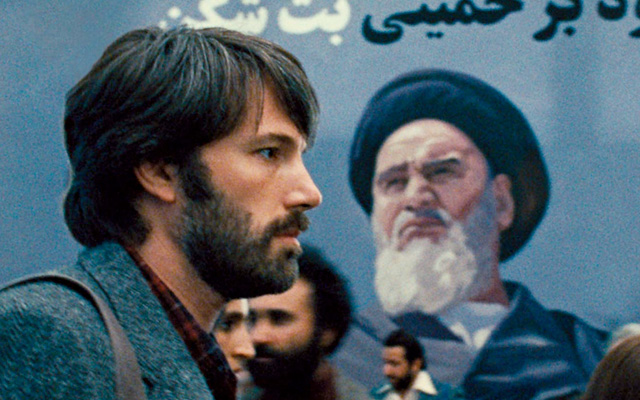
Is the movie saying that had the “No” campaign had been any more mature, Pinochet might have ruled for much longer? I think so. The movie doesn’t adopt a morally superior position toward this, however, or endorse it; it just raises as more of a hint of a theory than a critique and then lets it hang there, nagging at you and prompting reflection. The notion that advertising is an essentially sub-rational, in some ways sinister industry isn’t new, nor is the idea that certain political outcomes can be achieved by appealing to fantasies that might or might not have anything to do with the pressing matters at hand. But somehow No puts them together, along with some very subtle and sophisticated integrations of documentary reality and drama, in a way that both entertains and provokes. This is the movie I kept hoping Argo would turn into, honestly. Not that Argo isn’t a good movie — it is! — but it lacks the nerve or intelligence to really delve into the fantasy/reality matrix that its story quite naturally creates. No says yes to doing that, and is the richer for it.

Matt Zoller Seitz is the co-founder of Press Play.

Ramble On: THE HOBBIT: AN UNEXPECTED JOURNEY

Ramble On: THE HOBBIT: AN UNEXPECTED JOURNEY

null

From one perspective, it’s ironic that the film adaptations of J.R.R. Tolkien’s Lord of the Rings books have been so successful; they owe their success to technological progress, and yet an argument against such progress is one of their underlying themes.

Rambling along country roads in England, for instance, was much better in the past. Back then, as you meandered about, puffing on a brier pipe, the world was a sunny paradise. Birds chirruped; cows chewed cud contemplatively; and portly farmers grunted surly, friendly greetings. These days, some chump in a Land Rover will no doubt mash you into the nearest clump of gorse, upbraid you in crude “estuary” English, and speed off.

In Britain during the past century, there was no shortage of people who could tell you how things were sliding downhill, fast.  The past was better, merry, mirthful; dirtier in some respects, but good, honest dirt for all that. And we, with our plastic flowers and cement grass, have left our soul behind in yonder merry medieval ditch.

I have always found this narrative fairly hard to fathom. Tooling around in medieval times, wooing the odd damsel, and banging out a few ale-drenched Chaucerian stanzas may sound great fun, but on closer examination of only a few historical statistics, the Chaucer and the damsels pale into insignificance. Fact is, if you were around in ye olden days, you would probably be dead, since child mortality rates were astronomical. Other illnesses were so little understood, they didn’t even have the right names! (Anyone for the bloody flux?)

The reverence for a supposed golden age ruined by progress is a recurring theme in human history. The Romans had it, no doubt the guys before the Romans had it too. J.R.R. Tolkien, whose children’s story The Hobbit has now been adapted to the screen as a trilogy by Peter Jackson, also subscribed to this philosophy, along with his contemporaries, G.K. Chesterton, Hilaire Belloc, Dorothy L. Sayers, and C.S. Lewis. As the twentieth century progressed, Tolkien would be embraced by the alternative society as a sort of prophet of doom, accurately predicting the harrowing bleakness wrought by modernity.

To this day our hemp-wearing chums will knowingly roll their eyes and talk—at length—about Tolkien’s prophetic abilities (in theme, at least). Machines ravaged the earth only a handful of years after he wrote The Hobbit, in the carnage of the Second World War, they pronounce. But machines are operated by people. Human cruelty can be catalogued as far back in history as you want to go. The twentieth century has no exclusive rights on the charnel house.

And, most tellingly, neither of Tolkien’s books that have now been adapted into live-action features, The Hobbit or its cinematic precursor The Lord of the Rings, would have been possible without advancements in film production.  Both were turned into feature animations of varying success in the 1970s, and John Boorman had long planned bringing the latter to the screen in the same decade, but it was technological progress that allowed Peter Jackson, et al to successfully tackle such densely—and idiosyncratically—crafted works of fantasy. Jackson’s The Lord of the Rings trilogy was a rousing success, hugely popular with both audiences and critics, garnering billions of dollars at the box office, with the final film, 2003’s The Return of the King, sweeping the Oscars. Jackson and his films put the fantasy genre on film culture’s map.

Of course, it wasn’t always like this. Before Jackson’s trilogy, fantasy in film had been about as cool as a tweed g-string.  When I was young, it was, speaking bluntly, rubbish: fascinating for the Dungeons and Dragons set or habitual devourers of superhero comics, but to be avoided like the plague by people with any taste (I can say these things—I used to belong to the D and D set). But the Lord of the Rings films changed something, and people started talking about not just them, but also the fantasy genre, in hushed, awed tones. For better or worse, the genre and its fans owe a debt of gratitude to Peter Jackson and technological wizardry.

This tradition of marrying fantasy with high-tech hermetics and portentous narrative continues in The Hobbit: An Unexpected Journey, which promises to be the first part of a new trilogy, fashioned from a book that a particularly slow reader could devour in a lazy afternoon. Despite his initial protestations, Peter Jackson returned to the director’s chair vacated by Guillermo Del Toro, whose sole contribution seems to be an afterthought-like screenwriting credit. The Hobbit: An Unexpected Journey is a dense picture, but perhaps not as densely conceived as it could have been (the original plan only included two installments). It neither disappoints nor enchants. If anything, it leaves the viewer wondering what all the fuss is about Tolkien.

I have recently watched Fellowship of the Ring, and found it once again to be utterly delightful. It remains my favorite of Jackson’s Ring Cycle, mainly because I love the quaint, rather English scenes set in the Shire before the plot kicks in. The Hobbit, judging from its advance publicity, promised more of the same. And it delivers. To a point.

The Hobbit opens with not one but two prologues, the first showcasing how Erebor, the greatest dwarf kingdom in Middle Earth, was overtaken by the treasure-hungry dragon Smaug, forcing the dwarfs into a nomadic existence. The second works, assumingly, as a bookend to the earlier films and a narrative device connecting them to The Lord of the Rings, as old Bilbo Baggins (Ian Holm) sits down to write his memoirs. This takes us back to sixty years previously, when Gandalf, once again played by Sir Ian McKellen, who knocks on the younger, and much more timid, Bilbo’s (Martin Freeman) door to enlist him on an adventure with 13 dwarfs, who want to reclaim their mountain kingdom from the dragon. The dwarfs (I refuse to use “dwarves,” Tolkien’s in-universe plural for dwarf) are led by Thorin Oakenshield (Richard Armitage), who remains unconvinced of Bilbo’s talents, which Gandalf says will make him useful as a burglar. Hesitation, though, is overcome by all parties involved, and the group set off on their quest, in which they come across elfs, goblins, and many other creatures, the knowledge of which once assured the relative longevity of my virginity.

Peter Jackson, who, along with Del Toro, also wrote the screenplay with long-time collaborators Fran Walsh and Philippa Boyens, has put together a fine, if uneven, almost paradoxical, film. The Hobbit is long and feels long, but it has a new challenge for the characters every few scenes.  Tolkien’s original book is highly episodic, but Jackson overcomes this with a deft, natural-seeming touch.  Having said that, the film leaves one with a sense of incredulity.  Unlike The Fellowship of the Ring, whose titular band ends up in tatters, The Hobbit comes to a close, after almost three hours, just as it is revving up.

Indeed, so much of the film is filler that it amazes me to hear there will be an extended version for home video. Short of having the dwarfs sing the full version of the Lonely Mountain song (which is, admittedly, a terrific moment) or showing the fat dwarf wiping his arse, one wonders how a film that spends ten minutes showing a wizard trying to resuscitate a hedgehog left anything on the cutting room floor. 

The film has many high points, though: Martin Freeman is great as Bilbo: the sense of underhanded sarcasm in his delivery of even the most sincere lines is welcome in a series devoid of such thespian frivolities. Sir Ian is equally delightful as Gandalf, thanks to a higher screen time than he had as Gandalf the Grey in Fellowship.

The film’s scope is perhaps even greater than The Lord of the Rings, if not wholly logical (at one point the group is in the middle of verdant greenery, in the next cresting a snowy mountain overpass).  Accompanied by Howard Shore’s instantly hummable main theme, the visuals are stunning.  The effects look magnificent, especially during the Erebor scenes in the monologue as well as a later battle between stone giants.  Even Gollum (Andy Serkis) looks much better than he did in the earlier films; the game of riddles he embarks on with Bilbo is the film’s single most wonderful sequence.

In the end, though, Jackson’s film remains a bit of an enigma.  It cannot be dismissed as either a vanity project or a mere commercial endeavour.  It’s grand, yet it also feels small. More than that, though, the film’s central philosophy is muddled.  It advocates leaving one’s creature comforts behind and venturing out into the wild, and yet its reasoning for this, in Jackson's interpretation, remains the eventual restructuring of a once-stationary order. The film argues for progress, only to inhibit its natural inclination: the destruction of boundaries. What’s best: localization or globalization? At least Tolkien and his kin thought the old ways were better. Jackson hasn’t quite made up his mind.

Ali Arikan is the chief film critic of Dipnot TV, a Turkish news portal and iPad magazine, and one of Roger Ebert’s Far-Flung Correspondents. Ali is also a regular contributor to The House Next Door, Slant Magazine’s official blog. Occasionally, he updates his personal blog Cerebral Mastication. In addition, his writing appears on various film and pop-culture sites on the blogosphere. He also believes in the transformative potential of Twitter.

DJANGO UNCHAINED Is All Too Restrained

DJANGO UNCHAINED Is All Too Restrained

null

A plantation in the antebellum South is a perfect setting for a Quentin Tarantino film. His movies flip expectations, revealing gangsters as mundane chatterboxes and assassins as loving parents, transforming the would-be victims of murderous stalkers and World War II Nazis into forces of vengeance. So with Django Unchained, Tarantino takes aim at the mythology of the southern plantation through his genre-colliding structure to bathe the culture in his excessive style. The film is intermittently thrilling fun—the director is in complete control of his camera—yet for all its surface pleasures, it feels oddly unfocused. It rarely displays Tarantino’s ability to undermine or reinvent the familiar. Too often it feels like a film by one of his poor imitators.

In many ways, the structure of Django Unchained recalls Inglorious Basterds. It’s a mix of spaghetti western and blaxploitation that takes its title from the Sergio Corbucci film Django, and even features a cameo by its star, Franco Nero. The film begins with a shot of whip scars on the back of the titular Django, played by a quietly soulful Jamie Foxx, as he’s led across the landscape as part of a chain gang. Dr. King Schultz, a dentist played by Christoph Waltz, approaches the slave masters in the middle of a forest, using words such as parley and malarkey to intimidate them with his control of the English language. It turns out the good doctor is actually a bounty hunter who needs Django to identify his next targets. When Django’s owners turn down Schultz’s request, he turns this nighttime encounter into a bloody mess, sending our heroes on their way, and planting the seeds of black revenge.

In terms of sets and locations, Django Unchained is Tarantino’s most expansive film, but it features his most straightforward story. Django and Schultz first team up as bounty hunters across the South before deciding to rescue Django’s wife, Broomhilda (Kerry Washington). She’s being held captive by the vicious, maniacal slave owner Calvin Candie (Leonardo DiCaprio, miscast) and Samuel L. Jackson as Candie’s loyal servant Stephen, an Uncle Tom to the nth degree. Schultz and Django must perform in order to deceive their captors, hiding their shock at the violence and pain of slavery around them. Playacting in service of the job is a Tarantino signature (see Reservoir Dogs’s undercover cop posing as the bank robber Mr. Orange, the Pulp Fiction assassin Jules bellowing Biblical passages as a prelude to murder, and the various role-players in Inglorious Basterds). Django doesn’t come at this theme with nearly as much originality or verve, nor does it present its bloodshed in a way that comments upon the moviegoer’s attraction-repulsion to violence. The characters obsessively discuss the savagery onscreen and the way violence is commodified, but their observations never add up to a critique.

Tarantino’s initial concept is promising; one would think that if anyone could re-imagine the clichés of Spaghetti westerns and slavery exploitation pictures, he could. But because the outcome of this tale feels inevitable and telegraphed, there’s little at stake, and the characterizations are disappointingly one note, and don’t defy our expectations as thrillingly as some of his other creations. Although Foxx plays Django with a cool and calculated depth, the hero never seems more than an archetype at the center of a myth, and Washington, another excellent performer, is given even less to do as Django’s mate Broomhilda. As much fun as DiCaprio looks like he’s having shouting epithets, his character is still a bombastic cartoon—stylish and fun but rarely complex. Only Waltz and Jackson give their characters more complicated, dynamic shadings. The plot machinations eventually lead to violent battle at the plantation, but it takes so long that when it arrives, it seems more a peak of excess than a satisfying climax, and throughout, the film lacks most of the other elements that make his earlier work more than just flashy entertainment. The hero slays all those who perpetuate the culture of slavery, but after the apocalyptic finale of Basterds, the bloodbath feels rote.

Tarantino, the Man Who Loves Movies, is still a virtuoso with the camera, taking inspiration from his idols to craft thrilling and exciting scenes. Sergio Leone’s tight closeups, Corbucci’s zooms, John Ford’s vistas and Howard Hawks’ editing patterns are all in play throughout Django, and there are echoes of blaxploitation films, too, particularly Shaft and Superfly. His camera movements are bold, taking you right into the action, and with Robert Richardson as director of photography, Western iconography hasn’t looked as good since The Assassination of Jesse James by the Coward Robert Ford. The film also boasts some of Tarantino’s most violent action, which for him is saying a lot, and its point-of-view is squarely with the oppressed rather than the oppressors. Scenes of violence toward blacks have an intense visceral quality and are often shot in tortuous close-ups with a grainy, oversaturated texture; violence against whites often plays in long shots, which lend these scenes over-the-top comical quality.

Unfortunately, Tarantino’s proficiency stops with the visuals. He seems more interested in its surface pleasures than actually engaging with his text. The movie’s most subversive moment—a comical set piece involving a very game Don Johnson and the Ku Klux Klan—feels less like Tarantino than a deleted scene from Blazing Saddles, and the deliberately anachronistic use of rap and soul artists, including 2Pac, Rick Ross, and John Legend, feels more intrusive than organic. (None of the songs feel as strangely right as David Bowie’s “Cat People” did in Basterds.)

More puzzlingly, the verbal tangents, a Tarantino hallmark, fall flat. Those elongated discussions usually serve one of two purposes: They contribute to the creation of unique character moments later, as in the TV pilot discussion in Pulp Fiction or the lap dance narrative in Death Proof; or they suggest what is not being said in a scene and build tension, as in the German pub sequence in Inglorious Basterds. Django’s talk lacks such richness. Much of the dialogue in the film’s second half centers on discussions of how slaves’ strength is rated; it should cut to the heart of the film’s subject, but it only underlines how much Tarantino loves his own phrasing. By the time Candie gives us an anatomy lecture with a human skull, the film seems as if it’s trying to be bold for boldness’ sake, without giving much thought to its ultimate goal. What, if anything, is the filmmaker trying to say about race, racism and slavery throughout Django Unchained? It’s not clear. The film plays out the fantasy of African-American revenge to an appropriately bloody conclusion, but it all seems more passé than inventive, clever but never revolutionary.

The movie’s failures are all the more depressing when one considers how many great films Tarantino has made, and how his talent has evolved over time. Twenty years ago, he revived commercial cinema with an adrenaline shot to the heart, but any complexity or surprise Django Unchained might have had gets asphyxiated under Tarantino’s love of his own craft. The movie is technically impressive but never emotional, its flourishes are witty yet superficial, and over time it becomes tedious. A film involving this many sticks of dynamite should have been more powerful.

Peter Labuza is a film critic and blogger. He is the host of The Cinephiliacs, a podcast where he interviews the great cinephiles of our time. His written work has appeared in Indiewire, MNDialog, Film Matters, and the CUArts Blog. You can follow him on Twitter (@labuzamovies).

The Sensible Craft of Ben Affleck’s ARGO

The Sensible Craft of Ben Affleck’s ARGO

null

Ben Affleck's third directing effort, Argo, is funnier than expected, is expertly paced, and has a fantastic 70s look (the most convincing since Zodiac), plus knockout supporting performances by Alan Arkin, Bryan Cranston, and John Goodman in very colorful roles and Victor Garber, Tate Donovan, and Clea Duvall in much subtler (at times almost colorless) ones. It’s not the perfectly carved gem you’ve heard it described as in the reviews, but it’s very good, and it's honorable in ways I didn’t expect. I don’t give star ratings, but afterward, I thought it was the very definition of a three-star movie. There’s nothing hugely wrong with it, and for the most part it’s a pleasurable thriller that had considerable potential to be exploitative but resisted the urge to do so. But there's a great or at least highly unusual film struggling to get out of this one, and it never quite escapes.

Written by Chris Terrio, Argo concerns a CIA plot to free six Americans who escaped the takeover of the US embassy after Iranian militants seized it in 1979, then hid in the home of the Canadian ambassador (Victor Garber). Affleck’s character, agent Tony Mendez, pretended to be a producer scouting locations for a Star Wars ripoff titled Argo (a script that actually existed). Then he enlisted four movie producers (represented by Arkin’s composite character, Lester Siegel) plus makeup artist John Chambers, an Oscar-winner for Planet of the Apes, to help him create media “evidence” that the picture was actually in production and figure out which of the hostages should pretend to be which film crewmembers touring Iran. The top secret Argo operation was only declassified in 1997, and after its successful conclusion, Mendez had to go through the mordantly funny ritual of being awarded a medal for outstanding service, then handing it back immediately and swearing never to speak of the operation again.

Affleck directed the excellent Gone Baby Gone and the engrossing and incredibly corny The Town; he’s a handsome, capable actor-filmmaker of a sort that has many cinematic precedents. He could be another Robert Redford or Kevin Costner, or maybe (if he’s willing to go weird now and again), a Cornel Wilde. By that, I mean Affleck’s a solid, likable leading man, but not an amazing one, and his style consists mainly of sensible craft. Quotable lines abound: "John Wayne's in the ground six months, and this is what happens to America," Arkin’s producer grumbles, watching TV news coverage of America losing its collective shit over the hostage crisis. "Target audience will hate it," Chambers tells Mendez, describing a cheap sci-fi film he’s working on. Mendez: "Who's the target audience?" Chambers: "People with eyes." The film’s sense of humor—knowing but incredibly dry, like David Fincher’s, but without the undertone of perverse darkness—is its greatest asset. The suspense sequences are a close second. During the film’s climax, Affleck makes a simple scene of a Swiss Air employee checking a passenger manifest thrilling, and he does it through very basic directing techniques: cunningly-judged cross-cuts, tight close-ups of faces and hands. Argo seems like the kind of movie that comes on TV while you're trying to get something done—you don't get it done because you have to watch the whole thing.

nullThat's not the same thing as saying Argo is a masterpiece, though. Alexander Desplat's score leans on faux-Arabian Nights instrumentation and percussion, aural cliches that are frankly beneath a composer of his wit and passion. The script drops hints that the film will explore reality/fantasy, being/performing, but it never follows through. We see the hostages (including DuVall and Donovan) learning to play their parts, struggling with back stories and lines while Affleck “directs” them, but we never get a sense that the challenge affects them psychologically, beyond burdening them with homework while they’re trying to escape a nation in turmoil. Maybe this is a fair approach, but it’s disappointing because so often the situations and lines promise something deeper. The notions don't coalesce; they just hang there, like sub-narrative clotheslines on which deadpan one-liners can be affixed. And if director/star Ben Affleck and company were going to take liberties with the historical record—all movies do, don't mistake me for a historical literalist, please!—I wish they'd given the hostages and the Iranians one or two more good scenes to develop their personalities, maybe at the expense of all the "Tony Mendez loves his son" material, which, while sincere, didn't add much to the story or themes, and could have been deleted. (And why not cast a Latino actor in this part? Benicio Del Toro might've gotten a second Oscar if he'd starred in this.) 
Nevertheless, the grainy CinemaScope, period rock, giant mustaches, wide lapels, Hollywood insider humor, vintage "Nightline" clips, and a soupçon of historical/political context all tickled my ‘70s-kid pleasure centers without devolving into meaningless nostalgia. I expected a handsome but bloodless HBO docudrama-type thing, but Argo delivered more than that in every department, so watching it was like opening a box of Crackerjacks and finding a bunch of prizes inside. I loved the semi-storyboarded prologue summing up several decades of Iranian history; Black Sunday and Green Zone, to name just two mainstream Hollywood suspense pictures set in the Middle East, didn't bother with that kind of thing. And I liked that Argo gave us a little scene at the end showing that the young woman who bluffed the security people at the Canadian ambassador’s front gate got out, too, even though she ended up in Iraq; a lot of films about Yanks in turmoil-ridden countries forget that the nonwhite bit players are anything other than means to white folks’ ends.

Affleck's not the second coming of Orson Welles, or even Clint Eastwood—not yet, anyway—but he hasn't made a bad film yet. I wouldn't storm any gates if Argo won Oscars. It's not especially deep, but it is witty and exciting and it doesn’t make you hate yourself for enjoying it, and it tells a story you probably haven’t heard before. I’d like to see a sequel about what happened to the Canadian embassy employee in Iraq. Did she survive the Iran-Iraq war? Was she still around during the first and second Gulf Wars? Has she seen Argo?

Matt Zoller Seitz is the co-founder of Press Play.

Beyond the Veil of the Flesh: David Cronenberg’s THE FLY (1986)

Beyond the Veil of the Flesh: David Cronenberg’s THE FLY (1986) on Blu-ray

null

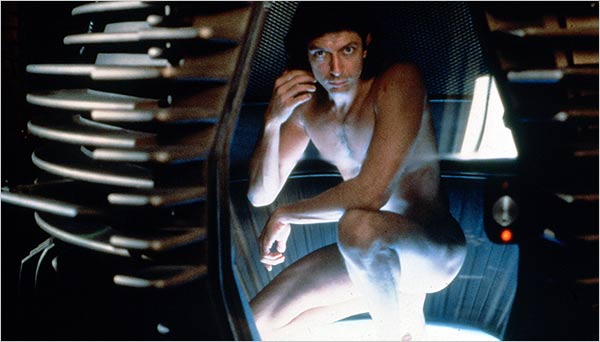
I’m glad I re-watched David Cronenberg’s 1986 version of The Fly on Blu-ray. I haven't watched it in decent resolution since I saw it in a theater on first release. It's still brilliant and perfect, and profoundly moving—maybe Cronenberg's greatest and most perfect film; a horror tragedy that doesn't cop out, ever. Deftly combining aspects of romantic comedy, science fiction, gross-out midnight movie, and parable of the consequences of hubris, The Fly also works as a metaphor for what happens to couples and individuals when the body breaks down, decays, or merely ages. (When the hero’s “disease” starts to snowball, he totters into the lab on two canes like an old man; something about the makeup reminded me of the “old” Joseph Cotten in Citizen Kane.)

Charles Edward Pogue's original script was heavily rewritten by Cronenberg, who fleshed out the main characters and the central love triangle and infused the whole story with his distinctive brand of pulp poetry, which is fundamentally rational yet prone to flights of romantic obsession and grandiose theatrical monologues. Since the film's original release, Pogue has been very open about Cronenberg’s contributions, and why wouldn't he be? They give the film much of its flavor. The Fly is filled with quotable lines and phrases, including "the poetry of steak" and "insect politics" and "Not to wax, uh, messianic" and "Drink deep, or taste not, the plasma spring! Y'see what I'm saying? And I'm not just talking about sex and penetration. I'm talking about penetration beyond the veil of the flesh! A deep penetrating dive into the plasma pool!"

nullIt's also a genuinely sexy film, at least at the start, before the body parts start falling off. (That closeup of the "Brundlefly Museum" of "redundant" body parts in the hero's fridge still makes me gasp; his cock is in there!) Jeff Goldblum’s Seth Brundle and Geena Davis’s Veronica “Ronnie” Quaife are one of the most real-seeming screen couples of the ‘80s. You can tell the actors were lovers during this period: they know each other's bodies as well as they know each other's senses of humor. They even share physical and vocal tics, as couples who've been together a while always do. Neither has ever looked more beautiful, but they’re attractive in a real way, not an airbrushed Hollywood way. Cronenberg treats them as real people whose wit and intelligence are as attractive as their bodies. The way Veronica plucks that bit of circuit board from Seth’s back post-coitus, and helps him clip those “weird hairs” as he's eating ice cream from a carton later; all the scenes of them eating in restaurants and walking through city marketplaces, doting on each other, exchanging the sorts of glances that only real lovers trade: these details and others make it feel as though we are observing a relationship, not a screenwriter's construct. Ditto the wonderful little character-building touches, as when Seth, who suffers from motion sickness, gets out of a taxi before it has even come to a full stop, and Ronnie gripes about a substandard cheeseburger, then eats one of the pickles first before biting into the sandwich.

When Goldblum sheds his geeky facade and embraces what he thinks is his Super Fly destiny, he becomes even more attractive because he's so dangerously confident; he walks with a swagger, tossing his long hair like a Persian prince in a fairy tale. (This film is my favorite take on Frankenstein ever, because the hero is both Dr. Frankenstein and the Creature—it's one-stop shopping!) Seth and Ronnie seem perfect for each other, which of course makes the ensuing tragedy so much harder to take. The third point in the triangle – Ronnie’s ex-lover and boss, John Getz's Stathis Borin, at first seems a caricature of an 80s Yuppie swine, but he deepens as the film goes along; we see that he's still hopelessly in love with his ex-girlfriend and wants to protect her, and we get that his more asshole-ish remarks are the product of self-loathing, a way of trying to distance her from him, perhaps for what he believes is her own good. (Weird that the character's name has the same first letters as the hero's. Surely it was intentional, but it’s one of the few touches Cronenberg doesn’t elaborate on.)

nullRonnie goes from cynical opportunism to deep and true love, but without ever losing her rationality. She looks out for herself, and not once does she seriously consider giving into Seth's, um, messianic waxing. But she never stops loving Seth. In the film’s final third, she’s wracked with guilt over finding her dream man suddenly repulsive and sad. The script is wise about how people in relationships keep feeling love and lust even when one or both are changing. When Ronnie realizes she’s pregnant with Seth’s probably-mutant baby, she decides to abort it, and it’s the correct decision; and yet when Seth crashes through the glass-bricked window of the hospital operating room to “rescue” her and their unborn larvae, she lets herself be swept into his arms anyway. It’s as if she’s in thrall to vestigial, or perhaps primordial, feminine desires to be protected and to bear a lover’s offspring. Her relapse into love is extinguished by horror once she returns to the lab and realizes what Seth has in store for her: a genetic sifting operation designed to minimize the physical presence of Brundlefly by merging him, Ronnie and the “baby.” But there’s never a sense that The Fly is copping out by trying to have things both ways—that it can’t make up its mind what it thinks of the situation. It’s fiercely true to life even though its physiological details are fiendishly unreal. Every stage of Ronnie’s emotional journey rings true. Extricating yourself from a failing relationship while pregnant is a predicament that countless women have experienced; ditto the pain of being in love with a man who’s dying and/or losing his mind, and becoming ever more frightening and repulsive, instilling his survivor with feelings of guilt and shame that she’ll never shake, only learn to manage. Mainstream movies rarely dare to depict such fraught situations in all their messy realness. The Fly does so in a science-fiction setting, with telepods and freaky prostheses and an operatic Howard Shore score that could be the music Franz Waxman heard in his head as he lay dying. It’s all quite astonishing.

Cronenberg is one of the most sophisticated chroniclers of romance in modern cinema, and I’m surprised critics haven’t made more of this over the decades. Why? Perhaps it’s because Cronenberg deals in symbols and metaphors as well as witty dialogue and plausible behavior. It can be hard to sense the human heart beating beneath the blood and goo that engulf some of his finest adult dramas. The Fly is a rare horror film—and a rare big-budget Hollywood movie, period—that is adult in all the ways that count. I would never show it to a child, or even a young adult, not because of the sex and gore, but because they would have no way of processing the feelings it evokes. You have to have lived a bit to truly appreciate this movie, and it only becomes more powerful as you grow older.

Matt Zoller Seitz is the co-founder of Press Play.

Clint Abides: TROUBLE WITH THE CURVE

Clint Abides: TROUBLE WITH THE CURVE

null

In one of his great essays about baseball, the late A. Bartlett Giamatti famously called the game “our best invention to stay change.” Giamatti (who, besides being president of Yale University, was briefly commissioner of Major League Baseball) added, “I need to think something lasts forever, and it might as well be that state of being that is a game; it might as well be that, in a green field, in the sun.”

The ragtag group of has-beens and hopefuls in Trouble with the Curve would likely share Giamatti’s sentiment. No matter what illnesses or impediments come their way, they cannot let go of the sound of the bat hitting the ball. Seventy-something Atlanta Braves scout Gus Lobel (Clint Eastwood) is going blind, relying on his wits and a magnifying glass to hang onto his job, while former MLB pitcher Johnny Flanagan (Justin Timberlake) seeks to rebrand himself as a broadcaster for the Boston Red Sox after an injury. It is hard to dislike a movie that makes an odd couple out of stars as disparate as Eastwood and Timberlake—Dirty Harry and Sean Parker—and the incongruous pairing is one of the freshest touches in the debut of director Robert Lorenz (a longtime producer for Eastwood).

In Randy Brown’s so-so script, characters of all ages are scrambling for security and status, including Gus’s ambitious lawyer daughter Mickey (Amy Adams), who is hoping to be made a junior partner at her firm. One of the film’s strengths is its willingness to let Gus, Johnny, and Mickey appear weak or desperate. In the Braves’ front office, peopled largely by callow jocks who lean on computer programs rather than firsthand observation to evaluate talent, Gus is mocked as outmoded. Even his old friend Pete (an amiable, mustachioed John Goodman) wonders if something is wrong when he stops by Gus’s house one morning and observes him mistakenly paying the pizza delivery boy with a $50 bill instead of a $20. The look on Goodman’s face suggests he fears something far worse than failing vision: is Gus going senile? When Pete recruits Mickey to look out for her father out on an important scouting trip in North Carolina, his request has all of the subtlety of an intervention.

The pleasure of Trouble with the Curve is not only that Gus will prove the doubters wrong but that he does not care how he is perceived. If he really is not as far gone as Pete and Mickey suspect, what is the harm in their thinking he is? He will get the last laugh, but in the meantime he has no patience for keeping up appearances, unashamed even when he wrecks his car. (Asked the next morning why he has a conspicuous bandage on his cheek, he says with a straight face that he cut himself shaving.) Eastwood’s remarkably open performance (one scene features him tenderly singing “You Are My Sunshine” a capella) suggests that he shares Gus’s wily indifference to others’ opinions, as does his shrug of a response to the humorless criticism he received following his charming, personal speech at the Republican National Convention.

In fact, Trouble with the Curve reflects its star’s gently libertarian disposition. When Mickey tries to mother Gus—helping him with the keys to his motel room or throwing out a hamburger patty he has overcooked—he recoils, all but saying, “Don’t tread on me.” Gus is affronted, too, when the Braves, having learned of his vision problem, suggest he retire and begin drawing a pension. Such gestures are meant to be helpful, but they are bathed in condescension. At the same time, Gus accepts Mickey’s assistance in scouting the presumptive top draft pick because she acts like she’s just . . . chipping in. The film’s politics, such as they are, are not doctrinaire.

Lorenz inherited most of his boss’s usual crew, including cinematographer Tom Stern and editors Joel Cox and Gary Roach, and the result is an unusually well-produced first film. Lorenz has a sure sense of comedy, too, eliciting amusing supporting performances from the reptilian Matthew Lillard (as a go-getting Braves scout) and Joe Massingill (as the draft pick, a misogynistic, self-regarding oaf who calls to mind the wrestler Gorgeous George).

As with several recent Eastwood projects, the biggest liability is the screenplay. Novice screenwriter Randy Brown is simply no James Bridges or William Goldman (authors of two of Eastwood’s best films of the nineties, White Hunter Black Heart and Absolute Power, respectively). His characters lack consistency. Mickey moans about Gus’s uncommunicative manner, implausibly claiming that his emotional distance has driven her to therapy, yet she seems pert and well-adjusted for the most part. What’s more, she has inherited many of her father’s best traits—not just his eye for the game, but his go-it-alone stubbornness and prickly attitude toward co-workers. Was Gus really such a bad dad, to produce such a nice kid? She is not the only one who vacillates. One minute Johnny gladly risks his new career with the Red Sox by taking a counterintuitive piece of advice from Gus and the next he is furious at him for doing just that.

Through it all, though, Eastwood stands firm. Gus gets what he wants, winning a new contract with the Braves with his methods unchanged. He even orchestrates the romance between Mickey and Johnny, like a craggy, cigar-chewing matchmaker. Ever stalwart, Eastwood is, like baseball itself, proof that there is “something abiding,” as A. Bartlett Giamatti would say. 

Peter Tonguette is the author of Orson Welles Remembered and The Films of James Bridges. He is currently writing a critical study of the films of Peter Bogdanovich for the University Press of Kentucky and editing a collection of interviews with Bogdanovich for the University Press of Mississippi.

One Life, Two Callings: A Review of GOD IS THE BIGGER ELVIS

One Life, Two Callings: A Review of GOD IS THE BIGGER ELVIS

null

"The first night I felt like I had jumped off a 20 story building and landed flat on my butt." That’s Mother Prioress Dolores Hart, describing her first night in the Regina Laudis Abbey, after taking her vows as a novice in the Benedictine order. Hart had it all: an exploding Hollywood career, a contract with famed American film producer Hal Wallis, and a handsome fiancé.  She appeared in 10 movies.  Often compared to Grace Kelly, with the same willowy blonde beauty, she, too, ended up walking away from her Hollywood life in 1963, to enter a convent.  She has lived in an abbey in Bethlehem, Connecticut, a cloistered monastery, the only one of its kind in the United States, for 48 years.  Her journey is the subject of God Is the Bigger Elvis, a new Oscar-nominated HBO documentary, which aired last night.  Directed by Rebecca Cammisa, it is a moving and intimate portrait, not only of the contemplative monastic life, a world we rarely get access to, but of the personal journey of one woman who seemingly had it all but gave it up to find something higher and deeper.  

The documentary is made up of current interviews with Dolores Hart and the other nuns and novices in the Abbey, as well as clips from old home movies of the Abbey's history.  We see grainy footage of nuns working in the garden, herding cows, riding in the back of a pickup truck waving to the camera. Any preconceived notion you may have had that nuns are stiff and uptight will be completely shot to pieces when you watch this beautiful documentary.  The nuns speak openly about their pasts and their own doubts.  They say that living a monastic life requires a constant renewal of their vows.  Submitting to the rigors of communal life and the order is not easy for many of them.

Born to teenage parents, Dolores Hart felt called to be an actress. She speaks now of the series of "strokes of good luck" that came her way early on in her career, which eventually put her in the position of auditioning to be Elvis Presley's co-star in Loving You (1957).  It was his second movie, and it would be her debut.  Even after so many years, Hart still seems awe-struck that she got that role.  Hart says, "I often wonder why the Lord gave me such an opportunity to audition for Elvis. There were so many of us in line that day.  And I just can't believe that I got the part."  When asked if she had prayed that she would get the part, you can still see the hunger and ambition of a young actress in Hart's response, "Did I pray to get the part in Loving You?  You bet your sweet I did!  Every role I got I prayed for."

She appeared again opposite Elvis, in King Creole (1958), directed by Michael Curtiz, a wonderful film featuring one of Elvis' best performances.  In King Creole, Hart plays Nellie, the five-and-dime cashier romanced by a tough bruiser, Danny Fisher (Presley).  God Is the Bigger Elvis opens with a clip from King Creole, showing Elvis as Danny singing in a New Orleans nightclub, with a beaming, teary-eyed Dolores Hart watching from the audience.  She was an intense and natural actress with a deep capacity for emotion, and she enjoyed her career. 

nullIn 1959, Elvis Presley sent Hart a postcard from Germany, where he was stationed with the 3rd Armored Division. His greeting to her was, "How are you, hot lips?"  Hart told the drooling press at the time that no, they were not in love, he called her that because she had the honor of giving him his first onscreen kiss in Loving You, thereby making her the envy of swooning girls worldwide. Hart has described how nervous the two of them were filming that kissing scene. They both blushed so painfully that the makeup department was forced to do some damage-control.  She was a devout Catholic and went to Mass every day at 6 A.M.. before heading to the studio.  In a 2002 interview, she said that she felt fortunate to get to know Elvis when she did, that he had "an innocence" to him that was very touching.  There are home movies of the two of them at her house, he playing the piano, she jamming out on a clarinet, both of them laughing and free.

In 1958 and 1959, Hart was appearing on Broadway in The Pleasure of His Company and  struggling with fatigue.  A friend suggested Hart take a weekend retreat at an abbey in Connecticut, to get some rest.  Hart was so taken with the life that she saw there amongst the nuns that she had a hard time getting it out of her mind, although she did return to her burgeoning career.  She began dating a Los Angeles architect, Don Robinson.  They ended up seeing one another for five years, before getting engaged.  Preparations for the wedding proceeded at breakneck speed.  The invitations were sent out.  The legendary Edith Head designed Hart's wedding dress.  But Don Robinson, who is interviewed in the documentary, could tell that something was wrong.  

Hart finally came clean and told him that she wanted to join the Abbey.  Robinson says, "I said to her, 'Dolores, are you telling me that you're going to become a nun?' And she said, 'Yes, I am.'  I totally collapsed.  I felt, in Catholicism, when you give yourself to a person – that's a contract commitment.  Then an outside force comes in and breaks it up. Every part of my love for her was destroyed in a matter of seconds."  

Robinson never married.  And every Christmas and Easter, for 47 years, until his death last November, he would travel to the Abbey in Connecticut, to attend Mass and spend time with Dolores.  We see them walking hand in hand on the abbey grounds, talking quietly. Robinson says baldly, "I never got over Dolores. I have the same thoughts today that I had 52 years ago. I love her. I've come to the abbey for 47 years. I think that says something."  

The access Camissa was given is extraordinary.  The nuns accept the presence of the camera.  We see them at prayer, we see them observing the three periods of silence each day.  The abbey itself is beautiful, with wooden walls and rounded doors. The nuns stomp around in work boots and work gloves, herding sheep, driving tractors. Dolores Hart always wears a jaunty beret placed on top of her habit, with three gleaming bird pins on the side.  Her cluttered office is filled with chirping birds in cages.  She plays music for one temperamental parrot named Toby, and smiles widely when he starts bouncing up and down to the beat.  She counsels pained people who come to her, and she listens to the novices who express to her their struggles.  In the clip of King Creole that opens the film, Hart's listening is so intense that it seems her heart is on the outside of her skin, which was one of her gifts as an actress.  That listening power is still with her.  You can see it in every moment she is interacting with someone else.  Even her parrot gets her full attention.

She still gets fan mail.  She goes through some of it in her office, showing the publicity photos for Loving You, with Hart and Presley looking at the camera cheek to cheek.  She reads one of the letters out loud:  "I enjoyed watching you and Elvis. He was such a sweet personable young man.  I loved you in Loving You and Where the Boys Are.  You were my favorite actress.  What are you doing now?"  At that last question, Hart stops, looks at the camera, in her full habit, and bursts into a hearty laugh.  

In her early visits to the Abbey, she had expressed concerns to the Mother Superior about her career.  "The concern that I had was that it was wrong as a Catholic to be in the movies because sexually – you could be aroused by boys, and you could get involved sexually with men.  And my leading man was Elvis.  She said, 'Well, why not? You're a girl. Chastity doesn't mean that you don't appreciate what God created.  Chastity says use it well.'"  

In one of the most emotional moments of the film, she and her old fiancé, Don Robinson, say goodbye.  They have spent the afternoon together, talking. They embrace goodbye.  He tells her he thinks about her all the time, that he loves her.  She tells him she loves him, too.  He holds onto her hand, and doesn't want to let go. But finally, with his halting elderly step, he walks away.  Hart watches him go and suddenly, out of nowhere, her eyes well up with tears.  A lifetime of emotion is in that look:  what she gave up, what she passed on, the sacrifice she made to choose the life she chose.  It is a breathtaking moment.

Early in the documentary, Hart says, with a mischievous smile, "I never felt I was leaving Hollywood… The Abbey was like a grace of God that entered my life that was totally unexpected.  God was the vehicle.  He was the bigger Elvis."  

null

Sheila O'Malley is a film critic for Capital New York. She blogs about film, television, theater, music, literature and pretty much everything else at The Sheila Variations.

Breaking the Silence, Sort Of: Whit Stillman’s DAMSELS IN DISTRESS

Breaking the Silence, Sort Of: Whit Stillman’s DAMSELS IN DISTRESS

 null

Wherefore art thou, O Whit Stillman? Though never exactly a blur in motion, the minor auteur managed to generate three hyper-stylized, hyper-talky meditations on manners, morality and money throughout the ‘90s—the last of which, Last Days of Disco, proved his best known and arguably finest. After that, rumors about him licking his wounds in Europe swirled for years, though little was definitively known about his goings-on. Now, after a nearly decade-and-a-half gap in his curriculum vitae, Damsels in Distress marks his first venture back into cinema. And lo! what an odd re-entry it is.

It’s not that this series of vignettes about a year at Seven Oaks University, a fictional liberal arts college, is terrible. Nor does it mark much of a departure in form or function for Stillman, who’s always liked to focus on old-fogeyish young people. It’s just that, despite its many clever bits and terrific cast, including mumblecore siren Greta Gerwig, this film sounds a wan echo of Stillman’s earlier work. Intentionally or not, he has fashioned here an auto-valentine to his already-established tropes (a murky mentor and her ingénue; the watered-down Kool-Aid of an elite subculture; the questionable merits of nostalgia; the healing power of dance), and it comes with less certitude and many more protestations than does his previous work.

Take the film’s opening minutes, in which 50s-style elevator music swells while big-co-ed-on-campus Violet (Gerwig), flanked by her lackeys Heather and Rose (all three clad in floral prints, lest we not get the flowergirl motif), approaches transfer student Lily (Crazy Stupid Love’s rubbery faced Analeigh Tipton).  “You were unhappy at your old school,” Violet says. “Would you prefer our guidance or to sink or swim on your own?” Predictably, Lily opts for the former, and she preens and then bristles under their tutelage as she stumbles through the university’s rarified ecosystem of body-odor-afflicted education majors, aggressively moronic fraternity brothers, tap-dancing depressives, anal-sex-fixated foreign grad students, and, yes, damsels in distress.

Like all of Stillman’s characters, the girls and boys of this world speak in a halting schoolmarm-ese (no contractions, no cussing, no colloquialisms) that betrays the vehemence of their fastidiously parsed paragraphs. On topics ranging from the acceptable plural of doofus (doofi? doofuses?) to the human tendency to seek those cooler than ourselves, Violet and her peers deliver speeches and aphorisms with strangely ineffective hand gestures and a minimum of flair. Says eighth-year ed student Fred (Adam Brody, whose apparent nose job reinforces his blank, tabula rasa demeanor): “I do romanticize the past. It’s gone, so we may as well romanticize it.” Says Lily: “We value idiosyncrasies and uniqueness but really such people are pains in the asses.”

As you watch, you get the sense that Stillman has been chomping at the bit for years to serve up these unique, idiosyncratic, pain-in-the-ass gems, and so he wishes them as unadulterated as possible.  To that end, these kids are oddly indistinguishable, although each bears one branding characteristic. Rose is haughty (and black! With this film, Stillman has finally broken his racial barrier); Heather is cheerily dimwitted; Lily is a reluctant ingénue; and Violet, who, as Stillman’s most overt stand-in, is also most fully fleshed out, prevails as an earnestly flawed Jane Austen-style heroine. Say what you will about Stillman, he does know his Austen.

The girls’ stances and passions, if they have them, seem to spring from nowhere and just as quickly evaporate, while their many beaus prove interchangeable—liars or dolts, all of them. Even such marginal characters as campus policemen and waitresses utter Whitticisms in the writer-director’s patented cadences. Obviously cats like David Mamet feature a similar homogeneity in tone, but Mamet Stillman is not. And I don’t even like Mamet.

The problem is that since all these kids are so blank, only Stillman, as the narrative voice, is in on his many jokes (“I fled to a Hotel 4, even more economical than a Hotel 6,” states Violet flatly in an account of post-breakup despair.) It’s a pat-himself-on-the-back device that quickly rings hollow: Characters as cogs.  The fact that, as a technician, he doesn’t produce much to write home about here doesn’t help. Pastel and bracingly bright, the film often resembles a Lifetime TV movie—sun-splashed is the name of the game—and its pacing is as ungainly and stiff-legged as these young people’s gaits. (Sharp editing proved a saving grace in his earlier trifecta.)

Near the end, Damsels abruptly transforms into a paean to Fred Astaire, complete with a few inexpert ensemble musical dance numbers. At that point, not uncharmed, I threw up my hands. Just like the paper-thin storylines of Astaire’s movies always functioned as mere filler between his dance numbers, plot and character are apparently mere conduits for Stillman’s signature shouts and murmurs. Lest this connection not be fully drawn, one morose Seven Oaks student even insists upon being referred to as Freak Astaire. Fuck subtext, Stillman seems to be saying. Whit Disney world is my oyster, and herein lie my pearls.

As I left the screening, I described myself to a colleague as feeling “vexed.” “Now you’re talking like the movie,” he replied drily and, indeed (even in the paragraphs above), I’ve fallen prey to its sticky vernacular. Despite myself, I have to admit that I’ll probably be happily charmed by this world for years to come—albeit most likely, and most preferably, in 15-minute snatches on 2 AM cable. Just the gems, ma’am.

Lisa Rosman writes the indieWire film blog New Deal Sally and has reviewed film for Marie Claire, Time Out New York, Salon.com, LA Weekly, Us Weekly, Premiere and Flavorpill.com, where she was film editor for five years. She has also commentated for the Oxygen Channel, TNT, the IFC and NY1. You can follow Lisa on twitter here.

SIMON SAYS: SNOWTOWN MURDERS and a Guided Tour Through Serial Killer Movies

SIMON SAYS: SNOWTOWN MURDERS and a Guided Tour Through Serial Killer Movies

null

“Now, do I look like a sex murderer to you? Can you imagine me, creeping around London, strangling all those women with ties? That’s ridiculous. For a start, I only own two.” –Jon Finch, Frenzy

In Florence, there’s a wax museum filled with dioramas of various serial killers. Almost none of these killers are from Italy. This is odd since the infamous Monster of Florence slayings are, ostensibly, the reason why such a museum is situated in Florence, the city most people associate with the Uffizi Museum and the Medicis.

If you take the museum’s guided tour (and you really must), you’ll notice that The Monster is however only a footnote, part of a single tapestry-like map of Italy’s many murderers. Ironically, most of these killers whom don’t really qualify as serial killers. Two or three murders, a death here or there, nothing like the wave of murders that inspired Thomas Harris to set his Hannibal in Florence. These killers are mostly Americans like Ed Gein, Aileen Wuornos and Jeffrey Dahmer. The Dahmer diorama is particularly impressive, complete with a realistic-looking trap door that hides half-exposed, half-decayed kiddy corpses.

Watch this video tour of the Serial Killer Museum – how many famous killers can you name?


I’m reminded of Florence’s wonderfully icky wax museum because The Snowtown Murders comes out in theaters this week. Based loosely on a series of real-life murders that took place in Snowtown, Australia, the film serves as a great reminder of why serial killers in particular are interesting: they’re pathologically disturbed. After a certain point, you can’t logically discern why a serial murderer does what he or she does. But that’s why they’re so fascinating: their gruesome crimes don’t make sense.

Think of it: guys like Albert Fish, the so-called “Vampire of Brooklyn,” or Jack the Ripper murdered people but only certain ones. So we want to know: why remove this body part or why take out your anger on women and why in this way? To make sense of these crimes, we have to confine these aberrant and largely inexplicable characters to reductive motives: they’re impotent, they have mommy issues, they hate women, etc.

Still, if everyone that had the above issues acted in the way that Ed Gein, the inspiration for films as diverse as Psycho, The Silence of the Lambs and The Texas Chain Saw Massacre, we’d not only be in deep shit but we’d also probably not care as much about serial murderers. Maybe, in an alternate universe where pathological behavior, as we understand it, is normal, dressing up like your mother and hacking people to bits with a chainsaw is something paid spokespeople encourage you to talk to your doctor about while Arnold Palmer throws footballs through tire swings.

But in our universe, many movies depict serial killers as a certain type of nebbish loner. In Psycho, Norman Bates is an exception that inadvertently proves the rule: Anthony Perkins is shy, keeps to himself but seems mostly harmless (He wouldn’t even hurt a fly, you know). So as cheesy as Psycho’s coda scene, where a police profiler breaks down why Norman killed people dressed like his mother and murdered people, is, it’s also kind of necessary. After all, Bates is evasive throughout the film. His personality and his motives are deliberately kept a mystery throughout the film’s proceedings. In the end, we want to know why he did it, and what drove him so far over the edge.

nullStill, it’s important to note that Gein isn’t really a serial killer. He murdered two people, which hardly establishes his slayings as a pattern. But he is important because he became a symbol of all the Freudian motivations that we project onto killers. We make these assumptions partly because of the phallic imagery implicit in Psycho’s shower scene or Leatherface’s chainsaw in The Texas Chain Saw Massacre (Massacre director Tobe Hooper would make a lot of hoopla over Leatherface’s fetish in The Texas Chainsaw Massacre 2, which plays out like a fittingly schizophrenic and limp slasher made by a big Laura Mulvey fan).

Take for example the depiction of murderers in a film like Maniac!, Bronx-born director William Lustig’s immaculately skuzzy 1980 film. Co-scripted by anti-star Joe Spinell, the film follows a loner that has garden variety psychological problems as they were defined in a post-Psycho filmic world: Spinell’s character kills women because he’s terrified of them. The ghost of his mother tells him what to do and he talks to himself throughout the film as her.

At the same time, even Spinell’s killer is constantly asking himself (as his mother, mind you) why he does what he does. But while he’s totally baffled by his behavior, we as viewers are made to feel like we know exactly what’s wrong with him: basically, he’s crazy. By which I mean he’s a very frustrated man that’s paralyzed and tantalized by sex. When Spinell’s character picks a prostitute up, he doesn’t decide to go with her to a motel until she tells him how far she’s willing to go for a hundred bucks. When the prostitute in question tries to put her arm on Spinell, he reactively brushes her off him. He can’t be seen in public being touched by her, though who he thinks is watching him is unclear.

Spinell’s character conforms to the basic stereotypes that define serial murderers in the 1972 thriller Frenzy, director Alfred Hitchcock’s last movie. Screenwriter Anthony Schaefer (Sleuth, The Wicker Man) suggests in no uncertain terms that, like Alec McCowen’s police chief, we, the viewers, presume to know the motives of a serial strangler pegged. McCowen haughtily explains to a peer how such killers behave:

“The important thing to remember is that they hate women and they’re mostly impotent. Don’t mistake rape for potency, Sergeant. In the latter stages of disease it’s the strangling, not the sex, that brings them off. You know what they are, Sergeant, I’m sure.”

nullThe funniest part about this scene is that it’s a 100% accurate description of the killer in Frenzy: he tries to rape one of his victims. But she resists and refuses to give him the satisfaction of whimpering while he breathes heavily and repeatedly growls, “Lovely!” The joke is that even McCowen’s chief, an equally impotent British man that politely hems and haws while his wife experiments with French cuisine, could guess why the real killer behaves the way he does. So while most characters in Frenzy spend the film insisting that they know exactly what the cops are looking for, McCowen inexplicably does.

One of the most satisfying depictions of a serial killer on film has to be Michael Rooker’s Henry in the 1986 character study Henry: Portrait of a Serial Killer. Rooker’s antihero is a more polished version of the loaded popular assumptions reproduced in most movies about serial killers. Henry lives with two other people, though he always seems uncomfortable around them and is tellingly emotionally withdrawn all the time. There’s even a line that deflates the assumption that Henry came from a broken home and has mommy issues: he tells Becky (Tracy Arnold) a story about how his mother died, one which Becky inadvertently reveals to be a pack of lies.

And there’s basically the rub: Rooker’s character has no hard-and-fast reason to kill. Which is really what’s so puzzling about serial killers, that sense of not knowing. The fact that Henry: Portrait of a Serial Killer is the most ambiguous film of the bunch I’ve listed is possibly because, of all the movie murders I’ve mentioned, Henry is the only one that’s really based on a real-life Henry Lee Lucas, a real-life serial killer (Bates was only inspired by Gein). As exploitable as their subject may be, Henry co-writers John McNaughton and Richard Fire at least respected the fact that there were things about their subject that they simply could not know for sure. I wonder if Florence’s Serial Killer Museum is looking for film-related add-ons. I’m sure they could fit in an extra TV monitor in somewhere, possibly between Ted Bundy and Charles Manson…

You can take a virtual tour of the Serial Killer Museum by visiting their website.

Simon Abrams is a New York-based freelance arts critic. His film reviews and features have been featured in theVillage VoiceTime Out New YorkSlant MagazineThe L MagazineNew York Press and Time Out Chicago. He currently writes TV criticism for The Onion AV Club and is a contributing writer at the Comics Journal. His writings on film are collected at the blog, The Extended Cut.