

 Whether immersed in a discussion with Margaret Nagle or in her film The Good Lie, one seems to forget the
materialistic obsessions of our culture. Nagle is no stranger to the industry,
with Emmy and Golden Globe nominations for her work as well as multiple WGA
wins. She’s battled with studios, executives and all the other elements that a
female writer has to wrestle with in the business. Her career is expansive,
encompassing writing on Boardwalk Empire,
the critically praised TV Movie Warm
Springs and recently creating Red
Band Society on Fox. But within the spectrum of her work is a common
thread: humanity. Many of her stories, The
Good Lie included, explore survival. Whether an audience is watching kids
cope with cancer in The Red Band Society or
Sudanese refugees wrestling with America in The
Good Lie, it’s impossible not to put our culture’s trifles aside and focus
on a much more visceral exploration of humanity.
It’s not often a film breaks down humanity to the basics. The Good
Lie is not a story about selfies, iPhones or materialism. It’s about pure
survival. It makes you wonder, do we
really need all this crap to survive? Nagle gets to the crux of this
question with her story about the Lost Boys of Sudan. The film centers on
Jeremiah, Mamere, Abital, and Paul, a close-knit group of friends who, after
fleeing their country, grow up in a Sudanese refugee camp. 13 years later,
they’re among the lucky few who are posted on a list in the camp, given the chance
to move to America and start a new life. They meet Carrie (Reese Witherspoon),
a woman in Kansas City who helps them get settled. She takes them around to
grocery stores and factories, introducing them to the managers and hoping to
find them employment. Eventually, with her encouragement and persistence, they
find jobs. But the more they become immersed in American culture, the harder
their battle is to preserve their past culture and morals. Jeremiah (Ger Duany)
is scolded for offering a homeless woman food from the grocery store where he
works, even though he’s headed to dump it in the trash. The wasteful nature of
Americans baffles him. Paul (Emmanuel Jal) is tempted with pot by his
co-workers and struggles to maintain his work ethic while building new
friendships. Each of the characters must decide what principles to preserve and
which to sacrifice in order to build their new life.
The film took 11 years to make, with Nagle being attached to
the project, then fired, then re-attached. She never, though, lost her
emotional connection to the film. Despite an apparent difference between Nagle,
a white woman from the US, and a group of Sudanese refugees, their childhoods
possess a similar sense of survival. Despite the public, presentational
environment of our interview (we’re sitting outside Arclight surrounded by
movie-goers) Nagle soon revealed some private, intimate facts. Not only does
she only have her own tale of endurance, taking care of her disabled brother
for years, she admits that writing the film has helped her see that there is
salvation for herself and others. Freedom from guilt and healing can begin, the catalyst being the act of sharing. Lucky
for her, that’s the beauty of film.
“I was selling purses out the trunk of my car,” Nagle states
matter-of-factly, popping a fry in her mouth. She worked a number of odd jobs
but found time to do her own writing in-between gigs. Two of her purse suppliers
were guys from Senegal whose grandfathers were from Sudan. They were going
through an adjustment, learning American culture, and Nagle became close with
them. Around the same time, she heard about the open assignment at Paramount
about the Lost Boys. She’d never been paid as a writer and just had a spec
script. Nagle is a fighter. Her agent assured her that better known writers
were up for the open assignment and that she should pursue other options. But
after urging her agent countless times, she finally got a meeting. Soon after, she got the job. Nagle and then-producer
Robert Newmyer traveled the country and pitched the story to The Lost Boys
themselves. They went to Atlanta, Phoenix,
San Diego and Kansas City twice. She
wanted to create a fund for their education and knew that making a film about their
community would raise awareness. Nagle, most importantly, also wanted the Lost
Boys to “sign off on the story.” When Newmyer died of a heart attack soon
after, the Lost Boys all drove across the nation to speak at his funeral. Nagle
recalls that they said, ““Bobbie Newmyer was a Lost Boy. He was one of us.”
Nagle spent the next few years trying to get the script
made, even being fired from the project at one point. The studio wanted a
bigger-named writer. But the script eventually landed in the lands of Molly
Smith. Smith’s father had adopted a Lost Boy and put him through college. Six
months after the movie was shot, the Lost Boys told Nagle they “prayed for
Molly.” She was the producer needed to get the project jump-started.
Nagle is adamant many times throughout our chat about how
much research she did, stating that it kept the project strong. She does “immersion writing” where she learns multiple
levels of a story. She reads every article she can on a subject and is
enthusiastic when discussing her process, clearly passionate about getting into
the psyche and circumstances of her characters. Nagle doesn’t want to meet the
people she’s writing about until she’s made a lot of decisions. With The Good Lie, she used a number of videotapes
of documentarians who couldn’t finish shooting in Sudan. The environment is
extremely volatile and many filmmakers have had to choose their own safety over
the completion of their projects. But this movie is not a documentary. The more we talk, it’s clear that the
project’s continuation isn’t only due to Nagle’s work ethic. I ask her again
what about the story kept the project
going. “Because it’s about such courage. It’s about sacrifice and the ending is
a surprise.”
Although the film is distributed by Warner Brothers and
showing at Arclight, it’s still independent in spirit. The budget was 15
million (okay, so right at the ceiling of what’s considered an indie). All the
children in the film are children of Lost Boys. Even the main actors have
backgrounds that are shockingly similar to their characters’ backgrounds. Many
of them have lost family members and have had to flee their homes. Nagle speaks
warmly about each of them. Kuoth Wiel, who plays Abital, auditioned on her cell
phone “in the library at school. She was born in a refugee camp in Ethiopia.
She walked from Ethiopia to Sudan several times, back and forth.” Emmanuel Jal,
who plays Paul, has a big lion scar on his leg. In the film, Paul has a similar
wound on his arm. Nagle finds it coincidental. “Just so happened I had Paul
have it on his arm. He had a really, really bad life over there.” Ger Duany was
discovered by David O. Russell and appeared in I Heart Huckabees. He was
the first actor Nagle met for the film. Like his character Jeremiah, Duany is
writing his own book on transcendence. He has told Nagle that “religion can make
people do really bad things,” but that it’s how he survived. Arnold Oceng, who
plays Mamere, was raised in London after his father was killed. Nagle recalls
that he “never talked about it, ever” and “felt tremendous survival guilt.”
Up until this point in the conversation, Nagle has revealed
very little about her childhood. As we become more comfortable, she opens up,
admitting she’s often tentative about explaining her childhood to people. “I
grew up with older brothers and we were on our own.” Her parents weren’t
divorced but they were “out of commission” and “high-functioning alcoholics.” Nagle
and her brother took care of their other brother who was disabled through a car
accident, leaving him a quadriplegic, with brain damage. From a young
age, Nagle, too, was forced to learn to survive. The roots are coming together
now. Nagle is Mamere, but also Abital; she had two brothers were “allowed to be
very sexist” towards her. Her parents were in denial.
The parallels are becoming clear. The film’s main character,
Mamere, is fueled by guilt. At the
beginning of the film, as a child, he lets his brother Theo (Femi Oguns) sacrifice
himself. As the children hide in the brush, Theo rises and tells approaching
soldiers that he is the only one around. He’s then taken away and the other
children are able to escape. I ask if Nagle has been driven by her guilt over
her brother as well. She admits, “I was so scared to live my own life and leave
him behind.” Finally in Chicago as a young adult, Nagle’s therapist put her in
a group with Holocaust survivors. Although she was initially reluctant, her
therapist urged that she, too, had been through a traumatic experience and that
she was “very self- destructive” in ways she couldn’t even understand. She
didn’t agree until the group finally called her out. “You’re full of shit! What
you’ve gone through is terrible!” Eventually, Nagle was able to accept that she
had survived something. Like Nagle,
her characters struggle to not only talk about their past, but accept it.
This film isn’t about wallowing in past trauma; it’s about
liberating oneself from it. We learn late in the film that Carrie lost a sister. When she invites Abital to live with her, she
begins to discuss how it’s affected her. Through sharing their guilt, their
pain, the characters begin to reach healing. Nagle stops after we draw the
connection: “Oh my god! I can’t believe you’re pointing this out to me!” Her
time with the group validated her pain in the same way Abital validates Carrie.
At this point, Nagle reveals perhaps the most touching moment in our talk. In
the film Mamere and his brother have a game. They draw a square in the sand and
put their hands on top of each other. It’s one of those intimate idiosyncrasies
siblings share. Nagle did the same with
her brother. “He’d put his hand on the bed and I’d make a line in the sheets.”
It’s Nagle’s personal connection to the film, on the deepest
levels, that makes it so raw. But Nagle has more goals than just personal
catharsis. There aren’t schools in the refugee camps and Nagle stresses, “We
can’t solve the war in Sudan, we can’t change the religious differences. We can
make these camps better for the people that are living in them.” The Good Lie has been screening every
night in Washington, D.C. UNICEF, Oxfam,
and the Enough Project have all come on board. Nagle is adamant: “How do we
turn this into policy? How do you shift things? It’s so tragic that we’re
allowing these really minor things to divide us. Jeremiah has a last narration
in the film and talks about our common humanity. We share this big world we
call home. For the future of mankind, we’ve got to come together.”
Nagle is undeniably inspiring. Nagle’s passion has again
made me note my materialistic surroundings. Why is everyone around me jamming
in the parking lot with their gas-guzzling cars to flock to see Gone Girl, about bad people doing bad
things to each other? Nagle is clearly calling for the opposite.
“The film is going to be more than just a film. I’m so
proud. I get very choked up because it’s what I wanted.”
Meredith Alloway is a Texas native and a freelance contributor for CraveOnline, Paste, Flaunt, and Complex Magazine. She is also Senior Editor at The Script
Lab. She writes for both TV and film and will always be an unabashed
Shakespeare nerd. @atwwalloway







 EDITOR'S NOTE: This summer Sight and Sound, the magazine of the British Film Institute, will issue the seventh edition of their international poll of critics and directors on the greatest films of all time. While there have been plenty of lists and polls of this kind conducted over the years by innumerable publications, websites and other outlets, the Sight and Sound poll occupies a special place among them. It polls a select number of participants that rank among the most respected authorities on film (the 2002 edition polled 145 critics and 108 directors). To my knowledge it is the longest-running poll of its kind, having first been conducted in 1952, and conducted only once every ten years.
  1. The Godfather and The Godfather II, 1972 (actual placement #4, 23 votes)
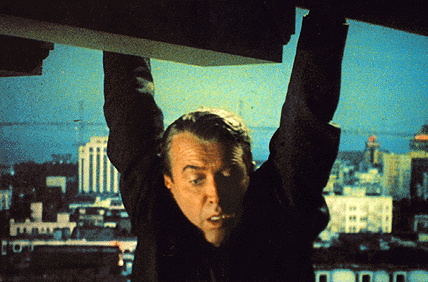
 On the flip side, the biggest loser of 2002 was Roberto Rossellini, whose Paisan fell from #18 out of the top 60 – Journey to Italy didn’t do much beter. Bicycle Thieves fell 34 spots, just as it was on the fringe of making it back to the top 10 for the first time in 40 years. Seems that Italian neo-realism fell out of favor – as did its Indian cousin Satyajit Ray, whose Pather Panchali fell out of the top ten. Surprisingly, Rear Window dropped 35 spots even as Vertigo nudged into the #2 spot, seriously challening Citizen Kane – you have to wonder if the Hitchcock contingent somehow collectively agreed to go all in on Vertigo. But the biggest surprise for me is seeing Raging Bull lose support, falling out of the top 50 after being the #1 post-1970 film in the ‘92 poll. (Note in the list above that Taxi Driver placed higher, so the Scorsese contingent may have shifted their focus). Maybe it just goes to show that it’s hard for recent films to gain momentum; and that it’s not that there aren’t any worthy of being the greatest, but perhaps too many for any one to attract consensus.
 1. Vertigo
 It's interesting to see that Bill predicts The Godfather will rise in the rankings. I was under the impression that it would, if not crash and burn, then at the very least fall out of the top ten. Coppola has hardly been churning out the copper-bottomed classics of late (20 years since the last decent film?), and perhaps his recent slump could affect participants' memories his early hits. Of course, it'd be churlish to think that too many participants would question their love of The Godfather on the basis of the director's more recent work, but for those formulating their lists by picking favourite directors and then narrowing things down from there, it could be swing the vote in small but meaningful ways.
 KEVIN B. LEE: Looking at Bill's predictions, I would be thrilled if Balthazar makes the top ten. Bresson is one of a handful of directors I would ever consider devoting a lifetime to study, and Balthazar along with L'Argent are my very favorites of his inimitable corpus. And I would be even more pleased – and perhaps a bit ashamed – if he makes it in without my vote. Because I'm pretty sure I'll be selecting another film and master as my lone representative from France.
 I struggled with these matters a lot concerning one film that is one of my favorites and will continue to inspire me for years to come, but I ultimately will not select. That film is Godard's Histoire(s) du Cinema, which is in some respects the greatest essay film ever made, and as a film about films is the kind of work I could only dream of making. I know at least one film critic who has it in their top ten ballot. But I ultimately decided not to include it because, as a work that seeks to explore film, its worldview in regard to cinema history and cinema's relevance to world culture is so baldly, unapologetically provincial that many times it feels antithetical to my understanding of film. Of course it is a reflection of Godard's Eurocentric orientation, but whatever the case the work embodies a lot of assumptions about what film is that, in the 21st century, can no longer be taken for granted.

 EDITOR'S NOTE: This summer Sight and Sound, the magazine of the British Film Institute, will issue the seventh edition of their international poll of critics and directors on the greatest films of all time. While there have been plenty of lists and polls of this kind conducted over the years by innumerable publications, websites and other outlets, the Sight and Sound poll occupies a special place among them. It polls a select number of participants that rank among the most respected authorities on film (the 2002 edition polled 145 critics and 108 directors). To my knowledge it is the longest-running poll of its kind, having first been conducted in 1952, and conducted only once every ten years.
  And on that note, would celebrated revivals and restorations serve to nudge under-loved films into the limelight? Will 2012 be the year of Charles Burnett's Killer of Sheep? Will the new, extended cut of Fritz Lang's Metropolis make it more of a contender than it has been in past polls?
 I have no plans to put Citizen Kane on my top 10 list; I watch it every 5 years or so and try to come around, but it's still not working out. (Welles was right: The Trial really is his best film. Anyway.) I'm also not planning for the only film I think has a reasonable chance of replacing it (Vertigo), so from the outset my interest in contributing to any kind of top 10 surge or shift is minimal. (Should I feel guilty about these relatively underwhelmed responses? I'll let the internet tell me!)
 Firstly, I'd like to comment on the process, and express my minor disappointment at the fact that S&S have decided not to increase the ballot from 10 films. It would have been nice to break with tradition and call for 20-25 films from each critic/filmmaker. The consensus at the top may have remained very much the same but the variety of films at the bottom would probably have intrigued more. That's not to say, that there won't be intriguing selections, just less than there might have been.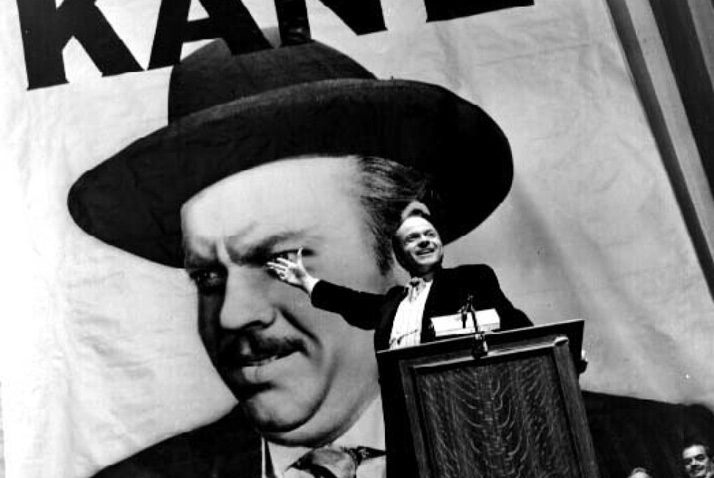
 Another critic I admire, Jonathan Rosenbaum gives his personal account of the list’s influence in
  Indeed, the 2002 results were a letdown, at least for me. I had seen nearly every film in the top 100, so it had little in the way of discoveries or surprises, other than how unsurprising it was. For that reason my relationship to the list changed; I no longer took the perspective of list consumer but that of a curator, looking for ways to make the list more meaningful.
 Bicycle Thieves (1948, De Sica)
 Singin’ in the Rain (1952, Donen and Kelly)

 Press Play Video Blog