SIMON SAYS: Pure Ideas: Dropping Science (Fiction) with EXTRATERRESTRIAL Filmmaker Nacho Vigalondo

SIMON SAYS: Pure Ideas: Dropping Science (Fiction) with EXTRATERRESTRIAL Filmmaker Nacho Vigalondo

null

Nacho Vigalondo’s films are about ideas. The Spanish filmmaker's two recent science fiction films, Timecrimes and Extraterrestrial, suggest that the drive towards scientific discovery or self-discovery doesn't need to be motivated by personal reasons. Vigalondo also makes the best contemporary high-concept science fiction movies. Timecrimes is a time travel thriller, and Extraterrestrial, his equally worthy 2011 follow-up, is an alien invasion story. At the same time, Timecrimes's story also concerns a struggle between free will and determinism; Extraterrestrial is also a romantic comedy about two people who slowly learn to make the best of their lots in life.

Extraterrestrial is especially striking since it's not about aliens' actions once they've arrived on Earth, but rather the actions of two characters who have elected to hole up in an abandoned apartment building after a UFO arrives. Our heroes never directly make contact with the aliens; Extraterrestrial isn’t about first contact. Instead, Vigalondo’s latest shows two indecisive, amoral protagonists reacting to extraordinary circumstances. 

I sat down with him this Tuesday to talk about the philosophy of time travel, Primer, Stanislaw Lem, and Red Planet Mars, among other things.

I know you’ve said before that Extraterrestrial is sort of an unconventional alien invasion film, unlike [Steven Spielberg’s] War of the Worlds, because your characters can’t see everything that’s going on. When you set out to write Extraterrestrial, what else did you set out to do?

Nacho Vigalondo (NV): I think that significance in your films comes from the movies themselves. Directors don’t always need to be aware of everything they’re doing. For example, when we talk about science fiction films from the ‘50s, we don’t know that those movies were cathartic expression—sorry for my English. When I speak about abstract ideas, it becomes complicated even in Spanish. [laughs] But those movies in the ‘50s talk about global fears about the war, about the unknown, about the others. Communists, for example.

Those films give symbolic expression to that fear. But those filmmakers were not aware of that. So I always try to let my movies talk instead of me. I think my movies have more interesting things to say than I do. So when I’m writing, I try to ignore my motives. When I started to write Extraterrestrial, my first idea was, “Ok, what if we were to tell an alien invasion story from the point-of-view of normal people instead of the heroes, people who would be occupied with everyday things?” That would describe most of us. If you have a toothache, and the end of the world comes, you still have a toothache. So you’ll be desperate for painkillers. So: “What if we talked about this big event from the point-of-view of people who are just waiting for things to happen, who are just waiting for things to be solved by someone else?”

That’s a little childish, I think. It’s a way to amuse myself when I write this sort of thing. But then, I let my movies talk about something else, which is more important. For example, in Timecrimes, what I wanted to do is prove to myself I was able to write a time travel story in which everything happened in real time, and the killer, the instigator and the victim are the same [person]. So I think of those stories as formal challenges.

But later, I found out that both movies are about guilt as well as the feelings you have when you find out you are the other. In both movies, the main guy realizes that he’s not just a good guy, that maybe he’s “the other.” So I feel it’s important, in any art, to let your body of work speak for itself. That’s a religion to me. Movies are more intelligent than their directors. I promise you that that’s the case with me.

Well, that’s also true of viewers and your films. When I was rewatching Timecrimes, I noticed new things that I missed the first go-around, like the way that the main character’s wedding ring is constantly emphasized. So at the end, when he talks to his wife’s hand, it’s sort of a re-affirmation of their relationship. Although at the same time, that gesture is, after the film’s grueling events, almost like a way for the character to silently say, “Well, I accept the fact that there’s only so much I can change in my life. Time to exhale and move on.”

NV: They’re looking up at this dark sky and don’t know what will happen next.

Right. I didn’t remember the ending of Timecrimes, so while I was rewatching it, I was debating with my roommate [Bill Best] whether or not the film was in favor of determinism or individualism. And he was insisting that it was definitely not an individualistic movie, and then I saw the ending again and I thought, “Oh yeah, it isn’t.”

NV: [laughs] This is one of those nice interviews, where you prefer listening to answering.

And in Extraterrestrial you start from the premise that everyone’s gone, so all that’s left for the main character to do is hunker down in an apartment and just move from there with a limited amount of options. So it’s not about the fact that aliens have invaded: that’s a given. The spaceship is in the sky, we can see it. What happens next isn’t even a matter of waiting for people to do something—it’s waiting for this guy to do something. By comparison, since you mentioned ‘50s science fiction movies, I have to ask: have you ever seen the movie Red Planet Mars?

NV: Hm. Sometimes the title gets changed in Spain. Red Planet Mars?

It’s a film based on a play where a radio signal is emanating from the far side of Mars, and people think it’s the voice of God.

NV: Oh, I haven’t seen it. I would remember that, definitely! [both laugh]

The idea is that the Americans and the Russians are competing to find the source of the transmission. And ultimately there’s a complicated conclusion where they find out it was a Russian plot the whole time. But wait, no, it wasn’t the Russians, it was the Americans pretending to be Russians. But then they realize, oh wait, it was God, after all. So ultimately, it’s just people figuring out that however much they think they’re in control, they’re really not.

NV: Oh, great! Who made this film?

I’m not sure…

NV: Because it really sounds like Stanislaw Lem, the guy who wrote Solaris. I’ve been reading this guy all my life, because he’s writing about conspiracies in which, after a certain point, characters have to assume they can’t know what’s going on. And I wanted to take this feeling and put it in Extraterrestrial, in a comical way. In my film, one character says, “Well, why are you here?” And the other replies, “Well, we haven’t thought of that.” That’s a metaphor for the script itself, and it’s something I wanted to play with consciously.

The latest Lem novel I’ve been reading—I’m not sure if it’s been translated into English—is called Fiasco. In it, we find evidence of extraterrestrial life in the universe, and they are expecting us to do something. We react, trying to communicate, but the nature of both civilizations is so deep that we are not able to communicate with them. We don’t understand them, and they will never understand us. It’s not because the language is different: the nature of the language is different. What if we realized that rocks were secretly alive, but we were not able to talk to them? Or we don’t get their references or the way we ordinate reality is totally different? I love when science fiction gives us the chance to look at ourselves as human beings. Instead of picturing ourselves as conquerors or limitless beings, we are just humans, and we have to face the fact that humanity has its limits. I love that, and I wanted to work on that in a different way in Extraterrestrial.

That’s interesting since there’s a rumor that you’re working on a film adaptation of a comic book written by [Kickass and Wanted co-creator] Mark Millar, called Supercrooks.

NV: Not exactly an adaptation, because we wrote the script together. In fact, the comics’ script and the screenplay were made in the same location. So at the end, I appear as a co-plotter. Our collaboration was really intense and one of my best professional experiences ever.

But while your stuff and his have cursory thematic similarities—they both ask how a “normal person” would behave under extraordinary circumstances—your characters are much more indecisive. Your characters are much more amoral than immoral.

NV: One thing I’ve noticed is that when Mark writes comic books, even when it’s just a Marvel comic like Wolverine or Fantastic Four—I have a theory. I’m not even sure he’s aware of this; it’s his nature as a writer. I’m not sure that he’s working on this in a conscious way. But every time he picks a character, he lets us intuit what the darker side of his characters are. So when we see the Fantastic Four in a Wolverine comic, the way you perceive the Fantastic Four is so dark. It’s not in a nasty way; he’s not being a punk writer to them. But you can guess—I don’t know, I’m being a bit crude now, but you can guess that there’s no sex life between Mr. Fantastic and the Invisible Woman. That’s nothing explicitly said but it’s something you can feel based on the kind of relationship they have. He’s too into his job and she feels invisible in many ways.

To get back to your movies: what’s interesting about these two films is that, while they’re science fiction films through and through, they’re also high concept.

NV: I really like to push for a starting point that feels striking and surprising but I don’t like the idea of making a movie that is just a high concept. For example, in the case of Extraterrestrial, the starting point is a mix of two genres that are apparently incompatible[: science fiction and romantic comedy]. But that’s the way it’s going to be described from this point. So we try to work every sequence in a way that we can forget about this starting point.

As in Timecrimes, I wanted everything your intuition says will happen at the end of the movie to happen in the middle. I want to work with audiences on that level. I want to take their hand and push them into different directions they were assuming the movie would take. So for me the idea of high concept is attractive but I don’t want to feel comfortable with that concept.

Not many people are making science fiction without a big budget. Horror movies are prolific because filmmakers know that they can do that on a low budget. But making a low-budget science fiction film is—not many people are doing it.

NV: That’s because science fiction films have become related with production values. Even B-movies from the ‘50s and ‘60s, most of the time they were trying to fake production values in their trailers. So that was the thing that always—sorry, two steps back. I feel sometimes, when I’m talking in English first thing in the morning, like I’m Danny from The Shining when he’s inside the labyrinth and he has to walk backwards [laughs].

But I think if you’re a true science fiction fan, you read novels. Because there aren't so many science fiction movie masterpieces. But if you read science fiction authors like Stanislaw Lem or Philip K. Dick, you’ll realize that science fiction is based on ideas, not descriptions of planets or other civilizations, but pure ideas. In fact, I’m not really sure science fiction is a genre. That's something I love to talk about. Because most of the time, people think science fiction is a genre. But a genre is based on rules, and there are no rules in science fiction.

There are rules in the western, in the crime movie and some horror subgenres. But in science fiction, you don’t have rules. The only rule in science fiction is that you can take ideas to the edge in many ways. You can say I have made two science fiction films, but I have also made a giallo and a romantic comedy. In a common romantic comedy, if you want to lie to someone else, you have this set of lies you can play with. But if there’s a UFO on the horizon, you can say, “Maybe this guy’s an alien?” It’s like giving new truths or new artifacts to a character in a Billy Wilder comedy.

I was recently thinking about the western and how it goes from the classical period to the spaghetti western to the acid western. And the further you go, the more the genre’s rules and tropes become decontextualized. Do you think that in science fiction, contemporary filmmakers just don’t know how to push and break down those ideas? Put another way: have you seen any contemporary science fiction films whose ideas have really impressed you?

NV: Yeah, but I’m not going to surprise you. I think the titles I’m going to give you are the titles you already know.

Go for it.

NV: For example, when I was writing Timecrimes, Primer had just come out. And I was horrified because the shape of the movie was close to mine. But then I saw it, and I saw that it was totally different. But I love the fact that in that movie, there’s no melodramatic implication to the fact that they’re going back in time. There’s no human impulse rather than the excitement of the scientific experiment itself. So you’re not going back in time to save the world, and you’re not going back in time to save the girl: you’re just scientific. I really liked the idea of applying that scientific impulse to the film. I like this film and I even really like an older film like Silent Running.

Oh, I love Silent Running!

NV: What’s amazing about that film is that it runs on ideals. In most movies, filmmakers tend to be universal through the intimate human experience. So it’s easier to tell a story where you’re going to protect your wife than wanting to protect a forest. It’s an unusual film in that the main character is pushed by pure ideals.

What comes next for you? Is Supercrooks filming…?

NV: At this moment, my next film is going to be called Windows. It’s a movie I’ve been developing for a couple of years. In fact, Windows is going to be like Timecrimes in so many ways that I decided to make Extraterrestrial first to prove to myself I can push a different button. Because those two movies—Windows and Timecrimes—are like narrative labyrinths in which, on every page of the script, you find another little twist. The nature of what we’re telling is changing all the time. It’s really plot-driven. I wanted to make something that was totally the opposite of me, so I made Extraterrestrial. I was trying to fight against myself.

And Windows is going to shoot this October, if everything goes well. I wish the casting were finished, so I could tell you about that, but we’re doing the negotiations right now. It’s going to be a really special thriller again in the Hitchcockian tradition. But this time, I really had Brian De Palma on my mind. I don’t want to make explicit references in my films because I want those references to be felt, not told. So if I had in my Vertigo and Psycho all the time while making Timecrimes, the movie I had in front of me for Windows is Blow Out.

Oh my God.

NV: So it’s a movie with an erotic element, and a chase element and the tricks with perception of the characters—it’s really in front of you all the time.

When you said “De Palma,” I was hoping you’d say, “Body Double.” But still.

NV: But you know, Body Double is too Timecrimes for me. I saw Body Double when I was making Timecrimes, and I thought, “This is the movie I’m making now: one guy falls into a trip, there’s an erotic impulse that is manipulated, and this guy has to move from his house to another place, but it’s a trap. Timecrimes is the same kind of film, except that the bad guy is also the good guy. But it’s the same kind of trick. It’s the same bait in both films.”

There will also be a lot of technical tricks in Windows that are going to make it really special. It’s not a found footage film but . . .

Oh, thank God.

NV: But I’m going to play a different game. I’m not going to fake a camera . . .

Oh, thank God.

NV: But I love found footage! Some of it’s good. I was so amazed when I saw Chronicle recently. When you see people flying in that, it’s like you’re seeing people flying on film for the first time. So I find it weird. People tend to criticize the movies, not the tool. And I think found footage is just a tool. This is not a found footage film. But I’d love to use found footage someday.

Simon Abrams is a New York-based freelance arts critic. His film reviews and features have been featured in The Village Voice, Time Out New York, Slant Magazine, The L Magazine, The New York Press and Time Out Chicago. He currently writes TV criticism for The Onion AV Club and is a contributing writer at the Comics Journal. His writings on film are collected at the blog, Extended Cut.

Art That Speaks to Everybody: A Father and Daughter Chat About E.T.

A Father and Daughter Chat About E.T.

[Editor's note: The following is an iChat between Press Play founder Matt Zoller Seitz and his daughter Hannah, a film student, about Steven Spielberg's E.T., which was released 30 years ago this week. It is the most recent installment in a series of dialogues about popular culture; earlier pieces discussed Cinderella, Fantasia and Harry Potter vs. Star Wars.]

Matt Zoller Seitz: Do you remember the first time you saw E.T.? Wasn't it during the 2002 rerelease when you were not quite five?

Hannah Seitz: I don't remember seeing it for the first time at all. But I do remember that when I saw it for the second time a couple of years later, I had no memory of the scenes where the government interferes and E.T. is dying. Was that because I was so traumatized during those scenes the first time?

Matt: Maybe you blocked it out?

Hannah: Maybe. Do you remember me not wanting to watch it at that point? In my mind there was a blank spot between the point where E.T. and Elliott are in the bathroom and the mom comes in, and then the part when Elliot sees E.T. come back to life.

Matt: I don't remember your not wanting to watch that part of the movie when you saw it for the first time, but I do remember you bursting into tears during the scene where the older brother finds the pasty, sickly E.T. lying in that drainage ditch. You were fine up to that point.

I am always a bit surprised by the length and intensity of all the medical stuff near the end. Steven Spielberg really twists the knife. It's like the scene in Dumbo where Dumbo goes to visit his mother in the iron cage. Or the "death" of the Beast in Beauty and the Beast. Stanley Kubrick used to say that he didn't like Disney movies because he thought they were cruel to children, and I don't think he was necessarily wrong in that description. But fairy tales are often cruel, or unrelenting, and we do want to feel things very intensely when we experience art. Some excess seems forgivable when a work is really, really cooking, in the way that E.T. cooks all the way through. It's operatic or symphonic. It's so powerful that it gives me the kind of feeling that I think you're supposed to feel in church, but that I never felt there.

Hannah: I haven't seen E.T. in a while, and this was the first time I really watched it as a film. I always knew it was a great story, but the lighting in the movie and the music really did give it a symphonic feel.

I also noticed an insane amount of religious or spiritual-like imagery. I know the most famous one is when E.T. comes out of the truck wearing the robe with his heart glowing in his chest, but I noticed a lot more shots than that one.

Matt: Such as?

Hannah: One of my favorites is when the brother and the sister first meet E.T. and they're in the closet. They're all kind of peering at him. There's even something in the background that looks like a stained glass window. Then it cuts to E.T., and he's encircled by a bunch of stuffed animals that look like they could be his disciples or something. 

Matt: I hadn't even thought of those images in that way, but you're right.

That closet, which is really E.T.'s sanctuary or home, is a sacred place, part womb and part cave of contemplation. It's almost a geographical metaphor for what happens when Eliott invites him into his life. There is nothing more intimate than inviting somebody you don't really know into your room. And since Eliott's closet is the place where all the toys are stored, the symbol of the childhood innocence that Eliott is still clinging to, it's as if the boy is inviting the alien right into the center of his personality, into the deepest place.

When the devout try to bring somebody into their faith, they often couch it in terms of an invitation. Invite God into your life, let Christ into your heart: that kind of language. Spielberg and Melissa Mathison, who wrote the screenplay, are brilliant at encoding that into the images.

Hannah: I love that scene where E.T. is listening to Elliott's mom reading Peter Pan to Gertie. E.T. is a great character because it's easy to look at him as a figure of wisdom, considering he's super-intelligent. But he's also very childlike, in the sense that's he's very curious and forms attachments easily.

I think that's one of the beautiful things about Elliott's connection with E.T. When Elliott first meets E.T., he doesn't immediately think of him as a higher, more intelligent species that needs to be studied, like the scientists and government workers do. As soon as he meets E.T. he begins to show E.T. around, and he doesn't immediately question what E.T. is or where he came from. And when Elliott does inquire about E.T. and what he's capable of, he does so in a very innocent and non-pushy way.

Matt: Spielberg is a humanist filmmaker, one of the greats, and you can see that come through in the way that he depicts the meeting of different cultures or even species. E.T. and Eliott's relationship is founded on open-mindedness and mutual trust and empathy—as Michael tells one of the researchers near the end, it's not that Elliott thinks what E.T. thinks, it's that he feels what he feels—and that's why they have such a strong and pure friendship, so strong that you can't even classify it.

At various points E.T. is like a mentor to Elliott, the dad that he recently lost to divorce, a friend, an older brother, a younger brother, and a pet. And towards the end, when the full extent of his power is made visible, he becomes angelic or supernatural. And at every point Elliott goes with the flow and accepts wherever the relationship is going. The reverse is also true, of course. Both characters change in relation to one another depending on what's happening in the story.

Communication might be the most important theme in Spielberg's filmography. Close Encounters, E.T., Amistad, Munich, pretty much every one of his films contains one or more scenes of different beings learning to speak to each other, and discovering they aren't as different as they thought.

Hannah: The idea that E.T. has a power that allows him and Elliott to feel each other's feelings is very metaphorical of friendship. In the beginning of the movie, Elliot makes the mother cry by saying his father is in Mexico with some woman named Sally. Michael says, "Dammit, why don't you just grow up! Think about how other people feel for a change." When E.T. comes along, Elliot is really forced to grow up by feeling E.T.'s emotions. He has a deep mutual connection with him, and towards the end it's clear that Elliott has matured a great deal, and made sacrifices as a result of being so connected to E.T.

Matt: Yes. There's a wisdom in the boy's face during that final shot that wasn't there at the start of the film, and all the changes have come about organically, as a result of his living through these extraordinary events.

Hannah: I also love how it portrays the government workers. Although they are the antagonists, the movie doesn't necessarily portray them as evil people who only want to harm E.T. They are, after all, trying to keep him alive. They aren't coldhearted people. They just don't understand how E.T. functions, like Elliot and his siblings do. In a way, their ignorance is really what drives their role as antagonists.

Matt: That's true.  

Hannah: It always sort of gets to me when Keys is talking to Elliott at the end and he says, "He came to me too, Elliott. I've been wishing for this since I was nine years old."

Matt: As you read more about film history you may eventually come across articles about Spielberg that were written in the '70s and '80s when he first became a cultural force. He was described as being culturally very conservative for a young Baby Boomer, and in some ways that's true. But the optimistic way he depicts human understanding, and cosmic understanding, is very much in tune with hippie values. He's a lot more countercultural in his worldview than some of the overtly counterculture filmmakers. He really believes people can make up their minds to be good, to do the right thing, to overcome ignorance and build bridges, that war and violence is rarely necessary, and so forth. All the stuff that modern popular culture tells us is for suckers, Spielberg actually believes in. And I like that about him.

Are there any particular things you noticed about the tone or style of the movie, the way it moved and looked, that spoke to you?  

Hannah: The lighting. Every shot in Elliot's house was lit in a way that represented the content of the scene. A lot of the lighting felt very eerie, or sometimes kind of quiet and lonely.

But it didn't make itself too obvious. The house still felt very real and homelike, no matter what the lighting was. I think the house itself was also one of the best features of the movie. Like you said, it was sort of a temple to innocence and childhood, which was a very magical environment for E.T. to be in. Also the layout of the house felt real and comfortable, not like most Hollywood movies where homes are well furnished and spotless.

Matt: With whom did you identifying with when you watched the movie this time? I ask because when I re-watch movies I've seen many times, my point of view changes.

When I was a kid I used to identify with Elliott, then after a certain point I started to feel more of a connection with other characters, probably because I was maturing. I went through a phase where I would imagine what this experience must have been like for E.T. This time, though, I thought about Mary, the mom. The way she was always emotionally wrung-out and kind of distracted really spoke to me as a single parent. When you're in that situation it's completely plausible that an alien could be walking around behind you in a bathrobe and you wouldn't notice.

And this time I was with Michael, too. The moment where he goes into Elliott's closet and curls up in a corner looking at all the toys and stuffed animals destroyed me.   

Hannah: I can't really say whom I connected to. I'm really bad at answering that question. I'm really not the type of viewer who connects to the characters.

Matt: What kind of viewer are you?

Hannah: I don't know. I don't really connect to characters, like, throughout an entire movie. When I do feel emotionally connected, it sort of just jumps out at me in a particular moment or scene.

I'm a film student now, and although I don't like to admit it because of my high school freshman finicky-ness about the future and careers and such, filmmaking or writing may possibly (emphasis on possibly) be something I want to do with my life. When I write, I usually write about realistic characters and situations, and I would say I'm pretty good in that field. So it was a weird experience watching this movie last night, because after it was finished and I had soaked it all in, I just felt this weird surge of jealousy. Art is made to affect and speak to people, and generally when it does so, the audience is limited, be it by age, ethnicity, gender, etc. I think it's one of the most amazing things in the world when you can create a piece of art that speaks to everybody. E.T. really is a timeless movie that you can enjoy when you're a little kid and appreciate just as much when you're on your last legs. It's really an incredible thing to be able to make something like that.

CRUEL SUMMER: PURPLE RAIN (1984)

CRUEL SUMMER: PURPLE RAIN (1984)

This video essay is part of the "Cruel Summer" series of articles; this series examines influential movies from the summers of the 1980s. The previous entries in the series have covered THE BLUES BROTHERS (1980), STRIPES (1981), ROCKY III (1982), and WARGAMES (1983).

If the 1980s are considered a decade of excess, then 1984 was the peak of that excess. George Orwell’s book 1984 had already given the year so much significance that an inexplicable energy and urgency coursed through it. Reagan’s re-election was pretty much a given, a recession was ramping up, and a wave of conservative values was washing over the country. While there wasn’t yet a sense of hopelessness, there was a feeling that maybe things would get better if only we could just get through the year. All this restless energy was channeled into music. In a rare case in which the stars aligned just right, the music released during 1984 was not only the most exciting of the decade but would turn out to be some of the most endearing pop music of the next 30 years. MTV was entering its third year and had, in a sense, become the number-one radio station in the country. If you had a video in heavy rotation on MTV, you had a hit record. During the summer of 1984 you were likely in any given hour to see videos for Yes’ “Owner of a Lonely Heart,” Madonna’s “Borderline,” Van Halen’s “Jump,” Cyndi Lauper’s “Girls Just Want To Have Fun,” Billy Idol’s “Rebel Yell,” The Cars’ “You Might Think,” Thompson Twins’ “Hold Me Now,” Pretenders’ “Middle of the Road,” Huey Lewis and the News’ “Heart of Rock N’ Roll,” Kenny Loggins’ “Footloose,” Culture Club’s “Karma Chameleon,” Rick Springfield’s “Love Somebody,” Deniece Williams’ “Let’s Hear It for the Boy,” Tracy Ullman’s “They Don’t Know,” John Mellencamp’s “Pink Houses,” Duran Duran’s “The Reflex,” and Bruce Springsteen’s “Dancing in the Dark,” not to mention the videos of Michael Jackson, especially “Thriller.”

The movies took their cue from the music as Hollywood entered into A symbiotic relationship with MTV, both as a new form of storytelling but, more importantly, as a powerful marketing tool to reach the coveted youth audience. Movies like Rocky III, Flashdance, and Staying Alive demonstrated the potential success for music-fueled storytelling and an accelerated editing style, but the movies of 1984 showed Hollywood going all-in on this new aesthetic. Almost any movie worth remembering from 1984 was connected to pop music. Footloose was the movie for the high school class of ’84, while Against All Odds had a power pop sensuality. Repo Man and The Adventures of Buckaroo Banzai had a madcap sci-fi punk vibe, while This Is Spinal Tap deflated the pomposity of heavy metal. The raw energy of the burgeoning hip-hop scene was showcased in the (still exciting) Breakin’ and Beat Street. Even music-oriented movies that flopped had soundtracks that rocked. Walter Hill’s rock ‘n’ roll fable Streets of Fire gave us Dan Hartman’s “I Can Dream About You,” while Rick Springfield’s vanity project Hard to Hold had a soundtrack better that the movie. Disco mastermind Giorgio Moroder made Fritz Lang’s Metropolis relevant to the MTV generation by adding a modern rock score, while ALSO scoring the soundtrack to the unjustly forgotten computer romance Electric Dreams. Even big name directors got into the act, as Brian DePalma showcased Frankie Goes to Hollywood’s “Relax” in his horror-porno satire Body Double while Milos Forman displayed a punk-ish attitude towards classical music in the Best Picture Oscar-winner Amadeus. But there was one movie (and record) from 1984 that would not only be representative of the entire year, but also become a cornerstone of pop culture.

Albert Magnoli’s Purple Rain is a one-of-a-kind mix of rock concert, intense drama, romance, and comedy. A star vehicle designed to showcase the talents of rock-fusion musician Prince, Purple Rain was that rare vanity project that worked. (Both Rick Springfield and Paul McCartney attempted similar movie projects in ’84, but they were a bust.) Magnoli (who had been an editor on James Foley’s youth-rebel drama Reckless) made his feature debut as a director with this film, displaying a remarkable understanding of quick-cut, backbeat-driven movie-music visuals that very few filmmakers have been able to duplicate. When pop stars attempt to cross over into movies, the results are often embarrassing. The Elvis movies are a classic example. Crummy direction and writing turned one of the century’s most charismatic entertainers into a depressing robot on screen. (With the exception of Jailhouse Rock, the Elvis movies would have been perfect for MST3K.) Performers ranging from Diana Ross to Peter Frampton to Neil Diamond all tried to translate their control of the stage to the big screen, and the results were a display of ego gone wild. Their fame as pop stars worked against them, because it caused them not to work hard enough at portraying characters. (Only The Beatles in A Hard Day’s Night displayed the kind of looseness and willingness to look silly that’s required to hold a viewer’s attention.)

Purple Rain was different. Prince was still a mystery, not yet the all-caps superstar he is today. From the movie’s beginning, when we heard a voice introducing The Revolution, followed by an anticipatory electro-synth drone accompanied by Prince’s spoken-word proclamations about life, we knew we were seeing something new, something vital. On songs like “Little Red Corvette,” “Delirious,” and “Controversy” Prince’s fusion of hard rock funk and dance rhythms was like an antidote to the polish of disco. (The music sounded like the next evolutionary step following The Rolling Stones’ Some Girls.) But Prince still hadn’t broken out. Purple Rain was his coming out celebration. Young audiences flocked to it expecting a show, and Prince delivered.

The opening “Let’s Go Crazy” number both sets the stage for Prince’s showmanship and put the story into motion. Unlike, say, Footloose or Flashdance, where the pop music was used to enhance a scene by giving it a beat, Purple Rain integrated the songs into the story. All the musical numbers are both interwoven into the story and separate from the drama, as if commenting on the lives of the characters. At times, Purple Rain plays like a rock ‘n’ roll version of Cabaret. Magnoli keeps the numbers visually arresting by using movement in the foreground to give them different perspectives. Not using a steadicam, he uses the swaying of the crowd’s bodies or the back and forth of waitresses trays to let us know life is going on even while the music plays. (Streets of Fire had a similar introductory musical number, but its song, “Nowhere Fast,” was no “Let’s Go Crazy.”)

The story of Purple Rain is almost primal, with its elements of frustration and rebellion. While the movie isn’t explicitly autobiographical, it creates a heightened version of reality; Prince and all the other performers play characters they can inform with their life experiences. The inexperience of the cast and crew affords them a cocky fearlessness, as the movie has a let’s-put-on-a-show energy, crucial to its success. The young people in the audience knew they weren’t seeing high drama. Instead, they related to the story of The Kid’s (Prince) desire to express his pain as an extension of their own similar desires. The Kid’s tentative romance with Apollonia (Apollonia Kotero) is first fueled by eroticism and hostility, but soon turns into a test of The Kid’s maturity. The movie tells us that if The Kid can learn to be generous and trusting, that might be what he needs in order to become a star.

This all sounds kind of heavy, but Magnoli is wise to keep the non-musical scenes brief and direct. No dialogue-driven scene seems to last longer than five minutes. This isn’t entirely because of the inexperience of the actors, but more because the music is so powerful that the scenes don’t need to be extended. The Kid’s romancing of Apollonia happens mostly through visuals. Their first meeting is done with eye contact and the help of the camera. Their first date is when they go riding on his motorcycle as “Take Me With U” plays on the soundtrack. (“I don’t care where we go/I don’t care what we do.”) When Apollonia is being wooed by The Kid’s rival, Morris (Morris Day), he sings “The Beautiful Ones” as a defiant ultimatum. (“Do you want him? Or do you want me?/Because I want you.”) Magnoli’s editing and the hot cinematography by Donald Thorin (Thief) give each number a palpable sense of momentum. “When Doves Cry” is used powerfully in a mid-movie montage to develop characters and fill in holes in the movie’s chronology, while Thorin uses fiery red lighting for “Darling Nikki” to accentuate The Kid’s desire to humiliate Apollonia.

What’s fascinating about Purple Rain is the matter-of-fact way it presents a racially integrated world. Until Purple Rain most black characters in movies either lived in a white world, or were held at arm’s length in movies dominated by black characters. But Purple Rain presented a world where race and gender were shown in something approximating the right proportions. The explicit sexuality of the characters was thrilling, as black sexuality had been mostly chaste (Sidney Poitier movies) or presented as something mythic (Sweet Sweetback’s Baadasssss Song). The time was right for black sexuality to be presented on screen accurately, and it turned out Prince was just the man to do it. The only drawback was in the treatment of its female characters. Purple Rain isn’t wholly misogynistic but like Saturday Night Fever, it isn’t entirely enlightened either.

Prince doesn’t really act in the film, more often standing still and using his presence to draw us closer to him. This is smart because his normal speaking voice lacks authority. Prince does anger and contemplation beautifully. He’s less assured when trying to be conversational. (His best scene is with Clarence Williams III, who plays his abusive failed musician father. They create just the right amount of tension, giving the scene a hushed intimacy.) Luckily the other actors around Prince are strong enough that they balance some of the movie’s shakier scenes. Wendy Melvoin is quite good in her big showdown scene with The Kid, while Billy Sparks is a natural as the manager of the First Avenue club where all the drama unfolds. Of course the scene-stealers of the movie are Morris Day and Jerome Benton. Day is like a cross between The Mack and James Brown, with Benton as the straight man for his outrageous one-liners. (“Let’s have some asses wigglin'!”) The two performances by The Time ("Jungle Love," "The Bird") are bumptious fun and work as welcome relief from the intensity of the other numbers. Morris is the leader of his band, but he knows to share the spotlight with his fellow musicians. That’s what The Kid needs to learn in order to go to the next level.

The movie’s final act is an extended battle of the bands, as The Revolution and The Time fight for supreme dominance at the club. The three-song set by The Revolution works as a kind of three-part movement toward the movie’s conclusion. “Purple Rain” is a spellbinding one-take performance as The Kid reconciles with those he’s hurt. (I love the moment when he kisses Wendy on the cheek.) “I Would Die 4 U” is used for the movie’s final character montage, while “Baby I’m A Star” pretty much says it all. (It’s easily the best number in the movie.)

Purple Rain is an anomaly, in that no matter how hard directors have tried, its success can’t be repeated. (Anyone remember Under the Cherry Moon or Graffiti Bridge?) It’s a movie whose title conjures up a moment in time. Purple Rain is a movie, a record, a sound. Its legacy is the audience’s wanting nothing but a good time.

San Antonio-based film critic Aaron Aradillas is a contributor to The House Next Door, a contributor to Moving Image Source, and the host ofBack at Midnight,” an Internet radio program about film and television.

For more commentary on significant films of the 80s, see this 5-part video essay by Aaron Aradillas and Matt Zoller Seitz for The L Magazine! Parts 1 and 2 cover 1984.

GREY MATTERS: ALIEN VS. PREDATOR VS. ALIEN VS. PROMETHEUS

GREY MATTERS: ALIEN VS. PREDATOR VS. ALIEN VS. PROMETHEUS

null

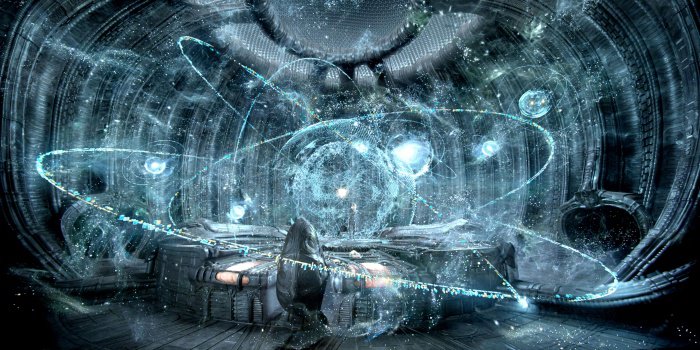
For months Twentieth Century Fox has been frothing us up over Sir Ridley Scott’s return to the Alien business with Prometheus. But for me, this is an occasion to not only celebrate the uncelebrated—Paul W.S. Anderson’s fantastic Alien vs. Predator—but to see through Scott’s contributions and mourn their horrible legacy.

First: Scott didn’t think up Alien’s feminist hero angle. All reports indicate that just sort of happened at the behest of producers David Giler and Walter Hill. Nor did he think up the paradigm-shifting H.G. Giger bio-mechanical alien design. Nor the story.

What he deserves credit for is saying yes to those elements.

But above and beyond that, what Scott—an ace adman whose Chanel #5 ads fused wealth, sex and property to almost pornographic levels—really brought to Alien (1979) was class. And Class.

Writing about Prometheus recently in Box Office, James Rocchi, after trashing the unimportant Alien vs. Predator (2004), just up and said it’s “nice to have Sir Ridley classing the neighborhood back up.”

Yes, ‘Sir”. As in knighted by The Queen. And “classing” things up, one assumes, like he classed up Hannibal with those splendidly art-directed, scrumptiously-lit scenes of Ray Liotta eating his own brains.

But why would you need "class" in a films about chest-bursting phallus monsters? Knowingly or not, Rocchi had used the correct verb.

Back in the late 70s, there’s no way that Scott could help but understand the discomfort we colonials felt around art and the class struggles we’re not supposed to suffer from. Watching Alien, you can see how he capitalized on that discomfort, on the way many Americans were still not quite sure how to process, say, a Bergman film. Did you act as if you got the long pauses, unfamiliar allusions, and the beauty for its own sake? Or should you just walk out, and fear being judged an idiot?

Doing what worked so well in the Chanel ads, he slathered Alien with style and class, and with the glacial pace, mood lighting, anti-hero casting, and doleful music he guessed we’d associate with "serious films." By the time the first finished print rolled through a projector with a really long, 2001-looking spaceship named after Joseph Conrad’s Nostromo and Howard Hanson's august Symphony No. 2 ("Romantic") rolling over the end credits, Scott may have imagined Americans who wouldn’t be caught dead seeing low-class fare like Friday the 13th feeling downright continental about watching what Scott himself called “the Texas Chain Saw Massacre of science fiction."

A Chain Saw, that is, about working-class stiffs deceived by an upper-class android, in which a blue-collar girl (Sigourney Weaver) kills the Giger menace.

British critics like the indispensible Kim Newman (author of Nightmare Movies) saw through the class story, seeing a pose that hid a monster/gore/Ten Little Indians hybrid whose plot required its characters to seek out dark places where they might get killed. But for Americans, that cold, humorless seriousness was the key to what made Alien so damned scary.

James Cameron understood that "serious" was a one trick pony: his war movie remix sequel, Aliens (1986), went for creature battle and feminism, blowing Scott’s pretense and future grunge chic out the air locker: the film was a huge success.

Alas, both Alien 3 (1992), wrought by the future king of high faux seriousness, David Fincher, and Alien: Resurrection (1997) both behaved as if somber, existential gloom—the Sir Ridley touch currently being pimped in the Prometheus teasers like the “Happy, Birthday, David” viral videos, which are basically ruling-class Danish modern architecture porn disguised as futurism—were the key to Alien riches. This proved incorrect.

But then came Paul W.S. Anderson, egalitarian king of deep focus mayhem and why-the-hell-not, ripping any shred of swank out of both the Alien franchise and its déclassé Predator brother, an 80s rasta hunter-monster that was either all developing-world anger-subtext or just a super bad-ass space demon, in a film that pitted one against the other to the death! Finally, some fun, for fuck’s sake!

Anderson is the creator of the terrifyingly strange Event Horizon (1997), the neo-grindhouse exploitationer Death Race (2008), and Resident Evil: Afterlife (2010), which proved that he demonstrably owns the most visionary sense of spatial geometry in modern cinema. He loves mixing, matching, and fusing ideas, conveys a palpable sense of sheer cinema-making glee, and most critics despise him as an aesthetically base-born, second-rate creator of vulgar garbage. 

But beyond these inaccurate judgments lie deeper, troubling, truly dispiriting things that go far beyond anything in any Alien film. I’ll get to that in a minute.

In Anderson’s alternately inspired and nutso screenplay for Alien vs. Predator (or AvP), an African American environmental scientist Alexa (Sanaa Lathan) leads a crew of experts to the Antarctic, where they discover a vast sub-glacier pyramid in which the titular Reagan-era monster icons are about to do battle.

But first, a whopper of a casually sacrilegious backstory posits humanity as just another race, made intelligent enough by predators to farm and worship predator gods, sacrifice themselves, and unknowingly become impregnated with aliens, assuring predators of awesome hunts. And if that doesn’t work out, they can blow up the city and start all over again a millennia later.

And then, back to the present day, amid the pyramid’s Aztec, Cambodian and Egyptian wall carvings, Alexa teams up with Predator to battle the alien queen mother, whose twice the size of either of them.

Anderson stages the main event like some Aztec SF Götterdämmerung, but it’s spiritually the original Kong v. Dinosaur with 21st century technology.

For anyone who’s loved the wonders of Willis O'Brien, Jan Švankmajer, Ray Harryhausen, the men-in-suits of Toho, or other toilers in the strange discipline of bringing the inanimate to life, AvP is like a screaming memorial to gods and monsters made of dead materials.  If Neil Gaiman had relayed this, or if Guillermo Del Toro had filmed the same story, there would be worship.

But Anderson? Too low class, honey. But like I mentioned, it’s more than director issues.

I worry that our always-coded class agita and blind reverence for high seriousness over all considerations has so mangled our appreciation of genre values that people might walk out of Mario Bava’s transcendentally gorgeous Hercules in the Haunted World (1961) or Gareth Edwards’ Lovecraft-in-the-jungle Monsters (2010), because the effects are so “unrealistic” (code-phrase for “not enough money”) and the dialogue “not good enough” (code-phrase for “not ironic, hiply detached, or displaying another luxury commodity trait prized by entitled classes”).

No doubt, Prometheus will offer the usual Scott attributes—as with Blade Runner (1982) and Alien, the out-sourcing of designs to the most exclusive and expensive creators on Earth; the ice-blood mise-en-scene; and gold standard blood and guts effects.

But Anderson? He does what only he can do: His unique mental mad lab, cutting and pasting an endless fountain of pop art, geographic, child-dream, King Kong, multi-culti-architectural, exploitation, Chariots of the Gods, and Lord knows what other fantasies. I imagine him laughing, maybe a little crazily, while the sparks fly.

Ian Grey has written, co-written or been a contributor to books on cinema, fine art, fashion, identity politics, music and tragedy. Magazines and newspapers that have his articles include Detroit Metro Times, gothic.net, Icon Magazine, International Musician and Recording World, Lacanian Ink, MusicFilmWeb, New York Post, The Perfect Sound, Salon, Smart Money Magazine, Teeth of the Divine, Venuszine, and Time Out New York.

SIMON SAYS: Trying Harder: What PROMETHEUS Gets Right

SIMON SAYS: Trying Harder: What PROMETHEUS Gets Right

null

One character in Prometheus sums up why Ridley Scott's return to his 1979 science fiction milestone is as refreshing as it is, in just two words. The protagonist in question is an android, arguably the first in the series since Aliens who’s more than an extension of the people who programmed him. Typically, androids are understood to be mental blank slates in the Alien films, so it makes sense that in Prometheus, David (Michael Fassbender) is treated as a tabula rasa. In fact, one character points this out late in Prometheus's plot, reminding him that he can't feel the emotions he professes to. So it's fitting that, when asked what his boss has communicated to him, David says: "Try harder." 

Prometheus, more ambitious than any other Alien sequel, has an impressively massive scope, both literally and figuratively. The film's mammoth CG and concept art-heavy sets are matched only by its over-arching theological speculation. Of course, because Alien 3 and Alien: Resurrection both went through production hell, their stories are understandably incoherent. But even Aliens, James Cameron's perfectly adequate follow-up to Alien, has relatively staid aspirations. 

The Alien franchise, up until Prometheus, delivered less and less of a payoff. This is most evident in the degrading of the relationship between three key figures in each film: the lead human protagonist (usually Ripley); the robot; and the Xenomorph. In Alien, Ripley (Sigourney Weaver) was the last survivor of the Xenomorph's attack on the Nostromo. She manages to escape the hazards of A mission whose main directives are unclear to all but one of its crew members. Ash (Ian Holm) is the voice of "the company," a phrase over-used in the Alien movies to describe the Weyland-Yutani Corporation. The company's motives are hidden and in this case, immediately dangerous. The Xenomorph thus represents an idiosyncratically weird fusion of technology and primal sexual tension (holy freeholey, H.R. Giger, to what libidinal depths did you plunge to come up with that concept art)—as well as all the trauma and emotions the otherwise bloodless company has suppressed. So it stands to reason that Ash admires the perverse "perfect[ion]" of the Xenomorph's feral but chilly behavior. The Xenomorph is the monster that Ash wants to become but cannot, since he was made in his creators' image.

Ripley's relationship with the Xenomorph is similarly not personal. In Alien's futuristic office space, Ripley is just one grunt among many. For the longest time, she's not the lead protagonist, just a survivor, more a concept than a character. This is striking given who Ripley is presented as in the forthcoming sequels. Each time, she's treated as the reluctant host to the Xenomorph's parasite. In Aliens, the aging Ripley's ticking biological clock gives her nightmares about motherhood, including one in which an alien shoots out of her guts. Her relationship with Newt (Carrie Henn) is simple: she is the child that Ripley wants, but the Queen Xenomorph is blocking her. The aliens are thus once again extensions of Weyland-Yutani, but this time they ultimately represent the monster the company might gradually turn Ripley into. 

The most complex character in Aliens is thus Bishop (Lance Henriksen), the one representative of Weyland-Yutani consistently portrayed as both an emissary of "the company" and an individual. In Alien, Weyland-Yutani employees only start to exist as individuals once they reject the mandates of their bosses. This is also true of David in Prometheus, who says that when his master dies, he "will be free." So it's refreshing to see that Bishop, at the end of Aliens, stands by Ripley and Newt in their final fight against the Queen. In that one moment, Bishop sets up the archetype that screenwriters Damon Lindelof and Jon Spaights will follow for David in Prometheus. Bishop's nature as a more human-like model is apparent in his lack of interest in the Xenomorphs. He, like Ripley, is there to save lives. The mission that he's on is thus not one that sympathetically associates him with the Xenomorphs. Instead, it's assumed that Bishop is trying to be, as the saying goes, "just one of the guys," a point succinctly illustrated during the famous knife trick scene.

Unfortunately, the next two sequels only perpetuate the more psychologically lacking aspects of the franchise. In Alien 3, Ripley grapples with her nascent feelings of survivor's guilt on a prison planet full of convicted murderers and rapists, some of whom have reformed. Ripley relates with the prisoners, all of whom are at least nominally atoning for their crimes. But that identification inexplicably makes the alien the cause of Ripley's feelings of impotence: in her head, the Xenomorph’s survival  is her responsibility and her fault. That theme is never fully explored but it's assumed that Ripley, who tries to get a prisoner to help her kill herself before she (and the alien she will soon give birth to) cause further damage, feels responsible for the Xenomorphs. Her death at the end of Alien 3 is not cathartic, however, because it's a drastic reduction of Alien's themes to a surreal fight between a specific character and a world-ending monster.

Furthermore, the man who created Bishop returns in the last scene of Alien 3, predictably representing Weyland-Yutani's psychopathic interest in studying and profiting from the Xenomorphs. Ripley briefly revives the robo-carcass of Bishop earlier on—meaning the Bishop android that was pretty much destroyed by the Queen at the end of Aliens. But Bishop's human creator's random appearance at the film’s conclusion is as good a sign as any of how un-nuanced that film's portrayal of "the company" and its androids have become.

That being said, Alien: Resurrection, a consistently entertaining but often ridiculous and mostly brain-dead sequel, is even more unambitious. The film starts with a heady theme: what does a post-Ripley Alien movie look like? Ripley's clone is the film's main heroine, once again restructuring the “Alien film” as a personal fight between her and the Xenomorph: ironic, given that the film's main theme is supposed to be evolution and the way that time has changed things. The Xenomorph may have transformed into a weird human-alien hybrid called a "Newborn" by film's end, and the robot Ripley deals with may be a lady (Winona Ryder), in fact. But there's nothing to suggest that anything that Ripley's relationship with these emblematic characters has grown or drastically changed from what we've seen in the last three films. Call (Ryder) is a sympathetic companion and is defined as an individual throughout Alien: Resurrection. There are thus no substantial stakes in her relationship with Ripley. And the Newborn is still just a dangling thread that Ripley has to get rid of so she can die easily. Call also has no real fascination with, or even strong hate for, the Xenomorphs or the Newborn. She just wants to kill the monster and not "die."

This thankfully brings us back to Prometheus, a film that finally builds on the foundation that Scott built with screenwriters Dan O'Bannon and Ronald Shusett. Scientist Elizabeth Shaw (Noomi Rapace) is circumstantially different than Ripley: she gets in over her head in her quest for answers. Shaw's actively searching for the unknown, unlike Ripley, who just happened to stumble upon it. Shaw is thus guided by the same impulses as David, a character who embodies a potentially pure drive towards scientific exploration. David is only corrupt because his master is corrupt. The deaths of a couple of other characters in the film suggest that Prometheus has a naive but intriguingly moralistic through-line: discovery for flawed reasons is dismissed. 

Unlike some other characters, Shaw has no ulterior motives. She genuinely wants to see, do and learn more than anyone else on the Prometheus, the ship that has replaced the Nostromo. The aliens in Prometheus, called Engineers, are the tantalizingly close realization of Shaw's search but ultimately, her encounter with them is not what it could be.  She does not learn anything from that originally wanted to. The aliens that Shaw encounters have no answers for her, leaving her right where she started at the film’s beginning.

That having been said, there is a serious danger inherent in these creatures, made clear when David suggests that the Engineers may have just made humans for the same reason man made androids: "because [they] could." But at the same time, there's a romance to David's actions. He idolizes the Engineers, and calls them "a superior race." But he also admires Peter O'Toole's Lawrence of Lawrence of Arabia, even going so far as to dye his hair an Aryan blond to match his messianic hero. David stands in awe of the Engineers and gets to "live" ultimately because he has that drive to learn and do more to learn about Prometheus' aliens.

By film's end, David and Shaw choose to continue their search for answers to big questions. And while that resolution's thematic bottom line is fairly simplistic, it's also what makes Prometheus's conclusion the second most satisfying in the series. To dream, to continue to strive for something greater than yourself and, yes, to try harder, in the face of the horrifying and the cruel is a very noble thing.

Simon Abrams is a New York-based freelance arts critic. His film reviews and features have been featured in The Village Voice, Time Out New York, Slant Magazine, The L Magazine, The New York Press and Time Out Chicago. He currently writes TV criticism for The Onion AV Club and is a contributing writer at the Comics Journal. His writings on film are collected at the blog, Extended Cut.

CRUEL SUMMER: WARGAMES (1983)

CRUEL SUMMER: WARGAMES (1983)

This video essay is part of the "Cruel Summer" series of articles; this series examines influential movies from the summers of the 1980s. The previous entries in the series covered THE BLUES BROTHERS (1980), STRIPES (1981), and ROCKY III (1982).

The fantastic opening sequence of WarGames uses one of the most basic constructs of video games: just when you think you’ve figured out a level, it turns out to be part of a bigger scenario. We first see an approaching car in the middle of a nasty storm. Two men (played by the late John Spencer and Michael Madsen, both looking very young) approach a house and enter its welcoming living room. After they walk up to a mirror, we learn they’re at a military outpost. Soon they are in an elevator that immediately descends into the Earth. When they reach their destination, we realize they’re in a fortified room in a nuclear missile silo, from which they’re in charge of launching a retaliatory strike if the U.S. is ever attacked. After an alarm goes off, an emergency message is received: an order to launch the first of ten nuclear missiles. As they insert their launch keys and go through the required checklist, the one who’s a veteran (Spencer) starts to have second thoughts about turning the key. The scene climaxes with the Madsen character pointing a gun at his commanding officer and ordering him to “turn your key, sir!” The sequence ends with what is known in the gaming world as a cut scene, an abrupt transition to daylight.

WarGames is the best video game movie ever made, precisely because it isn’t explicitly based on a video game. Hollywood has had mostly disastrous results when they’ve tried to tap into the video game market. Beginning with the Tie fighter sequence from Star Wars, video game graphics and situations have been clumsily incorporated into movies like, say, 1979’s Moonraker, a classic example of Hollywood attempting to retool an established property (in this case James Bond) to take advantage of a current craze. Arcade games like Pac-Man, Defender, and Galaga became part of the youthful movie-going experience. The line from Pong to Star Wars to Pac-Man to Atari to Hollywood seems fairly obvious. Hollywood’s first official video game movie was the summer ’82 release TRON, a spectacular sight and sound show that flopped but that Roger Ebert correctly described as “. . . breaking ground for a generation of movies in which computer-generated universes will be the background for mind-generated stories about emotion-generated personalities.”

WarGames is one of those movies. It works because the story is the main focus, not the technology. (That’s why a movie like the summer ’84 release Cloak & Dagger can retain a retro freshness while TRON: Legacy plays like a rerun.) Director John Badham and screenwriters Lawrence Lasker and Walter F. Parkes knew that the sight of a home computer system was exotic enough that they didn’t need to linger on it in order to keep the audience’s attention. That’s what separated WarGames from the glut of other summer ’83 releases that had some kind of video game and/or computer plot point. There was the speeder chase in Return of the JEDI that played like a take-off on Defender, while in Superman III,Richard Pryor played a computer programmer coerced by Baddie Robert Vaughn into working for him. (The climax of the movie had Vaughn firing missiles at Supes while seated at the controls of the world’s biggest game console.) Joe Dante’s segment of Twilight Zone—The Movie played like a cross between a Tex Avery cartoon and a video game. Even The Man with Two Brains had a throwaway gag of Dr. Necissiter’s (David Warner) brain transfer machine needing quarters in order for it to work. But WarGames felt organic (even if its story was a high concept mix of Steven Spielberg suburbia and Cold War fear). WarGames has a primal pop immediacy that uses the Reagan-era fear of a Russian invasion as a way to tap into the then percolating fear of modern technology.

After that intense Fail-Safe opening, the action switches to Colorado, specifically the NORAD command center where U.S. defense strategies are enabled in the event of an enemy attack. (In reality NORAD only handles detection, not actual military defense strategies.) At the time of the movie’s production, the NORAD set was the most expensive in history ($1 million) and it remains one of the most famous, ranking with the War Room from Dr. Strangelove. The shot where we first see the set is a beaut as a single analyst walks into a rather nondescript room, then, in an unbroken shot, the camera follows him as he walks up some stairs and a panning shot allows us to take in the massive computer screens that make up the front of the NORAD complex.

It turns out that the emergency launch was a test to see if the men in the missile silos are willing to turn the key. Twenty-two per cent of the men failed the test, which is viewed as a major problem by Washington. Some of the President’s men have arrived at NORAD to discuss ways to address this problem. Gen. Beringer (Barry Corbin) is a veteran of war who acknowledges the need for technology but feels safer knowing that men are in the silos. McKittrick (Dabney Coleman) is a civilian analyst who wants to replace the men with computers in order to guarantee the President’s orders are carried out. The film allows us to see validity in both sides.

We then meet David Lightman (Matthew Broderick), a bright kid who lives to play computer games. When we first see him he’s at an arcade playing Galaga. (There’s a brief fun shot of all the games as we try to spot our personal favorite. The detail of David playing Galaga and not, say, Pac-Man is just right. Pac-Man is a game of timing where Galaga requires real skill.) At school, David likes to stay under the radar. He invites Jennifer, played by Ally Sheedy, to come over to his house where he uses his personal computer to dial into the school’s computer and changes a recent scoence test grade from an “F” to a “C.” He does the same for her, because she also did poorly. When she orders him to change the grade back, he does, only to change it to an “A” after she leaves. David and Jennifer are cut from the same cloth as the kids in a Spielberg movie; you can almost imagine a cinematic suburb where the split-level houses from E.T., Sixteen Candles, Risky Business, and, yes, Ferris Bueller’s Day Off are all lined up. The byplay between Broderick and Sheedy is charming and blessedly lacking in teen sexual anxiety. David may be the movie’s first computer hacker, but he’s devoid of paranoia or arrogance. He’s like Mark Zuckerberg’s well-adjusted older brother.

What connects David to the men in the missile silos is his desire to play with the ultimate computer system. When he hacks into a computer game company he inadvertently finds himself playing a game with the W.O.P.R. (War Operation Plan Response), the U.S. Defense computer that comes up with every possible scenario in the event of World War III. Naturally, David wants to play a game of “Global Thermonuclear War,” representing the Russians himself. The sequence where David and Jennifer play on his computer and the people at NORAD scramble to come up with a proper response is close to slapstick. (The cross-cutting by Tom Rolf sustains tension impeccably.) The moment David ends the game is chilling, equating sudden termination of game play with possible nuclear annihilation.

Finally David realizes he almost caused nuclear war, but the W.O.P.R. insists on finishing the game. The idea of computers becoming aware and taking over the world is not new. (Think of 2001, when the HAL 9000 suggested to Dave Bowman that he take a pill and reconsider what he was doing.) The W.O.P.R.’s indifference is just the natural extension of the military creed about turning men into killing machines. Why bother with the men when the machines can simply follow their programming? In its own way WarGames foretold the day when our dependency on computer technology would be at the heart of all our fears.

Of course, Badham and his collaborators don’t bludgeon you with this message in this big-studio summer movie. Badham is known as a journeyman director, something quite rare in today’s Hollywood; he’s able to adapt to whatever environment a story is set in, giving the movie a sense of pacing and character—as in the classic Saturday Night Fever. His other worthy credits include the unjustly forgotten Whose Life Is It Anyway?, Short Circuit, Stakeout, and the underrated real-time thriller Nick of Time. Released a couple of weeks before WarGames, Badham’s Blue Thunder showed a noir-ish techno style that was like an adult video game. For WarGames he was aided immensely by the cinematography of William A. Fraker (Rosemary’s Baby, 1941), whose clean, bright lighting was indicative of early ‘80s movies. (Shooting several computer screens, Fraker does a really lovely job with reflections.) The score by Arthur B. Rubinstein is a mix of militaristic bombast and early sketches of electronica. My favorite musical cue is when David has his first “conversation” with his computer and asks, “What is the primary goal?” Both the answer and accompanying music never fail to create a genuine moment of dread.

The one thing that has made WarGames hold up to countless repeated viewings long after its then novel computer terminology has become dated is the depth of its supporting characters. Today, gadgetry and armory have placed ahead of character, but WarGames is a reminder of when Hollywood seemed to have things in somewhat proper proportions. Coleman allows McKittrick’s weakness for logic to keep him from being an unfeeling martinet, while Corbin is absolutely winning as a career military man only too aware of the situation’s severity. Corbin’s delivery of the classic line, “Goddamnit, I’d piss on a spark plug if I thought it’d do any good,” is typical of his good ol’ boy charm. Maury Chaykin and the incomparable Eddie Deezen play a couple of computer geniuses with a mix of jocular aggression and know-it-all superiority. (“Mr. Potato Head! Back doors are not secrets!”) The one misstep in the movie is the conception of the character of Dr. Stephen Falken (John Wood), a computer programmer who disappeared after personal tragedy and the realization that his work was going to be used for all the wrong reasons. A cross between Stephen Hawking and Robert Oppenheimer, Dr. Falken’s pessimism about humanity and belief in futility is the only place where the movie is explicit about its no-nukes message. Wood eventually wins viewers over, especially when he tells Gen. Beringer, “What you see on these screens up here is a fantasy; a computer-enhanced hallucination. Those blips are not real missiles. They're phantoms." That’s just the set-up for the movie’s climax, a spectacular sight and sound show that suggests that the futility of war might be beside the point. It suggests that all of life’s lessons will be learned online.

San Antonio-based film critic Aaron Aradillas is a contributor to The House Next Door, a contributor to Moving Image Source, and the host ofBack at Midnight,” an Internet radio program about film and television.

SIMON SAYS: White Men Can’t Ninja

SIMON SAYS: White Men Can’t Ninja

null

In the ‘60s and ‘70s, ninjas proliferated in Japanese movies. Movies like The Daimyo Spy (1964) and Castle of Owls (1964) helped to establish ninjas as the sneaky but honorable warriors that we now know them as. In 1981, an Israeli filmmaker with too much money and not enough talent started a wave of ninja-sploitation films. Producer-cum-director Menahem Golan was supposed to direct Charles Bronson in Death Wish 2. But, as the apocryphal story goes, Bronson didn't want Golan at the helm. So Golan directed Enter the Ninja—a movie which, oddly enough, has remote ties to the spaghetti western genre.

Enter the Ninja is the first film in a trilogy of schizoid films that Carlson, my amiably ornery Bad Idea Podcast co-host, has wisely characterized as "copy-and-paste cinema." Like spaghetti westerns and Manchurian action films before them, ninja-splotation films depend on cinematic revisionism. But instead of post-dubbed Italians shooting each other in Monument Valley, ninja cheapies like Enter the Ninja feature non-Italian Europeans throwing ninja stars and colored smoke bombs at Asian guys (plenty of whom were not even Japanese-American) in colorful outfits.

Ironically enough, Franco Nero, the star of Sergio Corbucci's blood-soaked spaghetti Western classic Django (1966), also starred in Enter the Ninja. Nero's face changed in the 15 years between the two films: the formerly glass-jawed B-grade star is notably puffier and has a different mustache in the later film. But the jowly, bleary-eyed, Chevron-mustache-clad look Nero perfected here would influence a couple of other ninja-splotation heroes, including Richard Harrison, star of such films as Ninja Terminator (1985) and Project Ninja Daredevils (1986). Harrison may have started his film career auspiciously in the 50s, as the co-pilot in the film version of South Pacific (1958), but after starring in such spaghetti westerns as Rojo (1967) and $100,000 for Ringo (1966), Harrison went even farther West: to Japan. 

The connection between spaghetti westerns and the '80s cycle of white-washed ninja films doesn’t run very deep. The narrative coherence found in spaghetti westerns can’t be found in ninja movies. For example, in Enter the Ninja, Golan arbitrarily transplants a western stock plot in the Philippines, presumably because it was famously very cheap to shoot there. But once we are in the Philippines, we see that nothing makes sense. Case in point: the film's villain is an evil, union-busting plantation owner with a bizarre love for synchronized swimming. He's hired a sadistic one-eyed German fellow as his head lackey. Similarly, the titular machine in Ninja Terminator is a small toy robot that delivers its irate masters' death threats for them. Regardless of budget constraints, these movies make no sense.

But ultimately, such a salient lack of sense is part of the appeal of the ninja-sploitation film. These blustery and nonsensical films follow murderous but chivalric white guys with lethal squints as they fight badly dubbed villains who laugh maniacally and use the telephone too much. What kind of ninja uses a phone? These are ninjas! They live by a code of honor, protect their women and beat each other up with exotic weapons. Who said anything about Ma Bell?!

In summation: no, I can't tell you why one film would include a toy robot, or another a sadistic, eye-patch-wearing gnome. But I'd have an equally hard time explaining why Nero's Django hid his signature Gatling gun in a coffin. The average ninja-splotation film makes its own rules, unwittingly going further than most spaghetti westerns did to feature as much exploitable ninja-related violence as possible on a tiny budget. Schlockmeisters like Golan and Godfrey Ho (Ninja Destroyer, Rage of Ninja), inept filmmakers though they were, carved out a surreally burgeoning niche for themselves.

***Enter the Ninja will be the first movie playing in a double bill that Steve Carlson and I will present next Saturday, 6/9 at 92YTribeca. That night, we will also be screening a 35mm print of Ninja III: The Domination.***

GREY MATTERS: What Is Sherlock Holmes Afraid Of?

GREY MATTERS: What Is Sherlock Holmes Afraid Of?

null

Sherlock, Steven Moffat and Mark Gatiss’s present-day adaptation of Sir Arthur Conan Doyle’s century-old sleuthing stories, gives us two heroic figures struggling with, well, not much. But you wouldn’t know it to watch them, as the creators of the most recent version of Doctor Who conjure up one of this year’s best rides.

It’s a show that lacks not one bit of wit, pace, and all-around smarts. It gives you everything you could reasonably want from a Sherlock Holmes movie—and not one iota more. It sidles right up to greatness—but stops right before it gets there.

The splendidly named Benedict Cumberbatch and his magnificent cheekbones play Sherlock as a zero-patience dandy with a mainframe for a brain. This Sherlock, using deductive reasoning, can suss out your life story from a scratch on your watch and a murder from a smear on a wall. He shares the storied 221B Baker Street flat with Afghanistan war veteran Doctor John Watson (the UK Office’s Martin Freeman), the only person he can tolerate for more than sixty seconds. Watson, in turn, is enthralled by Holmes’ brilliance. Thus, a bromance blooms, as arcane cases are engaged at light speed.

And aside from a consistent subplot in which Watson hopes to bring out the human side in Sherlock that may not exist, that is that. Never has a cigar so strenuously insisted it is just a cigar.  Or, in Sherlock’s case, a nicotine patch. Once the dust settles, the most remarkable thing about Moffat and Gatiss’ smashing new Sherlock is how little there is to say about it, on the surface.

It should be said that there are some fun updates. Dr. Watson posts Holmes’ adventures in a blog. High tech replaces creaky Victorian science. And Moriarty is now a master computer coder/madman with a Bee Gees infatuation, a playful riff on Doyle’s vision of Sherlock’s arch enemy, who was a master criminal utilizing the day’s highest technology to wreak havoc (Watson would call him “the famous scientific criminal”).

In addition, Doctor Who fans can, of course, point out the traits The Doctor and Sherlock share: uncontrollable braininess, love of long coats and fascinated companions, the threat of boredom, and arch enemies. But where Doctor Who has turned out to be the stuff of university courses, Sherlock displays a flashy insubstantiality. Which is, again, fine. Or is it?

After the end of the second season broadcast two weeks ago, the image I have trapped in my mind is that of Sherlock and Watson in a long dark corridor, running, from a scene on the show. By now I wonder, however, what from?

SEX.

Doyle was a man of his time. He disapproved of women’s right to vote and created in Sherlock the ultimate logical man, one who believed that “women are never to be entirely trusted—not the best of them” and “ "the motives of women . . . so inscrutable . . . . How can you build on such quicksand?”

Moffat and Gatiss, meanwhile, who brought to Who not one but two main female characters as integral as the Doctor, along with some of TV's most ceaseless casting of female secondary characters, are the most feminist showrunners this side of Joss Whedon. They’ve gone beyond mere surface changes, pissing off the traditionalists to make their show really work in the 21st century.

Already their Sherlock doesn’t dislike women any more than men. But then it gets complicated.

I’ll take Watson’s word that he and Sherlock are not gay. But what are we to make of Sherlock, cutting an almost ridiculously Romantic figure, running across the hills and moors of the Baskervilles with his scarf and Saville Row coat unfurling in the whipping wind?

I’d say the game is afoot.

In "A Scandal in Belgravia," the show hits its low point, because it tries to reconcile Doyle’s female aversion with a semi-female-interest story for Sherlock, courtesy of a contemptuous dominatrix named Irene Adler (Lara Pulver) whose client list and sexual allure could topple nations. (Literally.)

Aside from the absurdity of Adler as a character—in 90 minutes she goes from S & M top to intellectual peer to Bond-style girl of international mystery to terrorist victim—there’s the dissonance of any of these female types fitting into any Sherlock-esque story. (Yes, I know an Irene Adler exists in the Canon, but she was nothing like this, and that was another Sherlock, a long time ago.)

The Holmes stories have nothing to do with love. When Sherlock makes it clear to Watson that he doesn’t have friends in the plural sense, you realize there is even less room for a lover, and the obligations love entails. And that’s why the story rings so hollowly.

One assumes that, if Sherlock ever felt the slightest erotic stirring, he would deduce its chemical origins and construct an elixir to neutralize the sensation. And that’s what Sherlock Holmes is all about.

He lives in an intrinsically adolescent, sex-negative safe zone—which also describes the official club for Holmes enthusiasts, The Baker Street Irregulars, who did not allow female members until 1991, when the appearance of ASH (The Adventuresses of Sherlock Holmes) leveled the non-erotic playing field.

At the moment, we’re at the exact point in the show’s existence where Watson can’t continue to look satisfied with his exclusive relationship with Sherlock without wanting something more. (My limited understanding of the books is that he gets a bit more, but that this happens largely off-stage, which wouldn’t be adequate for modern drama.)

The point is—who are these guys? For two short seasons the show has floated on appearances, in a very Victorian fashion. And I suppose it could keep doing that, in a very "series TV" fashion.

And I know, for a show that doesn’t give you much to talk about, I certainly talked a great deal, but that’s what I’m talking about—the empty spaces, the things the show hasn’t yet addressed.

Earlier, in “The Hound of the Baskervilles,” drugs cause Sherlock to think he’s seen a monster, which leads to doubt, which he suffers badly.  Add this to his usual arrogance and tiny cruelties, and you wonder why other characters insist that Sherlock could be a great man.  Not a good one, a great man.  And yet it’s Moriarty, a mad genius, a sociopathic criminal and mass murderer who sees in Holmes a fellow traveler in boredom and compulsive puzzle playing, who’s more accurate.

Watson too has his own dark bipolarity.  When we first meet him, he seems to be suffering from PTSD. But as he says himself, what was wrong was that he missed war. The thrill of being with Sherlock—the crime, death and violence—was curing him.

If Moffat and Gatiss want, they can tell the traditionalists this: Hey, we stayed true to the original model for two seasons. But Sherlock is gaining an international audience. If you could take Russell T. Davis’ version of Doctor Who and make it your own, can’t we add some dark shadows to this Victorian black and white?

Ian Grey has written, co-written or been a contributor to books on cinema, fine art, fashion, identity politics, music and tragedy. Magazines and newspapers that have his articles include Detroit Metro Times, gothic.net, Icon Magazine, International Musician and Recording World, Lacanian Ink, MusicFilmWeb, New York Post, The Perfect Sound, Salon, Smart Money Magazine, Teeth of the Divine, Venuszine, and Time Out New York.

A CONFEDERACY OF DUNCES Finds Its Star In Zachary Galifianakis

A CONFEDERACY OF DUNCES Finds Its Star In Zachary Galifianakis

null

Among its army of cult followers, A Confederacy of Dunces is the funniest American novel ever written. Little surprise, then, that the recent leaked news of yet another attempt to adapt it to the big screen after thirty years of failure—with Zachary Galifianakis in the lead role—was greeted ecstatically by the book’s fans. But enormous obstacles remain in translating the unusual book to screen, including, most of all, whether Galifianakis has the ability to capture its one-of-a-kind antihero, Ignatius J. Reilly, in a way no one has ever done.

The story of the book’s path to publication is extraordinary. A gifted young New Orleans writer named John Kennedy Toole wrote A Confederacy of Dunces in the early 1960s. Toole couldn’t get it published, and, falling into deep depression from his general lack of success, killed himself in 1969 at age 32.

Several years after his death, his mother discovered the only remaining copy of the Confederacy manuscript in a box in his room. Determined to prove her son’s brilliance, she submitted the book to several publishers, meeting with rejection until she approached the great southern writer Walker Percy in 1976. Showing up unannounced at his office at Loyola University, she dumped the massive, barely legible draft in his hands and demanded he read it. Percy, who describes the incident in the book’s foreword, astonishingly not only read it but loved it. With his prodding, Louisiana State University Press published it in 1980 with a small print run, not expecting a profit. The rest is history: Confederacy earned national critical attention, won the Pulitzer Prize, and has sold millions of copies.,

The book’s path to Hollywood has not had a similar ending . . . yet. After Confederacy’s release, Scott Kramer, a young executive at 20th Century Fox, immediately bought its rights and set out to get the movie made. In 1982, he nearly signed John Belushi to star—after several amusing face-to-face meetings where the prickly star repeatedly forgot who Kramer was—but Belushi died shortly before a deal could be consummated.  Since then, such luminaries as Kramer, Johnny Carson, and John Langdon have tried to get the project made, with stars attached including John Candy, Chris Farley, John Goodman, and Will Farrell, as well as directors Harold Ramis and Steven Soderbergh, but none of the productions have ever gotten off the ground.

Of Confederacy, Will Farrell has said, “It’s a movie everyone in Hollywood wants to make, but no one wants to finance.” He may be right, but that’s only a small piece of the story. Other challenges relate to the book’s structure, specifically its language (which is unique to blue collar New Orleans), time period (ostensibly set in the early 1960s), and unusual plot layout (or really, its lack thereof). A big part of the book’s charm, indeed, lies in its language, which many Louisianans have long praised for its accuracy in capturing the region’s accents, something Toole seemingly acknowledged to his future readers in the beginning of the book: “’Oh, Miss Inez,’ Mrs. Reilly called in that accent that occurs south of New Jersey only in New Orleans, that Hoboken near the Gulf of Mexico.”  (This was also observed by Percy in a letter to Toole’s mother: “[Confederacy has] an uncanny ear for New Orleans speech and a sharp eye for place (I don’t know of any novel which has captured the peculiar flavor of New Orleans’ neighborhoods as well).”). First-time readers may take some time to get used to this language, but it’s hardly unintelligible: it’s an integral ingredient in creating the strange world of the novel, and it wouldn’t have to be changed to be understood or be funny. Take, for example, the main character’s description to his mother of an altercation at work: “I had a rather apocalyptic battle with a starving prostitute,” Ignatius belched. “Had it not been for my superior brawn, she would have sacked my wagon. Finally she limped away from the fray, her glad rags askew.”

Time period is also a potential challenge, but one that can be fairly neatly addressed. For the most part, the book makes almost no direct reference to its time, with the only clues revealing it based on the movies Ignatius goes to throughout the book (“When Fortuna spins you downward, go out to a movie and get more out of life”). When the adaptation actually takes place, then, is potentially flexible; a good film could take place in 1962 or 2012 and still capture the book’s spirit. In fact, it seems likely, both because of cost considerations and Ignatius’s loathing of the modern world, that the adaption would be set in the present, to make Ignatius’s pathology more timely and relatable.

Implementing Confederacy’s plot would be harder. For all of its gifts, the book is a highly unconventional narrative with no real plot. Not that there's anything wrong with that, but this why Toole had such a tough time finding a publisher in the 1960s, and why any adaptation would be a challenge.  

This problem was recognized by Simon & Schuster’s Robert Gottlieb. Gottlieb, who would go on to become the Editor-in-Chief at The New Yorker and the top editor at Knopf, corresponded with Toole over two years in the mid-1960s. He admired the book but repeatedly observed its lack of plot, something he noted in his first letter to Toole: “[Confederacy] must be strong and meaningful all the way through—not merely episodic . . . . In other words, there must be a point to everything in the book, a real point, and not just amusingness that’s forced to figure itself out.”

Considering its level of success, Gottlieb clearly underestimated Confederacy’s broader appeal, but his criticism remains apt. Despite Ignatius’s epic misadventures and squabbles, his personal story doesn’t follow a regular arc. This lack of direction is even more pronounced with the other characters: Ignatius’s antagonist, Myrna Minkoff, who isn’t actually seen until the novel’s final scene, the sardonic Burma Jones, the nasty bar owner Lana Lee and her dopey aspiring stripper Darlene, Patrolman Mancuso and his aimless “quest” to make an arrest, the pitiful denizens of Levy Pants, Claude Robichaux and his hatred of “communisses,” and others have no realizable goals—they’re all just drifting through the story. Make no mistake: their exploits are fantastic, but they lack real depth or meaning and would thus largely have to be filled out in a film—where, unlike in a novel, a character's actions must be seen and not just surmised.

Still, no book adapted to film is retained in its entirety, and writers must cut, amend, or remake entire scenes or segments. While in Confederacy’s case, the plot work to be done will be more immense – creating an individual drive for virtually each of the characters—and has likely been a factor in the repeated adaption failures, it’s not unreasonable to expect from a crack writer. Furthermore, as there is no single framework for a movie, Confederacy could come out as more episodic and less plot-driven; though many details would need to be creatively crafted from scratch.

Instead, the biggest difficulty in adapting Confederacy comes from the unparalleled main character. It is not hyperbole to describe Ignatius Reilly, the massive, flatulent, obese, obscene, delusional, curmudgeonly, masturbatory, habitually unemployed, and unemployable medieval philosopher layabout as a character with few parallels anywhere in American letters. He is Toole’s most magnificent creation, the novel's center and its most appealing part.

Every reader knows Ignatius is a fool, as does every character with whom he crosses paths; the only person who doesn’t realize this is Ignatius himself, which is what would make any portrayal of him so complicated.  Just beneath Ignatius’s hapless appearance, questionable sanity, and miserable tenure as a hot dog vendor is an unshakable dignity: we may see him as a clownish pariah, but Ignatius believes, no, knows he is a genius and a revolutionary, and it is the rest of the world—businessmen, police officers, gays, Protestants, beatniks—that ignores his wisdom at its own peril.  Preserving this dignity while at the same time capturing Ignatius’s rants and pratfalls would require a tough balancing act.

To portray him as simply a bumbling fat-ass who lives with his mother might earn some cheap yucks, but it would ignore Ignatius’s true greatness. This approach marks the fate Confederacy fans should fear most given the substandard comedies being churned out in recent years; I can just see a preview ad with a mustached, bloated Ignatius falling over and farting in a coarse resemblance to the tired slapstick of the recent ghastly-looking Three Stooges flop.

The newest adaptation attempt is at least in good hands.  The helming producer, Scott Rudin, is one of the most respected and intelligent men in Hollywood today (The Social Network, There Will Be Blood, The Girl With the Dragon Tattoo), with a reputation for taking on tough projects (including, for example, plans to adapt some of the most complex novels of William Faulkner and Cormac McCarthy).  Rudin’s selection of Zach Galifianakis to play Ignatius is evidence that the filmmaker is on the right track.  Confederacy with Will Farrell would have been a painful disaster: besides lacking the all-important physical look, Farrell’s one character, the Ricky Bobby-Ron Burgundy-Frank the Tank-George W. Bush idiot may lack self-awareness, a deficit which would be key to portraying Ignatius, but it’s a tired, one-dimensional act which couldn’t capture Toole’s subtlety.  John Candy, who thrived in kindly roles in Uncle Buck and Planes, Trains and Automobiles would have been too soft-edged, and the great Chris Farley, most clearly in Tommy Boy and defining roles like SNL motivational speaker Matt Foley, too loud and purely physical to pull it off. 

Less comedically narrow, Galifianakis is a better fit for the role.  Besides sharing Ignatius’s girth, tangled facial hair, swarthy visage, and panting physique, Galifianakis can also be funny in a mild manner, something he exhibited well in The Hangover as Alan, a pathetic, creepy weirdo who nonetheless doesn’t realize his eccentricity or others’ disgust for him.  Galifianakis also acts with a disguised but pointed bitterness, conveying an anger at the world which doesn’t come off as so biting and hostile that it overwhelms his comic effectiveness, and which would be a critical component to capturing Ignatius’s crusade against the world.  Galifianakis’s acting resume is thinner than those other top comic actors, but with Belushi and Oliver Hardy long gone, he seems by far the best man to balance Toole’s story with Ignatius’s misplaced dignity and soft, harmless fury.

If Confederacy finally gets made, fans everywhere will be hoping he can do it.
 

Mark Greenbaum's work has appeared in The New York Times, Salon, The LA Times, The New Republic, and other publications.

GREY MATTERS: The Way the World Ends

GREY MATTERS: The Way the World Ends

null

In 2001, Steven Spielberg went apocalypse crazy and he never recovered.  2001 was when he froze the world in in A.I.: Artificial Intelligence, followed by War of the Worlds, followed by the legacy-soiling Transformer toy-apocalypse line, more alien end times in Falling Skies, and the failed eco-Holocaust/Jurassic Park mash-up of Terra Nova—and was he done? No, he was not.

He will soon be destroying the world again in a remake of the original SF Armageddon, 1951’s When Worlds Collide, and an adaptation of Daniel H. Wilson’s robot apocalypse, Robopocalypse.

Still, the question isn’t “Why?” so much as, “What took him so long?”

One can only guess, so I will. One thing that rose from the debris of 9/11 was a need to process ambient terrors, of which there were suddenly so many. A new genre created itself from bits and pieces of other genres, in true Doctor Frankenstein fashion. And there’s always big money in salving inarticulated jitters—just ask Spielberg.

And so, by my rough count, over seventy-five films and TV shows have congealed over the last decade to form an actual new subgenre, or series of interconnected subgenres, complete with shared repeating narrative patterns and modes of obliteration.

How does the world end? By nuclear means (28 Days Later), by plagues (Contagion), vampires (Stake Land), zombies (The Horde), aliens (Returner), natural threats (The Happening), and sundry Biblical agita  (Jerusalem Countdown).

The subgenre has developed certain stylistic defaults: for example, heavy gray murk and raining ash, as in the indie post apocalypse road picture, The Road, and populist films like Terminator: Salvation and Book of Eli. We also have apocalypse-film go-to actors: Willem Dafoe moves effortlessly from Michael and Peter Spierig’s populist vamp actioner Daybreakers to Abel Ferrara’s self explanatory art house effort, 4:44: Last Day on Earth, while Sarah Polley, eternally wan, affectless and snarky, stared in 1998’s seminal indie end timer, Last Night, which added dot.com-style yawns to the Armageddon reactive syntax, and the remake of Romero’s pre-apocalypse classic, Dawn of the Dead.

Most fascinatingly, this new subgenre has split into what I’ll call indie and populist apocalypse films, each with radically differing sensibilities, aesthetics, and values.

First, the indie apocalypses. The indies are largely by, about, and for upscale, highly educated, older white people fortunate enough to enjoy the luxury of feeling a weary, ambient disappointment, born of under-appreciated entitlement. Inevitably, this leads to the valuing of the canon over the new, the ‘introspective’ over the vibrant, and, to bring us back to where we started, to what Spielberg is up to: staying lively, even if that means blowing up the world.

In the populist apocalypse films, anyone, of any class or any gender, can be a hero. She can be a genetically modified lab experiment turned anti-corporate leader, (see Paul Anderson’s Resident Evil: Afterlife). She can be a boy survivor of Earth’s decimation with a second chance on another planet (see Titan, A.E.).  Or, possibly, in a few years from now, while the world is falling apart, a starving, ruined slip of a girl taking down a fascist government, one arrow at a time, in the last of the Hunger Games films.

Anyway, while she may not make it to the end credits, the pop-apocalyptic hero’s efforts will not be for naught, and our entertainment budget will not be blown on a solipsistic nihilism fantasy.

And so, for your approval—or not—five films from the indie and populist sides of the Armageddon divide. Although I clearly have my issues with the indie cause, I’ve tried to include the best—or most interesting—of the subgenre.

INDIE ARMAGEDDON!

4:44: Last Day on Earth (2012)

nullSo nobody listened to Al Gore, and now some unspecified, global—but prompt!—atmospheric disaster will destroy the world at exactly 4:44 EST, in Abel Ferrara's new film.

As if continuing the role of the drug dealer he played in Paul Schrader’s Light Sleeper, Willem Dafoe is Cisco, a recovering addict with a super younger painter girlfriend named Skye. She’s played by Shanyn Leigh, the director’s real-life GF, which adds a layer of hermetic creepiness. Her paintings, big splashes of bold organized color are a true relief from the drab, mauve-ish digital video tones that give the movie a vanity project emptiness broken only by stock footage of riots, the Dalai Lama and other random elements.

In true boomer fashion, the End is really all about Cisco. So after bedding Skye, he mumbles to the heavens, wanders around Essex Street on the Lower East Side to see if—like the wild Ferraro of Ms. 45, Bad Lieutenant, and The Addiction—he will be able to stay literally/figuratively sober long enough to find some friends with whom he can talk about himself. Then he comes home, and the world ends.

Thing about these movies, you don’t have to worry much about spoilers.

They Came Back (2004)

nullThey Came Back takes the flesh-eating out of the zombie film model; what's left is a nightmarish allegory of elderly hospice care that never ends.

In a French village, the dead return. They seem the same. Almost. Sort of. But then they start gathering at night, silently, doing . . . what?

Robin Campillo’s unnerving film bounces real world fears into a fog of classic, Val Lewton-style quiet horror. The camerawork is stealthy, but like many indie apocs you wonder why color is such a villain in the director’s mind.

Still, the atmosphere and implication stabs home some cold questions: How long before the dead use up too many jobs, resources and space rightfully allotted to the young or healthy? How much care is too much care?

They Came Back also entertains a spiritual dimension that’s truly scary. It’s also revealing in the sense that it reminds us how self-limiting left-leaning indie film has chosen to be.

Melancholia (2011)

nullBoth a balm and a reveal of a classic Romantic sensibility at work behind Lars von Trier's mad Dane image, Melancholia limns depression as an elemental power that rips the planets out of line and threatens to sever the connection between two sisters. There's Justine (Kirsten Dunst), a major depressive getting married in the grand style, and Claire (Charlotte Gainsbourg), slender and always frightened.

And then there’s a planet—called “Melancholia”, no less—hurtling, When Worlds Collide-style, towards Earth, and Claire has no choice but to do the most terrifying thing: to ask for what she needs from a sister who delights in cruelty.

Most of all, this is rapturously beautiful, the natural universe as a cruel, loving, and insane mother-tormentor figure. Obliterated in the first and last images by Melancholia’s impact, but united by Wagner’s “Tristan und Isolde” and the sisters’ recurrent hand-holding, this is von Trier filming his way out of malady back to our world—and at 56, just starting a whole new peak of his career.

The Road (2009)

nullSo, something destroyed all life on Earth. The skies are grey, trees black and spindly, buildings in advanced decay. The world, in John Hillcoat's vision, looks like a 90s black metal album cover.

Filthy, wretched, starving, fifty-something Poppa (Viggo Mortensen) and his filthy, wretched, starving Boy (Kodi Smit-McPhee) are wandering South, and that’s what you’re going to be seeing for 111 minutes. The only reprise comes in the form of 30-second sunny dreams of Man's wife (Chalize Theron).

Aside from starvation and the elements, the biggest threat is from cannibal attack. As luck would have it, Man and Boy stumble upon an old southern mansion with a basement full of naked, crazed people . . . who are being warehoused as food.

Excuse my flippancy, but The Road’s cloying high seriousness, its saccharine Nick Cave score, and its studied miserablism can't hide the fact that The Road is one genre step away from being a zombie movie, which is why I suppose they eliminated the famed baby-roasted-on-a-campfire-spit scene which appeared in Cormac McCarthy's original book.

The Last Days of the World (2011)

nullThanks to Japan's manga culture, we finally got an indie end time film with young people in it. Based on Naoki Yamamoto’s cult manga, The Last Days of the World tells of Kanou (Jyonmon Pe), a seventeen-ish schoolboy busy hating life when a half-foot high God in a top hat shows up to tell him the world will be ending soon.

And so Kanou kidnaps his crush, Yumi (Chieko Imaizumi), steals a car, tries to sexually attack Yumi with mayonnaise (don’t ask), finds a cult devoted to cos-play (dressing up in manga costumes), as a life-hating cop kills people while in pursuit of the pair. And sometimes a talking dog, or their car, might remind Kanoe that The End is Nigh.

Eiji Uchida’s sometimes funny nihilist travelogue wants to be Donnie Darko, suggesting Miike’s Gozu, but it lacks the latter’s passionate nuttiness. It’s also bereft of any music beyond a stumbling two-chord guitar flourish, or any color beyond a dull palette of liver-lavenders, greys and spoiled mauves. Uchida’s film is already dead: the end of the world is a mere formality.

POPULIST ARMAGEDDON!

Pandorum (2009)

nullAt the start of the film, the crew of a huge starship wakes from hyper-sleep with severely compromised memories.

The ship—apparently designed by a firm headed by Philippe Starck, H.R. Giger and H.P. Lovecraft—slowly reveals itself to be infested by shadow-dwelling monstrosities, but this is blamed on a mind-malady called "pandorum."

As more sleepers awake and promptly die horribly, we realize that the starship has been at the bottom of another planet’s ocean for hundreds of years after Earth’s destruction, and that Christian Alvart’s relentlessly nerve-wracking film is, like Carpenter’s The Thing, about trust among the working class. Unlike Carpenter’s film, it ends with a very tentatively hopeful gesture.

Dollhouse, “Epitaph Two: Return” (2009)

nullJoss Whedon’s Dollhouse starred Eliza Dusku as Echo, a ‘doll’ implanted with an endless array of personalities with as many skills who are hired by the rich, corrupt and despicable for various purposes. After a dumbed-down first season that felt like a surreal, sub-par Alias with muted anti-objectification subtext, Fox left Whedon alone. The result: the bleakest show in network history.

Men ‘nested’ inside women's memories like cancers. ‘Dolls’ blew their brains out to stop becoming what men wanted, or were brain-wiped and stored in an ‘Attic’ like, well, broken dolls.

“Epitaph” suggests where Whedon would have gone with a third season. It’s 2020. Corporate misuse of Dollhouse technology has turned the world into a wasteland. Clutches of people know who they are; others have built agrarian lives built on false memories.

Echo and a small group of survivors believe that a pulse weapon can destroy all imprinting and return humanity to their real selves.The Onion’s Noel Murray compared Dollhouse’s artistic growth to “MacGyver [who] gradually morphed into Battlestar Galactica."  Yep.

I Am Legend (2007)

nullFor all Robert Neville knows, he’s the last man in Manhattan after an attempted cancer cure decimated most of the city’s population, save nocturnal “Daykseekers” that feed on those immune to the virus.

Neville—played with grace and gravity by Will Smith in what will be remembered as his greatest role—is an Army doctor who doesn’t give in to despair even as it tears at him.

Director Francis Lawrence takes shots of almost Malick-ian stillness in long shots of a strangely sylvan dead city, rendered in computer-assisted views of Manhattan landmarks overgrown with Nature softly amuck. There’s the tiny alien effect of being able to hear Neville’s German Shepard sniffle where once crowds would dwarf his loudest bark. Smith portrays the alienation, fear, and loneliness of his situation beautifully, while never going for pitiful. And that ending—what’s wrong with nobility again?

Priest (2011)

nullSomewhere in an unspecified post-apocalypse wasteland, The Church is led by a corrupt monsignor (Christopher Plummer) who rules with an iron Christian fist in the middle of a war between vampires and humans.

When a lovely young girl (Lily Collins) is kidnapped by rogue vampires, led by an uber-vamp Black Hat (Karl Urban), who doesn’t know the girl is the niece of a vamp-hunter named Priest (Paul Bettany), all hell breaks loose.

Before you know it, our rockin’ man of the cloth with the upside down crucifix face tattoo (!) is on his ultrasonic nitrocycle to save Lucy and teach Plummer a thing or two, eventually teaming with a priestess badass (Maggie Q).

Directed by Scott Stewart as if he lost his mind after watching The Searchers, Priest is the real successor to the Mad Max films, with about twenty gallons of sizzling sacrilegious transgression thrown in just because they could, and also the alien luster in Don Burgess’ purposefully monocolor images, as a gorgeous bonus feature.

Terminator: The Sarah Connor Chronicles (2008-9)

nullTerminator: The Sarah Connor Chronicles was the most conceptually daring television entry in the canon since the first film in 1984. Predictably, Fox axed it after a paltry thirty-one episodes.

Lena Headey took the titular role as the badass mother of John Connor, aka the man who will save us all from the world-destroying Terminators. Connor, meanwhile, is played by Thomas Dekker.

Guaranteeing the show its eternal place in Queer Media Studies is the other "woman" of the Conner household–a "good" Terminator dedicated to John’s survival. Her name is Cameron, and she's played by Joss Whedon regular Summer Glau in a hilariously discombobulated performance.

Showrunner Josh Friedman deftly ran this odd alt.family through plot lines that juggled Fugitive tropes, bits of bizarro-world domestic comedy, SF time paradoxes and action film storytelling—but what’s compelling now is the way its anti-corporate storylines mirror the general exhaustion of the Cheney era’s end.

Ian Grey has written, co-written or been a contributor to books on cinema, fine art, fashion, identity politics, music and tragedy. Magazines and newspapers that have his articles include Detroit Metro Times, gothic.net, Icon Magazine, International Musician and Recording World, Lacanian Ink, MusicFilmWeb, New York Post, The Perfect Sound, Salon, Smart Money Magazine, Teeth of the Divine, Venuszine, and Time Out/New York.