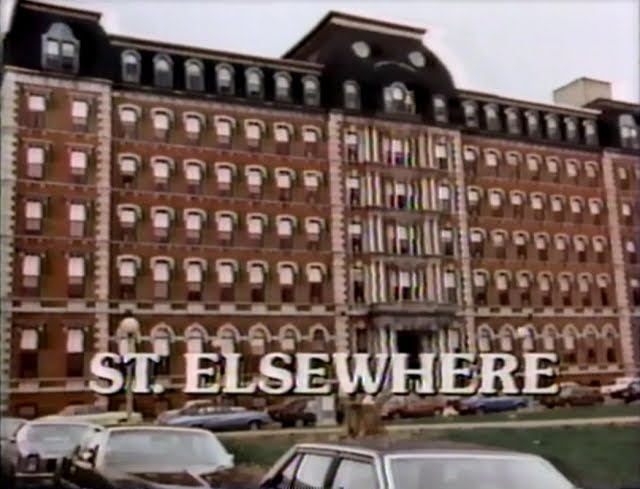
Films Misunderstood: Hollywood’s Best Retroactively Redeemed Failures

Films Misunderstood: Hollywood’s Best Retroactively Redeemed Failures

null

People love, in general, to talk about failure, especially as it applies to the movies: stories of bombs or flops or unmitigated disasters of any kind are the industry equivalent of celebrity gossip, and they usually run about as deep. But an even more salient topic of conversation than a perceived failure’s dismal performance at the box office is the lashing it receives at the hands of critics, which, if universal (and scathing) enough, often garners more attention than the failed film itself. And once that reputation has settled in, it’s practically impossible to shake: we still talk of The Phantom Menace in the hushed tones reserved for funeral processions, the very mention of its name cause for knowing snickers and recollections of widespread disdain; few could ever approach it for the first time free of those damning preconceptions. John Carter, Andrew Stanton’s ostentatious sci-fi epic and a colossal loser at the box office, is only the latest in a long line of anticipated blockbusters beset by pervasive pans and walk-outs, the harsh words hurled its way amplified, at record volume and in record time, by rapid-fire tweets warning others to stay away. It barely stood a chance: a nine-figure marketing budget was nothing compared to the trusted words of those who had seen it and sworn it off straight away, and it’s unlikely, even if it finds admirers, that its general reputation in the public consciousness will ever fully recover.

And yet, every so often, a film widely considered to be a failure reemerges years later as a newly respected critical favorite, its reputation salvaged on the grounds that it was once misunderstood. In some cases, the film finds a new audience through ironic reappraisal, which is often how bad films become cult classics–an odd or obscure work that couldn’t find love on the mainstream theatrical circuit finds fans on home video or as a midnight movie. Other times, though, the effect is more substantial: a younger generation of critics might heave a forgotten film up from the muck of its battered reputation, rediscovering it as a forgotten classic or great work never given its proper due. These films, the orphans taken in and dearly loved, are some of the most interesting cases of critical appraisal and reappraisal in cinema history, and it’s worth exploring how and why their reputations were rescued–as well as why their reputations were abysmal in the first place. What’s most fascinating, of course, are the implications for contemporary criticism: these considerations might cause one to hesitate before tearing into any new film, because what seems so obviously bad today might, in another thirty or forty years, come to be regarded as a masterpiece. And nobody wants to be the one to have short-sightedly slammed a classic in the making. Following are eight films which, at the time of release, received vicious reviews but have, in the years following, become lauded as great works, in one way or another.

The List:

8. Johnny Guitar (Nicholas Ray, 1954)

nullWidely dismissed when it came out on implicitly sexist grounds—its overtly feminist bent didn’t sit well with the mid-50s status quo—Nicholas Ray’s Trucolor western epic Johnny Guitar has finally, over the last decade-plus, emerged as something of a critical darling, owing in no small part to its director’s ever-increasing prestige. Unavailable on Region 1 DVD for far too long, the film recently made its long-awaited home video debut, thanks to a sterling Bluray from Olive Films, whose efforts will undoubtedly introduce this daringly revisionist classic to the newly receptive audience it has always deserved. Scoring only one vote in the 2002 iteration of Sight And Sound’s once-per-decade poll of the greatest films of all time, Johnny Guitar appeared on an impressive 8 ballots this year—as good an indication as any of the film’s gradually ballooning reputation.

What The Critics Said Then:

– “Joan Crawford is as sexless as the lions on the public library steps and as sharp and romantically forbidding as a package of unwrapped razor blades. Neither Miss Crawford nor director Nicholas Ray has made it any more than a flat walk-through of western cliches. That’s about all there is to it…the color is slightly awful and the Arizona scenery only fair. Let’s put it down as a fiasco.” – Bosley Crowther, The New York Times

– “The maddest Western you are likely to encounter this year. It has not only male but female gunfighters. It was probably inevitable that sooner or later somebody would try to change the pattern of Westerns, but I can state authoritatively that this twist is doomed.” – John McCarten, The New Yorker

– “Just plain pathetic.” – Mae Tinee, Chicago Daily Tribune

What The Critics Say Now:

– “A miraculous movie that should never be far from screens, large or small . . . a proto-feminist masterwork.” – Richard Brody, The New Yorker

– “It’s about time it was acclaimed for what it really is: a genuine western film classic.” – TV Guide’s Movie Guide

– “For all its violence, this is a surpassingly tender, sensitive film, Ray’s gentlest statement of his outsider theme.” – David Kehr, Chicago Reader

Number of votes on Sight And Sound’s 2002 Poll: 1

Number of votes on Sight And Sound’s 2012 Poll: 8

7. Marnie (Alfred Hitchcock, 1964)

nullWhile it’s true that Alfred Hitchcock’s Vertigo was received with an alarming amount of consternation in 1958, its status as a canonical classic has gone uncontested for so long that there wouldn’t be much point in speaking of its critical redemption here (though going from perceived failure to this year’s Sight and Sound-certified Greatest Film of All Time is indeed a commendable feat). Meanwhile, Hitchcock’s other misunderstood intellectual opus, the even more fiercely maligned psychological drama Marnie, must still contest with the glib dismissals of confounded critics to this day. Only outlier fans champion its heady, oblique virtues with any regularity, though it’s invigorating to see their numbers grow with each passing year: in a recent (and informal) poll of the Top 5 Hitchcock films conducting by film critics on Twitter, Marnie emerged as a surprise favorite, particularly among young, web-savvy cinephiles, for whom Marnie perhaps seems an appealingly obscure favorite. And considering Hitchcock’s tendency to split the vote (and Vertigo’s substantial win), 9 votes for Marnie in this year’s Sight And Sound poll is certainly an impressive showing in its own right.

What The Critics Said Then:

– “Hitchcock must plead guilty to pound foolishness, for Marnie is a clear miss. A strong suspicion arises that Mr. Hitchcock is taking himself too seriously—perhaps the result of listening to too many esoteric admirers. Granted that it's still Hitchcock—and that's a lot—dispensing with the best in acting, writing and even technique is sheer indulgence. When a director decides he's so gifted that all he needs is himself, he'd better watch out.” – Eugene Archer, The New York Times

What The Critics Say Now:

– “Universally despised on its first release, Marnie remains one of Alfred Hitchcock's greatest and darkest achievements.” – David Kehr, Chicago Reader

– “Viewed from the safe distance of four decades after its release, Marnie, perhaps even more than The Birds, emerges as the director’s definitive late-period masterpiece.” – Fernando F. Croce, Cinepassion.org

– “Considered a misfire at the time, it now looks like late-period Hitchcock at his most Hitchcockian.” – Keith Phipps, The AV Club

Number of votes on Sight And Sound’s 2002 Poll: 4

Number of votes on Sight And Sound’s 2012 Poll: 9

6. Zabriskie Point (Michelangelo Antonioni, 1970)

nullMichelangelo Antonioni had, by 1970, long since established himself as one of the world’s premier art house directors, boasting a handful of already certified classics as well as a slew of newer, more daring coups. Blowup, his most recent effort, had seen his cache expand considerably, garnering characteristic acclaim but also, for the first time, making a remarkable dent in British and American popular culture by becoming a kind of crossover mainstream hit. The stage was thus set for Antonioni’s rising acclaim to accelerate, as he shfted the gaze of his perceptive Italian eye from the modish world of U.K. fashion photography (Blowup’s appealing milieu) to the similarly youth-oriented landscape of the American protest movement, where he would shoot Zabriskie Point. An unmitigated commercial and critical failure, Zabriskie was regarded as a failed replication of his previous success at best and an uniquely awful disaster at worst; it would bring Antonioni’s career to a grinding halt (he didn’t make the Jack Nicholson-starring existential drama The Passenger until 1975, a full five years later), and it would kill his box office prospects for good. It’s only recently, with the added clarity of historical distance, that Zabriskie Point has found itsself reclaimed by critics able to look past facile faults in acting or dialogue to see the clarity and intensity of its vision.

What The Critics Said Then:

– “This is such a silly and stupid movie  . . . our immediate reaction is pity.” – Roger Ebert, Chicago Sun-Times

– “For the rest of us—with the possible exception of highway engineers (the film includes a lot of lovely aerial shots of macadam roads snaking into blue distances—Zabriskie Pointwill remain a movie of stunning superficiality, another example of a noble artistic impulse short-circuited in a foreign land.” – Vincent Canby, The New York Times

What The Critics Say Now:

– “Almost 40 years later, Zabriskie Point exists to teach us more exact and sensitive perceptions about a cultural moment that its original audience was too close to appropriately observe.” – Armond White, New York Press

Number of votes on Sight And Sound’s 2002 Poll: 0

Number of votes on Sight And Sound’s 2012 Poll: 3

5. The Exorcist (William Friedkin, 1973)

nullIt’s hard to believe given the nearly unanimous praise heaped upon it now (since its rerelease in the year 2000), but there was a time when William Friedkin’s horror classic The Exorcist was considered the height of insensitive vulgarity, a picture as trashy as it was needlessly provocative. And it wasn’t merely those offended by its overtly sacrilegious content that found themselves fervently opposed to the spectacle: perfectly respectable (and secular!) intellectuals turned their noses up in disgust at what was widely considered to be the exploitative pits. The grand irony, of course, is that The Exorcist stands now as a pillar of fright-night respectability, the horror genre’s premier prestige picture and basically its permanent gold standard. You still see it crop up whenever a contemporary slasher pic allegedly lowers the bar: critics beleaguered by cheap gross-out tactics and moral repugnancy yearn, by comparison, for the halcyon days of 1973, when level-headed filmmakers still knew how to deliver traditional, well-rounded scares. Go figure.

What The Critics Said Then:

– “A practically impossible film to sit through…establishes a new low for grotesque special effects. The care that Mr. Friedkin and Mr. Blatty have taken with the physical production…is obviously intended to persuade us to suspend disbelief. But to what end? To marvel at the extent to which audiences will go to escape boredom by shock and insult.” – Vincent Canby, The New York Times

– “Vile and brutalizing. Friedkin and Blatty seem to care nothing for their characters as people, only as victims—props to be abused, hurled about the room, beaten and, in one case, brutally murdered.” – Jay Cocks, TIME Magazine

What The Critics Say Now:

– “Some movies aren’t just movies. They’re closer to voodoo. They channel currents larger and more powerful than themselves.” – Owen Gleiberman, Entertainment Weekly

– “An early indication of how seriously pulp can be taken when religious faith is involved, this 1973 horror thriller is highly instructive as well as unnerving.” – Jonathan Rosenbaum, Chicago Reader

Number of votes on Sight And Sound’s 2002 Poll: 4

Number of votes on Sight And Sound’s 2012 Poll: 3

4. Heaven’s Gate (Michael Cimino, 1980)

nullLumped in for thirty-plus years with only the most notorious box office failures, Michael Cimino’s Heaven’s Gate is still to this day regarded as the ultimate industry cautionary tale, a warning of what happens when one man’s dictatorial demands are permitted to run free. The film bankrupted its studio, United Artists, and it remains one of the least financially successful films ever made. Stories from the set of its protracted, preposterously over-budget shoot sound like a producer’s worst nightmare: Cimino commanded his crew to construct elaborate sets with meticulous specifications, insisting they be torn down and reconstructed anew on a whim, and he would even, according to Steven Bach’s tell-all book Final Cut, have particular trees uprooted in order to replant them on sets where Cimino believed they’d fit. But anecdotes detailing the uncontrollable creative impulses of a director made out to be mad with power have an unfortunate (and deeply misleading) consequence: they eclipse the film as a work on its own, making it practically impossible to divorce Heaven’s Gate from its storied production. Thankfully, the critical tide is beginning to shift: a new director’s cut screened, to overwhelming acclaim, at this year’s New York Film Festival. That version is also being honored with a DVD and Bluray release from the Criterion Collection—a sure sign that, in some circles at least, Cimino’s efforts have finally been vindicated.

What The Critics Said Then:

– “A study in wretched excess. This movie is $36 million thrown to the winds. It is the most scandalous cinematic waste I have ever seen, and remember, I’ve seen Paint Your Wagon.” – Roger Ebert, Chicago Sun-Times

– “Fails to work on almost every level.” – Variety

– “An unqualified disaster.” – Vincent Canby, The New York Times

– “It really is a stinker.” – David Kehr, Chicago Reader

What The Critics Say Now:

– “For all the abuse heaped on it, this is a majestic and lovingly detailed Western which simultaneously celebrates and undermines the myth of the American frontier.” – Tom Milne, Time Out

– “A great movie which did not deserve the lousy reputation heaped on it by vituperative critics.”  – Phil Hall, Film Threat

– “Seen again it its original, nearly four-hour form, the film plays like an opium vision of American bloodshed. Gorgeous.” – Michael Atkinson, Village Voice

Number of votes on Sight And Sound’s 2002 Poll: 1

Number of votes on Sight And Sound’s 2012 Poll: 5

3. Twin Peaks: Fire Walk With Me (David Lynch, 1993)

nullIn the early 1990s, it seemed that David Lynch could do no wrong: he was still feeling the afterglow of the critical and commercial success of both Elephant Man and Blue Velvet, two movies that introduced him to the American mainstream; his latest film, the madcap Nic Cage/Laura Dern fairy tale Wild At Heart, had just won the prestigious Palme D’Or at the 1990 Cannes Film Festival; and his co-authored television series, Twin Peaks, had unexpectedly captured the popular imagination, becoming an international sensation. Alas, all the critical goodwill in the world couldn’t help Lynch in 1993, when his beloved show’s feature-length prequel/sequel arrived in theatres to widespread confusion, discomfort, and anger. Rarely is such vitriol spewed from the mouths of professional critics, even toward the other films on this list: something about the combination of anticipation for the film and the pedigree of its director opened the floodgates for scorn and fury, and pan after pan flowed through. But I’m pleased to see that my personal favorite Lynch film—a profoundly moving story of abuse and the reverberations of turmoil it sets off—has finally begun to get its critical due, being increasingly revisited and reconsidered even by those who’d initially dismissed it. At a still-meager three votes, it’s yet to really make a dent in the Sight And Sound poll, but hey: that’s three more votes than it received in 2002. That’s progress.

What The Critics Said Then:

– “Everything about Fire Walk With Meis a deception. It’s not the worst movie ever made; it just seems to be. Its 134 minutes induce a state of simulated brain death, an effect as easily attained in half the time by staring at the blinking lights on a Christmas tree.” – Vincent Canby, The New York Times

– “Self-parody would seem too generous an assessment of Lynch’s aims and achievement.” – Geoff Andrew, Time Out

– “Profoundly self-indulgent.” – Rita Kempley, Washington Post

What The Critics Say Now:

– “Arguably Lynch’s most literal-minded creation. It’s also his most scatterbrained work—as well it should be considering that this undervalued, hallucinogenic gem should be approached as a collection of suffocated battles cries before Laura Palmer enters rapturously (and iconically) into the realm of the dead.” – Ed Gonzalez, SlantMagazine

– “Lynch’s finest film to date.” – Richard Luck, Film4

– “A Lynchian triumph.” Dan Jardine, All Movie Guide

Number of votes on Sight And Sound’s 2002 Poll: 0

Number of votes on Sight And Sound’s 2012 Poll: 3

2. Showgirls (Paul Verhoeven, 1995)

nullPerhaps the most infamous critical failure on a list overloaded with them, Paul Verhoeven’s deeply misunderstood Showgirls has had a pretty brutal run over the last 17 years. Widely considered, both then and now, to be the epitome of shameless Hollywood trash, the film’s innumerable detractors have kicked its reputation for the dirt for so long and with such fervor that it seemed unlikely that its reputation could ever earn credibility even among its marginalized apologists. Even worse, though, are those young cynics who’ve endeavored to “redeem” Showgirls on the basis of relishing its apparent badness, cherishing it only with superficial so-bad-it’s-goodness irony; that makes the critical heavy-lifting of seeing Showgirls for the masterpiece it really is even more taxing and laborious, and it makes serious defenses of the film even harder to successfully mount (you know: those who detest Showgirls consider its defenders distasteful, while those who jokingly love Showgirls consider its other defenders elitist). You’d think, given Verhoeven’s reputation for smuggling exacting social satire into ostensibly low-brow entertainments, that critics would be more open to looking at Showgirls a little more closely. But serious reappraisals are popping up more and more frequently, and there are whispers throughout the critical community that suggest some welcome revisionism is imminent.

What The Critics Said Then:

– “The kind of movie that gives NC-17 a bad name. It’s exactly the kind of exercise in salacious pandering you already suspect it is. The story is so shabbily built that it can make no valid clam to motives other than the filmmakers’ mercenary desires to cash in on the public’s prurient interests. And even on this bottom-feeder level, Showgirls fails to deliver the goods.” – Marjorie Baumgarten, Austin Chronicle

– "Showgirls" is an overcoat movie for men who don't want to be seen going into a porno theater. – Rita Kempley, The Washington Post

– “Call Showgirls appalling, pornographic, silly, trashy — and the filmmakers might say, “No kidding.” But Showgirls fails even on its own terms.” – San Francisco Gate

What The Critics Say Now:

– “Showgirls is truly one of the only 90s films that treats pop culture as a vibrant field of social economics and cerebral pursuit, and not merely tomorrow’s nostalgia-masturbation fodder. It is the very definition of the term “essential”.” – Eric Henderson, Slant Magazine

– “Intelligently made by a smart director in full command of his powers.” – Tim Brayton, Antagony & Ecstasy

Number of votes on Sight And Sound’s 2002 Poll: 0

Number of votes on Sight And Sound’s 2012 Poll: 1

1. A Perfect Getaway (David Twohy, 2009)

nullThough its still-recent release date and overall absence in any larger critical conversation make it a hard sell as a “redeemed” film in the same manner as Showgirls or Johnny Guitar, David Twohy’s criminally underappreciated thriller A Perfect Getaway is nevertheless a prime candidate for future reconsideration. Part of the problem with reevaluating failures, of course, is that it works best with the clarity of hindsight, and one can never know for sure what disasters will someday emerge as classics misunderstood in their own day. Still, the degree to which broadsheet journalists and mainstream critics of every variety misperceived A Perfect Getaway already baffles me, so perhaps it’s time to get an early start on the serious revisionism: Hardly the shallow, B-grade blockbuster it was made out to be in 2009, this is a film of surprising depth and nuance, a formally rigorous mystery intended as a critique of how audiences watch and understand the cinema, and in particular of our tendency to gather and process information only selectively. It articulates these themes with more sophistication than your average arthouse drama, and yet it unfolds with brisk economy of a classical Hollywood thriller (its visceral pleasures more than match its intellectual ones, to be sure). But it wasn’t even slammed as a pretentious failure; nobody cited excessive ambition or dreamy aspirations as the film’s fatal flaws. More tragically, nobody even noticed the depth of this thing: A Perfect Getaway was regarded by nearly every critic who saw it as, at best, a serviceable but ultimately very forgettable trifle. Only a handful of admirers saw through its thin veneer of sun-soaked beaches and tanned bodies to the near-perfect film beneath: the Toronto Film Critics Association very nearly awarded Timothy Olyphant their award for Best Supporting Actor (he walked away as the Runner Up), and several of the critics in that group have gone to bat for the film since (including Adam Nayman, perhaps its foremost defender, who has written extensively on the film’s merits for Reverse Shot). One only hopes that with the distance of time, more critics join the ranks. 

What The Critics Said Then:

“A cringingly self-aware, painfully verbose and somewhat smug motion picture, Getaway is itching to keep audiences guessing, but it’s far more successful at putting viewers to sleep.” – Brian Orndoff, BrianOrndoff.com

“A failure, and a highly flawed one at that.” – Bill Gibron, Filmcritic.com

What The Critics Say Now:

“It’s really all so elegant: Twohy reverses his characters’ positions–and the audiences’ way of relating to each pair–and in the same instant embraces his own true, painstakingly sublimated nature as a recklessly unashamed visual stylist. Form and content, molten and melted into one. If that’s not the only definition of great moviemaking, it’s one that I think holds up fine.” – Adam Nayman, ReverseShot.com

Number of votes on Sight And Sound’s 2002 Poll: N/A

Number of votes on Sight And Sound’s 2012 Poll: 0

Calum Marsh is a frequent contributor to Slant Magazine.
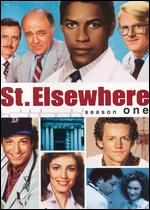
20th Century Fox Home Entertainment, Release Your DVDs!

20th Century Fox Home Entertainment, Release Your DVDs!

null

St. Elsewhere isn’t the only series that has the bulk of its episodes being held hostage by 20th Century Fox Home Entertainment – and when I started examining what only can be described as bizarre release habits by that division of News Corp., I realized financial decisions alone can’t explain all its moves away. For example, if you live in England, you can access all six seasons of St. Elsewhere as Britain’s Channel 4 makes all 137 episodes of the series available through its on demand service.

Repeated attempts for comment from James Finn, senior vice president for consumer and corporate communications at 20th Century Fox Home Entertainment along with attempts to reach Julie Henderson and Dan Berger in News Corp.’s Los Angeles corporate communications office went unreturned.

“They have the whole MTM library and they’re pissing it away,” Tom Fontana said. Of the many award-winning and popular programs from 20th Century Fox Home Entertainment, only The Mary Tyler Moore Show and Remington Steele can be purchased, rented or viewed in their entirety. “I think things would have been different had MTM had not been sold to British, who failed miserably in doing anything, and then Fox gobbling it up,” said Mark Tinker, whose late father, Grant Tinker, founded MTM Enterprises. Between MTM’s ownership by the British company TVS Entertainment and its purchase by News Corp., the company and its library were held by Pat Robertson’s International Family Entertainment.

Along with only releasing the first season of St. Elsewhere, which Norman Lloyd calls “a failure of the industry,” Fox also stopped Newhart after releasing the first season on DVD, so two television shows with the most famous final episodes in TV history don’t have those final episodes available for the public to see. Fox also has done strange things such as releasing two out of three seasons of The White Shadow, Bruce Paltrow’s series before St. Elsewhere. Fox leased the rights to release Rhoda to Shout! Factory, the company that has produced some of the best DVD box sets ever for shows such as The Larry Sanders Show and Freaks and Geeks, but only four of the five seasons of Rhoda were released. When fans of the show contacted Shout! Factory to ask why they didn’t complete the series, the company blamed Fox Home Entertainment. I attempted to contact Shout! Factory as well but received no response. Lou Grant, winner of multiple Emmys, never has been released.

Apparently, there is evidence that a season 2 St. Elsewhere DVD release had been prepared at some point. When I spoke with Blythe Danner about her second season episode “The Women,” she expressed surprise that it wasn’t available for home viewing. “Oh no, because I did an interview for the guy who was putting it all together,” Danner said. If you’re interested in seeing what demand for some shows exists, as well as the anger that they haven't been released, go to Amazon and check out the listings for The Bob Newhart Show Season 5 or The Bob Newhart Show Season 6. Nearly a year ago, Fox announced they would complete the release of that series; they set a price and Amazon began accepting preorders. At some point, Fox changed its mind but Amazon hasn’t caught on; the nonexistent products are filled with comments from potential customers who not only wanted the episodes but kept getting emails telling them “no release date has been set yet.”

Steven Bochco, co-creator of the award-winning and landmark Hill Street Blues for MTM (stopped at season 2), also has had subsequent series disappear into the Fox black hole. Only season 1 and the reunion movie of L.A. Law were released, and then they stopped NYPD Blue releases with season 4. “I’m sure those are financial decisions—the cost of putting them out wasn’t justified by the return, although that’s when it was all DVDs or videotape,” Bochco said. “These days, you can make direct deals with Netflix or Amazon or whatever to access stuff. I don’t know why these shows aren’t readily available.” Gordon Clapp, who won an Emmy as outstanding supporting actor for his work as Detective Greg Medavoy in the fifth season of NYPD Blue, wrote in an email that he’s heard about the missing episodes from the show’s fans: “I can't tell you how often I've been asked about the DVD situation. There is clearly a demand, but DVD's are going the way of 8-tracks so who knows if there is even a chance we will see seasons 5-12?” Though the rights aren’t owned by Fox, two of Joshua Brand and John Falsey’s other series never have seen release. “TV – a lot of it is so perishable and the culture changes. We did I’ll Fly Away and that’s never been released on DVD and it won all kinds of awards,” Brand said. Neither has A Year in the Life.

It would take too long to list all of the shows that Fox holds hostage, but prominent examples include only releasing the first season of Picket Fences and no seasons of Chicago Hope. They also employed the strangest marketing gimmick: they released half of the first season of The Practice and called it Vol. 1, but never released a Vol. 2. (They did the same trick with the second season of the 1960s Western The Big Valley). At least you can say that Fox has no qualms about eating its own. Malcolm in the Middle ran for seven seasons on its network but only its first season was deemed worthy of DVD release.

Television and movies are, of course, a business and these series are being preserved in places such as The Paley Center for Media, but not everyone lives in New York or Los Angeles. In addition, cultural education of all kinds in this country has reached distressing levels. As a rule, whenever I meet a new parent, I try to make them promise to keep all knowledge of the movie Psycho away from their child until he or she is old enough to see it, so it can surprise them. Earlier this year, I told this to a 23-year-old health care aide. She had no idea what movie I was talking about, though the name Hitchcock sounded familiar. Is it too much to ask that culture trump commerce occasionally?

From an early age, Edward Copeland became obsessed with movies, good television, books and theater. On the side, he nursed an addiction to news and information as well that led him into journalism where he toiled for 17 years until health problems forced him to give up the daily grind of work. In addition to writing for Press Play, he ran the blog Edward Copeland on Film (later renamed Edward Copeland's Tangents and currently in hibernation) and has written for The Demanders on rogerebert.com, at Slant Magazine's The House Next Door, Movies Without Pity, Awards Daily as well as the political commentary site The Reaction.

Returning to St. Eligius: ST. ELSEWHERE, 30 Years Later, Part 1

Returning to St. Eligius: ST. ELSEWHERE, 30 Years Later, Part 1

In the video above, for the first time, the St. Elsewhere credit sequence, set to Oscar-winning composer Dave Grusin’s memorable and infectious theme, unites all 26 regular cast members who graced its opening credits for varying lengths of time, ranging from a single season to its entire six-year NBC run, which began 30 years ago tonight. G.W. Bailey’s psychiatrist Hugh Beale never actually passed resident Seth Griffin (Bruce Greenwood) in the corridors of St. Eligius, but now Press Play has brought them together as fellow alumni of this groundbreaking, one-of-a-kind medical series. If the theme sounds different than you remember it, that’s because the original version of Grusin’s tune wouldn’t run long enough to squeeze in all the performers. On the occasion of the series’ pearl anniversary, I’ve been fortunate to speak with many of those who participated in making St. Elsewhere a show that tugged at your heart, tickled your funny bone, made your jaw drop at the chances it took and, ultimately, evolved into a program whose secret subject was television itself, camouflaged as a medical series–assuming that any of the stories contained in its 137 episodes actually happened at all, given the controversial series finale.

ROUGH BEGINNINGS

Premiering more than a year and a half after Steven Bochco’s Hill Street Blues changed television’s idea of what a cop show could be and brought a large ensemble to a prime time series, St. Elsewhere arrived from MTM Enterprises, the same company that made Hill Street. (MTM’s original pitch to NBC actually referred to St. Elsewhere as “Hill Street in a hospital.”) Created by Joshua Brand and John Falsey, developed by Mark Tinker and John Masius, and executive produced by the late Bruce Paltrow, St. Elsewhere didn’t have an easy birth. “The genesis of the show came from my oldest friend who was a resident at The Cleveland Clinic,” Brand said in a telephone interview. Like St. Eligius Hospital itself, which teetered on the brink of disaster throughout the series run, so did the show.

NBC wouldn’t agree to let St. Elsewhere begin production until the network saw 10 scripts for the show. Cancellation seemed possible at the end of every season. Production started on the pilot while Paltrow completed work directing the movie A Little Sex. Actor-director Lou Antonio began helming the first episode. To play Dr. Daniel Auschlander, who originally hailed from Vienna, the magnificent and amazing actor Norman Lloyd employed an Austrian accent. Additionally, the great actor Josef Sommer, especially memorable as the leader of the corrupt cops in Peter Weir’s Witness, portrayed Dr. Donald Westphall, and the wonderful David Paymer, whose body of work includes a subsequent Oscar nomination for Mr. Saturday Night, filmed scenes as Dr. Wayne Fiscus.

null”When (Paltrow) got back and he saw the rushes, he didn’t like the look of the show at all, so he closed down. He fired the cinematographer. He put in a ceiling on the show so it wouldn’t look like Dr. Kildare – a sparkling hospital. We had to go to MTM to get permission to do that because they took quite a hit financially,” said William Daniels, who won two Emmys for playing chief of surgery Mark Craig. The changes extended further. Thomas Carter, who made his directing debut while playing Hayward on Paltrow’s previous series, The White Shadow, replaced Antonio in the director’s chair, and Sommer and Paymer’s roles were recast. “In the recasting, Ed Flanders came in. In Ed Flanders, you had one of the very best actors in America – one of the very best actors, underappreciated. There was none better than Ed Flanders,” Lloyd said. There were other changes as well, which Lloyd described: “They repainted the set to a color that was easier to take than the color that existed. In general, they changed everything. They decided that they didn’t want [Auschlander] to come from Vienna and [he became] a New York guy brought up in lower Manhattan. That saved the pilot, and the pilot came out very well indeed.”

Still, the production shutdown proved nerve-wracking for some, particularly the younger performers whose excitement at being cast turned into a fear of being fired. Cynthia Sikes, who played Dr. Annie Cavanero during the first three seasons, recalls, “A lot of us, we were sweating it out (thinking), ‘Are we going to get the axe?’ Because he didn’t tell us. He said, ‘We’ll see. We’re rethinking things.’ We thought, ‘Oh great.’ So we went from the high of ‘I got it! I got it’ to ‘Oh my God! I may not have it! I may not have it.’ It was a roller coaster, but I got to stay and that was good.” Terence Knox, who portrayed resident Peter White, whose character’s downward spiral began with adultery before ending in the third season with a literal bang, said, “I worked one day because I had one scene and then we shut down. I remember I heard there was going to be a shakeup in the cast. I was afraid I was going to get a call from Bruce Paltrow saying they were going to find somebody else for my role. I sat around for a couple of weeks, wondering what was going to happen and then my phone rings one night about 8:30 and the voice says, ‘This is Bruce Paltrow.’ I said, ‘Please Mr. Paltrow, don’t fire me. Give me a chance. I’ll get better.’ He just started laughing. ‘No no no. You’re fine. I just wanted to let you know we’re going back into production in another week.’ I started crying I was so relieved.’”

nullDavid Morse, who has accumulated quite a body of work since his days as Dr. Jack Morrison, still recalls exactly where he was when informed of the shutdown. “I remember being in The Sportsman’s Lodge when I got the call from Bruce saying for me not to worry, that he was happy with what I was doing, but they were going to shut down for awhile and retool, recast and think a little bit,” Morse said. “It’s a hard call to get, because even though we had only done a few days of shooting, you’ve already started to bond with that group of people, David Paymer especially. Josef Sommer was older, so we really didn’t have that kind of relationship, but you knew yourself that there already was a team coming together, and that was gone. It’s not easy to go through a kill patch with people. Obviously, good things came out of it—Howie (Mandel) or Ed Flanders, but . . . it’s not a great thing to go through for anybody. I’m sure it stung at the time, but (Sommer and Paymer have) both had pretty good careers.”

Even once the pilot resumed production, characters’ status remained very fluid, something that remained the case throughout the series’ run; some roles made a steady rise from the end credits to regular status, while other parts originally intended to be prominent slipped to “recurring” status, if not disappearing altogether. Many characters marked for an early exit or a limited appearance organically grew once Paltrow and his writers saw a spark of something in them, as was the case with both Ed Begley Jr.’s Dr. Victor Ehrlich and Daniels’ Dr. Craig, who was planned as a minor role.

null“I had tried out for Terence Knox’s part, Dr. Peter White, and I didn’t get it. Instead of the regular part, the plum role that I wanted, Peter White, I got this other part, Ehrlich, that they merged with another character,” Begley said. “I thought, ‘Well, they threw me a bone, but I’ll make the best I can out of this part’ and Ehrlich turned out to be one of the best parts in the run of the show.” The role that Begley initially sought wasn’t supposed to last as long as Peter White did for Knox. Knox said, “They couldn’t decide what to do with me so they kept bringing me in for auditions . . . I got a call at my home from the casting director at NBC, Joel Thurm. He said, ‘They’re not sure what they’re gonna use you as, but they want to use you for something. Would you be interested in the part of Peter White?’ I said, ‘Sure, sure.’ He said, ‘Now, they’re probably gonna kill him off at the end of six episodes.’ I said, ‘I don’t care. I don’t care. I’ll take it. I’ll do anything.’ Originally he wasn’t supposed to be on that show very long because he was a screwup, you know, but that turned out to be a good storyline and they kept writing more stuff for me.”

The onscreen pairing of Daniels and Begley proved crucial to the expansion of both characters. “There was chemistry there. They liked the interplay between us, so there was a certain amount of humor between us,” Daniels said. Begley said, “My part was just in one or two episodes and then they said, ‘Well, we’d like you to do three.’ I was elated. Then they said, ‘We’d like you to do six.’ I was over the moon. Then very shortly thereafter, they made me a regular and I died and went to heaven.” Jennifer Savidge, whose character, Nurse Lucy Papandrao, would be Ehrlich’s wife by the show’s final season, started on the show as an unnamed, uncredited character in the pilot before rising to become one of the show’s most memorable characters. “That was due basically to Jeffrey Tambor, who was friends with the original director, Lou Antonio . . . He just called him and said you need to use this girl, and he just basically hired me for it, and I think I just went in and met him, and he said, ‘Here, we’ll give you something on it. It was a very small thing in the operating room. You couldn’t even see my face because I was behind the mask,” Savidge said.

The newest face to series television that first season wasn’t one you saw on the screen. Paltrow and his wife, actress Blythe Danner, brought to the show many friends and colleagues they had met while working at The Williamstown Theatre Festival each summer. One happened to be a struggling New York playwright named Tom Fontana. “I was a starving, unsuccessful playwright here in New York City when Bruce Paltrow plucked me from obscurity and said, ‘I’m doing this new medical show. You want to come to California and write one?’” Fontana said. “‘I said, ‘Sure.’ I was flat broke, even though I had sort of an attitude about television at the time. I didn’t sort of have an attitude—I definitely had an attitude about television. My income as a playwright for the previous year, which I believe was 1980, was three thousand dollars, all-in. When he said to me I could make 12 thousand dollars, which was Writers Guild minimum at the time, I thought, ‘Oh boy. I could live for four years off this St. Elsewhere money.” Fontana figured he’d write one episode, then return to New York with his payday and resume his playwriting career. “He had enormous patience, though he was brutal in his criticisms. He really sat me down and taught me. They asked me back to do a second script, then they asked me to be a story editor. Of course, being completely naïve, I said, ‘What’s a story editor?’” Fontana’s wife at the time, actress Sagan Lewis, also ended up with a small role on the show as Dr. Jackie Wade who, as in the case of Savidge, by the end of the series’ run, had ascended to the opening credits with the other regulars.

THE SHOW STARTS

“Donald, do you know what people call this place? Not St. Eligius. St. Elsewhere—a dumping ground—a place you wouldn’t want to send your mother-in-law.” – Dr. Mark Craig, “Pilot” (Written by Joshua Brand and John Falsey)

When St. Eligius officially opened its doors to the general public on Oct. 26, 1982, its initial slate of regulars consisted of Flanders, Bailey, Begley, Knox, Mandel, Morse, Sikes, and Daniels, as well as Christina Pickles (Head Nurse Helen Rosenthal), David Birney (Dr. Ben Samuels), Kavi Raz (Dr. Vijay Kochar, anesthesiologist) and a certain young actor, cast as first-year resident Philip Chandler, by the name of Denzel Washington. By the time the show ended its sixth and final season, only Begley, Daniels, Mandel, Morse, Pickles and Washington had held a spot in the opening credits from the pilot to “The Last One.” (Flanders departed memorably in the third episode of the sixth season, though he did return as a guest star for two more episodes that year.) As integral a part of the show as Lloyd’s Auschlander became, his character also had been marked for an early exit in the first season, introduced as an expert on diseases of the liver who found himself suffering from terminal liver cancer. Lloyd and Auschlander both proved too precious to let go.

The digital clock that would appear periodically in the corner of the screen read 9:03 p.m. at the beginning of that first episode. (Craig later references the new clocks he’s managed to acquire for the hospital, which are all supposed to say the same time.) The first recognizable face we see belongs to Eric Laneuville as Luther Hawkins, wheeling a maintenance cart and checking pay phones for loose change. Laneuville, another White Shadow alumnus, would also evolve with the show; he eventually made it to the opening credits and started a burgeoning directing career which continues to this day, as his character went from being a cleanup guy to studying to be a physician’s assistant. Characters came and went throughout the run. St. Elsewhere, despite some performers’ names listed beneath “starring” or “also starring” credits, truly worked as an ensemble. No one person stood out as the lead or the main character.

null“I thought the star of the show was the actual St. Elsewhere, the building, the hospital,” Pickles said. “The story was really about the heart and soul of this extraordinary, crumbling, generous place, filled with people trying to do their best work against all odds. When we left the hospital and went to somebody’s home . . . I thought it was never as exciting as staying in those halls and corridors and nurses’ stations.” Looking back at the first season now—which is all most people in the U.S. can see, since 20th Century Fox Home Entertainment holds distribution rights to the MTM library and only released the first season on DVD or for streaming—the initial 22 episodes of St. Elsewhere come off as rather straight-forward by comparison with some of the more surrealistic and flat-out wacky aspects that came along in later years. ”The first season was sedate compared to the others,” Begley said. That first year definitely lifted medical dramas on television to a higher, more realistic level that separated it from past medical series such as Ben Casey or Marcus Welby. “Our intention was to make it feel real. That was pretty much our guiding principle,” Brand said, referring to himself and co-creator Falsey. “We got a lot of reviews from medical journals and doctors and it was very gratifying to see how they felt that it was by leaps and bounds that it was much more reflective of what reality was than what had been projected on television prior to that.”

At St. Eligius, patients didn’t always recover. According to Brand, “A lot of people seemed to have felt the first year was darker. Some people might have found it depressing. There was humor, but it was black humor for the most part. I think that Falsey and I were somewhat affectionately called Dr. Death and Mr. Depression because we didn’t think you were going on vacation or going to The Love Boat when you went into a hospital. There was sort of a high body count that first year.”

The laughs extended beyond dark comedy though, especially through the interplay between Craig and Ehrlich. Daniels and Begley’s chemistry rivaled that of any of the romantic pairings that the show created over the years. Those two actors together guaranteed gold, though both got to display more dramatic sides by themselves as well. Even though Birney’s Samuels departed after the first year, he also received his share of comedy and tragedy, including his memorable entrance in the pilot episode: Samuels, one of the hospital’s lotharios, finds that he’s contracted gonorrhea and proceeds to try to remember all the female staff members he has slept with, so he can advise them to be tested (he was a conscientious lothario). Samuels informs one nurse about his condition, only to learn that, though they did go out, he fell asleep and they didn’t have sex, befuddling him further. “That was such a funny way to start in the first show. That sense of comic bewilderment,” Birney said.

A lot of other characters provided a mix of humor and pathos over the years, especially that of Mandel’s Fiscus, which extended behind-the-scenes as well. “It was always very hard to work with Howie and Ed (Begley) because we would always start laughing, and Howie was a big practical joker,” said Stephen Furst, who appeared three times in the second season as medical student Elliot Axelrod before becoming a regular and a resident in the third season. Still, for all six years, the interplay between Begley and Daniels kept matters from becoming too dark. “He’s got a mean head butt,” Begley said, referring to Daniels in their first surgery scene as Craig and Ehrlich. “He nailed me pretty good and it got my attention. It was wonderful. It woke me up, which I think was the stated purpose.”


The first season focused more frequently on issues in health care, beyond diagnosis and treatment, than later years did (if memory serves—I’ve been deprived of access to the rest of seasons two through six since TVLand stopped airing reruns around 13 years ago). Keeping the hospital open and fighting administrative penny pinchers always remained issues on the series, but that first season also dealt more openly with scalpel jockeys, the high costs of fruitless tests, and doctors on the take. “We were sort of influenced by the Paddy Chayefsky movie The Hospital. I think the tone did shift, and I think it was probably the desire of a lot of people to have the tone be a little lighter and the surrealistic aspect of it might have been something that might or might not have been related to that,” Brand said. “I have a deeply emotional reaction to the idea of a St. Elsewhere because of the health care system in this country,” Pickles said. A British native and naturalized citizen, Pickles came to the U.S. in 1958, though her character Helen arrived in 1965, as we learned in the fourth season episode “Time Heals.” “If you go to England and you cut your finger," she said, "you’ll be taken care of automatically for no money. This country is absurdly behind the times, which creates awful stories of people waiting around in emergency rooms.”

The first season episode “Cora and Arnie” (story by Brand, Falsey and Neil Cuthbert; teleplay by Cuthbert; directed by Mark Tinker) stays with original viewers mainly due to the Emmy-winning performances by guest stars Doris Roberts and the late James Coco as a homeless couple who wander into the ER because of Cora’s various problems, which she doesn’t want to face because she’s mentally disabled Arnie’s sole protector. However, another storyline within that episode that I had forgotten until I rewatched it struck even more of a chord with me. Bernard Behrens and Anne Gerety portray a couple visiting Boston; the trip takes a strange turn when she passes out in their hotel room. As Fat Tony once said on The Simpsons, “It’s funny ‘cause it’s true” and we’ve made it the centerpiece of this montage.

As Brand says, “Thirty years on, the problems are still there. They’ve only become more pronounced. You’ve got a lot of very powerful groups that are sort of feeding at the trough. Nobody wants to give up their piece of the pie.” At the end of the first season, Brand and Falsey moved on from St. Elsewhere. The team would go on to create the short-lived but critically acclaimed and award-winning series A Year in the Life and I’ll Fly Away as well as another show involving a doctor–this one practicing in tiny Cicely, Alaska, in Northern Exposure. “There were a lot of chefs, and it just seemed like it was the best thing for everybody, for myself individually and for the show, to pack our bags and move on . . .  There was the genesis of the show and how the show evolved,” Brand said. “At the time, it seemed like the right thing to do. Looking back, I think it was the right thing to do. Certainly, for me.”

In that first season, you can spot many up-and-coming actors such as Ray Liotta and Michael Madsen in small roles, and Tim Robbins in a multi-episode arc as a heartless sociopath turned domestic terrorist that Morse’s Jack Morrison had to treat, despite his misgivings. Robbins and Morse reunited years later in different capacities, when Robbins directed two episodes of Morse’s current series, Treme on HBO. “[Robbins’s role was] certainly one of the most memorable characters that I got to work with on that show, but I don’t know if it was because of what Tim became after that or how vivid a character that really was. Probably a combination,” Morse said.

The top-notch writing soon attracted many big name performers—some of whom rarely did television—to check in to St. Eligius. “The writing was so strong that very good actors who were not on the show would request to be on the show because they knew they’d get very good scenes to play,” Daniels said. In the second season premiere, two of them memorably came crashing literally through the emergency room as Alan Arkin (as Jerry Singleton) plowed his car through the hospital walls after his wife Fran (Emmy nominee Piper Laurie) suffered a stroke. Laurie, who last year published her memoir Learning to Live Out Loud to much critical acclaim and success, had known Arkin for years but never worked with him before St. Elsewhere. “With Alan Arkin, it was really exciting because I’d  never worked with an actor on film who had such freedom in terms of the actual dialogue,” Laurie said. “He just took it. I never quite knew what he was going to say. It was an interesting and exhilarating experience for me.”

Morse’s Jack not only treated Laurie’s character, years later she would play his mother in the films The Crossing Guard and Hound Dog. Patricia Wettig, who eventually played Jack’s second wife on St. Elsewhere, also crossed acting paths with Morse frequently, which is what the actor says is one of the things he loves best about his job. “I worked with Alan Arkin and since then, I’ve become friends with Adam, his son. I’ve worked with everybody in his family at one point or another over the years. Working with Patty (Wettig) over the years, working with Piper Laurie over the years—this just happens with more and more actors and it’s one of the things I really, really love about this business, if you’re lucky enough to keep working, is just touching on these people’s lives over the course of a lot of years,” Morse said. “To me, there’s something very touching about it and very gratifying to have these connections. At one time, it feels just like we have a job together and ‘See you later,’ then 15 years later, you’re doing something together again. Like I said, it’s one of those things that really means something to me.”

(Special thanks to Daniel Butterfield of The St. Elsewhere Experience.)

From an early age, Edward Copeland became obsessed with movies, good television, books and theater. On the side, he nursed an addiction to news and information as well that led him into journalism where he toiled for 17 years until health problems forced him to give up the daily grind of work. In addition to writing for Press Play, he ran the blog Edward Copeland on Film (later renamed Edward Copeland's Tangents and currently in hibernation) and has written for The Demanders on rogerebert.com, at Slant Magazine's The House Next Door, Movies Without Pity, Awards Daily as well as the political commentary site The Reaction.

Animating Without a Narrative: On the Work of Adam Beckett and Lillian Schwartz

Animating Without a Narrative: On the Work of Adam Beckett and Lillian Schwartz

This is the fourth of six essays based on the list of “250 Great Animated Short Films,” recently published here at Press Play.  These six essays are celebrating the inspiration behind some of these films; a complementary series of 20 essays on Lee Price’s cultural history blog, 21 Essays, focuses on common themes.

Adam Beckett was an animator and visual effects artist who attended the California Institute of the Arts during the 1970s, where he learned from and studied alongside important members of the LA experimental animation scene. Lillian Schwartz is a pioneer in the field of computer art who worked out of Bell Labs during the 1970s, then going on to develop tools for computer-aided analysis of art, particularly finding inspiration in the work of Leonardo Da Vinci. Each of these relatively unknown animators is represented by one work on the “250 Great Animated Short Films” list: Heavy-Light (1973) for Beckett and Pixillation (1970) for Schwartz.

nullThe first time I saw an Adam Beckett film I was repulsed. What started as a structured sketch, in which quadrilaterals were progressively birthing more quadrilaterals, erupted into blobs of pastels and indiscreetly organic colors stretching and consuming each other in an orgy of what looked like sexy intestines. This was set to some of the most half-assed and unsystematic free jazz ululation I could imagine. It disgusted me at the second screening too; in my recreational pursuits, I was after a more refined sense of personal clarity than Sausage City could provide. This was indiscreet, self-indulgent, and haphazard.

Four years later, I see the films of Adam Beckett as fitting all of these descriptions, but importantly I also find them to be miraculous excursions into a world of sensations nearly separate from our own. As such, each completed work by him is in some ways a major one, unified by a general aesthetic and a keen attention to the minutiae of evolution. Whether he will be considered marginal by the standards of marginal filmmakers is somewhat up in the air. Beckett has a certain notoriety as a historical footnote: he headed the rotoscoping team for Star Wars and died tragically in a house fire at twenty-nine, leaving six completed works and two major unfinished films behind. His films were successfully restored in 2006, and in 2012 a DVD release by the iotaCenter made his films available to a wider audience.

In the end stage of selecting the films for the list mentioned above, each of the seven panelists was asked to fill in one of the remaining slots, so Heavy-Light sits on the “250 Great Animated Shorts” list entirely by my own choice. The film is an outlier among Beckett’s work in terms of surface level aesthetics, resembling an HR Giger spinal motif (a la the creatures from the Alien films) run amok in the world of early computer animation (though accomplished entirely through optical printing), but it is consistent in terms of technique. Beckett largely worked with short animation loops that he altered through advanced optical printing methods. Optical printing involves rephotographing images run directly from a projector to a camera; in this case the technique was used to apply special effects such as changing color, zooming in on a particularly area of the scene, etc. Heavy-Light takes this sort of experimentation to the extreme, being based on numerous optical extrapolations from only thirteen drawings. The result, when coupled with Barry Schrader’s score, is an intensely creepy series of abstract progressions based in novel imagery.

Beckett's work is deceptive: it suggests doodling, but it actually grew out of intense dedication. Anyone who claims chance plays a significant role in a Jackson Pollock painting is dead wrong, but how much more self-evident would this be if Pollack had been an animator dedicated to forming works with the illusion of motion? To draw and redraw the incrementally different images of an animated work takes intense labor and talent. Lillian Schwartz’s Pixillation presents an opportunity to discuss the process of animating without narrative more acutely. As with Heavy-Light the work is not meant to represent real objects, however the systematic nature of the creative process behind it is more readily transparent.

nullThe role of a computer animator could be said to be that of an instructor showing a computer how to handle the material construction of an image. Pixillation juxtaposes painted images with computer-generated images, thus mixing the notion of an artist’s direct involvement with material and indirect rendering. Interestingly the painted images are captured in such a way that the effect is, from the perspective of the artist, seemingly more haphazard. Schwartz, rather than always filming a single image, allows the paint to flow at times, droplets intermingling in a predictable but naturally defined manner. This combination of traditional single-frame captures with jump cuts amounts to a unique effect. In contrast, every pixel of a computer-generated display must be chosen by an artist either manually or algorithmically.
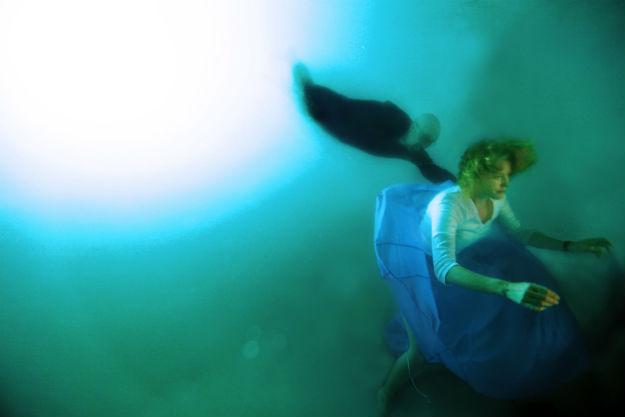
The divide between the two animation techniques isn’t as simple as it might seem. Despite the vast textural difference between the painted and digital animations, they depict similar shapes, compositions and movements. The computer animation is meant to represent something, it just happens that that something is an abstract painting. And in turn the painted images attempt to represent the digitally generated images, forming an ouroboros of edited imagery, or a cycle that feeds into itself. The contrasts are equally exciting: Schwartz’s squares crudely etched into the paint are juxtaposed with the cold precision of the computer, while the free-flowing spontaneity of paint is mathematically reduced to a series of clashing polygons. The film is stunningly vibrant.

In Pixillation as in Heavy-Light, the novel nature of the imagery gives much of the pleasure. Both filmmakers worked with new and somewhat unfamiliar technology, yet in many ways the works were guided by the technology they were using. The strangeness and relative marginality of these filmmakers perhaps increases the understanding of the artistic process, whether the process is figurative or non-figurative, narrative or non-narrative, or even bounded by any rules at all.

Scott Bussey is a Pittsburgh resident and student at Duquesne University.

Chameleon Soul: On Lana Del Rey’s RIDE Video and BREAKING BAD

Chameleon Soul: On Lana Del Rey’s RIDE Video and BREAKING BAD

In Lana Del Rey’s new music video, Ride, Del Rey explores the pleasures and pitfalls of the American west. The video, directed by Anthony Mandler, depicts Del Rey cavorting with a gang of rough and tumble bikers for a life of sex, danger and free ranging passion on the open road. Del Rey’s video, like all her videos, reinvents and reinterprets cliché, which triggers reflection on what about these motifs continues to captivate us. Del Rey is especially interested in exploring the iconography behind the beautiful woman as both victim and femme fatale. The image of Del Rey in costume, which seems both especially real and especially artificial against a backdrop of faded images and video footage from the past, is designed to provoke, to cause the reader to consider the implications of the myriad ways that artful renditions of the past drift into our perception of the present. Ride subverts our expectations of a particularly American narrative; it features a female performer commanding the Wild West, a landscape that has historically been used to designate and explore the drive for male power and pathos. Del Rey is a first person protagonist throughout this ten minute video; her narrative poetry bookends a bizarre unfolding tale of her life as a singer/prostitute/biker/free-love child and ruptures our ideas and attitudes about the American drive for freedom and its curious designation as a masculine ideal.

nullRide is a portrait of a very old-fashioned kind of American ethos—where being on the open road means being unattached to anyone or anything. This idea of freedom is also found in the most complex and interesting examination of masculinity in our current cultural landscape—Breaking Bad. Throughout the series, the wide, empty open expanses of the Southwest are both intoxicatingly beautiful and dangerously deserted. Men inhabit these empty highways, driving cars, dealing meth, forging alliances, and killing off their enemies. Walter White’s (Bryan Cranston) meth production is often necessarily nomadic, constantly shifting locations, from the first RV that he and his friend, partner, and former student Jesse Pinkman (Aaron Paul) use to cook, to his use of Vamanos Pest Control as a front for moving from house to house. The few times when Walt settles into a routine, as when he has a stable job cooking for kingpin Gus Fring (Giancarlo Esposito), are the times when he feels most restricted. Walt’s journey from zero to anti-hero is driven by a desire for freedom, making the series, in a sense, a beautiful ode to an America where the world is yours for the taking, where you are never under someone else’s thumb.

One of the reasons Breaking Bad is such an appealing show (and there are many) is that there is an allure in the concept of breaking bad, in taking a risk and going off course. America’s obsession with staunch individualism has made this particular narrative an acceptable mainstay in cultural discourse. We admire men who do what they have to do to preserve their own self of self-worth and integrity. For women, however, breaking bad tends to be more loaded. Throughout Breaking Bad, women rupture scenes of male escape. The women throughout Breaking Bad are firmly planted in the domestic sphere. When Walt's wife Skyler (Anna Gunn) tries to assert herself, she kicks Walt out of their home. Skyler's sister Marie’s (Betsy Brandt) primary vice is stealing cute and pretty things from department stores. As an accountant, Skyler ends up being in charge of the money, but her taking charge of the car wash means she is almost never on the road. Even the women Jesse ends up dating, complex and varied, symbolize comforts of the home front. Jane (Krysten Ritter) is Jesse’s landlord. The time they spend together is most often in their duplex. One of the most powerful images of their bond is sitting together in two separate chairs in Jesse’s living room, when Jane reaches over to touch Jesse’s hand. Jane dies in bed in her own home from an overdose, before she and Jesse have the opportunity to hit the open road together, as a pair. Likewise, Jesse’s newer girlfriend, Andrea, is often seen with her son Brock at home, cooking (food!), or playing video games.

The male anti-hero has become a staple of storytelling in 2012, but the female anti-hero is still considered relatively taboo. The show is more forgiving of Walt’s bad behavior than of Skyler’s bad behavior, for example. Indeed, in one of the most uncomfortable moments in Breaking Bad, Skyler, a prisoner in her own home and feeling completely powerless to either turn Walt in or else save her family by escaping him, tries to commit suicide by walking into the family pool.The image of Skyler vacantly walking into the water and resolutely staying under while her family panics is striking because it feels so familiar. The scene conjures a particular type of female suffering and despair, one charted through the lives of Virginia Woolf and Sylvia Plath. It is a striking image precisely because it still resonates with a modern viewer: in a “post-feminist” landscape where gender rules are supposedly less restrictive than in the past, we still understand female suffering as something which is fundamentally passive.

The way we think about masculinity has undoubtedly shifted since the 1960s, but, in many ways, our concept of what it means to be a man has stayed relatively static. We respect loudness more than quiet, violence more than measured resolution, silence more than gentle talking. The mask of masculinity is compelling precisely because in recent years it seems like so much more of a mask than femininity. While femininity is perceived as a construct, an outfit that can be removed, replaced, strengthened or destroyed completely, masculinity is increasingly perceived as a fixed kind of attitude. In our culture, female characters learn to take off the artifice of “femininity” in order to find strength (perhaps this is why Del Rey’s insistence on continuing to play dress-up frustrates some viewers) while male characters, from an early age onwards, learn to put “masculinity” on.

This is clearly evident in Walt’s transformation. He starts out the series as a symbol for castrated modern masculinity and becomes a definitive alpha male character. For much of the series we are supposed to rally behind Walt, regardless of his myriad flaws. But Jesse, plays an interesting foil to this one-dimensional type of masculinity, which is still strongly lauded in our culture. Though Jesse is consistently awash in swagger, delightfully adding “bitch” to the end of every sentence he utters, he is also the show’s heart and moral compass. Jesse is a small-boned, vulnerable kind of dude, gentle in the smallest, most heart-warming ways, whether calling Skyler “Mrs. White” and trying to make conversation at the dinner table or worrying about the extent to which the drug-dealing business is hurting those around him. While Walt seeks freedom, Jesse seeks comfort, family and security, those things that Walt purports to love but ultimately leaves behind in pursuit of his own greatness. In many ways, Walt and Jesse represent opposite ends of the spectrum of masculinity—the old school domineering alpha male versus the more modern, tentative kind of masculinity, that sees strength not as the need to domineer, but in the need to protect and love.

The American West is perceived in both Breaking Bad and Ride as sensual; the open road is seen as a path to conquer. The female place in this enticing and forbidden landscape is still unsure. Del Rey’s vision of freedom is centered on a fantasy of finding a community of outlaws where she can feel at home. Critics often view Del Rey’s desires as self-abnegating, rather than self-fulfilling.  The L.A. Times music blog claimed that her stage persona is a “…put-on, and a transparent plea for attention, and a little bit sad to watch in a cute kind of way." Many dismiss Del Rey’s potential to have complete agency as a moral actor and cast her off as a mere passive and pretty image. In contrast, Walt’s transformation is portrayed as if it is entirely of his own volition. But the catalyst that triggers Walt’s transformation is cancer, an illness entirely outside the realm of his control. While Del Rey’s actions are often interpreted as self-objectifying, throughout Ride Del Rey makes it clear that she has made deliberate choices about her self-presentation and the way she interacts with the world around her. The femme fatale figure she presents is threatening precisely because she doesn’t eschew femininity; she uses the motifs of femininity to her advantage, to get what she wants regardless of the cost.

We tend to read male responses to trauma as choices and female responses as necessary outcomes. In her spoken word monologue in Ride, Del Rey describes how her mother always told her she had a chameleon soul, “no moral compass pointing due North, no fixed personality, just an inner indecisiveness that was as wide and unwavering as the ocean.” For men, the chameleon soul refuses to be tied down to anything or anyone, a pure badass. For women, the chameleon soul is an empty vessel waiting to be filled, an image to project all your hopes and desires onto. The Manic Pixie Dream Girl and Femme Fatale tropes are dangerous not because women shouldn’t be wild, but because the untamed image of the girl who got away is always told from the perspective of the man she left behind.

The New York Times argued that “Ms. Del Rey generates so much anger precisely because she does so little. People don’t know what to do with this unformed thing they’ve been told they need to care about; crushing it is easy, almost humane.” Del Rey’s greatest critics argue that her work is, at best, derivative and, at worst, a complete sham.The extent to which Del Rey’s image is authentic highlights our disbelief in the idea that female artists can conceive and construct their own identity. Lots of male artists come from wealthy, privileged backgrounds, but we balk when twenty-something privileged female artists like Lena Dunham or Emma Koenig get impressive book deals. The assumption that Del Rey is somehow not responsible for crafting her own image is part and parcel of a culture that automatically casts off the feminine as something intrinsically fragile and helpless.  

Both Breaking Bad and Ride depict an American West which is ultimately a fantasy. There are no more open roads left to be discovered in America. The American cultural landscape of today is shaped more by the desire to meet public approval than the need to upset social order. But the continued fixation on the freedom of the open road is a deeply embedded American desire, a characteristically male longing for individual autonomy. The female characters in Breaking Bad rupture the male fantasy of escape, but Del Rey’s video for Ride complicates this type of longing, taking a page from the American fable of the egoism of the open road while ripping apart its very fabric.

Arielle Bernstein is a writer living in Washington, DC. She teaches writing at George Washington University and American University and also freelances. Her work has been published in The Millions, The Rumpus, St. Petersburg Review, and South Loop Review, and she has twice been listed as a finalist in Glimmertrain's Family Matters Short Story Contests. She is Associate Book Reviews Editor at The Nervous Breakdown.

Apocalypse TV: Between the Reality and the Dream

Apocalypse TV: Between the Reality and the Dream

null

Right now, the apocalypse is hip. Revolution and The Walking Dead are two of television's biggest success stories this season. The former is a surprise success for NBC, which is struggling otherwise, while the latter is breaking cable records on AMC. But the settings of these shows have more in common than their apocalyptic nature. The quality of their apocalypses, the drama they're attempting to mine, and the aspects of modern society they choose to discuss reveal a great deal about modern anxieties about population,  morality, and climate change. But they don't necessarily confront these issues, head-on. Instead, they offer a “do-over.”

nullSpeculative fiction has often examined contemporary anxieties, either consciously or not. In the 1990s, the fall of the Soviet Union led to a world quite different from the bilateral world most American TV writers and viewers of that time had grown up with. This world was characterized by a distrust of American governments, or governments similar to ours. The X-Files is the most famous example of this conspiracy-theory mindset, but it was joined by Star Trek: Deep Space 9—a relatively cynical take on the future compared to its utopian Star Trek predecessors—and Babylon 5, in which an American-style government called EarthGov was corrupted into dictatorship. The terrorist attacks of September 11th, 2001 pushed SF TV in a still more different direction. Shows like Battlestar Galactica, Firefly, Angel, and the literally and figuratively more realistic 24 all dealt with the moral issues and compromises of being a leader in a fight against evil.

nullWhile both Revolution and The Walking Dead are clearly descended from these previous stories (imagine Rick, Shane, and Dale as Adama, Tigh, and Roslin from BSG during some of their ethical arguments, for example), their settings focus their cultural anxieties. The shows both take place on Earth, in a semi-recognizable America, after or during a massive population apocalypse caused by something that, at least at the beginning, is unknown. On Revolution, it's the end of electricity and modern technology; on The Walking Dead, it's a zombie plague. In both cases, it's a new, harsh world, where characters used to the amenities of modern life like the video game Portal or their iPhone have to cope with facts of day-to-day reality instead of the contrivances of society. And in both cases, civilization itself may have been the cause of the apocalypse. Both shows revolve around debates of how civilization is being reborn, whether it deserves to be reborn, and whether American ideals of rights and justice can work in apocalyptic settings.

nullThe core anxiety is straightforward: there are too many people for civilization to be sustainable. This is a common worry. For some people, the concern is that high-population areas are immoral, breeding grounds for sex and violence; for others, the thinking is that too many people consume too many resources, which leads to climate change. In both cases, there's a general belief that there are too many people whether they be sinning via sexuality or via energy consumption. The former attitude exists to a certain extent on both shows. Revolution's post-apocalyptic setting opens on a pastoral farming community whose peace is shattered by people who want to bring the worst of civilization back. Meanwhile, The Walking Dead moves out of the dangerous city to Herschel's farm, a seemingly safe chance for the characters to regroup and survive the apocalypse.

But it's the latter issue, that of climate change, that drives the recent popularity of the population apocalypses. Rapid climate change could be seen to indicate that we're undergoing a slow-motion apocalypse; it's something that affects us at a personal level, and it is both uncontrollable and unstoppable. Finally, it's something that, at its worst, will force Earth’s residents to focus on the facts of existence on the planet, like extreme weather events, food and water shortages, mass extinction, and potential political destabilization, while our social and technological focuses (including television!) are already often derided as distractions preventing the masses from pushing to make the world a better place. These two apocalypse-based shows thus function as allegories for climate change's worst-case scenarios; the grittier, more violent cable drama The Walking Dead portrays a world without hope while Revolution is notably brighter in tone, though not exactly uplifting. But they only function as allegories, manifesting an anxiety—will the world go to hell?—without actually engaging with it.

nullThese two shows clearly blame the apocalypse on the flaws of civilization, but they're not alone. 2011's short-lived Terra Nova—the Revolution of its Fall television season—was entirely explicit about this role. The show was set on normal Earth, hundreds of years after a slow environmental apocalypse, with the sky covered by pollution and society governed by rigidly enforced population controls. But a magical discovery led to the chance to travel back in time, and build the colony of “Terra Nova.” This was an idyllic colony set on dinosaur-dominated Pangaea millions of years in the past, with its name's translation, “New World,” demonstrating the show's focus. The characters even state that this colony offers a chance for them to rebuild civilization without making the mistakes, technological and moral, that forced humanity down a dark road. Terra Nova was a second chance, a do-over.

Both Revolution and The Walking Dead engage with the idea of the do-over. The institutions and leaders who failed or are failing to protect society from collapse are gone, but so too are the real-world effects of their failures. Global warming is irrelevant. These shows may use some of the symbolism and anxiety of a climate apocalypse, but they avoid dealing with it head-on, inadvertently promoting the idea that something almost magical will prevent us from having to deal with the excesses of civilization. This isn't necessarily just a component of current broadcast television: a 1990s version of Terra Nova and Revolution, SeaQuest DSV, was premised on overpopulation, resource exhaustion, and rising oceans from climate change.

But you don't even have to go back in time to see impending, uncontrollable societal collapse due to both climate change and immorality in a speculative fiction TV series. HBO's Game Of Thrones provides a mirror image to the apocalypses on Revolution and The Walking Dead. It takes place in a world unrelated to modern Earth, yet this just makes its allegory stronger. From the very beginning, the idea that “winter is coming” pervades the series, but the “is coming” shows that the apocalypse is on its way, instead of having happened already. And the “winter” exists in the literal sense, allegorical sense, and a magical sense. The season lasts for years in the world of Game Of Thrones, and this particular winter is expected to be harsh. The “winter” also refers to the brutal civil war that envelops the Seven Kingdoms and beyond. Additionally, there's a supernatural threat of dark, uncontrollable magic returning to the world.

nullGame Of Thrones' allegorical examination of climate change ties in directly with its concept of leadership. Almost all of its characters all ignore the impending climate and supernatural disaster. These men and women making crucial decisions in Westeros are small-minded and petty, or ambitious and self-serving, or in the best case, good people who are forced by honor or obligation to do the wrong thing. The latter is true even of the heroic Robb Stark, whose decision to march south for his family's honor and to attempt to repair the Seven Kingdoms is described as a mistake by Osha, a “wildling” whose time north of “The Wall” gave her direct experience of the impending apocalypse in the south. She says he should have turned his army north, toward winter and the supernatural invasion instead of south to fulfill the obligations of his political system.
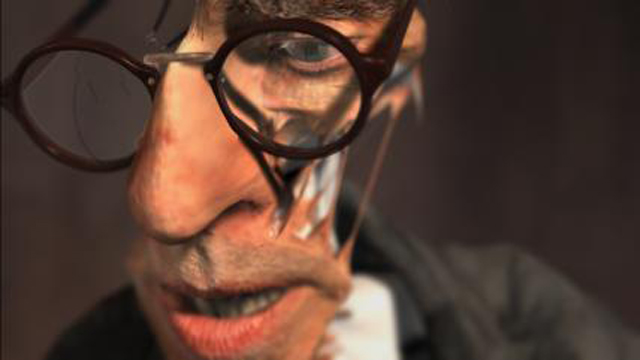
Robb's (and others') inability to break the cycle of civil war and violence is a clear commentary on the failures of real-world political leaders to see beyond smaller, short-term political considerations in order to solve larger problems, such as the failure of the Copenhagen Summit in 2009.  Perhaps most importantly, Game Of Thrones is built on the idea that the sins of the past destroy the hope of the future. The civil war of 15 years prior is a direct cause of the contemporary battles of the show, and the mistakes the characters make in the present, like Ned Stark's attempts at honor proving his downfall in the first season. The world of Game Of Thrones neither forgives nor forgets, and a do-over? Unthinkable.

This is not to say that the creators or fans of these shows view them as being explicitly about issues of population, climate change, or morality—that would be an especially difficult claim to make given that both The Walking Dead and Game Of Thrones are adaptations of older, already popular works. Rather, the point is that the popularity of certain kinds of apocalypse shows, both with the executives who greenlight them through the difficult pitch process and with the fans who support them, illustrates a need for these stories. The need comes from a feeling that something has gone horribly wrong with our political systems, with our societies, with our world, and with civilization itself. Television shows like The Walking Dead and Revolution draw power from the tension between our society's apocalypse anxiety and an allegory that trades complicated real issues for simple, if horrifying, escapism.

Rowan Kaiser is a freelance pop culture critic currently living in the Bay Area. He is a staff writer at The A.V. Club, covering television and literature. He also writes about video games for several different publications, including Joystiq and Paste Magazine. Follow him on Twitter at @rowankaiser for unimportant musings on media and extremely important kitten photographs.

Animating Real Life

Animating Real Life

null

This is the third of six essays based on the list of “250 Great Animated Short Films” recently published here at Press Play.  These six essays are celebrating the inspiration behind some of these films; a complementary series of 20 essays on my cultural history blog, 21 Essays, focuses on common themes.

“… but I’m getting off the subject here, I’m afraid. This story is about Ryan.”

The subject of Ryan (2004) is real: animator Ryan Larkin (1943-2007). The story is drawn from real life, as pieced together from recorded interviews. The visual approach is . . . director Chris Landreth’s interpretation of real life.

But isn’t that the way it always works? The subject of James Boswell’s classic Life of Johnson is Samuel Johnson. The story is pieced together from transcripts and remembrances of conversations. The narrative is . . . Boswell’s interpretation of real life.  Granted, Boswell doesn’t show us Johnson and friends with exposed brain matter, bones, and tendons, yet he manages to find his own strategies to artfully shape the narrative of a life.

A 21st century Boswell might show a CGI-animated Johnson with his Tourette's Syndrome exaggerated, confusing and frightening people with his tics and sudden unexpected motions. Animating real life is a challenge—by nature, animation looks fictional, as opposed to, say, still photography or biography writing, art forms that can make claims to objectivity more easily.

With the dawn of live action film, realism preceded fantasy—Auguste and Louis Lumière precede Georges Méliès. But this process was reversed with the dawn of animated film. The history of animation began with fiction, fantasy, and artful exaggeration. While live action cinema took its first cues from still photography, animation looked to fiction, theater, and the paintings on the salon walls for inspiration.

Ten years after Émile Cohl and Segundo de Chomón made their seminal fantasy animations Fantasmagorie (1908) and The Electric Hotel (1908), pioneering animator Winsor McCay created what is widely regarded as the first attempt at animating documentary material, The Sinking of the Lusitania (1918). McCay’s film aimed for a high degree of realism, documenting the sinking of the ship with the same technical fascination that James Cameron brought to Titanic (1997) nearly eighty years later. Two years in the making, McCay’s masterful drawing talents proved extraordinarily effective in depicting real-life horror and tragedy.

However, moving and innovative as it was, The Sinking of the Lusitania was in many ways a dead end, the last gasp of the newspaper graphic illustration tradition as it was superseded by the alleged realism of photojournalism. McCay returned to fantasy subjects for his final animated films and the idea of using animation to depict contemporary news stories was abandoned.

Animation became a fallback device that documentary filmmakers used as vignettes in longer films, mainly as a way of illustrating abstract ideas. Max and Dave Fleischer used limited animation in their early science shorts, Darwin’s Theory of Evolution and The Einstein Theory of Relativity (both 1923). Disney combined live footage with animation in the feature-length documentary Victory Through Air Power (1943) and the Our Friend the Atom (1957), a TV episode broadcast on Walt Disney’s Wonderful World of Color. This approach wasn't exactly a dead end—animation continues to be a wonderful tool for use in educational and marketing films—but it rarely fully capitalized on the power inherent in animation.

Jump cut to 1973. In Frank Film, Frank and Caroline Mouris presented a radically new strategy for using animation to depict real life—or, more precisely, the real life of the mind. Just nine minutes in length, Frank Film playfully weaves three components, all interacting simultaneously. Two of the components are aural: one soundtrack is of Frank Mouris reflecting on his life and a second overlapping soundtrack has Frank Mouris releasing a monotone torrent of free-association (usually words or phrases starting with the letter ‘f’), riffing on ideas and words overheard on the first soundtrack. The visual component is a rapid-fire animated collage of photos loosely suggested by material on both soundtracks.

Bold and unapologetically weird, Frank Film paved new directions for animation to pursue in the quest for realism—but an internal psychological realism rather than the external realism of McCay’s The Sinking of the LusitaniaFrank Film is more like a cinematic equivalent to Molly’s soliloquy at the close of James Joyce’s Ulysses.  Decades before attention-deficit disorder entered the public consciousness, Frank Film presciently depicted modern life as an anxiety-inducing bombardment of images and sounds.

While Frank Film is entirely presented from inside Frank’s consciousness, Ryan (2004) uses animation to find universal themes in a cafeteria and a street in Montreal. The ostensible subject is animator Ryan Larkin but in some ways he’s just the MacGuffin (Hitchcock’s famous phrase for a peripheral plot device needed to launch the narrative). In Ryan, Landreth shows a world where everyone is damaged. Animation enables him to depict inner psychological damage in horrific physical ways. The film opens with Landreth showing the damages that life has wrought upon him, and it closes with allusions to his mother’s alcoholism (and a concluding intertitle dedicating the film to her). Every character that passes across the screen is graphically scarred with damage and pain. The compassion elicited by this vision of the world is nearly unbearable. Landreth’s surreal animation forces us to see the excruciating pain behind the real-life conversations that we hear on the soundtrack.

This unflinching brand of animated realism has got to be hard on the filmmakers. Belgian animator Mathieu Labaye took his father as a subject, resulting in a film that’s every bit as emotionally devastating and compassionate as Ryan. Orgesticulanismus (2008) opens with photos of Benoît Labaye, the director’s father, accompanied by a soundtrack of Benoît explaining his way of viewing the world. He has multiple sclerosis. “So when you are deprived of the ability to move, as I am, as many others are . . . in order to survive, you need to reinvent movement.”  In the animation that follows, the son imagines the mental landscape of his father as he dissects and reinvents movement. It’s an act of great love, by turns nightmarish and liberating.

Films like Frank Film, Ryan, and Orgesticulanismus are enlarging the boundaries of film art, suggesting that the boundaries that appeared to distinguish Émile Cohl’s Fantasmagorie from Winsor McCay’s The Sinking of the Lusitania may have been artificial all along. Animation’s natural strength in depiction of fantasy and abstraction may be precisely the element that can make it a powerful vehicle for animating real life.

Here’s a list of 11 films with intriguing realistic or documentary elements drawn from our list of 250 great animated short films. I’ve broadened my net to include films based on memoirs (Caroline Leaf’s The Street is based on the childhood memories of author Mordecai Richler), personal correspondence (Piotr Dumala’s Franz Kafka is based on the author’s correspondence), and interviews (Never Like the First Time!).

Toot Whistle Plunk and Boom (Ward Kimball & Charles A. Nichols, USA, 1953) 

Frank Film (Caroline & Frank Mouris, USA, 1973) 

Great (Isambard Kingdom Brunel) (Bob Godfrey, UK, 1975) 

The Street (Caroline Leaf, Canada, 1976) 

Powers of Ten (Charles & Ray Eames, USA, 1977) 

Franz Kafka (Piotr Dumala, Poland, 1992)

Black Soul / Âme noire (Martine Chartrand, Canada, 2001) 

Ryan (Chris Landreth, Canada, 2004)

The Danish Poet (Torill Kove, Norway/Canada, 2006) 

Never Like the First Time! / Aldrig som första gången! (Jonas Odell, Sweden, 2006) 

Orgesticulanismus (Mathieu Labaye, Belgium, 2008)

Lee Price is the Director of Development at the Conservation Center for Art and Historic Artifacts (Philadelphia, PA). In addition, he writes a popular fundraising column for Public Libraries, writes a tourism/history blog called "Tour America's Treasures," and recently concluded two limited-duration blogs, "June and Art" and "Preserving a Family Collection."

SCREAMING HIDES THE SOUND, PART 2: THE WICKER MAN, The Pagan-Horror-Folk-Rock Musical

SCREAMING HIDES THE SOUND, PART 2: THE WICKER MAN, The Pagan-Horror-Folk-Rock Musical

null

Many seemingly healthy people are terrified of folk music, which makes it not surprising that one of the most innovative and hauntingly effective soundtracks in the history of horror films is essentially a collection of folk songs. Most of us can relate when John Belushi smashes the folk singer’s guitar during the toga party scene in Animal House, and who among us with hair above shoulder length would be caught dead at a folk festival? Folk music, by its very nature, runs against the grain of anything we might call “modern,” and contemporary sensibilities are instinctively repulsed when exposed to sounds that by any rights should be long dead. 

When Paul Giovanni composed his songs for Robin Hardy’s The Wicker Man in 1973, however, this music of the dead was experiencing a strange resurrection, and, with the cooperation of arranger Gary Carpenter, he crafted a soundtrack wholly in tune with the peculiar musical spirit of the moment. This moment involved a complex and often unsettling relationship between present and past. This relationship is something the moment had in common with the film itself, which is certainly one reason for the film’s enduring popularity.

The film’s opening scene captures the tensions that play throughout the narrative, as well as its soundtrack: as the film’s main character, Sergeant Howie (Edward Woodward), ascends in his sea plane over the Scottish coastline, the first sound we hear is of his buzzing engine, which gradually merges with the rising tones of Northumbrian pipes (essentially a small bagpipe). The police sergeant is headed to the mysterious Summerisle to investigate the disappearance of a young girl. Initially the reclusive islanders turn him and his plane away. Yet their rejection of an intruder from the modern world is at odds with the strange harmony achieved in the film’s first musical set-piece, as the combined engine and pipe sounds merge to create an unsettling drone that serves as the musical base to a haunting ballad based on a Robert Burns poem about a sixteenth century massacre.

The mournful beauty of this piece, enriched by ghostly choral harmonies, gradually segues into a jaunty folk ballad, “Corn Rigs,” sung by the film’s composer, Paul Giovanni. Giovanni was an American songwriter hired to concoct a convincing amalgam of ancient and modern folk sounds. “Corn Rigs” is a good example of the latter, though within the phase of the 70s English folk revival, the modern was often defined by the presence of ancient musical forces. Giovanni’s plummy voice sings a ribald tune of getting busy in the cornfields with a lass named Annie to the accompaniment of vigorous guitar strumming and pop backing vocals. This is folk music in its more listener-friendly form, with echoes of the Byrds, White-Album-era Beatles, and English group Steeleye Span, whose electric folk album Parcel of Rogues had recently broken into the upper echelons of the pop charts.  

Yet running alongside the song’s modern currents are weirder strains: spiraling recorders offering an appropriately Pan-like accompaniment to the lyrics’ subtly pagan elements. The singer’s tryst with Annie is described as taking place on “Lammas Night,” a late-summer harvest festival in the ancient Celtic calendar; so, what initially seems like a song reflective of the seventies spirit of zesty sexuality becomes a paean to ancient fertility rites. This tension between folk culture’s friendlier, modern face and its darker pagan heart runs throughout the film, as the viewer, along with Sergeant Howie, gradually discovers the true nature of musical sacrifice.

Original as Giovanni’s soundtrack is, it has several contemporary antecedents in folk music, many of them trends instigated by another American working with British musicians, producer Joe Boyd. Boyd was running sound at the infamous Newport Folk Festival of 1965 where Dylan went electric, driving a peaceful folk artist like Pete Seeger to take an axe to the power cords, so Boyd knew what kinds of sparks could fly when merging the ancient and the modern. As a producer in England, Boyd was drawn to groups like Fairport Convention and The Incredible String Band, who pursued the path opened by Dylan in reinventing native musical traditions.

When record collector and visual artist Harry Smith released his landmark collection The Anthology of American Folk Music in 1952, it offered a revisionist account of American music history that Greil Marcus would famously call “The Old Weird America,” but the bands working in the musical circles around Boyd would discover that their indigenous music was even older and weirder. Mixing traditional and original compositions, old and new instruments, ancient song structures and innovative modern recording techniques, the British electric folk movement produced some of the richest and strangest music of the 1960s and 70s, including among its ranks such influential figures as Nick Drake, Sandy Denny, and John Martyn.

The Wicker Man draws from this musical wellspring to create a soundscape behind the pagan practices of Summerisle, yet it also brings to these trends a sense of humor and irony not often found in folk music. As Sergeant Howie checks into his rooms at the local inn, The Green Man, he is confronted by the bawdy drinking song “The Landlord’s Daughter” and is later serenaded by the daughter herself: the character Willow, played by Britt Ekland. When “Willow’s Song” starts, the viewer begins to realize The Wicker Man may actually be a very strange kind of musical, as a naked Britt Ekland sings to Sergeant Howie in the next room and attempts to lure him to her bed. As the song builds, Ekland’s dancing becomes more provocative, as she pounds out the song’s escalating rhythms, switching between slapping the walls and slapping her bare bum. The song’s frankly erotic lyrics range from the beautiful (“Would you have a wond'rous sight? / The midday sun at midnight”), to the gross (as when she offers to show “How a maid can milk a bull / And every stroke a bucketful”).

“Willow’s Song” is one of Giovanni’s more famous pieces, having been subsequently covered by bands such as The Mock Turtles, Doves, and Sneaker Pimps, but what is perhaps most striking here is its synchronization into the scene. Director Robin Hardy plays with the distinction between sounds that are directly connected to the film’s narrative and those added for effect. The film makes it seem as if the pub band downstairs is playing the music, but as the song progresses musical elements are introduced that are clearly outside of their musical range. “Willow’s Song” is the first of many pieces that initially seem to be generated by residents of Summerisle but subtly introduce sound effects and orchestral elements crafted in the sound studio by arranger Gary Carpenter. The effect is unsettling, and effectively parallels Sergeant Howie’s and the viewer’s increasing sense that the islanders are up to more than a little harmless ribaldry.

The tension between narrative and non-narrative music culminates in the final sequence of the film, a May Day festival in which everyone dons ritual costumes, Howie taking the place of The Fool, unbeknownst to the other revelers. As Howie pursues the sinister mystery at the heart of Summerisle, the traditional music of the islanders mingles with suspenseful chase music modeled on 70s electric folk, the electric guitar growing increasingly distorted by acid fuzz-tones. The popular modern styles appearing early in the soundtrack now give way to the harsher edge of musical modernity, challenging folk tradition even as the film seems to glorify it by showing paganism’s crueler strains. 

Those acquainted with the film may have noticed my careful avoidance of spoilers, keeping the shock ending a surprise for those who have yet to see this strange masterpiece. But when you do, just keep telling yourself: “It’s only a folk festival, it’s only a folk festival, it’s only a folk festival…”

Jed Mayer is an Associate Professor of English at the State University of New York, New Paltz.

In Remembrance of Harris Savides: 1957-2012

In Remembrance of Harris Savides: 1957-2012

Cinematographer Harris Savides, who died on Tuesday at 55, was a poet of light. He shot some of the most stylistically striking movies of the last two decades: James Gray’s The Yards; Sofia Coppola’s Somewhere; Jonathan Glazer’s Birth; Noah Baumbach’s Greenberg; Gus Van Sant’s Elephant, Gerry and Last Days; David Fincher’s The Game and Zodiac.

Look over that list and you get a sense of his versatility. But there was more to Savides than craft. His mix of artistic restlessness and quiet confidence bridged schools of filmmaking that might seem incompatible: virtuosity and naturalism. He came out of the world of fashion and TV ads and music videos, but when you look at his feature work, you rarely get the sense that you’re being sold anything. There’s a reticence and mystery to his images, as audacious as they often are.

Birth is filled with “How the hell did they do that?” camera moves and astoundingly long takes, but his New York streetscapes and lush interiors aren’t TV-commercial glossy, or even fussed over; they seem like places where real people, not movie characters, might live and work. Coppola’s comfortably numb Somewhere has an early 70s stoner art-film vibe, but its locked-down wide shots, which let us simply watch characters behaving for minutes at a stretch, bespeak powers of concentration that Coppola’s earlier movies only hinted at. Van Sant’s hothouse triptych seems influenced by the work of hypnotically stripped-down European filmmakers who had become critical darlings in the U.S. around that time, Bela Tarr especially; but the casual-seeming quality of the light—radiant, even woozy, yet somehow not sentimentalized—is thoroughly American. Van Sant’s school-shooting psychodrama Elephant, in particular, merges documentary patience and movie-brat showiness in a way that felt strange and new; no wonder it divided critics.

In time, Fincher’s Zodiac might prove the most significant picture of the bunch. Shot digitally with the Viper camera at a time when many directors and viewers were still suspicious of high-definition video, it was at once revolutionary and reassuring. No American movie had revealed the texture of night with such crystalline clarity. At the same time, though, the mid-’70s conspiracy thriller look that Fincher and Savides devised for Zodiac’s daytime and office scenes tied the movie to analog values, and sent an important subliminal message: tools change as technology evolves, but they’re still just a means to an end.

When I heard about Savides’ passing, I reached out to Jamie Stuart, a filmmaker and writer. He’s been doing highly conceptual documentary shorts for the New York Film Festival for years now; Roger Ebert championed his 2010 short film “Idiot with a Tripod.” Stuart was an admirer of Savides’ who interviewed him twice and corresponded with him via email; an edited transcript of our conversation follows.

null

MZS: Harris Savides' death hit me harder than that of most cinematographers, and in trying to figure out why that was, I decided it was because he was a transitional figure in a really volatile period of film history. I can't think of many cinematographers who demonstrated such mastery of both traditional celluloid and new digital technologies.

‪Jamie Stuart: It's interesting. I didn't really see that as his journey so much, because I know he was very dubious of digital and greatly preferred film. I really looked at him as somebody who came from high-end fashion and music videos and commercials—but then transitioned into simplicity and naturalism.   

‪MZS: Can you elaborate on that? Because when I think of Harris Savides, "simplicity" and "naturalism" aren't necessarily words that spring immediately to mind.

nullWhen I look over his filmography I see him acting as cinematographer on movies that seemed stylistically pivotal for their directors. He was behind the camera when Gus van Sant got into his American Bela Tarr phase, and did movie after movie comprised of very, very long Steadicam shots: Elephant, Gerry, Last Days. He was the director of photography on David Fincher's Zodiac, a groundbreaking, digitally-shot feature that revealed all the details of night that celluloid and low-end video couldn't show us before, and the somewhat stately rhythms of that movie signaled a new phase for Fincher. I wonder if the more contemplative The Curious Case of Benjamin Button and the almost live-TV-like claustrophobia of The Social Network would have happened without Fincher’s collaboration with Savides on Zodiac? We’re not talking meat-and-potatoes here. And Birth! My God. That's so daring visually that I can imagine Brian De Palma watching it and thinking, "I wouldn't have gone quite that far, but well-played, sir."

‪Stuart: Yes, but look at the way he shot and the way he lit a lot of those movies. When I first met him and interviewed him in 2003, he had just made Gerry and Elephant, and he found those experiences working mostly with long takes and practical light to be completely liberating. He was afraid he couldn't go back to shooting more controlled commercial work. He suggested he would feel like a caged animal.

I think that's one of the reasons Fincher brought him in on Zodiac — because he knew Harris would be able to give a natural look that also had style. Harris lit the basement scene, for instance, with 40-watt bulbs, I think. He was upset that the Viper couldn't handle low light well, so he was forced to light up a lot of scenes and stop down, when he really wanted to shoot things as they were.  

nullMZS: Interesting. So what you're describing here is a very simple way of shooting, one that tries to make the conditions seem "available" even if they were meticulously contrived. And then on top of that you've got formal daring with regard to camera movement. That closeup of Nicole Kidman in Birth, for example, is spectacular. No pretense of being "invisible" there. You are supposed to notice the artistry. The form is the show; the hugeness of these gestures help move the film into the realm of fable, make it operatic. And yet the exteriors and interiors don't have a fussed-over look. They're inviting, real-seeming. Glazer's previous movie Sexy Beast was daring, too, in its way, but it contains nothing as stunningly, brazenly big as the stuff in Birth. Savides must have had something to do with that change, don’t you think?

‪Stuart: Perhaps. But I wonder how much of that is Glazer and how much of that is Harris? I think Harris would've been perfectly content to shoot everything with natural light and a perfect camera angle. Harris has a quote somewhere about lighting rooms instead of actors. And that's a very specific approach.

He hated rim light or backlight. I once spotted a close-up of Jake in Zodiac that had rim light, took a still, sent it to him convinced that had been done in a reshoot that he didn't supervise. He confirmed. I remember him going on about Ballast, and how realistic it was. He loved The Dardenne brothers.  

MZS: Do you remember the first time you noticed Harris Savides' work? Do you remember when you decided he was somebody significant?

Stuart: I knew Harris' work initially from his music videos with Mark Romanek. The first one they did together was for Teenage Fanclub 20 years ago. It's black and white. Very simple. The band performing with a giant light above them.

Then, I remember when he did The Game and Fincher said he wanted Harris as his director of photography because the movie was really complex, and he needed a cameraman he could completely trust. So when I was covering the NYFF in '03, and he was there with Elephant, I introduced myself. We remained in touch ever since.

We had a similar taste in lighting and composition. We were trading e-mails when my blizzard video blew up, he was joking that I'd become a celebrity. After he first watched the video, he told me he was upset when it transitioned from black-and-white to color, but then he liked the color a lot, too, so he didn't mind.

The last time I think I saw him was at a Q&A Mark Romanek did a couple of years ago. As we were leaving, I remember looking back and seeing Mark and Harris walking together like old best friends.

I can say that, strangely, he was on my mind [Wednesday] night. The New York Film Festival screened my work at Richard Pena's tribute. One of the people featured in it was Noah Baumbach, whom I subsequently bumped into while leaving. I had sent Harris a still photo I took of Noah from a shoot a couple of months ago. I thought about e-mailing him to let him know that my work looked good on the big screen and that I'd just seen Noah.

So, to be honest, I'm a little mixed today. Going from the high of having my work play last night at the NYFF, then finding out about [his death Thursday] morning.  

MZS: Did you get to spend much time with him in person?

Stuart: Our relationship was primarily via e-mail. I interviewed him twice. Once in 2003, then again in 2006 before the release of Zodiac. We randomly discussed getting together to shoot some stills or maybe my tagging along when he was first testing the Alexa [motion picture camera]—but neither materialized.  

‪MZS: What, specifically or generally, do you think you learned from Harris Savides as an artist? Are there any things he inspired you to do, or to do better, or differently?

‪Stuart: He inspired me in the sense that I always sent him my work—and considering how highly I thought of him, I damn well hoped my work would be good enough to show him. He was somebody, a professional, who was there for me as I was embarking on my filmmaking career. And that's something I'm grateful for.

I remember sending him a copy of my first full mini-DV short in early 2004, made for like $50, and he told me his hat was off to me for doing so well with such little money. We thought similarly about lighting and composition. He had a very no-bullshit attitude about work. Whenever he made a movie and I offered my opinion, he always wanted it straight, even if I didn't like it.

He was somebody I always sent links of my work to. I liked his opinion. You know? I liked him. I liked his work.

Nelson Carvajal is an independent digital filmmaker, writer and content creator based out of Chicago, Illinois. His digital short films usually contain appropriated content and have screened at such venues as the London Underground Film Festival. Carvajal runs a blog called FREE CINEMA NOW which boasts the tagline: "Liberating Independent Film And Video From A Prehistoric Value System." You can follow Nelson on Twitter here.

Matt Zoller Seitz is the co-founder of Press Play.

Animating the Folktale: The Puppet Animation of Ivo Caprino

Animating the Folktale: The Puppet Animation of Ivo Caprino

null

The classical fairy tales and fables have served as fodder for many film animators, from the pioneer days of Lotte Reiniger and Walt Disney onward. One filmmaker almost exclusively associated with this type of material is Ivo Caprino (1920-2001), Norway’s most famous practitioner of the art of animation.

The closest parallel to Caprino is perhaps George Pal of Puppetoons fame. Like Pal, Caprino patented his own method of animation early in his career, basically replacing the marionette operator’s strings with a remote control device. However, Caprino’s work is very different from Pal’s, both in form and content. His world is more whimsical, like a storybook, with little of the gag-happiness of the classic Hollywood cartoons. This in no way should imply that Caprino was a dull fellow. In fact, he frequently displays a wicked sense of humor, a major factor in his films’ appeal to adults as well as children,

Caprino was also naturally gifted as a pure filmmaker, in this regard bearing comparison with the best of Disney: The choices in shots, blocking and editing (you know, mise en scène) are pretty much faultless. Even more significantly—and again like uncle Walt—Caprino was a master of personality animation, becoming ever more expert at giving his characters clearly individual traits in movement and behavior as well as visual appearance.

The appealing look of Caprino’s characters was originally given to them by his mother Ingeborg, an artist and writer of children’s books. These characters have an instantly recognizable ”Caprino look”: round blue eyes frequently in motion, perhaps together with a lifted eyebrow, conveying either wonder or slyness. To invoke yet another one of the American animators, Caprino’s use of the eyebrow in many ways recalls Chuck Jones’ famous mastery of this subtle ingredient of animation ”acting.”

Of the handful of films Caprino made between 1949 and 1975, only 5 short films were based on folktales, yet these made such an impression that they are instantly associated with his name. In the early 1950’s, Caprino had planned to make a feature film about Asbjørnsen and Moe, the writers and story collectors of the 19th century who were the parallel of the Brothers Grimm for the Germans. This projected feature was to combine live action of the two story collectors at work with puppet animation segments of the tales themselves. When he failed to get funding for the project, the idea had to be scrapped and Caprino made the short films instead. This was probably a blessing in disguise, as the later films certainly benefit from his increasingly sophisticated mastery of the medium.

If the tales of Asbjørnsen and Moe are less well known internationally than those of the Brothers Grimm, they have several characteristics in common. A noticeably Grimmian element recurring in those films is the punishment of bad guys and the rewarding of good guys, according to their behavior towards a mysterious stranger with magical powers. The hero of Veslefrikk med fela (Veslefrikk and His Fiddle, 1952), the first of the folktale shorts, gets three wishes.  The hero of Askeladden og de gode hjelperne (The Ash-Lad and the Good Helpers, 1961) gets a magic ship for use on land, in the sea, and in the air. And so it goes!

Also in common with the Grimms, these tales have their share of unabated cruelty and sadism. In this regard, Caprino is certainly different from Disney; he doesn’t shy away from bizarre dark humor. In Reve-enka (The Fox’s Widow, 1962), a fox encounters a very cute little rabbit who is singing and dancing merrily; the ”that’s good, that’s bad” routine that follows is almost vaudevillian:

”Why are you so happy?” asks the fox.

”I got married today,” replies the rabbit.

”That’s good.”

”Oh, not all that good, for my wife turned out to be a shrew.”

”That’s bad.”

”Oh, not all that bad, for she had a luxurious home.”

”That’s good.”

”Oh, not all that good, for the home burned down, and everything we owned with it.”

”That’s bad.”

”Oh, not all that bad, for the wife was burned as well!”

The rabbit laughs maniacally as he continues singing and dancing happily on his way. This, in a puppet film for children?

For the 150th Anniversary of Hans Christian Andersen’s birth, Caprino was commissioned to make a film of the master’s fairy tales. Caprino chose Den standhaftige tinnsoldat (The Steadfast Tin Soldier,1955), surely one of his finest achievements. Unlike what happens in the Disney versions of Andersen (The Little Mermaid and the rendition of the Tin Soldier in Fantasia 2000), there is no happy ending here.

Caprino’s biggest ”cult” favorite, at least in his native country, was Karius og Baktus (1954), from a children’s book intended to impress upon the youngsters the importance of dental hygiene. The two eponymous rascals are tiny trolls living in a boy’s mouth. They protest in vain when the lad, due to the pain they cause, finally sees a dentist who flushes them out in the horrific finale! This truly bizarre classic caused a lot of Norwegian youngsters to actually sympathize with the antagonists, two anarchistic embodiments of dental decay.

Caprino directed two full-length features. The first, Ugler i mosen (1959) was mainly a live-action family feature with puppet animation segments. A mostly innocuous affair, again certain elements have a somewhat more adult appeal, especially a nightmare sequence straight out of 1920s German expressionism. The second, which turned out to be his last film, was Flåklypa Grand Prix (Pinchcliffe Grand Prix, 1975). Caprino’s most ambitious work, this was over four years in the making. The long toil was rewarded; this was the most financially successful of any Norwegian feature film and one of the most critically acclaimed as well.

By that time, Caprino had gradually shifted from filming his puppets in ”live action” with the remote control technique to mostly using good old ”stop action”—one frame at a time. It might at first seem surprising that it wasn’t the other way around, since stop action obviously made the filming process take much longer. Caprino, however, had come to realize that stop action gave him much more control of the characters’ movements, enabling him to make them ”act” all the more subtly.

My favorite, and Caprino’s own fave as well, is his penultimate short, Sjuende far i huset (The Seventh Father of the House, 1966). Also based on on the old folktales, this one is quite different from the others in the series. Until the finale, there is little of the magic of the earlier films, and no boyish, resourceful hero. What we have here is rather a tall tale that makes satuire out of the subject of ”passing the buck.” Our protagonist is a weary traveler who comes to a house and humbly asks for lodging and food. The first man he meets refers him to his father, who refers him to his father, and so on, each one sadly commenting that ”the decision is not for me to make.” By the third or certainly the fourth father, the viewer begins thinking that now, at least, there simply cannot be an even older generation living in the house—but of course there is, and another, and another.

The challenge of this film was to make each succeeding father both believable, memorable and, not least, truly hilarious. Caprino commented later that the film worked for him personally as a sort of catharsis: The endless succession of buck-passers personified for him the bureaucrats he had struggled with through the years in getting funding for his films.

Though not exactly unknown internationally—in fact his cult seems to be growing—the films of Caprino can be difficult to get hold of. For the adventurous collector there is a great 8-disc set (PAL format, region 0), Caprinos eventyrlige verden (See http://www.caprino.no/start/en/default.asp for info, or check out amazon). All his major films are included, with lots of extras such as commercials and TV interviews. The films themselves have optional English soundtracks as well as subtitles.

Waldemar Hepstein is an artist for No Comprendo Press, a publisher of alternative comics. Hepstein's work has appeared in the magazine Fidus and is collected in albums like 'Snork'.