Watch: In ‘Buffy the Vampire Slayer,’ Doorways Were Everything

Watch: In ‘Buffy the Vampire Slayer,’ Doorways Were Everything

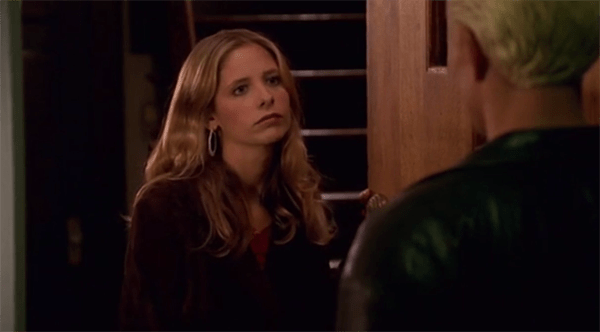
To say ‘Buffy the Vampire Slayer‘ was deceptively light is a not-so-deceptive understatement. The Sarah Michelle Gellar vehicle, with its heady mixture of young-adult struggles and visitors from the world of nightmares, was always, at the very least, self-aware–and at its best, it was downright literary in its depth and range of reference. This video essay by Manuel Betancourt takes us through one particular image on the show–that of the doorway–and convincingly shows the depth this image accrued during the show’s all-too-short run.

Watch: Where Does ‘Straight Outta Compton’ Really Come From?

Watch: Where Does ‘Straight Outta Compton’ Really Come From?

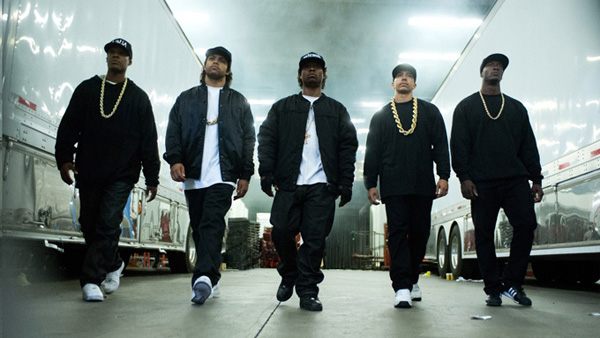
I was seven years old the first time I saw John Singleton’s powerful debut film Boyz N The Hood. I remember how I watched it too: It was one of three movies on a six-hour unlabeled VHS tape that my mother’s cousin had recorded off Pay-per-view. At the time there was a lot of excitement and anticipation towards the film from the adults in my family; this was supposed to be a good movie. And it ended up being a very good movie. Outside of the matter-of-fact handling of its material and its investment in its palpable screen characters, there were embedded themes of gentrification, social unrest and the repetitive nature of violence in poverty-stricken urban areas. Upon first viewing however, the film’s unruly anti-heroes who were taking an eye-for-an-eye vengeance towards each other were the persons of interest who transfixed the seven-year-old in me. As I got older, I began to pay more attention to those embedded themes and often found myself disappointed in how the slew of street films that followed mostly relied on shock violence for value, while offering little introspection. Still, it’s important to note that even as a child, I felt that Boyz N The Hood was about something; the year before I watched Boyz, the Rodney King Riots were a fixture on the living room television set. Those were the same streets I would later see in Singleton’s film.

As I write this, the country is entering its one-year anniversary since the untimely and awful death of Michael Brown, the eighteen-year-old black man who was fatally shot in cold blood by police in Ferguson, Missouri. Brown’s death sparked civil unrest last summer; this week, unrest has resurfaced in Ferguson. On Sunday, August 9, 2015, police in Ferguson shot another eighteen-year-old black man (Tyrone Harris Jr.) during a demonstration in commemoration of Michael Brown’s passing. Coincidentally, during this same week in 1965, the Watts Riots—which started when a black motorist was arrested for drunk driving—brought 4,000 bodies from the California Army National Guard to a Los Angeles neighborhood. The clash would result in thirty-four deaths. And on Friday August 14th, the musical biopic on N.W.A. (Straight Outta Compton) hits theatres across the country. I’m not listing all of these events to stress some cosmic coincidence; if anything, it’s to further shine some light over what I’ve been ruminating on as of late.

In the simplest terms, I could best describe it this way: we are in a heightened state of national unrest. On the one hand, gang wars have been happening on the tough streets of this country for decades. On the other hand, you have the law enforcement that tries to combat those wars in an effort to retain order for the communities. But in between those hands is a complex, layered and deeply rich history of varied philosophies (the pacifism of Dr. King vs. the radical retaliation of the Black Panthers), taste-making media gatekeepers (CNN vs. Fox News), and (most unfortunately) racism. From the glorification of street gang violence to the misconstrued views that all black men wearing hoodies are thugs (a la Trayvon Martin), the power for understanding and the possibility for gauging what we’re saying with these films lie in the moving images presented to the public.

And this isn’t some soapbox declaration. Street violence has been an element in my personal life from the get-go. Shortly before I first watched Boyz N The Hood, gang members shot my father’s brother-in-law several times here in the streets of Chicago; he survived the incident only to move his wife and kids out of the city not too long after recovering. The weekend I moved out of state for college, I received a frantic phone call from my mother: the oldest son of a family friend was shot and killed in a drive-by across the street from my mother’s apartment. He was in early 20s, was not in a gang, and sadly was just in the wrong place at the wrong time. Even though I don’t live in Compton, where numerous gangbanger films take place, growing up in the violent streets of Chicago positioned me to observe these films on two levels: as entertainment and as personal social filmmaking.

With my latest video essay titled Street Culture, Street Cinema, my aim was to conjure up a visual melting pot of historical violence and contemporary carnality to show the generational passing of the torch; this torch of course carries the burden of voices that aren’t heard or that have already accepted a fate of bleakness and social immobility. I’m not saying that decontextualizing street gang films is going to save the world—but at the same time, when the world we live in quickly calls a black shooter a “thug” or a “threat” and yet somehow manages to marginalize a white shooter as only being “mentally ill,” well then, the responsibility falls on all of us to look deeper into the media we devour on a daily basis. I worry that a social media mantra like #BlackLivesMatter only gains traction because of its populist “hip” factor—the same way that a catchy rap song about murder captivates the pop culture public. That simply won’t do. The reality is that Black lives struggle. They have struggled for a long time. Civil rights violence, segregation, and class struggle are all a large part of this nation’s oral and visual history. But that somehow becomes mute the minute the national media dialogue focuses much of its efforts on proving how certain cops are not racist and how that week’s Black victim was already going down the wrong path anyway. It’s not as clear-cut as that. Gang culture spawns from inopportunity in low-income housing neighborhoods coupled with desperation for a crack at the American dream. The problem is that most movies don’t delve into the “why” but more into the “where,” which are the streets, where the bullets soar through the air like Shakespearean verses stressing the tragic, inescapable plight of life. I hope that, while watching my video essay, one can come closer to feeling both the historical and emotional undercurrent that permeates every image of street violence. Much in the spirit of my first viewing of Boyz N The Hood, our eyes should penetrate through these images with a fervent yearning to want it all to be about something, and to ultimately mean something.

Nelson Carvajal is an independent digital filmmaker, writer and content creator based out of Chicago, Illinois. His digital short films usually contain appropriated content and have screened at such venues as the London Underground Film Festival. Carvajal runs a blog called FREE CINEMA NOWwhich boasts the tagline: "Liberating Independent Film And Video From A Prehistoric Value System." You can follow Nelson on Twitter here.

Watch: How Wes Anderson and Yasujiro Ozu Are Very, Very Similar

Watch: How Wes Anderson and Yasujiro Ozu Are Very, Very Similar

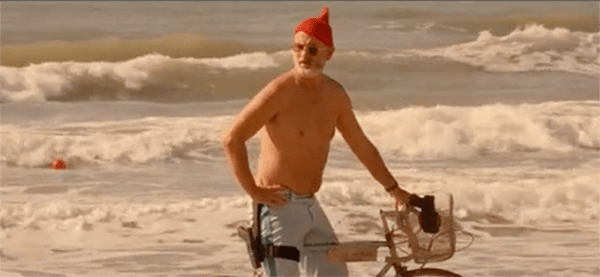
When you think about it, the influences of Wes Anderson are hard to trace, as much as he might be discussed and re-discussed–if you had to find one director he was "quoting," it might be slightly difficult. His influences, such as they are, are more easily found within visual art and literature (Joseph Cornell, Franz Kafka) or even music (Serge Gainsbourg, for instance). Similarly, it’s hard to find a director Wes Anderson is "like"–he cultivates a meticulous distinctiveness that makes it tricky to compare him in the same way you might compare, say Steven Spielberg and George Lucas, or David Fincher and Christopher Nolan. Nevertheless, Anna Catley, who has posted memorably at Vimeo, has waded in and made a strong, fascinating comparison between Wes Anderson and Japanese director Yasujiro Ozu, perhaps most famous for his 1953 film ‘Tokyo Story.’ Catley finds many points in common, such as strong repertory casts or a love of complex interiors, as well as many thematic overlaps, which make the comparison seem wholly logical–and might make one wonder why it hadn’t popped up before.   

Watch: Who Is Jonathan Glazer?

Watch: Who Is Jonathan Glazer?

[A transcript follows:]

The ultra-bizarre surrealist nightmare ‘Under the Skin’ sparked a lot of discussion when it came out last year and the name Jonathan Glazer found its way onto the lips of many film enthusiasts, but what you may not realize is that you’ve been watching his work for years.
 
Let’s go back a bit. For the past 20 years, Jonathan Glazer’s directorial efforts have mainly been television advertisements and music videos. You may recognize his 1996 video for Jamiroquai’s ‘Virtual Insanity’ where Jamiroquai appears to slide around the room as he dances. The effect is quite an ingenious one. He was a theater design major at Nottingham Trent University in his native country of England, and we can see how this knowledge came into play in his creative solution for the video.
 
It seems obvious that his experiences working on music videos and commercials allowed for much more experimentation than if he had focused on directing features from the beginning, but it’s much more than that. He also had the invaluable experience of heading a Guinness campaign that provided the opportunity and constraint to communicate information economically. These ads pack a lot into a short timeframe—whether it’s character, story, or atmosphere.
 
The next thing these commercials and music videos did was provide logistical experience in a shoot much shorter than a feature film. And sometimes the scale of the production was quite substantial. This ad for Bravia, which he directed in 2006 (after his first two feature films), used 250 crew members and was made pretty much entirely out of practical effects. It took 10 days to shoot and the result is nothing short of epic.
 
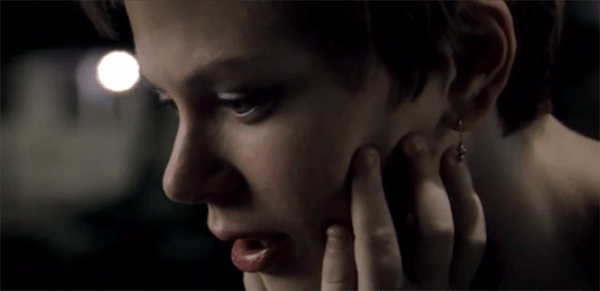
His first feature film, made in 2000, was titled ‘Sexy Beast’ about a gangster called out of retirement to aid in a heist. His second, made in 2004, was ‘Birth’—a film about a boy who claims to be the reincarnated soul of a woman’s deceased husband. The films display Glazer’s playful creativity and striking visual style, but none more so than his most recent endeavor—’Under the Skin.’
 
I don’t know about you, but I am really looking forward to seeing what he does next—whatever that may be.

Credits:

Films:
Under the Skin (2014 dir. Jonathan Glazer)
Sexy Beast (2000 dir. Jonathan Glazer)
Birth (2004 dir. Jonathan Glazer)

Music Videos:
“Street Spirit” by Radiohead  (Music Video dir. Jonathan Glazer)
“Virtual Insanity” by Jamiroquai (Music Video dir. Jonathan Glazer)
“Rabbit in Your Headlights” by UNKLE (Music Video dir. Jonathan Glazer)
“The Universal” by Blur (Music Video dir. Jonathan Glazer)
“Karma Police” by Radiohead (Music Video dir. Jonathan Glazer)
“Karmacoma” by Massive Attack (Music Video dir. Jonathan Glazer)

"Treat Me Like Your Mother" by The Dead Weather (Music Video dir. Jonathan Glazer)

Commercials:
Wrangler – Ride (Commercial dir. Jonathan Glazer)
Guinness – Surfer (Commercial dir. Jonathan Glazer)
Guinness – Swim Black (Commercial dir. Jonathan Glazer)
Guinness – Dreamer (Commercial dir. Jonathan Glazer)
Volkswagen – Protection (Commercial dir. Jonathan Glazer)
Stella Artois – Last Orders (Commercial dir. Jonathan Glazer)
Stella Artois – Whip Round (Commercial dir. Jonathan Glazer)
Levis – Kung Fu (Commercial dir. Jonathan Glazer)
Levis – Odyssey (Commercial dir. Jonathan Glazer)
Barclays – Chicken (Commercial dir. Jonathan Glazer)

Sony BRAVIA – Paint  (Commercial dir. Jonathan Glazer)


Clips:
Jonathan Glazer: The Making of Jamiroquai’s "Virtual Insanity"
Jonathan Glazer: Keeping It Alien – Jonathan Glazer on Under The Skin
Jonathan Glazer: BRAVIA "Paint" Behind the Scenes
DP/30 Short Ends – Jonathan Glazer talks Under The Skin

Music:
“Andrew Void” – Under The Skin OST
“Virtual Insanity” by Jamiroquai
“Karma Police” by Radiohead

Tyler Knudsen, a San Francisco Bay Area native, has been a student of film for most of his life. Appearing in several television commercials as a child, Tyler was inspired to shift his focus from acting to directing after performing as a featured extra in Vincent Ward’s What Dreams May Come. He studied Film & Digital Media with an emphasis on production at the University of California, Santa Cruz and recently moved to New York City where he currently resides with his girlfriend.

Watch: Why ‘Mad Men’ Is a Personal Experience

Watch: Why ‘Mad Men’ Is a Personal Experience

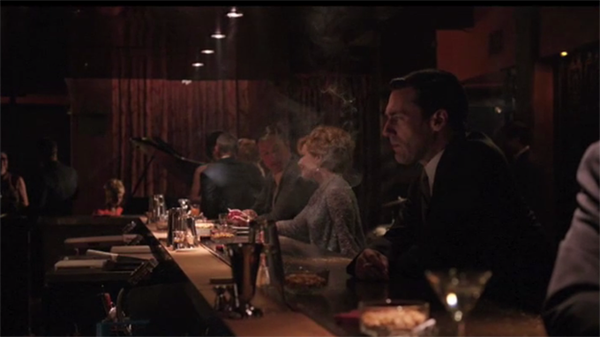
Mad Men is a show about the odd relationship that human beings have with the past—our desire to escape coupled with our desire to hang on. On Mad Men nostalgia is dangerous, deceptive, illusory.

When Mad Men first came out eight years ago, friends hosted theme parties with tailored clothes and twist and shout dances, bars had Mad Men themed events, with cocktails named after the characters, clothing stores like Banana Republic opened up their own Mad Men themed clothing lines.

Over the course of the last eight years we’ve acknowledged the casual sexism and racism of the 60s, while also distancing ourselves from it. I ran into people at parties who swooned over Don’s primal masculinity, who laughed at sexist and racist moments, as if they were an inside joke.

Mad Men’s construction has always been seductive, all the beauty and sex and money and cars. We keep coming back even after we see that its an illusion, when Don’s house is emptied, when Betty is diagnosed with cancer from those same cigarettes we couldn’t help thinking were beautiful and sexy and dangerous in all the best ways.

Mad Men has always also been a mirror, forcing us to look at our own choices and see how deeply they are marred in the culture we live in. I was first introduced to the series by an ex who smoked cigarettes and loved whisky and cinema and sad films as much as I did. When we fought I often felt like one of the women of Mad Men, desperate to keep up appearances, to hide tears with makeup, to throw used liquor bottles in the trash. I’ve seen myself in every female character on Mad Men: when Betty shot those birds, when Joan knocked her fiancé out with her flowers, when Sally got those go-go boots.

But I didn’t think of these women when I left that relationship and started my life ostensibly over; I thought of Don, those empty shots of office rooms and open highways, of New York skylines and the California sun.

Despite strange protests that Mad Men is really all about the women, the truth is Mad Men has always been about Don. No character on Mad Men is capable of evolution the way that Don is, if not for himself than for the advertising culture he lives for. The ending of the series is ambiguous—does Don find peace? Does he use his experience in California as the foundation for a beloved and manipulative Coca Cola ad that defined the 70s?

The final episode of Mad Men reinforces the show’s allure for me, as well as its fundamental tensions. I’m still half in love with and half terrified of what I’m being sold. In the beginning Don tells us that, “What you call love was invented by guys like me, to sell nylons.” By the end, Don is moved to tears by the unmemorable man named Leonard who explains how deeply unloved he feels even though he knows the people in his life who he cares about are trying. Don’s response to Leonard’s opening up is the exact opposite response he received when he opened up about his own past at the Hershey pitch the previous season, when he was basically fired from his position for opening up about a past he is deeply private and emotional about.

Don has tried to fill a void in his heart with any number of vices. It’s telling that when Don calls Peggy, he doesn’t lead with his secret past, but the myriad ways he has been disloyal to the people he truly loved the most. “I broke all my vows.”

We can’t help being who we are, even when who we are is so deeply shaped by the culture we live in. In some ways, the hippie retreat is a relief and respite from the stiff, unfeeling world of advertising that Don comes from. But, at the end of the day, it’s just peddling another set of wares. Does Don’s meditation forgive him of his sins? “You always run away,” Peggy tells him over the phone and it’s true. If anything, the hero of this series is Sally, dutifully cancelling her trip to Madrid, so that she can help her mother and brothers at home.

But that’s not who we are poised to identify with at the end.

Though Mad Men has always fiercely critiqued the patriarchy, it is also very much the product of the time in which it was created. For the past eight years we have seen many series featuring a white, male antihero who finds some kind of redemption—steely, hard eyed, with an emotionally soft core. The women in these series have been given a far greater capacity for rich interior lives, but we also are still poised to see other women in the series as mere objects. We view these women through the eyes of the ad men themselves, the camera panning up and down legs, breasts and other disembodied body parts, whether in pencil dress or mini skirt.

To be a woman on Mad Men is to endure hurt after hurt, and brief moments of sisterhood and solidarity. At the very end, Peggy is afforded a possibility for romance that is still predicated on a man wanting her, rather than someone she has been overtly longing for. At the very end, Joan makes a decision, but finds she can’t have it all either.

At the start of Mad Men, I hated Don—I couldn’t stand his smugness, his womanizing, his lies, his cruelty in the workplace and at home. But after watching this show for eight years I began to see myself in him in small ways, especially in moments where the façade of ease would break.

Many of the reasons I will mourn the end of Mad Men do feel intensely personal. If you watch something for eight years, even something you felt profoundly ambivalent about, you’ll eventually start to have feelings for it, or at least for the YOU that was watching it. A lot has happened over the last eight years. I lost friendships, gained them and lost and gained them again. I started and left different jobs. I lost my grandparents. I mended my relationship with my parents. I learned to love in new ways, to love more deeply, and more carefully. I felt my soul crack open and felt parts of me sewn shut, and then I let parts of myself be open all over again. At the end of Mad Men, Don is the same person he was at the start, older, wiser, slightly changed, but still with that same wonderful, terrible core. Our identity is as malleable as we let it be, except when it’s not. By the end of the series we still want more, but at least we’ve learned to listen.

Arielle Bernstein is a writer living in Washington, DC. She teaches writing at American University and also freelances. Her work has been published in The Millions, The Rumpus, St. Petersburg Review and The Ilanot Review. She has been listed four times as a finalist in Glimmer Train short story contestsShe is currently writing her first book.

Serena Bramble is a film editor whose montage skills are an end result of accumulated years of movie-watching and loving. Serena is a graduate from the Teledramatic Arts and Technology department at Cal State Monterey Bay. In addition to editing, she also writes on her blog Brief Encounters of the Cinematic Kind.

Watch: Who Is Andrei Tarkovsky?

Watch: Who Is Andrei Tarkovsky?

A transcript follows:

There is no one in the history of cinema who photographs the poetic beauty of nature quite like Andrei Tarkovsky. He made only seven feature films and yet, his impact on cinema remains one of the most substantial. Tarkovsky was born in the Soviet Union on April 4th, 1932— his mother, a literature scholar and proofreader, his father, a famous Soviet poet. Having a poet for a father obviously influenced his own work greatly. His style can be appropriately described as ‘visual poetry.’ His stylistic trademarks consist of long unbroken takes, beautiful contemplative scenes of nature, unconventional narrative structures, and surreal imagery.
 
In 1954, he went to a film school in Moscow called the State Institute of Cinematography where he made his first short film titledThe Killers—based on the short story by Earnest Hemingway. His start in film school was very well-timed. Prior to 1953, there was much censorship in the Soviet Union because of Joseph Stalin. But after Stalin’s death in 1953, Nikita Khrushchev took over and reversed many of the censorship laws as part of his “de-Stalinization” which came to be known as the “Khrushchev Thaw.” Because of this, film students like Tarkovsky were now allowed to view films from outside of Russia including the films of Kurosawa, Buñuel, Bergman, Bresson, the Italian neorealism movement, and the French New Wave movement. These films were a big influence on him—he especially loved Bergman and Bresson. Bergman eventually returned the affection saying, “Tarkovsky for me is the greatest, the one who invented a new language, true to the nature of film, as it captures life as a reflection, life as a dream.”
 
In 1959, Tarkovsky teamed up with a classmate to make The Steamroller and the Violin. They wrote the screenplay together and Tarkovsky directed it. The film was his senior project and went on to win the First Prize at the New York Student Film Festival in 1961. In 1962, Tarkovsky directed his first feature film titled Ivan’s Childhood about a 12 year old orphan boy named Ivan during World War II. It was the only film he directed that he did not write the screenplay for, but he was around the same age as Ivan during the war and drew from his own experience while making the film.
 
Every film he made was somewhat autobiographical, but none more so than The Mirror, which touches on his experiences during the war, his mother, and the absence of his father. In 1939, he fled Moscow with his mother and sister to live with his grandmother in the countryside, which is reflected in the film. The Mirror is a beautifully haunting piece of filmmaking that evokes a dreamlike atmosphere.
 
The beauty of the natural world is a major theme in all of Tarkovsky’s work, but almost the entirety of his most famous film doesn’t take place on Earth at all—rather it takes place on a space station orbiting a planet known as Solaris. It was a considerable departure from his comfort zone being so removed from the naturalistic setting found in all of his other films and yet, Tarkovsky’s unique perspective shines through.
 
When asked what advice he would give to young directors, he said, “It requires sacrificing of yourself. You should belong to it, it shouldn’t belong to you. Cinema uses your life, not vice versa.”

Clips used:

Solaris (1972 dir. Andrei Tarkovsky)
Stalker (1979 dir. Andrei Tarkovsky)
The Mirror (1975 dir. Andrei Tarkovsky)
The Sacrifice (1986 dir. Andrei Tarkovsky)
The Killers (1956 dir. Andrei Tarkovsky, Marika Beiku, Aleksandr Gordon)
Yojimbo (1961 dir. Akira Kurosawa)
Un Chien Andalou (1929 dir. Luis Buñuel)
The Seventh Seal (1957 dir. Ingmar Bergman)
Pickpocket (1959 dir. Robert Bresson)
Rome, Open City (1945 dir. Roberto Rossellini)
Breathless (1960 dir. Jean-Luc Godard)
Andrei Rublev (1966 dir. Andrei Tarkovsky)
The Steamroller and the Violin (1961 dir. Andrei Tarkovsky)
Ivan’s Childhood (1962 dir. Andrei Tarkovsky)
Nostalgia (1983 dir. Andrei Tarkovsky)

Tyler Knudsen, a San Francisco Bay Area native, has been a student of film for most of his life. Appearing in several television commercials as a child, Tyler was inspired to shift his focus from acting to directing after performing as a featured extra in Vincent Ward’s What Dreams May Come. He studied Film & Digital Media with an emphasis on production at the University of California, Santa Cruz and recently moved to New York City where he currently resides with his girlfriend.

Watch: ‘The Shining,’ The Twins, and You

Watch: ‘The Shining,’ The Twins, and You

There seem to be two general schools of thought on Stanley Kubrick’s timeless ‘The Shining.’ Either everything means something, or none of it means anything (and those who think otherwise are deluded). The two camps agree only on the fact that the film is terrifying. Rob Ager does a good job of straddling the two attitudes in his Collative Learning video essay on one of the oddest features of the film: the twins. Ager takes us through some details we may have missed (or may not have, if "we" are obsessive): the recurrence of the colors red and blue, the symmetrical relationship of the twins’ butchered bodies in one of Danny’s nightmares, a (possibly staged) making-of clip featuring two women who look quite a bit like the twins–as well as George Mason, of all people. (Not that surprising, given that Mason’s performance as Humber Humbert in Kubrick’s ‘Lolita’ was one of his greatest roles.) In any event, another thing all critical camps may agree on concerning ‘The Shining,’ and which this piece proves, is that you can never watch the film too much.  

Watch: What Makes ‘House of Cards’ A Success?

Watch: What Makes ‘House of Cards’ A Success?

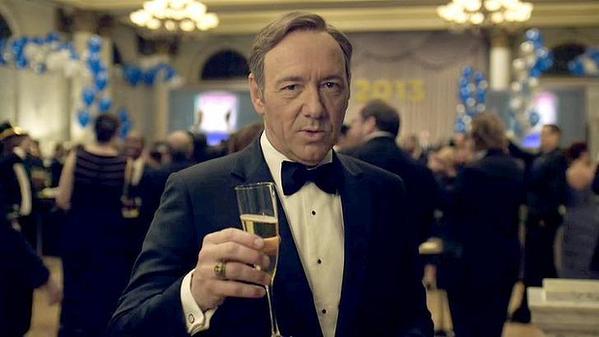
As I’m fond of saying, nothing happens without a reason. That film you love, the one you can’t stop re-watching? That scene you discuss for hours? That dramatic climax that caps anything you’ve seen before? It’s the product of deliberation, planning, calculation: a director whose work is memorable becomes that way because he or she wants it to be that way–and to do that, layers of hard work have to be poured on, making what seems to you like an effortless product but is in fact anything but. In the case of David Fincher’s ‘House of Cards,’ the first series to make Netflix a credible location for entertainment, there are several factors in play, some we know and some we don’t, nicely enumerated in this brief but dense analysis by Elena Ishchuk: breaking the 4th wall, dynamic use of lights and darks, determined use of blues and yellows, centralized shots, and others. If you haven’t yet dipped into what many deem an addictive series, powered by Kevin Spacey’s demonic drawl, this piece might be a nice introduction for you.

Watch: Xavier Dolan Makes Filmic Poems

Watch: Xavier Dolan Makes Filmic Poems

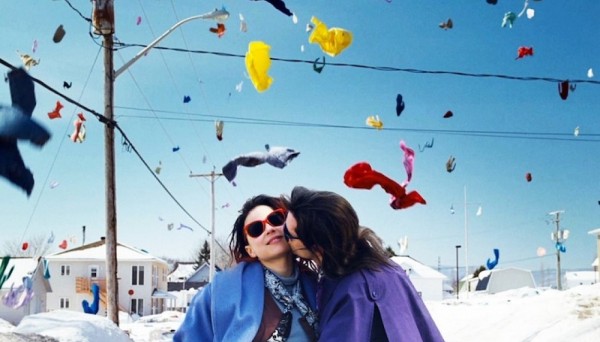
Watching a Xavier Dolan film is like having a poem smashed over your head. If you don’t know what I mean by that sentence, then you should watch Kevin B. Lee’s remarkable compilation video essay for Fandor on Dolan’s film ‘Laurence Anyways,’ above. Take a look, and let me know if I’m right. (And yes, I used the word "filmic" in the headline.)

Watch: What Tim Burton Owes to German Expressionist Films

Watch: What Tim Burton Owes to German Expressionist Films

It could easily be said that the best things about Tim Burton’s work come from German Expressionist film: the attentiveness to detail in design, the darkness, the vast, complex sets, the theatricality and over-blown nature of films such as ‘Edward Scissorhands,’ ‘Batman,’ and ‘Sweeney Todd.’ This new video piece by Cinema Sem Lei makes the connection between Burton’s work and such great films as ‘Nosferatu’ or ‘The Cabinet of Dr. Caligari’ crystal clear. This isn’t to suggest, of course, that Burton doesn’t inject and imbue his films with his own distinctive style. Far from it, in fact! But we are reminded, when watching this video, that the influence of older German filmmakers flows through Burton, empowering him.