Motion Studies #11: Razzle Dazzle Part 6: The Takeaway

Motion Studies #11: Razzle Dazzle Part 6: The Takeaway

http://www.movingimagesource.us/flash/mediaplayer.swf?id=129/891

From now through April, the Oberhausen International Short Film Festival will present "Film Studies in Motion", a Web Series curated by Volker Pantenburg and Kevin B. Lee. This series, available on the festival's website and Facebook page, presents weekly selections of analytical video essays on the web, in preparation for Pantenberg and Lee's presentation  "Whatever happened to Bildungsauftrag? – Teaching cinema on TV and the Web", scheduled for April 28 at the festival.

Week Three: Remixes: Parody, Supercut and Mashup

Appropriating and recombining existing footage has been a prime strategy of art and analysis for a long time. With the immense circulation of movies on the web and the accessibility of editing software, this method is no longer restricted to experimental cinema or contemporary art, but has become part of a wider remix culture. This episode gathers recent examples from a wide range of practices. Some of them are driven by critical intentions, some by sheer enthusiasm for iconography and rhythm.

Today's selection:

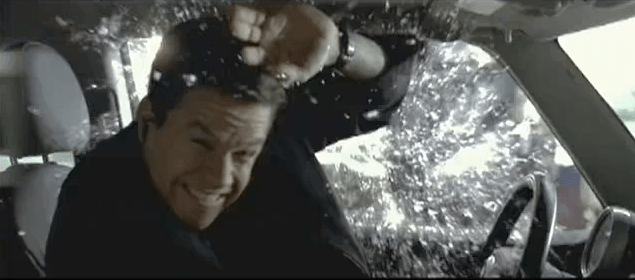
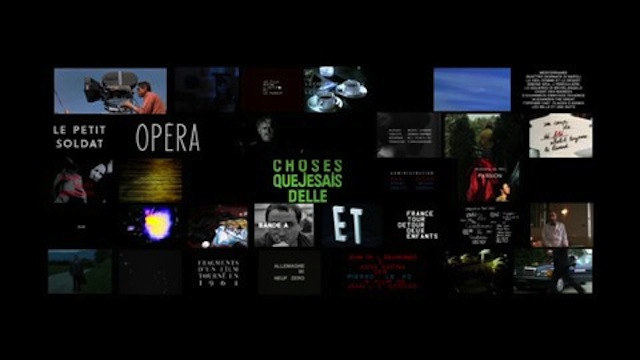
Razzle Dazzle Part 6: The Takeaway

Aaron Aradillas, Steven Santos, Matt Zoller Seitz (2010)

A stunning montage that tunnels through the media distortion field as depicted in dozens of movie and video clips.

View all Motion Studies video selections.

Volker Pantenburg is assistant professor for moving images at the media faculty of the Bauhaus-Universität Weimar. 

Kevin B. Lee is Editor in Chief of IndieWire’s PressPlay Video Blog and contributor to Roger Ebert.com. Follow him on Twitter.

Motion Studies #10: Pure

Motion Studies #10: Pure

From now through April, the Oberhausen International Short Film Festival will present "Film Studies in Motion", a Web Series curated by Volker Pantenburg and Kevin B. Lee. This series, available on the festival's website and Facebook page, presents weekly selections of analytical video essays on the web, in preparation for Pantenberg and Lee's presentation  "Whatever happened to Bildungsauftrag? – Teaching cinema on TV and the Web", scheduled for April 28 at the festival.

Week Three: Remixes: Parody, Supercut and Mashup

Appropriating and recombining existing footage has been a prime strategy of art and analysis for a long time. With the immense circulation of movies on the web and the accessibility of editing software, this method is no longer restricted to experimental cinema or contemporary art, but has become part of a wider remix culture. This episode gathers recent examples from a wide range of practices. Some of them are driven by critical intentions, some by sheer enthusiasm for iconography and rhythm.

Today's selection:

Pure

Jacob Bricca (2009)

"Jacob Bricca's Pure (2008)—which played at a number of film festivals, including the Berlinale—groups together a slew of visual cues from action movies, creating a kind of auto-critical futurist paean to maximum velocity. The shots he finds are so similar that the effect is often like watching the same exact thing from multiple angles." – Tom McCormack, Moving Image Source

View all Motion Studies video selections.

Volker Pantenburg is assistant professor for moving images at the media faculty of the Bauhaus-Universität Weimar. 

Kevin B. Lee is Editor in Chief of IndieWire’s PressPlay Video Blog and contributor to Roger Ebert.com. Follow him on Twitter.

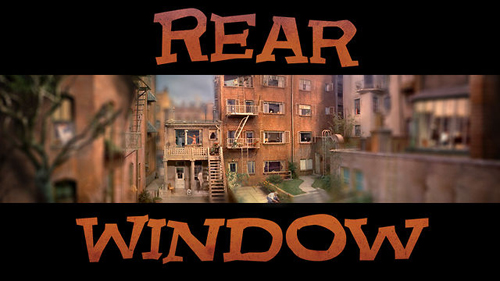
Alfred Hitchcock’s REAR WINDOW reimagined by artist Jeff Desom

Alfred Hitchcock’s REAR WINDOW reimagined by artist Jeff Desom

Rear Window Timelapse from Jeff Desom on Vimeo.

[Editor's Note: We at Press Play can't imagine the hours, the imagination and the creativity it took to create the above tableau. It is a reworking of Alfred Hitchcock's film Rear Window, presenting this classic in a way that has never been seen before. It extracts all of the film footage as seen from Jimmy Stewart's point of view, stitches and reconstructs the pieces, and places them on a single plane. This has to be seen to be believed. It is the remarkable work of installation artist Jeff Desom, who employed any number of digital effects programs and lots of caffeinated coffee to create this effect. Way to go, Mr. Desom. Let us know what you're doing next. Here is Mr. Desom's site.]

Motion Studies #9: Rose Hobart

Motion Studies #9: Rose Hobart

From now through April, the Oberhausen International Short Film Festival will present "Film Studies in Motion", a Web Series curated by Volker Pantenburg and Kevin B. Lee. This series, available on the festival's website and Facebook page, presents weekly selections of analytical video essays on the web, in preparation for Pantenberg and Lee's presentation  "Whatever happened to Bildungsauftrag? – Teaching cinema on TV and the Web", scheduled for April 28 at the festival.

Week Three: Remixes: Parody, Supercut and Mashup

Appropriating and recombining existing footage has been a prime strategy of art and analysis for a long time. With the immense circulation of movies on the web and the accessibility of editing software, this method is no longer restricted to experimental cinema or contemporary art, but has become part of a wider remix culture. This episode gathers recent examples from a wide range of practices. Some of them are driven by critical intentions, some by sheer enthusiasm for iconography and rhythm.

Today's selection:

Rose Hobart

Joseph Cornell (1936)

The original movie remix.

View all Motion Studies video selections.

Volker Pantenburg is assistant professor for moving images at the media faculty of the Bauhaus-Universität Weimar. 

Kevin B. Lee is Editor in Chief of IndieWire’s PressPlay Video Blog and contributor to Roger Ebert.com. Follow him on Twitter.

VIDEO – Motion Studies #7: Low Budget Eye Candy

VIDEO – Motion Studies #7: Low Budget Eye Candy

From now through April, the Oberhausen International Short Film Festival will present "Film Studies in Motion", a Web Series curated by Volker Pantenburg and Kevin B. Lee. This series, available on the festival's website and Facebook page, presents weekly selections of analytical video essays on the web, in preparation for Pantenberg and Lee's presentation  "Whatever happened to Bildungsauftrag? – Teaching cinema on TV and the Web", scheduled for April 28 at the festival.

Week Two: Cinematic Techniques on Display

The video essay format has quickly shown its abilities to illuminate and critique the techniques of filmmakers in ways that surpass the reach of traditional text-based analysis. This selection of videos creatively engages with various films to reveal surprising insights into the many dimensions of cinema: cinematography, editing, sound, etc.

Today's selection:

Low Budget Eye Candy

Steven Boone (2009)

Even George Lucas started out as a resourceful low-budget filmmaker, as detailed in this video essay manifesto on DIY film production.

View all Motion Studies video selections.

Volker Pantenburg is assistant professor for moving images at the media faculty of the Bauhaus-Universität Weimar. 

Kevin B. Lee is Editor in Chief of IndieWire’s PressPlay Video Blog and contributor to Roger Ebert.com. Follow him on Twitter.

VIDEO – Motion Studies #5: Variation on a Sunbeam

VIDEO – Motion Studies #5: Variation on a Sunbeam

From now through April, the Oberhausen International Short Film Festival will present "Film Studies in Motion", a Web Series curated by Volker Pantenburg and Kevin B. Lee. This series, available on the festival's website and Facebook page, presents weekly selections of analytical video essays on the web, in preparation for Pantenberg and Lee's presentation  "Whatever happened to Bildungsauftrag? – Teaching cinema on TV and the Web", scheduled for April 28 at the festival.

Week Two: Cinematic Techniques on Display

The video essay format has quickly shown its abilities to illuminate and critique the techniques of filmmakers in ways that surpass the reach of traditional text-based analysis. This selection of videos creatively engages with various films to reveal surprising insights into the many dimensions of cinema: cinematography, editing, sound, etc.

Today's selection:

Variation on the Sunbeam

Aitor Gametxo (2011)

A 12 minute D.W. Griffith short is dissected and rearranged into multiple spaces playing out in real time, providing a revelatory view of Griffith's approach to storytelling and space.

View all Motion Studies video selections.

Volker Pantenburg is assistant professor for moving images at the media faculty of the Bauhaus-Universität Weimar. 

Kevin B. Lee is Editor in Chief of IndieWire’s PressPlay Video Blog and contributor to Roger Ebert.com. Follow him on Twitter.

VIDEO – Motion Studies #4: Godardloop

VIDEO – Motion Studies #4: Godardloop

For the next seven weeks, the Oberhausen International Short Film Festival will present "Film Studies in Motion", a Web Series curated by Volker Pantenburg and Kevin B. Lee. This series, available on the festival's website and Facebook page, presents weekly selections of analytical video essays on the web, in preparation for Pantenberg and Lee's presentation  "Whatever happened to Bildungsauftrag? – Teaching cinema on TV and the Web", scheduled for April 28 at the festival.

Press Play will track the series, posting four or five of the selected videos each week as they also become available on the Oberhausen Film Festival website.

This week is an initial sampling of exemplary works from the emerging genre of online video essays on cinema. Combined they cover a wide range of subject matter (a genre, a sequence in a film, a cinematic motif, a director’s body of work). They demonstrate a variety of stylistic approaches to the video essay form, using an array of techniques: montage and rhythm, split screens, narration, creative use of on-screen text, etc. These works, some of them conceived as multi-part series, are made typically on computers with consumer-grade editing software, but they display an ingenuity that is comparable to that of the films they explore.

Today's selection:

Godardloop


Michael Baute (2010)

47 films spanning 50 years of filmmaking are channeled into a stream of images that attest to an inimitable talent: an artist who transforms the world simply by how he looks at it through a camera.

Volker Pantenburg is assistant professor for moving images at the media faculty of the Bauhaus-Universität Weimar. 

Kevin B. Lee is Editor in Chief of IndieWire’s PressPlay Video Blog and contributor to Roger Ebert.com. Follow him on Twitter.

VIDEO SERIES – MAD MEN Moments

VIDEO SERIES – MAD MEN Moments

nullWith the long-awaited premiere to Season Five imminent, Mad Men is on many a person's mind. For the next thirteen weeks, some may revel in a neverland of glamorous mid-60s living fraught with social strife; others may wonder what jaw-dropping, life-changing events await their favorite characters. But for us here at Press Play, it's about the moments. Moments that have us instantly rewinding our DVRs as soon as an episode is over, or poring over blog recaps all Monday long while real work lies unattended. Mad Men has yielded four seasons stuffed with such moments. We decided to produce a series of videos dedicated to spotlighting some of the best.

This was no easy task and involved a fair amount of deliberation in selecting four iconic moments to produce the video essays that are our specialty here at Press Play. We decided to pick just one moment from each of the previous four seasons that lent itself best to video essay treatment. What surprised us was how each selected moment organically led to distinctly different approaches in our analysis. Watch each video and see what we mean. If anything they will have you salivating for more from Matt Weiner, Jon Hamm & company.

Press Play is especially fortunate to have as co-producer of the series Deborah Lipp of the popular Mad Men blog Basket of Kisses. Deborah co-runs the blog with her sister Roberta Lipp (who lent her estimable voice talents to three of these videos) and was an invaluable presence in bringing this series to fruition. Not only are we proud to co-present these videos with Basket of Kisses, we are doubly excited to announce that Deborah will serve as Press Play's very own Mad Men specialist, writing episode recaps throughout the season. Look for her first recap this Sunday IMMEDIATELY following the end of the two-hour season premiere, which starts at 9PM on AMC. For the next thirteen weeks, Press Play will be an essential destination for replaying another season's worth of Mad moments.

Index of "Mad Men Moments" Video Essays:

It's a Mad World: A video essay by Serena Bramble, essay by David Ehrenstein

Season One: The Carousel by Tommaso Tocci and Kevin B. Lee

Season Two: The Sad Clown Dress by Deborah Lipp, Roberta Lipp and Kevin B. Lee

Season Three: The Lawnmower by Amanda Marcotte, Roberta Lipp and Kevin B. Lee

Season Four: The Fight by Serena Bramble, Deborah Lipp, Roberta Lipp and Kevin B. Lee

Top Five Mad Men Moments, selected by the Mad Men blog Basket of Kisses

Deborah Lipp is the co-owner of Basket of Kisses, whose motto is "smart discussion about smart television." She is the author of six books, including "The Ultimate James Bond Fan Book."

Kevin B. Lee is Editor in Chief of IndieWire’s PressPlay Video Blog and contributor to Roger Ebert.com. Follow him on Twitter.

VIDEO ESSAY: It’s a MAD World – a MAD MEN Video Tribute

VIDEO ESSAY: It’s a MAD World – a MAD MEN Video Tribute

Part of the Mad Men Moments Video Essay Series

Serena Bramble, who has already created several dazzling montage tributes to film noir, Powell and Pressburger, and Steven Spielberg, among others, unveils her latest work, weaving dozens upon dozens of clips into a jazz-like succession of motifs, mapping out the resplendent world of Mad Men

Bramble's video includes an excerpt of Don Draper reading Frank O'Hara's poem "Mayakovsky" from the premiere episode of Season Two. Writer David Ehrenstein takes that scene as the starting point for the following meditation on the poem, its author the poet Frank O'Hara, and their significance to the series:

Don Draper reading Frank O’Hara’s poem "Mayakovsky" was one of the most startling yet oddly right cultural cross-references in all of Mad Men. Don is of course extremely intelligent and very much aware of the arts — but hardly what anyone would call an intellectual. His romantic exploits have brought him in passing contact with late 50’s /early 60’s New York bohemia (jazz clubs, loft parties) but he’s never evidenced a desire to be part of them. His chance encounter with an O’Hara poem is part and parcel of his magpie-like instinct to gather up information for possible future use. Had Don actually run into Frank O’Hara it’s doubtful he’d have anything to say to him. O’Hara, of course, would have been sure to put the make on a Total Babe like John Hamm.

Frank O’Hara (1926-1966) lived a life that in some ways mirrors that of the Mad Men characters. He went to Harvard (Edward Gorey was his roommate) studied music, but became profoundly interested in poetry — especially avant-garde French and Russian poets Stephane Mallarme, Arthur Rimbaud, Pierre Reverdy, Boris Pasternak and Vladimir Mayakovsky. He got a job working in the card shop at the Museum of Modern Art and in a very short space of time worked his way up to being one of the Museum’s most important curators. This Peggy-like rise was aided by the fact that he became personal friends with the Abstract Expressionists the Museum was collecting. His essays reveal him to be one of their most vocal and direct champions. It wasn’t lofty and “theoretical” with O’Hara at all. A prodigious imbiber, the fact that he could drink any abstract expressionist in the house under the table was why this very openly gay man with — in his words — “the voice of as sissy truck driver” doubtless impressed this decidedly straight and very macho crew. Here’s the greatest love poem ever written (IMO).

O’Hara wrote constantly. His powers of inspiration never waned. The poem he reads above is about Vincent Warren — a dancer in the chorus of the New York City Ballet. O’Hara had been invited by John Ashbery to accompany him on a State Department sponsored Cultural Tour of Europe (hence the cities listed in the poem). The minute he said “Yes” to the trip was the same minute he discovered that he was in love with Vincent Warren. O’Hara’s open celebration of joy in his sexual and romantic self is something Mad Men’s Sal couldn’t possibly bring himself to so much as dream of. 

Frank O’Hara died in 1966 as a result of injursies sustained when he was hit by a slow-moving dune buggy on Fire Island coming back in the wee smalls from a party. He was in mid-conversation with Babe du Jour J.J. Mitchell, when J.J. suddenly realized Frank had stopped talking. He looked back and there Frank was on the sand. He was flown back by helicopter to New York where he died in hospital while trying to comfort his distraught friends. His last words were to Willem de Kooning. “Oh Bill, you’ve come by. How nice.”

It would be nice if Mad Men makes mention of it when the time comes in the story arc.

Serena Bramble is a film editor currently pursuing a Bachelor's degree in Teledramatic Arts and Technology from Cal State Monterey Bay. In addition to editing, she also writes on her blog Brief Encounters of the Cinematic Kind.

David Ehrenstein is a film critic and writer whose books include Open Secret: Gay Hollywood 1928-2000 and The Scorsese Picture: The Art and Life of Martin Scorsese. He lives in Los Angeles.

VIDEO ESSAY – MAD MEN Moments: The Carousel

VIDEO ESSAY – MAD MEN Moments: The Carousel

Part of the Mad Men Moments Video Essay Series

Click here to watch this video on your mobile device.

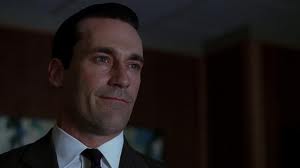
This video is inspired by the famous "Carousel" presentation in the finale of season one of Mad Men. In this scene, Don Draper uses idyllic images of his family to sell Kodak's new slide projector as a "time machine" taking us from one perfect moment of our life to the next.  This video re-imagines the scene as a time machine journey through the life of Don Draper, with moments that are anything but picture-perfect. It asks the question that has run through the entire series: "Who Is Don Draper?" and explores the gaping chasm between the man he has been and the man he wishes to be.

The original sequence is embedded below, and is further explored by Tommaso Tocci in the following essay.

The 'carousel scene' was one of the moments that helped define the first season of Mad Men. The series had made a strong first impression on its 2007 debut and had consistently built on that over the course of the twelve episodes before 'The Wheel'. Many of the seasonal arcs had already reached their conclusion in the penultimate episode, 'Nixon vs. Kennedy', leaving this one as a sort of offbeat climax covering emotional grounds.

nullThe season finale finds creative director Don Draper in charge of a pitch to Kodak executives for the marketing of their new projector. The client request is to work the technology angle, emphasizing the automated capabilities of the device.

Except that Don Draper doesn't really trust technology, or even the future. Earlier in the season (ep. 1.2), he dismissed a space-themed campaign because 'some people think of the future and it upsets them'. As much as he doesn’t like thinking of himself – and his agency – as 'traditional' (ep. 1.6), he always goes searching for his ideas in the past, because that’s where the emotions he’s drawn to really are.

'Technology is a glittering lure, but there’s the rare occasion when the public can be engaged on a level beyond flash, if they have a sentimental bond with the product'.

When we met him in the pilot, we took his boyish smile at face value. We could believe his free-spirited nature, his philosophy that what we call love was invented by guys like him – to sell nylons. He lives like there’s no tomorrow because there isn’t one. It’s only at the end of the episode that we learn how heavily Don had invested on an idealized, prefabricated version of tomorrow (and love). We discover that there's very little we can take at face value in this show. After thirteen episodes spent trying to stabilize this fracture, it's clear that something has gone wrong in the process. By the time he gets to work on the Kodak pitch, Mr. Draper is no longer a happy customer.

The carefully crafted ‘love-doesn’t-exist’ fiction is consistent with the way he approached his first challenge of the series: the creation of a new slogan for Lucky Strike. Claiming that advertising is only based on 'happiness' ('a billboard screaming with reassurance that whatever you’re doing, it’s okay. You are okay' – it’s worth noting that Jon Hamm was instructed to say the line as if he was telling that to himself), in a fit of genius he abandons any thoughts of complexity and just focuses on immediate pleasure: 'It’s toasted'. Don’s discomfort throughout the episode is mirrored by the setting of the scene when he walks into the meeting. He sits alongside Roger in a fully lit, unforgiving room, desperately scrambling for inspiration. He’s just scratching the surface of himself, like a patient on the first session with his therapist.

null

Thirteen episodes later, with an extremely messier but more acute self-awareness, he owns the Kodak pitch. He's the man behind the curtain, now. He's getting closer to the darkness that's being eating at him while simultaneously distancing himself from it by literally projecting it on the wall. Look how he disappears in the dark background of the room, firmly in charge of the narrative. Confident, composed, assured while he exposes himself. He is a man with a plan, and his plan is so effective because it feeds off everything that’s happened to him in 13 episodes.

Over the course of the season, we’ve seen flashbacks of a forgotten childhood emerge through the cracks of a crumbling conscience. As in a twisted psychoanalytical process, Don refuses to acknowledge his past on a conscious level, but he allows it to re-surface in his work. Indeed, it’s the only place he ever goes to – his secret emotional goldmine.

'A deeper bond with the product. Nostalgia. It's delicate, but potent'.

The story he tells about his first job, 'in-house at a fur company' with 'this old pro copywriter' Teddy, is a convenient half-truth (we’ll find out only in episode 4.6), just like the Greek etymology of 'nostalgia' that he uses as a gateway for his carousel allegory: 'nostalgia' is not 'the pain from an old wound'; it’s actually the pain caused by the desire to return home. But for Don Draper, the thought of returning home IS an old wound, and a very painful one.

As the plastic of the projector rotates, echoing each of Don’s increasingly assertive statements, we go back and forth between full-frame family pictures and Don’s face. It’s almost shot-reverse-shot. Note how the pictures are kept in motion and in contact with the scene by the cigarette smoke blowing in front of the projector ('Smoke gets in your eyes') and how Don’s dark, austere frame is dynamically countered by the abstract painting in the background.

nullThe first slide with Don and Betty – playfully biting the same hot dog – is a recreation of an actual photo of series-creator Matthew Weiner’s parents on their first date. Beyond the autobiographical detail, this also reinforces the notion of Mad Men as a ‘time machine’ for the people who are now 40-to-50 years old. A way for that generation to come to terms with their parents’ time. This is interesting because every major character can be examined through the lens of its child issues (Don, Betty, who’s always been a child, Peggy, who must fight to no longer be considered one). Mad Men is full of irresolvable controversies and contradictions – simultaneously stigmatizing and fetishizing the customs of the 60s, hating and loving its anti-hero protagonist, believing in his emotions or regarding his whole identity as a ploy, and ultimately being in itself a meta-meta play on the ambivalence of advertising. It's epic turned parody turned irony turned postmodern epic. A rational centrifuge of polar opposites spinning faster and faster until you need a different set of eyes to make sense of it. Reconciling such opposites is the way in which we make peace with our parents, with their world. It’s how we put them to rest. It’s probably the only point of view from which Mad Men can be experienced as a whole – rather than as an eternal duality.

That’s why the carousel scene has made such an impression – it encapsulates not only the themes and storylines of every character in the first season, but also the different layers that the series has taught us to look out for. People ‘buy’ the scene for its straightforward, raw emotional power, or they choose to see it as the ultimate manipulation. It can be a psychoanalytic struggle or an historical rollercoaster. It can be earnest or cynical, cathartic or parodic.

The 'place where we ache to go again' also complements another etymological quirk that appears earlier in the season (1.6), when Rachel explains to Don that ‘Utopia’ means both ‘the good place’ and ‘the place that cannot be’. Another double definition perfectly fitting Don’s search for his past AND the time of Mad Men in its entirety. A magical Babylon. Has it ever really existed? Or did we collectively imagine it? Is it just some good memories of a child mixed with the rational judgment of a man? 'It was good, but it cannot be' would make a great caption for the show’s attitude towards the values and customs it depicts.

Tommaso Tocci is a freelance writer and translator currently based in Italy. Follow him on Twitter.

Kevin B. Lee is Editor in Chief of IndieWire’s PressPlay Video Blog and contributor to Roger Ebert.com. Follow him on Twitter.