Watch: A Video Essay on the Truly Iconic Figures in Sergio Leone’s ONCE UPON A TIME IN THE WEST

Watch: A Video Essay on the Truly Iconic Figures in Sergio Leone’s ONCE UPON A TIME IN THE WEST

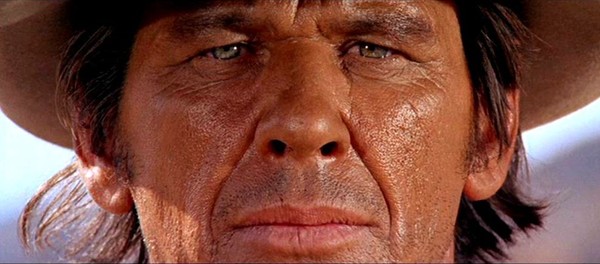
Sergio Leone, as indicated in such films as Once Upon a Time in the West, The Good, the Bad, and the Ugly, and A Fistful of Dollars, and as shown in this beautiful video essay by Michael Mirasol, recently posted at Movie Mezzanine, understood a couple of basic things about the human gaze. One was that if you look into another’s face for a long time, really, hold the gaze, really stare deeply, the effect is unsettling. You begin to see things in the face: possibilities, flaws, other faces, perhaps. The gravity of an expression grows, the longer you look at it. A well-placed squint becomes a predictor of future danger. Similarly, a human figure, positioned against a landscape, may in one sense seem dwarfed by it, as the figures in Once Upon a Time in the West seem here, but in another sense become all you notice in the frame. The story you’re watching ultimately comes to hinge on these solitary figures and their relationship to the landscape–which begins to be equated with ther relationship to the universe itself. It’s been said that the grandstanding expressions the American Founding Fathers wear in early portraits come directly from the proud way in which the subjects often carried themselves, which would today seem exaggerated; similarly, the slow strut of a Charles Bronson, a Henry Fonda, a Clint Eastwood, or a Jason Robards in one of Leone’s westerns suggests, when one considers the context Mirasol offers here, a readiness for battle with consuming forces (history, industry, the railroads) which will eventually win out, but which the humans will not give up without a struggle–and in so being, the figures Leone portrays become equivalent with the heroes of Ovid, Homer, and Virgil, timeless icons surrounded by swirling dust.

Watch: A Video Essay on the Afterlife, from Albert Brooks to Woody Allen

Watch: A Video Essay on the Afterlife, from Albert Brooks to Woody Allen

This remarkable piece, which takes us through visions of the afterlife ranging from Albert Brooks’ Defending Your Life to Woody Allen’s vision of Hell in Deconstructing Harry, threaded along with clever music (Jessica Lurie’s cover of David Byrne’s "Heaven" for the former half, "Disco Inferno" for the latter half), managing to instersperse cameos from South Park‘s version of the Devil, Seth Rogen, and Harry Potter along the way, raises a question: how do we arrive at these visions? Heaven, in the Christian sense, is thought of as a reward for good behavior–and in many of the scenes "brutzelpretzel" has arranged here, it’s a tranquil place, even beautiful (as in What Dreams May Come, with its poignant Robin Williams performance). But what about the person sent there? What if tranquility isn’t their idea of a reward, nor physical beauty? For a person who had been active all his or her life, would an eternity of inactivity and comfort be a reward? Similarly, is a burning, chaotic pit necessarily the best punishment for a person who has done evil deeds for a lifetime? In both extremes, many of the characters seem baffled; the most apparent emotion on the face of Woody Allen’s Harry as he descends into the inferno ("Floor 7: The Media") is disgruntlement–and on that of Richard Dreyfuss’s pilot in Always, confusion. Watching these afterlife sequences makes one think, mainly, that our cinematic visions of Heaven and Hell tell more a story of displacement than of right and wrong–and that when Keanu Reeve’s Ted says "No way" upon learning he is dead, and Alex Winter’s Bill replies, "Yes way," this is perhaps as profound a statement as a character might realistically make on the experience: that of stunned acceptance.  

Watch: A Video Essay about Aliens in Movies: Scary, Wondrous, Awful, Magnificent

Watch: A Video Essay about Aliens in Movies: Scary, Wondrous, Awful, Magnificent

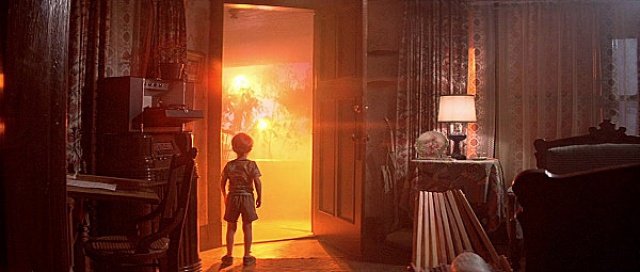
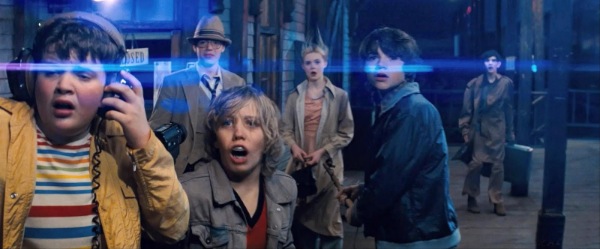
As I watched this briskly edited video essay by Waterclock about aliens in movies from Alien to Close Encounters of the Third Kind to E.T. to Super Eight, I found myself, oddly enough, drawn back to a memory from my childhood that had very little to do with outer space, but every bit to do with unfamiliar visitors. I grew up in an area of Dallas called the Park Cities, so named for the ample greenery, lush landscaping, and manicured lawns to be seen everywhere. It was an affluent neighborhood, and an implicitly guarded one; as I grew older and smarter, I grew increasingly frustrated and disgusted with the fact that anyone who wasn’t white or, for that matter, wasn’t driving a fairly expensive car was under suspicion in the area. In any event, when I was young, a group of gypsies moved into my neighborhood. No one knew where they came from. No one knew much about them, period, except that they were supposed to be "dangerous." The primary evidence of their dangerousness was their blunt behavior in grocery stores; an anecdote about "one of those gypsies" throwing a loaf of bread across the Safeway Market down the street from me because he "didn’t like the price" made the rounds repeatedly. I read a lot at that time, and my main curiosity about the gypsies was whether they had a covered wagon with them, and whether they played gyspy music on elaborately painted violins. This didn’t seem to be the case. The only palpable detail I gleaned about them, having never seen one of them, was that they wore jogging suits, the idea being that they’d stolen them, for how would traveling gypsies obtain jogging suits otherwise? According to popular wisdom, "they just took things." They were "greedy." I was told, in school, to watch out for them, to stay out of alleys, because they apparently loved alleys–and if I saw anyone in a jogging suit who looked, well, "different," to be on my guard. Apparently, the gypsies "traveled in groups": another criterion. The Park Cities had a local newspaper that conveyed to local residents the news of their biosphere, and the gypsies were definitely a hot item–the small organ probably expended more ink on the gypsies than it did on any other subject in its history. Though the gypsy furor died down, as well one might suspect, and without a ringing certainty as to whether the gypsies were, in fact, members of the Roma people, it taught me a valuable lesson about the American character. Americans are full of fear: fear of invasion, fear of theft, fear of difference, fear of instability, fear of death, of sickness, and, most sadly, of showing vulnerability. Americans flock to watch films about aliens, and, in particular alien invasions, because these films touch a crucial American nerve: what if our safety were threatened by forces we didn’t understand? Or, put another way, what if these forces simply showed up one day, and we had no idea what to do other than eliminate them? Or, put more accurately, what do we do about those who are different from us? Sadly, acceptance is not a part of the American sensibility, despite what certain parts of the Constitution might have us believe. Correspondingly, the alien narratives presented to Americans are always ones of destruction, of terror, of invasion, of a foreign menace moving in that must be stopped. This video piece brings home the excitement inherent in this narrative, the quickening of the blood that takes place when we believe we have something to defend, and it does so with great skill. In so doing, though, it points up the scary side of our country’s fascination with these creatures, and it makes viewers like me wonder what that fascination might mean–and, beyond that, if we might ever grow past the fears that make these films so successful.

Watch: A Video Essay About Witches in Film

Watch: A Video Essay About Witches in Film

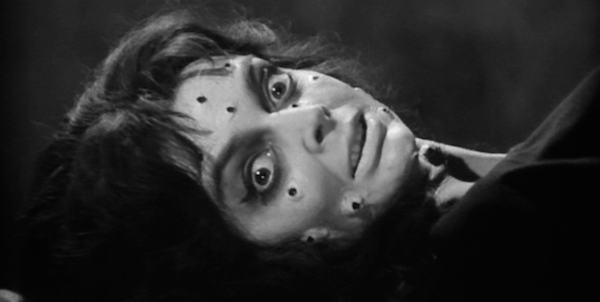
The venerable Film Comment has started publishing video essays! Their first entry is a brilliant piece on witches in film by Pam Grossman. Grossman’s research was extensive, and fascinating. We see clips from many countries, times, and aesthetics here; the 16-minute video should answer anyone’s questions about the roles of witches in film, who played them, what movies they appeared in, and how they’ve changed over time. Grossman offers us the obvious roles that everyone knows, of course, from Angelina Jolie’s stepmother in Maleficent to the Wicked Witch of the West in The Wizard of Oz–but she also digs significantly deeper into film history to roll out clips from Mario Bava’s Black Sunday, George Miller’s The Witches of Eastwick and George Romero’s Season of the Witch. The crucial message here is that the state of being a witch–should we call it witchery?–is empowering to the witch, and potentially either threatening or helpful to those within the reach of her wand. On this tour of cinematic witch history, Grossman takes us from a Scandinavian silent film all the way up to the present day, being careful to show the ambivalence of the witch figure throughout, even highlighting such films as The Craft, in which witchcraft is both an agent of needed revenge (as an outlet for teen angst) and problematic for its young users. This expertly edited and thoughtfully executed piece would be an informative watch for anyone interested in the history of witchcraft or the changing face of the occult in film.

Watch: A Video Essay About Jacques Tati, A Glass Door, and The Importance of Appearances

Watch: A Video Essay About Jacques Tati, A Glass Door, and The Importance of Appearances

It would be very easy to watch the event which forms the center of this beautiful video essay from David Cairns for Criterion, on Jacques Tati’s Playtime, and think it was merely a gag, nothing more, nothing less. Monsieur Hulot breaks a glass door at a fancy restaurant because he is trying to enter too politely; everyone pretends it’s still there; madcap and hilarious hijinx ensue. But, in fact, there’s more to it than that. As Cairns sagely points out, the gag has its own architecture, as the door’s parts become markers for a scene within a larger film. Beyond that, though, the gag is a telling one, about human nature and the desire to pretend, beyond hope, that everything is fine. The doorman continues to hold the door handle "open" for restaurant customers, even though there is no door; when the shards of the door replace ice in a champagne bucket, the drinkers think they are at fault when their champagne is warm. The short scene anatomized here points out something immortal about so much of physical comedy, and reminds us of an oft-forgotten fact: whatever it is we think the mind is, or may be, it is ultimately a product of the brain, and the body. What happens in the body, such as smashing into a door, ultimately happens within the mind as well.

WATCH: This New Video Essay Shows the Turning Point in Movies From SNOWPIERCER Back to Looney Tunes

WATCH: This New Video Essay Shows the Turning Point in Movies From SNOWPIERCER Back to Looney Tunes

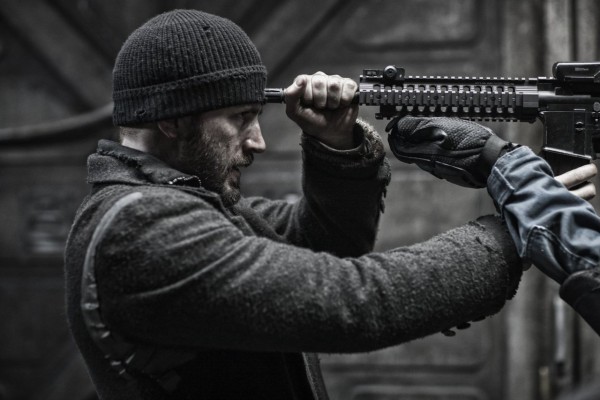
Tony Zhou’s newest video essay reminds us that a Warner Brothers cartoon, Snowpiercer, The Walking Dead, The Matrix, Eyes Wide Shut, Batman Begins, The Untouchables, and many other films have one thing in common: a point where, to quote the films (as the video does, repeatedly), "There’s no turning back." This would commonly be referred to in literature classes as the turning point, the spot in a narrative where the protagonist, the hero whose exploits you’ve been following throughout the story and the figure for whom you root for the most, must make a choice. The choice the character makes will send the narrative in one of several directions. Sometimes, Zhou suggests, the choice a story presents is not that complex; sometimes it’s the equivalent of turning left or right. Zhou uses Snowpiercer as an example of such a choice–a perfect example, indeed, since the characters in this film, imprisoned as they are on a train hurtling around the globe, can only go in one of two directions. In Snowpiercer, the left-right choice represents a dichotomy between two radically different castes or social strata, the ruling class vs. the downtrodden, impoverished class. In Eyes Wide Shut, to take a radically different example, the choice the masked figures offer Tom Cruise’s hapless interloper could affect the life or death of another human, as well as his own sense of himself as a moral being. In The Untouchables, the choice Jim Malone offers Elliot Ness is a choice between bending to the will of bullies or standing up for what he believes is decency. One question a piece like Zhou’s raises is: how common is it that a film offers us such a choice, any more? Is it possible that as cinematic history progresses, it is rarer and rarer that films hinge on gigantic moral questions which are no less gigantic for being represented by a simple choice between "right" or "left"? This ingenious piece does quite a bit of prodding in a very small space: kudos to the much-ballyhooed Tony Zhou for yet another job well done.

Watch: A Video Essay About the Power of the Lens Flare

Watch: A Video Essay About the Power of the Lens Flare

The lens flare is typically used, or perhaps over-used, to show a brush with the unnameable, in whatever form that might take. Jacob Swinney takes us through over 50 of these instances in this video essay, but they are all unified by a sense of sublimity, either benign or horrific. We see lens flares at the opening of Saving Private Ryan to signal the enormity of the war carnage approaching. When Leatherface spins his chainsaw around, and around, and around, the lens flares recall the grandiosity of the bloodshed that has preceded this moment. The technique doesn’t always have to signal dread, though, of course. In Punch Drunk Love, its presence signals the growth of love between Barry and Lena; in There Will Be Blood, we catch lens flare as Daniel Plainview ponders the possibilities of oil. It’s been argued that the technique is a cinematic trick, somewhat facile; it’s also been suggested that lens flares are annoying, little bursts of light that interrupt visual narrative for not certain purpose. This viewer tends to find their effect somewhat different–the lens flare almost always expands what I’m looking at, increases its potential, and brings speculativeness into the picture. Swinney’s beautiful video piece concludes, quite sensibly, with lens flare from one of the more expansive and widely appreciated stories of the last century: E.T., in which the earthly touched the unearthly, both in a literal and figurative sense.

VIDEO ESSAY: Terry Gilliam: The Triumph of Fantasy

VIDEO ESSAY: Terry Gilliam: The Triumph of Fantasy

In a 1988 interview with David Morgan for Sight and Sound, Terry Gilliam proposed that the most common theme of his movies had been fantasy vs. reality, and that, after the not-entirely-happy endings of Time Bandits and Brazil, The Adventures of Baron Munchausen offered the happiness previously denied, a happiness made possible by “the triumph of fantasy”.

That
triumph is not, though, inherently happy. Gilliam’s occasional happy
endings are not so much triumphs of fantasy as they are triumphs of a
certain tone. They are the endings that fit the style and subject matter
of those particular films. More often than not, his endings are more
ambiguous, but fantasy still triumphs. Even poor Sam Lowry in Brazil
gets to fly away into permanent delusion. Fantasy is sometimes a
torment for Gilliam’s characters, but it is a torment only in that it is
haunted by reality, and reality in Gilliam is a land of pain,
injustice, and, perhaps worst of all, ordinariness.

For
if there is, generally, an overarching theme to Gilliam’s work, it is
one familiar from fairy tales, comic books, science fiction stories, and
so many other works of popular culture: the yearning of an ordinary
person to be, in truth, extraordinary — a hero, a savior, a king, a
master of the universe. (Time Bandits is Harry Potter
avant la wand, and it’s no surprise that, according to Gilliam, J.K.
Rowling and others hoped he would direct one of the movies.) Gilliam is
especially sensitive to the ins and outs of this power fantasy, and as
much as he wants to maintain the pure, innocent wonder of children’s
experience, he recognizes that in adults such wonder may be far from a
blessing. Notice, for instance, how in many of his films, including his
most recent, The Zero Theorem,
there’s a component of gendered, heterosexual fantasy: an awkward (even
schlubby) male builds up a fantasy of a beautiful (often blonde) woman
who ushers him into his heroism.

Thus, the theme song for The Zero Theorem,
Karen Souza’s sultry cover of Radiohead’s “Creep”, is deeply
appropriate not only for that film but for so much of Gilliam’s work
overall. The point of view is that of a person who sees someone as “just
like an angel” and feels not merely inadequate but repulsive: “I’m a
creep. I’m a weirdo.” Some of Gilliam’s protagonists become heroes in
the world of the film, and get to trade in their status as weirdo and
experience the life of the lauded; others have their ideas of heroism
challenged and subverted, their dreams transformed so that they can
better live in everyday life, but still: the desire to transcend
ordinary existence is common to most of them.

For
all his love of fantasy, Gilliam is enough of a realist to know that
most creeps and weirdos don’t get the girl of their dreams, or the girl
of their dreams turns out to be more human than they’d bargained for,
and so what they are left with is the pure, perfect bliss of the dream —
the triumph of fantasy. Whether, in the end, we see such a triumph as
pitiful and escapist or heartwarming and nourishing — or somewhere in
between — is up to us. The greatest triumph may be the sort we see at
the end of The Fisher King,
where after all the delusions and madness and quests and tears and
dreams we are encouraged to seek not girls to fantasize about or dragons
to slay, but ordinary moments to infuse with wonder.

Matthew Cheney’s work has been published by English Journal, One Story, Web Conjunctions, Strange Horizons, Failbetter.com, Ideomancer, Pindeldyboz, Rain Taxi, Locus, The Internet Review of Science Fiction and SF Site, among other places, and he is the former series editor for Best American Fantasy. He is currently a student in the Ph.D. in Literature program at the University of New Hampshire.

VIDEO ESSAY: Electric Sheep: How Female Power Is Limited By Consumer Culture

VIDEO ESSAY: Electric Sheep: How Female Power Is Limited By Consumer Culture

[The script for the video essay follows.]

In the opening montage to Do The Right Thing, Tina, played by Rosie Perez, dances to “Fight
The Power,” the only figure in an otherwise empty urban landscape. In this opening sequence, Tina symbolizes
everything we associate with female power: a delicate body in a kung fu pose,
her big beautiful eyes coupled with tight fists. In the world of the “strong
female character,” sex is a snarl, fingers are clenched and punches are thrown,
even though the camera zooms in and lingers on curves.

In the opening credits Tina seems active and empowered, In
the actual film, Tina is house-bound. We see moments of her talking to Mookie,
begging him to come home or lecturing him about being a man. However, we don’t
have any scenes of interiority, where Tina is established as a character, with
her own hopes and dreams. 

Her existence in Do
The Right Thing
is less about unpacking the world that women of color live
in than showing a sexy female figure in a poor urban landscape. After that
opening sequence, Tina is actively disempowered. Her role goes from
revolutionary to mere eye candy. Tina’s big moment in a film about individuals
making hard choices is when Mookie finally shows up and rolls an ice cube over
her segmented body.

The image of the female revolutionary has often been adapted
to fit different time periods. In the 1928 film, The Passion of Joan of Arc, we see close ups of Joan’s face
crying. In a ’48 version we see Joan in full armor leading the charge, as well
as images of her bound and crying. In
the 1999 film, The Messenger, Joan’s
hair is shorn, her eyes looking intently, her lip curled into a snarl. Is Joan
of Arc’s strength from her religious conviction, or her prowess on the
battlefield? 

We focus less on the substance of icons of female strength
than we do on their image. We worry about what Wonder Woman is going to wear
when she fights evil. We get concerned about whether Super Girl’s breasts look
fake. We cheer when Beyonce dresses up as Rosie The Riveter; her curled bicep
is lauded as a powerful statement about female empowerment. We care less about
what celebrities actually do to help women than whether or not they are
willing and proud to proclaim themselves feminists. We want the quick sound byte,
the 3:00 minute Upworthy video, the clever meme.

We don’t want women to be objects, but we sure as hell want
them to be symbols. 

The powerful woman is defined first by how she looks and how
she holds her body. The “strong female lead” is always beautiful and fierce,
sexy and tough. She has a tragic back-story and a yearning for justice as solid
and strong as any male action hero. In today’s world, Xena, Buffy, The Bride,
and Lara Croft, as well as superheroes like Wonder Woman and Super Girl, are read
as powerful because of their physical prowess. Often their power is meant to
surprise us precisely because, despite their physical strength, they appear
pretty, delicate, and sweet.

The ubiquity of these images of female strength and power is
exacerbated in a world of Instagram images and constantly generated GIFs.
Beyonce’s allusion to Rosie the Riveter is one part homage and one part
marketing initiative. It’s a beautiful, brazen and, above all, familiar image,
a picture of feminism that we generally don’t question, an idea about power we
all agree we can get behind.

Beyonce and Janelle Monae are two artists at the forefront
of today’s feminist movement. Beyonce is deeply invested in claiming space for
female experience in a man’s world and insists on a woman’s right to “have
it all.” In contrast, Monae demands change. Monae doesn’t want us to “ban
bossy” or “lean in”, she wants us to open our minds. To embrace creativity,
queerness, sensuality.

There’s a reason Beyonce can be heralded as both a feminist
icon, and also have her lyrics used to support a mainstream film like Fifty Shades of Grey, which is less
about S&M than a relationship that meets all the criteria for abuse. In
reality, Queen Bey isn’t worried about power dynamics as long as she gets to
call the shots, which is why her rallying call of “bow down bitches!” is less a
call for female revolution than an assertion that she wants a seat in the boys
club.

Beyonce’s feminist message, though visible and important,
does not actively disrupt the mainstream. In contrast, Janelle Monae is an
R&B artist who is actually deeply invested in dismantling the way we think
about power. In her debut studio album, The
ArchAndroid
, Monae plays the character Cindi Mayweather, an android who
time travels to save a civilization from forces trying to suppress freedom and
love. In her recently released Q.U.E.E.N.,
Monae also calls for revolution. She encourages solidarity amongst the
disenfranchised, the wacky and the just plain weird. Women in Monae’s videos
don’t bump and grind, objects for the camera, the way they do in almost every
single music video. They smile, they dance, they play records, they sing.  While Beyonce croons slow ballads about
yearning to be an object of allure for her husband, Monae tells a male lover on
“Prime Time,” “I don’t want to be mysterious with you.”

In a world where female sexuality and power is
still often obscured, rendered strange, unintelligible, or made to exist to
fulfill a male fantasy, Monae’s insistence on being seen as a full person is
far more radical than any power pose you can copy and share on Facebook or
Instagram. While Beyonce’s brand of feminism might be a more attractive model
for consumer culture, it’s artists like Monae, who insist on questioning the
ways we are labeled, that will ultimately help us do what Tina in Do The Right Thing strives for in her
opening dance, but never ultimately achieves: get a chance to actually fight the
power.

Arielle Bernstein is
a writer living in Washington, DC. She teaches writing at American
University and also freelances. Her work has been published in
The
Millions, The Rumpus, St. Petersburg Review and The Ilanot Review. She
has been listed four times as a finalist in
Glimmer Train short story
contests
. She is currently writing her first book.


Serena Bramble is a film editor whose
montage skills are an end result of accumulated years of movie-watching
and loving. Serena is a graduate from the Teledramatic Arts and
Technology department at Cal State Monterey Bay. In addition to editing,
she also writes on her blog Brief Encounters of the Cinematic Kind.

VIDEO ESSAY: In Memory of Richard Attenborough (1923-2014)

VIDEO ESSAY: In Memory of Richard Attenborough (1923-2014)

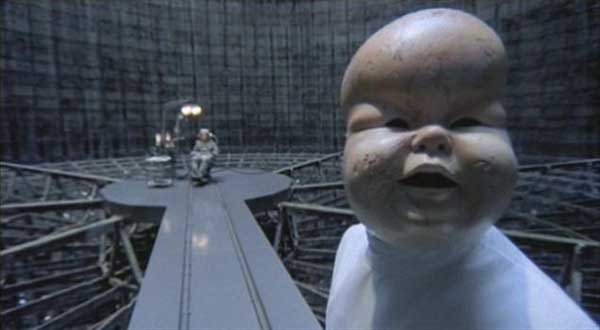
The scary doll, or puppet, or dummy, is, by now, a cliché of horror: films from
the Chucky movies to Poltergeist have
availed themselves of it, to the increasingly begrudging fright of their
viewers. For many (though not as many as there should be), the scary puppet
motif began (and possibly ended) with the 1978 film Magic, directed by Richard Attenborough, who passed away in late
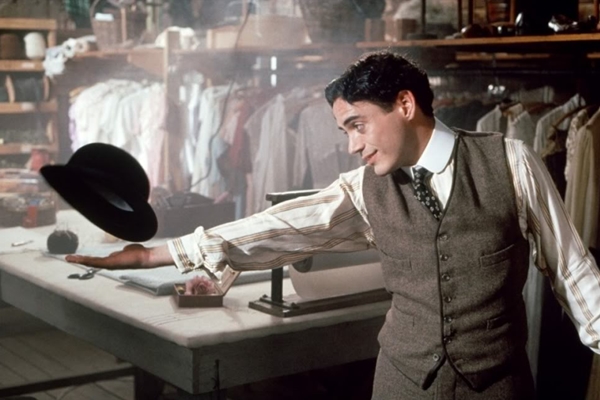
August. The actor and director whom most would know either for his turn in Jurassic Park or for directing vast
films like Gandhi or Chaplin had other exploits up his sleeve
as well: an early film role was Pinkie in Brighton Rock, a movie about violence and terror on the English seaside birthed from
the fog-swept, crime-obsessed mind of Graham Greene. What’s most evident, in
watching Attenborough’s films and considering his career, is a sense of embodiment, of
polymathy. On the most basic level, this could mean he was able to act and direct
with equal ability. To play Pinkie as a young man and then play Santa Claus (in Miracle on 34th Street)
or a deranged scientist late in life suggests, at the very least, range, but it
also indicates that he possessed the kind of intelligence invaluable to successful
actors: the ability to imagine someone you have never met, and then
someone else, and then someone else, and never let anyone see the workings of your imagination. Carvajal’s fluid, deft piece shows us both sides of
this man, the acting side and the directing side–and reminds us of the great consciousness Attenborough obviously had of his audience. It is strange to remind one’s
self, when witnessing the expansiveness of a film like A Chorus Line, in which the only way to tell the story is to go
large, as large as possible, that the maker of these films also made a movie as
creepy and all-out frightening as Magic,
which captured the flitting, nervous intensity of Anthony Hopkins in his younger
days and, as with many movies of this period, put very little between the viewer
and the events unfolding on screen: there was little subterfuge, little music,
even, just the pure fright of what was unfolding. The phenomenon of the
actor-director is an old one, going back to Charlie Chaplin himself, or farther. It’s rare, though,
that an individual pulls off great success in both in one lifetime. The
projects an actor directs might take on the sheen of a “private project,” like
the films of Tim Roth or Ethan Hawke, or they might assume a stature separate
from their director’s reputation, like those of Sean Penn, in recent times, or,
in a different sense, Woody Allen. Although these shape-shifters do something
slightly different things with what might call their powers, the source is
clear: immersion in a discipline, which is, in this case, film. RIP Richard
Attenborough.—Max Winter

Nelson Carvajal is an independent digital filmmaker, writer and content
creator based out of Chicago, Illinois. His digital short films usually
contain appropriated content and have screened at such venues as the
London Underground Film Festival. Carvajal runs a blog called FREE CINEMA NOW
which boasts the tagline: "Liberating Independent Film And Video From A
Prehistoric Value System." You can follow Nelson on Twitter
here.

Max Winter is the Editor of Press Play.