Watch: The Inherent Vice in Paul Thomas Anderson’s Films: A Video Essay

Watch: The Inherent Vice in Paul Thomas Anderson’s Films: A Video Essay

Throughout
his career, Paul Thomas Anderson has focused on human vulnerability. Films from
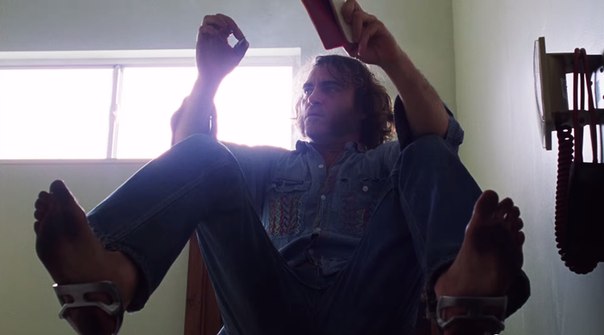
Punch Drunk Love to Magnolia to The Master to Inherent Vice to There Will Be Blood portray love as equal parts tender and strange. The
protagonists of Anderson’s films struggle with a range of
vices, from drug and sexual addiction, to anxiety and depression, to megalomania,
to gambling, to rage, to straight-up greed.

Anderson
uses vice as a way to explore different dimensions of human sadness. Each hero
is promised some kinds of greatness—Barry Egan wants to achieve success by collecting
frequent flyer miles from pudding box tops in Punch Drunk Love. Dirk Diggler hopes to keep up his fame and
recognition by virtue of his enormous package in Boogie Nights. Troubled Freddie Quell hopes to find both freedom
and family when he meets his mentor, the cult leader Lancaster Dodd, in The Master.

I was
first introduced to the world of P.T., as I affectionately called him, when I
watched Boogie Nights in a dingy
college dorm room, my sophomore year. There was a painting of an ocean on the
wall and a bottle of melatonin on the dresser, a tiny hand-me-down television
we borrowed from a friend that still played VHS tapes. At the time I spent full
days writing poems and songs and learning to be an artist and a writer. I was
smart, but I often didn’t live up to my potential and I wasn’t a particularly
good student. I have many good memories, but I have a lot of sad ones too. I
struggled throughout college with an eating disorder, I often had a strained
relationship with my parents, I rushed headfirst into a relationship that
taught me everything there is to appreciate about young love, and everything
there is to be wary of too.

In my
last year of college I’d walk past the elementary school at about noon every
day, on my way home from getting out of morning classes, and I’d see a sea of
children playing just over the horizon. My painful memories from college seem
blurry and imprecise, but images like these remain clear. At the time I didn’t
know it, but moments like these were slowly carving out my heart into the shape
it was meant to be.

Perhaps
P.T. Anderson strikes such an emotional cord in me because I discovered him at
a time when I was first learning to push back against cynicism. The truth may burn in a P.T. Anderson film, but even when it
does, we learn not to regret the scar. The
worlds that he explores are darkly sensual, hardboiled and masculine, but
softness and light always seem to linger somewhere in the periphery: sunlight
arching over an oil rig, a harmonium found next to a warehouse. We focus on tear-filled
faces throughout Magnolia, but the
final shot was still a close-up of a crying woman’s smile.–Arielle Bernstein

Arielle Bernstein is
a writer living in Washington, DC. She teaches writing at American
University and also freelances. Her work has been published in
The
Millions, The Rumpus, St. Petersburg Review and The Ilanot Review. She
has been listed four times as a finalist in
Glimmer Train short story
contests
. She is currently writing her first book.

Nelson Carvajal is an independent digital filmmaker, writer and
content creator based out of Chicago, Illinois. His digital short films
usually contain appropriated content and have screened at such venues as
the London Underground Film Festival. Carvajal runs a blog called FREE CINEMA NOW which
boasts the tagline: "Liberating Independent Film And Video From A
Prehistoric Value System." You can follow Nelson on Twitter here.

Watch: L.A.I.: Spike Jonze’s HER Meets Ridley Scott’s BLADE RUNNER: A Video Essay

Watch: L.A.I.: Spike Jonze’s HER Meets Ridley Scott’s BLADE RUNNER: A Video Essay

This video amalgamation of Spike Jonze’s Her and Ridley Scott’s Blade Runner by Drew Morton has a sad, sweet quality about it, as if Morton were depicting two parts of the same film. Indeed, the movies show two sides of the same city, which in this case is futuristic Los Angeles. Los Angeles is a ripe creative playground for filmmakers, and they tend to exercise their recess privileges with great abandon. Jonze imagines the daytime city as a place built for both human convenience and soul-crushing anonymity; Scott imagines the nighttime city as a James-Joyce-meets-Buck-Rogers-meets-Raymond-Chandler stew, in which anything might happen, on the one hand, but the results might be depressingly predictable on the other. Similarly, blending the films this way makes one think that Joaquin Phoenix’s Twombly and Harrison Ford’s Deckard could be two halves of the same person–one vulnerable and open, the other jaded and wary. Both actors stepped out of their habitual roles for these films; Phoenix broke from his normal scenery decimation to play someone who was approachable, almost boring, and Ford played a character scarred by seeing the worst of life for too long, on his way to acquire still more scars, fresh from playing Indiana Jones. Morton skillfully allows the two films to bleed into each other, as when the music from Blade Runner becomes the music for Her–or does it?–and thus shows how two visions, separated by several decades, might possibly speak to each other, sending universal messages about loss and loneliness that echo and expand with repeated viewings, and with consideration.

Watch: What Is It, Kevin B. Lee Asks, That Makes a Video Essay Great?

Watch: What Is It, Kevin B. Lee Asks, That Makes a Video Essay Great?

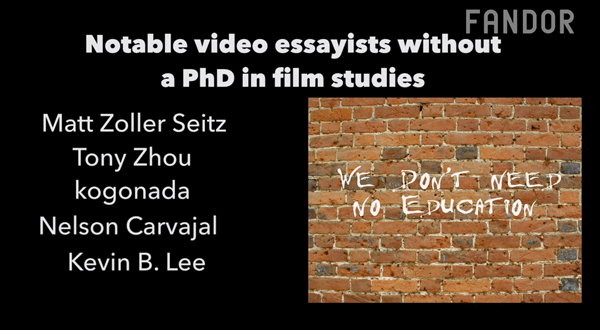
This excellent video piece by Kevin B. Lee for Fandor should be of interest to anyone who reads this blog regularly. If you go to the home page for Press Play, you’ll see a quote by Roger Ebert at the (more or less) upper left corner: "The best video essay source on the Web." And, if you’ll notice, a healthy percentage of the content posted here is, well, of the video essay variety. Faces in the work of Jonathan Glazer. What are the links between Martin Scorsese and Elia Kazan? The sublime in Michael Mann’s films. How has the treatment of rape changed in film and television–or has it? What is composition? The experience is simple. You press the play symbol, as the blog’s title suggests, and then what rolls in front of you is either a set of film clips spliced together with a voiceover or a set of related film clips bound together only by a (usually) catchy soundtrack and a fairly broad theme. And, there’s some accompanying text, either a transcript of the video essay’s script, or some text by me or someone else, an interpretation of or rather a response to the video you’re watching. Lee is asking a simple question in this video essay, in an animated and dynamic fashion, alluding to many of the acknowledged masters of the form, such as Matt Zoller Seitz, Nelson Carvajal, and Tony Zhou: what makes one of these pieces better than the other? How do we distinguish a meaningful video essay from a not-so-meaningful one? What’s the value of these pieces? You could learn a tremendous amount by watching Lee’s video: about Lee’s own erudition in film history, about the purposes and forms these pieces may assume, and also about the ways in which we (you, me, the person reading over your shoulder) watch films, these days. We interrogate. We dissect. We connect. We sever. We compare. We measure. We evaluate. The message here isn’t apocalyptic, i.e. Movies are done for! Embrace the video essay! Hug your iPhone, because soon it will be all you have left! Instead, it’s speculative: there’s more than one way to watch films, think about them, or discuss them–in fact, a plethora of ways. And the video essay, be it a 2-minute supercut or a scholarly work with MLA-approvable attributions in the credits, is one of those forms. It’s an enjoyable one, a moveable lecture. Take it or leave it, but give it a chance to wash over you first.

Watch: A Video Essay on the Links Between Martin Scorsese and Elia Kazan in THE DEPARTED

Watch: A Video Essay on the Links Between Martin Scorsese and Elia Kazan in THE DEPARTED

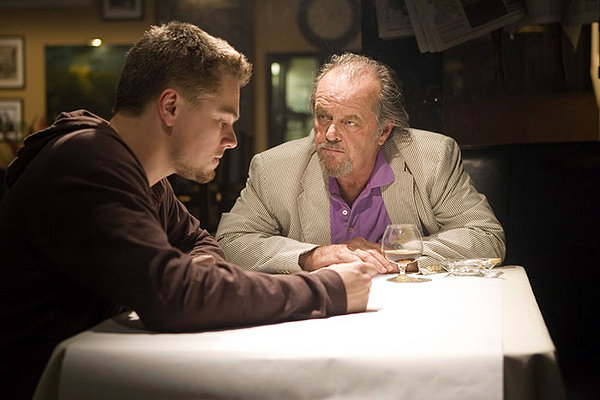
Cole Smith’s recent video essay on the links between Martin Scorsese and Elia Kazan brings a few important things to light, with an unusual amount of command and fluidity. One of these is the turbulent story of Kazan himself; Smith includes footage of the 1999 Academy Awards, at which Kazan received a Lifetime Achievement Award, presented by Scorsese, and at which only some of the audience members clapped. Why was this? Well, it was because, as many know, Kazan worked with the House Un-American Affairs Committee to name many Hollywood professionals suspected of having Communist leanings; it’s been said that On the Waterfront was an apology of sorts for this misstep. Smith leapfrogs over this moment to look at the Kazan film itself, along with A Streetcar Named Desire, to show how important the assumption of different points of view is for telling a story in these works, as in the contrast between Blanche DuBois’s and Stanley Kowalski’s vantage points in Streetcar or Terry Malloy’s and Johnny Friendly’s vantage points in Waterfront. It’s an easy transition, then, to a discussion of The Departed, one of Scorsese’s most successful films of recent years, and an examination of the way in which playing off Costigan’s (Leonardo DiCaprio) point of view against Sullivan’s (Matt Damon) point of view heightens suspense, stretches it to an almost wire-thin degree. Indeed, Scorsese’s films are at their best when they are taking us inside someone, whether it’s Travis Bickle in Taxi Driver, Jake LaMotta in Raging Bull, Henry Hill in Goodfellas, Teddy Daniels in Shutter Island, or, more recently, Jordan Belfort in The Wolf of Wall Street. Without that voyage into a character’s interior, there can be little empathy, and without empathy, the story can’t come to life inside viewers themselves.

Watch: Faces in the Work of UNDER THE SKIN Director Jonathan Glazer: A Video Essay

Watch: Faces in the Work of UNDER THE SKIN Director Jonathan Glazer: A Video Essay

In looking at Shaun Higgins‘ video homage to Jonathan Glazer, director of Under the Skin, Birth, and Sexy Beast, what is most striking is the presence of the human face. Or rather, the human face made vaguely unhuman. If you repeat a word long enough, as we know from childhood, it will eventually lose its meaning. And if you stare at a human face long enough, its components will eventually stop adding up to the thing we call "face" and will eventually seem much more like a random collection of bones, arranged into an image which is familar to us but which we can’t quite place. Consider, for instance, the face of Scarlett Johansson, the star of the most recent of the three films addressed here. In her other dramatic work, we expect that look from her face, a highly sexualized and yet open stare, somewhat as if, before her gaze rose to meet the camera, her eyes have made a scooping motion, as if she were either taking something in or simply taking her time to look upwards. Here, she’s numb, raw, dead-eyed, in some senses not animalian, but quite literally alien, as if the vantage point from which she views her male victims and the world around her is so far removed as to be incomprehensible to us. Nicole Kidman’s mother in Birth, far from the animated, mischievous taunting woman she played in Moulin Rouge, Eyes Wide Shut, or even Flirting, is so frightened and disoriented by the experiences depicted in the film that to say she is "beside herself" is not far from accurate. And what’s most visible in the amalgamation of gangsters’ faces from Sexy Beast shown here are different degrees of toughness under strain, most memorably displayed in Ben Kingsley’s craggy mug. These films are obviously quite complex, balancing hosts of elements, too many to adequately summarize, but characters’ faces, as this video piece accurately points out, make focal points for the films, entryways into their beautifully orchestrated madness.   

Watch: What’s at the Heart of the Sadness of Christmas Movies? A Video Essay

Watch: What’s at the Heart of the Sadness of Christmas Movies? A Video Essay

This touching and wise new video essay made for Criterion by Michael Koresky and Casey Moore highlights an idea which you’ll see plenty on the news but highlighted very little on the streets: that the holidays are not, necessarily, happy times for all. In fact, the pressure  to be happy, to be cheery, to celebrate, to gather with others, to bloviate on "the milk of human kindness" may make some of us want to crawl into bed and stay there for several days, getting up only to open the blinds, look out at a populace buying unnecessary mittens to the (weird) tune of "Santa Baby," and then go back to bed, pondering what stores might be open, what take-out options will be available on this holiday when so many businesses are closed and when human commerce, indeed, seems to close up like a shell for 48 hours or more. Too bleak? Okay, sure. In any event, these two film scholars extraordinaires have gathered a collection of movies that celebrate the dourness of the holiday in melancholy writ large. The three they choose to focus on, out of a list that includes Fanny and Alexander, A Charlie Brown Christmas, Gremlins, Metropolitan, and Eyes Wide Shut, are remarkable documents of yuletide emotional froth: Claude Jutra’s Mon oncle Antoine, a tale of coming of age admist financial desperation set in Quebec; Eric Rohmer’s My Night at Maud’s, a story of sexual and moral temptation set on a snowy Paris Christmas night; and Arnaud Desplechin’s A Christmas Tale, which concerns that famed institution of the holiday season, the family gathering–with many twists. Throughout the essay, we see one gorgeous, haunting scene after another: snow-filled, empty streets; huge apartment buildings checkered with glowing signs of absence or presence in their half-off, half-on windows; ice-covered countrysides with one or two figures running across them. The accumulation of these images serves to remind us of an intelligent point which Koresky and Moore make in the film, which is that the holiday season is as much about absence as it is about presence, and it’s important to give both parts their due.

Watch: My Life as a Swedish Pop Star: The ABBA Videos of Lasse Hallström: A Video Essay

Watch: My Life as a Swedish Pop Star: The ABBA Videos of Lasse Hallström: A Video Essay

[The script of the video essay follows.]

Agnetha, Benny, Bjorn, Anna-Frid: their initials spell ABBA,
a nonsense word, childish, almost preverbal, as much a brand name as a
band.  Their distinctive image,
indivisible from their sound and their success, was in large part crafted by Lasse
Hallstrom, a director better known for his quirky comedies, like My Life as a Dog, What’s Eating Gilbert
Grape, Chocolat
, and The Hundred Foot
Journey
. Hallstrom was getting his start as a television director in
Stockholm when he was approached by ABBA’s manager, Stig Anderson, in 1974. Anderson
wanted Hallstrom to produce a series of promotional spots for the group.  He would go on to direct over thirty ABBA
videos. These videos created an indelible pop image and documented the
super-group’s meteoric rise and tragic fall. 

Before MTV, music videos were a novelty.  Elvis’ fifties musicals and Richard Lester’s
films for the Beatles in the 1960s established many of the conventions of the
genre. Swoony close ups, rhythmic jump cuts, and intimate, casual footage of
the band goofing off captured the experience of listening to the music, and
indulged the audience’s fantasy of hanging out with the group. Singers like Nancy
Sinatra and Lee Hazlewood filmed television specials that ran like mini-movies,
juxtaposing performance with narrative film-making, setting the singers against
exotic landscapes, creating fantasy visions of the songs’ lyrics.

Then along came ABBA. 
After struggling for years as solo artists, the members of the group
began looking beyond the shores of their native Sweden for popular
success.  They first gained it with their
victorious performance of Waterloo at the Eurovision song contest in 1974.  Already the band’s signature elements are in
evidence: Anna-Frid’s imposing perm, Agnetha’s flowing mane, glowing Swedish
complexions, and costumes that look like they were made by two teenage girls
left for an afternoon in the attic of their stage-actress grandmother.  By the time they approached Hallstrom,  their charming smiles and unaffected pleasure
in performance were so irresistible they almost disguised the rudimentary
choreography. Also, the singers’ sex appeal nearly made up for their goofy
looking male cohorts. ABBA may have been the first video stars in pop history.

Hallstrom’s earliest videos for the group were all seemingly
shot in a day in the same studio, with costume changes between songs. The
videos laid down a basic visual vocabulary that perfectly complemented the
music’s elegant simplicity.  Camera zooms
in, mascara, lipstick, dazzling smiles fill the screen; pan right, taking in
the whole band, swaying with the music’s rhythms; quick cuts in time with the simple
four/four beat.  The men, fixed in place,
rooted to their instruments, lend a visual anchor for the minimal movements of
the women, by contrast making them seem dynamic, vibrant.  And through it all, what costumes: flashes
of David Bowie, Marc Bolan, Gary Glitter, but always with a quaintly home-made,
theatrical quality that made ABBA approachable, and silly, but in a good way.

One of Hallstrom’s visual signatures came from an unlikely
source.  In Persona, fellow Swede Ingmar Bergman juxtaposed the faces of
actresses Liv Ullmann and Bibi Andersson in dreamlike sequences suggesting the
gradual merging together of their identities and the mental and emotional
confusion that follows.  Hallstrom
employed this motif in a humbler context to create a visual counterpart to the uncannily
sympathetic voices of the band’s two singers.

Eventually Hallstrom took the band out of the studio,
setting them against landscapes that complemented the band’s Nordic image;
frozen tundra, sunset at sea, eagle over mountains.  As their songs began to take on more esoteric
topics, Hallstrom created mini-films that dramatized their peculiar lyric
narratives.  It’s easy to forget how
preposterous it is for two Swedish women to be reminiscing about some long-ago
revolutionary battle with the song set against a roaring fire, Bjorn strumming
away on his acoustic guitar…at least until the camera pans back to reveal an
obviously fake starry sky above.  The
video for their most successful single, “Dancing Queen,” avoids disco glitz for
a decidedly more downmarket club experience; the dancers all seem to be
underage, underscoring the song’s wistful nostalgia, as the singers look across
the generation gap at a girl having the time of her life. 

As the band continued to climb international pop charts,
Hallstrom responded to their global fan base with videos that allow us to hang
out with ABBA, strolling down the streets of Stockholm, even sharing
breakfast.  These intimate moments made the
band resemble the most successful double date in pop history. 

But this happy intimacy wasn’t to last.  In January of 1979, Agnetha and Bjorn
announced their plans to divorce. 
Anna-frid and Benny followed in 1981. 
Although they’ve repeatedly claimed that “The Winner Takes it All” was
not autobiographical, the video begins with a montage of the band in happier
times, before cutting to Agnetha, her curls hanging limply, mascara smudged,
face pale from crying: this is one of more nakedly honest images of despair
ever shown in a music video.  Hallstrom’s
lighting is natural, intimate, the editing restrained, with only the occasional
freeze frame to suggest the happier moments are snapshots of a time now
lost. 

“One of Us” is even more abject, portraying Agnetha
unpacking alone in a new apartment.  The
lighting is stark, the contrast harsh; this is ABBA’s first film shot on actual
videotape, and the colors seem drained of all their former vibrancy.  For one brief moment there is a splash of
yellow across the screen, recalling happier days, brighter costumes. 

Played from beginning to end, Hallstrom’s videos for ABBA
can be watched like one of his wistful comedies, youthful eccentricity and
goofy innocence giving way to bitter experience. Beyond telling us more about
one of the great pop bands than any of the numerous documentaries and tell-all
biographies that followed the band’s last performance, these small films created
a visual vocabulary for the video era that followed.

Nelson Carvajal is an independent digital filmmaker, writer and
content creator based out of Chicago, Illinois. His digital short films
usually contain appropriated content and have screened at such venues as
the London Underground Film Festival. Carvajal runs a blog called FREE CINEMA NOW which
boasts the tagline: "Liberating Independent Film And Video From A
Prehistoric Value System." You can follow Nelson on Twitter here.
Jed Mayer is an Associate Professor of English at the State University of New York, New Paltz.

Watch: This Is How You Make a Low-Budget Horror Film–Err, Comedy: A Video Essay on Sam Raimi’s EVIL DEAD 2

Watch: This Is How You Make a Low-Budget Horror Film–Err, Comedy: A Video Essay on EVIL DEAD 2

To say I laughed until I cried while watching Kevin B. Lee’s video essay on the low-budget Sam Raimi horror film Evil Dead 2 would be a misstatement, since I don’t recall any actual tears rolling down my face. But: there are a lot of laughs here. In this installment of his Shooting Down Pictures project, in which Lee (the former Editor of this very blog!) chronicled his viewing of the 1000 greatest films of all time, Lee uses the director’s admittedly over-acted, mawkishly fake, chaotic quasi-masterpiece of after-dinner-theater style horror as a basis for discussion of the value of such films. And in so doing, Lee instructs us on the way this kind of film is actually made. As one fairly artificially constructed special effect is piled on top of another, the scenes we see here acquire a level of absurdity which could be said to be next to artfulness. We laugh, but we’re also genuinely unsettled at certain moments. The drive, the singular energy behind what we’re watching, the focus of the director’s animus, is what causes the disturbance. The giggles come when the car goes off the road a bit–which happens quite often in this film, and others of its type. Lee provides helpful nuggets of information onscreen along the way, such as "fake hand filled with gelatin," as a knife plunges into flesh, or "440 gallons of fake blood used for this scene," as a powerful gusher of blood erupts, wholly spontaneously. And, viewed in this light, with the seams of the film exposed, somewhat, the question is raised: what was Raimi doing here? Is it what it seems like he was doing, or something more complex? And beyond that: at what point could we say that what would seem on the surface to be the opposite of artfulness is actually pushing, perhaps in spite of itself, towards something which is poetic and profound in its own right?

Watch: The POV Shot in Film, Part One (Leigh Singer’s Take)

Watch: The POV Shot in Film, Part One (Leigh Singer’s Take)

How do we quantify what happens when a film assumes the first person point of view, and instead of watching events unfold on camera, viewers become, in a sense, part of those events? Leigh Singer takes us through the varieties of experience possible with such POV shots in his latest video essay (which covers 74 films!). The first experience is a sense of dizziness, which can either be darkly funny, as it was in Being John Malkovich, or darkly jarring. The technique often occurs in films in which empathy is important: films as different as The Blair Witch Project or Reservoir Dogs depend upon our ability to identify with the person carrying the story to us, whether that story is presented as nonfiction or fiction. It may communicate power, in different forms: contrast the famous (in different ways) uses of first person POV in Robocop and Bram Stoker’s Dracula, both signalling the advent of disorder and mayhem, one disorder somewhat deserved, one disorder decidedly undeserved. It may be used to let us in on a voyeur’s discovery, as it does for the hero of Blue Velvet, as he spies on the horrors of the abusive relationship between a nightclub singer and a perverted small time criminal. And, then again, it may be done simply for what should be called, for lack of a better label, the "what if" factor: what if we could sit on the back of a bullet as it flew towards its destination, and then, having reached the destination, what if we went a little farther? In a sense, the use of the first person POV shot is the point at which film mingles with the other arts, whose purpose is, after all, to show us the beautiful wildness inside the human imagination: sublimated, glorified, alive.–Max Winter

Leigh Singer is a freelance film journalist, filmmaker and screenwriter.
Leigh studied Film and Literature at Warwick University, where he
directed and adapted the world stage premiere of Steven Soderbergh’s
‘sex, lies and videotape’. He has written or made video essays on fllm for The Guardian, The Independent, BBCi,
Dazed & Confused, Total Film, RogerEbert.com
and others, has appeared on TV and radio as a film critic and is a
programmer with the London Film Festival. You can reach him on Twitter
@Leigh_Singer.

The STAR WARS Films and Their Hold on Viewers’ Inner Lives: A Video Essay

The STAR WARS Films and Their Hold on Viewers’ Inner Lives: A Video Essay

Most American moviegoers who are old enough to have seen the original Star Wars films in the theater, back in the 1970s and 1980s, oversized iced beverage on one side, tooth-rotting candy or dehydrating popcorn on the other, air conditioners blasting, every seat full, utter silence in the days before cell phones, have some emotional relationship with them. It may be awe at the scope of their story, with its aspiration to an epic structure (in the true sense of that word, not the recent malapropic usage that has been popular in recent years). It may be amusement at the stilted acting pervading the original series, the black-and-white themes and messages as tall as the screen on which the tales were projected. It may be disappointment at their successors, which have all been flawed in one large way or another. Regardless, it’s safe to say that George Lucas’s three original films burned themselves into America’s cultural DNA, forming a point of reference for individuals of different backgrounds, tastes, professions, and levels of intelligence. The Prince-Valiant-esque goodness of Luke Skywalker, the raffish heroism of Han Solo, the misshapen evil of Darth Vader are all as familiar to many Americans as apple pie, the American flag, or George Washington. So, too, as this personal and sharply edited video piece by Clara Darko points out, are the ideas the films express. Good may in fact triumph over evil. Self-confidence can help the ordinary human become extra-ordinary. Wisdom trumps reckless ambition. Huge things come in small, odd-looking packages with distended green ears, inverted grammatical constructions, and frog-like voices. And so on. The funny thing about these ideas is that many viewers search for them, perpetually, in films, regardless of how well-trodden they might be. Those ideas might not be sought in isolation–the same viewer might seek out both stories of dissolution and hopelessness along with tales of triumph. The person who watches eight hours of footage of the Empire State Building today might easily gaze at the adventures of dashingly dressed heroes on a desert planet tomorrow. The point about these films is what they tapped into, a yearning for myth, for story, and perhaps for closure that has proven to be universal. Darko calls her piece "All you need to know about life," suggesting that the films taught her many such lessons. And perhaps they could teach these lessons. I wonder, though, if the piece also couldn’t have been called "All you need to know about you."