Watch: The Power of Reflection in 120 Films (in Five Minutes)

Watch: The Power of Reflection in 120 Films (in Five Minutes)

Reflections
are a common find in every type of film, but what can we learn from them? 
What does it mean when a character gazes emptily into his or her own
reflection?  What is communicated when the filmmaker decides to focus on
the characters’ reflections rather than on their actual bodies? 
  There are several ways a reflection may be presented to us–we see
them in mirrors, windows, water, shiny surfaces–each holding numerous symbolic
interpretations.  Of course, just as sometimes a "cigar is just a
cigar," a reflection is often just a reflection.  If a character is
grooming in the bathroom, a reflection would clearly be a natural part of the
scene.  But even in cases such as this, the way the said reflection is
presented to us may hold deeper significance.

A recurring
idea expressed through reflections is duality.  Travis Bickle talking to
his reflection in Taxi Driver, the gasoline puddle foreshadowing Harvey Dent’s
disfigurement in The Dark Knight, and the overwhelmingly disorienting
mirror placement in Black Swan are prime examples of duality expressed through
reflections.  Reflections shown in the mirror of a vehicle can often
express regret, dwelling on the past, and isolation.  In Brokeback
Mountain
, Jack watches as Ennis becomes belittled by the distance in his side-view
mirror.  In Drive, we are frequently presented with the driver reduced
down to eyes in the rear-view mirror–this is all he has.  Sometimes
reflections are manipulated to help us feel the inner turmoil of a
character.  Rayon is pigeonholed into the tiny makeup mirror reminiscent
of his lifestyle in Dallas Buyers Club, Lou Bloom’s inner disconnect is
portrayed through his fragmented reflection in Nightcrawler, and Ed Avery’s
unpredictable state of mind is visually expressed through his fractured mirror
in Bigger Than Life.  Reflections presented in reflective surfaces other
than mirrors seem to suggest an intrusion of some sort.  As the elevator
doors close in Lost in Translation, Bob’s own identity is forced into his
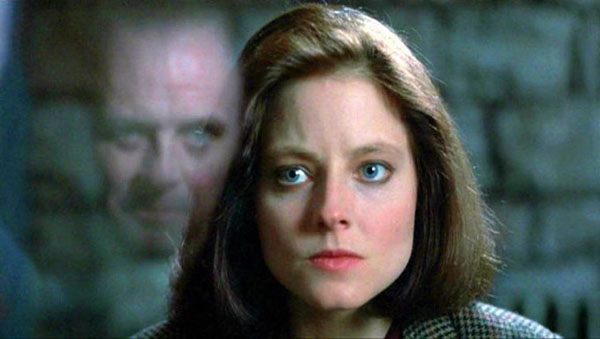
view.  During Clarice’s close-up in Silence of the Lambs, Dr. Hannibal
Lecter’s reflection in the prison wall monopolizes the frame–he is in
control. 

When used in a
significant manner, reflections can effectively communicate intricacies of a
character’s thoughts, feelings, and secrets that would otherwise not be
expressed visually.  Here is a look at significant reflections in 120
films. 

Watch: Why the Colors of ‘The Unbreakable Kimmy Schmidt’ Are So Important

Watch: Why the Colors of ‘The Unbreakable Kimmy Schmidt’ Are So Important

On what level do we notice the colors a director of a film or TV show chooses? When we watch, we’re noticing all kinds of other things: the dialogue, the intrigues, the humor, the suspense. We don’t necessarily always consciously notice the way directors help these things work together; we don’t necessarily instantly analyze what’s happening on screen; we don’t necessarily think of film as a visual phenomenon first. And why should we? Why should we view these works with special technique-detecting goggles on? We shouldn’t, but, as Todd VanDerWerff points out in this excellent Vox video essay, there may be a reason for our positive response to a show or film, and that reason may lie with the director’s ingenuity, rather than the twistings and turnings of individual taste. It’s a simple point, possibly, and almost tautological, but one worth making, lest we see ourselves as mindless amoebae, wondering from one stimulus response to another. VanDerWerff trains his sights here on The Unbreakable Kimmy Schmidt, one of the more interesting serial dramas around at this moment, novel for both its storyline and its hyper-caffeinated, fresh-from-left-field approach to storytelling; there have been precious few TV dramas that made cults an integral part of their storyline, though they might have appeared in the occasional school-of-Law-&-Order procedural every now and then. The piece clues us in to the director’s ingenious use of colors here, primarily, also giving us a small glimpse of enough TV history, via a clever timeline and some fast shots of older shows, to drive home the idea that experimentations with the clash of Day-Glo colors and milder hues, of the colors of emotional overdrive with its bland opposite, are yet another indication of the rare and strange period of TV history in which we live. A piece like this reminds me of what a writing teacher once said after a rather long monologue on technique: "These are terrible things to think about, but they’re wonderful things to have thought about." If you’re a fan of this show, maybe this careful examination will make you more aware of technique the next time (or two) you watch.

Watch: An Unsettling Mash-Up of Terrence Malick’s ‘Days of Heaven’ and Woody Allen’s ‘Manhattan’

Watch: An Unsettling Mash-Up of Terrence Malick’s ‘Days of Heaven’ and Woody Allen’s ‘Manhattan’

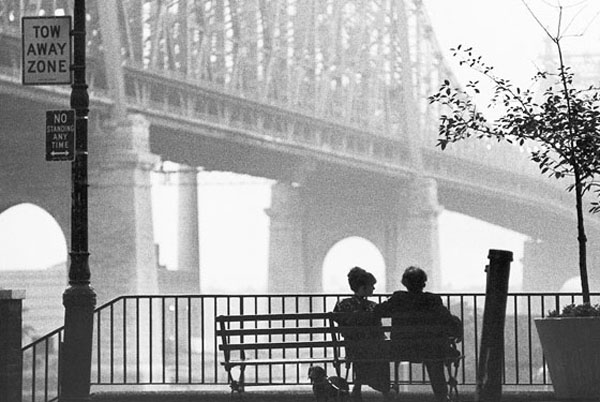
Terrence Malick and Woody Allen would seem to make a rather odd pair, but the reality is that, as this piece by Vince Di Meglio shows, the two have more in common than one might think. Di Meglio has taken the opening voice-over from Malick’s Days of Heaven and spliced it over the opening shots of Manhattan–and then done the reverse, taking Woody Allen’s novel draft stops-and-starts from Manhattan and placing them over the opening scenes from Days of Heaven. And… to be honest… it works quite nicely. The angst-ridden tones of the Malick film complement Allen’s vast, black-and-white Gordon Willis vistas, just as the aspirational tone of the Manhattan voice-over portends the desperation soon to be seething in Days of Heaven, after its opening frames. It doesn’t hurt, either, that the movies were relatively close in release date; their evident sympathetic relationship here could be because they were part of a larger, more romantic zeitgeist than the one we have at present.

Or maybe not.

Watch: How Can Music Shape a War Film?

Watch: How Can Music Shape a War Film?

Just as war is inexplicable, music is inexplicable. We can describe both: one is violent, savage, sometimes needless, uneven; the other operates by relationships between sounds that simply work, remaining in our memory for reasons we can’t pinpoint. It makes sense, then, that music would be important to war films. It’s hard to forget, for instance, the sound of Wagner’s "Ride of the Valkryies" blasting from the helicopters in Apocalypse Now. The tension in the "I don’t know but I been told" marching song in Full Metal Jacket is palpable, especially given what lies ahead of the singing trainees. And the whistling melody from The Bridge Over the River Kwai is a classic–which I once whistled with a small group during summer camp as a child, not realizing the full significance of the tune. This video essay by Ian Magor uses these and other scenes to show us how music can affect the way we
perceive war in movies–and can "allow us to rediscover our humanity."

Watch: Akira Kurosawa’s Love of Movement: A Video Essay

Watch: Akira Kurosawa’s Love of Movement: A Video Essay

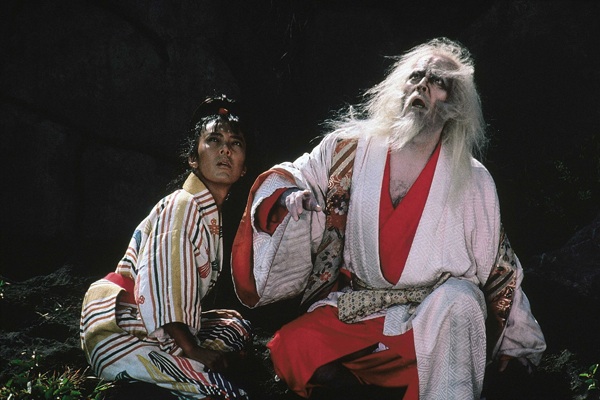
Tony Zhou has looked at Kurosawa before, as when he examined the Japanese director’s use of geometry in a crucial scene from ‘The Bad Sleep Well.’ In this piece, he takes a more wide-ranging look at the director’s work to show how, in films from ‘Throne of Blood’ to ‘The Hidden Fortress’ to ‘Ran,’ movement is essential to every Kurosawan frame. Zhou’s central idea is that Kurosawa unifies motion and emotion, so that one force speaks through another–and proposes that superior films follow suit, across the board. At one point, Zhou even uses this idea to critique one of the many mediocre scenes in The Avengers, indicating that if we judged the scene by movement alone, without knowing anything about the story, we wouldn’t know what was going on–whereas in Kurosawa, movement tells the story as well as the dialogue.

Watch: What Do David O. Russell’s Characters All Have in Common?

Watch: What Do David O. Russell’s Characters All Have in Common?

A character in a David O. Russell film cannot
be easily described in a few words. Russell’s characters tend to
possess a variety of contradicting qualities that spin and twist
throughout the duration of the film. It started in 1994 with the
quirky, baby-faced pre-med student who just so happens to have an
incestuous relationship with his mother (Spanking the Monkey). There’s
also the romantic and volatile mental patient who wants nothing more
than companionship (Silver Linings Playbook). And let’s not forget the
pudgy, comb-over-sporting con artist with a heart of gold (American
Hustle
). With all of Russell’s characters, we often witness a turbulent
assortment of emotions, ranging from one end of the spectrum to
the other–we see greed and sympathy, violence and tenderness,
neurosis and confidence. These characters are clearly not simple,
but ironically enough, they usually have one simple desire. And while
these characters may seem to be unlikeable on paper, in spite of their
tedious and often aggravating complexities, we cannot help but like
them. Here is a look at David O. Russell’s unpredictable characters
from 1996’s Flirting with Disaster to 2013’s American Hustle.

Films used:
Flirting with Disaster (1996)
Three Kings (1999)
I Heart Huckabees (2004)
The Fighter (2010)
Silver Linings Playbook (2012)
American Hustle (2013)

Jacob T. Swinney is an industrious film editor and filmmaker, as well as a recent graduate of Salisbury University.

Watch: How Are Martin Scorsese’s ‘The Wolf of Wall Street’ and Orson Welles’s ‘Citizen Kane’ Related?

Watch: How Are Scorsese’s ‘The Wolf of Wall Street’ and Welles’s ‘Citizen Kane’ Related?


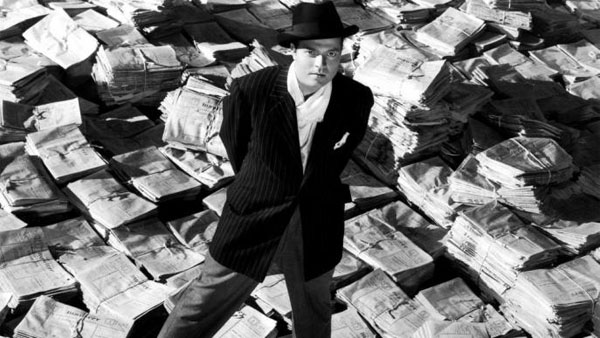
Both The Wolf of Wall Street and Citizen Kane show
men accumulating wealth, acquiring mistresses, divorcing their wives
and succumbing to decadence and power. But where Scorsese significantly
differs from Welles’ vision is in the ending. Welles may have lamented
Kane’s loss of innocence by materialising it in a sled, but Scorsese
exposes materialism itself. His film closes with an image of Jordan
Belfort’s captivated audience wishing to learn his secrets of success.
That final image is an unflinching mirror of us, the audience secretly
wishing for our own Belfort-scale wealth.

Steven Benedict is a writer, producer and director of multi-award winning films. He is also a contributor to several shows on Newstalk106. Having lectured for several years in
University College, Dublin, the National College of Art and Design
and the National Film School, he recently graduated with First Class
Honours from the Staffordshire University MSc in Feature Film Production
at
FILMBASE.

Watch: What Are the Parts of a Good Film Noir Story?

Watch: What Are the Parts of a Good Film Noir Story?

What exactly is film noir?  Is it a movement, a mode, a style, or a
genre?  These questions have preoccupied film scholars for decades.
According to filmmaker Paul Schrader, noir began with The
Maltese Falcon 
and ended with Orson Welles’s Touch of Evil.
 He’d add that it was largely
an American movement that applied certain stylistic (high contrast
lighting, voice over narration, non-linear storytelling) and thematic
(existentialism, the cruel mechanizations of fate, amour fou) elements
in genres ranging from melodramas to detective films.
Another film scholar might add that directors like Fritz Lang and Billy
Wilder never described their films as being "noir."  They thought they
were making thrillers. Film noir?  That’s a term the French critics
applied retroactively.  

This video essay series takes the fairly provocative stance that film
noir became a genre.  Essentially, in its golden age during the 1940s,
noir was a mode/movement that was superimposed onto other genres.  In
the words of genre theorist Rick Altman, genres
can start off as "adjectives"–fragments of the style and theme might
be there, but the genre has yet to fully solidify because the filmmakers
and audiences haven’t quite gotten their heads around it yet.  However,
by the time Robert Aldrich was making Kiss
Me Deadly 
in 1955, the writings of the French critics had made it
stateside (in fact, there’s a picture of him reading Borde and
Chaumeton’s Panorama
du Film Noir 
on the set of Attack!),
and perhaps the filmmakers and audiences had finally
begun to think of noir as being a noun.  When neo-noir flourished in
the 1970s (thanks to filmmakers like Schrader), the movement
emerged–fully formed as a genre–from its black-and-white cocoon.  

I write this trajectory into this introduction to the series because I
can imagine that some of my colleagues might have been troubled by a
video essay that calls film noir a genre. I am more than aware of the
history of this debate, and I will cover it in
a subsequent piece (Part I covered semantics, Part II focuses on
genetic syntax, Part III on pragmatics–so the noir genre discussion
will primarily rest there, and Part IV will focus on evolution.  There
will be a Part V on international noir, so don’t think
I’ve forgotten about that either!). What I’m attempting to do here is
to craft the video essay equivalent of an encyclopedia entry on film
noir for the undergraduate student with a new episode each month.  If
you’re already familiar with the films and the
key debates, you may not find much in the way of "new" knowledge here.
 My main audience–at least in terms of an intellectual presentation–is
the uninitiated.  I assume the pleasures of the more advanced fans and
scholars of noir will be found in the aesthetics
of the pieces, although maybe they’ll be surprised by a "new"
recommendation.  In any case, I hope you enjoy the first part of this
ongoing series, and I look forward to the debate it encourages.  Stay
tuned for more! 

To watch Part I of this series, click here.

Dr.
Drew Morton is an Assistant Professor of Mass Communication at Texas A&M University-Texarkana.  
He
the co-editor and co-founder of
[in]Transition: 
Journal of Videographic Film and Moving
Image Studies, the first peer-reviewed academic journal focused on the
visual essay and all of its forms (co-presented by MediaCommons and
 Cinema Journal).  [in]Transition recently

won an award of distinction in the annual SCMS Anne Friedberg
Innovative Scholarship competition.  His publications have appeared in
animation: an interdisciplinary journal, The Black Maria, Flow, In Media Res, Mediascape, Press Play, RogerEbert.com, Senses
of Cinema, Studies in Comics, and a range of academic anthologies.  He is currently completing
a manuscript on the overlap between American blockbuster cinema and comic book style. 

Watch: What’s Behind the Success of Horror Movies and Blockbusters?

Watch: What’s Behind the Success of Horror Movies and Blockbusters?

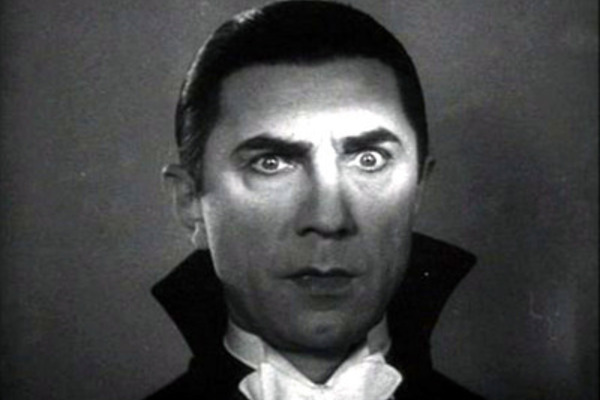
We like to tell ourselves, possibly foolishly, that artworks exist in their own realm, and that they can be created and consumed separately from whatever outer factors might be working on them. Politics is one sphere; the economy is another sphere; and artistic culture is a separate sphere, which can transcend the other spheres, right? Well, this video essay by Socionomics would suggest that that’s wrong, and that the kinds of films produced, and the kinds of films most widely consumed, during a particular period depend highly on the economy, and on the political landscape. During times of economic deprivation, as between 1931-1933, horror films like Dracula, King Kong, and The Mummy were highly popular; ditto for the late 1960s to the 1980s, the era of Halloween, Night of the Living Dead, and The Texas Chainsaw Massacre. During an economic boom, such  the one from the mid-1930s to the mid-1960s, companies like Disney could put out Snow White, Pinocchio, and other such films, to see them become huge hits. People crave happiness in films to reflect their own social happiness, just as they crave darkness to reflect their despair. In a bull market, we want adventure films and similar entertainments; in a bear market, we want films that show our inner apprehensive feelings. It’s a not a brand new point, but this piece, actually part of a larger film called History’s Hidden Engine, states it well, and eloquently, with ample clips from old and new sources.

Watch: 70 Films That Go Inside Characters’ Minds

Watch: 70 Films That Go Inside Characters’ Minds

Cinema
is no stranger to exploring the realms of dreams, memories, and
fantasies.  We’ve all been fooled by a strategically placed dream
sequence or been clued into opinion-shifting information via
flashbacks.  But visually speaking, how do we know that we are currently
viewing something created in a character’s mind?

Often, the
filmmaker chooses not to employ any visual cues that would suggest
something is not quite what it seems.  For instance, David Fincher’s
Gone Girl (2014) presents us with several lie-laced flashbacks that are
visually cohesive with the rest of the film.  In doing so, the film uses
manipulation tactics similar to that of Amy Dunne.  Christopher Nolan’s
Inception (2010) frequently tricks us into believing that dreams are
realities by not differing from the film’s overall visual look.  Nolan
seems to slowly introduce different visual elements as he is ready to
show his hand.  The same applies to Wes Craven’s A Nightmare on Elm
Street
(1984).  Craven often wants us to think that the characters are
awake and experiencing reality when they are actually dreaming.  It is
not until it is revealed that the character is in a dream that the look
of the film begins to change.  Little by little, aesthetics tend clue us
into the truth.  Sometimes a film completely blurs the aesthetic
boundaries of reality and fantasy and we have a rather difficult time
even deciphering what is and is not real.  David Lynch is notorious for
hindering the comprehension of his audience in this way. 

On
the other hand, sometimes a filmmaker decides to immediately let us know
that we are experiencing something within the mind of a character. 
This "aesthetic of the mind" is clearly different from the overall
look of the film and can be expressed in a vast variety of ways.  In
regard to flashbacks, there are two major types: a scene
that takes place at a time previous to the rest of the narrative, and a
scene that replicates the memories of a character.  The former tends to
use the same aesthetic approach as the rest of the film, while the
latter usually displays visual differences to mimic the perception of a
character.  The change could be as simple as the switching from color to
black and white in Spider-Man (2002), or the overly shaky camera
movement in Blue Valentine (2010).  While effective, these visuals can
often be misleading as we become overly connected to a character.  We
see things only as he or she remembers them, which may or may not be
entirely faithful to the truth.  For example, over-saturation can often
fool us into interpreting pleasant realities, while the opposite can
lead us to believe false negativity.  The idea of subjectivity is
especially amplified in films like Pulp Fiction (1994), where a flashback
is presented to us in a POV shot. 

Dreams and fantasies are a
bit less complicated when it comes to their aesthetic makeup.  Since neither of these elements are ever anchored in reality, the
filmmaker has an endless supply of visual tools at his or her disposal. 
The changes can range from the simple soft focus used in Ralphie’s
daydream in A Christmas Story (1983), to the CGI filled, vibrantly
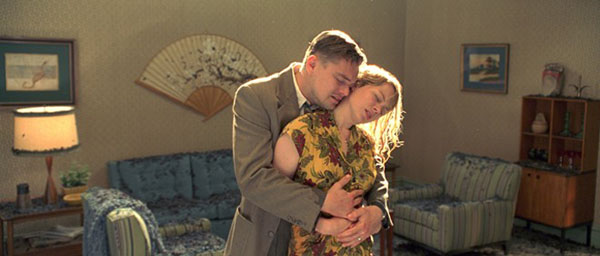
colored dream sequence in Shutter Island (2010).  Even viewing these
scenes out of context, the viewer would most likely suspect the action
is not taking place in reality.  These are the types of scenes being
investigated in this video–the scenes that clearly stand out as
non-reality due to noticeable aesthetic differentiation.  These scenes
showcase a few of the infinite visual techniques used to express the
ever powerful and manipulating mind.

Films used (in order of appearance):
American Beauty
American Hustle
Her
The Virgin Suicides
Django Unchained
Batman Begins
Shutter Island
The Shining
Vertigo
Kill Bill Vol. 1
Apocalypse Now
Mulholland Drive
I Heart Huckabees
The Big Lebowski
A Nightmare on Elm Street (1984)
Eternal Sunshine of the Spotless Mind
Fight Club
Noah
The Secret Life of Walter Mitty (2013)
Super
Scott Pilgrim vs. the World
Requiem for a Dream
Blue Valentine
Dallas Buyers Club
Watchmen
Brokeback Mountain
Silver Linings Playbook
Memento
Gladiator
Bronson
Inception
Blade Runner
Wish I Was Here
The Skeleton Twins
The Machinist
Warm Bodies
Man of Steel
Eternal Sunshine of the Spotless Mind
Terminator 2: Judgment Day
It’s Kind of a Funny Story
(500) Days of Summer
Happy Gilmore
Old School
Harold & Kumar Go to White Castle
Walk Hard: The Dewey Cox Story
This Is the End
The Hangover Part II
Zombieland
Pulp Fiction
Ray
The Crow
The Lovely Bones
The Bourne Ultimatum
Rambo
25th Hour
Kill Bill Vol. 2
The Green Mile
The Curious Case of Benjamin Button
Amélie
The Butterfly Effect
X-Men 2
Batman Forever
Spider-Man
Tusk
Raising Arizona
Papillon
The Big Lebowski
Fast Times at Ridgemont High
A Christmas Story
The Wizard of Oz

Jacob T. Swinney is an industrious film editor and filmmaker, as well as a recent graduate of Salisbury University.