Watch: All of Sterling Archer’s Literary References: A Video Essay

Watch: All of Sterling Archer’s Literary References: A Video Essay

Secret Agent. Asshole. Book nerd? Sterling Archer, the modern take-down of James Bond on Adam Reed’s cult animated show ‘Archer,’
is many things, but that last detail has always been a quirk in the
show, with literary references spouted out almost as often as jokes
about oral sex. Often, these references in V and films don’t stick as
well as they should, coming off less as wit and more as self-indulgent
name-dropping–it never made sense to me that Buffy Summers lamented
that her slaying duties got in the way of her social life, yet was still
able to stay on top of her pop culture references. Reed has admitted
that the show’s many literary references, including the many from other
characters not included for time, are the remnant of his tenure as a
frustrated English major, yet their contrast with the more deplorable
aspects of Archer’s personality was probably the first indicator of his
humanity, his intelligence when he chose to use it, and maybe even an
indication of his lonely, friendless childhood and adolescence. Plus, of
all the mixed-up characters on Archer, Reed seems to know that
it’s most fun to hear the debonair, narcissistic spy mention an obscure
Herman Melville book at gunpoint, read 10 Babysitter’s Club books
in preparation for guarding his daughter, or wonder out loud if he’s gay
for Tolkien. You won’t find Sean Connery or Daniel Craig saying that
with a straight face any time soon.

Serena Bramble is a film editor whose
montage skills are an end result of accumulated years of movie-watching
and loving. Serena is a graduate from the Teledramatic Arts and
Technology department at Cal State Monterey Bay. In addition to editing,
she also writes on her blog Brief Encounters of the Cinematic Kind.
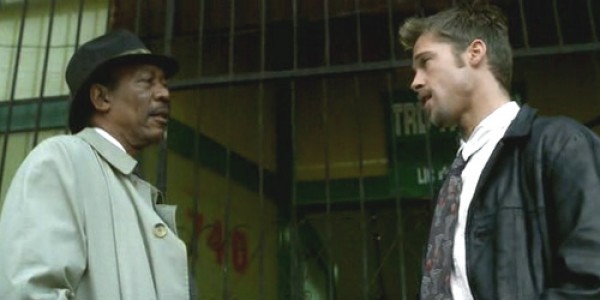

Watch: Why the Beginning of David Fincher’s ‘Se7en’ Is the Perfect Opening Sequence

Watch: Why the Beginning of David Fincher’s ‘Se7en’ Is the Perfect Opening Sequence

A filmmaker once told
me that exposition in dialogue must be stated twice if anyone is going to
remember it. The opening to David Fincher’s ‘Se7en’ introduces the
protagonists, sets up the initial premise, and displays how their different
personalities will clash throughout the film. Not only does it do this in less
than four minutes, but it manages to communicate this information twice. It was
fascinating to discover that this simple and graceful opening was actually
pieced together from a much longer opening, which contained details that were
meant to make appearances throughout the film. Due to the inability to move the
production to New York for a shot of Morgan Freeman on a train bound for the
city, the opening was ultimately carved up and rearranged into the one we now
know. Without this turn of events, we never would have gotten the brilliant
opening credits sequence that was made to replace the train shot. The trimmed-down opening gives us the opportunity to jump right into the story.

Tyler Knudsen, a San
Francisco Bay Area native, has been a student of film for most of his life.
Appearing several television commercials as a child, Tyler was inspired to
shift his focus from acting to directing after performing as a featured extra
in Vincent Ward’s
What Dreams May Come. He studied Film & Digital
Media with an emphasis on production at the University of California, Santa
Cruz and recently moved to New York City where he currently resides with his girlfriend.


For more of Tyler’s video essays, check out his channel at
youtube.com/cinematyler.

Watch: How the Visual Gaffes in Iñárritu’s ‘Birdman’ Make It a Better Film

Watch: How the Visual Gaffes in Iñárritu’s ‘Birdman’ Make It a Better Film

Alejandro González Iñárritu‘s ‘Birdman‘ is a curious film in that it thrives on both orientation and disorientation. As we move (literally) through the film along with Riggan Thompson, we become acquainted with his mind, if not sympathetic with his personality–he orients us, in that our view of the events on screen, even those which do not involve him directly, become filtered through his world view. However, paradoxically enough, as we become oriented in relation to Thompson, we become progressively disoriented in relation to the rest of the world. What are for Thompson wholly routine skitterings through the theater where his Raymond Carver drama is being performed become for us ramblings through an increasingly complex and dizzying maze. As the film moves forward, little discrepancies occur: a path that should lead back to the main stage leads elsewhere; Thompson in his skivvies makes a turn that should send him into the depths of Times Square but instead returns him to the theater; and so on. This well-arranged and articulate video essay by de Filmkrant takes a look at these inconsistencies, and argues convincingly that, far from detracting from the effect of the the film, they are very important to the film’s achievement, which is to describe the rise out of chaos of an utterly troubled, tortured artist.

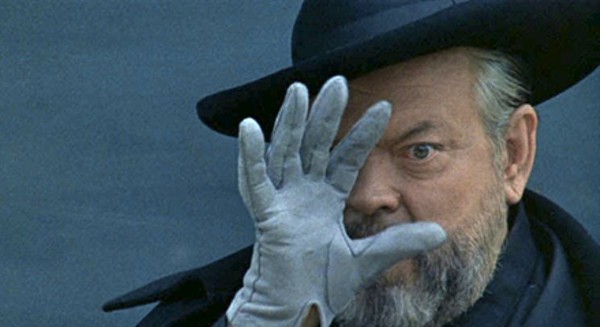
Watch: Orson Welles, ‘F for Fake,’ and the Art of the Video Essay

Watch: Orson Welles, ‘F for Fake,’ and the Art of the Video Essay

I was 22 when I first saw Orson Welles’ ‘F for Fake.’ Some hipper friends and I were sprawled out on the floor of someone’s dorm room. It was probably a Sunday night, when everyone had more purpose-driven things to do, but we had taken time out to watch this film. Why? Because it was wonderful, of course. And you had to watch it. It was essential Welles, made all the more essential by the fact that few people had seen it. I had seen ‘Citizen Kane,’ of course. And ‘Macbeth.’ And even ‘The Trial.’ (A great match of director to subject, if ever there was one.) But not ‘F for Fake,’ a speculation on the life of a famous forger, which transformed, or at least deepened, my thinking on Welles; the films I had watched previously as unquestionable institutions now seemed to me to be animate, near-living creations, the products of a restless, idiosyncratic mind, exemplary in its curiosity and dissatisfaction. Tony Zhou’s most recent video essay uses this film to explain how one builds and structures a video essay–and he gets some help from, of all people, Trey Parker, who memorably suggests that when one is telling a story, the next word after each plot event must either be "therefore" or "but." The film seems to have helped Zhou developed a working method (ars cinematica?); he reminds us, rather firmly, that video essays, playful though they may sometimes be, are films, and they have to be structured and built as tightly as longer features. As with all of Zhou’s Every Frame a Painting videos, this one is highly educational about the art of film watching and film reading, but, as always, the highly complex insights are affably deployed.

Watch: What If ‘Lost in Translation’ and ‘Her’ Were Two Parts of the Same Movie?

Watch: What If ‘Lost in Translation’ and ‘Her’ Were Two Parts of the Same Movie?

Spike Jonze’s ‘Her’ and Sofia Coppola’s ‘Lost In Translation,’ despite their differences, often seem as if they are part of the same general mood in the minds of their directors: a little sad, a little bemused, a little amused. Each film views as less a story than a series of grace notes on the idea of loneliness; they puncture our minds less than they nudge them. And they conjure terrific, understated performances out of normally dominant stars like Bill Murray, Scarlett Johansson, and Joaquin Phoenix in the process. This new video by Jorge Luengo proposes that they could be part of the same movie, more or less, and in watching it, one begins to think that might not be such an outrageous possibility…

Watch: Gordon Willis’s Framing Techniques in Over 25 Films: A Video Essay

Watch: Gordon Willis’s Framing Techniques in Over 25 Films: A Video Essay

Gordon Willis was one of the cinema’s greatest
artists. Drawing from over 25 of his films, this essay celebrates Willis’ lighting, blocking, preference for a 40mm lens and
above all his use of strong geometric patterns. Whether collaborating with some
of America’s most celebrated directors; Woody Allen, Alan J. Pakula and Francis
Ford Coppola, irrespective of the genre and regardless if the setting was
urban, rustic, contemporary or period, Willis’ style was
so identifiable that he redefined cinematography. Gordon Willis
was a cinematograph-auteur.

Steven Benedict is a writer, producer and director of multi-award
winning films. He is also a contributor to several shows on Newstalk106.
Having lectured for several years in
University College, Dublin, the National College of Art and Design
and the National Film School, he recently graduated with First Class
Honours from the Staffordshire University MSc in Feature Film Production
at
FILMBASE.

Watch: An Exhilarating Supercut of Quentin Tarantino’s Profile Shots

Watch: An Exhilarating Supercut of Quentin Tarantino’s Profile Shots

Watching this supercut of profile shots from Tarantino’s films is like having a cup of visual espresso. Part of it is the idea of the profile shot itself. Have you ever noticed that no one quite looks themselves in profile? There’s always something a little more vulnerable there, possibly because only half of the face is visible, the rest concealed from view. In Rishi Kaneria’s newest piece, we see side views of many of Quentin Tarantino’s most beloved characters: Vincent Vega (John Travolta), The Bride (Uma Thurman), Max Cherry (Robert Forster), O-Ren Ishii (Lucy Liu), and others, flash in front of our face, first slowly, and then faster and faster until all we see is one mottled face we could call the Tarantino face, an amalgam of sensitivity and toughness, of jocularity and aloofness. And Kaneria makes the prescient choice of running the drum track from Whiplash under the piece, ratcheting up the tension, turning a 45-second video into a substantial little film, in and of itself.

Watch: What Makes GHOSTBUSTERS a Classic? A Video Essay

Watch: What Makes GHOSTBUSTERS a Classic? A Video Essay

One thing that became resoundingly clear after the death of Harold Ramis was that the films he was involved in–‘Ghostbusters,’ ‘Animal House,’ ‘Groundhog Day’–had an undeniable solidity to them, regardless of what you might say about their degree of refinement. This video essay by Bob Chipman, who also calls himself MovieBob, digs into the particular solidity of ‘Ghostbusters,’ a film which would appear on the surface to be light entertainment, but which reveals itself, under the eye of this sharp, dense, and fast-moving analysis, to be a complexly conceived and brilliantly executed project, on several levels. One important and interesting point the piece makes is that the film’s three central characters don’t undergo tremendous changes during the film–there’s no apparent character arc. The movie resists, as well, tried-and-true developments such as a switch from disbelief in ghosts to belief in ghosts. Additionally, Chipman discusses the fact, all too true, that the film grew out of–and commented on–a ghost craze that swept American film during the late 1970s and early 1980s, notable examples of this trend being ‘Poltergeist’ and ‘The Exorcist.’ And capping off this elaborate examination is a serious look, without too much fannishness, at the extent to which the movie looks at questions of mortality and faith through the lens of Sumerian mythology. Chipman assigns Ghostbusters a fair amount of profundity, signing off with a rousing coda and ending with "Ghostbusters is really. That. Good." This is the first in a series, in which Chipman will delve into classics and determine why they endure.

Watch: David Fincher’s Early Film Work: A Video Essay

Watch: David Fincher’s Early Film Work: A Video Essay

The early years of David Fincher were, to watch this installment in the excellent Directors Series by the Raccord collective, very different from the later years, at least in content. The nearly-half-hour-long piece details how he got his start making music videos for the likes of Rick Springfield, Paula Abdul, and The Motels, even making a documentary about Springfield called The Beat of the Live Drum. We’re given a hint of the discomfiting approach to come in a short film Fincher made for the American Cancer Society in 1984 featuring a (cigarette-) smoking fetus, modeled after the Star Child from Stanley Kubrick’s 2001: A Space Odyssey. (Watch it: it’s truly disturbing.) We also learn about his travails with the maligned Alien 3, his first feature film. What’s happening here, with these early projects of Fincher’s, is what would be best called the finding of a form. Just as you might be able to tell a lot about a writer by reading his or her first book, we can see a lot of the later Fincher in his 1980s videos–the steely sheen that lies over everything, the sense of perfection, and the sense of pure mania that lies beneath that perfection. For anyone who wants to learn a little about artistic development, and in particular about Fincher’s development, this would be a good piece to watch.

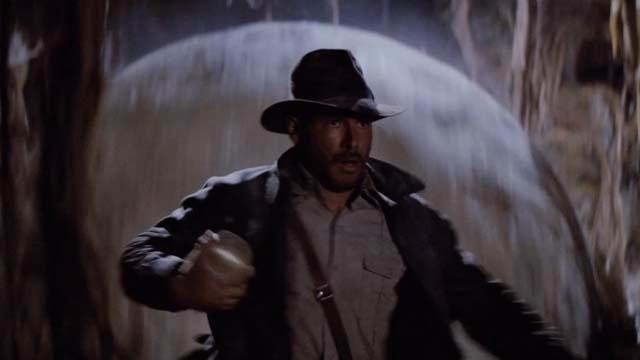
Watch: How the Boulder Scene from ‘Raiders of the Lost Ark’ Was Made and Why It Lasts

Watch: How the Boulder Scene from ‘Raiders of the Lost Ark’ Was Made and Why It Lasts

There were many scenes from Raiders of the Lost Ark that thrilled my preteen mind: brushing the spiders off a man’s back, the melting eyeballs, the unleashing of the power of the Ark. But, in the end, a scene of Indiana Jones being chased by a large boulder down a long tunnel wins. Why? Not sure. It has metaphorical power, I suppose–maybe it’s the opposite of the myth of Sisyphus, in which a man pushes a boulder up a hill for eternity? Maybe because it was the sort of gut-level entertainment that we rarely see in unmitigated, pure form in films these days? In any event, this brisk and informative "Art of the Scene" installment from Cinefix lays out the history of the film, and, for our edification, the details of the making of the boulder scene. We learn, among many other things, that George Lucas got the idea for the boulder from a Scrooge the Duck comic book, and that the sound of the boulder rolling is actually the sound of the wheels of a Honda Civic, rolling on gravel. Enjoy!