Watch: The Face of Christopher Lee (1922-2015)

Watch: The Face of Christopher Lee (1922-2015)

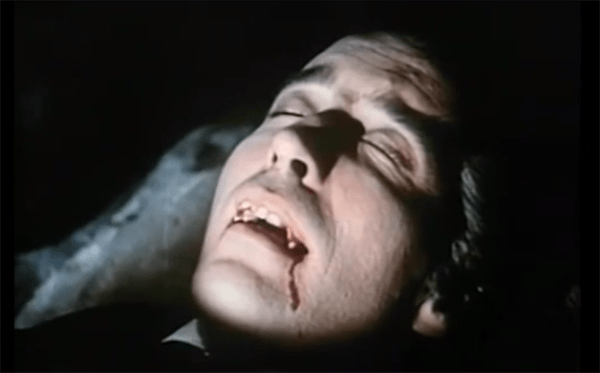
Christopher Lee was the definitive working actor. His career was long, and he appeared in more films than any major performer in the English-speaking world — over 250. What distinguishes him, though, and should make him a role model for anyone seeking a life on stage or screen, is not that he worked so much but that he worked so well. He took that work seriously as both job and art, even in the lightest or most ridiculous roles, and he gave far better, more committed performances than many, if not most, of his films deserved.

Lee said that a successful actor needed “a degree of versatility”, and he embodied that idea. He never quite broke out of his typecasting as a horror villain, but he didn’t need to — he showed the variety and depth possible within such characters, playing each not as a collection of clichés (even when they were written that way), but as something like a human being (even when they weren’t). This is the key to one of the great roles of his later career, that of Saruman in the various Lord of the Rings and Hobbit movies. He is utterly terrifying but also fascinating, and there are moments where we want to sympathize with him, or perhaps join him, and then we realize the error of our momentary desires. No actor in those films so fully and convincingly portrays the temptations of evil.

Though Lee performed well and even memorably in plenty of bad, unmemorable movies, the one that stands as the apotheosis of his skill is ‘The Man with the Golden Gun.’ It’s neither Lee’s worst movie nor the worst James Bond movie, but it’s pretty bad nonetheless. However, Lee so perfectly embodies Scaramanga that he steals every scene he’s in and is usually listed as one of the great Bond villains.

One of the film’s faults is that it plays too much for laughs, but Lee doesn’t make that mistake. He takes Scaramanga seriously as a character and he doesn’t wink at us to signal that he thinks he’s in a crappy movie. To have an actor commit to a role, even if it’s a terrible role in a terrible movie, pays respect to the audience. The nature of film production is such that an actor can’t always know when they’re in a good or bad film, anyway, as what things feel like on set can be quite different from what ends up making it through postproduction, and so the only way to make sure that you don’t mess up a potentially great (or even just passably good) movie is to treat the job as you would had you been cast in the greatest, most demanding, most prestigious film of all time. 

Again and again, Christopher Lee performed that way. Nobody performed terribly-written lines as adroitly as he — no matter how awkward, stilted, or absurd the line, he would find a way to inhabit it, a way to make it seem like the only thing his character could possibly have said at the moment of utterance. As an actor, he couldn’t necessarily control the writing, the cinematography, the editing, but he could control his own performance, and that he did.

Lee was, for similar reasons, an impressive comedic actor. One key to successful comedic acting is this: the actors shouldn’t do the laughing for the audience. Watch Lee in, for instance, ‘Gremlins 2,’ an at best mediocre film in which he is delightful: his timing is excellent, and he knows when to pull back and allow a simple, stoic glance to do all the work for him.

It’s a shame that Christopher Lee was never nominated for an Academy Award (though of course the list of actors and filmmakers never nominated for that award is not at all a shameful one). He certainly deserved at least an honorary, career-spanning acting award, because he achieved far more than a lot of actors who walked away with Oscar in their hands. It’s one thing to perform well in a beautifully written, sensitively directed, artistically shot, masterfully edited movie. It’s quite another accomplishment to perform so consistently well, year after year, in a wide variety of movies that more often than not are not especially well written, directed, shot, or edited — that, indeed, at times seem to have been written, directed, shot, and edited by a vaguely sentient slime mold. Christopher Lee did so, over and over again, for more than sixty years. If that doesn’t define a great actor, I don’t know what does.

Matthew Cheney’s work has been published by English Journal, One StoryWeb ConjunctionsStrange HorizonsFailbetter.comIdeomancerPindeldybozRain TaxiLocusThe Internet Review of Science Fiction and SF Siteamong other places, and he is the former series editor for Best American Fantasy. He is currently a student in the Ph.D. in Literature program at the University of New Hampshire.

Watch: How Does Nicolas Winding Refn’s Colorblindness Shape His Films?

Watch: How Does Nicolas Winding Refn’s Colorblindness Shape His Films?

Did I know Nicolas Winding Refn was colorblind? No, I did not. But having been thus educated, this little bit of information explains quite a lot about his work’s appeal. Looking at YouTube user Blue Leaf’s piece through this scrim, and given Refn’s own testimony that his colorblindness is what causes him to make all of his films with high color contrast, I begin to understand why films like ‘Bronson‘ or ‘Only God Forgives‘ have the visual appearance they do–and I also begin to understand something about their attitudes: the interest in extremes of morality, the clash of affection and intense violence, the silence versus the noise. Perhaps it’s an obvious point to make about a filmmaker who’s gotten more than his fair share of attention, criticism and fan-dom over the years, but re-investigating the point can’t hurt–and this piece is, at the very least, a thrilling watch.

Watch: What’s the Difference Between the WATCHMEN Comic and the WATCHMEN Movie?

Watch: What’s the Difference Between the WATCHMEN Comic and the WATCHMEN Movie?

Alan Moore’s ‘Watchmen’ graphic novel, named by Time Magazine as one of the 100 best novels of all time, is an absorbing and potentially transformative read: for its sagacity, for its balancing of numerous texts, for its storytelling. Zack Snyder’s ‘Watchmen‘ film was a slightly different animal, a valiant attempt to film a book that many might call unfilmable. With their usual wit and energy, the staff of Cinefix have constructed an elegant and rousing examination of the differences between book and film here, giving credit to both source and adaptation where due–and including some background about other filmmakers who took a running jump at filming the comic and failed. Take a look… 

Watch: What If David Lynch Had Directed Stanley Kubrick’s ‘The Shining’?

Watch: What If David Lynch Had Directed Stanley Kubrick’s ‘The Shining’?

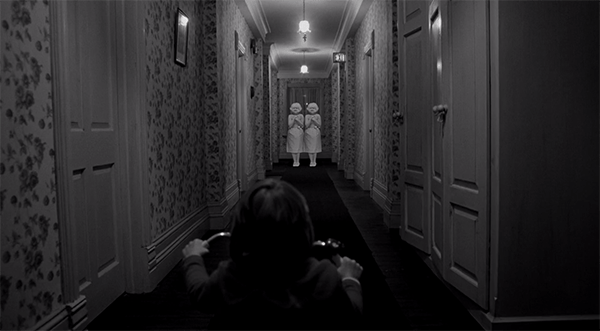
If David Lynch had directed Stanley Kubrick’s ‘The Shining"–let’s just stop there. In a sense, he did, just as much as Kubrick directed many of Lynch’s films. (In a sense.) It’s been said many times that there are only 4 or 5 good ideas, and they keep being passed around over and over, re-shaped, re-imagined. And the creative animus, the deranged, meticulous force of imagination that fueled Kubrick’s mind when he took a good thriller by Stephen King and made it into a horrific masterpiece could well have been flowing through Lynch’s mind when he made… anything. Except, perhaps, ‘The Straight Story.’ Or ‘Dune.’ This mash-up (though it’s a lot more) by Richard Vezina has a lot of beautiful little touches: a log truck rolling by outside the window as Jack Torrance is conducting his entrance interview at The Overlook; Dick Hallorann ending up in the tractor from ‘The Straight Story’ when he’s driving to the hotel to save the lives of Torrance’s family; Torrance watching ants gnawing and gnashing their teeth as he looks at a model of the hotel grounds… Far from just a random supposition, the question at the heart of the piece prods us to pay more close attention to the similarities between these two cinematic emissaries from the dark side of the mind.

Watch: Who Says Pixar Characters Have No Emotions??

Watch: Who Says Pixar Characters Have No Emotions??

Though I’ve written elsewhere about how uneasy Pixar films make me at times, after watching Lindsay McCutcheon’s rampaging, charged homage to the studio and, more specifically, its characters’ emotions, you’d think you were watching a showcase of German Expressionist dramas rather than scenes from ‘Up,’ ‘Toy Story,’ ‘Monsters University,’ ‘Wall-E,’ ‘Ratatouille,’ ‘Brave,’ and other films that show both the extremes of, yes, emotions these films express and, begrudgingly though I might say it, the personality and variety and (begrudgingly again) idiosyncratic charm Pixar’s animators bring to their unsettlingly smooth-contoured figures. ‘Inside Out‘ is coming up–this rollicking piece should serve as a fantastic primer for a movie all about a young girl and her, well, feelings.  

Watch: John Carpenter, Subversive Auteur

Watch: John Carpenter, Subversive Auteur

Up until recently, I had a difficult time grasping the cult of John
Carpenter. Out of the small handful of films I had seen from him across
the past decades (‘Halloween,’The Thing,’ ‘Escape from L.A.,’ and ‘Vampires‘), I found one great film (‘Halloween’), one good film (‘The Thing,’ which felt a bit too much like ‘Alien‘ in Antarctica for me), and two pretty mediocre films (‘Escape from L.A.’ and ‘Vampires’).
Yet, many cinephiles and friends I respect kept urging me to give him a
proper chance. I spent a week or so with about half of his filmography
and I found a director who uses generic pulp for the best of all
possible uses: as a capsule for philosophy and more radical ideology. John Carpenter seems to gravitate towards the subversive, be it in the
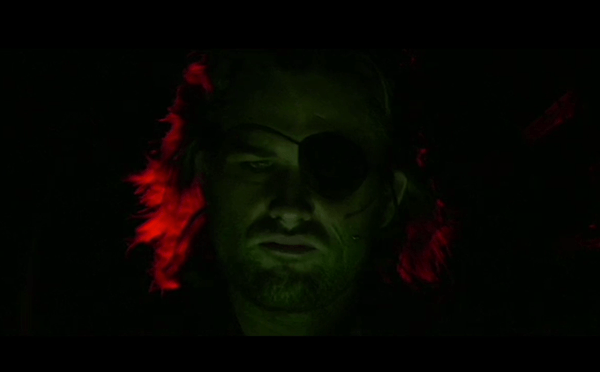
form of critiquing American ideology in ‘They Live‘ (1988) or building an action star out of former Disney child actor Kurt Russell with ‘Escape from New York‘ and ‘The Thing’ before destroying that image with the ineffectual man of action—Jack Burton—in ‘Big Trouble in Little China‘ .  

What
I found during my journey through his output was not a perfect
filmmaker, but almost always an interesting one.  A film like
Carpenter’s ‘Prince of Darkness‘ is hampered by a low budget
and bloated running time, but it’s overflowing with Lovecraftian
nuggets (the anti-God, psychic television signals from the future) and
surreal images (the bug man, the broadcasts).  Even his director for
hire adaptation of Stephen King’s ‘Christine‘ (1983) features some
of his finest work with actors, finding a real friendship between the
two male leads in one of the worst of King’s novels.  Across all of his
films, there are poetic images, radical ideas, innovative musical
compositions, an idiosyncratic pace, and abrupt shifts in tone (all of
which Nicole Alvarado and I have attempted to capture within our essay)
that define his cinematic voice.  He is, like his hero Howard Hawks, an
auteur.  
Dr. Drew Morton is an Assistant Professor of Mass Communication at Texas A&M University-Texarkana.  He the co-editor and co-founder of [in]Transition: 
Journal of Videographic Film and Moving Image Studies, the first
peer-reviewed academic journal focused on the visual essay and all of
its forms (co-presented by MediaCommons and
 Cinema Journal).  [in]Transitionrecently
won an award of distinction in the annual SCMS Anne Friedberg
Innovative Scholarship competition.  His publications have appeared in 
animation: an interdisciplinary journal, The Black Maria, Flow, In Media Res, Mediascape, Press Play, RogerEbert.com, Senses of Cinema, Studies in Comics, and
a range of academic anthologies.  He is currently completing a
manuscript on the overlap between American blockbuster cinema and comic
book style. 

Nicole Alvarado is an animation buff and research analyst.  This is her first video essay.

Watch: ‘Mad Max: Fury Road’ Meets Buster Keaton (Really)

Watch: ‘Mad Max: Fury Road’ Meets Buster Keaton (Really)

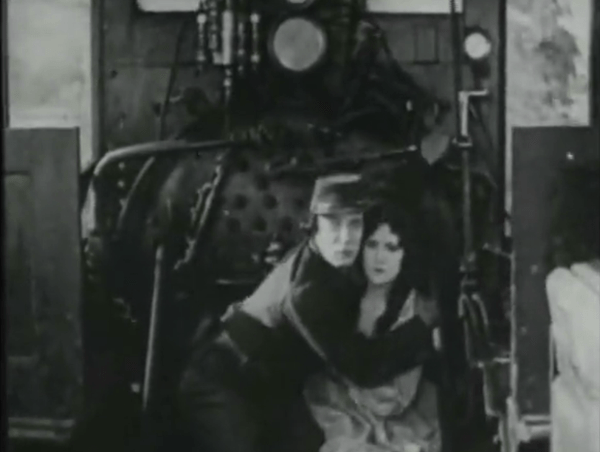
Once upon a time, there were two directors. One was named George Miller and the other was named Buster Keaton. They lived many, many years apart, and their films were very, very different from each other. George Miller directed the ‘Mad Max’ films, a series of apocalyptic car chase action social commentary science fiction road movie romance thrillers (set in Australia, maybe), while Buster Keaton directed and starred in silent comedies, dependent largely on slapstick and a vast Rolodex of remarkable facial expressions. One day, a film editor named Walter Rafelsberger discovered that if he put the soundtrack to ‘Mad Max: Fury Road‘ (2015) behind a famous chase scene from a Keaton film called ‘The General‘ (1926), the two parts… just… fit! And the result is what you see above.

Watch: ‘Mad Max: Fury Road’: It’s All in the Framing

Watch: ‘Mad Max: Fury Road’: It’s All in the Framing

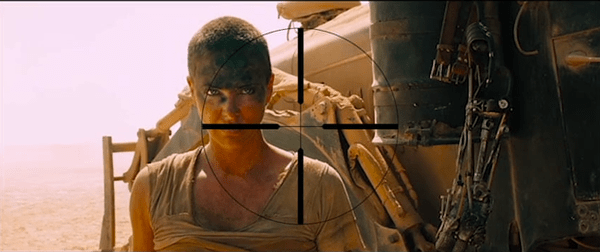
We’ve looked, elsewhere, at how the use of point-of view shots made the original Mad Max movies compelling–here, in Vashi Nedomansky’s recent piece, we discover a secret of the success of George Miller’s ‘Mad Max: Fury Road‘: the editing. Or, more specifically, the framing. Each shot is center-framed, meaning that the eye’s intended focal point will always be in the center of the frame. Nedomansky has helpfully added crosshairs to make us see this a bit more clearly, along with a voice-over from John Seale, the film’s director of photography.

Watch: Who Were the Great International Noir Directors?

Watch: Who Were the Great International Noir Directors?

What
exactly is film noir?  Is it a movement, a mode, a style, or a genre?
 These questions have preoccupied film scholars for decades. According
to filmmaker Paul Schrader, noir began with The Maltese Falcon and ended with Orson Welles’s Touch of Evil.
 He’d add that it was largely an American movement that applied certain
stylistic (high contrast lighting, voice over narration, non-linear
storytelling) and thematic (existentialism, the cruel mechanizations of
fate, amour fou) elements in genres ranging from melodramas to detective
films. Another film scholar might add that directors like Fritz Lang
and Billy Wilder never described their films as being "noir."  They
thought they were making thrillers. Film noir?  That’s a term the French
critics applied retroactively. 

This
video essay series takes the fairly provocative stance that film noir
became a genre.  Essentially, in its golden age during the 1940s, noir
was a mode/movement that was superimposed onto other genres.  In the
words of genre theorist Rick Altman, genres can start off as
"adjectives"–fragments of the style and theme might be there, but the
genre has yet to fully solidify because the filmmakers and audiences
haven’t quite gotten their heads around it yet.  However, by the time
Robert Aldrich was making Kiss Me Deadly in
1955, the writings of the French critics had made it stateside (in
fact, there’s a picture of him reading Borde and Chaumeton’s Panorama du Film Noir on the set of Attack!),
and perhaps the filmmakers and audiences had finally begun to think of
noir as being a noun.  When neo-noir flourished in the 1970s (thanks to
filmmakers like Schrader), the movement emerged–fully formed as a
genre–from its black-and-white cocoon.  

I
write this trajectory into this introduction to the series because I
can imagine that some of my colleagues might have been troubled by a
video essay that calls film noir a genre. I am more than aware of the
history of this debate and it was covered in Part III on Pragmatics.
 Part V is a shift in gears.  There isn’t much in the way of an academic
argument regarding noir or genre to be found here; it’s simply a poetic
supercut of international noir films that the interested viewer should
check out (a list of films – in the order they appear – can be found
below).  

What
I’m attempting to do here is to craft the video essay equivalent of an
encyclopedia entry on film noir for the undergraduate student with a new
episode each month.  If you’re already familiar with the films and the
key debates, you may not find much in the way of "new" knowledge here.
 My main audience–at least in terms of an intellectual presentation–is
the uninitiated.  I assume the pleasures of the more advanced fans and
scholars of noir will be found in the aesthetics of the pieces, although
maybe they’ll be surprised by a "new" recommendation (in this case, I
obviously love Elevator to the Gallows!).
 For those who have followed me through this five part series, I thank
you for watching, sharing, and for the wonderful words of encouragement.
 For those new to the series, I welcome you and urge you to start at
the beginning.  

FILMS (IN THE ORDER OF APPEARANCE, INCLUDING REPEATED CLIPS): 
OSSESSIONE

BREATHLESS

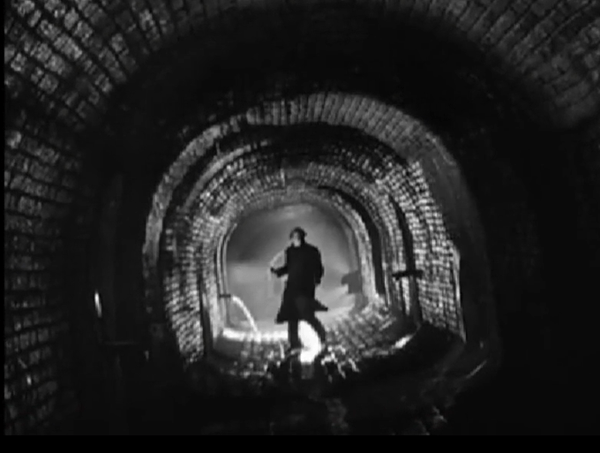
THE THIRD MAN

ELEVATOR TO THE GALLOWS

DRUNKEN ANGEL

ODD MAN OUT

PIERROT LE FOU

ELEVATOR TO THE GALLOWS

BAND OF OUTSIDERS

SERIE NOIRE

STRAY DOG

RIFIFI

TOUCHEZ PAS AU GRISBI

BOB LE FLAMBEUR

THE CRYING GAME

TOKYO DRIFTER

MADE IN U.S.A.

DRUNKEN ANGEL

LA BETE HUMAINE

SHOOT THE PIANO PLAYER

BAND OF OUTSIDERS

ALPHAVILLE

JE JOUR SE LEVE

LE SAMOURAI

ELEVATOR TO THE GALLOWS

SERIE NOIRE

SHOOT THE PIANO PLAYER

LE SAMOURAI

DRUNKEN ANGEL

TOKYO DRIFTER
BREATHLESS

STRAY DOG

ODD MAN OUT

Dr. Drew Morton is an Assistant Professor of Mass Communication at Texas A&M University-Texarkana.  He the co-editor and co-founder of[in]Transition:  Journal of Videographic Film and Moving Image Studies, the first peer-reviewed academic journal focused on the visual essay and all of its forms (co-presented by MediaCommons and Cinema Journal).  [in]Transitionrecently won an award of distinction in the annual SCMS Anne Friedberg Innovative Scholarship competition.  His publications have appeared inanimation: an interdisciplinary journal, The Black Maria, Flow, In Media Res, Mediascape, Press Play, RogerEbert.com, Senses of Cinema, Studies in Comics, and a range of academic anthologies.  He is currently completing a manuscript on the overlap between American blockbuster cinema and comic book style.

Watch: Spike Lee’s ‘Do the Right Thing’: The Camera Work Behind the Tension

Watch: Spike Lee’s ‘Do the Right Thing’: The Camera Work Behind the Tension

I have often thought that if there were one director who could direct a film version of Shakespeare’s ‘Titus Andronicus,’ it would be Spike Lee. Why that play? Because it’s one of Shakespeare’s bloodiest, most violent works. Why Spike Lee? Because he understands how to  portray violence: his fight scenes, specifically those portraying hand-to-hand combat between humans, are among the most thrilling of such scenes portrayed in cinema. But why are these fight scenes so successful? Because Lee understands tension. A fist fight is usually the eruption of profound tension–sometimes built slowly, sometimes in a millisecond. And Lee always gives us both halves of the occurrence. In this video essay on Lee’s seminal ‘Do the Right Thing,’ "Film-Drunk Love" shows how Lee, through clever cuts and angle shifts, manages to show the tension between the actor and the lens and between one character and another, in the opening credits and in an altercation between Bug-Out and a bigoted neighbor.